Copenhagen Travel Guide: Everything You Need to Plan Your Trip
Copenhagen: City Highlights Walking Tour With Local Guide
Duration: 2-2.5 hours
How do I plan a trip to Copenhagen?
Most first-timers do 3–4 days. Visit May–August for the best weather (15–22°C), or November–February for Christmas markets and cheaper hotels. Budget at least 800–1 200 DKK per person per day for a mid-range trip. Stay in Vesterbro or Indre By for the best location-value balance. The metro M2 runs 24/7 and covers the airport (36 DKK). English is universal — you will never need Danish.
The honest overview
Copenhagen is expensive, compact, and remarkably easy to navigate. The Danish capital sits on the eastern edge of Zealand, 40 minutes by train from Malmö (Sweden) and 45 minutes by metro from its international airport. It has world-class food, genuinely good museums, a functioning cycling culture, and the highest density of Michelin stars in Scandinavia.
It also costs real money. A mid-range city-break for two — decent hotel, two restaurant meals a day, metro passes and three or four paid attractions — runs 3 000–4 500 DKK per person for three nights. That is roughly €400–600 per person, not counting flights. Budget more, or plan specifically for free attractions and cheap eats.
This guide gives you the framework: when to go, how long to stay, where to sleep, how to get around, and what things actually cost. Every figure is in DKK with euro approximations (7.46 DKK = 1 EUR at mid-2026 rates). If you want the number worked through in full for your specific trip length, the Copenhagen trip cost guide breaks it down day by day, and is Copenhagen expensive? puts the city in context against other European capitals.
| Best for | First-time visitors planning 2–5 days |
| When to go | May–September for weather; Nov–Dec for Christmas markets and lower hotel prices |
| Typical budget | 800–1 800 DKK/person/day depending on style |
| Where to stay | Vesterbro (value) or Indre By (convenience) |
| Getting in | Metro M2 from the airport, 13–15 min, 36 DKK |
If you want an efficient start to your first day, a city highlights walking tour with a local guide (2–2.5 hours) covers the key landmarks with context that no map app provides.
When to visit Copenhagen
Summer (June–August): peak season
Average temperatures 18–22°C, up to 17.5 hours of daylight in late June. Tivoli is in full swing, outdoor pools and harbour baths open, canal tours run constantly. This is Copenhagen at its most alive — and its most expensive and crowded.
Hotel prices in July–August can be 60–100% higher than in March. Book accommodation at least 6–8 weeks ahead. The upside: evenings are light until past 10 pm, street life spills onto every corner, and Copenhagen’s excellent café culture operates at full capacity.
Spring (April–May) and autumn (September–October): sweet spot
The best overall timing for most visitors. Temperatures 10–17°C, crowds noticeably smaller than summer, hotel prices more reasonable. April brings the city back to life after winter; May is often considered the city’s most photogenic month — bright, green, not yet overcrowded.
September is ideal for foodies and culture: all restaurants are open, the summer queue pressure drops, and the New Nordic restaurant scene operates without the summer tourist surge.
Winter (November–March): budget season
Cold (0–5°C), with only 7 hours of daylight in December. Tivoli transforms into one of Europe’s best Christmas markets (mid-November to December 30). Hotel prices drop significantly — sometimes 40–50% below peak. Many museums are quieter and some outdoor attractions reduce hours.
Winter is a legitimate choice if you dress properly, embrace hygge (the Danish concept of cosy warmth), and focus on museums, cafés and the Christmas market atmosphere rather than canal cruising and cycling.
How many days do you need?
2 days: Enough to cover the core — Nyhavn, Tivoli, Strøget, one or two museums, Christiansborg, a canal cruise. Rushed but doable for a weekend city-break.
3 days: The comfortable minimum for most first-timers. Adds Rosenborg Castle, Torvehallerne, Vesterbro or Nørrebro, and time to actually sit in a café rather than sprint between sights.
4 days: The recommended standard. Includes one day-trip — Helsingør (Kronborg/Hamlet Castle, 45 minutes by train), Roskilde (Viking Ship Museum, 25 minutes by train), or Malmö (15 minutes by train via the Øresund Bridge). Four days lets you feel the city rather than just tick it.
5–7 days: For those who want multiple day-trips, deeper neighbourhood exploration, or the slower pace that makes Copenhagen’s café culture actually enjoyable. A week here is a genuinely pleasant experience if the budget allows.
For an exact hour-by-hour plan rather than just a day count, see the how many days in Copenhagen guide and the ready-made 2-day, 3-day and 4-day itineraries.
Where to stay
Copenhagen’s neighbourhoods have distinct characters. Here is an honest breakdown for first-time visitors.
Vesterbro: best overall location-value balance
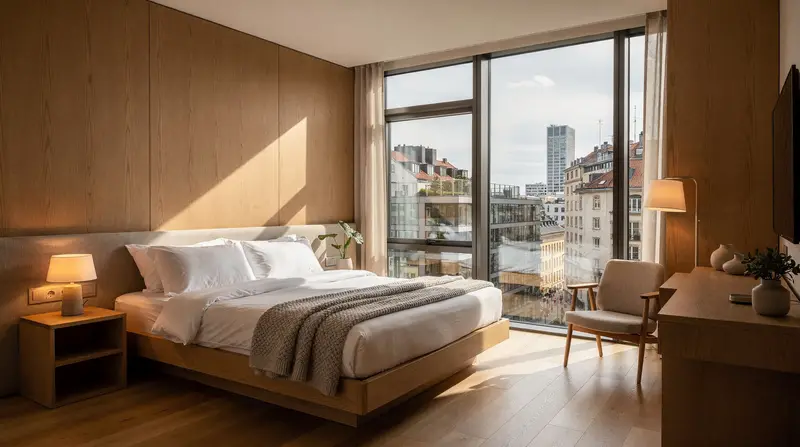
The most popular neighbourhood for independent travellers. Central, well-connected, mix of budget hotels and mid-range options, excellent local restaurants. The Meatpacking District (Kødbyen) is here — the best nightlife and food scene outside the tourist centre.
Typical hotel range: 800–1 600 DKK per night for a double room.
Indre By (city centre): most convenient, most expensive
Closest to the main sights. Strøget, Tivoli, Christiansborg, Rosenborg all walkable. Hotel prices reflect the prime location. Good choice if you are spending most of your time in the classic centre.
Typical hotel range: 1 200–2 500 DKK per night.
Nørrebro: local character, slightly less convenient
The most diverse and authentic neighbourhood — independent cafés, vintage shops, good restaurants at local prices. Slightly further from the main sights but well-served by bus lines and the Lakes as a walking route.
Typical hotel range: 700–1 400 DKK per night.
Frederiksberg: quieter residential, good metro access
Upscale residential area bordering Vesterbro. Good for families wanting space and quiet with metro access. Frederiksberg Gardens are excellent for a morning run or picnic.
Typical hotel range: 900–1 800 DKK per night.
Budget tip
Copenhagen’s hostels and guesthouses start at around 200–350 DKK per person per night for a dorm, 700–1 000 DKK for a private room. Generator Copenhagen in the Nørrebro fringe area is one of the best-regarded budget options. The full where to stay in Copenhagen guide goes street-by-street within each neighbourhood if you want more granularity than the summary here.
Getting around Copenhagen
Metro (M1, M2, M3, M4)
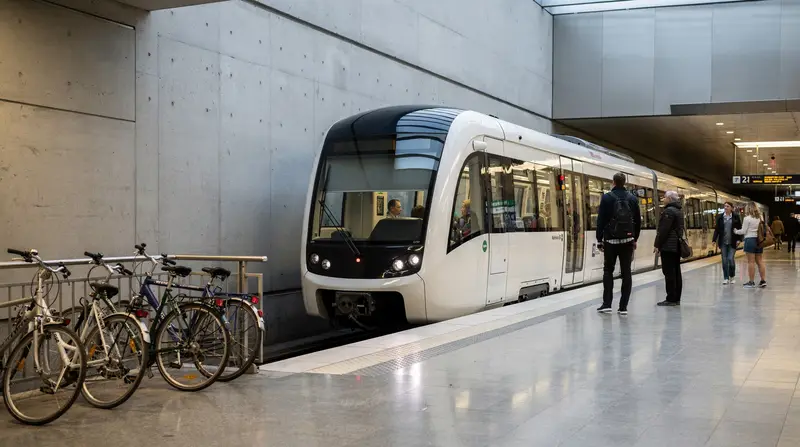
The cleanest and most useful system for visitors. The M2 line connects the airport directly to the centre (Nørreport, Kongens Nytorv) in 13–15 minutes. The M3 Cityringen circles the central neighbourhoods. The M4 reaches the Islands Brygge harbour area and Orientkaj.
Single ticket: 26 DKK (2 zones, valid 1 hour). Airport zone ticket: 36 DKK. 24-hour pass: 160 DKK. 72-hour pass: 300 DKK.
Fare evasion fine: 750 DKK — the inspectors are frequent and unhurried. Always validate before boarding. Tap-to-pay (contactless card) works on all metro gates.
S-tog (suburban rail)
Useful for day-trips to northern suburbs (Klampenborg, Louisiana Museum at Humlebæk) and connections to the regional rail network.
Cycling
Copenhagen has 390 km of dedicated cycling lanes. Renting a bike (100–200 DKK/day from Baisikeli or similar rental shops) is genuinely practical for central sightseeing — distances between major attractions are short and the infrastructure is safe. The city’s free GoBikes exist but require a credit card deposit and are more limited in availability.
On foot
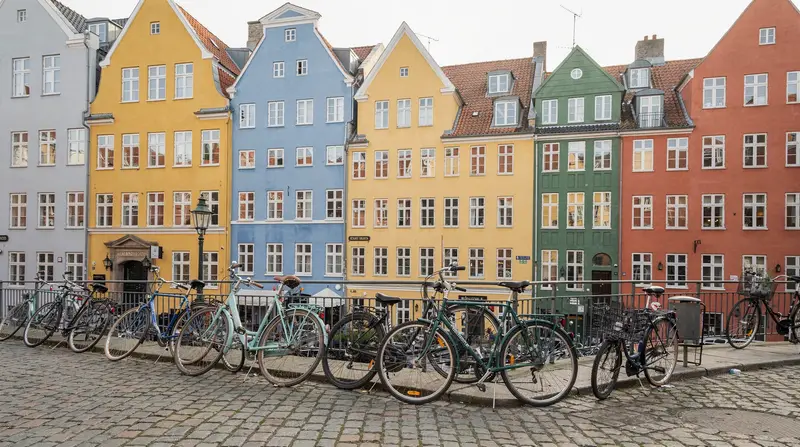
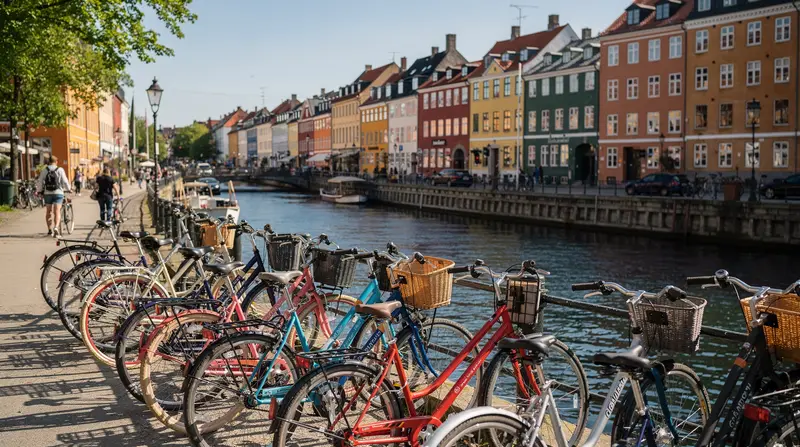
The historic centre is very walkable. Nyhavn to Rosenborg to Tivoli to Christiansborg can all be done on foot in a morning. Shoes that handle cobblestones are recommended. The full getting around Copenhagen guide compares every option (metro, bike, bus, taxi) side by side if your itinerary needs more than the basics here.
What things cost in DKK
| Item | DKK | ~EUR |
|---|---|---|
| Metro single ticket (2 zones) | 26 | €3.50 |
| Airport metro ticket | 36 | €4.80 |
| Takeaway coffee (flat white) | 50–70 | €6.70–9.40 |
| Bakery pastry (kanelsnegl) | 35–55 | €4.70–7.40 |
| Hot dog from pølsevogn cart | 40–60 | €5.40–8 |
| Casual lunch, one person | 150–250 | €20–34 |
| Sit-down dinner, one person | 300–500 | €40–67 |
| 0.5L draught beer (bar) | 70–100 | €9.40–13.40 |
| Tivoli entry | ~200 | €27 |
| Rosenborg Castle entry | 130 | €17.40 |
| Christiansborg Palace | 110 | €14.75 |
| Copenhagen Card 24h (adult) | 679 | €91 |
| Budget hostel (dorm/night) | 200–350 | €27–47 |
| Mid-range hotel (double/night) | 900–1 600 | €121–215 |
Key things to know before you go
Language: Danish is the official language but English is near-universal. Street signs, menus, museum labels and transit announcements are in Danish and English. You need zero Danish words to navigate Copenhagen.
Currency: Danish krone (DKK). Denmark is in the EU but not the eurozone. Cards are accepted almost everywhere and contactless payment is standard. Some smaller stalls at markets prefer cards only. Exchange cash at the airport or an ATM — avoid commission-heavy exchange bureaus on Strøget.
MobilePay: Denmark’s dominant mobile payment system. Used between Danes for splitting bills, paying at smaller vendors and parking. Tourists cannot register the app without a Danish phone number or CPR number — use your contactless bank card instead.
Tipping: Not customary in Denmark. Restaurants include service in the bill. Rounding up a taxi fare is appreciated but optional. No tipping pressure in any context.
ETIAS: Expected Q4 2026 for passport holders from visa-exempt countries (USA, UK, Canada, Australia, etc.). Once live, it will be a short online pre-registration (similar in spirit to the US ESTA) rather than a visa, valid for multiple entries over a set period, and is expected to cost a modest fee per applicant. It applies to the whole Schengen Area, not Denmark specifically, so it only needs completing once even if your trip also includes Sweden or other neighbouring countries. Check the EU ETIAS portal before booking if visiting after mid-2026, and complete it a few days ahead of travel rather than at the airport.
Safety: Copenhagen is one of the safest capitals in Europe. Pickpocketing exists in tourist-heavy areas (Nyhavn, Strøget) but is not aggressive. Standard urban awareness applies.
The Copenhagen Card — honest assessment
The Copenhagen Card covers 80+ attractions (Rosenborg, Christiansborg, National Museum, Tivoli, many museums) plus unlimited metro, S-tog and bus use. It is sold in 24h (679 DKK), 48h (939 DKK), 72h (1 099 DKK) and 120h (1 269 DKK) versions.
The card pays off if you visit 4+ paid attractions per day and use the metro regularly. A single day hitting Rosenborg (130 DKK), Christiansborg (110 DKK), Glyptotek (110 DKK) and Tivoli (200 DKK) with metro trips reaches roughly 620 DKK — the 24h card covers that for 679 DKK and adds unlimited transit. If you spend more time eating, drinking and walking free streets, skip it.
Your first 24 hours: a practical sequence
If you land in the morning, here is a realistic way to spend day one without either overplanning or wasting the jet-lagged first hours. Take the Metro M2 directly to your hotel (13–15 minutes, 36 DKK) and drop your bags rather than sightseeing with luggage. Walk to the nearest bakery for a coffee and pastry — this does double duty as breakfast and orientation.
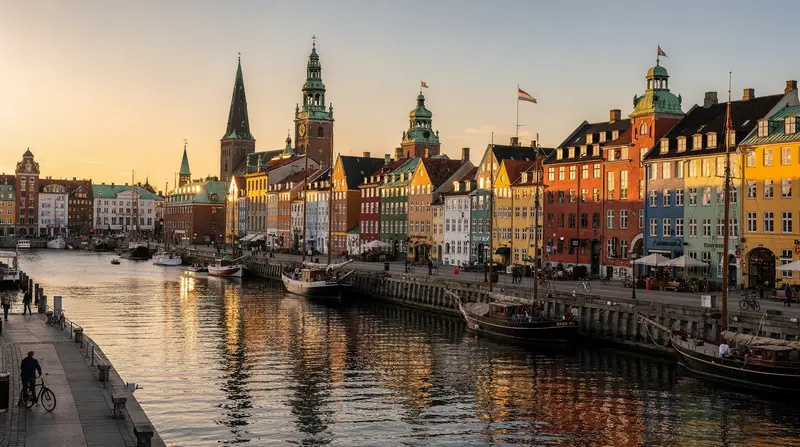
Spend the early afternoon on the free, walkable core: Nyhavn’s canal (best photographed before crowds build), then Amalienborg for the changing of the guard if timed to midday, then Kongens Have for a slower half hour. In the evening, resist the urge to eat at the first restaurant you see near your hotel — walk one street back from any tourist-adjacent block, per the Copenhagen tourist traps guide, and book a table if it’s summer.
Day-trips worth considering
Helsingør (Kronborg Castle): 45 minutes by train from Copenhagen Central (110 DKK return). The castle that inspired Shakespeare’s Hamlet. Worth a half-day if you enjoy medieval history. See the Kronborg Hamlet castle guide for entry prices and how to combine it with Helsingør town.
Roskilde: 25 minutes by regional train (~110 DKK return). UNESCO Viking Ship Museum with real excavated longships. The medieval cathedral holds the tombs of Danish kings. A strong half-day or full-day trip — the Roskilde Vikings guide covers the museum in detail.
Malmö, Sweden: 15 minutes by Øresund train (~130 DKK return, or included in some transit passes). An entirely different country at minimal cost. Sweden’s third city, with excellent Scandinavian modern architecture, a charming old town, and noticeably lower restaurant prices than Copenhagen. Full logistics in the Copenhagen to Malmö train guide.
Louisiana Museum of Modern Art: 45 minutes by S-tog + walk from Humlebæk station. One of Scandinavia’s great art museums in a dramatic coastal setting. Adults 160 DKK entry. See the Louisiana Museum guide for the full visit plan.
For a full week of day-trip options beyond these four, the day trips from Copenhagen guide covers the rest.
What to pack for Copenhagen
Copenhagen’s weather changes fast regardless of season, and the city’s cycling and walking culture rewards packing lightly and practically over dressing for a photo.
Year-round: A light rain jacket (Copenhagen sees rain on 170+ days a year, rarely heavy but frequent), comfortable shoes that handle cobblestones and occasional wet pavement, and a reusable water bottle — tap water is excellent and free refill points exist at major museums and parks.
Summer (June–August): Layers rather than just warm-weather clothes — evening temperatures drop 8–10°C from daytime highs even on hot days, and the extended daylight (see the northern summer nights guide) means you’ll likely be outdoors later than planned. A swimsuit if you intend to use the harbour baths.
Winter (November–March): A proper insulated coat, not just a rain jacket — Copenhagen’s winter cold is damp and windy rather than dry, and it cuts through inadequate layers quickly. Waterproof boots for slush and occasional ice. Gloves and a hat are not optional if visiting the Christmas markets after dark.
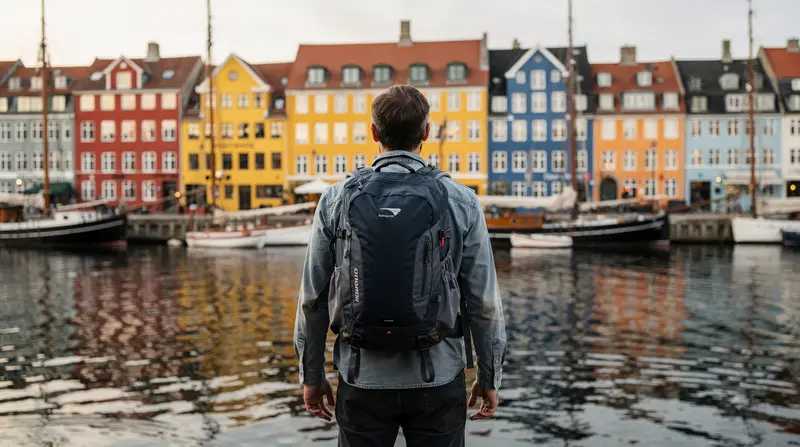
For cycling: If you plan to rent a bike, bring a small bag or pannier-compatible daypack rather than a large backpack — most rental bikes have a front or rear rack rather than backpack-friendly design, and cycling with a heavy backpack is genuinely less comfortable on Copenhagen’s cobblestones.
Copenhagen’s neighbourhoods: a quick guide
Understanding Copenhagen’s geography helps with planning. The city is compact and its neighbourhoods have genuinely distinct characters.
Indre By (Inner City): The historic centre, containing most of the major sights — Strøget pedestrian street, Rosenborg Castle, Christiansborg Palace, the Latin Quarter and the Round Tower. Densely touristed in peak season. The highest concentration of museums and historical interest.
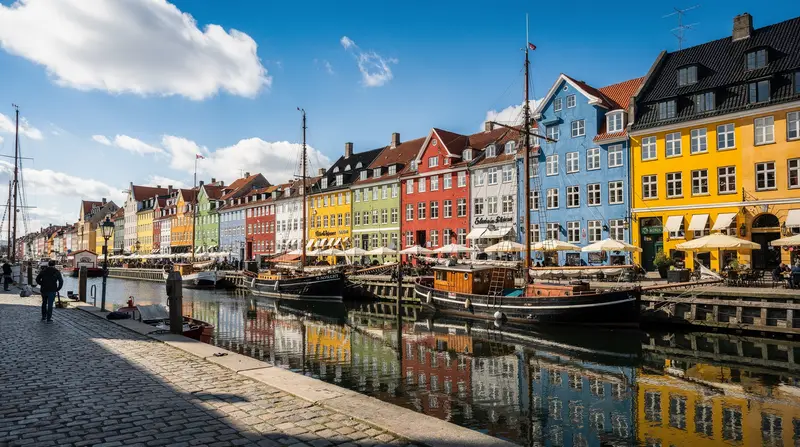
Nyhavn and Frederiksstaden: The canal district and the aristocratic quarter to its north. Amalienborg Palace, the Marble Church and Kastellet are here. Nyhavn is the most photographed street in Denmark. Tourist-heavy but genuinely beautiful.
Christianshavn: Across the Knippelsbro bridge from Christiansborg. A neighbourhood of canals, houseboats and the autonomous commune of Christiania. Quieter, more residential, with good restaurants at lower prices than the city centre. The Church of Our Saviour (spiral exterior staircase, 118 DKK) is here.
Vesterbro: The former meatpacking and working-class district, now Copenhagen’s most interesting neighbourhood for independent travellers. The Meatpacking District (Kødbyen) has the best nightlife. Istedgade has good independent restaurants at local prices. Carlsberg City district is being developed to the west. Best neighbourhood for value hotels.
Nørrebro: The most diverse neighbourhood in Copenhagen — historically working-class, now home to the city’s immigrant communities, independent café culture, vintage shops and Superkilen park. Jægersborggade is the best street in the city for independent restaurants and cafés. Nørrebro is what makes Copenhagen feel like more than a museum city.
Frederiksberg: Technically its own municipality within the city. Affluent, green, with Frederiksberg Gardens (free, excellent for families) and the Frederiksberg Palace. Slightly quieter than Vesterbro but well-connected by metro.
Practical information for your trip
Money and cards
Currency: DKK (Danish krone). Not euros — Denmark is in the EU but has retained the krone. 7.46 DKK = 1 EUR approximately.
Cards: Accepted universally — restaurants, shops, cafés, markets, public toilets. Many venues are card-only. Contactless payment is standard. American Express has some gaps at smaller venues.
ATMs: Available throughout the city at reasonable rates. Avoid bureau de change offices.
Tipping: Not customary. Prices include service. Round up a taxi fare if you want — not expected.
Connectivity
Copenhagen has reliable 4G/5G coverage throughout the city and metro system. Free WiFi is available at most cafés, museums and transit hubs. A Danish or EU SIM card is unnecessary for short visits if you have a roaming plan.
Pharmacies
Pharmacies (apotek) are common in central Copenhagen. Steno Apotek near Copenhagen Central Station is one of the few 24-hour pharmacies in the city. Standard European medications are available over the counter; prescription requirements follow Danish law.
Health and emergencies
Emergency number: 112. Non-emergency medical helpline: 1813 (English-speaking staff available). Denmark’s public hospitals are excellent. EU citizens with an EHIC card receive free emergency treatment. Non-EU visitors should carry travel insurance with medical coverage.
Copenhagen in one paragraph for planning purposes
You will land at an airport 15 minutes from the city centre by metro (36 DKK). You will stay in a mid-range hotel in Vesterbro or Indre By (1 200–1 800 DKK/night). You will spend your days walking between Nyhavn, Rosenborg, Christiansborg and Tivoli, eating at Torvehallerne and a couple of neighbourhood restaurants, taking one canal cruise, and possibly cycling between sights. You will spend, on average, 1 200–1 800 DKK per person per day including accommodation. You will use English exclusively. You will not tip. You will need to have validated your metro ticket. You will leave thinking the food was excellent, the city was beautiful, it was more expensive than expected, and you should have had four days instead of three.
What planning decisions matter most
Timing: May or September for the best balance of weather, crowds and price. July for the maximum summer experience. December for the Christmas market.
Accommodation: Book central Vesterbro for value; Indre By for convenience. Book at least 6–8 weeks ahead in summer.
Transport: Metro from the airport (always). A 72h transit pass or the Copenhagen Card if visiting multiple attractions per day.
Attractions: The Copenhagen Card pays off if you visit 4+ paid sights per day. Calculate your specific itinerary before buying.
Food: Bakery breakfast daily. Torvehallerne for at least one lunch. One properly researched dinner at a neighbourhood restaurant. Skip Nyhavn for eating.
Day-trips: On day 4 (not day 2 or 3 — see the city first). Helsingør for history; Roskilde for Vikings and UNESCO; Malmö for two-country novelty.
Don’t miss: Rosenborg treasury (crown jewels), the canal at Nyhavn before 9 am, Torvehallerne at any time of day, Tivoli in the evening.
Skip if short on time: The Little Mermaid (underwhelming statue, 20-minute walk from main sights), Nyhavn restaurants (eat elsewhere), guided bus tours when a canal cruise covers the same ground better.
Frequently asked questions about planning a Copenhagen trip
Is Copenhagen worth visiting for just a weekend?
Yes — two nights and three days is enough to see the highlights without feeling rushed. You will miss depth and day-trips, but Nyhavn, Tivoli, one or two museums, canal cruise and a good meal are achievable and genuinely rewarding in a weekend.
What is the best neighbourhood to stay in Copenhagen?
For first-timers: Vesterbro. It has the best combination of location (central, walkable to most sights), character (authentic local neighbourhood), and value (hotels typically 20–30% cheaper than Indre By). For pure convenience: Indre By. For a local feel: Nørrebro.
How much cash do I need in Copenhagen?
Very little. Copenhagen is effectively a cashless city — cards accepted almost universally, including at market stalls and hot dog carts. Bring enough for one or two small cash-only vendors or emergencies: 200–300 DKK is ample.
Is Copenhagen good for families with children?
Excellent. Tivoli is one of the best city amusement parks in Europe for young children. The Blue Planet National Aquarium is superb. The city’s cycling infrastructure means kids can ride safely alongside parents. Restaurants are generally child-welcoming. The main challenge is cost — family hotel rooms and attraction tickets add up quickly.
What should I avoid in Copenhagen?
Avoid eating on Nyhavn itself (overpriced for the quality), skip the Little Mermaid if you are short on time (it is anticlimactic), and do not pay for the harbourbus if you already have a transit pass (it is included). Also avoid Strøget souvenir shops — identical items are sold at half the price in the covered market at Torvehallerne.
Can I visit Copenhagen on a budget?
Yes, but it requires planning. Free attractions include Nyhavn (from the outside), the Botanical Garden, the free Sunday entry at many national museums (check individual museum websites), Superkilen park in Nørrebro, and the harbour baths in summer. Eating at bakeries, hot dog stands and food markets cuts daily food costs significantly. See the Copenhagen on a budget guide for a detailed breakdown.
Frequently asked questions — Copenhagen Travel Guide: Everything You Need to Plan Your Trip
Is Copenhagen easy to visit independently?
Very. English is spoken by virtually everyone — staff, locals, even market vendors. The metro and S-tog train network are clean and reliable. Wayfinding is excellent. Copenhagen is one of the safest and most tourist-friendly cities in Europe.Do I need to book things in advance in Copenhagen?
For summer (June–August): book your hotel at least 6–8 weeks ahead. Tivoli, canal tours and food tours can be booked a few days before. The Copenhagen Card can be purchased on the day. Popular restaurants — especially any Michelin-starred table — should be booked months ahead.Do I need to change money before arriving?
No. Denmark uses the Danish krone (DKK), not the euro. ATMs at the airport give fair rates. Cards are accepted almost everywhere — many cafés and stalls are cashless. MobilePay is the Danish contactless payment app; tourists can use any Visa or Mastercard contactless instead.Is the Copenhagen Card worth buying?
It depends on your itinerary. If you plan to visit 4+ paid attractions per day (Rosenborg, Christiansborg, National Museum, Tivoli) plus use the metro, the 24-hour card (679 DKK adult) typically pays off. If you are spending a lot of time in free spots or eating, skip it.How do I get from the airport to the city centre?
The metro M2 from Copenhagen Airport (CPH) to Nørreport or Kongens Nytorv takes 13–15 minutes and costs 36 DKK (one standard city zone ticket). Taxis cost 250–350 DKK. There is no rail link to Kastrup separate from the metro. The metro runs 24 hours.What are the biggest tourist traps in Copenhagen?
Nyhavn restaurants (overpriced, average food — eat elsewhere, photograph from the canal), the Little Mermaid statue (200m walk for a small bronze figure), and Strøget souvenir shops. Worth skipping: the overpriced harbour bus if you have a transit ticket; GoBikes (GYG bikes are better value). Worth the hype: Tivoli, Torvehallerne, Rosenborg Castle.Do I need ETIAS to visit Copenhagen?
ETIAS (European Travel Information and Authorisation System) is expected to launch in Q4 2026 for passport holders from visa-exempt countries (USA, UK, Canada, Australia, etc.). At the time of writing, check the EU official ETIAS portal for the latest status before booking.
Top experiences
Bookable activities with verified prices and instant confirmation on GetYourGuide.