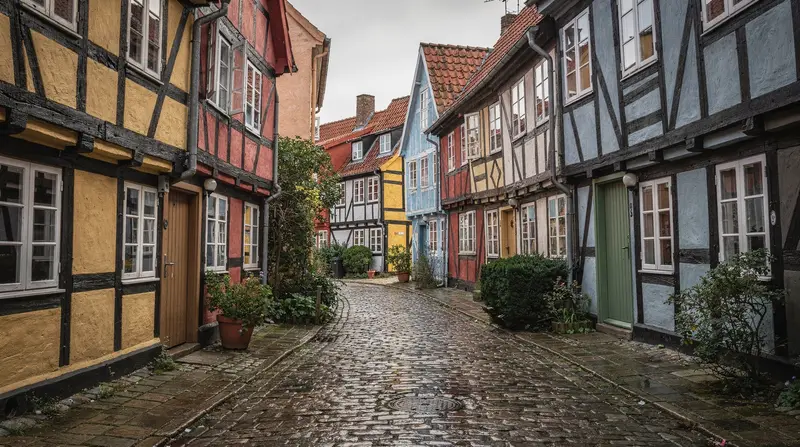
Odense Day Trip from Copenhagen
Odense is H.C. Andersen's birthplace and Denmark's third city. Train takes 1h30. Honest guide: what's worth it, costs in DKK, and how to plan your day.
Odense: Hans Christian Andersen Walking Tour
Duration: 1.5 hours
Quick facts
- From Copenhagen
- 1h20–1h35 by InterCity train (IC)
- Train price
- ~DKK 200–350 return (DSB, varies by timing)
- Currency
- DKK (Danish krone)
- Best for
- H.C. Andersen museums, riverside walks, city cycling
- Population
- ~180,000 (Denmark's third-largest city)
Quick answer: Odense earns a day trip — particularly for families with children, H.C. Andersen enthusiasts, and anyone who wants to see a functioning Danish city rather than a tourist-only attraction. The H.C. Andersen Museum is genuinely excellent and the riverside area makes for a pleasant afternoon. One day is enough for most visitors; two days works if you’re combining with Funen countryside or the Funen Village open-air museum.
| Where | Odense, Funen — 1h20–1h35 by train from Copenhagen |
| Cost | ~DKK 200–350 return train; museum ~170 DKK adults |
| Time needed | Full day; two days with Funen Village |
| Getting there | InterCity train from København H, via the Great Belt Bridge |
| Best time | Book train tickets ahead for the lowest fares |
Getting to Odense from Copenhagen
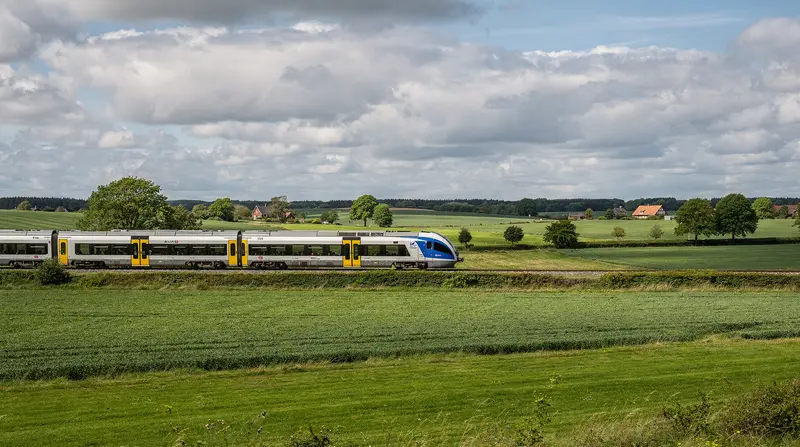
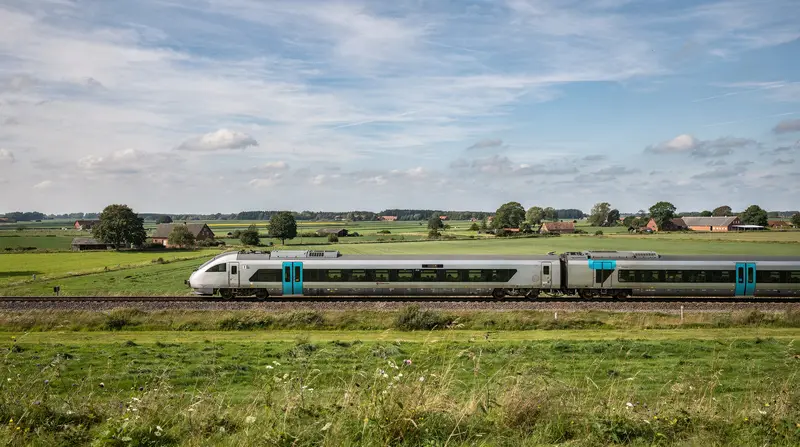
InterCity (IC) trains run frequently from Copenhagen Central (København H) to Odense. Journey time is typically 1 hour 20 to 1 hour 35 minutes, depending on the service. Trains cross to Funen via the Great Belt Bridge (Storebæltsbroen), Denmark’s longest bridge at 18 kilometres, which is itself worth the window seat on the crossing.
Return tickets cost roughly DKK 200–350 depending on whether you book in advance or turn up on the day. The DSB app rewards early booking with significant discounts — the cheapest seats can be as low as DKK 149 each way if you plan ahead. Last-minute day-of travel is noticeably more expensive.
Odense station is right in the city centre. The main museums and old town are all within 15–20 minutes on foot, or you can rent a city bike — Odense takes cycling seriously and has an extensive dedicated network.
The H.C. Andersen Museum
Hans Christian Andersen was born in Odense in 1805, grew up in a small house on Munkemøllestræde, and left the city as a teenager to seek his fortune in Copenhagen. The museum built around his story is excellent — far better than you might expect from a literary birthplace museum.
The HC Andersen Hus, redesigned and reopened in 2021, is built into and around the original neighbourhood where Andersen grew up. Japanese architect Kengo Kuma designed the new structure, which weaves around the preserved 19th-century streets of the old quarter. Inside, the experience is immersive rather than object-heavy: there are theatrical installations, fairy-tale environments, and a genuine attempt to get at why Andersen’s stories still matter. Entry costs DKK 170 for adults, DKK 70 for children aged 4–17 (2026 prices — verify before visiting).
The birthplace house on Bangs Boder, a 5-minute walk from the main museum, is included in the ticket. It’s the actual house where Andersen was born, preserved and furnished as it would have been around 1805. It’s intimate and genuinely evocative.
Allow 2–3 hours for the main museum, less if you have children with short attention spans — though the installations are designed to engage children directly.
H.C. Andersen walking tour in Odense’s footstepsThe Old Town (Brandts Klædefabrik and Around)
The area around Brandts Klædefabrik — a former textile factory turned arts and culture complex — is Odense’s creative centre. It houses a contemporary art museum (Kunsthallen Brandts), a photography museum, and a media museum, all within the same converted brick buildings. Entry to all three costs about DKK 120.
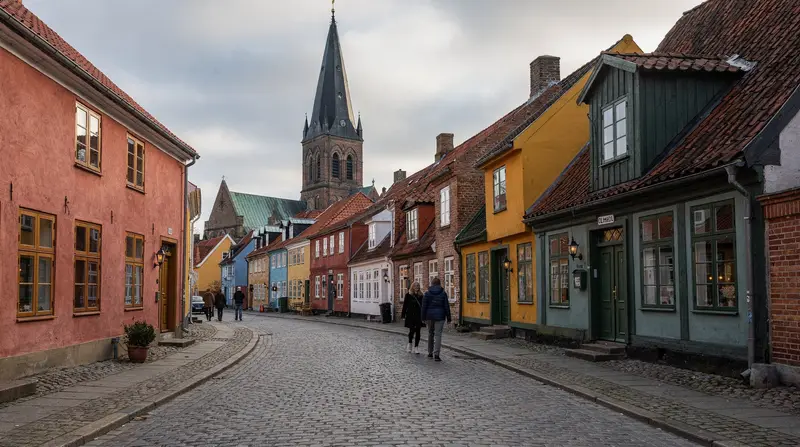
The surrounding streets of the old quarter are the most atmospheric in Odense: low-rise, red-brick, with a scale that feels human rather than monumental. This neighbourhood is roughly 10 minutes’ walk from the H.C. Andersen Museum and makes a natural second stop on a walking itinerary.
Overgade and Nedergade, the two streets running parallel through the old town, have good independent cafés, bakeries, and lunch spots at prices that feel generous compared to central Copenhagen.
St. Canute’s Cathedral (Sankt Knuds Domkirke)
The Gothic cathedral on Flakhaven square dates primarily to the 15th century and contains the remains of King Canute IV, the only Danish king canonised as a saint. The cathedral’s interior is dominated by a huge carved altarpiece (1521) by the German sculptor Claus Berg — one of the finest examples of Gothic woodcarving in Scandinavia. Entry is free.
The crypt beneath the cathedral contains the skeleton believed to be Canute himself, displayed in a glass case. It sounds gruesome but is presented respectfully and tells a genuinely interesting medieval story.
Private guided walking tour of OdenseOdense River and Funen Village
The Odense River runs through the city and is navigable by small boat in summer. The river cruise connects the city centre to the Den Fynske Landsby (Funen Village) open-air museum about 3 kilometres south — a living museum of 19th-century rural Funen, with costumed interpreters, farm animals, and historic buildings. It’s genuinely well done and particularly good for families.
The boat trip itself takes about 30 minutes each way and costs around DKK 80–100 per person. You can also cycle there in 20 minutes along the riverside path. Funen Village entry costs DKK 130 for adults (2026, verify before visiting).
Combining the river cruise with Funen Village adds a half-day to your itinerary — which is why two days in Odense makes sense if you want to do both the H.C. Andersen material and the rural Funen experience properly.
Odense river cruise to Funen VillageCycling in Odense
Odense takes its cycling seriously — it regularly appears in surveys of Denmark’s best cycling cities (after Copenhagen), and the infrastructure reflects this. There are dedicated cycling paths throughout the city and along the river. City bikes are available for hire at several points. The flat terrain of Funen makes cycling genuinely easy, and many of the connections between the H.C. Andersen Museum, Brandts Klædefabrik, and Funen Village are more pleasant by bike than on foot.
If you’re visiting with children, the bike-path network along the Odense River to Funen Village is particularly good — it follows the riverbank, passes through light woodland, and ends at a destination that children respond well to. The whole route one-way takes about 25 minutes at a relaxed pace. This is one of the better free activities Odense offers.
Food in Odense
Odense has a good café and restaurant culture, strongest in the old town around Overgade, Nedergade, and the streets south of the cathedral. Prices are noticeably lower than Copenhagen for equivalent quality, which makes Odense a good place to eat well without the capital’s premium.
The smørrebrød tradition is well-represented: several traditional Danish lunch restaurants (frokostrestauranter) serve the full selection of open-faced sandwiches on rye bread. Expect DKK 100–140 for a two-sandwich lunch with a beer. The Carlsberg brewery doesn’t have a presence here — Odense has its own brewing tradition, and craft beer bars have proliferated in the Latin Quarter equivalent (Filosofgangen and around).
For a quick lunch between museums, the Brandts Klædefabrik café is reasonable and well-located. For a proper sit-down meal, the restaurants on Vintapperstræde and around the old market (Gråbrødretorget) tend to offer better value than those directly adjacent to the H.C. Andersen Museum entrance.
Street food and fast options: the Kongensgade and Vestergade pedestrian streets have the usual mix of bakeries, fast-food chains, and coffee shops. Odense’s university student population keeps independent cafés well-fed with custom; the streets south of the university building are worth exploring for a coffee stop.
What Odense Is Not
Odense is a normal Danish city where people live and work. It is not a theme park or a sanitised tourist experience. This means the city centre has the usual mix of pedestrian retail streets, chain restaurants, and office buildings alongside its historic areas. The H.C. Andersen quarter is genuinely charming; the main shopping street (Vestergade/Kongensgade) is competently dull in the way most European pedestrian shopping streets are.
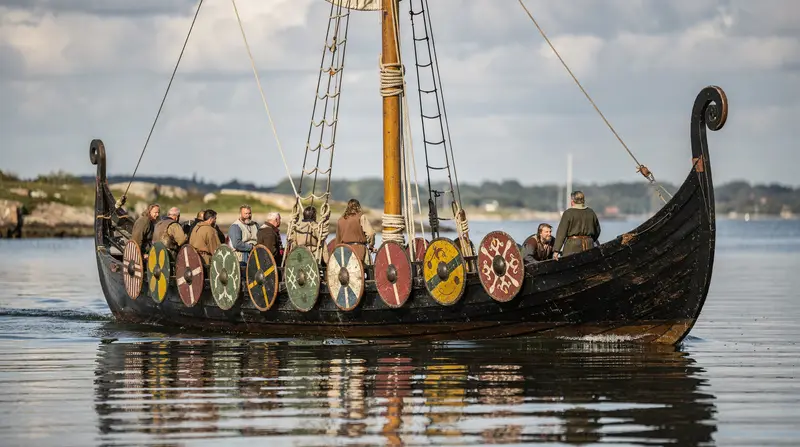
The Viking history angle is less prominent in Odense itself — the city doesn’t have a Viking museum in the way Roskilde does — but the Viking Walk audio tour (a self-guided route through the city with recorded content) is a reasonable way to add a historical layer to an Odense walk.
Odense Viking Walk self-guided audio tourOdense Zoo
If you’re visiting with children, Odense Zoo (Odense ZOO) is one of Denmark’s three largest zoos and ranks consistently well in European zoo quality surveys. It’s about 20 minutes’ walk south of the city centre (or take the bus). The zoo covers around 12 hectares and houses roughly 1,400 animals, with a focus on African savannah habitats, orangutans, and aquatic species.
Entry costs approximately DKK 200 for adults, DKK 170 for children aged 3–11 (verify current prices). The zoo and the Funen Village open-air museum are both in the same southern part of the city, so combining them on a two-day visit makes sense logistically.
Egeskov Castle: a worthwhile detour with a car
If you’re driving rather than taking the train, Egeskov Castle — about 30 km south of Odense — is one of the best-preserved Renaissance moat castles in Europe, built in 1554 and famously constructed on a foundation of oak piles driven into the lake bed (the name means “oak forest”).
The castle grounds include several themed gardens, a large collection of vintage cars, motorcycles and aircraft in the Titania’s Palace and vehicle museum wings, and a series of aerial rope courses and treetop walks that make it genuinely appealing for families as well as history enthusiasts. Entry (2026) runs around DKK 275 for adults covering castle, gardens and museums; the aerial activities are a separate paid add-on. Egeskov works best as a half-day detour on a car-based Funen itinerary rather than a standalone trip from Copenhagen, given the combined driving time.
Odense’s Latin Quarter equivalent: Filosofgangen
The streets around Filosofgangen, a short walk from the university area, have become Odense’s answer to Copenhagen’s Latin Quarter — a concentration of independent cafés, small bars, and the city’s growing craft beer scene, populated largely by students from the University of Southern Denmark’s Odense campus. It’s a genuine local hangout rather than a curated tourist strip, with prices noticeably lower than equivalent venues in Copenhagen. If you have an evening in Odense (staying overnight rather than day-tripping), this is where to spend it — quieter and more residential than the H.C. Andersen quarter, but with a more interesting drinking and eating scene after dark.
How Odense Fits into a Larger Jutland/Funen Trip
Odense sits on Funen (Fyn), the island between Zealand (Copenhagen’s island) and Jutland. Its position makes it a natural waypoint on any train journey west: everything bound for Aarhus or Jutland passes through Odense. This means you can break your journey to Aarhus with a stop in Odense — spending a few hours at the H.C. Andersen Museum before continuing west — without significantly extending your total travel time.
By car, Odense is also a sensible stopping point between Copenhagen and Billund/LEGOLAND. The drive from Copenhagen to Billund passes through or near Odense, and spending 3–4 hours in the city makes the total journey more interesting for adults who might otherwise spend 2.5 hours on a motorway.
See the Billund guide and the Aarhus guide for how these destinations combine into a multi-day Jutland itinerary. The day trips week itinerary gives a structured option for covering multiple western Danish destinations across a week-long stay in Copenhagen.
Practical Planning
One day: Copenhagen departure at 8:00–9:00am arrives by 9:30–10:30am. Visit the H.C. Andersen Museum through the morning, lunch in the old town, Brandts Klædefabrik or St. Canute’s Cathedral in the early afternoon, home by 5–7pm. Comfortable.
Two days: Add the Funen Village river cruise itinerary on day 2. This works particularly well with children. Consider staying overnight to avoid two early starts.
Food: Odense has a genuinely good café and restaurant scene concentrated in the old quarter. For a city of this size, the level of independent food culture is impressive. Budget DKK 150–250 for a sit-down lunch, DKK 80–120 for a good smørrebrød. Skip the places directly around the main H.C. Andersen Museum entrance; walk 5 minutes south and prices improve.
Combining with other destinations: Odense sits naturally on the route to Billund/Legoland if you’re travelling by car. By train, Billund requires a bus connection from Vejle and adds complexity; see the Billund guide for logistics.
Frequently asked questions about Odense
How long does it take to get from Copenhagen to Odense by train?
The InterCity (IC) train takes 1 hour 20 to 1 hour 35 minutes from Copenhagen Central (København H). Trains run frequently throughout the day. The journey crosses the Great Belt (Storebælt) via the famous bridge-and-tunnel crossing, which is worth watching from the window.
Is Odense worth visiting from Copenhagen in a day?
Yes, comfortably. One full day gives you the H.C. Andersen Museum, the old town, and either Brandts Klædefabrik or St. Canute’s Cathedral. Two days is worth it if you want to add the Funen Village open-air museum via river cruise.
How much does the H.C. Andersen Museum cost?
Adult entry costs DKK 170; children aged 4–17 pay DKK 70 (2026 prices — check the official website before visiting as prices update). The ticket covers both the main museum and the original birthplace house nearby.
Is Odense good for families with children?
Very much so. The H.C. Andersen Museum has immersive installations designed to engage children as well as adults. Funen Village has farm animals and costumed interpreters. The Odense Zoo (about 20 minutes’ walk south) is an additional option. The city’s cycling infrastructure is excellent for families who want to explore on two wheels.
What else can I do in Odense besides H.C. Andersen?
Brandts Klædefabrik (art, photography, and media museums), St. Canute’s Cathedral (free entry, exceptional medieval altarpiece), the Odense River and Funen Village (best reached by river cruise in summer), and the city cycling routes along the river. The craft beer walking tour is a good evening option if you’re staying overnight.
Do I need to book train tickets in advance?
Not strictly necessary, but advance booking through DSB.dk yields significantly lower prices — sometimes less than half the walk-up fare. If you’re visiting on a summer weekend, book ahead to secure seats. Day-of travel is always possible but costs more.
Is there anything to do in Odense in the evening?
Yes, though the evening scene is smaller than in Copenhagen. The bars and restaurants around Brandts Klædefabrik and the Vintapperstræde area are active in the evening. The craft beer scene is genuinely interesting for a city this size. Most visitors doing a day trip will head back to Copenhagen before evening.
Top experiences
Bookable activities with verified prices and instant confirmation on GetYourGuide.