Malmö Day Trip from Copenhagen
Cross the Øresund Bridge to Sweden in 35 minutes. Honest guide to Malmö from Copenhagen: trains, DKK vs SEK, what to see, and is it worth it?
Copenhagen: Malmö Private Highlights Trip with Lunch Option
Duration: Full day
Quick facts
- From Copenhagen
- 35–40 min by train (Malmö Central)
- Train price
- ~DKK 120–160 return (Øresundtog)
- Currency
- Swedish krona (SEK) — DKK not accepted
- Best for
- Architecture, street art, Western Harbour walk
- ID required
- Yes — bring passport or EU ID card
Quick answer: Malmö is genuinely worth the trip — but only if you go in knowing it’s a Swedish city with Swedish prices and Swedish currency. Most visitors are surprised to learn that DKK is not accepted here, and that crossing the border may involve a quick passport check. Sort those two logistics upfront and you’ll have a great day.
| Where | Malmö, Sweden — 35–40 min by train from Copenhagen |
| Cost | ~DKK 120–160 return train; SEK 300–600 for food/entry |
| Time needed | Full day (9:30am–6pm is comfortable) |
| Getting there | Øresundtog direct from København H or Kastrup airport |
| Best time | Weekday for photography; Saturday for atmosphere |
Getting to Malmö from Copenhagen
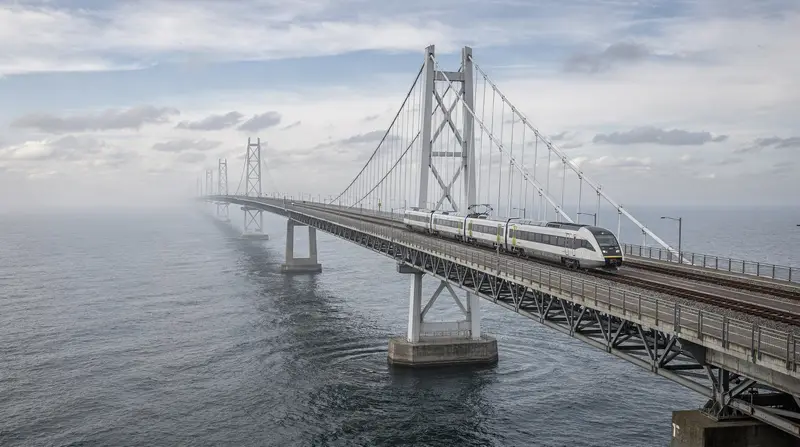
The Øresundtog (Øresund train) runs every 20 minutes from Copenhagen Central (København H) and Copenhagen Airport (Kastrup) directly to Malmö Central. The journey takes about 35 minutes from the city centre, or 20 minutes from the airport. The train crosses the Øresund via the combined road-and-rail bridge and tunnel, dropping you right in the middle of Malmö.
A standard return ticket costs roughly DKK 120–160 if you buy it via DSB.dk or the Rejseplanen app. You can also use the Øresundsbroen’s combined travel cards. Do not attempt to pay on board in DKK — the train runs on a shared Danish-Swedish fare system, but the easiest approach is to buy your ticket online before you go.
Currency warning: Once you step off the train in Malmö, you are in Sweden. Every shop, café, and museum prices in Swedish krona (SEK). As of mid-2026, 1 DKK ≈ 1.55 SEK, so DKK 100 gets you about SEK 155. You can withdraw SEK at ATMs in Malmö Central or exchange at Forex counters on both sides of the bridge. Most places accept Visa/Mastercard contactless, which charges in SEK automatically — the cleanest option for most visitors.
Border control: Since 2015, Sweden has periodically reinstated ID checks at the Øresund crossing. As of 2026 these checks remain active. Bring your passport or, if you’re an EU citizen, a valid national ID card. Danish citizens and EU residents are fine with an ID card; non-EU visitors need a passport and should verify Swedish entry requirements for their nationality before travelling.
Book a guided highlights trip to Malmö by trainWhat Malmö Actually Looks Like
Malmö is Sweden’s third-largest city, with about 360,000 people. It has a split personality that makes it interesting: a medieval old town (Gamla Staden) with cobblestone squares and a genuine castle, set alongside one of Scandinavia’s most ambitious pieces of modern urban planning — the Western Harbour (Västra Hamnen).
This contrast is the whole point of a day trip. You can walk from a 16th-century castle to a neighbourhood built on a former shipyard in under 30 minutes. That’s the itinerary most people do, and it works.
Gamla Staden (Old Town)
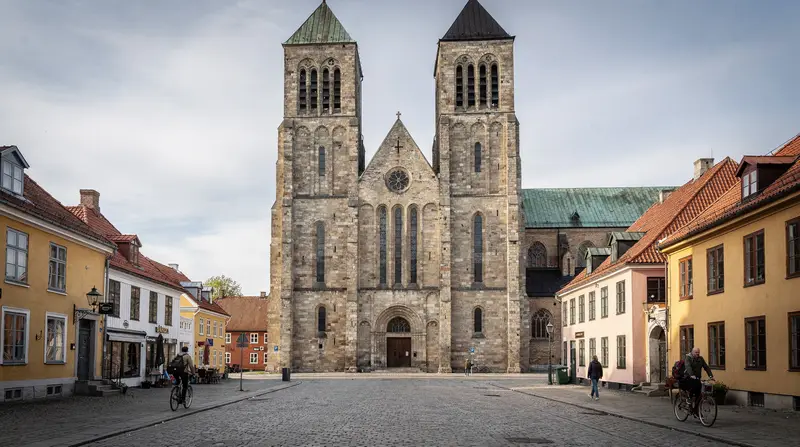
The old town sits about 15 minutes on foot from Malmö Central, or one metro stop (Triangeln). At its centre is Stortorget, the main square, dominated by the equestrian statue of King Karl X Gustav and the Renaissance town hall. The St. Peter’s Church (Sankt Petri kyrka) on the eastern edge of the square dates to the 14th century and is one of the largest Gothic brick churches in Scandinavia — free to enter, calm inside, worth ten minutes.
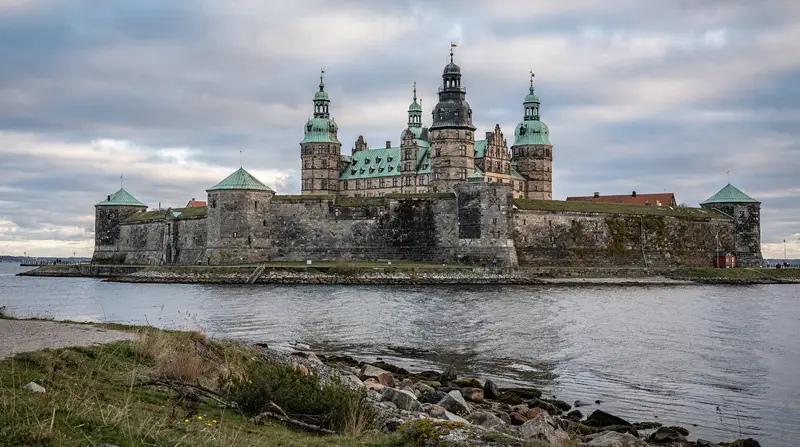
Malmöhus Castle is a proper moated castle from the 1530s, now housing the Malmö Museum. Entry costs SEK 100 (roughly DKK 65). It covers natural history, art, and a submarine exhibit that children genuinely enjoy. Not essential, but the castle grounds along the moat are worth a stroll regardless.
Lilla Torg is the prettier square — smaller, surrounded by timber-framed buildings from the 16th and 17th centuries, now mostly restaurants and bars. On warm evenings it’s busy; on weekday mornings you can photograph it properly.
Western Harbour and Turning Torso
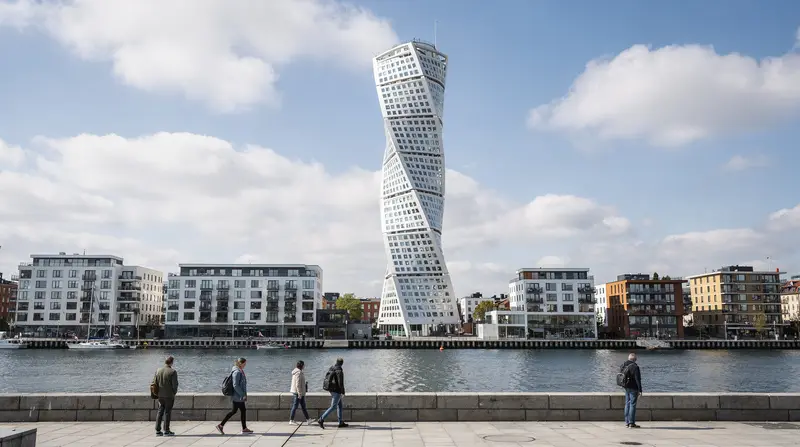
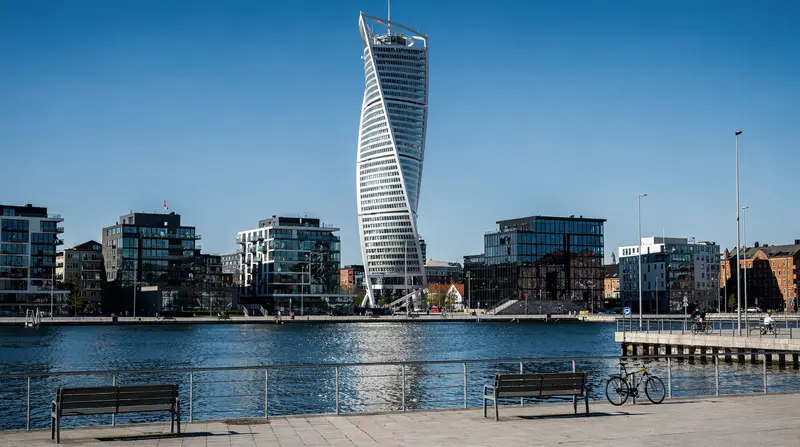
Walk or cycle 25 minutes west from the old town (or take bus 5 directly) and you reach Västra Hamnen. This is where Malmö reinvented itself after the Kockums shipyard closed in the 1980s. Santiago Calatrava’s Turning Torso tower — a 190-metre residential skyscraper that rotates 90 degrees from base to top — is the visual anchor, but the whole neighbourhood repays a wander.
The waterfront promenade here looks directly across the Øresund to Copenhagen. On a clear day you can see the spires of the city you came from. The beach at Ribersborg (Ribban) stretches north for about 4 kilometres — Malmöers swim here in summer, and the traditional bathhouse (Ribersborgs kallbadhus) has outdoor hot tubs and a sauna for SEK 90.
Malmö self-guided day tour with transport includedMöllevångstorget and the Food Market
If you have the afternoon free, go to Möllevångstorget — “Möllan” to locals. This is Malmö’s most multicultural neighbourhood, built on the working-class immigrant communities that arrived in the 1960s and 70s. The covered market hall (Saluhallen Briggen is a more upscale option; Möllan itself is the street market) sells cheap, good food from a dozen cuisines. This is where Malmöers actually eat, not in the tourist-adjacent old town restaurants.
The neighbourhood around Möllan has also become the centre of Malmö’s arts and nightlife scene, with independent galleries, second-hand bookshops, and some of the best falafel you will eat in Scandinavia.
Getting Around Malmö
Malmö is very walkable — the old town, Stortorget, and Lilla Torg are all within a 10-minute walk of each other, and the Western Harbour is about 25 minutes on foot from the centre. The city also has an extensive cycling network: you can hire city bikes from several points around the centre, and the flat terrain makes cycling genuinely comfortable.
The Malmö local bus and Skånetrafiken commuter trains cover routes further out (including the connection to Lund). A day travel card for Malmö costs approximately SEK 100–130. Most visitors on a short day trip will find they don’t need public transport within Malmö if they’re focused on the old town and Western Harbour.
Taxis and ride-hailing apps (Uber operates in Malmö) are straightforward if you need them.
Food and Drink in Malmö
Malmö’s food scene has matured significantly in the past decade. The old tourist traps around Stortorget still exist, but the city also has a sophisticated independent restaurant and café culture — particularly in Möllan and in the Western Harbour area.
Breakfast and coffee: Swedish café culture runs on high-quality coffee and pastries. Look for cafés around Lilla Torg and in the streets south of Stortorget. A flat white and a kanelbulle (cinnamon bun) costs around SEK 60–80.
Lunch: The Möllan market is the best-value option — international street food from SEK 80–120 per dish. Lilla Torg has sit-down restaurants in the SEK 150–250 range for a full meal. The Western Harbour has higher-end options in renovated harbour buildings with water views.
Swedish specialities to try: Räkmacka (open prawn sandwich on white bread with egg and dill), smörgåsbord lunches at traditional Swedish restaurants, and gravlax. Malmö is not particularly strong on traditional Swedish husmanskost (home cooking) at the tourist-accessible level, but it exists if you look.
Craft beer: Malmö’s craft beer scene is genuinely good — Systembolaget (the Swedish state alcohol store) is the main off-licence option, but craft beer bars operate independently. The Inre Hamnen area near the Western Harbour has several. Note that alcohol is expensive in Sweden, more so than Denmark — factor this into your budget.
What to Skip
Malmö’s big museums are solid but not essential for a day trip. Unless you have a specific interest, the Moderna Museet Malmö (contemporary art) and the Form Design Center are better used as wet-weather fallbacks than primary attractions.
The food market at Malmö Central is convenient but overpriced for what it is. Walk five more minutes to Lilla Torg or Möllan instead.
Canal tours exist but Malmö’s canals are far less impressive than Copenhagen’s — don’t reorganise your day around them.
The Malmö Live concert hall is a major building architecturally but unless there’s a concert on, there’s no reason to go inside.
Malmö vs Copenhagen: Honest Assessment
Malmö is not as polished as Copenhagen. Parts of the city centre feel underdeveloped, some squares are windswept, and the restaurant scene — though improving — does not match what you can eat in Nørrebro or Vesterbro. What Malmö offers instead is a genuinely different urban experience: Swedish café culture, a different architectural language, some of the best street art in the region (the Stormgatan area and Möllan), and the satisfaction of technically being in two countries in one day.
The Turning Torso and Western Harbour are legitimately impressive pieces of architecture. Gamla Staden is genuinely medieval in ways that Copenhagen’s centre sometimes is not. And the Øresund crossing itself — the bridge dissolving into the tunnel as you cross the strait — is a civil engineering experience worth having.
Is it worth the trip? Yes, for most visitors with more than 3 days in Copenhagen.
The Øresund Bridge: What the Crossing Is Like
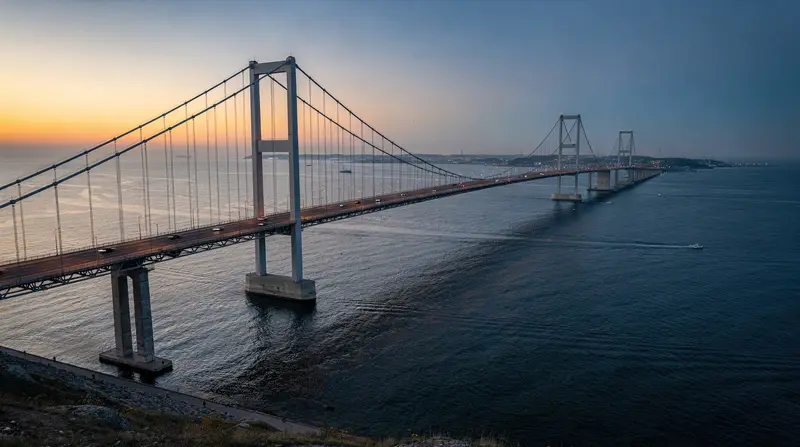
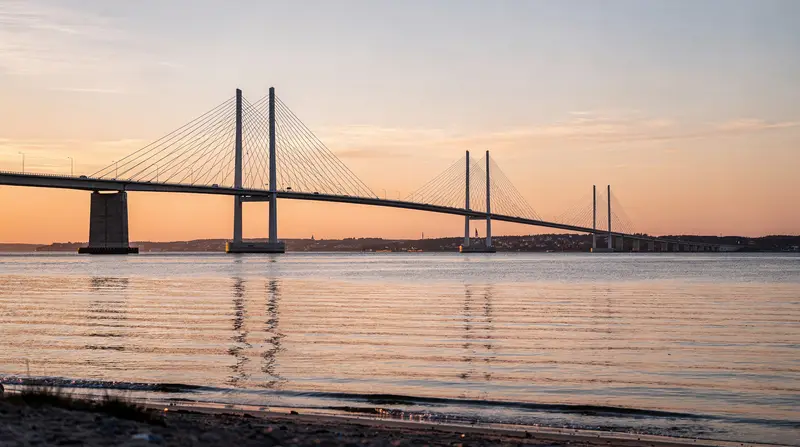
The Øresundsbron (called Øresundsbron in Swedish and Øresundsbroen in Danish) is a combined road and rail bridge-tunnel spanning 16 kilometres between Denmark and Sweden. The train travels through a tunnel on the Danish side (dipping below the sea to the artificial island of Peberholm), then emerges onto the bridge section with the water visible on both sides, before arriving at Malmö Central station.
For most first-time visitors this crossing is one of the highlights of the trip — the engineering is remarkable and the visual experience of the bridge meeting the tunnel is unlike most other border crossings in Europe. The total crossing takes about 10 minutes by train; the bridge section is roughly 8 kilometres.
The bridge is most dramatic in grey weather, when the structure disappears into low cloud on the Swedish side. On clear days you can see both cities from the midpoint. Midnight crossings (for those returning on late trains) have a particular atmosphere: the bridge lights up, the cities glow on either side, and the seascape at night is genuinely beautiful.
Cyclists and pedestrians cannot cross the bridge independently — the bridge deck’s upper level is for road vehicles only, and the rail section is for trains. The bridge has its own tolls for cars (approximately DKK 380–470 one-way for a standard car); your train ticket covers the rail portion automatically.
Cross the Øresund Bridge: guided tour to Lund and MalmöMalmö with Children
Malmö works well for families with children. The old town and Lilla Torg have a human scale that doesn’t exhaust small legs. The Malmöhus Castle grounds with the moat are excellent for younger children who like water, ducks, and the sense of a real castle. The Ribersborg beach has safe swimming in summer.
For specifically child-oriented activities: Malmö’s Naturhistoriska museet (Natural History Museum) inside Malmöhus Castle has dinosaur skeletons and taxidermied animals that reliably capture children’s attention. The Malmö Aquarium (also in the castle complex) covers sea life from the Øresund strait. Combined entry to the castle complex is around SEK 100 for adults.
The beach at Ribban has a popular outdoor bathhouse (Ribersborgs kallbadhus) and a long stretch of sand that’s good for building. From late June through August this is busy with local families — which tells you something about its quality.
Malmö in different seasons
Malmö changes noticeably across the year, more so than a strictly indoor-attraction city would. Summer (June–August) is the obvious peak: Ribersborg beach fills, Lilla Torg’s outdoor seating runs at capacity in the evenings, and the Western Harbour promenade is at its most pleasant for walking or cycling. Spring and early autumn (April–May, September) offer the best balance — mild weather, thinner crowds, and outdoor seating still viable on sunny days.
Winter (November–February) sees the old town and Möllan remain fully functional (Sweden does indoor café culture well), but Ribersborg beach and the Western Harbour promenade lose most of their appeal in cold wind off the Øresund; plan a winter visit around the old town, museums, and craft beer bars rather than the waterfront.
Malmö street art beyond Möllan
While Möllevångstorget gets most of the attention for street art, Malmö’s mural scene extends further, particularly around Rörsjöstaden and pockets of the Sofielund district east of Möllan. These areas see rotating legal mural projects, often coordinated with the city’s urban art programme, and are less photographed than the Möllan murals but frequently just as striking. This is a genuine detour rather than a must-do — worth it only if you have a free hour after the standard old-town-plus-harbour circuit and specifically enjoy street art hunting.
Practical Planning
How much time do you need? A comfortable day runs from about 9:30am arrival to a 6pm train back. That gives you the old town, a lunch in Möllan or Lilla Torg, the Western Harbour walk, and a coffee at the beach. You could do it in 5 hours if you move efficiently, but why would you rush a day in a different country?
Budget: Expect to spend SEK 300–600 (roughly DKK 200–400) on food and entry fees for a normal day. Add SEK 100–200 if you visit the castle museum or take a sauna at Ribban. Train tickets are your main fixed cost.
What to bring: SEK cash or a Visa/Mastercard card, your passport or EU ID, and comfortable shoes for cobblestones.
Day of week: Avoid Mondays when some museums close. Saturdays have a better atmosphere in Lilla Torg and Möllan. Weekday mornings are quieter for photography.
Combining with Lund: Lund is only 12 minutes by train south of Malmö. It is perfectly feasible to do both in one day — see the Lund destination guide and the Malmö day trip guide for a suggested combined itinerary.
Half-day tour of both Denmark and Sweden from CopenhagenFrequently asked questions about Malmö from Copenhagen
Do I need a passport to visit Malmö?
You need a valid ID document — a passport or an EU national identity card for EU citizens. Sweden reintroduced border checks at the Øresund crossing in 2015, and they remain in place as of 2026. Non-EU visitors must bring their passport and should check Swedish entry requirements for their specific nationality. Driving licences are not accepted as border ID.
Can I use Danish krone in Malmö?
No. Malmö is in Sweden, which uses Swedish krona (SEK). DKK is not accepted in shops, restaurants, or on public transport. The easiest solution is to pay by Visa or Mastercard contactless everywhere — your bank converts to SEK automatically. ATMs at Malmö Central dispense SEK, and Forex exchange counters operate on both sides of the Øresund.
How long is the train journey from Copenhagen to Malmö?
About 35–40 minutes from Copenhagen Central (København H) and 20 minutes from Copenhagen Airport (Kastrup). Trains run every 20 minutes throughout the day.
How much does the train to Malmö cost?
A standard return ticket via DSB or the Rejseplanen app costs roughly DKK 120–160 depending on timing. You can also buy a combined Øresund travel pass if you’re planning to visit multiple times.
Is Malmö safe for tourists?
Malmö has a complicated reputation in some press, but tourist areas — the old town, Western Harbour, and Möllan — are safe during the day. Exercise the same common sense you would in any European city. The area around Rosengård is best avoided, but it’s far from any tourist attraction.
What is the Turning Torso and is it worth seeing?
The Turning Torso is a 190-metre residential skyscraper designed by Santiago Calatrava that twists 90 degrees from its base to its top. It’s a landmark worth seeing from the outside as part of the Western Harbour walk. You cannot visit the interior. It’s about 25 minutes’ walk from the old town, and the harbour walk along the waterfront makes the trip worthwhile even without the tower as a destination.
Can I combine Malmö and Lund in one day?
Yes, comfortably. Trains between Malmö and Lund run every 10–20 minutes and take 12 minutes. A typical combined day: arrive Malmö, explore the old town and Western Harbour, take the train to Lund for the cathedral and university city atmosphere, then return via Malmö or direct from Lund. See the Lund guide for details.
Top experiences
Bookable activities with verified prices and instant confirmation on GetYourGuide.