Nørrebro: Copenhagen's most interesting neighbourhood
Nørrebro is Copenhagen's multicultural, street-art-covered, coffee-serious neighbourhood. Honest guide with craft beer, smørrebrød, lakes and DKK prices.
Copenhagen: Nørrebro Neighborhood Tour
Quick facts
- Getting there
- Metro M1/M2 Nørreport, then walk 15 min north; bus 5C on Nørrebrogade
- Key areas
- Nørrebrogade, Sankt Hans Torv, Jægersborggade, the Lakes (Søerne)
- Coffee
- The Coffee Collective (Jægersborggade 10) — Copenhagen's benchmark specialty roaster
- Canal price
- 26 DKK per person on a Rejsekort (harbour bus); free to walk the lakes
- Market
- Torvehallerne is on the Nørrebro-Indre By border, open daily
Quick answer: Nørrebro is the neighbourhood north of the lakes, historically working-class and politically left-wing, now multicultural and increasingly fashionable without having entirely lost either quality. It has the best specialty coffee in Copenhagen, several genuinely good natural wine bars, the city’s most consistent street art concentration, and the Assistens Cemetery where Hans Christian Andersen and Søren Kierkegaard are buried in a park that people use for picnics. Come for a half-day at minimum; come hungry.
| Where | North of the Lakes, 15–20 min walk from Nørreport |
| Cost | Free to walk; coffee ~50 DKK, lunch ~130 DKK |
| Time needed | Half-day minimum |
| Getting there | Walk from Nørreport, bus 5C, or cycle from centre |
| Best time | Saturday morning for the flea market; year-round otherwise |
What Nørrebro actually is
The neighbourhood sits north of Peblinge Sø and Sortedams Sø (two of the three artificial lakes that ring Copenhagen’s northern edge) and is bounded by the S-Tog rail line to the north and the Bispeengbuen motorway viaduct to the west. The main artery is Nørrebrogade, running from the Lakes to the northwest.
The population is among the most mixed in Denmark — first and second-generation immigrants from Turkey, Lebanon, Pakistan and Somalia have lived here since the 1970s, alongside the students, artists and younger Copenhageners who found the rents accessible before the gentrification pressure arrived. The neighbourhood has seen periodic unrest (the most significant was the Nørrebro Riots of 1993, following a referendum vote) and retains a political consciousness visible in its murals, community organisations and the occasional protest banner on Nørrebrogade.
None of which means it’s uncomfortable for visitors — it means the neighbourhood has a texture that Indre By and even Vesterbro lack. The Turkish grocers on Nørrebrogade, the Lebanese bakeries on side streets, and the secondhand shops are not curated for tourism; they’re functional businesses in a working neighbourhood.
Nørrebrogade: the main street
Nørrebrogade runs from the bridges over the lakes northwest to the Frederiksberg border. Walking its full length (about 1.5 km from the lakes to the cemetery entrance) takes 20 minutes and covers the neighbourhood’s economic and cultural range.
At the southern end (near the lakes): the newer wave of coffee shops, wine bars and small restaurants catering to the younger, more affluent residents who’ve moved in over the past decade.
Mid-section: the mixed economy — Turkish supermarkets open until midnight (useful for cheap produce, phone charging cables, dairy products at prices about 40% below Danish supermarket rates), Lebanese-run bakeries selling simit (sesame rings) for 10 DKK each and börek from large trays, alongside Copenhagen’s ubiquitous pharmacy chains and mobile phone shops.
Toward the cemetery: the street quiets into a more residential character. The Assistens Cemetery entrance on the left at Kapelvej; the bridge over the old moat leading to Bispebjerg.
The best grocery option in the neighbourhood is Grøntorvet (wholesale vegetable market at Frederiksberg Allé end — slightly off the main drag) or the numerous Middle Eastern and South Asian shops on Nørrebrogade itself for anything from fresh herbs to spices.
Coffee: The Coffee Collective and the scene around it
The Coffee Collective is a Copenhagen institution — it was among the earliest specialty roasters in Scandinavia (opened 2007) and has maintained its quality through two decades of the specialty coffee explosion. The Jægersborggade branch is the one most worth visiting.
The Coffee Collective (Jægersborggade 10): small, focused, with rotating single-origin filter options and espresso drinks in the 45–65 DKK range. The roastery is behind the counter; staff are knowledgeable without performing snobbery. This is the baseline against which Copenhagen specialty coffee is measured.
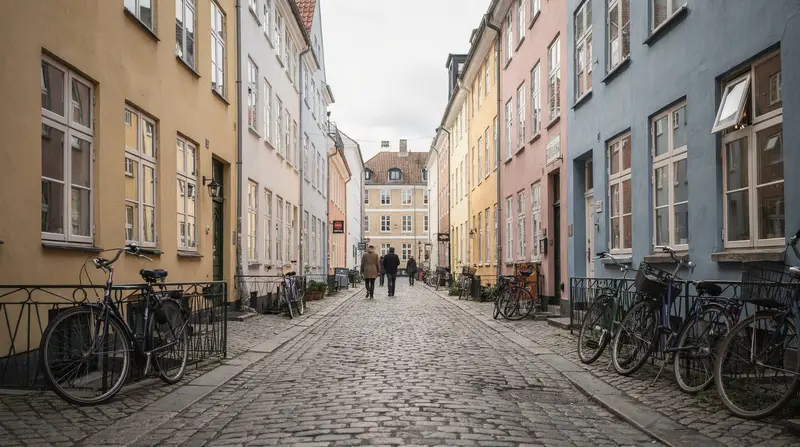
Jægersborggade as a street: the pedestrianised section of Jægersborggade (the stretch between Nørrebrogade and Stefansgade) is worth a full detour. It has independent shops, several small restaurants, a natural wine bar and the occasional market on weekends. It’s the kind of street that gets mentioned in lifestyle publications once and then quietly becomes more expensive — come before the cycle completes.
Other notable coffee in Nørrebro:
- Risteriet (Frederiksborggade, near the lakes): technically on the Nørreport border, focused on filter brewing, good outdoor seating on warm days.
- Grød (Jægersborggade 50): the porridge restaurant that became an unlikely export concept. Opens for breakfast and lunch; porridges run 85–115 DKK with seasonal toppings. Genuinely good, not gimmicky.
Street art in Nørrebro
The neighbourhood has a higher concentration of commissioned and unsanctioned murals than any other part of Copenhagen. The work ranges from commissioned civic murals (several on the walls of school buildings and sports halls) to elaborate pieces by international artists using the neighbourhood’s industrial and residential building stock.
The area around Stefansgade and Mimersgade (northwest of the main strip) has the densest cluster. The walls of the sports hall on Mimersgade host a rotating programme; the back walls of the apartment blocks on Stefansgade have been used by several notable artists.
The Superkilen park (at the northern end of Nørrebrogade) is the most designed example of street-art-adjacent public space in the city — a 750-metre linear park divided into three zones (black, red and green), containing 108 objects sourced from 60 different countries: a Moroccan fountain, a Thai boxing ring, an Icelandic swing set, a Japanese octopus slide. It was designed by architects BIG (Bjarke Ingels Group) with the artists Superflex and opened in 2012. It’s an architectural statement about multiculturalism that has been both celebrated and criticised for aestheticising the neighbourhood’s diversity. Worth seeing regardless of where you land on that question.
The Nørrebro street art and food tour covers the major mural locations with a guide who provides context on both the individual pieces and the neighbourhood politics around public art — the combination of visual and historical context is hard to replicate with a phone map.
Assistens Cemetery: the unexpected park
Assistens Cemetery (Assistens Kirkegård, entrance on Kapelvej) has been an active burial ground since 1760. Notable graves include Hans Christian Andersen (section D, well signposted), Søren Kierkegaard (section A), and the physicist Niels Bohr. The cemetery is still in active use — new burials take place regularly in the northern sections.
What makes it unusual: it functions as a public park. On warm afternoons, Copenhageners spread blankets between the graves, bring picnic food, and spend the afternoon in the shade of the old trees. Children run between the headstones. The atmosphere is relaxed rather than morbid — a practical relationship with the dead that reflects a secular Danish culture.
Entry is free, open daily. Allow 45–60 minutes to find the significant graves and walk the main paths. The Andersen grave is consistently tidy with fresh flowers from admirers; the Kierkegaard grave is more modest.
Practical note: the cemetery is large (about 5 hectares) and the grave numbers can be confusing. Pick up a printed map at the entrance gate — the guides are in English and Danish.
The Lakes: cycling and walking the Søerne
The three lakes (Peblinge Sø, Sortedams Sø and Sankt Jørgens Sø) that mark the northern boundary of the city centre are former moat sections converted to public space. A 6-kilometre circuit around all three takes about 45 minutes on foot, 20 minutes by bike, and constitutes one of the more pleasant exercises in urban Copenhagen.
The Nørrebro side of the lakes (eastern shore of Sortedams Sø and Peblinge Sø) has café seating that faces west toward the sunset in evening — the standard Copenhagen lake circuit ends or begins here. Rent a Bycyklen electric bike from any nearby docking station (app-based, 40 DKK per hour) for the loop.
The lakes are covered in more detail in the biking in Copenhagen guide.
Eating in Nørrebro
The neighbourhood is one of the better areas in Copenhagen to eat affordably without compromising quality.
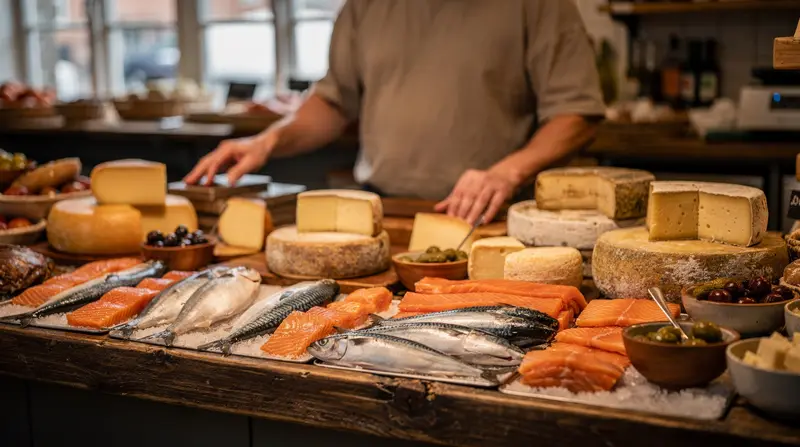
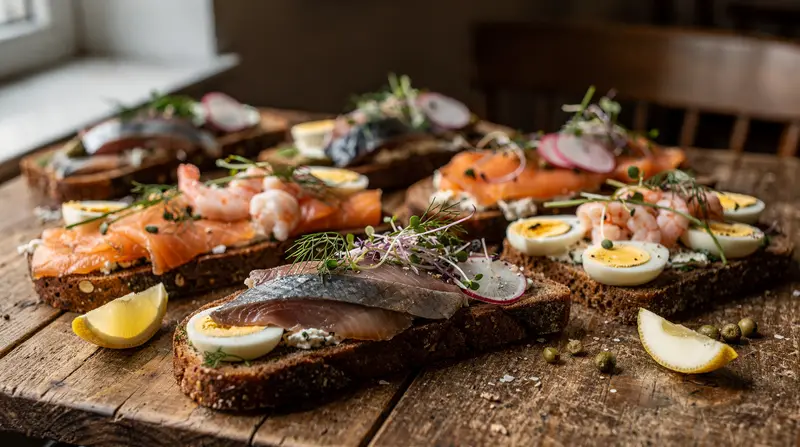
Smørrebrød and Danish lunch: Nørrebro’s café culture skews toward café-all-day formats rather than dedicated smørrebrød restaurants, but Café Halle (Nørrebrogade 212) and several spots around Sankt Hans Torv do reasonable lunch specials in the 125–165 DKK range (two smørrebrød plus drink).
Middle Eastern: the side streets off Nørrebrogade (particularly Blågårds Plads and the area south of it) have Lebanese, Turkish and Somali restaurants operating without tourist margin. Falafel sandwiches for 45–55 DKK, lamb dishes for 120–150 DKK. Anorak Restaurant (Blågårds Plads 2) is consistently recommended for a slightly elevated take on Middle Eastern cooking at reasonable prices.
Natural wine: Pompette (Rantzausgade 6) is a small natural wine bar that has become a Nørrebro institution — rotating wine list, small plates, standing room at the bar. A glass runs 90–130 DKK (12–17 €). Come early or join the queue on weekend evenings.
Craft beer: the craft beer scene in Nørrebro centres on Brus (Guldbergsgade 29N), the full To Øl brewery tap room with 20+ taps of its own production and guests. Main courses in the kitchen run 165–225 DKK; the beer selection rewards an hour of exploration. The seated-dinner model makes it different from Mikkeller Bar’s standing-room approach.
The craft beer walk in Nørrebro covers multiple venues in the neighbourhood over a guided evening — useful for navigating a scene where the best places don’t necessarily have high street visibility.
Sankt Hans Torv: the neighbourhood square
Sankt Hans Torv (Saint Hans Square) is the informal centre of the more gentrified part of Nørrebro — a small square at the intersection of Nørrebrogade and Fælledvej, surrounded by café terraces that fill at the first sign of sun. In warm weather the outdoor seating spills across the square and the atmosphere is exactly the unhurried café culture Copenhagen’s tourist industry promises but rarely delivers downtown.
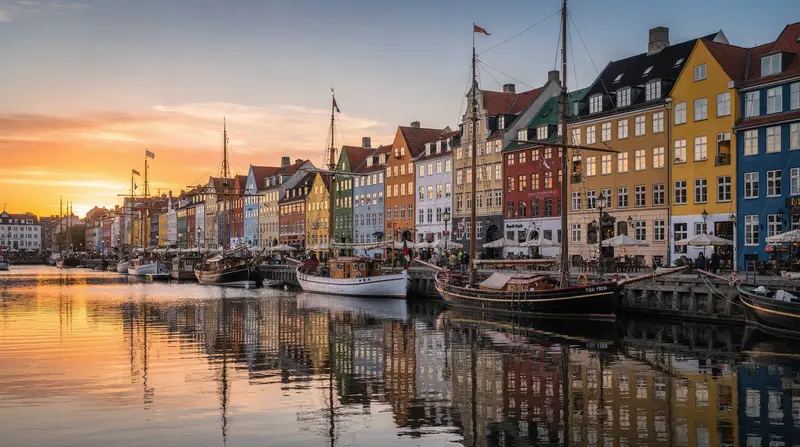
The cafés here (Sebastopol, Pussy Galore’s Flying Circus, several others) are not cheap — a coffee is 45–55 DKK, a glass of wine 90–120 DKK — but the quality and the setting justify it more than equivalent spending on Strøget or in Nyhavn.
From Sankt Hans Torv, it’s a 12-minute walk south to Nørreport metro station (M1/M2) and Torvehallerne market.
Getting to and around Nørrebro
From the city centre: walk 15–20 minutes north from Nørreport station, or take bus 5C on Nørrebrogade. From Indre By, it’s a pleasant 20-minute walk via the lakes.
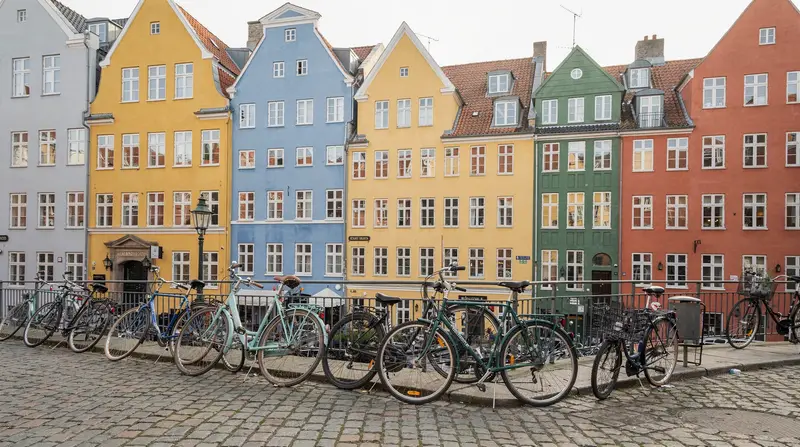
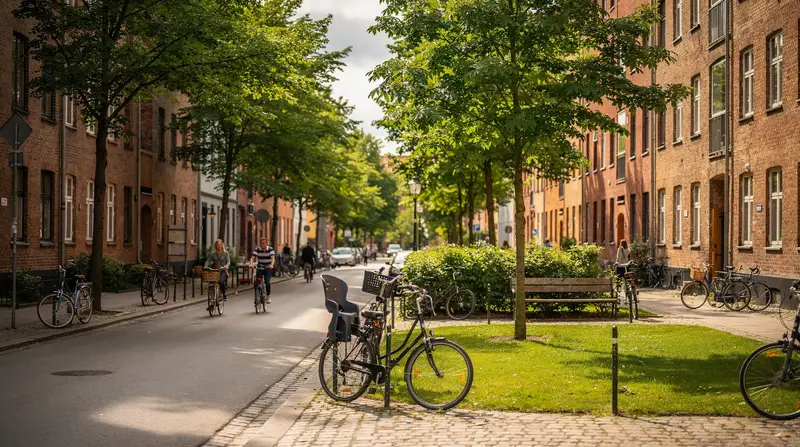
By bike: the most natural way to arrive — from Central Station it’s about 25 minutes on the bike network. The Nørrebrogade bike lane is one of the city’s busiest and one of its widest. See biking in Copenhagen for route planning.
Metro: Nørreport (M1/M2) is the nearest station — at the southern edge of Nørrebro. The neighbourhood itself has no metro stations. The planned Cityringen extension would improve this but currently buses and bikes are the intra-Nørrebro options.
Shopping and markets in Nørrebro
The neighbourhood has a different retail character than Indre By — fewer chains, more independent and secondhand, with several standout shops:
Episode (Ravnsborggade 1): one of Copenhagen’s best vintage and secondhand clothing stores, with genuinely curated stock and reasonable pricing (jackets from 300–600 DKK, shirts from 100–200 DKK). The Ravnsborggade street in general has antique and secondhand dealers in older warehouse spaces — arrive on a Saturday morning when it’s most active.
Nørrebro Loppemarked: the flea markets held on Blågårds Plads (typically Saturday, April through September) are used by locals clearing out possessions as well as dealers. Vintage furniture, household items, records. Prices are negotiable. Arrive before 10:00 for the best selection.
Nørreport’s Thursday market: at the square around Nørreport station (the boundary of Nørrebro and Indre By), a weekly organic market runs on Thursdays from roughly May through September. Seasonal vegetables, cheese, fresh bread and cut flowers from Danish growers. Prices are fair — not supermarket cheap, but not tourist markup either.
Antikvariater (second-hand bookshops): several small secondhand bookshops cluster around Nørrebrogade and Blågårds Plads. Even without Danish language reading, the illustrated art books and design monographs are worth browsing. Most accept cash only.
Nørrebro with children
The neighbourhood is more child-friendly than its reputation suggests:
Fælledparken: Copenhagen’s largest park begins at the northern edge of Nørrebro (strictly speaking it’s in Østerbro, but it’s walkable from the northern parts of Nørrebro in 15 minutes). The park has a large children’s playground, open football pitches, a skateboard area and space for cycling. In summer, free outdoor cinema and concerts operate in the park on an irregular schedule.
Superkilen: children find the playground equipment and the variety of the 108 objects genuinely engaging. The Icelandic swing set and the Moroccan fountain are the popular points.
Grød: the porridge format sounds child-unfriendly but the sweet versions (with strawberry jam, raisins, brown sugar and butter in the traditional Danish way) are usually a success with younger visitors. The communal table format is manageable with children.
The Cemetery: the Assistens Cemetery’s park atmosphere — families on blankets, cyclists crossing the paths, dogs — makes it more accessible for children than a formal cemetery would be. The Andersen grave and the park atmosphere are worth 20–30 minutes.
Nørrebro cycling and the Bicycle Snake context
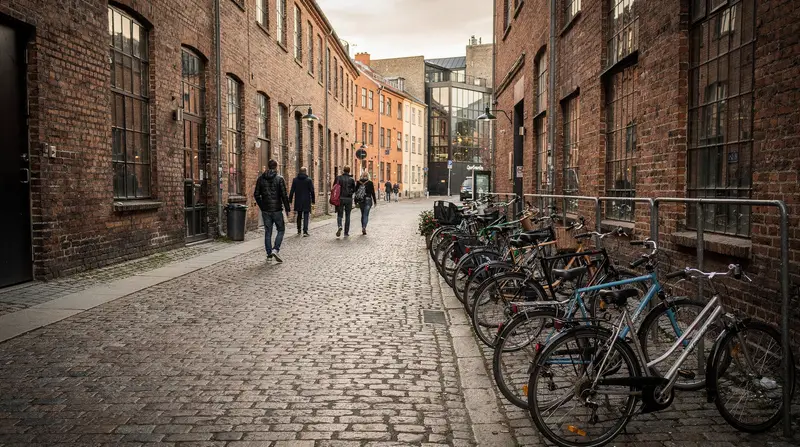
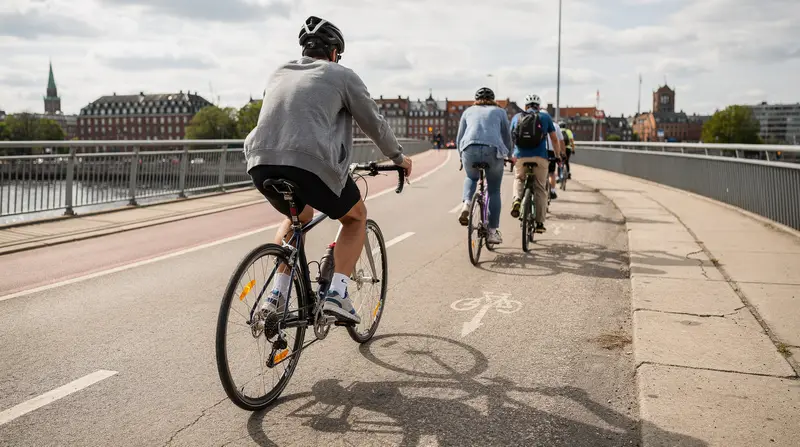
Nørrebro is one of the best neighbourhoods in Copenhagen to experience the city’s cycling culture as an everyday reality rather than a tourist activity. The Nørrebrogade bike lane carries an estimated 40,000+ cyclists a day at peak points — reportedly one of the busiest cycling corridors in Europe — and rush hour here (roughly 7:30–9:00 and 16:00–17:30 on weekdays) is worth observing even if you’re on foot: the sheer density and orderliness of the bike traffic tells you more about how Copenhagen actually functions than any museum exhibit.
If you rent a Bycyklen bike to explore the neighbourhood, stick to the marked cycle lanes rather than the pedestrian pavement — Danish cyclists move fast and expect predictable lane discipline, and tourists weaving unpredictably is a common source of minor collisions.
Evening and nightlife in Nørrebro
Nørrebro’s evening scene is less about clubs and more about bars that stay interesting past midnight. Beyond Pompette and Brus (covered above), the streets around Elmegade and Ravnsborggade fill with a mixed, unpretentious crowd on weekend evenings — mostly locals in their 20s and 30s rather than tourists.
Props Coffee Shop by day becomes a low-key cocktail spot by night on some evenings; Bird’s Basement style speakeasy-adjacent bars have opened and closed over recent years around this strip, so checking current listings before committing to a specific venue is worth the extra two minutes. Compared to the more polished, pricier bar scene of Indre By, Nørrebro’s evening venues tend to be smaller, cheaper, and more likely to have a genuinely local crowd rather than a tourist-heavy one.
Guided neighbourhood options
The Nørrebro neighbourhood tour provides a solid introduction to the area’s history and present — the immigration waves, the political history, the food culture and the street art — in roughly 2 hours. Worth doing on a first visit before exploring independently.
The “coolest neighbourhood” walking tour covers the curated highlights — Jægersborggade, Superkilen, the cemetery, the food scene — at a pace that allows stops and questions. More lifestyle-focused than historically oriented.
Frequently asked questions about Nørrebro
Is Nørrebro worth visiting as a tourist?
Yes, particularly if you’ve already done the Indre By circuit and want to see a neighbourhood that functions as a real neighbourhood rather than a tourism product. It requires no specific agenda — a morning walking Nørrebrogade, coffee at The Coffee Collective on Jægersborggade, a walk through the cemetery and lunch from a Middle Eastern café is a genuinely useful half-day.
Is Nørrebro safe?
Yes. The neighbourhood has a slightly higher crime rate than the Danish average — primarily property crime — but it is not unsafe for visitors in any practical sense. The periodic unrest that made headlines in the past was politically motivated and was not directed at tourists. Walking, cycling and evening café visits are normal activities here.
What is the best coffee in Nørrebro?
The Coffee Collective on Jægersborggade is the city benchmark. Grød on the same street is excellent for breakfast. Risteriet near the lakes has strong filter coffee. For espresso-focused work, The Coffee Collective remains the reference.
How do I get to Jægersborggade?
From Nørrebrogade: turn west (left if you’re walking from the lakes) at the Nørrebrogade-Stefansgade intersection. Jægersborggade runs parallel. On foot from Nørreport it’s 20 minutes; by bike, 10 minutes.
What is Superkilen?
A 750-metre public park in northern Nørrebro designed by BIG architects, divided into three colour-coded zones containing 108 objects sourced from 60 countries. It’s an architectural representation of the neighbourhood’s multiculturalism — a Thai boxing ring next to a Moroccan fountain next to a Yemeni bench. Open 24/7, free entry.
Where should I eat in Nørrebro on a budget?
The Middle Eastern restaurants and cafés around Blågårds Plads (falafel sandwiches 45–55 DKK, full meals 100–150 DKK) and the Turkish grocery stores on Nørrebrogade for self-catering. Grød (porridge) at 85–115 DKK per bowl for a filling and interesting breakfast option. See Copenhagen on a budget for the full picture.
How does Nørrebro compare to Vesterbro?
The two are often paired as Copenhagen’s “neighbourhood alternatives” to the tourist centre. Vesterbro is more about restaurants and nightlife (Kødbyen, craft beer bars, Carlsberg); Nørrebro is more about coffee culture, street art, multicultural food and the civic outdoor life around the lakes and cemetery. They complement each other and an itinerary covering both gives a good picture of the city beyond the waterfront.
Top experiences
Bookable activities with verified prices and instant confirmation on GetYourGuide.