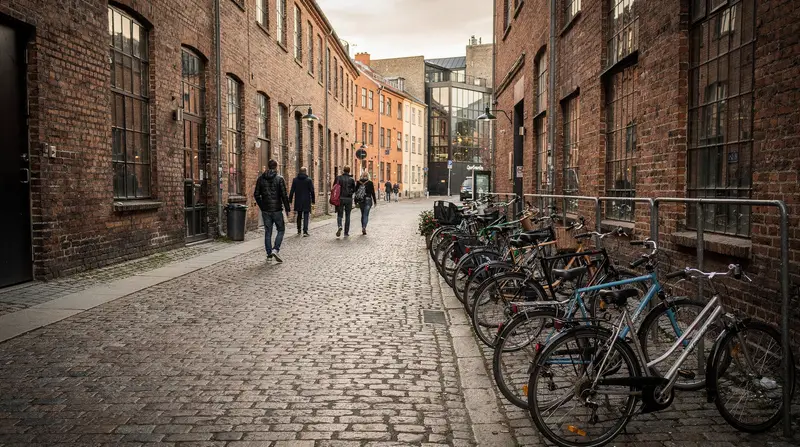
Vesterbro: Copenhagen's neighbourhood that actually works
Vesterbro is where Copenhagen eats, drinks craft beer and lives without performing for tourists. Meatpacking District, Carlsberg, honest DKK prices.
Mikkeller Craft Beer Walk in Vesterbro
Duration: 2.5 hours
Quick facts
- Getting there
- Central Station (Hovedbanegården) is on Vesterbro's eastern edge; bus 6A on Vesterbrogade
- Key areas
- Kødbyen (Meatpacking District), Carlsberg Byen, Istedgade, Enghave Plads
- Carlsberg entry
- From 170 DKK (~23 €), includes two beers; advance booking recommended
- Dinner budget
- 180–280 DKK (~24–38 €) per main in Kødbyen restaurants
- Craft beer
- Mikkeller Bar (Viktoriagade 8B) — the Copenhagen craft beer reference
Quick answer: Vesterbro is the neighbourhood immediately west of Copenhagen Central Station, running from the station down Vesterbrogade toward Frederiksberg. It used to be the city’s red-light district — sex shops and cheap hotels around Istedgade — and is now a textbook example of slow gentrification that has managed to keep some of its working-class character while adding restaurants, cafés and a serious craft beer scene. It’s where many Copenhageners in their 30s choose to live. Visitors should come for the food, the beer, and the Carlsberg brewery.
| Where | West of Central Station, toward Frederiksberg |
| Cost | Mains 180–280 DKK; Carlsberg entry from ~170 DKK |
| Time needed | Half-day for Kødbyen + Carlsberg; full day with the walk |
| Getting there | Walk from Central Station (12 min) or bus 6A |
| Best time | Thursday–Saturday evenings for the full scene |
What Vesterbro is
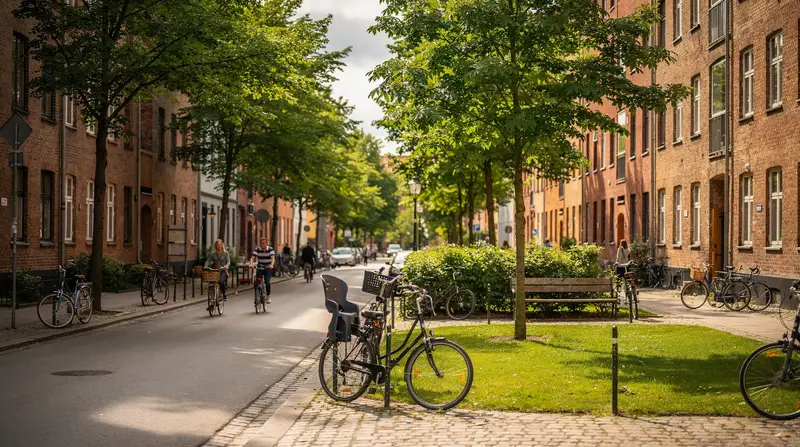
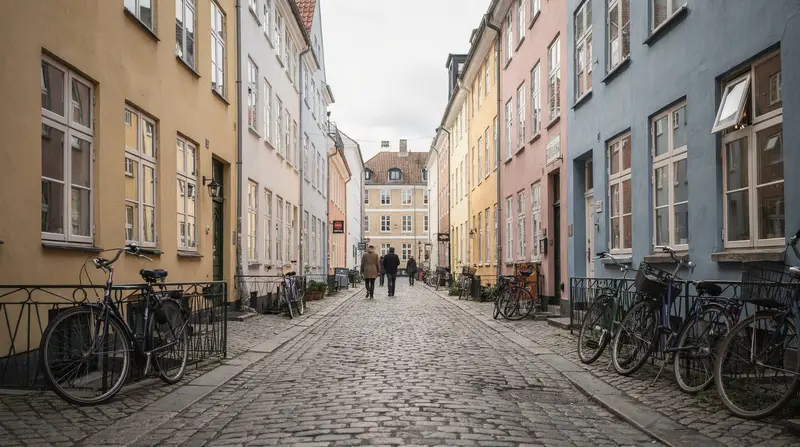
The neighbourhood covers roughly 2 square kilometres between the rail corridor (south), Vesterbrogade (the main thoroughfare), and the lakes (Søerne) to the north. Historically it was built in the 1880s and 1890s to house Copenhagen’s industrial working class outside the old city walls — the housing stock reflects this: five-storey apartment blocks with inner courtyards, modest facades and functional layouts.
The red-light area around Istedgade (starting from the station) has contracted significantly over the past 20 years as rents have risen, but it hasn’t disappeared entirely. Walking north from the station on Istedgade you’ll pass a few remaining businesses alongside the wine bars, coffee shops and vintage clothing stores that now dominate the street.
Kødbyen (the Meatpacking District) sits in the southwest corner of the neighbourhood on Flæsketorvet. The district functioned as Copenhagen’s wholesale meat market until the early 2000s and the original white-tiled industrial buildings survive intact. The transition from working meat trade to restaurant and nightclub district happened relatively quickly and the area now contains some of the more interesting eating and drinking in Copenhagen.
Kødbyen: the Meatpacking District
The Meatpacking District divides into three sections based on historical function: the White Meat City (Den Hvide Kødby), the Brown Meat City (Den Brune Kødby) and the Grey Meat City (Den Grå Kødby). The White Meat City is where most of the restaurants and bars have opened; some meat wholesalers still operate in the adjacent buildings.
Getting there: from Central Station, it’s a 12-minute walk west on Vesterbrogade and then south. Bus 6A runs along Vesterbrogade; exit at Enghavevej. By bike, it’s 7 minutes from the centre.
What to eat in Kødbyen:
- Nose2Tail (Flæsketorvet 13A): the restaurant that best represents what Copenhagen does with whole-animal cooking. Charcuterie, offal preparations, and a pork-centric menu. Main courses 195–270 DKK (~26–36 €). Reservations strongly advised.
- Kødbyens Fiskebar (Flæsketorvet 100): seafood restaurant with a raw bar, a menu that changes with the tides and seasons, and a serious wine list. Mains 250–320 DKK (~34–43 €).
- Hija de Sanchez: the taqueria run by former Noma head pastry chef Rosio Sanchez. Tacos at 45–55 DKK each, natural wine, communal tables. The Mexican food here is better than you’ll find in most specialist Mexican restaurants in Copenhagen. Queue or arrive at opening (usually noon for lunch service).
The bars: the White Meat City has several bars operating in converted industrial units. The nightclubs (Culture Box, Jolene, KB18) operate Thursday through Saturday; the restaurant crowd and post-dinner drinking crowd overlap from around 21:00.
Craft beer: Mikkeller and the Copenhagen scene
Copenhagen has one of the highest concentrations of craft breweries per capita in Europe, and Vesterbro is where the scene concentrated early. Mikkeller — the nomadic brewery founded by Mikkel Borg Bjergsø in 2006, now producing at partner breweries worldwide — has its conceptual home here.
Mikkeller Bar (Viktoriagade 8B, near Halmtorvet): the original Mikkeller bar, opened in a small corner space in 2010. Around 20 taps, rotating constantly, with a focus on Mikkeller’s own production and collaborations with international craft breweries. A 0.33L pour runs 75–120 DKK (10–16 €) depending on the beer. The bar is tiny; it fills quickly on evenings.
Halmtorvet: the small square around which several bars concentrate, including Mikkeller Bar and the bottle-shop focused Ølbutikken. The outdoor seating fills immediately on warm evenings.
The Mikkeller craft beer walk in Vesterbro covers four to five venues across the neighbourhood over approximately 3 hours — it’s a useful way to understand the landscape of Copenhagen craft beer beyond the obvious Mikkeller flagship, and the guide context on brewing history and the neighbourhood’s development is genuinely interesting.
Other notable craft beer venues in Vesterbro: Fermentoren (Halmtorvet 29C) is the bottle shop and tap room operated by the people behind To Øl brewery — technical focus, unusual fermentation styles. Brus (in Nørrebro, but the closest neighbourhood) is To Øl’s full restaurant-and-brewery operation.
Carlsberg Brewery: what’s actually there
The Carlsberg story is inseparable from Copenhagen — Jacob Christian Jacobsen founded the original brewery in 1847 on the hill southwest of Vesterbro, naming it after his son Carl. The brewery complex on Gamle Carlsberg Vej is the “Home of Carlsberg” visitor experience, which opened in 2022 following an extensive renovation of the original 19th-century buildings.
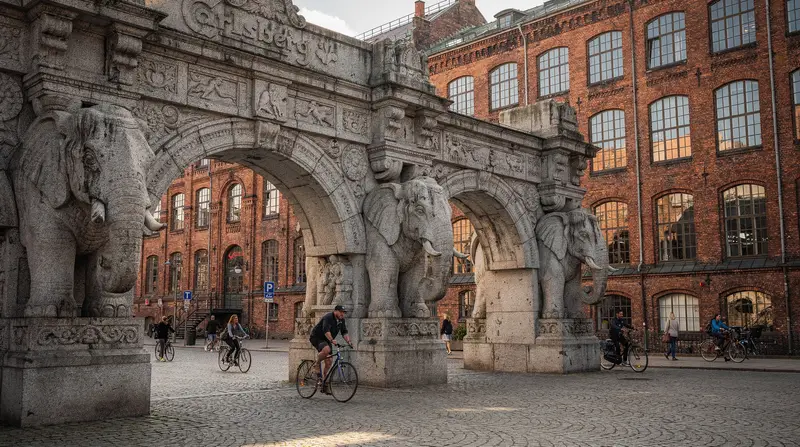
What you get: the visitor experience runs through the original brewery buildings (some still operational, most converted to exhibition space), covering the history of Danish lager brewing, the Jacobsen family’s role in Danish cultural patronage (they funded the Ny Carlsberg Glyptotek art museum, among other institutions), and the brewing process. Entry includes two beer samples. The original Elephant Gate (a listed structure from 1901) frames the entrance to the historic brewery yard.
Entry tickets to the Home of Carlsberg run from approximately 170 DKK (~23 €) per adult and include two beer samples. Booking in advance is recommended on summer weekends — the visitor centre is popular and timed entry helps avoid crowding.
The Carlsberg Byen development around the old brewery site is a large-scale urban regeneration project — new apartment buildings, a hotel, restaurants and event venues built on the former industrial land. It’s an interesting example of Copenhagen’s approach to brownfield development, though it’s not yet fully built out.
The industrial Carlsberg city walk covers the history of the brewery district and its relationship to the rest of Vesterbro — a more contextual approach than the standard visitor centre if you’re interested in urban history.
Skip if: you don’t drink or are not particularly interested in brewery history. The experience is well-executed but the core product is a beer museum for people who like beer. The Ny Carlsberg Glyptotek (the art museum Carlsberg money built) in Indre By is a better two hours for non-drinkers.
Walking Vesterbro: the neighbourhood circuit
The most useful orientation walk in Vesterbro takes about 90 minutes at a moderate pace:
Start at Enghave Plads — the small square in the middle of the neighbourhood that has been recently regenerated and now hosts a Sunday market in summer. This is Vesterbro’s community centre point, with regular local events.
Walk west along Enghavevej toward the lakes, then north on Gammel Kongevej through the transition zone between Vesterbro and Frederiksberg (the independent municipality entirely surrounded by Copenhagen). The architecture changes noticeably at the boundary — Frederiksberg’s villas and larger apartment buildings reflect a wealthier 19th-century constituency.
Return south on Istedgade, the neighbourhood’s main artery, which runs from Central Station almost to Enghave Plads. Notice the density of independent food shops, bottle shops, and the remaining traces of the older neighbourhood economy alongside the newer arrivals.
End at Halmtorvet for a beer at Mikkeller Bar or one of the neighbouring establishments.
The alternative circuit focuses on Kødbyen: approach from Vesterbrogade at Dybbølsbro, walk through the Meat City’s industrial yards during the day (best before 16:00 when the wholesale operations close and the restaurant preparation begins), then loop back north.
Vesterbro for accommodation
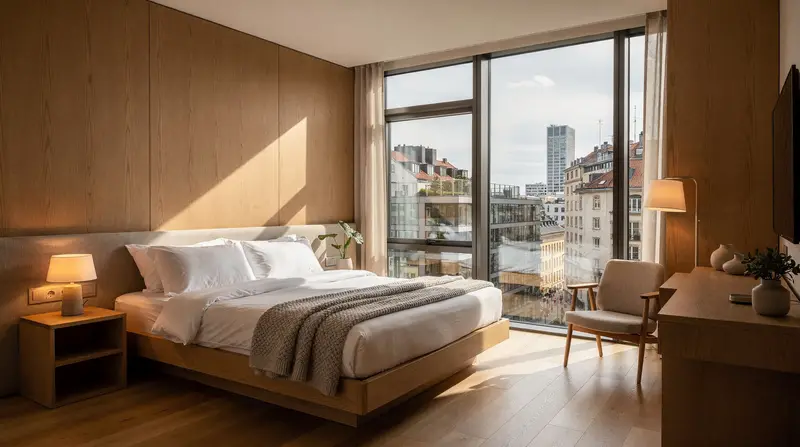
Vesterbro is a genuinely good neighbourhood base for exploring Copenhagen. The positioning — 15 minutes’ walk from Indre By, 10 minutes from the canal waterfront, close to Central Station for day trips — is excellent. Hotels here typically run 800–1,300 DKK (107–174 €) per night in summer, 20–30% less than equivalent accommodation at the waterfront.
Specific areas within Vesterbro:
- Around Istedgade / Halmtorvet: walking distance to Kødbyen, lively evenings, some street noise
- Enghave Plads area: quieter, more residential feel, excellent food shops nearby
- Near the station: convenient for early departures but noisier and less characterful
See the where to stay Copenhagen guide for specific hotel recommendations across the city.
The Vesterbro and Christianshavn alternative neighbourhood tour covers both districts in a single half-day — useful if you want to understand the contrast between the Meatpacking gentrification model and the Christiania alternative community model in the same guided circuit.
When to visit Vesterbro
Weekday lunch: Kødbyen’s restaurants are less crowded and the wholesale operations still running give the district a working feel. Some restaurants close Monday–Tuesday; check before planning around a specific place.
Thursday–Saturday evening: the neighbourhood is at its most active. Dinner reservations at Nose2Tail and Fiskebar should be made a week ahead in summer.
Sunday morning: the Enghave Plads market (when running, typically May–September) is a genuine neighbourhood market with produce, food stalls and secondhand goods.
Carlsberg visit: morning visits (10:00–12:00) are least crowded. The visitor centre is open year-round.
Vesterbro for cyclists
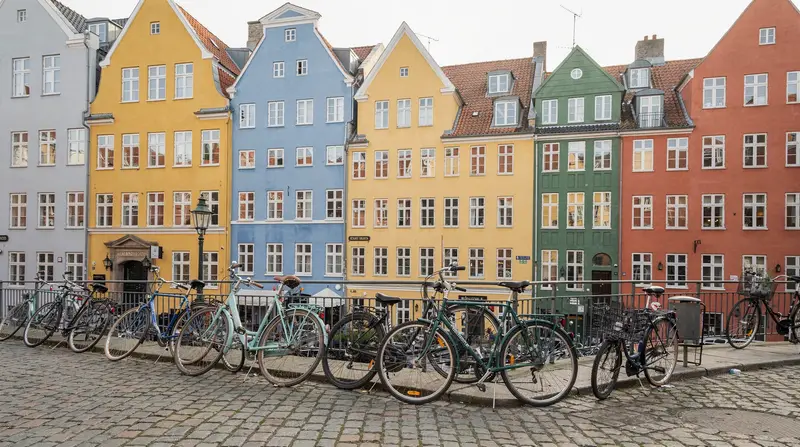
The neighbourhood is well-served by Copenhagen’s bike infrastructure — Vesterbrogade has one of the busiest bike lanes in the city (over 25,000 cyclists per day at peak, by city count). The route from Central Station west through Vesterbro and into Frederiksberg is flat and well-signed.
For visitors, the Donkey Republic app or the Bycyklen electric bike system (dockless, 40 DKK per hour) both have good coverage in Vesterbro. From Halmtorvet, the bike ride to Nørrebro via the western side of the lakes takes about 20 minutes and is a genuinely pleasant urban cycling route.
The Carlsberg Brewery is more easily reached by bike (12 minutes from Halmtorvet) than by bus. There’s covered bike parking at the brewery entrance.
See the biking in Copenhagen guide for a full route map and tips on navigating the bike lane system.
The social and neighbourhood history
Vesterbro’s reputation for a red-light economy was genuine and longstanding — the neighbourhood served the sailors and workers of the adjacent Central Station and harbour infrastructure from the 1880s onward. The cluster of hotels, bars and adult entertainment around Istedgade was one of the most openly visible such areas in Scandinavia through the 1970s.
Gentrification began in earnest in the 1990s — first artists and students, then the restaurant industry’s discovery of Kødbyen’s cheap industrial rents in the early 2000s, then the rapid increase in property values that followed. The transformation is essentially complete in the Halmtorvet and Kødbyen area, partially complete on Istedgade itself, and barely started in the southern parts of the neighbourhood near the rail corridor.
The result is a neighbourhood that feels lived-in rather than performed — unlike parts of Indre By that function primarily as tourist circuits, Vesterbro has bakeries, hardware shops, nursery schools and GP surgery waiting rooms alongside the craft beer bars. Both things are true at once.
The dyrehaven connection: Dyrehavsbakken (“Bakken”), the world’s oldest operating amusement park, is technically in Klampenborg (northern Copenhagen) not Vesterbro, but the neighbourhood has its own version of democratic public entertainment in the summer street markets and Enghave Plads events. Watch local listings for neighbourhood-specific events in summer.
Practical Vesterbro: groceries, pharmacies and daily life
If you’re staying in Vesterbro for a few days, useful practical information:
Supermarkets: Netto and Rema 1000 are the budget options (a basket of basics — bread, cheese, cold cuts, fruit, water — runs 150–200 DKK); the Irma or Meny on Vesterbrogade has higher-quality produce at 30–40% more. Several Turkish and Middle Eastern grocers on Istedgade are open late (until midnight or later) for top-ups.
Pharmacies: Vesterbro has two Matas (pharmacy-adjacent health and beauty, not prescription dispensing) on Vesterbrogade and a proper apoteket (pharmacy) near Enghave Plads. Prescription drugs require a Danish CPR number; over-the-counter equivalents are available without.
Laundry: coin laundries on Istedgade operate 07:00–22:00 most days. A full wash-and-dry cycle runs approximately 60–80 DKK.
Transport from Vesterbro: the S-Tog from Central Station reaches the airport in 15 minutes (66 DKK, or buy a multi-day transport pass). Day trips to Roskilde and Helsingør start from Central Station, as do regional trains toward Funen and Jutland.
Vesterbro vs. Nørrebro: which neighbourhood to prioritise
Visitors with limited time often ask whether to spend an evening in Vesterbro or Nørrebro — Copenhagen’s other major gentrified working-class neighbourhood. Vesterbro wins on food (Kødbyen’s restaurant density is unmatched) and on a single anchor attraction (Carlsberg). Nørrebro wins on multicultural street life and a slightly rawer, less finished feel — it gentrified later and still shows it. If you only have one evening, choose Vesterbro for dinner and drinks; choose Nørrebro for a daytime wander and different food (its own strong food scene, covered in the best food in Copenhagen guide). With two evenings, do both — they’re a 20-minute bike ride apart.
For a broader sense of how Vesterbro compares to Copenhagen’s other neighbourhoods, the best Copenhagen neighbourhoods guide ranks all the major districts by what each does best, and the Copenhagen in 2 days itinerary shows where an evening here fits into a short trip.
Frequently asked questions about Vesterbro
Is Vesterbro safe to walk around?
Yes. The reputation for seediness is largely historical — the area around Istedgade near the station has some remaining adult entertainment venues but is not unsafe for tourists. The neighbourhood is active at all hours and the presence of families, cyclists and café-goers is the norm, not the exception.
What is the best restaurant in Vesterbro?
By consistent reputation, Nose2Tail (Flæsketorvet 13A) and Kødbyens Fiskebar (Flæsketorvet 100) are the two most compelling options in Kødbyen. Hija de Sanchez suits a different mood — excellent tacos in a more casual setting, lower cost per head. All three require advance booking on Thursday–Saturday evenings.
How far is Vesterbro from the city centre?
The eastern edge of Vesterbro (Rådhuspladsen / Tivoli) is the centre of Copenhagen. The neighbourhood extends west from here — Halmtorvet and Mikkeller Bar are 15 minutes’ walk from Rådhuspladsen; Carlsberg Brewery is a further 15 minutes by foot or a short bus ride.
Is the Carlsberg brewery tour worth it?
For beer drinkers with an interest in industrial history: yes. The buildings are genuinely impressive (the original Elephant Gate, the oak-fermentation cellars) and the two included samples are generous. For non-drinkers: the exhibition is professional but beer-centric. Budget 2–2.5 hours for the full experience.
Where can I find Vesterbro on public transport?
Central Station (Hovedbanegården) serves as the main gateway — all S-Tog routes plus regional trains stop here. Bus 6A runs along Vesterbrogade toward Frederiksberg. For Carlsberg, bus 26 from the centre stops close to the brewery entrance on Gammel Carlsberg Vej.
What is the Meatpacking District like during the day vs at night?
During the day (until about 17:00), Kødbyen retains some working wholesale character — refrigerated trucks, workers in white coats, the machinery of a functioning food distribution centre. From 17:00, the restaurant preparations begin and the district shifts to its evening mode. Both are interesting; the daytime version is quieter and less crowded, the evening version more obviously lively.
Should I stay in Vesterbro or somewhere more central?
Vesterbro is a strong choice if food, beer and value matter more than being steps from the main sights — it’s 15 minutes’ walk from Indre By and typically 20–30% cheaper than waterfront hotels. See the where to stay in Copenhagen guide for a full comparison against Indre By, Nørrebro and Christianshavn.
Top experiences
Bookable activities with verified prices and instant confirmation on GetYourGuide.