Where to stay in Copenhagen: best neighbourhoods by budget and travel style
Copenhagen Card: Access 80+ Attractions and Transportation
What is the best area to stay in Copenhagen?
Indre By (Old Town) suits first-timers who want walkability to all sights. Vesterbro offers the best value mid-range hotels and great restaurant access. Nørrebro is for independent travellers wanting a local neighbourhood. Christianshavn is the quietest and most scenic option.
Copenhagen’s accommodation market is expensive and the neighbourhood you choose matters more than in most cities — getting it wrong costs you taxi rides or metro trips that add up fast. This guide covers the five main areas where tourists stay, their character, their realistic price ranges in DKK and who each suits.
| Best for first-timers | Indre By — walk to everything |
| Best value | Vesterbro — 15–30% cheaper, better restaurants |
| Best for longer stays | Nørrebro or Østerbro |
| Quietest / most scenic | Christianshavn |
| Book ahead by | 8–10 weeks for June–August |
Indre By (Old Town) — best for first-timers
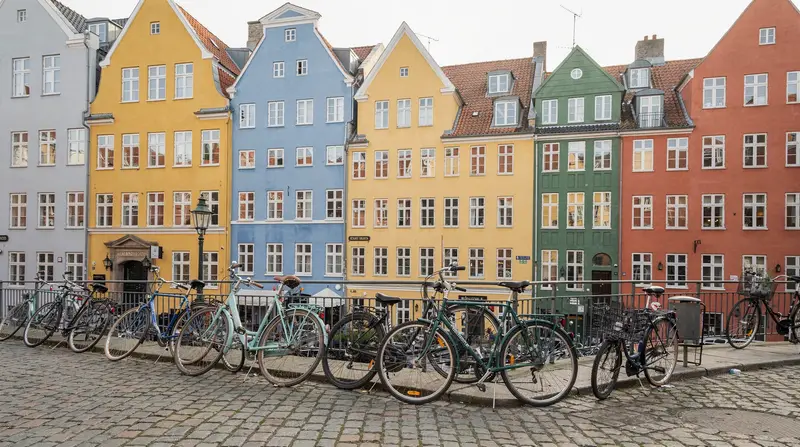
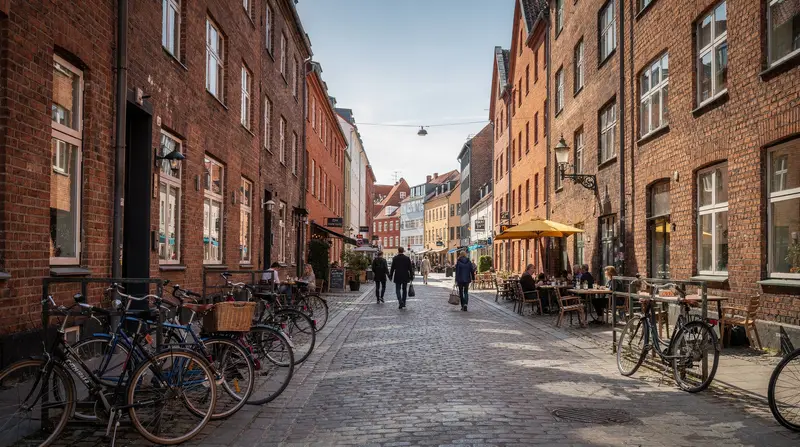
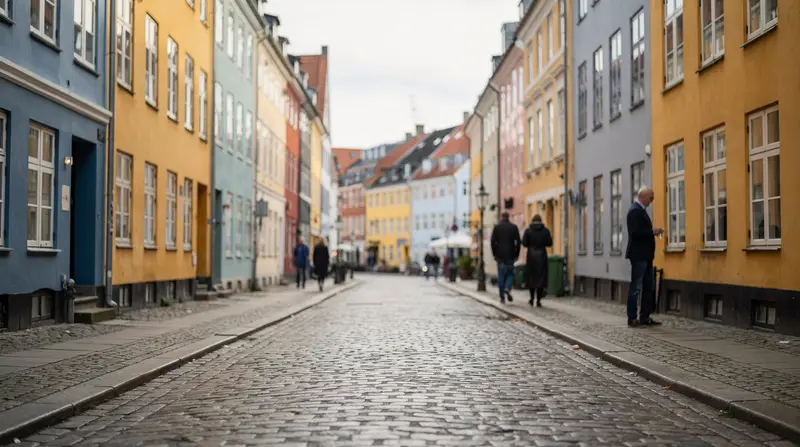
Indre By is the historic core: the Latin Quarter, Strøget, Rundetårn, the Cathedral and everything that appears in most photos of Copenhagen. It is compact, walkable and as central as the city gets.
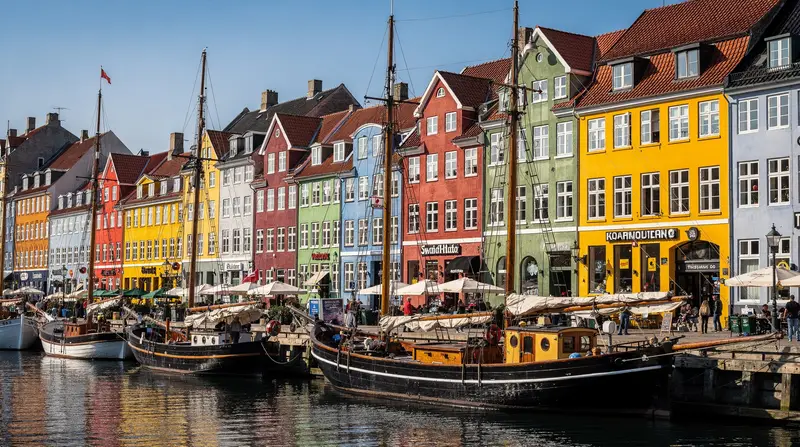
What you get: You can walk to Nyhavn in 10 minutes, Tivoli in 12, Rosenborg Castle in 15. The metro stations Nørreport and Kongens Nytorv sit on either side of the district. Bus and S-train connections are excellent.
What you sacrifice: Character. The streets between Strøget and the canals are genuinely beautiful but they fill with tourists by mid-morning. Restaurants in this zone are overwhelmingly tourist-oriented. You pay a premium for the address.
Honest assessment: Right choice for a two- or three-night stay with limited time. Not ideal for a week if you want to understand how the city actually works. See the Indre By guide for the full neighbourhood breakdown.
Hotel price ranges:
- Budget (hostel dorm / basic single): 350–600 DKK per person per night
- Mid-range double: 1,400–2,500 DKK
- Design/boutique double: 2,800–5,000 DKK
- Luxury (Hotel d’Angleterre, Hotel SP34): 4,000–9,000 DKK
Specific picks:
- Hotel SP34 (Sant Peders Stræde) — boutique, Latin Quarter location, doubles from 1,800 DKK. The design is genuinely good and the location puts you in the quieter part of the Old Town.
- Wakeup Copenhagen, Borgergade — clean budget hotel model, doubles from 850 DKK, no frills but well located. Run more like a hotel than a hostel.
- Copenhagen Downtown Hostel (Vandkunsten) — central, lively common areas, dorms from 260 DKK, private rooms from 700 DKK.
Vesterbro — best for mid-range value and restaurants
Vesterbro runs west from Copenhagen Central Station toward the Carlsberg brewery district. It was the city’s red-light and working-class district until the 1990s and has been the most complete gentrification story in Copenhagen since then. Kødbyen (the Meatpacking District) is here. So is Istedgade, which hosts a dense strip of restaurants, bars and cafés.
What you get: Better value than Indre By for comparable quality. An active restaurant and café scene that serves locals, not tourists. Central Station is within 10 minutes walk, giving direct access to airports, trains and metro lines M1/M2.
What you sacrifice: You need the metro or a 20-minute walk to reach Nyhavn and the main sights. At night the area immediately around the station remains slightly gritty.
Honest assessment: The best all-round choice for most visitors. Mid-range hotels here cost 15–30 percent less than equivalent properties in Indre By and the food options are considerably more interesting. The full Vesterbro guide covers Kødbyen, restaurants and nightlife in depth.
Hotel price ranges:
- Budget hostels: 250–500 DKK per person
- Mid-range double: 1,000–2,000 DKK
- Boutique double: 2,000–3,500 DKK
Specific picks:
- Generator Copenhagen (Adelgade, technically between Vesterbro and Nørreport) — consistent hostel chain, dorms from 220 DKK, privates from 750 DKK. Social common areas.
- Hotel Ottilia (Carlsberg Byen) — in the new Carlsberg district, design hotel, doubles from 1,400 DKK. Very quiet at night but a 10-minute walk to the main Vesterbro strip.
- Axel Guldsmeden (Helgolandsgade) — organic-certified boutique, doubles from 1,600 DKK, Balinese interior design that is either charming or bewildering. Good breakfasts.
- Meininger Copenhagen (Central Station) — functional, well-managed budget property, doubles from 850 DKK.
Nørrebro — best for independent travellers
Nørrebro is Copenhagen’s most genuinely mixed neighbourhood: Danes, second-generation immigrants, students, artists, young professionals. Jægersborggade is the street Copenhagen residents mention when they want to describe why they like living here. The Coffee Collective is on it. So are small ceramics shops, natural wine bars and an organic bakery that runs out of bread by noon.
What you get: A neighbourhood that functions as a neighbourhood rather than a tourism product. The lakes (Søerne) provide one of Copenhagen’s best free walks. Assistens Cemetery is a park as much as a burial ground. The food is more interesting per DKK than anywhere else in the city.
What you sacrifice: You need the metro (Nørreport station, M1/M2) or a 25-minute walk to reach the main sights. Accommodation options are fewer than in Vesterbro or Indre By.
Honest assessment: Correct choice for a longer stay (four nights or more) or anyone who’s already been to Copenhagen and wants to see the city beyond the postcard. Not the right base for a 48-hour sprint to tick attractions. The Nørrebro guide has the full neighbourhood detail.
Hotel price ranges:
- Budget: limited options, 400–700 DKK
- Mid-range double: 1,100–2,000 DKK
- Few boutique options: 2,000–3,000 DKK
Specific picks:
- The Manon Les Suites (Guldbergsgade) — part-boutique, part-serviced-apartment, strong design, doubles from 1,400 DKK. Small garden. Good for longer stays.
- Andersen Hotel (Helgolandsgade, adjacent to Vesterbro) — technically on the border, often listed under Nørrebro, clean budget-to-mid-range, doubles from 900 DKK.
Østerbro — best for families and longer stays
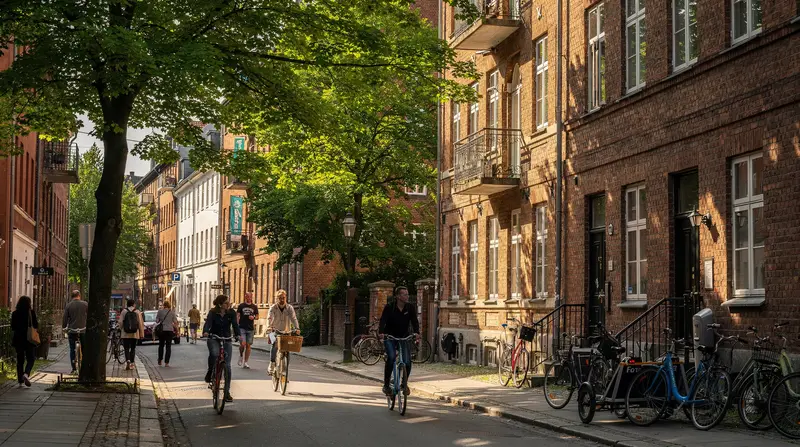
Østerbro sits north of Nørrebro and northeast of Indre By. It is the most residential of the main neighbourhoods: wide tree-lined streets, solid bourgeois apartment buildings, Fælledparken (the city’s largest park) and a lower density of tourism. The UN City building and Parken stadium are here.
What you get: Quiet, spacious, green. Fælledparken is excellent for families with children. The neighbourhood centre around Trianglen and Østerbrogade has a good selection of local restaurants and supermarkets. Metro M2 stops at Poul Henningsens Plads.
What you sacrifice: Distance from the main sights. You are 25–35 minutes from Nyhavn by metro or a 35-minute walk. The restaurant and café scene, while good, is thinner than Vesterbro.
Honest assessment: Best suited to families wanting space, or visitors staying five or more days who want a residential base. Not recommended for a short city-break where proximity to sights is the priority.
Hotel price ranges:
- Mid-range double: 1,200–2,200 DKK
- Boutique: 2,000–3,500 DKK
Specific picks:
- Hotel SKT. Petri (near Nørreport, on the Indre By / Nørrebro border) — large design hotel, reliable, doubles from 1,500 DKK. Rooftop bar.
Christianshavn — best for atmosphere and canal views
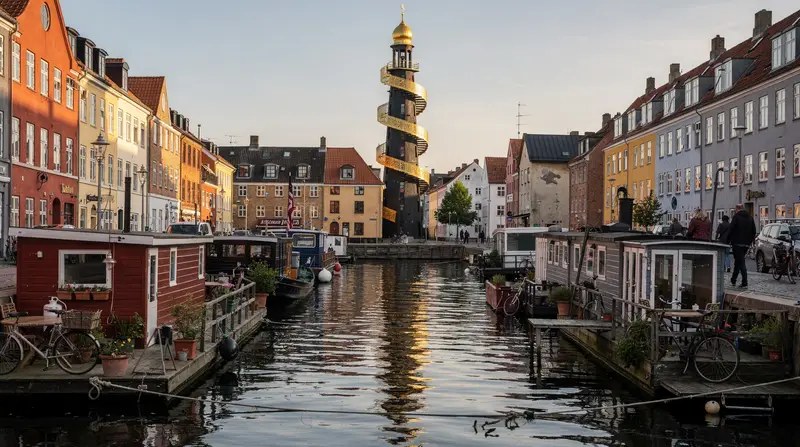
Christianshavn sits across the inner harbour from Slotsholmen (Christiansborg Palace). It is connected by bridges and by the M1 metro line. The canal system is quieter than Nyhavn, the architecture is Dutch-influenced 17th-century and the neighbourhood retains a genuine mix of residents and studios.
What you get: One of Copenhagen’s most beautiful neighbourhoods to walk in. Canal views, independent cafés, the spire of Vor Frelsers Kirke as a landmark. Freetown Christiania is within the neighbourhood boundary. One metro stop to Kongens Nytorv.
What you sacrifice: Accommodation options are limited. Prices are high for what you get. The neighbourhood goes quiet early.
Honest assessment: Worth seeking out if a canal-view apartment or specific boutique hotel comes up at a reasonable price. Otherwise the value proposition is weaker than Vesterbro. See the Christianshavn and Christiania guide for what the neighbourhood offers beyond hotels.
Hotel price ranges:
- Mid-range double: 1,500–2,800 DKK
- Boutique: 2,800–5,000 DKK
Specific picks:
- CPH Living (houseboat hotel, Langebrogade) — floating hotel on the canal, basic cabins from 1,200 DKK. More experience than comfort, but genuinely different.
Price comparison table
| Area | Budget per night | Mid-range double | Boutique double |
|---|---|---|---|
| Indre By | 350–600 DKK/person | 1,400–2,500 DKK | 2,800–5,000 DKK |
| Vesterbro | 250–500 DKK/person | 1,000–2,000 DKK | 2,000–3,500 DKK |
| Nørrebro | 400–700 DKK/person | 1,100–2,000 DKK | 2,000–3,000 DKK |
| Østerbro | — | 1,200–2,200 DKK | 2,000–3,500 DKK |
| Christianshavn | — | 1,500–2,800 DKK | 2,800–5,000 DKK |
Rates are summer 2026 averages. Winter rates typically run 20–35 percent lower outside Christmas/New Year.
What to book in advance
June, July and August: book at least 8–10 weeks ahead. Copenhagen is full during summer and prices spike sharply in the final two weeks before arrival. October–April (excluding Christmas): reasonable availability up to 2–3 weeks out, occasionally less.
A guided city highlights walk on your first morning is the fastest way to calibrate your geography and understand how the neighbourhoods connect.Frequently asked questions about where to stay in Copenhagen
Is Vesterbro safe at night?
Yes. The main concern is the street immediately south of Central Station (Istedgade near the station end), which had a visible street scene in previous decades. It has changed substantially. Restaurants and bars on Istedgade and in Kødbyen operate without incident. Walking back to your hotel at midnight is normal.
How much is a taxi from the airport to central Copenhagen hotels?
A taxi from Copenhagen Airport (Kastrup) to Indre By or Vesterbro costs approximately 250–350 DKK. The metro (M2 direct from the airport) costs 36 DKK with a Rejsekort card and reaches Kongens Nytorv in 15 minutes. There is no reason to take a taxi unless you have very heavy luggage.
Are there good budget options near the main sights?
The Wakeup Copenhagen properties (Borgergade near Indre By, Carsten Niebuhrs Gade near Central Station) offer the best price-to-location ratio in the budget tier — doubles from 700–900 DKK depending on season. They are functional, not atmospheric.
Should I stay in a hotel or apartment in Copenhagen?
For stays of four nights or more, a serviced apartment in Vesterbro or Nørrebro typically offers better value and the ability to self-cater breakfast (which saves 150–200 DKK per person per day at hotel restaurants). For two- or three-night stays, a hotel is simpler.
What is the Copenhagen Card and should I factor it into accommodation choice?
The Copenhagen Card (from 699 DKK for 24 hours, 1,329 DKK for 72 hours) covers unlimited metro, bus and train travel plus 80+ attractions including Rosenborg Castle, the National Museum and most major museums. If you stay in Nørrebro or Vesterbro and plan to use the metro frequently, the card’s transport component alone may justify its cost. See Copenhagen Card worth it for a full breakdown.
Which neighbourhood is quietest at night?
Christianshavn and Østerbro. Indre By and Vesterbro (particularly around Kødbyen) have noise from bars and restaurants until 2–3am on weekends. If noise is a concern, check that your hotel room does not face the street.
Can I walk between all the main Copenhagen neighbourhoods?
Yes. The city is compact. Vesterbro to Indre By is 15–20 minutes on foot. Indre By to Nørrebro is 20–25 minutes via Nørreport. Indre By to Christianshavn is 15 minutes across the bridges. Østerbro is the furthest at 30–40 minutes from the centre. Cycling between all areas takes 10–15 minutes; Copenhagen bike rental is straightforward.
Practical booking advice for each neighbourhood
Booking in Indre By
Hotels in Indre By require the earliest booking of any area. Boutique properties like Hotel SP34 and design hotels around Kongens Nytorv routinely fill 10–12 weeks ahead in summer. The major chain hotels (Scandic Copenhagen, Radisson Blu Royal) have more capacity but price accordingly — they rarely drop below 1,600 DKK for a double in high season. Christmas week (20 December–3 January) is separately expensive: prices match July levels even for budget-tier properties.
For Indre By specifically: if the price for your dates is above 3,000 DKK for a double and the hotel does not have a canal view or a genuinely distinctive location, compare Vesterbro alternatives first.
Booking in Vesterbro
Vesterbro has the best flexibility: enough properties at enough price points that last-minute bookers (under 2 weeks) can usually find reasonable rates outside peak season. In July–August, last-minute availability collapses. The M3 Cityringen metro stops at Enghave Plads and Frederiksberg Allé, which opened in 2019, have added genuine transit value to Vesterbro properties — previously you needed a bus or bike to reach the metro network.
Apartment alternatives
For stays of 4 nights or more, furnished apartments in Vesterbro and Nørrebro typically undercut hotel prices by 15–25 percent on a per-night basis, once cleaning fees are factored in for short stays. The Manon Les Suites in Nørrebro, Adina Apartment Hotel in Indre By and several smaller properties in Vesterbro operate on a hybrid hotel-apartment model that works well for families or visitors who want to self-cater breakfast (which saves 150–200 DKK per person per day compared to hotel breakfast surcharges).
What Copenhagen hotels actually cost — reality check
A common visitor experience: booking a Copenhagen hotel that looks reasonably priced in euros on a comparison site, then discovering the true cost when the DKK figure is visible. Here is what to actually expect in summer 2026:
The 1,000 DKK per night threshold: Below 1,000 DKK for a double in July–August, you are in hostel territory (dorm or basic private room) or in a budget property with minimal amenities and a location that requires transport to reach the main sights. This is approximately 134€ per night — the entry point for Copenhagen.
The 1,500–2,500 DKK range: This is the functional mid-range. A double room, private bathroom, reasonable location (Vesterbro or adjacent), breakfast sometimes included. This is where most visitors end up. At 2,000 DKK (~268€) you can access genuinely good boutique properties in Vesterbro.
Above 3,000 DKK: Design hotels, boutique properties with distinctive architecture (Hotel SP34, Villa Copenhagen, Hotel Sanders). The quality jump from the 2,000–3,000 DKK tier is real but not proportional to the price increase. These properties work well for honeymoons, special occasions, or visitors for whom the hotel is part of the experience.
A realistic budget check: A mid-range couple staying 3 nights in Vesterbro in July, with a decent double room at 1,800 DKK per night, spends 5,400 DKK on accommodation alone (~720€). Add Copenhagen’s restaurant and transport costs and the city is genuinely expensive by European standards.
Which neighbourhood by traveller type
Solo travellers: Vesterbro or Nørrebro both work well — hostels are concentrated in Vesterbro (Generator, Copenhagen Downtown), and both neighbourhoods have enough café and bar culture that eating alone doesn’t feel conspicuous. Indre By hostels tend to be pricier for the same social atmosphere.
Couples on a short break: Indre By for a two- or three-night stay focused on sights and romance (canal views, Nyhavn evenings); Vesterbro for a longer stay where good food and nightlife matter as much as landmarks. Christianshavn is worth considering specifically for couples who want quiet and can find a reasonably priced canal-facing room.
Families with young children: Østerbro for the space and Fælledparken, or Vesterbro for the balance of affordability and central access — many family-sized apartments are easier to find in these two areas than in the tighter Indre By footprint. See Copenhagen with kids for how neighbourhood choice interacts with family logistics like stroller access and nap schedules.
Business travellers: Indre By or the area immediately around Central Station (technically Vesterbro’s eastern edge) for proximity to meetings and transport links. Most business hotel chains cluster here for exactly that reason.
Budget-conscious backpackers: Vesterbro, without much competition — the hostel density, the cheaper food on Istedgade, and the walkable distance to Central Station combine to make it the most cost-effective base by a clear margin.
Digital nomads and longer stays (2+ weeks): Nørrebro edges out the rest for this profile — the neighbourhood has a genuine daily rhythm (specialty coffee shops that double as informal co-working spots, a strong local food scene that doesn’t get old after a week) rather than a tourist-facing one, and furnished apartments here are more common and better value than in Indre By. Vesterbro is the practical runner-up if reliable transit links matter more than neighbourhood character.
What changes if you’re visiting for a specific event or season
Hotel prices and availability in Copenhagen swing hard around a handful of fixed points: the Roskilde Festival week (late June/early July) pulls demand even in Copenhagen itself as festival-goers extend their trip; Copenhagen Fashion Week (August and January) fills Indre By and Vesterbro boutique hotels specifically; and Christmas week bookings for Tivoli’s Christmas season can push prices in Indre By and central Vesterbro to summer-peak levels despite the season nominally being “low.” If your dates overlap any of these, book earlier than the general 8–10 week guidance above and expect fewer last-minute options regardless of neighbourhood.
Transport from your neighbourhood to key sights
| From | To Nyhavn | To Tivoli | To Nørreport | By metro |
|---|---|---|---|---|
| Indre By | 10 min walk | 12 min walk | 10 min walk | — |
| Vesterbro | 25 min walk / M3+M1 25 min | 10 min walk | M3+M1 15 min | Yes |
| Nørrebro | 30 min walk | 30 min walk | 15 min walk | M1/M2 |
| Christianshavn | 15 min walk | 30 min walk / M1 20 min | M1 10 min | Yes |
| Østerbro | 35 min walk | 40 min walk | M2 15 min | Yes |
Single metro fare: 26 DKK with a Rejsekort card. A 24-hour travel pass costs 80 DKK. The Copenhagen Card includes all transport.
A hop-on hop-off bus is a useful alternative to the metro for visitors who want flexibility without committing to a fixed route — it passes through Vesterbro, Indre By, Frederiksstaden and Nyhavn.Frequently asked questions — Where to stay in Copenhagen: best neighbourhoods by budget and travel style
Is Copenhagen expensive to stay in?
Yes. Budget hostels start around 250–350 DKK per night per person. A decent mid-range double room runs 1,200–2,000 DKK. Design hotels and boutique properties cost 2,500–5,000 DKK. Prices spike in summer (June–August) and during events.Which area of Copenhagen is best for first-timers?
Indre By. You can walk to Tivoli, Nyhavn, Rosenborg Castle and Strøget without using the metro. Everything is within 20 minutes on foot.Is it safe to stay in Nørrebro or Vesterbro?
Yes. Both are safe neighbourhoods. Vesterbro has shifted from rough to gentrified over the past 15 years. Nørrebro is Copenhagen's most multicultural district with occasional isolated incidents, none of which affect tourists.Where should I stay in Copenhagen on a budget?
Vesterbro has the best concentration of budget hotels and hostels. The Generator Hostel and Wakeup Copenhagen near Copenhagen Central Station are reliable options under 500 DKK per person per night.Can I stay in Christianshavn and still be central?
Yes. Christianshavn is one metro stop from Kongens Nytorv (M1 line) and a 10-minute walk across the canal bridges to Slotsholmen. It feels removed but is not isolated.
Top experiences
Bookable activities with verified prices and instant confirmation on GetYourGuide.