Christianshavn and Christiania guide: canals, Pusher Street and Vor Frelsers Kirke
Copenhagen: Christiania & Christianshavn Guided Walking Tour
Duration: 2 hours
Is Christiania worth visiting in Copenhagen?
Worth visiting for the architecture, the cafés and the social experiment. Pusher Street (the open cannabis market) is real and operating — you will encounter it. The rest of Christiania is a genuinely unusual community that warrants 1–2 hours of exploration. Vor Frelsers Kirke's spiral tower is one of Copenhagen's best viewpoints.
Christianshavn and Christiania sit directly across the inner harbour from Copenhagen’s historic centre — close enough that you can see Christiansborg Palace from the canal bridges, far enough that they feel like a different city. The contrast is genuine. Christianshavn is 17th-century Dutch urban planning applied to reclaimed Danish land: canals, brick warehouses, small bridges. Christiania is a 1971 squat that became a self-governing community, a political experiment, a tourist attraction and an ongoing legal dispute simultaneously.
This guide covers both honestly. Christiania in particular deserves more nuanced description than it typically receives in either direction — the “authentic alternative” framing and the “avoid it” warning are both too simple.
| Where | Across the harbour from Indre By, reached via Metro M1/M2 (Christianshavn) |
| Cost | Free to walk both areas; Vor Frelsers Kirke tower 50 DKK |
| Time needed | Half-day (3–4 hours) for the full circuit |
| Getting there | Metro to Christianshavn, or 15-min walk from Nyhavn |
| Best time | Weekday mornings for quieter canals and Pusher Street |
Christianshavn
Christianshavn was built between 1617 and 1640 under Christian IV, primarily by Dutch engineers using Dutch reclamation techniques. The neighbourhood sits on artificial land and its canal system — Christianshavns Kanal running through the centre — is the clearest expression of that origin.
The canals
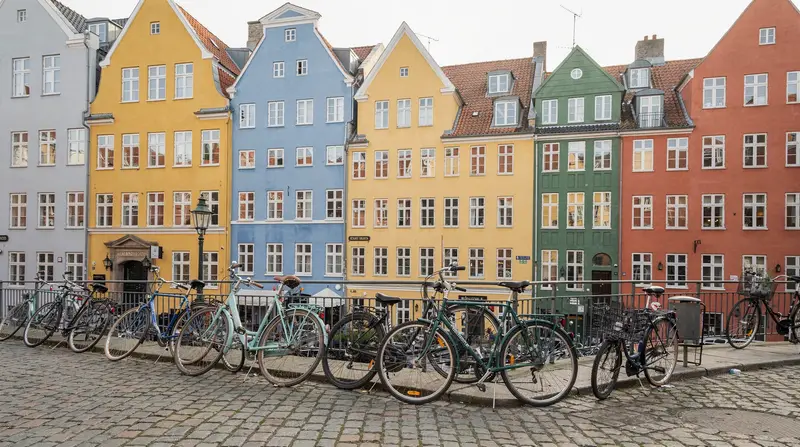
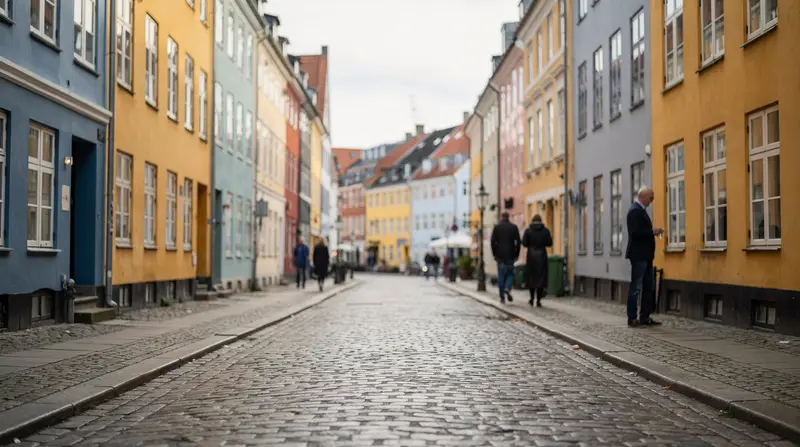
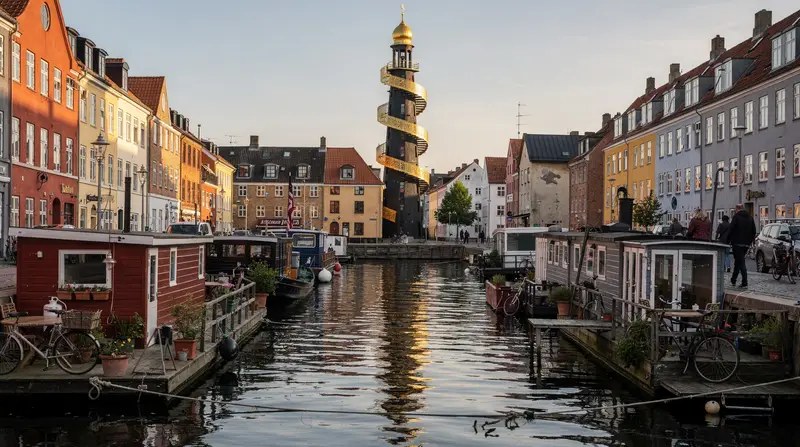
The main canal runs parallel to Torvegade, Christianshavn’s main street. Side canals branch off into quieter residential areas. The scale is smaller and more intimate than the harbour — houseboats are moored along several stretches, and the buildings are 3–4 storeys of 17th-century brick rather than the coloured tourist-oriented facades of Nyhavn.
This is worth stressing: Christianshavn’s canals are more pleasant to walk along than Nyhavn and receive a fraction of the tourist traffic. A 30-minute walk along the canal on a summer morning is as good a Copenhagen experience as anything in Indre By.
Torvegade and the neighbourhood
Torvegade is the main commercial street — supermarkets, cafés, local restaurants. It does not have the polished visitor-oriented character of Indre By streets; it functions as a neighbourhood street. Several good cafés: Café Wilder on Wildersgade (breakfast and brunch 85–160 DKK, excellent filter coffee) is worth seeking out.
The residential side streets — Overgaden oven Vandet, Overgaden neden Vandet (the streets named “above the water” and “below the water” running alongside the canal) — have a quieter, older-Copenhagen character that the main tourism districts have largely lost.
Vor Frelsers Kirke (Church of Our Saviour)
Vor Frelsers Kirke stands at the eastern end of Christianshavn, its distinctive black-and-gold spiral tower visible from much of the neighbourhood. The tower was added to the existing church between 1749 and 1752; the golden spiral staircase wraps around the outside of the tower in a counter-clockwise direction.
The climb: 400 steps in total. The first portion is internal on a standard staircase. The final 150 steps are on the external spiral, exposed to weather and wind, narrowing toward the top. The handrail is functional but the exposure is real. Not suitable for visitors with vertigo or significant fear of heights. Children can climb with appropriate supervision.
Entry: 50 DKK (approximately 6.70€). Open daily; hours vary by season (closed in strong winds for safety reasons). Church interior entry is free.
The view: Excellent. Less crowded than Rundetårn in Indre By and slightly higher. The harbour, Christianshavn canals, Christiania’s tree canopy, Amager and the Øresund Bridge on clear days. Worth the 50 DKK and the physical effort.
Interesting detail: The direction of the spiral (counter-clockwise) was unusual — most church towers spiral clockwise, which is associated with the path of the sun. Various stories explain the Vor Frelsers choice; none is definitively established.
Freetown Christiania — honest assessment
Christiania was established in September 1971 when a group of squatters broke through the fence of a decommissioned military barracks in eastern Christianshavn and declared the area a “free town.” The initial population included counterculture activists, hippies, young families seeking cheap housing and people who simply needed a place to live. It has been operating continuously since then.
What it is today:
A community of approximately 900 residents living in self-built and modified structures on a 34-hectare site. The community has its own rules (no hard drugs, no weapons, no violence, no private cars within the area), its own meeting structures, its own businesses and its own aesthetic — which tends toward brightly painted, individually constructed buildings, often incorporating salvage materials.
The community funds itself primarily through tourism (Christiania merchandise, café and restaurant revenue, guided tours) and through the cannabis trade.
What to expect as a visitor:
Enter through the main Prinsessegade gate or through the smaller Bådsmandsstræde entrance. The tourist path runs through the central area, past Pusher Street and to the cafés and restaurants further in.
Pusher Street: A straight street lined with stalls selling cannabis products openly. The stalls operate in daylight hours, the sellers are present, the product is visible. Photography is explicitly prohibited — signs in multiple languages make this clear and are enforced. If you take photos on Pusher Street the stalls will close immediately and you may be asked to leave.
The honest question: should you walk through Pusher Street? It is part of the Christiania experience and avoiding it means navigating around it which is awkward given the layout. Most visitors walk through. It takes 60–90 seconds. The atmosphere is commercial (sellers call out to passersby) rather than threatening. If you are travelling with children, the scene is not age-appropriate in the same way that any open drug market is not age-appropriate — but the decision is yours.
Beyond Pusher Street:
The rest of Christiania is more interesting and less discussed. The buildings — DIY constructed over 50 years — are architecturally unlike anything else in Copenhagen: painted concrete, recycled timber, repurposed shipping containers, houses that look more like sculptures than buildings. Walking the paths that wind away from the central area, toward the lake (Christiania Sø) and the southern perimeter, gives a better sense of the community as a place where people live.
Café Nemoland and Café Månefiskeren are Christiania’s main outdoor food and drink venues. Beer: 60–80 DKK. Food: 100–160 DKK (burgers, wraps, simple hot food). Functioning as normal cafés with the Christiania aesthetic — outdoor seating, live music in summer (Nemoland particularly), a relaxed pace.
The Christiania Bike: The distinctive three-wheeled cargo bike used for transporting children and goods around Copenhagen was developed in Christiania. The Christiania Bikes company still operates from within the community.
Visiting Christiania with a guided tour
The Vesterbro and Christianshavn alternative tour covers both neighbourhoods in a single session — useful for visitors who want to understand Copenhagen’s social and political geography beyond the tourist centre.A guided tour of Christiania provides context that is difficult to develop independently: the legal history, the community governance, the relationship with the Danish state, the specific phases of its development. It also provides a guide who can navigate the Pusher Street protocol (no photography, how to move through the area without friction) and show you the parts of Christiania that most independent visitors miss.
Whether to do a guided tour or explore independently depends on your interest level. For visitors with genuine curiosity about the community’s politics and structure: a guided tour is worth the time and money. For visitors who want to see Christiania as part of a broader Christianshavn afternoon: independent exploration is fine.
Combining Christianshavn and Christiania
A half-day programme:
Morning (9:30–12:30): Metro M1 to Christianshavn. Walk along Overgaden oven Vandet (the canal street). Coffee at Café Wilder. Cross into the Christiania entrance at Prinsessegade. Walk through the community, spending 60–90 minutes. Exit the eastern side and walk to Vor Frelsers Kirke. Climb the tower.
Lunch (12:30–14:00): Return to Christianshavn Torvegade for lunch at one of the local restaurants (100–200 DKK). Or return to Nyhavn (15 minutes on foot) and take a canal cruise.
Afternoon: Continue to Indre By via the harbour bridges, or take the M1 back to Kongens Nytorv.
For a wider view of where Christianshavn ranks against Copenhagen’s other neighbourhoods, see the best Copenhagen neighbourhoods guide and the where to stay guide if you’re considering basing yourself here.
Frequently asked questions about Christianshavn and Christiania
How long should I spend in Christiania?
Between 1 and 2 hours is appropriate for most visitors. The main circuit — entrance, Pusher Street, cafés, buildings, exit — takes 45–60 minutes. Spending more time requires genuine interest in the community: sitting at a café, talking to residents (who are generally willing to engage), attending a live music event at Nemoland (check schedules).
Can I buy cannabis in Christiania?
Cannabis is sold openly on Pusher Street but it remains technically illegal in Denmark. Purchasing and consuming it in Christiania is at your own legal risk. Carrying cannabis outside Christiania — on public transport, into hotels, toward the airport — carries the same legal consequences as anywhere else in Denmark.
Is Christiania closing or changing?
Christiania has been in ongoing negotiation with the Danish state since the 1970s. A 2012 agreement allowed the community to collectively purchase its land. The community is not imminently closing but has faced regular legal challenges and enforcement actions regarding Pusher Street. The situation as of 2026 is stable but not permanently resolved.
What is the best canal in Copenhagen — Nyhavn or Christianshavn?
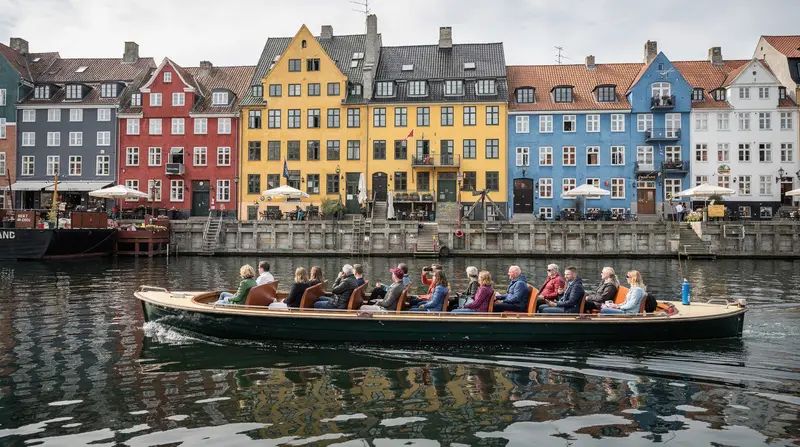
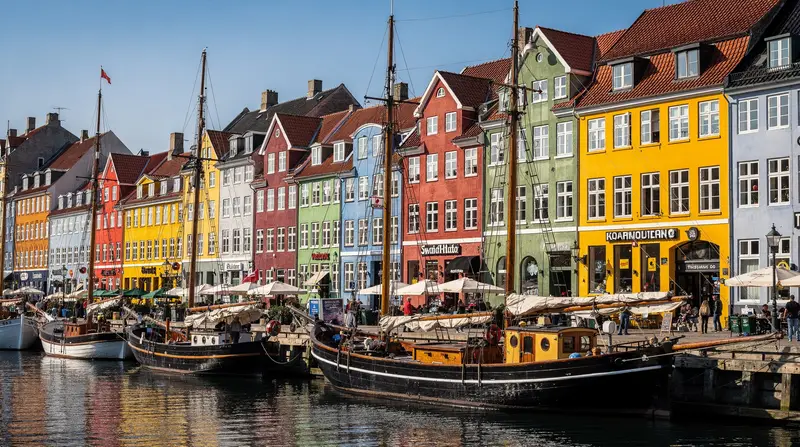
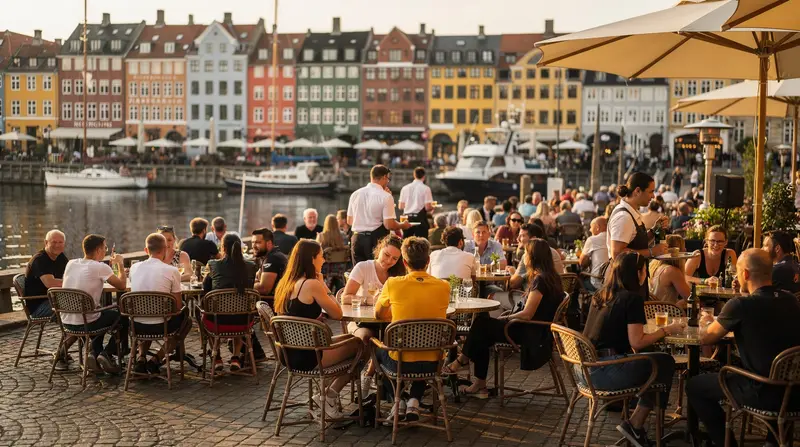
Christianshavn’s canals are more authentic and less tourist-saturated. Nyhavn is more photogenic (the coloured houses) and more accessible. They serve different purposes: Nyhavn for the iconic photograph, Christianshavn for actually sitting by a canal in a functioning neighbourhood.
Can you take the canal cruise through Christianshavn?
Yes. Most Copenhagen canal cruises that depart from Nyhavn or Gammel Strand include the Christianshavn canal section of their route. From the water you can see the backs of the canal-side buildings and get a different perspective on the neighbourhood’s Dutch-influenced layout. Canal tours Copenhagen.
The canal cruise from Gammel Strand passes through Christianshavn’s canal system and gives a complete view of the harbour neighbourhood from the water.Is Christiania suitable for children?
The broader Christiania site is fine — the DIY architecture, the café culture and the outdoor spaces are interesting for children. Pusher Street is not appropriate for young children. If you want to visit with children under about 10, you can enter through the Bådsmandsstræde entrance and walk around the eastern (non-Pusher Street) section of the community without encountering the cannabis market directly. Ask at the entrance; the community is generally accommodating about guiding families away from that section.
Are there good restaurants in Christianshavn outside Christiania?
Yes. Appleby’s (Applebys Plads) is a reliable smørrebrød restaurant — open sandwiches 80–150 DKK, lunch only. Era Ora (Overgaden neden Vandet) is one of Copenhagen’s most respected Italian restaurants, main courses 250–380 DKK, requires a reservation. Several café-restaurants on Torvegade for daily fare.
A walking itinerary for Christianshavn and Christiania
Duration: Half-day (3–4 hours) or full day if you add a canal cruise.
Start: Christianshavn metro station (M1)
Exit the station and walk east along Torvegade. In 5 minutes you reach the main canal bridge crossing Christianshavns Kanal. Stop here and look both ways — north toward the open harbour and south toward the quieter residential stretch. This is one of the better canal views in the city.
Walk the canal streets (30 minutes): Turn south along Overgaden oven Vandet (the north side of the canal). The street names translate as “above the water” and “below the water” — the canal originally flooded to this level. Walk to the end, cross the footbridge at the south end, and return north along Overgaden neden Vandet. The residential character of this stretch — cobblestones, low buildings, houseboats moored at intervals — is what distinguishes Christianshavn from the tourist canal areas.
Vor Frelsers Kirke (45–60 minutes including climb): Continue east along the canal streets to Vor Frelsers Kirke on Sankt Annæ Gade. Enter the church (free), look at the interior, then pay 50 DKK for the tower climb. The 400 steps and the exposed external spiral will take 15–20 minutes each way.
Christiania (60–90 minutes): From Vor Frelsers Kirke, walk north to the Prinsessegade entrance to Christiania (5 minutes). Enter and follow the main path. Walk through Pusher Street (or bypass it via the left-hand path if you prefer). Continue to the central café area — Nemoland in summer has outdoor seating and live music. Walk around the lake (Christiania Sø) if time allows. Exit through the same or the Bådsmandsstræde entrance.
Lunch or afternoon coffee (30–45 minutes): Return to Christianshavn Torvegade for a café meal. Café Wilder on Wildersgade (a side street off Torvegade) is the neighbourhood’s best-known café. Alternatively, Appleby’s on Applebys Plads for smørrebrød (lunch only, closes 16:00).
Return or extend: From Christianshavn, the metro M1 brings you back to Kongens Nytorv in one stop (2 minutes). Alternatively, walk north along the harbour front to Nyhavn (15 minutes) and take the canal cruise from Nyhavn or Gammel Strand.
Christianshavn’s connection to Copenhagen’s broader history
Christianshavn and Slotsholmen (the island of Christiansborg Palace) were, for much of Copenhagen’s history, as important as the medieval city centre. The area was the commercial and naval base of the city during its imperial period — the naval arsenal (Holmen), the royal shipyards and the fortifications were all in this part of the harbour.
Holmen (the former naval base): Just north of Christianshavn, across a canal bridge. The former naval buildings now house the Copenhagen Opera House, the Danish National School of Architecture and various arts institutions. Free to walk through; the opera house has performances most evenings (tickets from 180–900 DKK depending on production).
The Opera House: Designed by Henning Larsen and opened in 2005, funded by the A.P. Møller Foundation. It sits directly across the harbour from Amalienborg Palace, on a sight line that was deliberately chosen. The building is a significant work of Danish contemporary architecture and worth seeing from the outside (access by harbour bus from Nyhavn, 10 DKK with Rejsekort).
What Christiania sells — a factual account
Beyond cannabis, Christiania has a functioning internal economy:
Merchandise: The Christiania logo (three yellow dots in a triangle) appears on mugs, bags, clothing and prints. These are sold at the Christiania market stalls and online. They are a significant revenue source for the community and the logo is a genuine trademark, not a replica.
Food and drink: The cafés and restaurants within Christiania — Nemoland, Månefiskeren, Morgenstedet (vegetarian), Woodstock — serve food and drinks at prices similar to standard Copenhagen café level: beer 60–80 DKK, meals 100–160 DKK.
Art: Several studios within Christiania sell work by resident artists. The quality and price range vary widely. Original paintings from 500–3,000 DKK; prints from 100–400 DKK.
Bikes: The Christiania Bike (cargo bike) company operates from within the community. New three-wheeled cargo bikes start at approximately 6,000–8,000 DKK — these are serious Danish products with a global market, not tourist items.
The economic case for visiting Christiania as a consumer: the merchandise is legitimate, the food is reasonable, the art is variable. Spending money in Christiania’s cafés and shops directly funds the community’s ability to maintain the space.
If Christiania’s alternative, unpolished character appeals to you, Vesterbro and Nørrebro are Copenhagen’s other neighbourhoods with a similar edge — less politically loaded, but with the same independent cafés and street art energy. For tourist traps to avoid nearby, see the Copenhagen tourist traps guide.
Frequently asked questions — Christianshavn and Christiania guide: canals, Pusher Street and Vor Frelsers Kirke
Is Christiania legal in Copenhagen?
Christiania exists in a legally complicated status. The community was established illegally in 1971 in former military barracks and has been in ongoing negotiation with the Danish state since then. A 2012 agreement gave the residents the right to buy the land collectively. Cannabis possession for personal use is technically illegal in Denmark, but the open market on Pusher Street has operated for decades with varying degrees of enforcement.What is Pusher Street in Christiania?
Pusher Street is the central street in Freetown Christiania where cannabis is sold openly. Stalls operate in daylight hours. Photography is explicitly prohibited on Pusher Street. It is a functioning open drug market — visitors who do not want to be in that environment can avoid Pusher Street while still visiting the broader Christiania area.How do I get to Christianshavn and Christiania?
Metro M1 to Christianshavn station. Exit and walk east 10 minutes along Torvegade to reach the main canal. For Christiania, continue east past the canal to the Prinsessegade entrance (main gate). Walking from Nyhavn: 15 minutes across the harbour bridges.Is Vor Frelsers Kirke worth climbing?
Yes. The external spiral staircase of Vor Frelsers Kirke winds to the top of the tower — 400 steps, the final 150 exposed to the open air. Entry costs 50 DKK (approximately 6.70€). The view over Christianshavn, the harbour and Copenhagen is excellent and less crowded than Rundetårn. Not suitable for visitors with vertigo or fear of heights.Is Christianshavn safe?
Yes. Christianshavn is one of Copenhagen's more peaceful and pleasant neighbourhoods to walk in. The area around Christiania requires normal awareness — Pusher Street has had periodic incidents — but the broader Christiania community and Christianshavn neighbourhood are safe.
Top experiences
Bookable activities with verified prices and instant confirmation on GetYourGuide.