Indre By guide: Copenhagen's Old Town, Strøget, Rundetårn and the Latin Quarter
Copenhagen: Old Town Guided Walking Tour
What is worth seeing in Indre By (Copenhagen's Old Town)?
Rundetårn (Round Tower) for the view, the Latin Quarter for architecture and atmosphere, Rosenborg Castle for the crown jewels, and Torvehallerne for food. Strøget is a chain shopping street — worth walking once but not the reason to be here. Avoid the tourist restaurants on the main streets; good food exists 1-2 blocks off.
| Where | Central Copenhagen, Rådhuspladsen to Kongens Nytorv |
| Cost | Free to walk; Rundetårn 40 DKK, Rosenborg 130 DKK |
| Time needed | Half a day for highlights, a full day unhurried |
| Getting there | Nørreport or Kongens Nytorv metro; walkable from Central Station |
| Best time | Weekday mornings; avoid Strøget at Saturday midday |
Indre By is where Copenhagen keeps its history, its most visited attractions and most of its tourist restaurants. It is compact — you can walk its length in 20 minutes — and despite the density of visitors it contains enough genuinely interesting architecture, streets and buildings to reward a full day’s exploration if you approach it correctly. This means ignoring Strøget as a destination and treating it as a route, staying off the main tourist restaurant circuit, and finding the streets that function as a city rather than a stage set.
A guided Old Town walking tour is the most efficient way to understand what Indre By actually contains — most visitors miss the Latin Quarter and the streets around the Cathedral entirely.What Indre By is
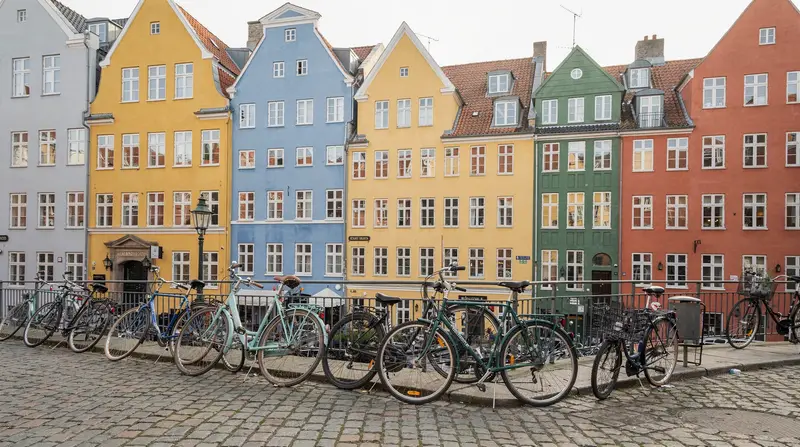
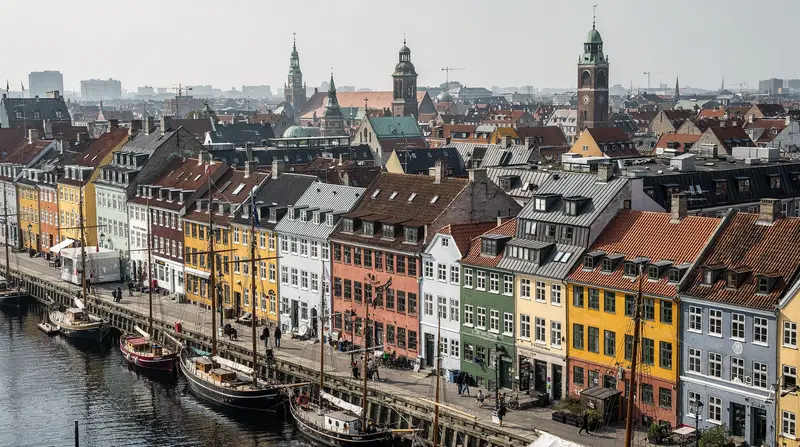
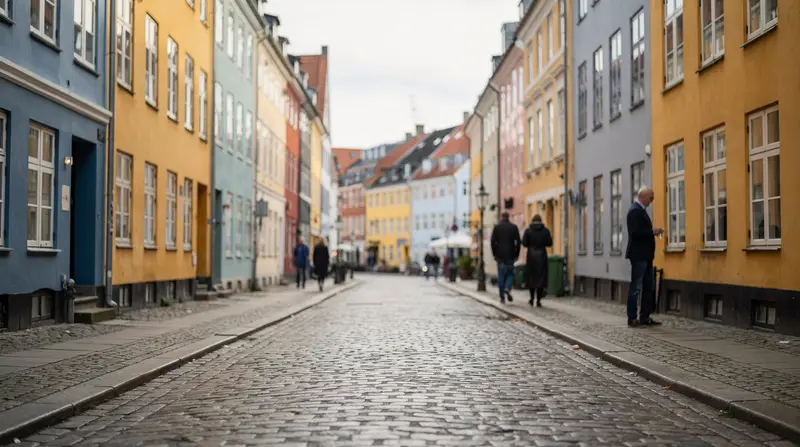
Indre By translates as “Inner City.” It is the medieval core of Copenhagen, enclosed by its historic fortifications (now mostly parks and lakes) and connected to Nyhavn on the east and Vesterbro on the west. The street pattern is largely medieval — tight, irregular, unpredictable in the best way — with Danish Baroque and Neoclassical buildings inserted over the 18th and 19th centuries.
The neighbourhood runs from Rådhuspladsen (City Hall Square) in the west to Kongens Nytorv in the east. Its north-south extent is roughly from Nørreport station to the harbour.
Strøget — what it actually is
Strøget is Europe’s longest pedestrian shopping street at 1.1 kilometres. It connects Rådhuspladsen to Kongens Nytorv through a sequence of squares: Gammeltorv (Old Square), Nytorv (New Square), Amagertorv (in the middle) and Kongens Nytorv at the end.
Gammeltorv and Nytorv: Two adjacent squares divided by a building — Gammeltorv on the north (older) and Nytorv on the south. The Caritas Fountain in Gammeltorv dates from 1608 and is one of the city’s oldest. Worth 10 minutes of attention.
Amagertorv: The central square of Strøget, with the Stork Fountain (Storkespringvandet, 1894) as the visual centrepiece. The surrounding buildings house Royal Copenhagen porcelain (expensive, significant, worth looking at even without buying), Georg Jensen silver, and the Illum department store.
The shopping on Strøget itself: Dominated by international chains. A useful fact: the H&M and Zara here are not cheaper than anywhere else. If you need Danish design, the shops around Amagertorv, on Strøget’s side streets, and in the Latin Quarter are more interesting.
Tourist trap status: Strøget is a route, not a destination. Walk it once to orient yourself. The restaurants directly on or adjacent to Strøget charge tourist prices (150–300 DKK for a basic lunch that costs 90–130 DKK two blocks off the main street). The street performers and market stalls vary by season.
Rundetårn (Round Tower)
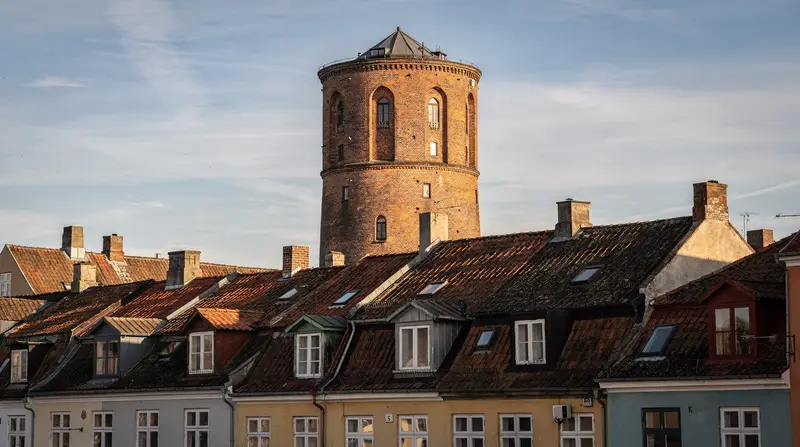
Rundetårn is a 17th-century tower with an internal spiral ramp rather than stairs — it was designed to allow horse-drawn carts to reach the astronomical observatory at the top, which operated until 1861. It now functions as a viewpoint with a small gallery space in the lower section.
Entry: 40 DKK adults, 5 DKK children under 15. Open daily; hours vary by season (typically 10am–8pm in summer, shorter in winter).
The view: 360-degree panorama over Indre By and toward the harbour, Nyhavn, Christianshavn and the rest of the city. On clear days you can see the Øresund Bridge toward Sweden. The best views are north toward Nørreport and west toward the towers of Christiansborg and the Cathedral.
Worth it? Yes. The ramp is interesting (tsar Peter the Great drove a carriage up it in 1716; his tsarina rode alongside on horseback), the gallery is usually worth 10 minutes, and the view justifies the 40 DKK.
A guided visit to the Round Tower with a local includes the hidden library room and the tower’s historical context — worth 45 minutes if you want more than just the view.The Latin Quarter (Latinerkvarteret)
The Latin Quarter is the area of Indre By around the University of Copenhagen buildings — bounded roughly by Nørregade (west), Studiestræde (south), Fiolstræde (east). The name comes from the Latin that was the language of scholarship when the university was founded here in 1479.
What to find here: Second-hand bookshops on Fiolstræde — several small shops with mixed Danish and English-language collections, prices 30–150 DKK for most books. Independent cafés on Studiestræde and Larslejsstræde. The Church of the Holy Spirit (Helligåndskirken, free entry) on Niels Hemmingsens Gade, with a 14th-century cloister.
Why it matters: The Latin Quarter is the part of Indre By that does not operate primarily for tourism. University buildings, students, independent businesses and residential buildings are mixed together. It feels like a city rather than a visitor attraction.
Where to eat in the Latin Quarter: The restaurants on Larslejsstræde and Studiestræde are more affordable than those on Strøget — expect 120–180 DKK for a main course at lunch, 160–240 DKK at dinner. Café Norden on Amagertorv is the standard reference for a coffee in a central location (overpriced for the coffee quality at 65–80 DKK but the location and the building are legitimately good).
Rosenborg Castle and the King’s Garden
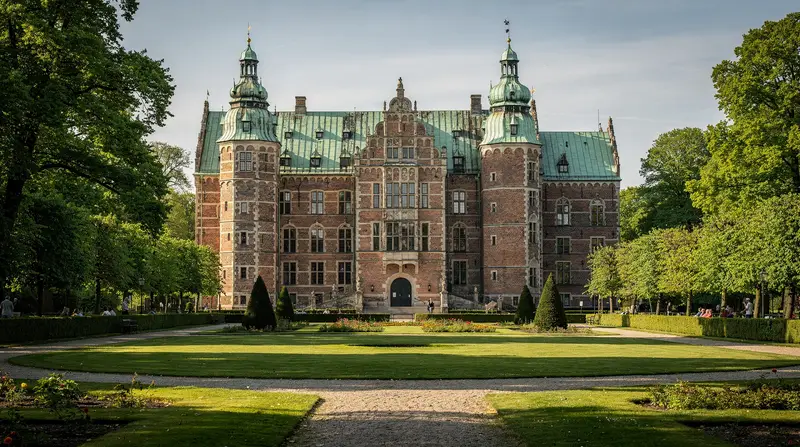
Rosenborg Castle (Rosenborg Slot) sits at the northern edge of Indre By in a formal garden called the King’s Garden (Kongens Have), which is one of the oldest and most pleasant parks in Copenhagen. The castle was built by Christian IV in the early 17th century and used as a royal residence until 1710. It now houses the crown jewels and a collection of royal regalia.
Entry to the castle: 130 DKK for adults (approximately 17.40€). The crown jewels and the royal chambers are included. The King’s Garden itself is free.
Worth it? Worth it if you have genuine interest in royal history or want to see actual crown jewels (which are impressive as physical objects). The castle interiors are authentic and less glamorised than some comparable European royal properties. Allow 1.5–2 hours.
The King’s Garden: Free, open daily from 6am until dusk. One of the best picnic spots in central Copenhagen. The café at the garden’s entrance does sandwiches and coffee at reasonable prices (75–120 DKK).
A guided tour of the Round Tower, Rosenborg Castle and the Old Town covers the three main Indre By sights in a single session — efficient if you have one day to cover the centre.Copenhagen Cathedral (Our Lady’s Church) and the University
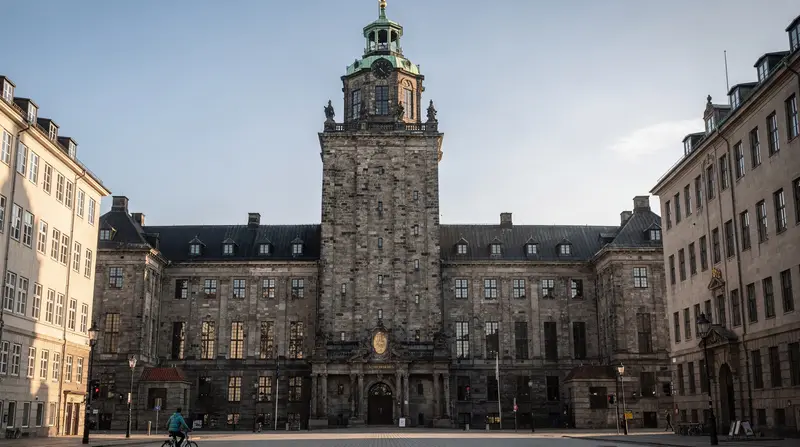
The Cathedral (Vor Frue Kirke, “Our Lady’s Church”) on Nørregade is the main Lutheran church of Copenhagen and contains the famous sculpted series of Christ and the Twelve Apostles by Bertel Thorvaldsen. Entry is free. The architecture is Neoclassical (the current building dates from 1829 after a fire). Allow 20–30 minutes.
Directly opposite the Cathedral is the main building of the University of Copenhagen (Københavns Universitet), founded 1479 and Denmark’s oldest university. The courtyard is open during university hours.
Christiansborg Palace (Slotsholmen)
Christiansborg Palace is technically on Slotsholmen (Castle Island), a separate island south of Indre By, connected by bridges. It houses the Danish parliament (Folketing), the Supreme Court and the offices of the Prime Minister — all in the same building, a configuration that is unusual and worth noting.
What to visit: The Royal Reception Rooms (entry 100 DKK, guided tours available), the Ruins beneath the palace (50 DKK, the remains of earlier castles on the same site from the 12th century onward), and the Christiansborg Tower (free) with a viewing platform over the city.
Worth it? The ruins and the tower are both worth it. The Reception Rooms are impressive if you are interested in state rooms. The building’s political function — parliament, courts and monarchy in one building — makes it more interesting than a pure museum. Christiansborg Palace guide.
National Museum of Denmark (Nationalmuseet)
The National Museum is on Ny Vestergade, adjacent to Christiansborg. It covers Danish prehistory, the Viking Age, the Middle Ages and the modern period through an extensive collection.
Entry: The permanent collection is free. Special exhibitions have separate entry fees.
Worth it? Yes, particularly for the Viking section and the Danish Middle Ages collection. The prehistoric section (Bronze Age finds, the Trundholm Sun Chariot from around 1400 BC) is internationally significant. Allow 2–3 hours for a substantial visit. National Museum guide.
Where to eat in Indre By
Avoid: Restaurants with A-frame signs on Strøget, around Gammeltorv and directly beside Nyhavn. These are priced for tourists.
Better options:
-
Schønnemann (Hauser Plads, near Nørreport) — classic smørrebrød restaurant, open since 1877. Lunch only. Open sandwiches 70–160 DKK each. The standard reference for traditional Danish lunch. Book in advance.
-
Torvehallerne market (Nørreport) — covered market with 60 stalls. Fish sandwiches 95–145 DKK. Bread from Meyers Bageri. Coffee from The Coffee Collective outpost. Open daily.
-
Cofoco (Abel Cathrines Gade, near the Central Station end) — fixed-menu Danish restaurant, well-regarded, 3-course menus from 395 DKK. Requires a reservation.
Frequently asked questions about Indre By
How long does it take to see Indre By?
A half-day covers the highlights on the surface: Strøget walk, Rundetårn, a coffee in the Latin Quarter. A full day allows Rosenborg Castle, the Cathedral, Christiansborg Palace (ruins and tower), the National Museum and unhurried walking. Two days gives you everything without rushing. Copenhagen in one day for a compressed itinerary.
Is Strøget worth visiting?
As a route, yes — you will cross it repeatedly just by moving through Indre By. As a shopping destination, no unless you want international chains. The interesting shopping in Copenhagen is on Jægersborggade (Nørrebro), Ravnsborggade (antiques, Nørrebro), and in the design shops around Klareboderne and Store Regnegade (Indre By, just off Strøget).
What is the best free thing to do in Indre By?
Walk through the King’s Garden (Kongens Have) and around the exterior of Rosenborg Castle. Free, open all day, beautiful in any season. The second-best free option is the National Museum’s permanent collection.
Where can I find affordable food in the Old Town?
Torvehallerne at Nørreport for take-away food at reasonable prices. The side streets of the Latin Quarter for sit-down meals. Avoid anywhere with photos on the menu or a sign in multiple languages on Strøget.
Is Copenhagen’s Old Town walkable?
Very. The distances between the main sights are all under 15 minutes on foot. Rosenborg to the Cathedral is 7 minutes. Cathedral to Rundetårn is 3 minutes. Rundetårn to Nyhavn is 10 minutes. The only area that requires more walking is Christiansborg (10–15 minutes from Rundetårn across the bridges). Cycling cuts all these times in half.
What is the Copenhagen Card and does it cover Indre By sights?
The Copenhagen Card covers Rosenborg Castle, the National Museum, transport on the metro and buses, and most other major attractions across the city. At 699 DKK for 24 hours or 1,329 DKK for 72 hours, it works out financially if you are visiting 3+ paid sights per day. Copenhagen Card worth it guide.
Is Indre By safe?
Yes, with the standard urban common sense. Pickpocketing has been reported on Strøget in busy summer months — keep bags and phones aware. There is no area of Indre By that is unsafe to walk in at any hour.
A practical walking route through Indre By
This 3-hour walking route covers the main points without getting lost in the tourist circuits:
Start: Rådhuspladsen (City Hall Square) — the western anchor of Strøget. The large town hall building (Rådhuset) dates from 1905. The square is busy but the building facade is worth a look. Free entry to the courtyard.
Walk east on Strøget — the full 1.1-kilometre length. Note the sequence of squares: Gammeltorv (Old Square) with the Caritas Fountain, Nytorv (New Square), Amagertorv with the Stork Fountain (stop at Royal Copenhagen for a look at what genuine Danish porcelain costs — the gift shop prices for small items start around 150 DKK; full dinner services cost tens of thousands). Continue to Kongens Nytorv at the far end.
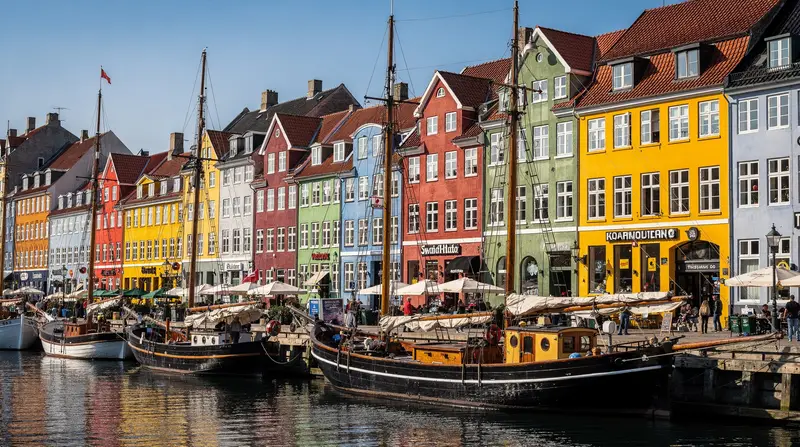
Detour: Nyhavn — at Kongens Nytorv, walk 5 minutes east to Nyhavn canal. Photograph the houses, look at the boats. Return to Kongens Nytorv.
Turn north from Strøget into the Latin Quarter — at any of the side streets off Strøget between Amagertorv and the Cathedral: Larslejsstræde, Studiestræde, Fiolstræde. Walk through the university area. Find the Cathedral (Vor Frue Kirke) on Nørregade.
Rundetårn — from the Cathedral, Rundetårn is 3 minutes east on Købmagergade. Enter, climb, view. Allow 30–40 minutes.
Rosenborg Castle — from Rundetårn, walk 10 minutes north to Kongens Have (the King’s Garden). Walk through the garden. If entering the castle, allow 1.5–2 hours extra. The garden alone is worth 15–20 minutes.
Return route — walk south from the King’s Garden through the streets around Nørreport. Torvehallerne is at Nørreport station for food or coffee. From Nørreport, the metro takes you anywhere in the city in minutes.
Shopping in Indre By beyond Strøget
Klareboderne and Store Regnegade: Streets running parallel to Strøget, north of it. Several design and homewares shops with genuine Danish products — ceramics, textiles, small furniture objects. Prices are high but the quality is real.
Antique and second-hand: Ravnsborggade in Nørrebro (15 minutes north) is better for antiques than anything in Indre By. Within Indre By, the second-hand bookshops on Fiolstræde are the most interesting specialised retail.
Georg Jensen: The silver and jewellery brand founded in Copenhagen in 1904 has its main store on Strøget (Amagertorv). The designs are Danish modernist and internationally recognised. Prices are high — small items from 400–800 DKK, significant pieces from 2,000 DKK upward. Worth seeing even if not buying.
Illum: The Amagertorv department store is the closest Copenhagen comes to a quality multi-brand department store. The food hall in the basement carries Danish speciality products at less-inflated prices than the canal-side souvenir shops.
Indre By after dark
Indre By’s evening character is more subdued than Vesterbro’s Kødbyen. The main concentration of nightlife is around the western end of Strøget (bars on Mikkel Bryggers Gade, Studiestræde) and near the Pisserenden street area in the Latin Quarter. The atmosphere is busy until midnight on weekends but does not have the sustained late-night energy of Vesterbro.
For dinner: Restaurant Schønnemann (Hauser Plads, lunch only — closes by 4pm) is for traditional smørrebrød. For dinner, the Latin Quarter streets are the right zone. Budget 200–350 DKK for a main course at a decent restaurant; 350–500 DKK for a full evening with starters and wine.
For a drink: The Wine Room on Snaregade, Studio on Gothersgade or one of the bars on Mikkel Bryggers Gade — all within the Latin Quarter. Expect 80–120 DKK per drink.
Copenhagen nightlife guide for the full picture across all neighbourhoods.
Frequently asked questions — Indre By guide: Copenhagen's Old Town, Strøget, Rundetårn and the Latin Quarter
What is Strøget in Copenhagen?
Strøget is a 1.1-kilometre pedestrian shopping street connecting Rådhuspladsen (City Hall Square) to Kongens Nytorv. It is one of Europe's longest pedestrian shopping streets. It contains Zara, H&M, Illum department store, Swarovski and other international chains alongside a few Danish names. It is extremely busy in summer and primarily of interest as a route through the city rather than a destination.How much does Rundetårn cost?
Entry to Rundetårn (Round Tower) costs 40 DKK for adults (approximately 5.40€). The tower is open daily and the spiral ramp leads to a viewing platform with a 360-degree view over central Copenhagen. Allow 30–45 minutes. No lift — the ramp is accessible to most visitors including prams.What is the Latin Quarter in Copenhagen?
The Latin Quarter (Latinerkvarteret) is the area around the University of Copenhagen buildings in Indre By, bounded roughly by Nørregade, Studiestræde and Fiolstræde. It has second-hand bookshops, independent cafés, small restaurants and less tourist pressure than the Strøget-adjacent streets.Is the National Museum of Denmark free?
The permanent collection of the National Museum of Denmark (Nationalmuseet) is free of charge. The museum covers Danish history from the Stone Age to the 20th century. Special exhibitions have a separate admission fee. Allow 2–3 hours for the main collection.
Top experiences
Bookable activities with verified prices and instant confirmation on GetYourGuide.