Rosenborg Castle Copenhagen: Crown Jewels, Tickets and Visiting Tips
Copenhagen: Rosenborg Castle Tour with Skip-the-Line Ticket
Is Rosenborg Castle worth visiting in Copenhagen?
Yes — it is one of the most genuinely interesting royal palaces in Scandinavia. The Crown Jewels in the basement treasury are remarkable, and the rooms are intact enough to read as a living residence rather than a generic museum. Admission is 150 DKK (~20 €). The surrounding King's Garden is free and one of the best city parks in Copenhagen.
Book a guided Rosenborg Castle tour with skip-the-line entry — the guide provides context that transforms the visit from a collection of objects into a coherent history of the Danish monarchy.
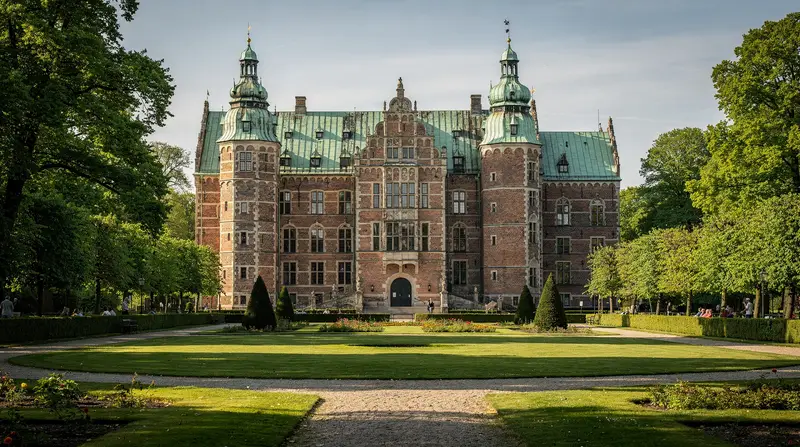
Rosenborg Castle is a Dutch Renaissance palace from 1606, sitting unexpectedly in the middle of one of Copenhagen’s most popular parks. Christian IV built it as a summer residence — it was always a personal project rather than a seat of government — and the rooms reflect this: smaller, more intimate, and more full of the king’s personality than the formal state rooms at Christiansborg.
The castle has been a museum since 1838, making it one of Denmark’s oldest public collections. Unlike many converted palaces where the furniture has been dispersed and the rooms reconstructed, Rosenborg’s contents have remained substantially intact. You are looking at objects that were here when these rooms were lived in.
| Where | Kongens Have, near Nørreport station |
| Cost | Around 150 DKK adults, under 18 free |
| Time needed | 1.5–2 hours, plus the free garden |
| Getting there | Metro to Nørreport, 5–7 min walk |
| Best time | Weekday mornings, outside July–August |
The Crown Jewels — the main draw
The basement treasury holds the Danish Crown Jewels and royal regalia, displayed in purpose-built cases with explanatory labels in Danish and English.
The centrepiece is Christian IV’s coronation crown (1596) — 2.3 kilograms of gold set with 19 sapphires, rubies, enamel, and table-cut diamonds. Made for his coronation at age 22, it remained in use for coronations until 1840. It is one of the most important surviving pieces of Renaissance goldsmithery in Europe.
Also significant: Frederick III’s coronation sword (1648), the Danish Order of the Elephant regalia (Denmark’s highest chivalric order, established 1693), the Order of the Dannebrog insignia, and the Danish Crown Regalia used at the last coronation-adjacent ceremony in 1972.
The Queen’s ruby parure — a necklace, earrings, brooch, and bracelet set of oval rubies and diamonds, given to Queen Ingrid by the Danish government on her marriage in 1935 — is the most visually striking modern piece in the collection.
The treasury is the most visited part of the castle. Go here first if you have limited time.
The castle floors: what to expect
Ground floor (1600s)
The rooms here represent the early 17th-century court under Christian IV: the Winter Room, with original Dutch carved furniture; the Marble Room, with original marble panelling; and the Dark Room, which contains Christian IV’s mirror cabinet (a series of mirrored alcoves). The writing cabinet in the Winter Room contains some of Christian IV’s personal possessions, including his glass eye — he lost his right eye at the naval Battle of Kolberger Heide in 1644 and continued commanding despite the injury.
First floor (mid-1600s to 1700s)
Frederick III’s room commemorates his absolute power coup of 1660, when he ended the nobility’s political dominance and established hereditary monarchy. The Great Hall on this floor — used for banquets until the 1720s — contains large-scale portraits, a glass collection of extraordinary scope (nearly complete Venetian glassware service), and the original throne used at coronations.
The throne itself — a silver throne from 1662 flanked by three silver lions (each weighing approximately 200 kg) — is the most imposing single object in the castle. It remains in the royal collection and is technically still the ceremonial throne.
Second floor (1700s–1800s)
The later royal apartments include bedchambers, reception rooms, and the final rooms used by the castle’s last royal resident — Frederick VII, who died here in 1863. The contrast between the rich early rooms and the quieter 19th-century apartments is instructive: by 1800, Rosenborg had become too small and old-fashioned for royal use, and it shows.
The King’s Garden (Kongens Have) — free
The formal garden surrounding Rosenborg is one of Copenhagen’s best public parks and completely free. Established in the early 17th century alongside the castle, it covers approximately 12 hectares of hedged paths, rose gardens, a marionette theatre (summer performances, free), sculptures, and lawns.
It is heavily used by locals — for lunch, dog walking, football on the lawns, and summer picnics. In mid-summer, the rose garden is at its best. In winter, the garden is quieter but still used.
The most photographed spot is the view from the northern end of the garden looking south towards the castle’s main facade — red brick against the sky, flanked by formal hedges.
Allow 30–60 minutes here, particularly in good weather. A picnic from Torvehallerne market (10 minutes north, near Nørreport) works well as a combination.
Visiting in practice
Getting there
Metro M1/M2 to Nørreport, then walk south across Israels Plads and through the garden (7–10 minutes total). Alternatively, walk north from Strøget (Gammeltorv) for about 10 minutes. Cycling: the King’s Garden has bike racks along the perimeter.
Tickets
Purchase at the door or online. Queues at the door are manageable outside peak season (July–August). The guided tour option includes skip-the-line entry and covers the castle in approximately 2 hours with considerably more context than self-guided audio.
Book Rosenborg Castle entry ticketsAudio guides
An audio guide is available in English and several other languages, included in some ticket types or rented separately. It covers the main rooms and regalia with adequate depth for most visitors.
Combined visits
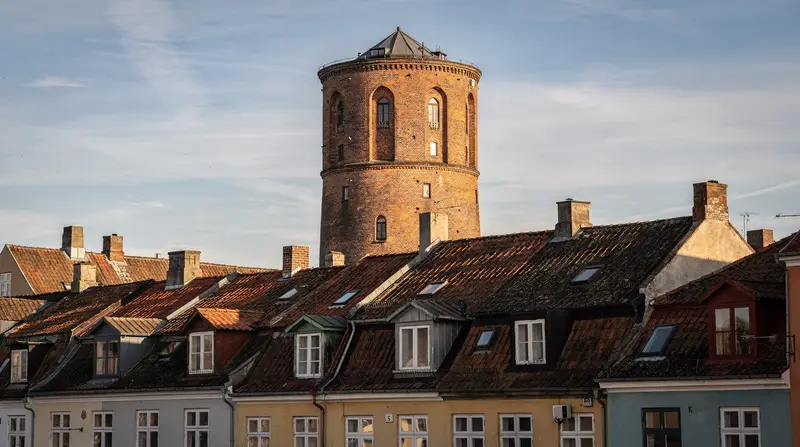
Rosenborg pairs naturally with the Rundetårn (Round Tower) — both are within 10 minutes’ walk — or with Torvehallerne for lunch. The Round Tower guide covers this combination. Christiansborg Palace is a 20-minute walk south and represents the other major royal site; if choosing between the two, Rosenborg is more intimate and the Crown Jewels are more remarkable than Christiansborg’s reception rooms.
Is Rosenborg better than Christiansborg?
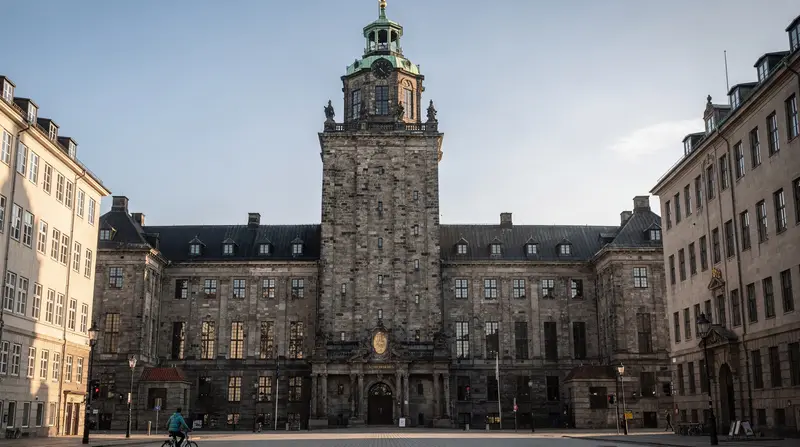
The two palaces serve different purposes. Christiansborg is the seat of government — vast, formal, and politically significant, with the tower offering the best free view in the city. Rosenborg is smaller, more personal, and more museum-like — the contents are more extraordinary than the architecture.
If you have one day and must choose: Rosenborg for the Crown Jewels and intimate royal history; Christiansborg for the free tower view and the sense of scale. Both reward a visit; neither is a waste of 150–220 DKK.
On a two-day visit, do both. They complement each other well.
Fitting Rosenborg into a wider Copenhagen day
Rosenborg sits at the centre of a genuinely walkable cluster. Torvehallerne market is 10 minutes north near Nørreport — a good lunch stop before or after the castle, and covered in the Torvehallerne guide. The Rundetårn (Round Tower) is 10–12 minutes south, and pairing the two makes a solid half-day of Indre By sightseeing — see the full things to do in Copenhagen ranking for how it stacks up against the city’s other paid attractions.
If you’re weighing whether to buy the Copenhagen Card for a multi-attraction day, Rosenborg’s 150 DKK entry is one of the ones it covers — the Copenhagen Card worth it guide walks through the maths. For a broader sense of the old town Rosenborg sits within, the Indre By guide covers the surrounding streets, and first-time visitors planning their whole trip should start with the first time in Copenhagen guide.
Frequently asked questions about Rosenborg Castle
What is the most impressive thing in Rosenborg Castle?
The Crown Jewels treasury, particularly Christian IV’s coronation crown from 1596 and the three silver throne lions from 1662. The latter are so large that most visitors don’t register them as single objects immediately.
Is Rosenborg Castle the official royal palace?
No. The royal family’s official residences are Amalienborg (winter, Copenhagen) and Fredensborg (spring and autumn, North Zealand). Rosenborg has been a museum since 1838. The Crown Jewels are stored here but used at official ceremonies.
Can you photograph inside Rosenborg Castle?
Photography for personal use is permitted in most areas without flash. The treasury has more restrictive rules — check current policy at the ticket desk.
Is Rosenborg Castle on the Copenhagen Card?
The Copenhagen Card gives discounted entry to Rosenborg Castle (not free). The discount is approximately 50 DKK off the adult admission, which is meaningful if you have the card for other attractions.
Is there a gift shop at Rosenborg Castle?
Yes, at the exit. The usual range of replica jewellery, royal family books, and Danish design items. Prices are comparable to other museum shops; not markedly overpriced.
What is the difference between the entry ticket and the guided tour?
The entry ticket gives access to all areas with written labels and optional audio guide. The guided tour (booked separately or via GYG) provides a knowledgeable guide for approximately 2 hours, which adds substantial context — particularly useful for the treasury, where the significance of individual pieces requires explanation to fully appreciate.
Frequently asked questions — Rosenborg Castle Copenhagen: Crown Jewels, Tickets and Visiting Tips
How much does it cost to visit Rosenborg Castle?
Adults: 150 DKK (~20 €). Children under 18: free. Guided tours cost extra — approximately 200–250 DKK including entry. The King's Garden (Kongens Have) surrounding the castle is free to enter and open to the public.What is in Rosenborg Castle?
Three floors of royal apartments spanning 1605–1863, the Crown Jewels and royal regalia in the basement treasury, Denmark's finest collection of royal silver and Venetian glass, and the personal objects of Danish monarchs including Christian IV's coronation crown (1596) and Queen Margrethe II's coronation regalia.How long does Rosenborg Castle take to visit?
1.5 to 2 hours for the castle interior. Allow an additional 30–60 minutes if you want to sit in the King's Garden. A skip-the-line tour with a guide takes around 2 hours and provides considerably more context than the self-guided visit.When is Rosenborg Castle open?
Rosenborg is open daily (with some exceptions on national holidays). Hours vary by season: approximately 10:00–17:00 in summer (longer on peak days), 10:00–14:00 or 10:00–16:00 in winter. Always verify current hours on the official website before visiting.Can you buy tickets at the door?
Yes. The ticket office is at the castle entrance. Queue times are typically short outside July–August. A skip-the-line tour booked in advance is worth considering in peak season, as it also adds a guide.Is the King's Garden free?
Yes. Kongens Have (the King's Garden) is a public park open daily. It is one of the most pleasant free spaces in central Copenhagen — formal hedged gardens, lawns, sculptures, and rose gardens surrounding the castle. Recommended for a picnic.How do I get to Rosenborg Castle?
Metro to Nørreport (M1/M2), then 5–7 minutes on foot through Israels Plads. Walking from Strøget takes about 10 minutes north. The castle is clearly visible from the Nørreport area.
Top experiences
Bookable activities with verified prices and instant confirmation on GetYourGuide.