Best Museums in Copenhagen: Honest Rankings for Every Traveller
Copenhagen Card: Access 80+ Attractions and Transportation
Which museums in Copenhagen are worth visiting?
The National Museum (free), SMK (free permanent collection), and Ny Carlsberg Glyptotek (free Tuesdays) are the strongest free options. Louisiana in Humlebæk is the standout paid experience. Den Blå Planet is the best family museum. Designmuseum Danmark is worth 2 hours for design fans. Cisternerne is a niche but memorable immersive space.
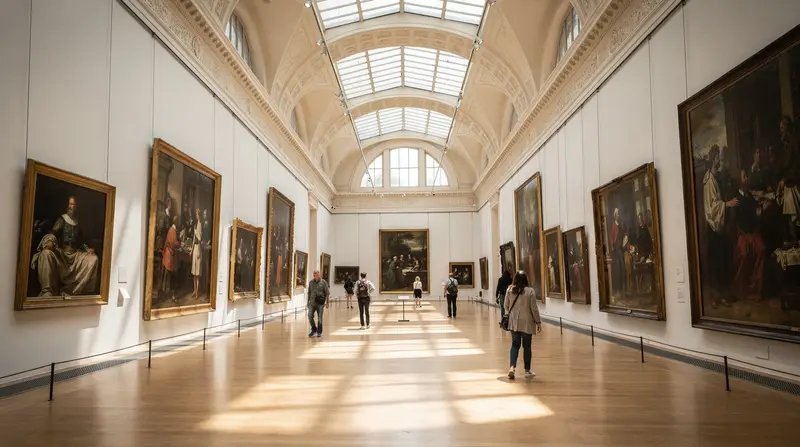
Copenhagen is a genuinely excellent city for museum-goers. Three of its best institutions are free, the paid ones are priced fairly by European standards, and the quality of collections ranges from Viking-era artefacts to French Impressionism to cutting-edge contemporary art. This guide ranks all eight major museums honestly — what to prioritise, what to skip, how long each takes, and whether the Copenhagen Card makes financial sense for your visit.
Why Copenhagen punches above its weight for museums
A city of 800,000 people has no business hosting so many world-class collections, yet here we are. The explanation is part historical (Denmark’s 18th-century golden age funded enormous acquisition campaigns), part philosophical (Scandinavian public culture has always invested heavily in free or subsidised access to arts and heritage), and part architectural (many of the buildings themselves are worth visiting).
The practical result for visitors: you can spend two full days doing nothing but museums and emerge having seen genuinely significant things — Egyptian mummies at the National Museum, Gauguin at the Glyptotek, Matisse at the SMK, Louisiana’s Giacometti terrace above the Øresund — without spending much money.
The ranking at a glance
| Museum | Entry | Copenhagen Card | Honest verdict |
|---|---|---|---|
| Nationalmuseet (National Museum) | Free | Yes | Worth it — non-negotiable |
| SMK – National Gallery | Free (perm.) / 130–175 DKK (temp.) | Yes | Worth it — free, world-class art |
| Ny Carlsberg Glyptotek | 125 DKK / Free Tue | Yes | Worth it — exceptional collection + building |
| Louisiana Museum | 175 DKK | Yes | Worth it — best experience outside the city |
| Designmuseum Danmark | 130 DKK | Yes | Worth it for design fans; 90-min visit otherwise |
| Cisternerne | 110 DKK | Yes | Niche — skip unless you like immersive/underground art |
| Den Blå Planet | 185 DKK adults / 110 DKK children | Yes | Worth it for families — weaker for adults alone |
| National Museum + tour | From 120 DKK | — | Useful if you want context for the Viking floors |
The free tier: Copenhagen’s most important museums cost nothing
Nationalmuseet — the anchor
The National Museum of Denmark on Ny Vestergade is the single most important museum in the country, and it is entirely free. Its permanent collection spans 14,000 years of human history on Danish soil, from the earliest post-Ice Age settlers through the Bronze Age, the Vikings, the medieval period, the Danish colonial era, and into the 20th century.
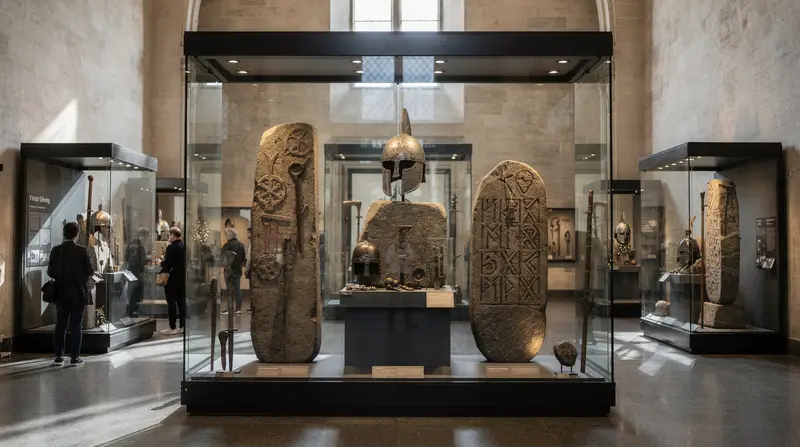
The Viking galleries alone justify a visit: the Trundholm Sun Chariot (a bronze and gold wheeled horse pulling a sun disc, cast around 1400 BCE) is one of the most arresting objects in any museum in Scandinavia. The Gundestrup Cauldron — a massive silver vessel found in a Jutland bog, decorated with Celtic gods and ritual scenes — is another. Neither requires any ticket, just walking through the door.
Alongside the prehistory and Viking collections, the museum has strong Egyptian, Greek, and Roman archaeology, a large Danish cultural history floor, a children’s museum, and an ethnographic collection. Budget at minimum 2.5 hours; 3.5 hours if you want serious depth.
The building itself — an 18th-century palace complex — adds to the experience. The courtyard café serves decent smørrebrød at non-tourist prices. See the dedicated National Museum guide for a full room-by-room breakdown.
A guided tour focusing on archaeology and history is worth considering if you want context for the Viking and Bronze Age sections; otherwise the museum’s in-house labelling is among the best-translated in Europe.
SMK – Statens Museum for Kunst
The SMK (National Gallery of Denmark) sits on the edge of Østre Anlæg park, a 20-minute walk from the city centre or two stops from Nørreport on bus 26. The permanent collection spans seven centuries of European and Danish art, and it is free.
The highlights are the Matisse collection (one of the largest outside France), strong Flemish and Dutch Golden Age paintings, and a significant collection of Danish 19th-century Romantics. The connected building extension (1998) holds the 20th-century and contemporary wings.
Temporary exhibitions — which are usually worth catching — cost 130–175 DKK. Check the SMK website before you go; major shows often book out on weekends.
The SMK shop is one of the better museum shops in the city: design-focused, with good art books and prints at fair prices. The full SMK guide covers the gallery layout and highlights room by room.
The paid tier: worth the money
Ny Carlsberg Glyptotek — the surprise
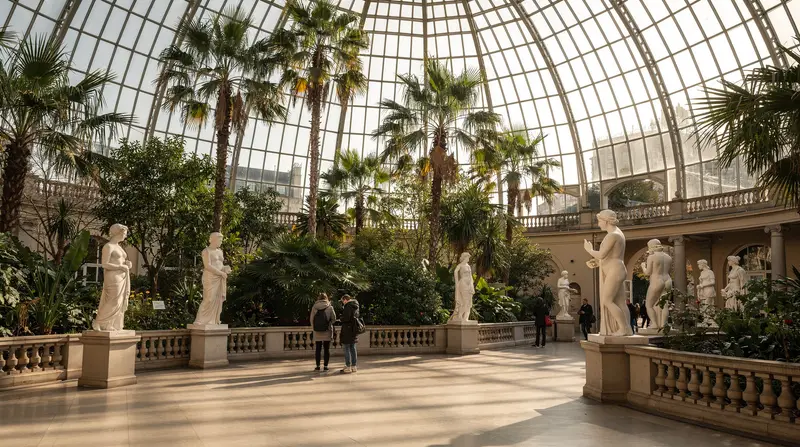
Most first-time visitors to Copenhagen do not know this museum exists; those who find it tend to consider it the best thing they did. The Glyptotek sits on Dantes Plads near Tivoli, occupying a pair of linked 19th-century buildings connected by a famous winter garden — a domed greenhouse with a palm and a small fountain, where you can sit and read or drink coffee on a rainy afternoon.
The collection covers ancient Mediterranean civilisations (Egyptian, Etruscan, Greek, Roman — including over 100 genuine Roman portrait busts) and 19th-century French art. The French wing includes significant Rodin bronzes, Gauguin paintings from his Tahitian period, and a strong Degas holding. It is genuinely world-class.
Entry costs 125 DKK on most days. On Tuesdays the permanent collection is free. The Copenhagen Card covers entry. Children under 18 are always free.
Allow 2–2.5 hours. If you’re visiting on a sunny day, the sculpture garden at the back is worth 20 minutes of your time. Full details in the Glyptotek guide.
Louisiana Museum of Modern Art — the best day out
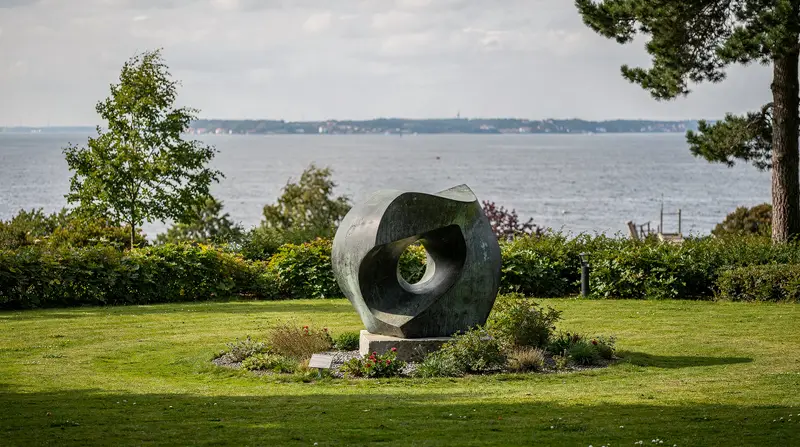
Louisiana sits in Humlebæk, 35 km north of Copenhagen, on a promontory above the Øresund strait. It is the best art museum in the Nordic region by most measures: the permanent collection (Giacometti sculptures placed so they look out over the water, Alexander Calder mobiles, Francis Bacon paintings, a strong COBRA movement holding) is exceptional, and the building itself — white wings extending through a series of gardens — is architecture worth studying.
Getting there is easy and pleasant: Kystbanen trains run from Copenhagen Central (Hovedbanegård) every 20 minutes, reaching Humlebæk in about 38 minutes. The museum is a 10-minute walk from the station, or you can take the shuttle. A return train ticket costs around 120 DKK at standard adult fare; the Copenhagen Card covers it.
Entry to Louisiana is 175 DKK for adults (children under 18 free). The Copenhagen Card covers admission. Budget at minimum 3 hours; 4–5 hours is not excessive if the temporary exhibition is strong.
The museum café is expensive (60–95 DKK for a coffee and pastry) but has genuinely good food and a terrace with a direct view over the Øresund to Sweden. Worth the splurge for lunch or a mid-afternoon break. See the full Louisiana Museum guide for exhibition planning and the Humlebæk destination page for the wider area.
Designmuseum Danmark — Danish design from Kaare Klint to Arne Jacobsen
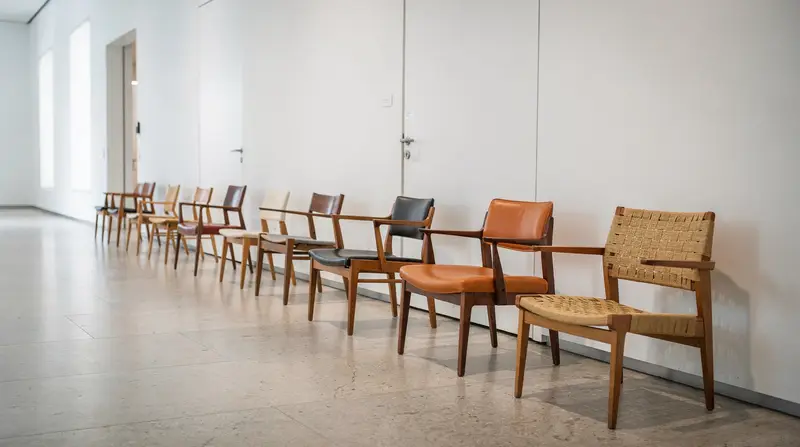
The Design Museum sits in the former Frederiks Hospital (1757), a beautiful rococo building in Frederiksstaden between Amalienborg and Nørreport. The core collection traces the history of Danish and international design from the early 20th century to the present, with particular depth in furniture (Kaare Klint, Arne Jacobsen’s Egg and Swan chairs, Hans Wegner’s Round Chair), ceramics, textiles, and graphic design.
Entry is 130 DKK. The Copenhagen Card covers it. Children under 16 are free.
Honest assessment: if you have a genuine interest in design or design history, you’ll happily spend 2–3 hours here. If you don’t, 60–90 minutes covers the highlights. The gift shop is excellent: original Danish design objects, prints, and homeware at fair prices. Full breakdown in the Designmuseum Danmark guide.
Cisternerne — underground immersive art
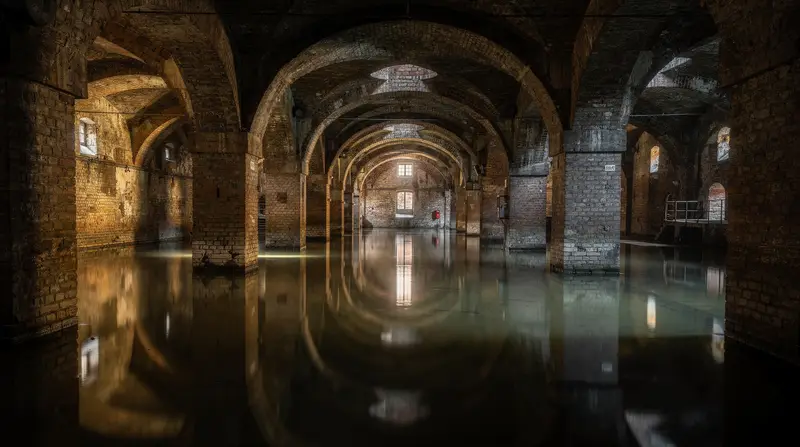
Cisternerne is what it sounds like: the old underground water cisterns beneath Søndermarken park in Frederiksberg, converted since the 1990s into a space for large-scale immersive art installations. The architecture itself — vaulted brick chambers, dripping water, constant darkness broken by the artwork — is memorable. The installations change approximately every six months.
Entry is 110 DKK. The Copenhagen Card covers it. The visit typically takes 45–75 minutes depending on the current exhibition.
Skip it if: you’re not specifically interested in installation art or underground architecture. Go if: you’re on your second or third visit to Copenhagen and want something genuinely unusual. See the Cisternerne guide for the current installation and access details.
Den Blå Planet — Northern Europe’s largest aquarium
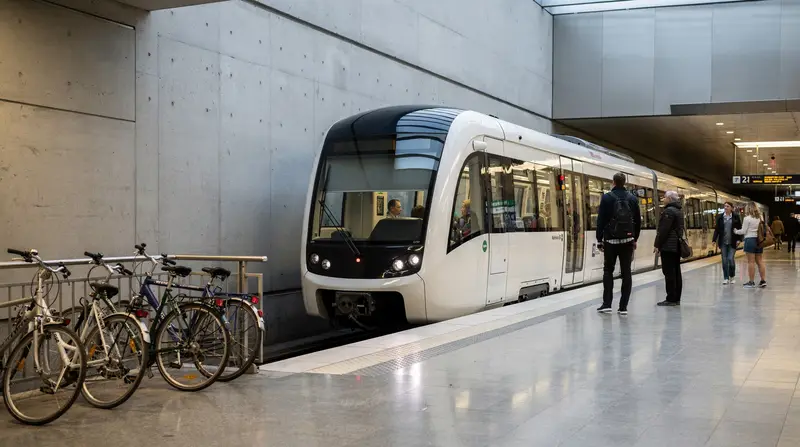
Den Blå Planet (The Blue Planet, officially the National Aquarium Denmark) is a 10-minute metro ride from the city centre (M2 to København Airport, then one stop to Den Blå Planet — check current metro timetables as the stop name varies). The building, designed by 3XN architects to resemble a spinning whirlpool when seen from above, opened in 2013 and is itself worth noting architecturally.
The collection covers approximately 450 species. The main draws are the large ocean tank (featuring sand tiger sharks and large ray species), the Amazon section (piranhas, river turtles, arapaima), and a touch pool zone for children with starfish and small ray species.
Entry is 185 DKK for adults, 110 DKK for children (3–11), and free under 3. The Copenhagen Card covers adult and child entry.
Honest assessment: Den Blå Planet is an excellent family museum and a genuinely impressive aquarium, but adults without children may find 2 hours here is enough. The marine naturalist exhibits are strong; the freshwater sections less so. It is not the world’s largest aquarium, but the building is striking and the main tank is genuinely impressive.
Tickets for Den Blå Planet can be booked via GetYourGuide to skip the box-office queue, which can be 15–20 minutes at peak times. The Den Blå Planet guide covers the full tank-by-tank layout; if you’re travelling with young children, Den Blå Planet with kids has age-specific tips.
Copenhagen Card: when it pays off for museums
The Copenhagen Card costs 899 DKK for 24 hours (adult), 1,149 DKK for 48 hours, 1,299 DKK for 72 hours, and 1,499 DKK for 120 hours. Children (10–15) cost roughly half; under-10s are free with a paying adult.
It covers: all public transport (metro, S-Tog, regional trains including the Kystbanen to Humlebæk for Louisiana), plus 80+ attractions including every museum on this list.
The card pays off if you visit 3–4 paid attractions per day. A realistic one-day example: Louisiana (175 DKK) + Glyptotek (125 DKK) + Designmuseum (130 DKK) + metro fares (roughly 40–60 DKK round trips) = ~470–490 DKK in individual costs, which already represents a significant saving against the 24-hour card price when combined with public transport.
If you plan two or more full museum days: get the 48-hour card. If you’re visiting mainly free museums (National Museum + SMK): skip the card and pay transport separately (a 24-hour transport pass costs 110 DKK, a 72-hour pass 200 DKK). The dedicated Copenhagen Card worth it guide runs the numbers against a wider range of itineraries, not just museums.
The Copenhagen Card (80+ attractions + transport) is bookable via GetYourGuide with immediate digital delivery.
Museums for families with children
Beyond Den Blå Planet, Copenhagen’s museums are generally family-friendly, but not equally so. The National Museum has a dedicated children’s museum wing with hands-on Viking-era activities — armour to try on, a reconstructed longhouse — that keeps most children engaged for 45–60 minutes on its own. The Glyptotek and SMK are quieter, more contemplative spaces better suited to children who are comfortable with a slower pace or who respond well to specific “spot the object” games (ask staff for family trail leaflets, available at most major museums).
Designmuseum Danmark and Cisternerne are the two least suited to young children: the former is a fairly quiet collection best appreciated by design-interested older children or teenagers, and the latter’s total darkness and dripping water can unsettle very young visitors. For a broader view of what else works well with kids in the city beyond museums, see the Copenhagen with kids guide.
Museum clusters: how to group your visits efficiently
Old Town cluster (walkable, 1–2 hours between): National Museum → Glyptotek (10-minute walk through Ny Vestergade/Vester Voldgade) → Designmuseum (20-minute walk via Strøget/Bredgade, or a short cycle).
North of centre: SMK sits near the Botanical Garden and Rosenborg Castle — pair it with Rosenborg for a full morning. Bus 26 from Nørreport.
Day-trip: Louisiana (half-day minimum, Kystbanen train from Central Station, every 20 minutes).
West/Frederiksberg: Cisternerne sits inside Søndermarken park next to Frederiksberg Castle gardens — combine with a walk through the park.
Airport metro line: Den Blå Planet is the final major stop before the airport on the M2. It’s logical to visit on arrival or departure day if you have 3–4 hours to spare.
What to skip
Ripley’s Believe It or Not: A franchise museum at Rådhuspladsen that happens to be included in the Copenhagen Card. Not worth your time in a city with the collections above.
City Museum of Copenhagen (Bymuseet): Currently undergoing redevelopment phases; access and collections are reduced. Check status before visiting.
Thorvaldsens Museum: Free and architecturally interesting, but only essential if you specifically want Neoclassical sculpture. Many visitors find it limited compared to the Glyptotek.
Practical logistics
- Opening hours: Most museums close Mondays. The National Museum, SMK, and Glyptotek are generally open Tuesday–Sunday 10:00–17:00 (later on certain days). Louisiana: 11:00–22:00 Thursdays, otherwise 11:00–18:00. Verify specific hours before visiting.
- Photography: Permitted without flash in most permanent collections. Prohibited or restricted in some temporary exhibitions.
- Cloakrooms: Compulsory in most major museums (bags must be checked). Plan an extra 5–10 minutes at entry.
- Cafés: The Glyptotek winter garden café is the most atmospheric. Louisiana’s café is the most scenic. National Museum’s courtyard café is the best value.
Frequently asked questions about Copenhagen museums
Which museum should I visit if I only have one day?
The National Museum (free, 2–3 hours) for Danish history and the Ny Carlsberg Glyptotek (125 DKK or free on Tuesdays, 2 hours) form the strongest single-day combination. Both are within 15 minutes’ walk of each other near the city centre.
Is photography allowed in Copenhagen museums?
Generally yes for the permanent collections, without flash. Temporary exhibitions often restrict photography — signs at the entrance to each gallery indicate the rules. Always check before shooting.
Do Copenhagen museums have good disabled access?
The SMK and Louisiana are among the most accessible in Denmark, with lifts, wide corridors, and accessible toilets throughout. The National Museum’s historic buildings have some access limitations but has been progressively upgraded. Cisternerne has limited accessibility due to the underground nature of the space — contact them in advance.
What are the best museum cafés in Copenhagen?
Louisiana’s café is the most scenically located (terrace over the Øresund). The Glyptotek’s winter garden café is the most atmospheric. The National Museum’s courtyard café offers the best value. Designmuseum’s café is small but pleasant and uses quality Danish produce.
Are children free at Copenhagen museums?
Children under 18 are free at the Glyptotek, SMK, and Louisiana. Children under 16 are free at Designmuseum. Den Blå Planet charges 110 DKK for ages 3–11. Children under 10 are free with a paying adult on the Copenhagen Card.
When is the best time to visit Copenhagen museums?
Weekday mornings (Tuesday–Thursday) have the smallest crowds at all major museums. The National Museum and SMK are manageable even at weekends due to their size. Louisiana can be very busy on sunny weekend afternoons in summer — arrive at opening (11:00) or go on a weekday. Glyptotek is quietest on Tuesday (when it’s also free).
Can I visit multiple museums in one day without exhausting myself?
Realistically, two major museums per day is the sustainable maximum for most visitors. Three is possible if they are nearby (for example, National Museum + Glyptotek + a quick look at SMK) but museum fatigue is real. Louisiana deserves a half-day on its own given the travel time.
Frequently asked questions — Best Museums in Copenhagen: Honest Rankings for Every Traveller
Which Copenhagen museums are free?
The National Museum of Denmark (Nationalmuseet) is permanently free. The SMK – National Gallery of Denmark has a free permanent collection (temporary exhibitions cost 130–175 DKK). The David Collection (Islamic and European fine art) is also free. Several smaller museums offer free entry on specific days.Does the Copenhagen Card cover museums?
Yes. The Copenhagen Card (from 899 DKK/24 h) covers 80+ attractions including entry to the National Museum, SMK, Glyptotek, Designmuseum Danmark, Den Blå Planet, Louisiana, Cisternerne, and public transport. It pays off from roughly 3–4 paid museum visits per day.How long do you need for the National Museum?
Plan 2–3 hours for a focused visit covering Vikings, prehistory, and the Danish cultural history floors. Allow 3–4 hours if you want the ancient Egypt section and medieval collections too.Is Louisiana Museum worth the trip from Copenhagen?
Yes, for most visitors. Louisiana in Humlebæk combines world-class modern art with a spectacular seaside setting. The 40-minute train journey from Copenhagen Central is straightforward. Budget half a day minimum. Entry is around 175 DKK adults.What is the best museum for children in Copenhagen?
Den Blå Planet (National Aquarium) is the clear winner for families — immersive tanks, touch pools, and interactive zones keep children engaged for 2–3 hours. The National Museum also has a dedicated children's section with Viking-era hands-on activities.Is the Ny Carlsberg Glyptotek worth it?
Very much so. The permanent collection (Egyptian, Etruscan, Greek, Roman antiquities plus French Impressionists) is outstanding, the winter garden is architecturally remarkable, and entry is free on Tuesdays. On other days it costs 125 DKK. Budget 2–2.5 hours.Which museums are covered by the Copenhagen Card that I can skip?
Ripley's Believe It or Not and some wax museums are on the Copenhagen Card list but are not worth your time. The card's real value is on the major cultural sites: National Museum, SMK, Glyptotek, Louisiana, Designmuseum, Den Blå Planet, and Cisternerne.
Top experiences
Bookable activities with verified prices and instant confirmation on GetYourGuide.