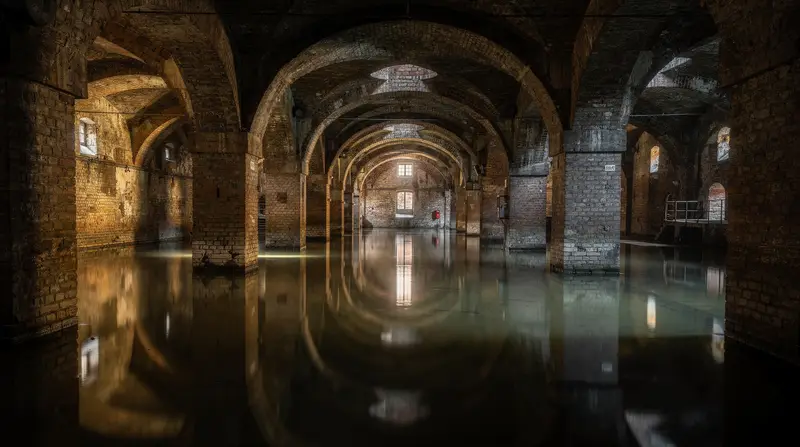
Cisternerne Copenhagen: The Underground Museum in Frederiksberg
Copenhagen Card: Access 80+ Attractions and Transportation
Is Cisternerne Copenhagen worth visiting?
Cisternerne is worth visiting if you enjoy immersive art installations or unusual underground architecture. The Victorian brick cisterns beneath Frederiksberg park are atmospheric regardless of the exhibition. Entry is 110 DKK; covered by the Copenhagen Card. The visit takes 45–75 minutes. Skip it if you are primarily interested in traditional fine art or historical collections.
Cisternerne is one of those Copenhagen attractions that requires a degree of specification before you decide whether to go. It is not a conventional museum. It is not a gallery with paintings on walls. It is a set of Victorian brick cisterns, built in the 1850s, subterranean, perpetually damp, lit by the artwork installed inside, and it hosts large-scale immersive art that uses the architecture of the space as part of the piece.
Whether this appeals to you depends entirely on what you are looking for. If you enjoy contemporary installation art, atmospheric underground spaces, and experiences that fall outside the standard museum visit format, Cisternerne is genuinely memorable. If you are primarily interested in historic or fine art collections, there are better uses of 110 DKK.
| Where | Søndermarken park, Frederiksberg |
| Cost | 110 DKK adults, free under 12, covered by Copenhagen Card |
| Time needed | 45–75 minutes |
| Getting there | 7 min walk from Frederiksberg station (M1), or bus 6A |
| Best time | Thursday evenings (extended hours, fewer visitors) |
The Copenhagen Card covers Cisternerne entry, which makes the calculation easier — if you have the card, the marginal cost of visiting is zero. See our Copenhagen Card worth it guide for the full break-even math.
The history: from water supply to art space
Copenhagen’s population grew rapidly in the first half of the 19th century. The existing water infrastructure — wells and a modest waterworks system — was insufficient, and the city suffered repeated cholera outbreaks as a result. In 1856, the municipality began construction of a new waterworks system with large underground cisterns to hold the supply.
The cisterns were built beneath Søndermarken park in Frederiksberg. The construction technique was straightforward but substantial: brick-vaulted chambers, supported by iron columns, in a grid layout beneath the park’s surface. They could hold approximately 16 million litres of water and supplied Copenhagen until 1983, when the system was decommissioned in favour of modern infrastructure.
The cisterns sat unused until 1996, when an experimental arts initiative began using the space for temporary exhibitions. The dramatic quality of the architecture — brick vaulting, columns, reflective surfaces, dripping water, near-total darkness — made it an obvious venue for immersive and site-specific art. The Cisternerne was formally established as a permanent cultural institution in 2014.
What to expect: the descent and the space
You enter Cisternerne from a small pavilion building in Søndermarken park. A staircase descends approximately 12 metres below ground. The temperature drops noticeably — the cisterns maintain a constant 10–12°C year-round, cold enough to require a layer in summer and not significantly colder in winter. Bring a jacket regardless of the season.
At the bottom of the stairs, the cisterns open up. The space is larger than the entrance suggests: the main chamber is approximately 140 metres long and 20 metres wide, divided by brick arches and iron columns. The floor has a shallow layer of water across much of its surface — this is original to the cisterns and is maintained deliberately, as it creates reflections that amplify whatever artwork is installed.
The lighting is entirely controlled by the artwork. In the absence of any natural light, the installations define what you see. Previous exhibitions have used:
- Large-scale projected imagery covering the curved brick vaults
- Sound installations exploiting the cisterns’ unusual acoustic properties (the reverberation time is approximately 12 seconds — sounds persist and overlap)
- Bioluminescent organisms in the water layer
- Sculptural installations using the columns and arches as structural elements
- Light works that respond to visitor movement
The experience is designed to be slow. The standard museum behavior — reading labels, moving systematically between objects — does not work here. The Cisternerne rewards standing still and looking for extended periods.
The current exhibition: always check before visiting
Cisternerne typically shows one major installation at a time, and the experience varies significantly between exhibitions. Some have been among the most discussed art events in Copenhagen; others have received more mixed responses. The website always describes the current show and includes images — this is worth checking before you go, as the art directly determines the experience.
Exhibitions typically run for six months to a year. The Cisternerne website (cisternerne.dk) keeps current information updated.
What else is in Søndermarken park
Søndermarken is a pleasant park in Frederiksberg — flatter and less famous than the adjacent Frederiksberg Have (Frederiksberg Gardens), but agreeable for a walk. Frederiksberg Gardens themselves, with the Frederiksberg Palace and the small rowing lake, are a 10-minute walk east and are worth combining with a Cisternerne visit.
The Copenhagen Zoo (Zoologisk Have) sits immediately east of Søndermarken, accessible from the south side of the park. The combination of Cisternerne + a walk through Frederiksberg Gardens + Copenhagen Zoo makes for a full day in the Frederiksberg area, particularly for families (the zoo costs 240 DKK for adults, 155 DKK for children). See the Copenhagen with kids guide for how this fits a family itinerary, or nearby Vesterbro for dinner afterwards.
Past exhibitions: understanding the range
Because the current exhibition at Cisternerne determines so much of the visitor experience, it is useful to understand the range of what has been shown there. Past major exhibitions have included:
Bioluminescence installations: Entire exhibition periods where the water layer in the cisterns was treated with bioluminescent organisms, causing the floor to glow faintly blue-green in the darkness. Visitors moved through a space lit only by living light. The effect was extraordinarily unusual — nothing else in Copenhagen offers an equivalent.
Sound-and-light works: Large-scale audio-visual pieces where moving light projections were synchronized with composed soundscapes designed for the cisterns’ reverberation. The water floor reflected the light; the sound echoed and accumulated in the vaulted space in ways that changed perception of duration and scale.
Sculptural installations: Artists who have worked at scale in the space, using the columns and arches as structural elements, hanging works from the ceiling or placing them in the water layer where reflections multiply and distort them.
Video installations: Projected imagery on the brick vaults at a scale that no conventional gallery wall could accommodate. The curved surfaces of the vaulting create unusual optical effects that flat-wall projection cannot replicate.
The through-line across all of these is that the best Cisternerne exhibitions use the specific properties of the space — the darkness, the acoustics, the water, the Victorian brick — as active components of the artwork rather than as a neutral backdrop. Artists who work in conventional white-cube galleries often find Cisternerne challenging; artists who treat the environment as material tend to produce the most memorable shows.
Cisternerne in context: Copenhagen’s underground
Cisternerne is not the only underground space in Copenhagen that has been repurposed for cultural use, but it is the most consistently programmed. The city has other Victorian-era infrastructure — tunnels, cisterns, and the remains of the medieval fortifications — that occasionally appear in public consciousness through guided tours or temporary openings.
For visitors interested specifically in Copenhagen’s urban subterranean layer, Cisternerne is the accessible entry point. The broader story of Copenhagen’s underground water, sewerage, and transport infrastructure is documented in part at the Copenhagen City Museum (check current access) and in various engineering history publications available in the museum shops of major institutions.
Practical information
Address: Søndermarken 1, 2000 Frederiksberg
Hours: Tuesday–Sunday 11:00–18:00 (Thursdays to 21:00). Closed Mondays. Check the website as hours occasionally change around exhibition transitions.
Admission:
- Adults: 110 DKK (~14 €)
- Children under 12: Free
- Copenhagen Card: Covered
Getting there:
- Metro M1: Frederiksberg station (7-minute walk west through the park)
- Bus 6A: Roskildevej stop (3-minute walk north into the park)
- Bus 18: Pile Allé stop (5-minute walk)
- Cycling: Bike parking available at the park entrances
What to wear: Bring a layer — the cisterns are cold (10–12°C). Comfortable shoes are important as some surfaces are slightly uneven or damp.
Photography: Generally permitted in the installation; some artists restrict photography for specific works. Check at entry.
Accessibility: The entry stairs (approximately 50 steps) and some uneven surfaces inside make Cisternerne difficult for visitors with significant mobility limitations. The cisterns are not wheelchair accessible at present. Contact the museum in advance if you need to discuss alternatives.
Honest assessment: who should go
Go if: You enjoy contemporary installation art. You want an atmospheric underground experience unlike any conventional museum. You have the Copenhagen Card and the marginal cost is zero. You are on a second or third visit to Copenhagen and have already covered the main collections. You travel for architecture and unusual spaces as much as for conventional art objects.
Skip if: You are primarily interested in historical art or artefacts. You have limited time and need to prioritise between major collections. You have mobility issues that make stairs or uneven surfaces difficult. You are travelling with very young children who may find the darkness and cold unsettling.
The National Museum of Denmark, SMK National Gallery, and Glyptotek should all be prioritised over Cisternerne for a first-time Copenhagen visit. But for those who have covered those bases, or who specifically like immersive contemporary art, Cisternerne offers something genuinely different from anything else in the city — see the best museums in Copenhagen guide for how it ranks against the rest of the city’s collections.
The acoustic dimension
One aspect of Cisternerne that is not adequately described in photographs or written accounts is the sound. The brick cisterns have an extraordinarily long reverberation time — sounds persist for 10 to 12 seconds after their source stops. When a visitor speaks in a normal voice, the words echo and overlap until they become unintelligible. When music plays, notes sustain until they accumulate into something closer to a chord than a melody.
Artists who work with Cisternerne often treat this acoustics as primary material. Sound installations at Cisternerne have included compositions written specifically to exploit the reverberation, field recordings from underwater environments played through the water layer, and electronic pieces where the cisterns themselves become the instrument. Even exhibitions that are primarily visual often incorporate a sound element that would not work anywhere else.
This acoustic quality is not reproducible in a photograph and cannot be experienced through any description. It is one of the genuinely unusual properties of the space — a reminder that some places require presence rather than documentation.
Events and special programming
Cisternerne runs a programme of evening events beyond the regular exhibition hours. These include:
- Guided tours: English-language tours of the current installation, typically run on weekends. Booking via the Cisternerne website is required.
- Artist talks: Occasional talks by the exhibiting artist or curators, usually in Danish with some English provision.
- Sound events: Live performances or DJ sets in the cisterns, exploiting the acoustic space. These are usually sold separately from regular admission and have a limited capacity.
- Late openings: Thursday evening hours (until 21:00) are extended compared to the standard schedule. Thursday visits have fewer visitors than weekend afternoons and allow more meditative engagement with the work.
Check the Cisternerne events calendar well in advance if you want to combine your visit with an event — popular programmes sell out quickly.
Frequently asked questions about Cisternerne
Is Cisternerne suitable for children?
Children under 12 are free. The underground atmosphere can be exciting or frightening for younger children depending on temperament. The darkness and the cold cisterns are not inherently dangerous but may be unsettling for children who are uncomfortable in dark enclosed spaces. The interactive nature of some installations can appeal to older children (8+). Parents should read the current exhibition description and assess accordingly.
Can you visit Cisternerne and Frederiksberg Gardens on the same day?
Yes — this is the natural combination. Frederiksberg Gardens (free) are directly adjacent to Søndermarken, and the two parks together make a pleasant 2–3 hour outdoor excursion. Frederiksberg Palace, visible from the gardens, is also accessible.
Does Cisternerne have a café?
There is a small café or refreshment counter at some exhibitions and during event evenings. It is not a full café and cannot be relied upon for a meal. Eat before you arrive or plan to stop at one of the cafés near Frederiksberg station after your visit.
Is there parking at Cisternerne?
Street parking is available on Roskildevej and surrounding streets but can be congested. Public transport (bus or metro) is the practical option.
What is the temperature inside Cisternerne?
A consistent 10–12°C year-round. This is cold enough to be uncomfortable without a layer, even in summer. Wear an extra layer or bring a jacket.
How does Cisternerne compare to similar underground art spaces in Europe?
Cisternerne is comparable in concept to the Carrières de Lumières in Les Baux-de-Provence or the various converted industrial spaces used by contemporary art institutions across Europe. What distinguishes it is the authenticity of the Victorian waterworks architecture — this is a genuine historic infrastructure space, not a purpose-built white cube relocated underground — and the acoustic quality of the vaulted chambers, which creates unusual possibilities for sound-based work.
Frequently asked questions — Cisternerne Copenhagen: The Underground Museum in Frederiksberg
What are the Cisternerne in Copenhagen?
Cisternerne (The Cisterns) are the old underground water supply cisterns built beneath Søndermarken park in Frederiksberg between 1856 and 1860. They supplied Copenhagen's fresh water until 1983. Since 1996, the brick-vaulted chambers have been used as an underground art space for immersive and site-specific installations. The architecture and atmosphere are integral to the experience.How much does Cisternerne cost?
Entry is 110 DKK for adults. Children under 12 are free. The Copenhagen Card covers admission. Tickets can be purchased at the entrance or online.Where is Cisternerne in Copenhagen?
Søndermarken 1, Frederiksberg. The entrance is inside Søndermarken park, accessed from Roskildevej or Pile Allé. The nearest public transport is bus 6A (Roskildevej stop) or a 20-minute walk from Frederiksberg station (metro M1).How long does a Cisternerne visit take?
45–75 minutes for most visitors. The space is not large, but it is designed to be experienced slowly. Allow 1 hour as a planning figure.Is Cisternerne accessible for people with mobility issues?
Accessibility is limited. There are steep stairs at the entry descent and some areas have low ceilings and uneven floors. Contact Cisternerne in advance if you have specific mobility requirements — they may have alternative arrangements for certain visitors.Is the Copenhagen Card valid at Cisternerne?
Yes, the Copenhagen Card covers full admission to Cisternerne.How often does the exhibition at Cisternerne change?
Major exhibitions typically run for six months to a year. Cisternerne usually shows one large-scale installation or artist project at a time. Check the Cisternerne website for the current exhibition before visiting.
Top experiences
Bookable activities with verified prices and instant confirmation on GetYourGuide.