Copenhagen with kids: the honest family guide (Tivoli, aquarium, cycling, beaches)
Copenhagen: Tivoli Gardens Entry Ticket
Is Copenhagen good for families with young children?
Yes — Tivoli Gardens is genuinely child-friendly from age 3 upward, Den Blå Planet (national aquarium) is excellent for all ages, and Experimentarium is one of the best hands-on science museums in Scandinavia. The city is very cycle-friendly and flat, stroller access is good on the metro and most streets, and beaches are reachable by metro in 20 minutes. Budget 800–1,200 DKK per family per day for entry fees alone at the major attractions.
Tivoli Gardens entry tickets are available online and worth booking in advance for summer weekends — the park sells out for special events and the entrance queue for walk-up buyers can be 30–40 minutes on busy days.
| Where | Central Copenhagen + Kastrup (M2) + Hellerup (S-tog) |
| Cost | around 800–1,200 DKK/day per family in entry fees |
| Time needed | 3–5 days for the core attractions unhurried |
| Getting around | metro + cargo bikes; both genuinely family-friendly |
| Best time | June or August (warm, slightly less crowded than July) |
What actually works for families in Copenhagen
Copenhagen is a city that functions well with children — not because it is designed as a theme park destination, but because the infrastructure is genuinely sensible. The metro runs to most major attractions. Pavements are wide and largely flat. Cycling infrastructure separates family cyclists from cars. Beaches are accessible by public transport. And the major paid attractions — Tivoli, Den Blå Planet, Experimentarium — are genuinely good, not tourist traps dressed up as family experiences.
That said, Copenhagen is an expensive city. A family of four spending a day at Tivoli with ride passes, lunch, and an evening meal will spend 2,500–4,000 DKK (330–530 euros). Understanding which attractions are worth the cost and which to skip saves money without diminishing the experience.
This guide covers the core attractions with honest assessments of age suitability, pricing in DKK, logistics, and what to skip.
Tivoli Gardens: how it actually works
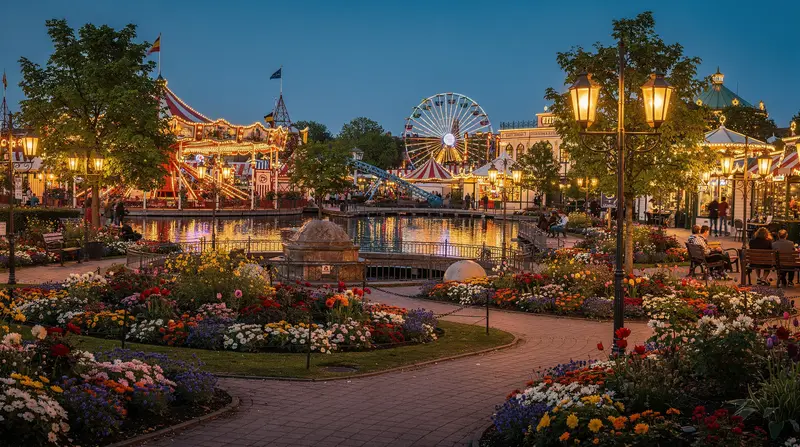
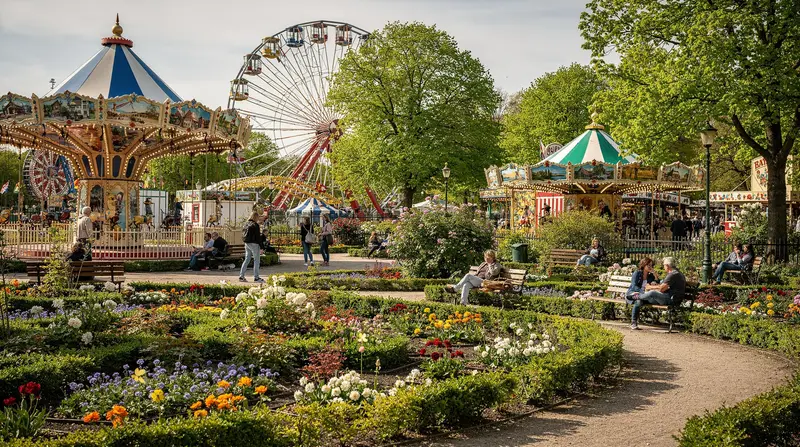
Tivoli Gardens is a 180-year-old amusement park in the city centre — 350 metres from Central Station, inside the S-tog ring, surrounded by hotels. It is simultaneously one of the most-visited attractions in Scandinavia and one of the most misunderstood by families visiting for the first time.
The key distinction: entry vs. rides. Buying an entry ticket does not include rides. The two-layer ticketing system trips up many visitors:
- Entry only (175 DKK adults / 95 DKK children 3–7 / under-3 free): access to the park, gardens, pantomime theatre, lake, and restaurants. You can watch rides, not go on them.
- Ride Pass / unlimited rides (270–320 DKK per person additional): adds unlimited access to all rides for the duration of your visit.
A family of two adults and two children (ages 5 and 8) with entry plus ride passes: approximately 1,100–1,200 DKK before food.
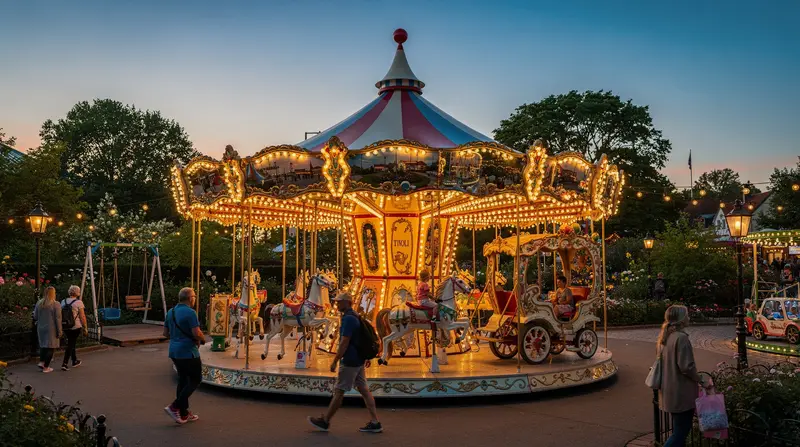
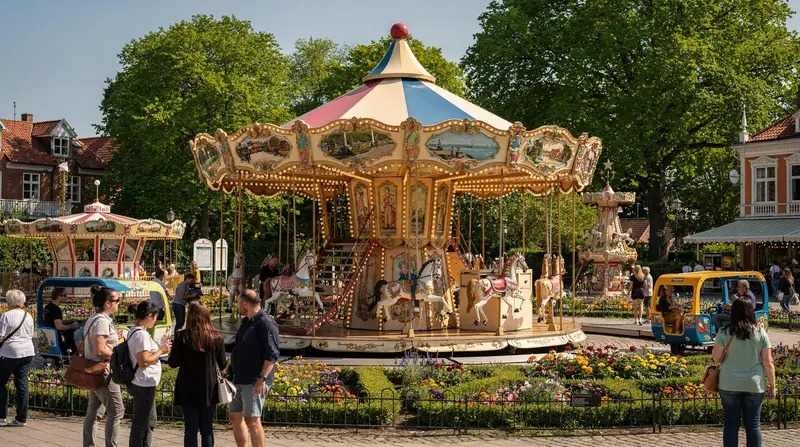
Age and height reality for rides. Tivoli operates standard height restrictions. The Rutschebanen (wooden roller coaster, a genuine classic from 1914) requires 120cm minimum. The Vertigo and Dæmonen rides require 130cm+. Children under 100cm are excluded from most mechanical rides — the carousel (Tivoli Grotten) and the Ferris wheel are the main exceptions.
For children under 100cm, Tivoli’s value is primarily in the atmosphere, the gardens, and the pantomime theatre (free performances of the commedia dell’arte tradition; 30-minute shows, no language barrier). These are genuinely charming, but a family paying 175 DKK per adult to watch a pantomime show and walk gardens should weigh whether it justifies the cost.
Best time to visit with children. The park opens at 11:00 (some days earlier). Arriving at opening avoids the longest ride queues; by 14:00 on summer weekends waits of 20–40 minutes are typical for popular rides. Tivoli illuminates its 100,000 lights at dusk — the evening atmosphere is genuinely special and worth experiencing if children are old enough to manage a late evening (park closes at midnight in summer).
Tivoli food. The park has 30-plus restaurants and food stalls. Quality ranges from fine dining (not appropriate for young children) to familiar formats (burgers, hot dogs, ice cream, waffles). Budget 150–220 DKK per person for a proper meal inside the park; 60–90 DKK for a hot dog and drink. Bringing food inside is not prohibited.
The Tivoli with kids guide covers ride-by-ride height restrictions and age recommendations in detail.
Den Blå Planet: the national aquarium
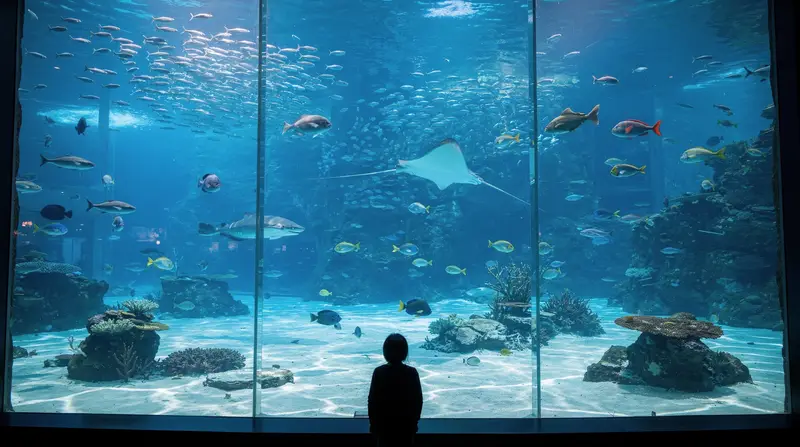
Den Blå Planet (The Blue Planet) is the national aquarium of Denmark, located at Kastrup near the airport — 20 minutes from the city centre on the M2 metro (Kastrup station, short walk).
The building is striking — a 3XN-designed spiral structure that references water in its architectural form. For adults who care about architecture, this alone is worth noting.
For children, the highlights are:
- The ocean tunnel — a walk-through acrylic tunnel with sand tiger sharks, rays, and large pelagic fish overhead and to the sides. Children under 6 are often overwhelmed in the best sense by this section.
- Tropical fish section — densely stocked coral reef tanks with vivid colours; strong with children aged 3–10.
- Ray touch pool — shallow pool where visitors can touch rays. Supervised, safe, and one of the most memorable moments for children aged 4 and up.
- Freshwater section — including large pike, eels, and perch. Less spectacular visually but interesting for children with an interest in nature.
Pricing: Adults 185 DKK / children 3–11 approximately 100 DKK / under-3 free. Family ticket (2 adults + 2 children) around 500 DKK. The Copenhagen Card includes entry.
Time: Allow 2–3 hours. The aquarium is not so large that it exhausts children, but there is enough to fill an unhurried morning or afternoon.
Logistics: The M2 metro journey from the city centre is smooth and stroller-friendly. Kastrup station to the aquarium is a 10-minute walk, largely flat. A café on site is adequate for lunch. Combine with a trip to the nearby beach at Amager Strandpark (5–10 minutes by metro) for a full day out.
The Den Blå Planet guide has the full layout and seasonal tips.
Experimentarium: for ages 5 and up
Experimentarium is a hands-on science centre in Hellerup, north of central Copenhagen — reachable by S-tog (Hellerup station) or bus. It reopened in purpose-built premises in 2017, which makes it one of the newest major attractions in the Copenhagen area.
The centre covers science, technology, and human biology through interactive exhibits. There are no passive displays — everything is designed to be touched, operated, or participated in. Key sections include:
- Bodylife — human physiology exhibits including a climbing wall designed around the musculoskeletal system
- Science universe — physics and chemistry exhibits including a wind tunnel and electricity demonstrations
- Ocean — a large water table and coastal ecology exhibits
- Children’s World — a dedicated area for children under 6 with simpler interactive elements
Age suitability: Children under 3 can engage with the youngest section but get limited value. Ages 5–14 are the target audience. Adults without children often find it interesting for 60–90 minutes.
Pricing: Adults approximately 210 DKK / children 3–14 approximately 145 DKK / under-3 free. Family ticket available around 640 DKK for 2+2. Copenhagen Card included.
Time: Allow 3–4 hours; it is one of the larger museums in the Copenhagen area. There is a café on site.
Experimentarium tickets can be booked online to skip the entrance queue.
Cycling with children
Copenhagen cycling is not optional — it is the experience that differentiates a family trip here from any other European city.
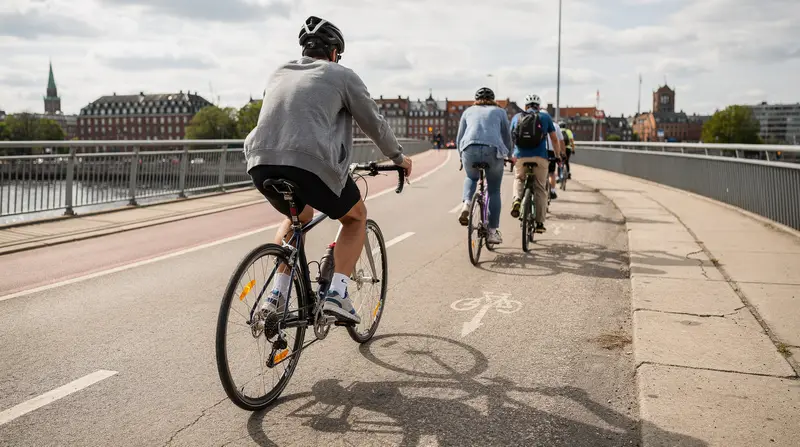
Cargo bikes (Christiania bikes or similar front-loading trikes) are the standard family vehicle in Copenhagen. These carry two to three children in a covered front box while an adult pedals behind. They are wide but stable, and Copenhagen’s cycling infrastructure — mostly physically separated from cars — accommodates them throughout the city.
Rental shops offering cargo bikes include:
- Copenhagen City Bikes (city-wide stations)
- Donkey Republic (app-based, includes cargo bike option)
- ByCyklen (electric bikes with GPS, good for parents who want assistance)
Cargo bike day rental: 350–550 DKK. Standard bike: 150–250 DKK per day. Helmets are not legally required in Denmark but are available from rental shops.
Recommended family cycling route: Central Station → Tivoli → Nørreport → Rosenborg (garden picnic) → Nørrebro → Superkilen park → return via Dronning Louises Bro (bridge, good lake views). Total distance: 8–10km, achievable in 2 hours at relaxed pace. The route uses cycle paths throughout with minimal car interaction.
The biking in Copenhagen guide covers rental options and route planning in detail.
Beaches accessible by metro
Copenhagen beaches are a genuine asset for families in summer (June–August).
Amager Strandpark is the closest to the city — a 5km artificial beach built in 2005, with a protected lagoon for younger children, lifeguards in peak season, and facilities including toilets, changing rooms, and seasonal kiosks. The M2 metro stops at Amager Strand (20 minutes from Kongens Nytorv). Water depth in the inner lagoon is 0.5–1.5m, suitable for young children.
Bellevue Beach (S-tog line C to Klampenborg, walk 10 minutes) is the historic beach north of Copenhagen, well-maintained with more facilities. The adjacent Bakken amusement park in Dyrehaven is a free-entry alternative to Tivoli for older children.
Charlottenlund Beach (S-tog to Charlottenlund) is smaller and quieter — less infrastructure but more relaxed atmosphere. Adjacent to Charlottenlund Palace gardens, which are free to enter and good for a picnic.
Water temperature: 15–17°C in June, 18–22°C in July–August, dropping to 16–18°C in September. Wet suits are not required in July and August for children who are comfortable with cool water.
Stroller and pushchair logistics
Copenhagen rates well for stroller access by European capital standards:
- Metro (M1–M4): All stations have lifts. Platform gap is minimal. Avoid peak hours (07:30–09:00 and 16:00–18:00) on the M3 Cityringen — the circle line gets crowded.
- S-tog: Lifts at most stations (not all). Designated stroller/wheelchair space in every carriage.
- Buses: Low-floor, designated stroller space. Folding is not required but appreciated in busy periods.
- Pavements: Generally wide, dropped kerbs throughout the city centre. Cobblestones in Nyhavn and parts of the old town are difficult for wheels — stick to parallel streets.
- Tivoli: Stroller parking is provided at the entrance. The park’s internal paths are pushchair-accessible, though some garden sections have gravel.
- Den Blå Planet: Fully accessible, wide corridors. Stroller storage available at the entrance if preferred.
One practical note: the Copenhagen Card includes unlimited use of metro, S-tog, and most buses — significant savings for families who travel across the city multiple times per day.
The Zoological Garden (Copenhagen Zoo)
Copenhagen Zoo (Frederiksberg, bus or S-tog to Frederiksberg station) is a mid-size zoo that punches above its weight architecturally — particularly the Elephant House (Foster + Partners) and the new Africa section. It covers around 11 hectares.
Animal highlights for children: the giraffe feeding platform (extra cost, approximately 55 DKK), the children’s farm, the polar bear enclosure, and the new African savanna section with rhinos and zebra.
Pricing: Adults approximately 230 DKK / children 3–11 approximately 140 DKK / under-3 free. Family ticket 2+2 around 650 DKK. Not included on the Copenhagen Card.
Time: Allow 3–4 hours for a proper visit. The zoo is significantly larger than it appears on the map.
The Bakken amusement park: free entry alternative
Bakken (officially Dyrehavsbakken) in Dyrehaven forest near Klampenborg is the world’s oldest operating amusement park, founded in 1583. Unlike Tivoli, entry is free — you pay only for individual rides.
The atmosphere is deliberately old-fashioned — a mix of fairground rides, food stalls, theatres, and a relaxed park culture. It is less polished than Tivoli but also less expensive and less crowded outside Danish school holidays.
With children: The carousel, bumper cars, and family roller coasters (smaller and slower than Tivoli equivalents) are the main draws. The adjacent Dyrehaven — a royal deer park with herds of red deer and fallow deer roaming free — is excellent for children who will appreciate seeing 2,000 deer in a forest setting.
Getting there: S-tog to Klampenborg, 25 minutes from Central Station. Bakken is a 10-minute walk through the forest.
Ripley’s Believe It or Not!
Ripley’s is located centrally at Rådhuspladsen. It is a franchise attraction — reliable but not exceptional. Good for children aged 7–13 who enjoy the unusual exhibits. Adults generally find it overpriced for what it delivers.
Ripley’s admission tickets cost approximately 195 DKK per adult and 130 DKK per child. A combo ticket bundles Ripley’s with three other nearby attractions for 335 DKK per person — only worth it if the family genuinely wants all four components.
Practical planning for families
Best season: June and August are the sweet spots — school holidays in Denmark begin mid-June and the weather is warmest (average 20–23°C). July is peak season and the most crowded. May and September offer lower prices and fewer queues at the cost of cooler weather (15–18°C).
Where to stay with children: Frederiksberg and Vesterbro have the best balance of space, price, and central access. Frederiksberg is quieter at night and has good park access (Frederiksberg Have). Vesterbro offers more apartment options suitable for families. Nørreport area (Indre By) is central but hotel prices are high.
Budget reality: A 3-day family trip (2 adults, 2 children) covering Tivoli, Den Blå Planet, and Experimentarium will cost 7,000–12,000 DKK in attraction entry and food alone, before accommodation and transport. The Copenhagen Card (24 or 48-hour) can reduce this if timed correctly, though Tivoli entry is not included.
The itinerary for Copenhagen with kids in 3 days maps out a realistic schedule with travel times and budget.
Public transport passes worth knowing about
Beyond the Copenhagen Card, a few practical ticketing options matter for families moving around the city several times a day. A DOT app or Rejsekort works for single journeys and is cheaper per trip than the Copenhagen Card if you are only using transport twice a day rather than constantly hopping between attractions. Children under 12 travel free on the metro and S-tog when accompanied by a paying adult (up to two children per adult), which meaningfully changes the maths for larger families compared to solo travellers.
Family day passes (24-hour zone tickets) make sense for families doing three or more separate journeys in a day — a morning trip to Den Blå Planet, an afternoon at the beach, and an evening return to the hotel adds up quickly at single-fare prices. Buy these at the station machines or through the DOT Tickets app before travelling; buying on board is not always possible on the metro, and inspectors do not accept “I meant to buy one” as an excuse for an unvalidated ticket.
Family-friendly accommodation zones in more detail
Beyond the general recommendation of Frederiksberg and Vesterbro, families should also weigh proximity to specific attractions. Staying near Nørreport or Kongens Nytorv puts you within walking distance of Rosenborg, Tivoli, and Nyhavn, but at a price premium and with less apartment-style accommodation suited to families. Østerbro is quieter and leafier, with good access to Experimentarium via S-tog, but slightly further from the main tourist sights. Amager (near the airport and Den Blå Planet) suits families prioritising the aquarium and the beaches over the historic centre, and often has better-value apartment rentals than central neighbourhoods.
Packing for a family trip to Copenhagen
Beyond the usual travel basics, a few Copenhagen-specific items make a real difference with children. Comfortable, closed shoes matter more than usual — cobblestones in Nyhavn and parts of the old town are hard on small feet and stroller wheels alike, and a full day combining walking, cycling, and metro transfers rewards proper footwear over sandals.
A light rain layer for each family member is worth packing regardless of season, since Copenhagen showers arrive with little warning even on forecast-sunny days. If cycling is part of the plan, bring or rent a properly fitted child helmet even though Denmark does not legally require one — rental shops stock them but sizes can run out on busy summer weekends, so ask ahead if your child needs a specific size.
Rainy-day backup plan
Copenhagen gets periodic showers year-round, and a family plan that only works in sunshine is an incomplete plan. Indoor options that hold up well with children: the Den Blå Planet aquarium (fully indoors, unaffected by weather), Experimentarium (hands-on, genuinely absorbs 3+ hours), and the National Museum of Denmark, which has a dedicated children’s museum section with dressing-up costumes and a reconstructed historical house that younger children enjoy more than the main collection.
Torvehallerne covered food market is a good wet-weather stop for lunch — browse the stalls, eat under cover, and let children choose their own food from the varied stalls. For families staying near Nørrebro or Vesterbro, a rainy afternoon is also a reasonable excuse to slow down at a neighbourhood café rather than forcing an outdoor itinerary that nobody enjoys.
Restaurants that actually welcome children
Copenhagen’s fine-dining reputation (Noma, the wider New Nordic scene) can make parents assume the city is hostile to family dining. It isn’t. Torvehallerne market has a dozen stalls where children can point at what they want — smørrebrød, pizza slices, pastries — and nobody minds a slow, messy toddler meal.
Reffen, the street-food area in Refshaleøen, has picnic-style outdoor seating that absorbs noise and mess far better than a formal restaurant, plus enough variety that fussy eaters usually find something. Burger chains and pizza places around Vesterbro and Frederiksberg are unremarkable but reliably tolerant of children, unlike some of the quieter New Nordic dining rooms where a hushed atmosphere makes families feel unwelcome even if not explicitly turned away.
Frequently asked questions about Copenhagen with kids
How much does Tivoli cost for families?
Entry for adults is 175 DKK and 95 DKK for children aged 3–7; under-3 is free. Ride Passes (unlimited rides) add 270–320 DKK per person. A family of 2 adults + 2 children (ages 5 and 8) expecting full entry plus rides: plan 1,100–1,200 DKK before food.
What age is best for Tivoli?
Ages 4–12 get the most from the ride experience. Under 100cm height excludes children from most rides. Teenagers enjoy the more intense attractions. Adults-only visits often find it overpriced for the rides.
What is Den Blå Planet like with children?
Excellent for ages 2 and up. The ocean tunnel and ray touch pool are the standouts. Allow 2–3 hours. Adults 185 DKK, children 3–11 approximately 100 DKK; the Copenhagen Card includes entry.
Can you cycle with children in Copenhagen?
Yes — cargo bike rentals (front-loading trikes carrying 2–3 children) cost 350–550 DKK per day. The city’s separated cycling infrastructure is genuinely safe for family use.
Which beaches near Copenhagen are best for families?
Amager Strandpark (M2 to Amager Strand, 20 minutes) has a protected lagoon ideal for young children. Bellevue Beach (S-tog to Klampenborg) is the classic choice for older children with more space.
Is the Copenhagen metro stroller-friendly?
Yes — all stations have lifts and level boarding. Avoid peak rush hours on the central M3 Cityringen line. S-tog is also accessible. Buses are low-floor with designated stroller spaces.
What is the Copenhagen Card and is it worth it for families?
The card covers Den Blå Planet, Experimentarium, the National Museum, and all public transport. Children’s cards are available. If you plan four or more paid attractions in 24–48 hours, it typically saves money. Note: Tivoli is not included.
Top experiences
Bookable activities with verified prices and instant confirmation on GetYourGuide.