SMK Copenhagen: Guide to Denmark's National Gallery of Art
Copenhagen Card: Access 80+ Attractions and Transportation
Is SMK Copenhagen free?
The permanent collection at SMK (Statens Museum for Kunst, Denmark's National Gallery) is permanently free. Temporary exhibitions cost 130–175 DKK. The museum is open Tuesday–Sunday 10:00–18:00 (Wednesdays to 20:00). It holds one of Europe's largest Matisse collections outside France.
SMK — Statens Museum for Kunst, Denmark’s national gallery — holds a permanent collection spanning 700 years of European and Danish art, and the whole thing is free. Temporary exhibitions cost 130–175 DKK, but the galleries covering everything from Dutch Golden Age painting to Henri Matisse to contemporary Danish art cost nothing at all to enter.
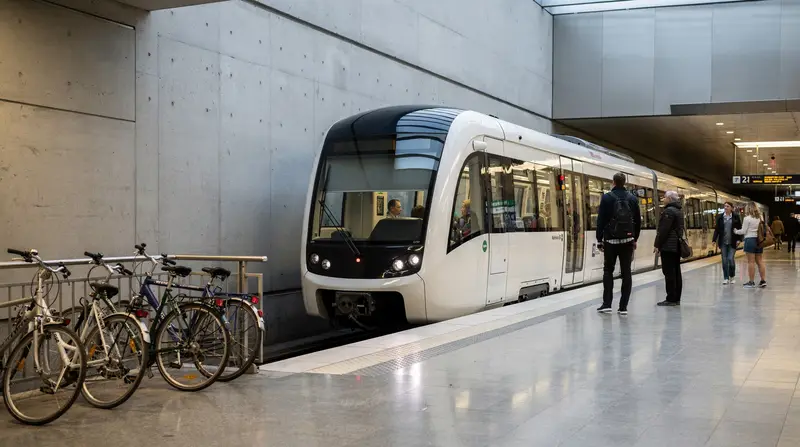
The Copenhagen Card covers SMK admission and pairs well with a day that includes Rosenborg Castle, the Botanical Garden next door, and public transport across the city.
| Where | Sølvgade 48–50, next to Østre Anlæg park |
| Cost | Permanent collection free; temporary exhibitions 130–175 DKK |
| Time needed | 2–3 hours for the permanent collection |
| Getting there | 10-min walk east from Nørreport station |
| Best time | Weekday mornings, or last Friday evening for SMK Fridays |
Why SMK is consistently underrated
Copenhagen’s cultural conversation often centres on the National Museum (for history), the Glyptotek (for ancient art and French Impressionism), and Louisiana (for contemporary art and architecture). SMK sits in a less obvious position — a national gallery with a broad mandate — and tends to receive less attention from visitors than it deserves.
This is partly because its collection is genuinely broad rather than spectacularly focused. Partly because it sits in a slightly peripheral location (next to a park in Østerbro/Indre By borderlands). And partly because the free permanent collection is in a building that requires finding your way in past ticket queues for temporary exhibitions.
Once inside, however, the quality is apparent. The Matisse collection alone — acquired through Carl Jacobsen’s personal friendship with Matisse in the early 20th century — justifies the trip.
The building: two centuries in two wings
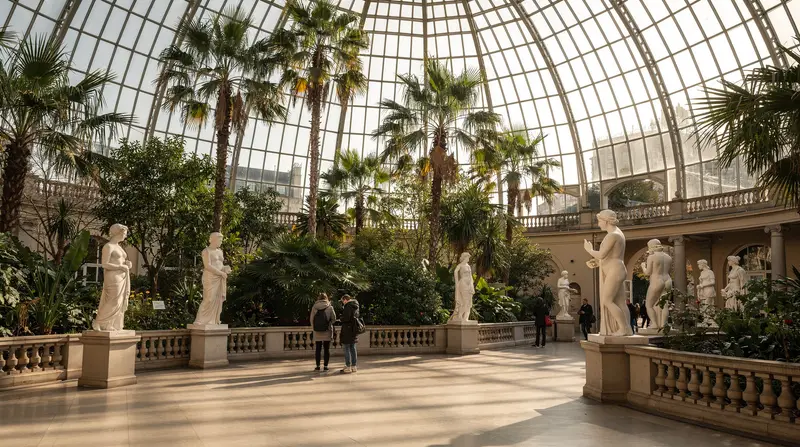
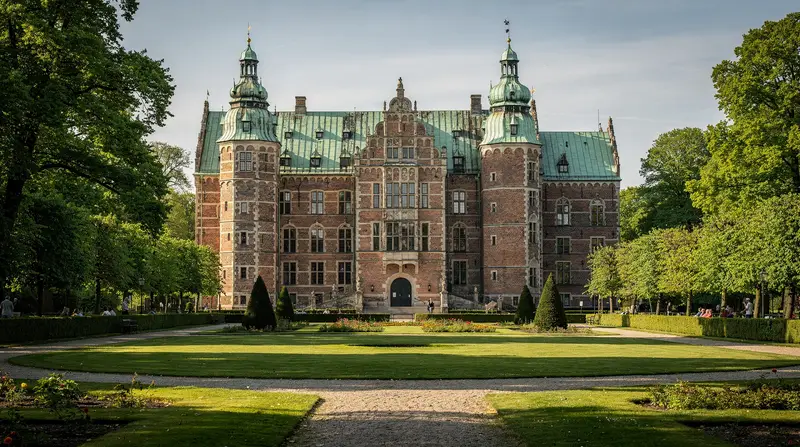
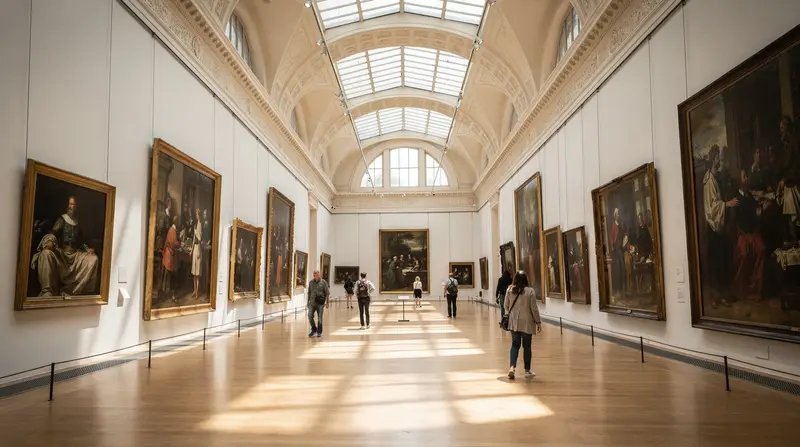
SMK occupies two connected structures. The original building, designed by Vilhelm Dahlerup (also responsible for the Glyptotek’s original wing) and opened in 1896, is a grand neoclassical palace with skylit galleries and broad corridors. The 1998 addition by Anna Maria Indrio added a more contemporary wing facing the park, connecting the 19th-century building to the 20th-century and contemporary galleries via a central hall.
The two wings meet in a large entrance hall from which all sections of the museum branch. The building’s layout is logical once you understand it but can feel confusing on first entry — pick up a floor plan at the desk.
The permanent collection: what to prioritise
Matisse
Henri Matisse and Carl Jacobsen met in Paris in the early 1900s, and the SMK’s Matisse collection is the direct result of that friendship. The museum holds major works from across Matisse’s career: the early Fauve period (explosively coloured, loosely rendered), the Moroccan period (flatter planes, warmer palette), and the Nice period (interiors, figures by windows, striped fabrics).
The collection includes paintings, bronze sculptures, works on paper, and prints. It is displayed in a dedicated gallery that rotates works from the holdings — not everything is shown simultaneously, but what is on display is consistently strong.
If you have any interest in early 20th-century painting, this section alone repays the visit. The originals read differently from reproductions: the colour is denser, the paint surface has texture and history that photographs cannot convey.
Danish Golden Age painting (1780–1850)
The term “Danish Golden Age” refers to a period of remarkable artistic production in Denmark, roughly coinciding with the Napoleonic era and its aftermath. Copenhagen at this time had a surprisingly cosmopolitan art scene, with painters who studied in Rome and Paris returning to depict Danish landscapes, domestic interiors, and ordinary people with a realism and attentiveness unusual for the period.
The key figures represented at SMK include:
- Christoffer Wilhelm Eckersberg: Often called the father of Danish painting. His portraits and seascapes are precise, luminous, and psychologically penetrating.
- Christen Købke: Eckersberg’s most talented pupil. His views of Copenhagen’s outskirts, the lakes, and the Citadel fortress are among the finest urban landscapes of the period.
- Constantin Hansen: Group portraits of Danish artists in Rome; Copenhagen street scenes.
This section of SMK gives you more access to Danish artistic identity than any other single museum space in Copenhagen. The works are not internationally famous, but they are excellent.
Dutch and Flemish Old Masters
SMK has a respectable collection of 17th-century Dutch and Flemish painting — the golden age of Rembrandt, Rubens, and Vermeer. The collection doesn’t reach the level of the Rijksmuseum or the Mauritshuis, but there are strong individual works: Rubens portraits, several Rembrandt-school paintings, and a good selection of genre scenes and still lifes.
European art: 15th–18th century
The collection extends back to the early Renaissance and includes Italian, Flemish, and German work across four centuries. Lucas Cranach the Elder, Andrea Mantegna, and Jacopo Tintoretto are among the artists represented. For most visitors, this section is best experienced in 30–40 minutes unless there is a specific artist you want to find.
20th-century and contemporary art
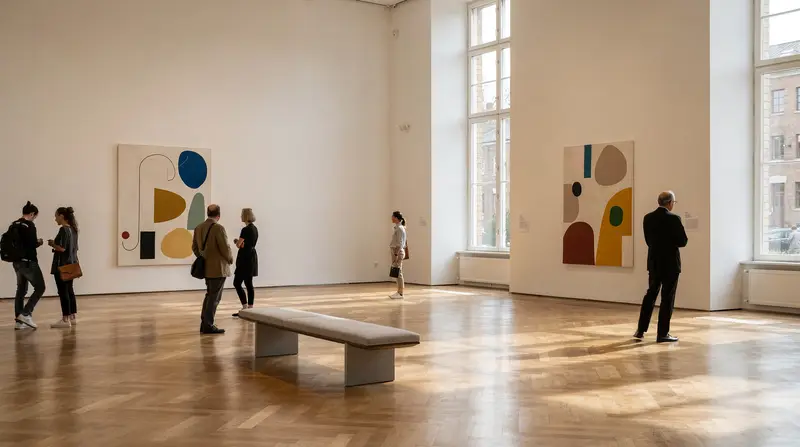
The 1998 wing houses SMK’s modern and contemporary holdings, covering international and Danish work from roughly 1900 to the present. Danish Modernism — including artists associated with the COBRA movement (which united Copenhagen, Amsterdam, and Paris artists in the late 1940s and early 1950s) — is particularly well-represented. Asger Jorn, the most prominent Danish COBRA member, has a substantial presence.
The contemporary section changes more frequently than the historical galleries; the SMK has an active acquisition policy and rotates holdings regularly.
Temporary exhibitions
SMK typically runs two to three major temporary exhibitions per year, often focused on either a single international artist or a thematic exhibition drawing on Danish and European collections. Entry costs 130–175 DKK depending on the exhibition.
Past exhibitions have covered Francisco Goya, Käthe Kollwitz, Danish folk art, and photographic history. The quality is consistently high, and temporary shows often attract visitors who might not otherwise come to the museum. Check the SMK website for current listings before your visit.
SMK Fridays
On the last Friday of each month, SMK stays open until midnight and hosts an evening event that combines museum access with live music, DJs, lectures, and a full bar. Entry is around 160 DKK (includes museum access and one drink). These are popular with Copenhagen’s 25–40 demographic and are a genuinely atmospheric way to experience the gallery. Advance booking is strongly recommended.
The museum shop and café
SMK shop: Located near the main entrance, accessible without a ticket. Strong selection of art books, exhibition catalogues, prints, jewellery referencing works in the collection, and Scandinavian design objects. One of the better museum shops in Copenhagen.
SMK café: The café in the main hall serves coffee, pastries, and lunch plates. Prices are mid-range for Copenhagen (a coffee 55–70 DKK, a lunch plate 125–160 DKK). The quality is good. The café has seating with views into the main hall — pleasant in the morning when the building is relatively quiet.
Practical information
Address: Sølvgade 48–50, 1307 Copenhagen K
Hours:
- Tuesday–Sunday: 10:00–18:00
- Wednesdays: 10:00–20:00 (extended hours)
- Closed: Mondays
Admission:
- Permanent collection: Free
- Temporary exhibitions: 130–175 DKK
- Children under 18: Free (including temporary exhibitions)
- Copenhagen Card: Covers permanent collection; check on temporary exhibitions
Getting there:
- Nørreport station (metro M1/M2, S-Tog): 10-minute walk east through Østre Anlæg park
- Bus 26: Stops on Øster Voldgade directly adjacent to the museum
- Kongens Nytorv metro (M1/M2): 15-minute walk northwest through the park
- Walking from Rosenborg Castle: 8 minutes east through the park
Cloakroom: Free and compulsory for large bags. Allow 5 minutes.
Photography: Permitted in permanent galleries without flash. Restrictions apply in temporary exhibitions — signage is clear.
Accessibility: Fully wheelchair accessible throughout, including lifts between all levels.
Pairing SMK with nearby attractions
SMK’s location next to the Botanical Garden (Botanisk Have — free, open year-round) and a short walk from Rosenborg Castle makes it natural to combine these on a single morning or afternoon route. Rosenborg Castle charges 130 DKK entry but is covered by the Copenhagen Card.
A practical morning route: Nørreport station → walk through the Botanical Garden (30 minutes, free) → Rosenborg Castle (1.5 hours) → SMK permanent collection (2 hours, free) → bus or walk back to Nørreport. This fills a comfortable morning without rush.
SMK among Copenhagen’s museums
Copenhagen has an unusually strong museum cluster, and SMK is one of several genuinely excellent options competing for your time. The best museums in Copenhagen guide ranks them all together; if you can only choose two or three, SMK’s painting collection, the National Museum of Denmark for history and archaeology, and the Glyptotek for ancient sculpture and French Impressionism cover the widest ground without overlap.
Design-focused visitors should also weigh the Designmuseum Danmark, which sits closer to Kongens Nytorv and covers Danish furniture rather than painting. For a wider view of how SMK fits into a full Copenhagen day, see the things to do in Copenhagen ranking and the Copenhagen Card worth it guide if you’re weighing whether the card’s coverage of SMK and several other museums pays off for your trip length.
SMK’s print and drawing collection
The SMK holds an extensive collection of works on paper — drawings, prints, and watercolours — that is not permanently displayed but can be seen by appointment through the museum’s study room. For researchers and collectors, this resource is significant: the collection covers Danish, Dutch, Flemish, and German graphic work from the 16th century to the present.
Casual visitors will not typically engage with this collection, but it is worth knowing it exists if you have a specific interest. The study room appointments are free and can be requested through the SMK website. Most material is not digitised.
Photography at SMK
SMK operates one of the more visitor-friendly photography policies among major European art museums. Photography without flash is permitted throughout the permanent collection. The museum actively encourages documentation and sharing, operating under the principle that access to art is a public good.
The permanent collection’s 19th-century and earlier works are, with a few exceptions, out of copyright — photographs of them can be shared freely. SMK has also published a large portion of its public domain collection online through its own digital archive, where high-resolution images are available for download without restriction. This is consistent with Danish cultural policy on public access to heritage materials.
Architecture and building history
The SMK building opened in 1896, designed by Vilhelm Dahlerup. The choice of Dahlerup — who had also designed the Glyptotek and Tivoli’s concert hall — reflected a moment when Copenhagen was investing significantly in permanent cultural infrastructure. The building’s neoclassical language, with its central dome, grand staircase, and skylit top-floor galleries, was intended to signal that Denmark’s national art collection was being taken seriously.
The 1998 extension by Anna Maria Indrio was more controversial. Its angular concrete and glass vocabulary contrasts deliberately with the 1896 building, and the connection between the two — a wide interior hall — serves as both a circulation space and an exhibition area. Danish critical opinion on the extension has never fully settled, though the building’s internal logic has been consistently praised.
Outside, the SMK’s park-facing facade looks across the north end of Østre Anlæg and is worth a few minutes of attention. The reliefs and decorative detailing on the 1896 building reflect the late-19th-century belief that a national art museum should itself be a work of art — a position that feels different from the neutral white-box museology that dominated construction in the following century.
Frequently asked questions about SMK
How does SMK compare to the Glyptotek?
The SMK’s strength is in painting across a broad sweep of Western art history, from the 15th century to the present. The Glyptotek specialises in ancient Mediterranean sculpture and French 19th-century art. They do not significantly overlap. Both are worth visiting; the SMK is best done on a different day from the Glyptotek.
Is SMK worth visiting for someone who is not particularly interested in art?
If you enjoy looking at paintings for 1–2 hours without prior knowledge, the Danish Golden Age section and the Matisse gallery are accessible entry points — the works are beautiful without requiring art historical background. If modern and contemporary art leaves you cold and you have limited time, the Glyptotek or National Museum may serve you better.
Does SMK have a children’s programme?
Yes. SMK runs guided tours for families (in Danish and English) on weekends, and during school holidays there are creative workshops where children can make art in response to the collection. The museum’s approach to families is thoughtful; this is not a museum that merely tolerates children.
Can I buy art prints from SMK?
The museum shop sells high-quality prints of works in the collection, as well as exhibition catalogues and postcards. Prices range from 60 DKK for standard postcards to 350–800 DKK for framed prints.
Is there parking near SMK?
There is some on-street parking on Sølvgade and surrounding streets, but Copenhagen’s parking is expensive and difficult. Public transport (bus or metro to Nørreport) is strongly recommended. Cycling is ideal — there are bike racks directly outside the museum.
What is the difference between the free permanent collection and paid temporary exhibitions at SMK?
The permanent collection covers everything in SMK’s own holdings — seven centuries of European and Danish art, the Matisse collection, the COBRA works, the Dutch Old Masters. Temporary exhibitions are time-limited shows that often borrow from other institutions. The permanent collection is large enough that most visitors can spend 2–3 hours in it without seeing temporary exhibitions at all.
Frequently asked questions — SMK Copenhagen: Guide to Denmark's National Gallery of Art
What is the best thing to see at SMK?
The Matisse collection is the standout — one of the largest holdings of his work outside France. The Danish Golden Age paintings (1780–1850) offer an excellent introduction to Danish Romantic art. The contemporary and 20th-century wing holds significant works by Danish and international artists.How long should you spend at SMK?
2–3 hours for the free permanent collection covering the highlights. Add 1 hour if there is a temporary exhibition you want to see. The museum is large enough that a full day is possible without feeling rushed.Where is SMK in Copenhagen?
Sølvgade 48–50, next to Østre Anlæg park and adjacent to the Botanical Garden. From Nørreport station (metro and S-Tog) it is a 10-minute walk east through the park, or a short bus ride on route 26.Does SMK have a shop?
Yes, one of the better museum shops in Copenhagen — strong on art books, prints, design objects, and items related to the permanent collection and current exhibitions. It is accessible without a museum ticket.What does SMK stand for?
Statens Museum for Kunst — the State Museum for Art. It is the national gallery of Denmark, founded in 1824 as the Royal Picture Gallery and moved to its current building in 1896.Is SMK covered by the Copenhagen Card?
Yes. The Copenhagen Card covers the permanent collection at SMK. Temporary exhibitions may require an additional ticket. Since the permanent collection is free regardless, the card's main advantage at SMK is when combined with other paid attractions and transport.Is SMK good for children?
SMK has family-focused programming on weekends and during school holidays, including guided tours for children and creative workshops. The building's size can be challenging for very young children, but the art is accessible and the museum staff are family-friendly.
Top experiences
Bookable activities with verified prices and instant confirmation on GetYourGuide.