Nørrebro guide: coffee, multicultural food, Jægersborggade and Assistens Cemetery
Copenhagen: Nørrebro Neighborhood Tour
What is Nørrebro Copenhagen known for?
Nørrebro is Copenhagen's most multicultural and creatively independent neighbourhood. Jægersborggade has the city's best coffee (The Coffee Collective), small independent shops and a neighbourhood food scene that feels genuinely local. Assistens Cemetery is a functioning park as much as a burial ground. No major tourist sights — that is the point.
Nørrebro does not have a palace, a famous statue or a coloured canal. What it has is the street where Copenhageners go for coffee when they want the best cup in the city, a cemetery where families picnic next to the graves of the country’s most important writer and philosopher, an outdoor park containing objects sourced from 60 countries, and a food scene that reflects an immigrant population that has been here for three generations. This guide explains how to spend half a day or a full day in the neighbourhood without a set agenda — which is largely the point.
| Where | North of Søerne (the lakes), 10–20 min from Nørreport by foot/bike |
| Cost | 400–450 DKK/person covers a full day of food and coffee |
| Time needed | Half day minimum; a full day covers Jægersborggade, the cemetery, Superkilen and the lakes |
| Getting there | Metro to Nørreport then walk/bus 5C, or 10 minutes by bike from Indre By |
| Best time | Morning for coffee, midday for the cemetery/Superkilen, evening for Sankt Hans Torv |
Geography of Nørrebro
Nørrebro sits north of the city centre lakes (Søerne) and west of Østerbro. Its main arteries run roughly north-south and northwest-southeast:
Nørrebrogade — the main street from Nørreport bridge into the neighbourhood. Busy, tram-wide, commercial at the southern end and increasingly residential further north.
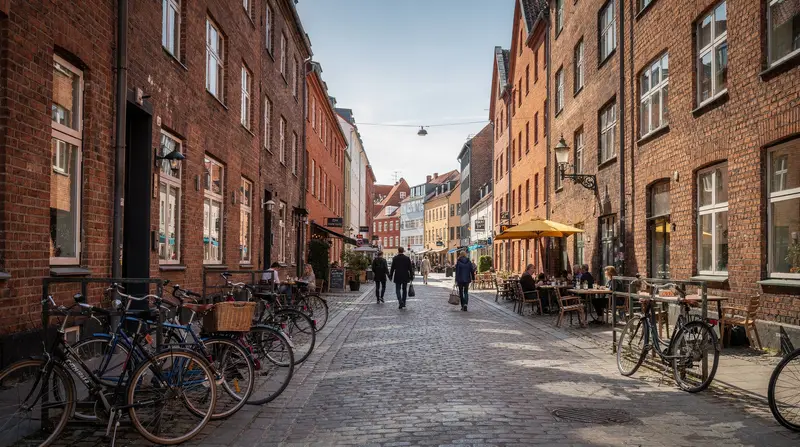
Jægersborggade — a pedestrianised street parallel to and west of Nørrebrogade. The most-referenced street in the neighbourhood.
Sankt Hans Torv — a square north of the lakes, roughly the social centre of the neighbourhood. Café tables spill onto the square in summer; it is one of the main evening gathering points.
Blågårds Plads — a square in the middle of Nørrebro with a fountain, a mix of residents and students, and a concentration of Middle Eastern food shops and cafés on the surrounding streets.
Superkilen — a 750-metre public park running from Nørrebrogade inland through three zones.
Jægersborggade
Jægersborggade is 200 metres long. It was an ordinary Nørrebro street until a combination of low rents and neighbourhood energy attracted several good independent businesses in the early 2010s. It now has a reputation that extends well beyond Copenhagen.
The Coffee Collective (no. 10): Copenhagen’s most consistent specialty coffee roaster. Filter coffee 50–65 DKK. Espresso drinks 50–70 DKK. The space is small, the queues are real in late morning, and the coffee is good enough to justify both the price and the wait. They roast their own beans, publish their sourcing transparently and have maintained quality for over 15 years.
Grød (porridge restaurant, no. 50): The concept sounds absurd — a restaurant specialising in porridge — but the execution works. Breakfast porridge with toppings (brown sugar, raisins, butter, jam) at 95–125 DKK. Congee and risotto for lunch and dinner at similar prices. A satisfying and cheap meal by Copenhagen standards.
Bæst (no. 8): Pizza and charcuterie using Danish organic ingredients, wood-fired oven, on-site curing. Main courses 200–280 DKK. The pizza quality is genuinely high and consistently rated as the best in Copenhagen. Book in advance for evenings.
Rudo (ceramics): One of several small studios and shops on the street selling locally made work. Prices are higher than you expect for what is still, legally, a piece of pottery — but the quality is evident.
The wine bar (no. 12): Natural wine by the glass from 90–140 DKK. Unpretentious atmosphere, good selection that changes with the season.
Assistens Cemetery (Assistens Kirkegård)
Assistens Cemetery is a 9-hectare burial ground on Nørrebrogade (between Rantzausgade and Jagtvej) that functions as a public park. Families spread blankets on the grass. Cyclists cross the paths. Dogs walk through. Students read on benches. The formal park atmosphere of a place explicitly for the living coexists with an actual functioning cemetery.
Hans Christian Andersen is buried in Section D, grave marker clearly findable from the map at the main entrance on Nørrebrogade. He died in 1875 and is buried here alongside many of his contemporaries.
Søren Kierkegaard is buried approximately 200 metres from Andersen, in Section A. The philosopher died in 1855 and is buried with his family.
The cemetery is free to enter and open daily. It is worth 45–60 minutes, particularly on a summer afternoon when the park atmosphere is at its most distinctive. It is not a solemn, quiet-voices kind of place — it is a living neighbourhood park that happens to also be a historical burial ground.
Superkilen
Superkilen is a public park that runs for 750 metres through northern Nørrebro, designed by Bjarke Ingels Group (BIG) with artist Superflex and landscape architects. It is divided into three colour-coded zones:
Den Røde Plads (The Red Square): sports and activity — basketball, fitness equipment, skateboard ramp.
Den Sorte Marked (The Black Market): more formal, with benches and a fountain from Marrakech.
Den Grønne Park (The Green Park): grass, picnic area, quieter.
The park contains 108 objects sourced from 60 countries reflecting the nationalities of residents in the area: a Moroccan fountain, a Yemeni bench, an Icelandic swing set, a Thai boxing ring. The concept is explicit: the park represents its neighbourhood demographically. The execution is uneven — some of the objects feel more interesting than others — but the ambition is coherent and the result is unusual in the way that Nørrebro itself is unusual.
Free to enter, open 24 hours.
The food scene
Nørrebro’s best food is cheap by Copenhagen standards. The multicultural character of the neighbourhood means you can eat very well for 80–150 DKK per person.
Middle Eastern: The concentration of Lebanese, Moroccan and Turkish-run restaurants and bakeries around Blågårds Plads and along Nørrebrogade. Falafel sandwiches at 45–60 DKK. Full plates (hummus, grilled meat, salad) at 100–160 DKK. The quality varies — the busiest-looking places are usually the most reliable.
Torvehallerne: Technically just south of Nørrebro at Nørreport station, the covered market is the obvious food option for anyone entering from the metro. Fish, meat, bread, cheese, fruit, take-away meals. Fish sandwich at 95–145 DKK. A full cheese and charcuterie selection for picnicking in the cemetery. Torvehallerne guide.
Reffen: The large summer street food market is on Refshaleøen island, 15 minutes by harbour bus from Nyhavn. Not in Nørrebro but worth mentioning as it reflects the same food culture: 20–30 stalls with dishes from 90–160 DKK. Open May–September. Reffen street food guide.
Budget reality: Nørrebro is the best neighbourhood in Copenhagen for eating well without spending much. A complete day in the neighbourhood — breakfast at Grød, lunch from a Middle Eastern café, afternoon coffee at The Coffee Collective, beer at the Sankt Hans Torv terrace — can be done for under 400–450 DKK per person.
The Nørrebro lakes (Søerne)
The three lakes — Sortedams Sø, Peblinge Sø and Sankt Jørgens Sø — form the southern boundary of Nørrebro (and Frederiksberg on the other side). A 6.5-kilometre path circles the lakes, passing cafés, rowing boats for hire and consistently good people-watching. Cycling around the lakes takes 25–30 minutes; walking takes 90 minutes.
On summer weekends the lakeside is one of Copenhagen’s main gathering points: students, families, people with dogs, open-air breakfast. Several cafés on the Nørrebro side of the lakes (particularly around Sankt Hans Torv) have terrace seating directly overlooking the water.
Free. Open at all hours.
Street art in Nørrebro
Nørrebro has a significant quantity of street art, concentrated around Nørrebrogade, Ravnsborggade and the side streets off Blågårds Plads. The work ranges from formal commissioned murals to tags. It is not as curated as in some other cities — this is organic accumulation rather than a managed programme.
The Nørrebro street art and food tour covers both the art and the food culture of the neighbourhood simultaneously — a practical way to cover the area without getting lost in the side streets.Craft beer in Nørrebro
The neighbourhood has several good craft beer bars. Fermentoren (on Nørrebro’s border with Vesterbro) is the largest, with 30 rotating taps and 80–110 DKK per pint. The Coffee Collective building has a beer component in the evenings. Warpigs (Flæsketorvet, technically Vesterbro/Kødbyen border) is 15 minutes south and worth combining.
The Nørrebro craft beer walk visits the neighbourhood’s best bars with guided pours — useful for orientation into the local brewing scene.Frequently asked questions about Nørrebro
What is the best time to visit Nørrebro?
Morning for coffee culture (Jægersborggade is busy from 9–11am, then eases off). Midday for the cemetery and Superkilen. Late afternoon for the lakes. Evening for restaurants and bars around Sankt Hans Torv and the side streets. It is an all-day neighbourhood rather than a single-sight destination.
Is Jægersborggade always crowded?
It has become well-known and receives visitors as a result. Saturday mornings in summer can be busy. On weekday mornings and in the early afternoon it functions more like a local street. The Coffee Collective specifically has queues from 9–11am on weekends; arriving just before it opens or after noon reduces the wait.
Can I combine Nørrebro with Vesterbro in one day?
Yes. Spend the morning in Nørrebro (Jægersborggade, cemetery, lakes), take the metro or cycle south to Vesterbro for lunch in Kødbyen, spend the afternoon on Istedgade, and stay for dinner and a beer in the Meatpacking District. This covers both neighbourhoods properly. Vesterbro guide.
Is the Assistens Cemetery open to tourists?
Yes, it is a public space with no entry fee. The main entrance is on Nørrebrogade between Rantzausgade and Jagtvej. It has its own internal map. Photography is permitted. The atmosphere is casual — locals use it as a park every day, not as a historical attraction. Treat it with appropriate awareness that it is also an active burial ground.
What is the food at Grød like?
The base is oatmeal porridge, cooked properly (not microwaved instant oats). Toppings range from simple (butter and brown sugar, in the traditional Danish way) to elaborate. The congee and risotto versions work well as lunch or light dinner. Portions are generous. It is filling, warming and cheap by Copenhagen standards. The portion of the menu that applies to most international visitors is the classic oat porridge with toppings for breakfast. Budget 95–125 DKK per bowl.
How multicultural is Nørrebro really?
Significantly. Approximately 30–35 percent of Nørrebro residents have immigrant backgrounds, a significant proportion of which is second and third generation. The neighbourhood’s food, shops and communal spaces reflect this. It is more relevant as a lived reality than as a tourism pitch — you notice it because the shops and cafés are different from those in Indre By, not because there are signs telling you about diversity.
Nørrebro by bike
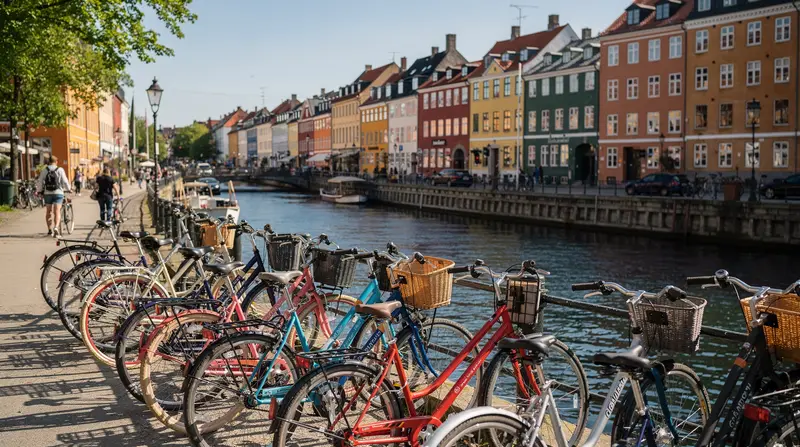
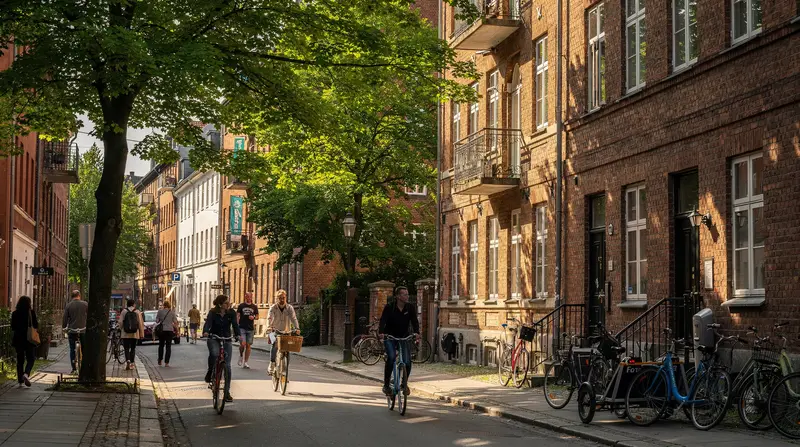
Nørrebro is one of the best neighbourhoods to cover by bike. The lakeside path runs directly into the neighbourhood’s main streets. Nørrebrogade has a wide cycle lane. The side streets are quiet enough for comfortable cycling.
Suggested cycling loop from Nørreport (approximately 45 minutes): Cross the bridge at Dronning Louises Bro (the bridge over the lakes at Nørrebro’s southern edge — one of the most-photographed cycling spots in the city, dense with cyclists in summer). Continue north on Nørrebrogade to Blågårds Plads. Turn left into the side streets toward Jægersborggade. Continue through the neighbourhood toward Superkilen. Circle back south along the lakeside path. Return across Dronning Louises Bro.
The Dronning Louises bridge point is worth noting specifically: on a weekday afternoon, hundreds of cyclists cross simultaneously in both directions, watched by people sitting on the bridge walls eating ice cream. It is one of the most distinctive visual moments in Copenhagen’s cycling culture and happens to be free to observe.
Bike rental near Nørrebro: The main rental operators cluster around Nørreport station. A 3-hour rental costs approximately 100–150 DKK. Bike rental Copenhagen.
Nørrebro’s political history
Nørrebro has a specific political character that shapes its present. Several points worth knowing:
The Battle of Nørrebro (1993): Copenhagen’s most serious modern civil unrest, following the Danish rejection of the Maastricht Treaty in a referendum. Riots in Nørrebro, tear gas and gunfire by police. The events remain politically significant in Danish memory and partly explain the neighbourhood’s self-image as politically radical.
The Youth House (Ungdomshuset): A squatted community centre on Jagtvej that operated from 1982 until its demolition by the city in 2007. The eviction and demolition produced significant protests. A replacement space was eventually found. The episode reflects the ongoing tension between Nørrebro’s counterculture traditions and city government.
Current political atmosphere: The neighbourhood has a left-leaning, socially progressive character that is expressed in local politics, street art and community organisation. This is not an abstraction for visitors — it is part of what makes Nørrebro feel different from Indre By or Østerbro.
Practical day itinerary for Nørrebro
A full day in Nørrebro:
9:00 – 10:00: Coffee at The Coffee Collective (Jægersborggade 10). Arrive at opening or slightly after. Order filter coffee; the espresso drinks are good but the roaster’s focus is on filter.
10:00 – 11:30: Walk Jægersborggade in both directions. Look into the ceramic studios, the cheese shop, the wine bar. Continue to the surrounding streets (Ravnsborggade for vintage and antique shops, Elmegade for independent clothing).
11:30 – 13:00: Walk to Assistens Cemetery (10 minutes from Jægersborggade). Find the Andersen and Kierkegaard graves using the entrance map. Sit in the park section. The cemetery has benches throughout and is genuinely pleasant in any weather.
13:00 – 14:30: Lunch from a Middle Eastern café around Blågårds Plads (100–150 DKK), or walk to Torvehallerne at Nørreport for the covered market (slightly more expensive, more variety).
14:30 – 16:00: Walk through Superkilen — all three zones. The Red Square, the Black Market, the Green Park. Allow 45–60 minutes.
16:00 – 17:30: Lakeside walk along Søerne. Coffee at a lakeside café near Sankt Hans Torv.
Evening: Dinner in Nørrebro (Bæst on Jægersborggade for pizza; one of the Blågårds Plads area restaurants for Middle Eastern food; or move to Vesterbro for the Kødbyen restaurant and bar scene).
Frequently asked questions — Nørrebro guide: coffee, multicultural food, Jægersborggade and Assistens Cemetery
Is Nørrebro worth visiting as a tourist?
Yes, particularly if you have more than 2 days in Copenhagen and want to see the city beyond its postcard version. Jægersborggade, the lakes (Søerne), the cemetery and the food scene offer a genuine Copenhagen experience that Indre By and Nyhavn cannot provide.How do I get to Nørrebro?
Metro M1/M2 to Nørreport station, then walk 15–20 minutes north along Nørrebrogade or Fælledvej. Bus 5C runs the length of Nørrebrogade. By bike from Indre By: 10 minutes.What is Jægersborggade?
A 200-metre pedestrianised street in Nørrebro containing The Coffee Collective (Copenhagen's benchmark specialty roaster), Grød (porridge restaurant), a natural wine bar, ceramics studios and independent food shops. It is not a tourist attraction per se — it is a functioning local street that happens to have become well known.Is Nørrebro safe?
Yes. The neighbourhood has had some media coverage of isolated gang-related incidents in specific areas, none of which affect tourists. Walking, cycling and evening café visits are normal activities across the neighbourhood.Where does Hans Christian Andersen's grave sit in Nørrebro?
In Assistens Cemetery (Assistens Kirkegård) on Nørrebrogade. The grave is marked and findable on the cemetery map at the main entrance. Søren Kierkegaard is also buried here, approximately 200 metres away.
Top experiences
Bookable activities with verified prices and instant confirmation on GetYourGuide.