Best Coffee in Copenhagen: The Speciality Café Guide
Copenhagen: A Taste of Denmark Tasting Tour
Duration: 4 hours
What is the best coffee in Copenhagen?
Coffee Collective (Jægersborggade 10, Nørrebro — their flagship, plus Torvehallerne and Frederiksberg) consistently leads Copenhagen's speciality scene with clean, bright-roasted filter coffees and a flat white that is among the best in Scandinavia. Prolog Coffee Bar (Meatpacking District, Vesterbro) and La Cabra (Frederiksberg and Indre By) are serious alternatives. Expect 45–65 DKK for a specialty coffee drink.
| Where | Nørrebro (strongest), Vesterbro, Frederiksberg, Indre By |
| Cost | Filter 40–48 DKK, flat white 50–65 DKK |
| Time needed | 30–60 min per café, more if you sit and work |
| Getting there | All neighbourhoods reachable by metro/bike in under 20 min |
| Best time | Weekday afternoons avoid the weekend queues |
Copenhagen’s speciality coffee scene
Coffee culture arrived in Copenhagen the same way it arrived everywhere — filtered through Seattle, San Francisco, Melbourne and Oslo — but the city has developed something genuinely its own. The combination of a strong hygge tradition (sitting with a warm drink is a social act), high consumer standards, and a cluster of exceptional roasters has made Copenhagen one of Europe’s most interesting coffee cities.
This is not a scene of performative barista culture. Copenhagen cafés are mostly quiet, unpretentious, focused on the quality in the cup. People sit for hours. The staff know what they are doing without making you feel interrogated about your order.
The three defining roasters — Coffee Collective, La Cabra, and Prolog — each have distinct philosophies and loyal followings. Beyond them, a strong ecosystem of independent cafés serves beans from these and international roasters.
Prices are not cheap: a flat white runs 50–65 DKK, a filter coffee 40–48 DKK. But relative to the overall cost of eating and drinking in Copenhagen, coffee represents some of the better value — you are paying Copenhagen prices for an internationally exceptional product.
If you are combining coffee exploration with food, the Taste of Denmark tour includes a coffee stop at a quality café alongside the food tastings.
The three defining roasters
Coffee Collective
Founded by Peter Dupont in 2007, Coffee Collective was among the pioneers of third-wave coffee in Scandinavia. The company roasts at their Nørrebro facility and operates multiple café locations. Their approach: direct trade with producers, light roasting to preserve origin character, meticulous extraction.
Flagship location: Jægersborggade 10, Nørrebro. This is the best place to drink Coffee Collective coffee — the roastery is nearby, the staff are knowledgeable, and the space is quiet and unpretentious.
Other locations: Torvehallerne market (most convenient for central visitors), Frederiksberg (Gammel Kongevej 44).
What to order: Filter coffee as a starting point to understand their roast profile. The flat white (they call it a “white”) demonstrates their espresso technique.
Price: Filter coffee 42–48 DKK. Flat white 55–62 DKK.
Hours: Monday–Friday 07:30–18:00; Saturday 08:00–18:00; Sunday 09:00–17:00 (varies by location).
Verdict: The most internationally recognised Copenhagen roaster. The Nørrebro flagship is worth visiting; the Torvehallerne location is the most practical for most visitors.
La Cabra
Founded in Aarhus, La Cabra has expanded to Copenhagen (Frederiksberg and Indre By locations). Their roasting philosophy is similar to Coffee Collective — light, clarity-focused — but the flavour profiles tend toward slightly more sweetness and less acidity. An excellent second point of comparison.
Copenhagen locations: Vesterbrogade 2D (Vesterbro/Frederiksberg), and a central Indre By location.
What to order: Their filter coffees showcase the house character well. The single origin espresso changes regularly — ask the barista what is on.
Price: Filter coffee 42–50 DKK. Flat white 54–62 DKK.
Verdict: Slightly warmer flavour profile than Coffee Collective. Worth visiting if you are in the Frederiksberg or Vesterbro area.
Prolog Coffee Bar
Prolog operates from a small space in the Meatpacking District (Kødbyen) in Vesterbro — an incongruously intimate café in an industrial neighbourhood. It is one of the most respected coffee addresses in Copenhagen and attracts a significant percentage of the city’s working coffee professionals.
Location: Høkerboderne 16, Kødbyen, Vesterbro.
What to order: The filter programme is exceptional — typically three to four options with clear origin notes. The espresso-based drinks are equally considered.
Price: Filter coffee 45–50 DKK. Flat white 55–65 DKK.
Hours: Monday–Friday 08:00–17:00; weekends reduced hours. Closed Sundays at many points.
Verdict: The most serious coffee address in Copenhagen in terms of programme depth. Small space, limited seating, not suitable for a leisurely sit — better for a focused coffee experience and then moving on.
Beyond the big three: other cafés worth knowing
Democratic Coffee
Krystalgade 15, Indre By
In the basement of Copenhagen’s main public library — an unusual and excellent location. Excellent filter and espresso programme using quality guest roasters. Very good for a coffee break during a day in the city centre.
Price: Filter coffee 40–46 DKK. Flat white 52–58 DKK.
Risteriet
Frederiksberg Allé 35, Frederiksberg
Small neighbourhood roaster-café in Frederiksberg. Strong filter programme, precise extraction, knowledgeable staff. Less well-known than the main trio, worth seeking out if you are in Frederiksberg for Hart Bageri.
Price: Filter 40–45 DKK. Espresso drinks 48–58 DKK.
The Corner
Vester Voldgade 106, Indre By
A café that combines speciality coffee with a strong lunch and brunch menu. Not only coffee — useful if you want coffee and food in a single stop. Quality espresso drinks and good guest filter roasters.
Broadstreet Coffee
Smallegade 36, Frederiksberg
Well-regarded neighbourhood café in Frederiksberg. Unpretentious, consistent, serves La Cabra beans with care. Good option in the Frederiksberg/Vanløse area.
Forloren Espresso
Nørrebrogade 32, Nørrebro
Natural wine, coffee and food — a hybrid café-wine bar that does good work on all fronts. Interesting guest coffee programme. More of an evening café than a morning stop (though it opens at midday).
Coffee Collective at Torvehallerne
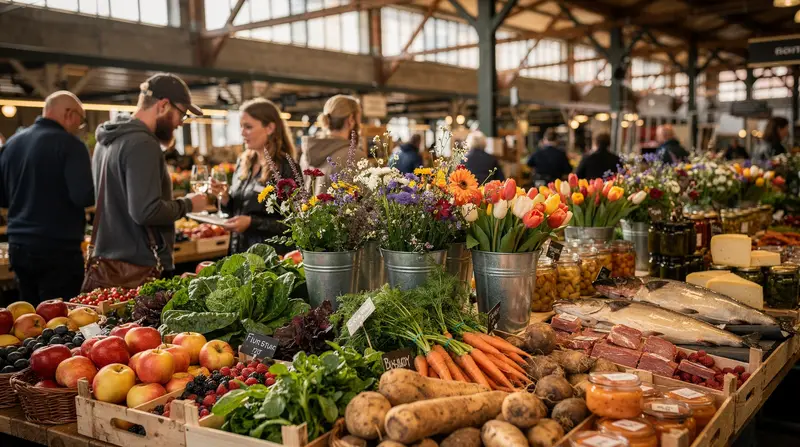
For visitors focused on central Copenhagen: the Coffee Collective stall at Torvehallerne is the most convenient access point to serious coffee in the area of Indre By / Nørreport. Easy to combine with a market visit — see the Torvehallerne market guide for the rest of what’s there.
Coffee and pastry pair naturally in Copenhagen; the bakeries and pastry guide covers where to get the cardamom bun or kanelsnegl to go with your cup. For a fuller picture of the city’s food scene beyond coffee, see the best food in Copenhagen guide, and if you’d rather have someone else lead the way, the best food tours guide covers options that include coffee stops.
The café as a hygge experience
In Copenhagen, a café is not primarily a place to drink coffee and leave. The hygge tradition — cosiness, warmth, togetherness — is partly enacted through sitting with a warm drink in a good space. You will not be rushed.
This means Copenhagen cafés are excellent places to work, read, rest or have a long conversation. The expectation that you will buy one coffee and stay for three hours is entirely normal. Some have electrical outlets; most have wifi. The most popular cafés in Nørrebro can be standing-room only on weekend mornings, but on weekday afternoons you can usually find a table.
What this means practically: Do not feel obliged to order a second coffee after 45 minutes. You can stay with one. The café business model in Copenhagen accounts for long visits.
Traditional Danish coffee culture
Beyond the speciality scene, traditional Danish filter coffee — black, brewed in a standard drip machine, drunk in large quantities throughout the day — remains deeply embedded.
If you visit a traditional Danish café (bodega style), a family home, or any office, you will be offered filter coffee in a regular mug. This is not inferior — it is genuinely how Danes drink coffee and many of the traditional filter coffees are excellent.
Asking for black coffee: In a speciality café, asking for a “filter coffee” or “brewed coffee” will get you a pour-over or drip coffee served black. This is often the best way to understand the roaster’s style.
Coffee shop etiquette in Copenhagen
Order at the counter. Very few Copenhagen cafés have table service for drinks. Walk to the counter, order, pay, collect your coffee.
Tipping: Not expected. Round up if you want; do not stress about it.
Oat milk and alternatives: Widely available at all quality cafés. Ask at the counter — “sojamælk” (soy milk), “havremælk” (oat milk), “mandelmælk” (almond milk) are all standard in Copenhagen’s café scene.
To-go cups: Available at all cafés. Some charge a small fee for the cup (5–8 DKK). Bringing your own reusable cup is welcomed everywhere.
Queue: On weekend mornings at popular cafés, there will be a queue. It moves faster than it looks.
Coffee neighbourhood guide
Nørrebro: The strongest coffee neighbourhood — Coffee Collective’s flagship, Juno the Bakery (excellent café component), Forloren Espresso, and several smaller operations. The Nørrebro guide covers the neighbourhood beyond its coffee.
Vesterbro / Meatpacking District: Prolog Coffee Bar is the anchor, La Cabra is nearby. The neighbourhood’s generally serious food culture extends to coffee — see the Vesterbro guide for the wider area.
Frederiksberg: La Cabra’s main Copenhagen presence, Risteriet, Broadstreet, and the coffee stop at Hart Bageri (they serve good coffee alongside the pastries).
Indre By (city centre): Democratic Coffee is the standout. Several good independent cafés among more tourist-oriented options — the key is walking one street away from Strøget.
Torvehallerne area: Coffee Collective at the market is the easiest quality-coffee stop near Nørreport.
Frequently asked questions about coffee in Copenhagen
How much does coffee cost in Copenhagen?
Speciality filter coffee: 40–48 DKK. Flat white: 50–65 DKK. Espresso: 38–48 DKK. Budget 50–60 DKK for a quality coffee experience. Hotel coffee is typically 65–90 DKK and rarely as good.
Is Copenhagen coffee better than other Scandinavian cities?
Copenhagen is broadly considered the strongest speciality coffee city in Scandinavia by density and roaster reputation. Oslo and Stockholm are also excellent; Copenhagen leads in the concentration of high-quality options.
What is the coffee culture like in Copenhagen?
Hygge and coffee are deeply connected. The café is a genuine social institution — sitting for an hour or two with one coffee is normal and expected. No one will rush you. The speciality scene coexists with a strong traditional filter coffee culture.
What coffee does Denmark traditionally drink?
Filter coffee — black, drip-brewed — is the traditional Danish approach and remains widely drunk. The speciality scene (lighter roasts, espresso drinks, pour-over methods) has developed strongly in the past 15 years alongside this tradition.
Is there a coffee tour in Copenhagen?
No dedicated commercial coffee tour, but visiting three or four of the recommended cafés over a morning is an informal equivalent. Allow 2–3 hours. Many food tours include a quality coffee stop.
What is Scandinavian-style coffee?
Lighter roasts than Italian or French traditions — prioritising origin clarity, fruit-forward acidity, and lighter body over the dark, bitter roast style. If you prefer darker espresso, ask — most cafés can provide it, though their house espresso will be lighter.
Are there any coffee shops to avoid in Copenhagen?
International chains are present but inferior to local alternatives at similar prices. Tourist-area cafés in Nyhavn and Strøget often serve mediocre coffee at inflated prices. Any café with a menu in 12 languages is probably not prioritising its coffee programme.
Top experiences
Bookable activities with verified prices and instant confirmation on GetYourGuide.