Copenhagen's neighbourhoods: an honest overview of where to go and why
Copenhagen: City Highlights Walking Tour With Local Guide
Duration: 2-2.5 hours
Which Copenhagen neighbourhood is best to visit?
For sights, Indre By and Nyhavn. For food and local life, Vesterbro and Nørrebro. For canals and atmosphere, Christianshavn. For architecture and palace culture, Frederiksstaden. There is no single best — they serve different purposes.
Copenhagen does not sprawl like Paris or London. Its main neighbourhoods sit within a 3–4 kilometre radius of Central Station, connected by a flat grid of streets, cycle lanes and a metro that arrived late (M1/M2 opened in 2002, M3 Cityringen in 2019) but now covers the core well. The character differences between neighbourhoods are real and matter for how you plan your time.
| Where | 8 core neighbourhoods within 3–4 km of Central Station |
| Time needed | Half a day to a full day per neighbourhood |
| Getting there | Metro M1/M2/M3, bus, bike, or on foot |
| Best for sights | Indre By, Nyhavn, Frederiksstaden |
| Best for local life | Vesterbro, Nørrebro |
Neighbourhoods at a glance
| Neighbourhood | Best for | Time needed | Crowd level |
|---|---|---|---|
| Indre By | Sights, walkability | Half–full day | High, especially Strøget |
| Nyhavn | Photos, canal views | 30–60 min | Very high, 10am–7pm |
| Vesterbro | Food, craft beer, local life | Half day+ | Moderate |
| Nørrebro | Coffee, multiculturalism | Half day | Moderate |
| Østerbro | Parks, residential calm | 2–3 hrs | Low |
| Frederiksstaden | Palaces, architecture | 2–3 hrs | Moderate |
| Christianshavn | Canals, Christiania | Half day | Moderate |
| Carlsberg Byen | Emerging district, museum | 2–3 hrs | Low |
Indre By — the Old Town core
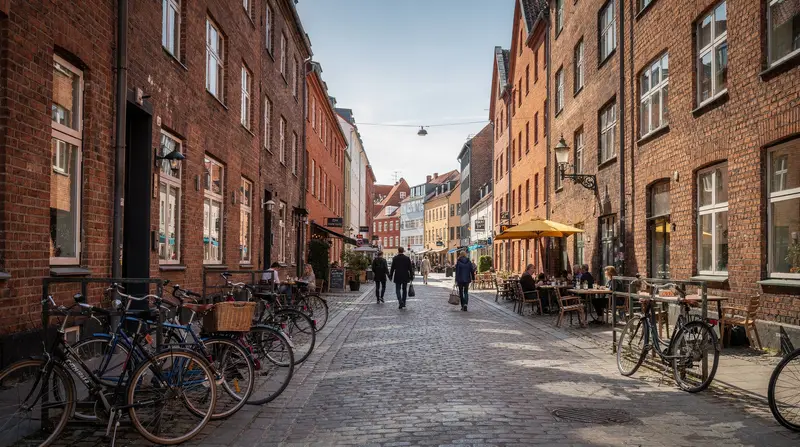
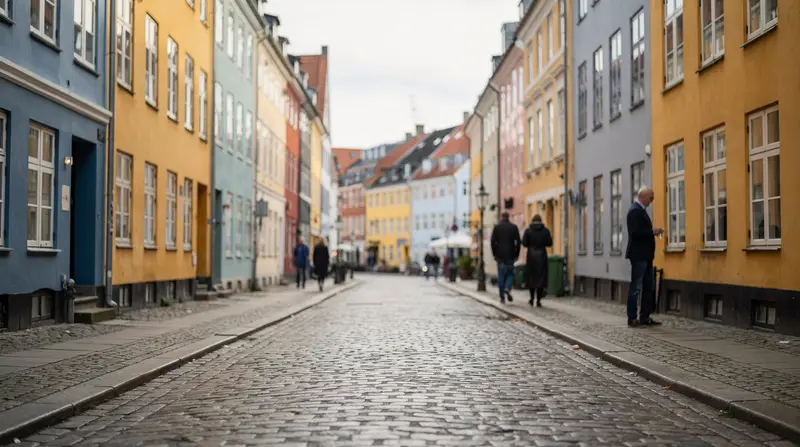
The medieval street pattern, the pedestrian shopping street Strøget, the Latin Quarter of second-hand bookshops and university buildings, Rundetårn, the Copenhagen Cathedral, the main squares — Indre By holds the density of conventional sights. It is also the most tourist-saturated part of the city.
What is good here: Walkability. Historical architecture. The Latin Quarter around Fiolstræde and Sankt Peders Stræde is genuinely charming and less visited than Strøget. Easily the best neighbourhood to be in for a single day in Copenhagen.
What is honest: Strøget is a chain shopping street. The restaurants on the main tourist circuits charge 20–40 percent more for equivalent quality. Crowds in summer (June–August) are serious — Nyhavn is particularly compressed.
Best time: Early morning (before 9:30) or weekday evenings when day-trippers have left.
Getting there: Metro M1/M2 Kongens Nytorv (east end); Metro M1/M2 Nørreport (north); S-train Copenhagen Central Station (west).
Nyhavn — the canal that everyone photographs
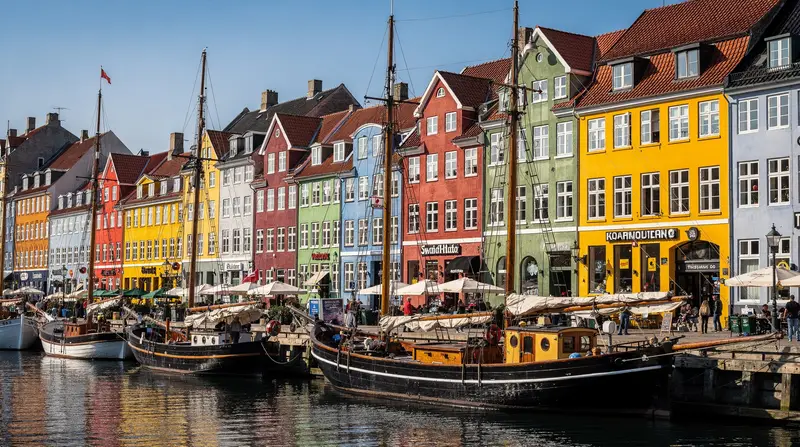
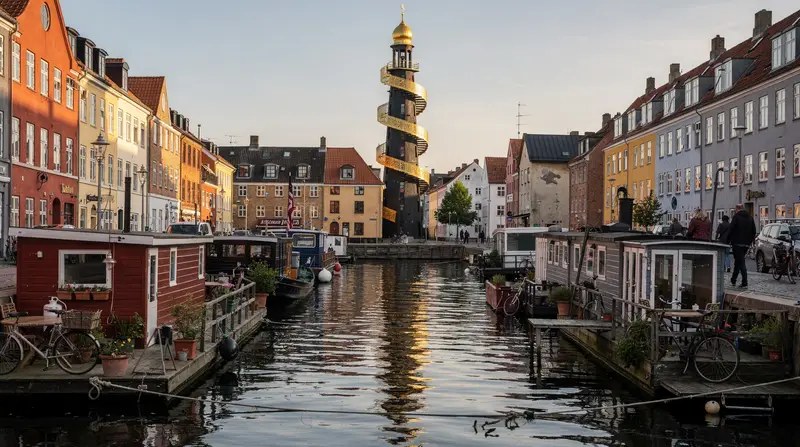
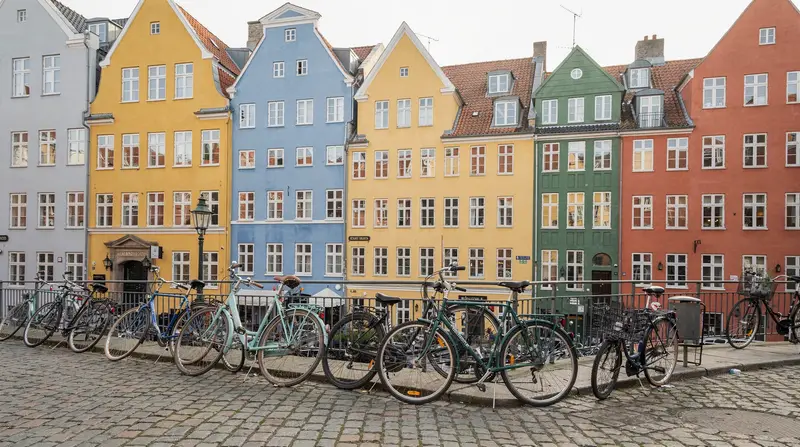
Nyhavn is 400 metres of canal lined with 17th-century townhouses painted in yellow, orange and red. It is the single most-photographed location in Copenhagen and the tourist density between 10am and 7pm in summer is severe. The restaurants on the sunny north side charge 280–420 DKK for main courses that are comparable in quality to what costs 160–220 DKK in Vesterbro.
What is actually good: The view, particularly from the bridge at the inner end. The Hans Christian Andersen connections (he lived at no. 18, 20 and 67). The canal cruises that depart from Nyhavn and from Gammel Strand.
The honest problem: Nyhavn is primarily a backdrop. Arrive before 10am or after 8pm. Drink coffee, photograph the houses, then move on. Do not eat here unless you have decided that the view is worth the price.
See: Nyhavn guide for the complete picture.
Vesterbro — the most useful neighbourhood for visitors
Vesterbro is Copenhagen’s most successful neighbourhood transition of the past 30 years. It went from Copenhagen’s red-light district (its western stretch, Istedgade, was that for most of the 20th century) to the city’s densest concentration of independent restaurants, craft beer bars and coffee shops.
Kødbyen (the Meatpacking District) is Vesterbro’s anchor: former slaughterhouses converted into restaurants, galleries, music venues and the offices of creative industries. On weekend nights it is genuinely full of Copenhageners, not tourists.
Istedgade from Central Station westward now reads as a standard gentrified street: Vietnamese restaurants, ramen shops, natural wine bars, bakeries. The western end (toward Dybbølsbro) is more residential and quieter.
Carlsberg Byen (Carlsberg City), at the far western end, is a new district being built on the former Carlsberg brewery footprint. The Carlsberg Experience museum (entry from 135 DKK, approximately 18€) is there, along with new housing, shops and a hotel.
Getting there: Metro M3 Enghave Plads or Alle; S-train Dybbølsbro; or 15-minute walk from Central Station.
See: Vesterbro guide for detail.
Nørrebro — coffee, multiculturalism and local life
Nørrebro is where Copenhagen residents who are not living in the suburbs tend to live. Its multicultural character — a significant proportion of residents with immigrant backgrounds, primarily Middle Eastern and South Asian — gives the neighbourhood’s food scene a range that the more tourist-oriented areas lack.
Jægersborggade is the street most often mentioned: 200 metres of coffee shops (The Coffee Collective), small ceramics studios, natural wine bars, a porridge restaurant (Grød) and a cheese shop. It does not feel performed or curated in the way that comparable streets in other cities do.
Assistens Cemetery is a public park that also contains the graves of Hans Christian Andersen and Søren Kierkegaard. Families picnic on the grass. Cyclists cut through on the paths. It is one of Copenhagen’s more unusual public spaces.
Superkilen is a public park designed by Bjarke Ingels Group containing objects sourced from 60 countries — a representation of the neighbourhood’s demographics in physical form.
Getting there: Metro M1/M2 Nørreport, then 15–20 minutes north on foot or by bike. Bus 5C on Nørrebrogade.
See: Nørrebro guide for detail.
Østerbro — residential, parks and families
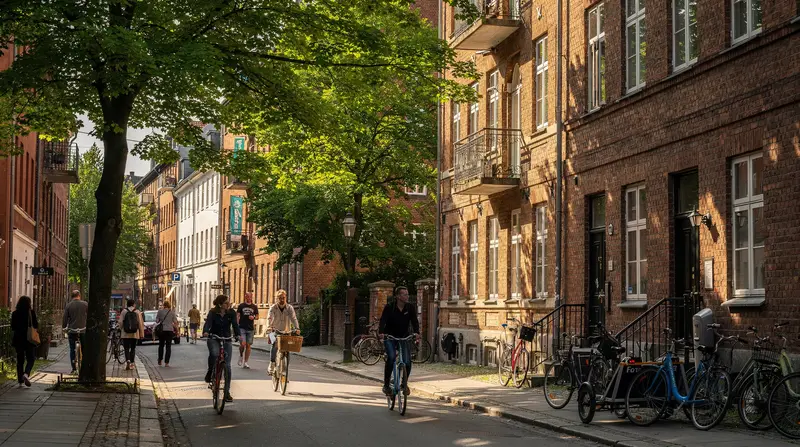
Østerbro is Copenhagen at its most residential and bourgeois. Wide tree-lined streets, large apartment buildings from the early 20th century, Fælledparken (the city’s largest park, used daily for football, cycling and informal gatherings). There are fewer sights here than in any other area covered in this guide, but the neighbourhood is worth crossing for specific reasons: the park, the lakeside restaurants near Søerne, and the local market at Østerbrogade.
Who it suits: Families with children who want park space; longer-stay visitors who want a residential rhythm; anyone whose hotel is here.
Getting there: Metro M2 to Poul Henningsens Plads or Vibenshus Runddel.
Frederiksstaden — palaces, symmetry and the royal quarter
The 18th-century planned district north of Indre By, built around the octagonal Amalienborg Palace Square. The palaces face each other across a large forecourt; the Marble Church (Frederiks Kirke) closes the western axis. The architecture is formal and impressive in a way that Indre By’s medieval organic streets are not.
What to do here: Watch the Changing of the Guard at Amalienborg (11:30 daily when the queen is in residence), visit the Amalienborg Museum, walk across to Nyhavn via the waterfront promenade (Amaliehaven garden overlooks the opera house across the harbour).
Time needed: 2–3 hours.
Getting there: Metro M1/M2 Kongens Nytorv, then 10-minute walk north.
Christianshavn — canals, colour and Christiania
Christianshavn sits across the inner harbour from Slotsholmen. It was built in the 17th century on reclaimed land following Dutch engineering — the canal system and the scale of the streets reflect this. The neighbourhood has a distinctive calm that central Copenhagen lacks.
Freetown Christiania is within Christianshavn’s boundaries but functions as a separate entity — a self-governing community established in 1971 in former military barracks. Pusher Street (the open cannabis market) is real, commercially functional and not recommended for anyone who does not want to see an open drug market. The rest of Christiania — the DIY architecture, the cafés, the live music venues — is genuinely worth visiting.
Vor Frelsers Kirke (Church of Our Saviour) has an external spiral staircase that winds to the top of the spire (400 steps, 50 DKK entry, approximately 6.70€). Worth it on a clear day.
Getting there: Metro M1 Christianshavn.
See: Christianshavn and Christiania guide for detail.
Carlsberg Byen (Carlsberg City) — new district, emerging
The 33-hectare former Carlsberg brewery site is undergoing the largest urban development in Copenhagen’s modern history. The Carlsberg Experience (the main museum) is open; the new buildings, shops and cultural venues are arriving in phases through 2027–2030. It is not a finished neighbourhood yet, but the Carlsberg Experience and the old brewing architecture are worth an afternoon.
Getting there: Metro M3 Enghave Plads, then 10-minute walk south.
How to combine the neighbourhoods
A two-day itinerary can realistically cover: Day 1 — Indre By, Nyhavn, Frederiksstaden, Christianshavn. Day 2 — Vesterbro (Kødbyen for lunch), Nørrebro (Jægersborggade, cemetery). A three-day addition works well for Østerbro and Carlsberg Byen.
A 3-hour guided bike tour covers the geography of multiple neighbourhoods efficiently and teaches you the cycling rules before you rent independently.For itinerary suggestions: 2 days in Copenhagen, 3 days in Copenhagen.
Frequently asked questions about Copenhagen neighbourhoods
Which Copenhagen neighbourhood is most authentically local?
Nørrebro and Østerbro have the highest proportion of residents living everyday lives rather than serving tourism. Jægersborggade in Nørrebro is the single street that most consistently comes up when Copenhageners describe what they like about the city. That said, it receives a lot of visitors now precisely because of that reputation.
Is Christiania worth visiting?
Yes, for most visitors — but not for Pusher Street. The broader Christiania area is architecturally and socially unusual in ways that are not replicated elsewhere. The open cannabis market is part of the reality of the place; deciding whether to walk through it is a personal choice. The art venues, the Woodstock-era buildings and the canal-side cafés are genuinely interesting. See Christianshavn and Christiania guide for a full assessment.
Which neighbourhood has the best Copenhagen street food?
Reffen (on Refshaleøen island, 10 minutes by harbour bus from Nyhavn) is Copenhagen’s main street food market, open May–September. Within the main neighbourhoods, Nørrebro has the best density of inexpensive, interesting food — the Middle Eastern cafés around Blågårds Plads and the food market at Superkilen.
Can I walk everywhere in Copenhagen?
You can walk most combinations in the inner city in under 30 minutes. Christianshavn to Vesterbro is about 35 minutes. Nørrebro (Jægersborggade) to Nyhavn is about 30–35 minutes. Cycling is faster for most combinations. Bike rental in Copenhagen is straightforward and costs 100–175 DKK per day.
What is the best neighbourhood to visit on a rainy day?
Indre By, because of the density of indoor attractions in walking distance — Rosenborg Castle, the National Museum (free entry), the Round Tower, the Latin Quarter bookshops. Alternatively, Torvehallerne market (on the Indre By / Nørrebro border) is a covered food market and an excellent rainy-day option for 2 hours.
Are there any Copenhagen neighbourhoods to avoid?
No area of Copenhagen is dangerous for tourists. The street near the Central Station (Istedgade, short stretch) can feel slightly edgy late at night but is not unsafe. Nørrebro has had isolated incidents in recent years — none involving tourists. The general advice: normal urban awareness, nothing specific to Copenhagen.
How does Copenhagen compare to other Scandinavian cities for neighbourhood variety?
More concentrated than Stockholm or Oslo. The size of the city means the contrasts — medieval Old Town, industrial Vesterbro, multicultural Nørrebro, canal Christianshavn — are all within a 3–4 kilometre radius. What Copenhagen lacks in breadth it compensates for in density and walkability.
Neighbourhood character at different times of day
The same neighbourhood can feel significantly different depending on when you visit. Here is a practical breakdown:
Nyhavn:
- Before 10am: peaceful, photographable, cafés just opening
- 11am–7pm in summer: crowded, tourist-density high, restaurant prices peak
- After 8pm: quieter, genuinely pleasant for a drink
Indre By:
- Morning: locals commuting, quieter streets, cafés and bakeries before tourist wave
- Midday: at peak density around Strøget; Rundetårn queue builds by 11am
- Evening: dinner rush in Latin Quarter restaurants; Strøget empties
Vesterbro:
- Morning: neighbourhood cafés and bakeries, less tourist traffic
- Afternoon: Carlsberg Experience open; Kødbyen quiet until evening
- Evening: Kødbyen restaurants and bars are the primary draw
Nørrebro:
- Morning: coffee culture prime time; The Coffee Collective busiest 9–11am
- Afternoon: cemetery and Superkilen at their best in summer
- Evening: Sankt Hans Torv bars and restaurants
Christianshavn:
- Any time: canal walks are best before tourist boats increase from 10am
- Morning: the neighbourhood’s resident character is most visible
- Christiania: daytime operation for Pusher Street; evening events at Nemoland in summer
Getting around between neighbourhoods
Metro (M1/M2): Runs 24 hours daily. Connects the airport, Vesterbro/Frederiksberg (M3 Cityringen), the city centre (Kongens Nytorv, Nørreport) and Amager. No metro stops in Nørrebro proper — Nørreport is the closest point. Fare: 26 DKK with Rejsekort card; single ticket 26 DKK for up to 2 zones.
Bus: Extensive network. Line 5C covers the length of Nørrebrogade into Nørrebro. Line 26 runs through Indre By near Nyhavn. Night buses operate when the metro runs normally (24h metro has made night buses less critical). Single bus fare is included in the metro zone pricing.
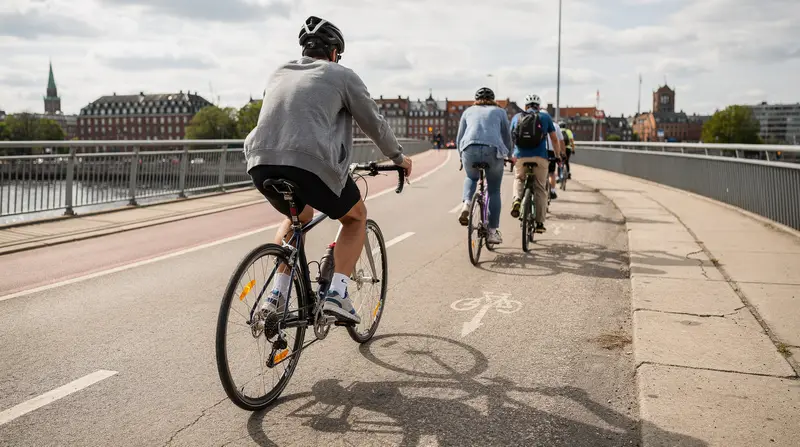
Cycling: The fastest way between most neighbourhood combinations. Copenhagen’s cycle lane network is extensive and well-maintained. Priority rules give cyclists right of way at most intersections with a green bike light. Rental from 100–175 DKK per day. Bike rental Copenhagen.
Walking: Realistic for Indre By–Nyhavn (10 min), Indre By–Christianshavn (15 min), Indre By–Vesterbro (15–20 min), Nørreport–Jægersborggade (20 min). Vesterbro–Nørrebro (30 min via Nørreport). Carrying a map and using Copenhagen’s flat terrain, a day of neighbourhood walking covers significant ground without transport.
Harbour bus: The harbour bus (line 991/992) runs along the harbour front between Nordre Toldbod (near Nyhavn) and Refshaleøen, stopping at Nyhavn, the Opera House and Islands Brygge. Useful for reaching Christianshavn from Nyhavn and for the Reffen street food market on Refshaleøen. Fare: same as regular transit (26 DKK with Rejsekort).
The honest tourist trap warning by neighbourhood
Nyhavn: The canal-side restaurants. You are paying for the view — which is legitimate once, for a single drink — but the food quality does not justify the 40–60 percent markup over equivalent meals 10 minutes walk away.
Indre By / Strøget: Restaurants with photos on the menu directly on or immediately adjacent to Strøget. The further you walk from the main pedestrian route, the better the price-to-quality ratio becomes.
Everywhere: The Copenhagen Tourist Pass products sold at some tourist information points differ from the Copenhagen Card — check exactly what is included before purchasing at a kiosk. The official Copenhagen Card (699 DKK / 24h, 1,329 DKK / 72h) sold through the official site or major hotels is the standard reference.
Transport trap: Taxis from the airport to city hotels are legitimate but expensive — 250–350 DKK when the metro (26 DKK, 15 minutes to Kongens Nytorv) is direct and fast. The metro station is at the airport terminal.
See Copenhagen tourist traps for a full rundown.
Choosing a neighbourhood to stay in
Where you sleep affects how much of this guide you get to experience without transport. Indre By and Vesterbro are the two most practical bases — Indre By for walkable access to sights, Vesterbro for restaurants, craft beer and a shorter walk to Central Station and the airport train. Nørrebro suits visitors prioritising a local, residential feel and coffee culture over proximity to the main sights. The full where to stay in Copenhagen guide breaks this down by budget and travel style.
Frequently asked questions — Copenhagen's neighbourhoods: an honest overview of where to go and why
How many neighbourhoods does Copenhagen have?
The city has dozens of official districts, but tourists typically move between 6–8: Indre By, Nyhavn, Vesterbro, Nørrebro, Østerbro, Frederiksstaden, Christianshavn and Carlsberg City. Each takes half a day to a full day to explore properly.Is Copenhagen easy to navigate between neighbourhoods?
Very. The city is compact and flat. Walking between adjacent neighbourhoods takes 15–25 minutes. The metro M1/M2 covers the core areas; the new M3 Cityringen ring line connects Vesterbro, Frederiksberg and Nørreport. A bike covers most neighbourhood combinations in 10–15 minutes.Which Copenhagen neighbourhood has the best food?
Vesterbro for restaurants and craft beer. Nørrebro for coffee, street food and cheaper daily eating. Indre By for New Nordic fine dining. Torvehallerne market sits on the Indre By–Nørrebro border and is accessible from both.
Top experiences
Bookable activities with verified prices and instant confirmation on GetYourGuide.