Nyhavn guide: what it's actually like, when to go, and what to skip
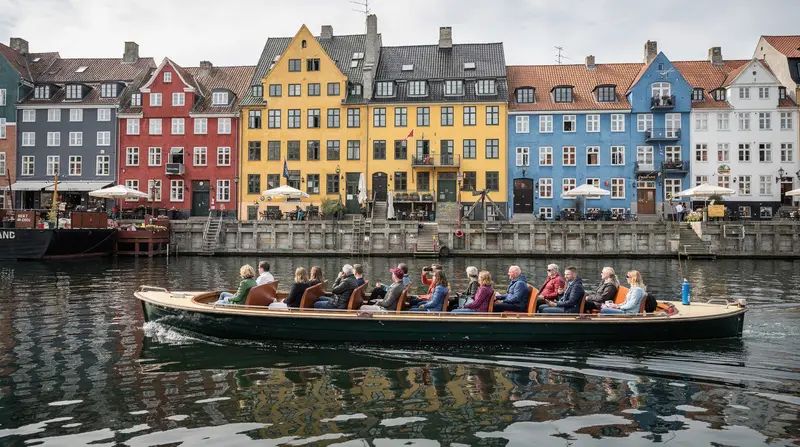
Copenhagen: Canal Cruise with Guide
Duration: 1 hour
Is Nyhavn worth visiting in Copenhagen?
Yes, but time it right. Before 10am the canal is calm and photographable. After 10am in summer it is one of the most crowded spots in Scandinavia. Do not eat at the canal-side restaurants — prices are 40-60% above comparable quality elsewhere in the city. Come for the view, stay for 45 minutes, then move on.
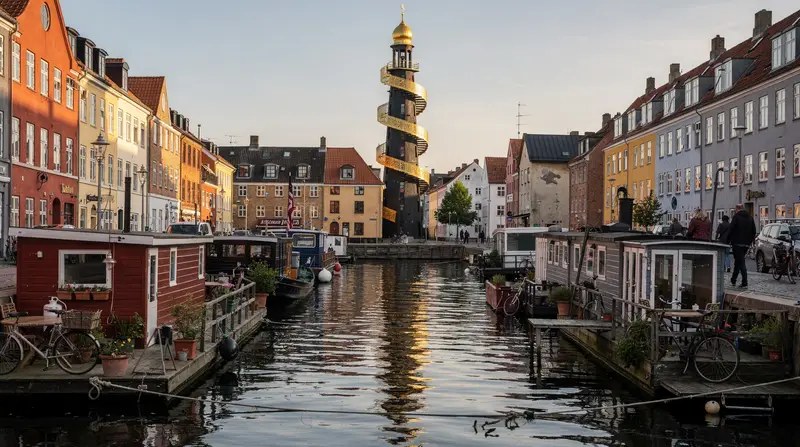
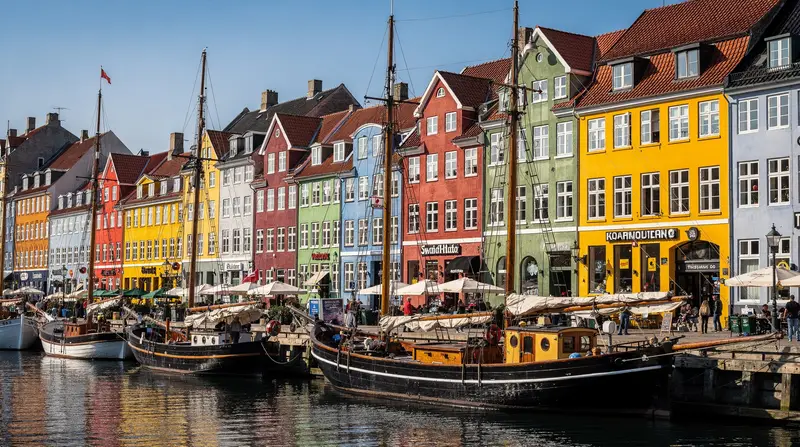
Nyhavn is 400 metres long. It contains a canal, 17th-century townhouses in five colours (yellow, ochre, red, orange, terracotta), several hundred tourists at any given moment between May and September, and a row of restaurants that charge accordingly. It is Copenhagen’s most photographed location and, for about two hours a day, one of its most pleasant places to sit. This guide explains when those two hours are and what else is worth knowing.
| Where | Kongens Nytorv metro exit, 2 min walk to the canal |
| Cost | Free to walk; canal cruise 120–160 DKK; skip the canal-side restaurants |
| Time needed | 45–90 minutes |
| Getting there | Metro M1/M2 to Kongens Nytorv |
| Best time | Before 10am, or after 8pm in summer |
What Nyhavn actually is
Nyhavn (literally “New Harbour”) was built between 1671 and 1673 as a commercial waterway connecting the city’s heart to the sea. Ships unloaded goods here for two centuries. The canal district was sailors’ territory: taverns, brothels, cheap lodgings. Hans Christian Andersen lived here at three separate addresses — not because it was respectable, but because it was affordable.
By the mid-20th century Nyhavn had declined. The 1970s renovation converted the canal into the pedestrian and café zone it is today. The coloured houses on the north side (the sunny side) date from the 17th and 18th centuries and are the image used in most Copenhagen travel photography.
What to see at Nyhavn
The houses on the north side — numbers 9, 17, 20, 29, 67. These are the coloured townhouses that appear in every photograph. They face south, which means the light is good from mid-morning to early afternoon in summer and limited in winter. The best photographs are taken from the bridge at the inner (western) end of the canal looking east, with the row of ships in the foreground.
The historic ships — several old wooden vessels are moored permanently in the canal and have been since the 1970s. They are not operational. They are part of the atmosphere and provide foreground interest in photographs.
Hans Christian Andersen connections — a plaque at number 20 marks one of his residences. He wrote some of his earliest fairy tales here. Number 67 (where he lived from 1845 to 1864, his longest stint) is at the outer end of the canal. Worth noting but not a major attraction in itself.
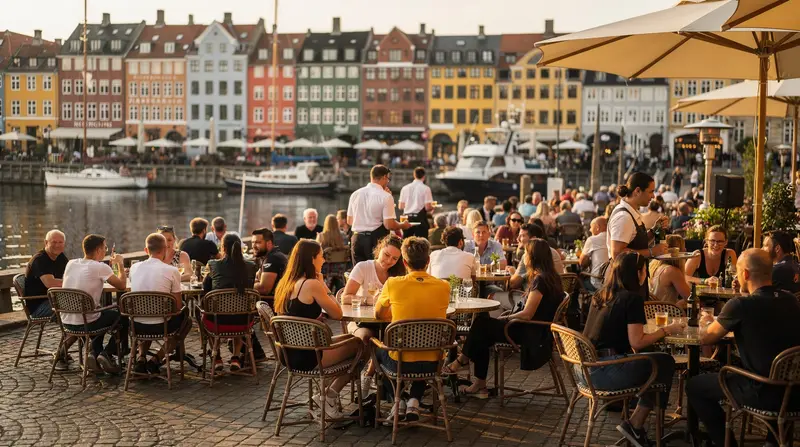
The atmosphere at dusk — on summer evenings (particularly May and June before the July peak) the canal turns golden around 9–10pm. It is genuinely beautiful and the crowds thin as the day-trippers leave.
When to visit — honest timing
Before 10am: The canal is calm, the light is soft and you can photograph the houses without 50 people in the frame. The restaurants are not yet open. This is when Nyhavn justifies its reputation.
10am–7pm in summer (June–August): The most crowded period. Canal-side terraces are full by 11am on sunny days. Walking the length of the canal in July requires navigating tour groups and selfie-sticks. The cruise queues are long at the Nyhavn end. Viable if you are arriving in any case; plan 45–60 minutes and move on.
After 8pm in summer: The day-tripper crowds have thinned. Restaurants are still operating but the atmosphere is more relaxed. If you are eating in the area, a restaurant on a side street near Kongens Nytorv is more value than the canal front.
Winter (November–March): Almost peaceful. The coloured houses look striking against grey sky. Most canal-side terraces are closed or have heaters. You can walk the canal slowly and look properly at the buildings.
The restaurant trap
The restaurants on Nyhavn’s north (sunny) side charge peak tourist rates. A beer costs 75–100 DKK. A simple open sandwich (smørrebrød) runs 160–220 DKK. A main course is 280–420 DKK. The quality is broadly equivalent to what costs 30–50 percent less on Istedgade in Vesterbro or Jægersborggade in Nørrebro.
Worth it or skip? Skip for a meal. Worth it for one beer if you want to sit on the terrace and watch the canal — that experience is legitimate and the ambience is what you are paying for. Do not make a dinner of it.
Where to eat instead: Walk 10 minutes to the Latin Quarter end of Indre By and find a restaurant on Larslejsstræde or around Kultorvet. Or take the metro (one stop from Kongens Nytorv to Nørreport) and eat in the Torvehallerne market for a fraction of the price.
Canal cruises from Nyhavn
The standard canal cruise departs from the inner end of Nyhavn and runs approximately 1 hour through the harbour and Christianshavn’s canals. Prices at the Nyhavn quayside vary but typically run 120–160 DKK per adult.
Alternative departure: Gammel Strand — 5 minutes west on foot (through Kongens Nytorv and along the canal). Cruises from Gammel Strand are often 10–20 DKK cheaper and the queues are shorter. The route is similar.
The Sip and Sail canal cruise includes a drink and covers the same harbour and Christianshavn route — a slightly more social version of the standard tour.The cruise is worth doing once — it gives you an orientation of the harbour, Christiansborg Palace from the water, the Christianshavn canal system and the Little Mermaid from the sea side. It is not a substitute for the Christianshavn neighbourhood walk, but it is a useful supplement.
The Little Mermaid — adjacent reality check
From Nyhavn, walking 30 minutes north along the harbour brings you to the Little Mermaid bronze statue (Den Lille Havfrue). It is 1.25 metres tall, sits on a rock in the harbour, and is routinely described as one of the world’s most disappointing tourist attractions relative to expectations. It is worth seeing precisely because it is that small, that modest and that surrounded by other tourists holding their cameras up. It is a surprisingly honest monument — the story it tells is not triumphant.
See little mermaid worth it for the full honest assessment.
Getting to Nyhavn
Metro: M1/M2 Kongens Nytorv — the station exits directly at the western end of the canal. 2 minutes walk.
Bus: Line 26 stops near Nyhavn. Several other lines stop at Kongens Nytorv.
On foot: 15 minutes from Copenhagen Central Station via Strøget. 10 minutes from Rosenborg Castle.
By bike: Cycle lanes run along Gothersgade and the harbour front. Bike parking on the canal is available but fills by mid-morning in summer.
Nyhavn with children
The canal is flat, pram-accessible and the waterfront is open. Children respond well to the boats and the colours. The ice cream shops at the inner end of the canal are solid (expect 50–85 DKK per cone). The canal cruise is appropriate for children from about age 4 upward — 1 hour sitting on a boat is manageable.
The combined canal cruise and Old Town walking tour covers both Nyhavn and Indre By in a single 3-hour session — efficient for families or visitors with limited time.Beyond Nyhavn: what’s nearby
Kongens Nytorv (5 minutes): The large square at the western end of Nyhavn. The Royal Danish Theatre and Magasin du Nord department store are here. Not a tourist sight per se but a useful orientation point.
Indre By (10 minutes walk west): Strøget, Rundetårn, the Latin Quarter.
Frederiksstaden (15 minutes north): Amalienborg Palace, the Marble Church, the royal quarter. Worth combining with Nyhavn in a single morning.
Christianshavn (15 minutes on foot, or one metro stop): The canal neighbourhood across the harbour, Christiania, Vor Frelsers Kirke. See the guide.
Frequently asked questions about Nyhavn
Is Nyhavn the best place in Copenhagen?
It is the most recognisable place in Copenhagen. Whether it is the best depends on what you are looking for. For atmosphere, Christianshavn’s quieter canals are arguably superior. For food, Vesterbro is significantly better. For photography, Nyhavn is unmatched — the coloured houses are the image of the city and they genuinely look as good as the photographs suggest, particularly in early morning light.
Can I swim in Nyhavn canal?
No. The inner harbour around Nyhavn and Kongens Nytorv is not designated for swimming. The harbour baths (Havnebad) are at Islands Brygge (metro M1/M2 Islands Brygge station) and at Fisketorvet — proper swimming infrastructure with changing facilities, open June–August. Harbour baths guide.
Are the canal cruise boats reliable?
The main operators (including DFDS Canal Tours and Copenhagen Adventure Tours) run regular departures in good weather throughout the tourist season. Departures slow in rain but do not typically stop. Book in advance in July — capacity is limited and queues form at the Nyhavn departure point by mid-morning.
What is the best photo spot at Nyhavn?
The bridge at the inner (western) end of the canal, looking east along the water with the coloured houses on the right and the old wooden boats in the foreground. Morning light (before 11am on a summer day) illuminates the houses directly. The alternative — from the canal front looking back at the Kongens Nytorv end — gives a less recognised but sometimes cleaner composition.
How long should I spend at Nyhavn?
45–90 minutes is sufficient for most visitors: walk the canal, sit with a coffee or beer, photograph the houses, consider a canal cruise. The attraction does not reward extended time — it is a specific visual experience, not a neighbourhood to explore at length. Combine it with Frederiksstaden or Indre By for a full half-day.
Is Nyhavn the same as the old town?
No. Nyhavn is a specific canal district, a 5-minute walk from the edge of Indre By (the Old Town). The Old Town covers a broader area: Strøget, the Latin Quarter, Rundetårn, the Cathedral, Gammeltorv. Nyhavn is the most photographed part of the city but not the most historically significant.
Nyhavn in winter
One of the less-discussed advantages of a winter visit (November–February): Nyhavn in cold weather with low crowds is a genuinely different experience. The coloured houses are equally striking against a grey Danish sky. The boats are moored quietly. The restaurants — fewer of them open, the ones that are tend to have heaters and a more authentic local clientele — are less pressured. Christmas lights are installed from late November through January and the canal in evening light is properly attractive.
Practical considerations for winter:
- Dress for wind off the harbour. The canal acts as a wind tunnel and the lack of surrounding buildings at the outer end means exposure.
- The light is limited — Copenhagen in January gets about 7 hours of daylight, with usable golden-hour light from roughly 8:30–10am and again 2:30–4pm. These are the windows for photography.
- Canal cruises operate year-round but with reduced frequency. Some operators suspend in January–February.
Copenhagen Christmas market: The city’s Christmas market near Nyhavn and on Kongens Nytorv operates from late November to 23 December. It is smaller and more atmospheric than German Christmas markets but runs at a similar price level (gløgg at 60–85 DKK, æbleskiver pancakes at 35–55 DKK for 5).
Nyhavn and Frederiksstaden — the natural combination
The most efficient Nyhavn visit combines the canal with Frederiksstaden, the 18th-century royal district immediately north. Walking north from Nyhavn along the harbour promenade (10 minutes) brings you to:
Amaliehaven: A formal garden at the harbour’s edge, facing the Copenhagen Opera House across the water (the opera house is on Holmen island and is accessible by harbour bus). The garden is a good photograph point with the harbour and the opera house in the background.
Amalienborg Palace Square: Five more minutes north. The four identical rococo palaces around the octagonal square house the Danish royal family (different wings for different members of the family). The Changing of the Guard happens daily at 11:30am when the queen is in residence.
The Marble Church (Frederiks Kirke): The large domed church visible from Amalienborg’s western axis. The dome is the largest in Scandinavia by diameter. Entry to the church interior is free; climbing the dome costs 50 DKK.
Time needed for the full Nyhavn–Frederiksstaden circuit: 2–3 hours including reasonable time at each point. This is a coherent half-day for a first-time visitor.
Prices at Nyhavn — the real numbers
To give a concrete sense of what you are paying for the location premium at Nyhavn:
Coffee: 55–80 DKK at canal-side cafés. Equivalent coffee at a Nørrebro or Vesterbro specialty café: 45–65 DKK. The premium for sitting on the canal: 10–15 DKK per drink.
Beer (pint/500ml): 75–100 DKK at Nyhavn terraces. 55–80 DKK at a Vesterbro bar. 60–85 DKK at a Nørrebro craft beer bar.
Lunch (two courses, no alcohol): 280–420 DKK per person at canal-side Nyhavn restaurants. 150–220 DKK at Torvehallerne market (Nørreport). 130–200 DKK at a Vesterbro lunch restaurant.
Ice cream: 50–85 DKK per scoop at the shops at the inner canal end. Acceptable for the context — this is where you will want ice cream after the walk.
Canal cruise (1 hour, adult): 120–160 DKK at the Nyhavn quayside. 100–145 DKK booking in advance through Gammel Strand or online. Minor saving but the queue at the quayside is longer.
The honest calculation: one beer at a Nyhavn terrace with the canal view is a legitimate tourist experience that costs around 90 DKK (~12€). A full meal at a Nyhavn restaurant is not.
How to walk Nyhavn
Start at the inner (western) end at the bridge by Kongens Nytorv. This is the best photo point. Walk east along the north (sunny, coloured houses) side. The houses are numbered — the Hans Christian Andersen plaques are at numbers 18, 20 and 67. Reach the outer harbour end where the canal meets the open water. Cross to the south side. Walk back west along the south side (less tourist pressure, different angle). Return to the bridge. Total: 20–30 minutes at a normal pace.
If you have a boat (GoBoat rents self-drive electric boats for 445–565 DKK per hour for the boat): entering the canal from the harbour and seeing the houses from the water level is the best angle of all, and the one that canal cruise passengers experience briefly as they pass through.
A walking tour connecting Nyhavn, the Old Town and Christiania covers the three most-visited Copenhagen areas in a single session — useful for visitors with one full day who want guided context.Frequently asked questions — Nyhavn guide: what it's actually like, when to go, and what to skip
What time should I visit Nyhavn?
Before 10am for quiet photos and calm atmosphere, or after 8pm in summer when the day-trippers have left. Midday in July is the worst combination — maximum crowds and maximum heat with no shade on the south-facing terrace.How much do restaurants at Nyhavn cost?
Main courses at the canal-side restaurants typically run 220–420 DKK. A simple lunch (open sandwich or fish and chips) costs 180–280 DKK. Comparable quality in Vesterbro or Nørrebro costs 30–50% less. A beer at a canal terrace: 75–100 DKK.Where do the canal cruises depart from Nyhavn?
Canal cruises depart from the inner end of Nyhavn canal (near the bridge) and from Gammel Strand (a 5-minute walk west). The tour from Gammel Strand is typically cheaper and less crowded than booking directly at the Nyhavn dock.Did Hans Christian Andersen live in Nyhavn?
Yes. He lived at three different addresses in Nyhavn over the course of his life — numbers 18, 20 and 67. A plaque marks number 20. He wrote The Tinderbox, The Princess and the Pea and Little Claus and Big Claus while living on the canal.Is Nyhavn safe at night?
Yes. It stays busy with bar crowds until late. The canal area is well-lit and populated. The main nuisance at night is the noise from bars, not safety.
Top experiences
Bookable activities with verified prices and instant confirmation on GetYourGuide.