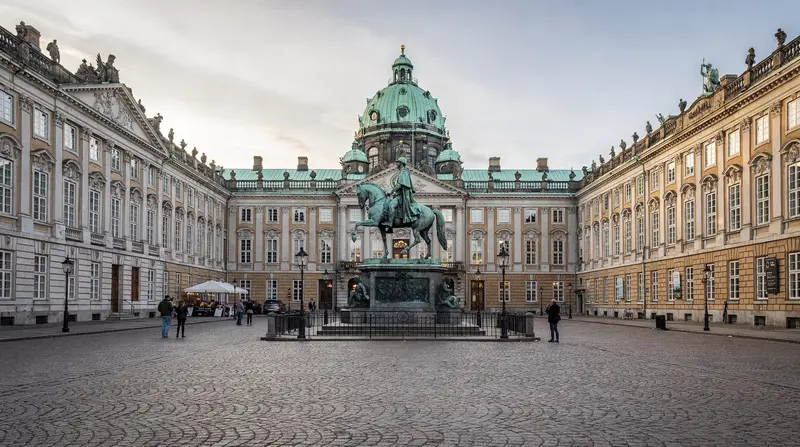
Frederiksstaden and Amalienborg: Copenhagen's royal quarter
Honest guide to Frederiksstaden: Amalienborg Palace, the Marble Church, Designmuseum Danmark, and what's actually worth your time in Copenhagen's royal
Copenhagen: Marble Church Architecture Private Walking Tour
Quick facts
- Getting there
- Metro M3/M4 to Marmorkirken (Kongens Nytorv + 12 min walk)
- Amalienborg Museum
- 130 DKK (~17€), students 75 DKK
- Marble Church entry
- Free (tower: 50 DKK/~7€)
- Designmuseum Danmark
- 145 DKK (~19€), free under 27
- Guard change
- Daily at noon when monarchs in residence
Quick answer: Frederiksstaden is the best example of planned 18th-century urbanism in Scandinavia, and the Designmuseum is one of the most underrated museums in Copenhagen. The neighbourhood takes a morning to cover properly. Skip the Amalienborg Museum if you’re not deeply interested in Danish royals; don’t skip the Marble Church dome.
| Where | Central Copenhagen, 12 min walk north of Nyhavn/Kongens Nytorv |
| Cost | Free (square, church, Kastellet); 130–145 DKK for the museums |
| Time needed | 2 hours minimum; a full morning with one museum |
| Getting there | Metro M3/M4 to Marmorkirken, or walk from Nyhavn |
| Best visited | Before 9:30 or after 17:00, before the tour groups arrive |
A neighbourhood built as a statement
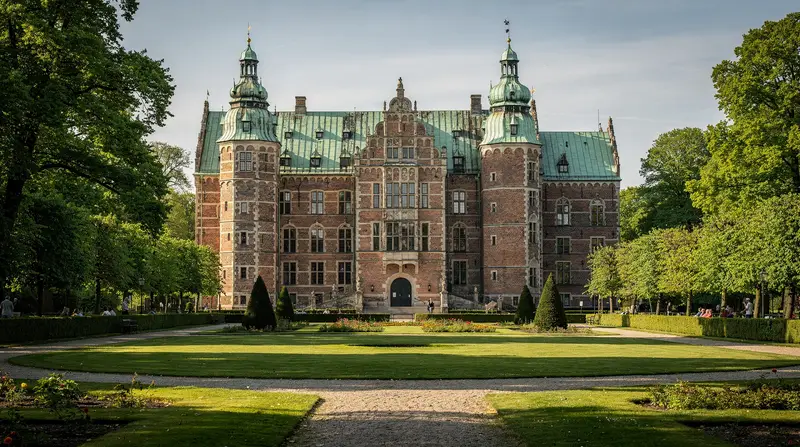
Frederiksstaden was designed in the 1740s by the architect Nicolai Eigtved as a grand expansion of Copenhagen to the north, ordered by Frederik V to mark 300 years of Oldenburg royal rule. The plan was geometrically rigorous: four identical palaces arranged around a central octagonal square, a church of cathedral-like ambitions at the end of the main axis, and wide streets connecting the whole ensemble to the harbour.
It was built largely with private money — the four palaces around Amalienborg were funded by Danish aristocratic families, not the Crown, which is why they vary slightly in decorative detail despite sharing a unified facade. The plan took decades to execute and was never fully completed as originally imagined, but what was built remains remarkably intact and is the closest Copenhagen gets to Parisian grand urbanisme.
The neighbourhood is still genuinely residential and working. Embassies occupy some of the grander buildings. The streets between the main axes have bakeries, a pharmacy, apartment blocks with residents who get mildly annoyed at slow-moving tourists blocking the cycle paths. This combination of formal grandeur and functional ordinariness is very Danish, and it makes the neighbourhood more interesting than a pure monument zone would be.
Amalienborg: four palaces, one square
The four Amalienborg palaces face each other across an octagonal cobbled square with an equestrian statue of Frederik V at its centre — a 1771 work by the French sculptor Jacques-François-Joseph Saly, considered one of the finest rococo equestrian statues in existence. It took 20 years to cast and was so expensive it nearly bankrupted the Asiatic Company that funded it.
Who lives there: The Danish Royal Family uses Amalienborg as their primary winter residence. Christian IX’s Palace (Christian IXs Palæ) is currently the residence of King Frederik X and Queen Mary. Frederik VIII’s Palace (Frederik VIIIs Palæ) is used by Crown Prince Christian. The other two palaces have state apartments and the museum.
The guard change takes place at noon when the monarch is in residence. The New Guards march from Rosenborg Castle at 11:30 through the city centre to Amalienborg, arriving around noon. It is genuine military ceremony rather than performance, but it is also watched by large numbers of visitors, especially in summer. If you want to see it without crowds, come on a weekday in October or March.
The Amalienborg Museum (Christian VIII’s Palace) displays interiors from the 19th-century royals — furnished rooms, personal objects, the kind of exhibition that works if you find Danish 19th-century court life interesting and feels slow if you don’t. Admission 130 DKK (~17€). Honest assessment: worthwhile for the quality of the restored interiors and the access to a real palace interior, not worthwhile if you’re visiting for the square and the church.
A private architectural walking tour covering the Marble Church and Frederiksstaden is the most focused way to understand the ensemble — the guide will explain Eigtved’s original plan versus what was actually built, the financing controversies, and the spatial logic of the design in a way that makes the square considerably more interesting than it appears without context.
Marmorkirken: the church that took 150 years to finish
The Marble Church (formally Frederik’s Church, or Frederiks Kirke) was designed by the same Eigtved in 1740 as the spiritual anchor of Frederiksstaden. It was intended to rival St. Peter’s in Rome in ambition, which immediately caused problems: the original plan required expensive Norwegian marble that the Danish treasury could not afford. Construction stopped in 1770 with only the lower walls built. The shell sat roofless for 112 years.
It was finally completed in 1894 by the architect Ferdinand Meldahl, using cheaper limestone instead of marble, which is why the exterior has a somewhat heavy, yellowish quality rather than the lightness marble would have provided. The dome — 31 metres in diameter, the largest in Scandinavia — was Meldahl’s addition, inspired by St. Peter’s but executed in a late-19th-century idiom that doesn’t quite match the 18th-century lower walls.
The interior is nevertheless extraordinary. The dome fresco cycle, painted by Constantin Hansen and others, covers the ceiling in an illusionistic scheme that makes the dome appear higher than it is. The acoustic quality for music is exceptional. Free entry to the church; the dome climb costs 50 DKK (~7€) and involves a steep internal staircase to a walkway just below the lantern with good views over Frederiksstaden and the harbour.
The church is a working parish. Sunday services at 10:30 use the full acoustic potential of the space. If you can arrange your visit to overlap with a service or a concert, the experience is qualitatively better than a weekday tourist walk-through.
Designmuseum Danmark: the honest case for going
The Designmuseum is housed in a 1757 rococo hospital building (designed by Eigtved, like everything else in this district) and covers Danish and international applied arts and design from the 18th century to the present.
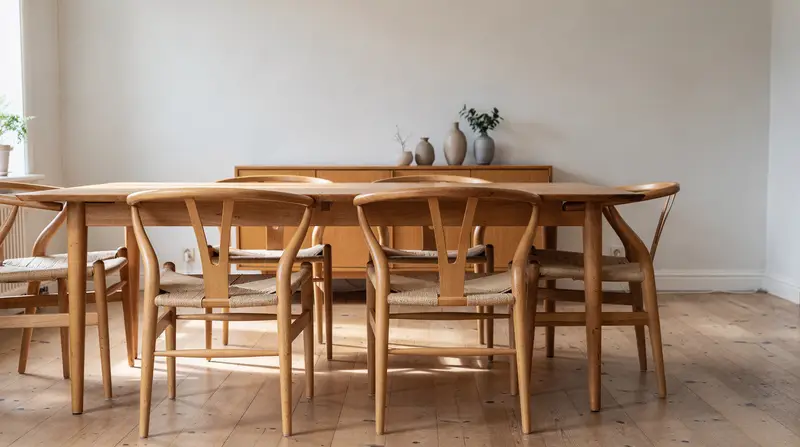
The permanent collection covers furniture design in a way that makes most similar museums look superficial — not just a parade of chairs, but a sustained argument about the relationship between materials, function, and form across 250 years. The Danish design canon (Kaare Klint, Hans Wegner, Arne Jacobsen, Verner Panton) is here in depth, with the design process visible where other museums show only finished objects.
The 20th-century Danish industrial design section is genuinely underappreciated internationally — Denmark’s contribution to modernist furniture, ceramics, glassware, and textiles rivals Scandinavia’s more internationally promoted design cultures and the museum makes this case convincingly.
Admission is 145 DKK (~19€). Free for under-27s. The museum shop is one of the better design shops in Copenhagen and worth browsing even if you don’t buy anything. Café on-site (average quality).
Allow 90 minutes minimum. Two hours if you’re interested in the material. The special exhibitions vary in quality — check what’s on before paying the premium if that’s your main interest.
A city highlights walking tour with a local guide that covers this neighbourhood will connect Frederiksstaden to the broader story of Copenhagen’s development — useful context before spending time in the museums.
Frederiksstaden with children
The neighbourhood is a mixed proposition for families. The guard change at noon is genuinely engaging for children — the marching band, the uniforms, and the ceremonial precision hold attention better than most museum visits, and it’s free. The square itself, being open and largely traffic-free, gives children room to move around between the formal moments of the ceremony.
The Amalienborg Museum’s interiors, by contrast, are a harder sell for younger children — glass cases of 19th-century royal possessions rarely compete with a playground. The Designmuseum fares somewhat better with children aged 8 and up who have any interest in making things, since parts of the collection show design process and prototypes rather than only finished pieces, but it is still primarily an adult-oriented museum. The Kastellet’s ramparts, a short walk north, are the best family add-on in the immediate area — genuinely fun to run along and climb, with real historical substance (a working star fortress) for parents to explain along the way.
If you’re building a family day around this part of the city, pair the free guard change and Kastellet walk with lunch, and save the paid museums for a day when the adults are exploring without younger children in tow, or when the children are old enough to engage with the content rather than just tolerate it.
Bredgade: the neighbourhood’s main artery
Bredgade connects Kongens Nytorv to the Amaliehaven garden and functions as Frederiksstaden’s commercial and institutional spine. It contains several of Copenhagen’s more specialised institutions and shops that most visitors miss.
The Medical Museion (Bredgade 62) is one of Europe’s most unusual museums — a history of medicine collection inside a 1752 rococo hospital building (the Frederiks Hospital, designed by Eigtved, repurposed after the hospital moved to a new location in the 1900s). The permanent collection covers anatomy, surgery, pharmaceuticals, and psychiatric history in ways that are frank about historical practices and appropriately sobering. Free on certain days; check the website. Typically very uncrowded even on summer weekends.
The Russian Orthodox Alexander Nevsky Church (Bredgade 53) is a notable 1883 building that marks the presence of the Russian aristocratic community in Copenhagen in the late 19th century — many Russian nobles maintained close ties to the Danish royal family. The interior has the full Russian Orthodox decorative programme: gilded iconostasis, painted domes, hanging lamps. Open for visits between services; free entry.
Antique dealers: Several serious antique dealers occupy Bredgade ground floors, catering mainly to the local collector market. These are not tourist shops — the stock is priced for the trade and the proprietors are experts. Browsing is welcomed but purchasing requires preparation. This is where Copenhageners with money buy 18th-century furniture and silver.
The street’s architecture shifts as you move north — from neoclassical early-18th-century buildings near Kongens Nytorv to slightly later rococo near Amalienborg, with occasional gaps where later buildings replaced originals. The spatial experience is more varied and interesting than the grand axis of Amaliegade, which was designed for ceremonial effect rather than everyday use.
The Kastellet: Copenhagen’s star fortress
The Kastellet (citadel) sits at the northern end of Frederiksstaden, on the point where the harbour meets the parks around the old city walls. Built in the 1660s under Frederik III, it remains the best-preserved star fortress in Northern Europe — the pentagonal earth ramparts with their bastions are intact, the buildings inside are still used by the Danish military, and the whole complex is accessible as a public park.
The ramparts walk takes about 30–45 minutes at an easy pace. The views from the top of the earthworks over the harbour and across to Sweden on a clear day are the best free views in this part of Copenhagen. The windmill on the northwest bastion (restored in 2011) is one of very few working windmills in any European capital.
The Little Mermaid: Edvard Eriksen’s 1913 bronze sculpture, commissioned by Carlsberg founder Carl Jacobsen, sits at the harbour edge just north of the Kastellet. She is — honestly — smaller than most visitors expect (about 1.25 metres tall), surrounded by other visitors attempting to photograph her without other visitors in the shot, and best visited before 9:00 or after 18:00 if the photograph matters to you. The sculpture itself is well-crafted and the waterfront location is genuine; the surrounding experience is intensive tourism.
The Kastellet and Little Mermaid are typically combined with a Frederiksstaden visit, adding 45–60 minutes to the itinerary. The walk north from Amalienborg takes about 12 minutes through the edge of Churchill Park.
The Amaliegade axis and Amaliehaven
The main street of Frederiksstaden, Amaliegade, runs north from Kongens Nytorv to the harbour front, where the Italian-designed Amaliehaven garden sits between the palace and the water. The garden was a gift from the Maersk shipping company in 1983 and was designed by landscape architect Jean Delogne in a formal classical style that deliberately echoes Eigtved’s 18th-century plan. It works; the harbour view from the garden benches, with the Opera House across the water, is one of the better free viewpoints in central Copenhagen.
The Opera House (Operaen), visible from Amaliehaven, sits on the island of Holmen directly across the harbour. It was designed by Henning Larsen and opened in 2005, its cost (around 500 million DKK) funded entirely by the Maersk Foundation. The placement — directly on axis with Amalienborg — was not universally admired at the time, and the Queen herself reportedly disliked having a modern building interrupting the historic sight line. The argument continues.
Amalienborg vs Rosenborg vs Christiansborg: Copenhagen’s royal sites compared
Copenhagen has three distinct royal sites, and visitors often conflate them or don’t realise how different the experiences are.
| Amalienborg | Rosenborg | Christiansborg | |
|---|---|---|---|
| What it is | Working royal residence, 4 rococo palaces | Renaissance castle, now a museum | Seat of parliament, on Slotsholmen |
| Can you go inside? | One palace (museum) | Yes, fully — Crown Jewels here | Reception Rooms + tower, free |
| Highlight | Guard change at noon | Crown Jewels and treasury | Best free rooftop view in the city |
| Time needed | 1–2 hours | 1.5–2 hours | 1–1.5 hours |
A morning covering both Amalienborg and the Marble Church pairs naturally with an afternoon at Christiansborg Palace or Rosenborg Castle if you want the fuller royal-Copenhagen picture in a single day — this is also a sensible structure for a 2-day Copenhagen itinerary. For design-focused visitors, the Copenhagen design guide gives wider context on where Designmuseum Danmark sits against the city’s other design institutions, and the things to do in Copenhagen guide places Frederiksstaden among the city’s other half-day neighbourhood options.
What to skip and what’s actually worth it
Skip: The souvenir shops around Amalienborg selling Royal Guard merchandise. The postcards of the Queen. The horse-drawn carriage tours that congregate near the square in summer (overpriced, slow, not particularly informative).
Don’t skip: The Marble Church dome climb if you’re reasonably mobile (50 DKK, 7€, worth every krone for the spatial experience). The Designmuseum if design interests you in the slightest — it consistently surprises visitors who expected a traditional decorative arts museum. Walking Amaliegade to the harbour front rather than turning around at the square.
Honest assessment of the Amalienborg square itself: It is more impressive in photographs and at a distance than up close. The proportions are correct and the four palaces read as a unified ensemble, but the effect is diluted by the sheer number of tour groups who stop there simultaneously. Arrive before 9:30 or after 17:00 for the version that makes the design legible.
Getting here
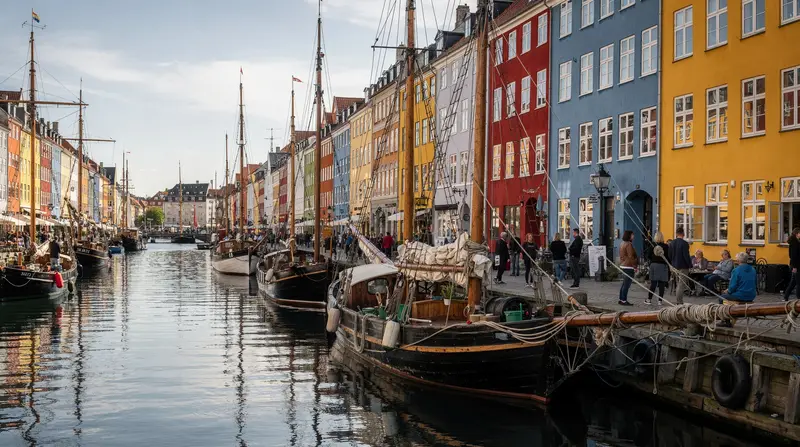
From Nyhavn: 12 minutes on foot north along the harbour front. This is the most pleasant approach and the right way to arrive — you walk through the neighbourhood’s transition from the tourist-dense canal zone to something quieter and more monumental.
From Kongens Nytorv Metro (M1/M2): 12 minutes on foot northeast along Bredgade, which passes several of the neighbourhood’s notable buildings.
By bus: Routes 26 and 1A stop near Frederiksstaden. Less useful than walking from the Metro given Copenhagen’s traffic.
The Copenhagen city card and public transit: the Copenhagen Card covers the Designmuseum and Amalienborg Museum, as well as all metro and bus travel. Worth calculating if you’re visiting multiple paid attractions.
How long to allow
Two hours: Walk the square, church exterior and interior (not the dome), Amaliehaven. Enough to see the architecture without going into any museum.
Half-day (3–4 hours): Add the Marble Church dome climb and either the Amalienborg Museum or the Designmuseum, but probably not both in a single session.
Full morning: Designmuseum (90 min) + Marble Church dome + Amalienborg square + walk to Amaliehaven and harbour front. This is the right approach for design-interested visitors.
A guided tour by car covering Copenhagen’s key historical sites connects Frederiksstaden to Christiansborg and Rosenborg in a single session — useful if you want historical context across all three royal sites without doing the full walking distance.
Frequently asked questions about Frederiksstaden and Amalienborg
Can you go inside Amalienborg Palace?
Part of the palace is open as the Amalienborg Museum — specifically Christian VIII’s Palace. The working royal apartments in Christian IX’s Palace and Frederik VIII’s Palace are not open to visitors. The outer courtyard is accessible and free.
When does the changing of the guard happen?
Noon daily when the Danish monarch is in residence (which is most of the year, except when the family is at Marselisborg Palace in Aarhus during summer or abroad). The guard marches from Rosenborg Castle at 11:30, arriving at Amalienborg around noon.
Is the Designmuseum free for young visitors?
Yes. Entry is free for visitors under 27 years old. This applies to the permanent collection and most special exhibitions. Worth verifying on the museum’s website for the current exhibition policy.
How long does the Marble Church dome climb take?
The climb is approximately 15–20 minutes each way and involves a narrow internal staircase. The viewing platform is below the lantern and gives a 360-degree view. Not recommended for severe claustrophobia or mobility issues. 50 DKK (~7€).
Is Frederiksstaden walkable from the city centre?
Yes. Nyhavn to Amalienborg square is about 12 minutes on foot. From Strøget (the pedestrian shopping street) allow 20 minutes. The neighbourhood is compact and the main sites are all within 10 minutes of the central square.
What’s the difference between visiting Amalienborg and Rosenborg?
Amalienborg is the current working royal residence; the museum shows 19th-century court interiors. Rosenborg is an older Renaissance castle that is now entirely a museum, housing the Crown Jewels and royal regalia. Rosenborg is more museum, Amalienborg is more living institution. Both are worth visiting for different reasons.
What’s near Frederiksstaden for lunch?
The neighbourhood itself has few restaurant options beyond tourist-oriented cafés. Walk south toward Nyhavn for more options, or north to the Kastellet area. For lunch near the Designmuseum, the museum café is acceptable; better alternatives are a 10-minute walk toward Nørreport or Indre By.
Top experiences
Bookable activities with verified prices and instant confirmation on GetYourGuide.