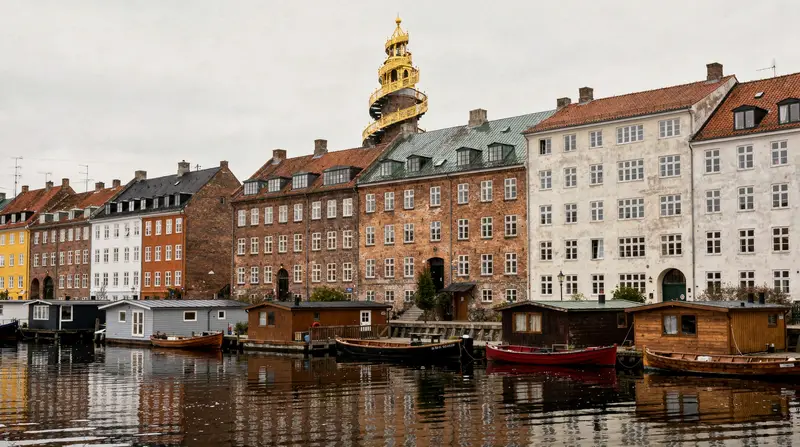
Christianshavn and Christiania: canals, counterculture and a ski slope
Honest guide to Christianshavn and Freetown Christiania: canals, CopenHill, what Christiania actually is, and what to skip.
Copenhagen: Christiania & Christianshavn Guided Walking Tour
Duration: 2 hours
Quick facts
- Getting there
- Metro M1 to Christianshavn (4 min from city centre)
- Christiania entry
- Free (no photos on Pusher Street)
- CopenHill ski pass
- From 199 DKK (~27€) incl. gear rental
- Canal kayak tour
- ~395 DKK (~53€) for 2 hours
- Best visited
- Year-round; CopenHill best Oct–May
Quick answer: Christianshavn combines Amsterdam-style canals with one of Europe’s most unusual social experiments and a ski slope built on a waste incinerator. Half a day covers the canals and Christiania; add CopenHill as a separate half-day trip. Come on a weekday morning for fewer crowds.
| Where | Man-made island, 4 min by Metro M1 from the city centre |
| Cost | Christiania free; CopenHill from 199 DKK; kayak tour ~395 DKK |
| Time needed | Half-day (canals + Christiania) or full day with CopenHill/kayaking |
| Getting there | Metro M1 to Christianshavn, or 12-min walk from Nyhavn |
| Best visited | Weekday mornings for quiet canals; Oct–May for CopenHill’s real snow |
Canals before the tourists arrive
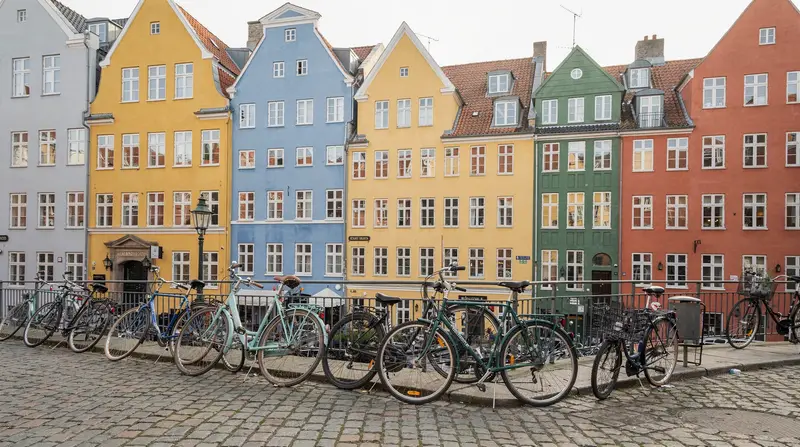
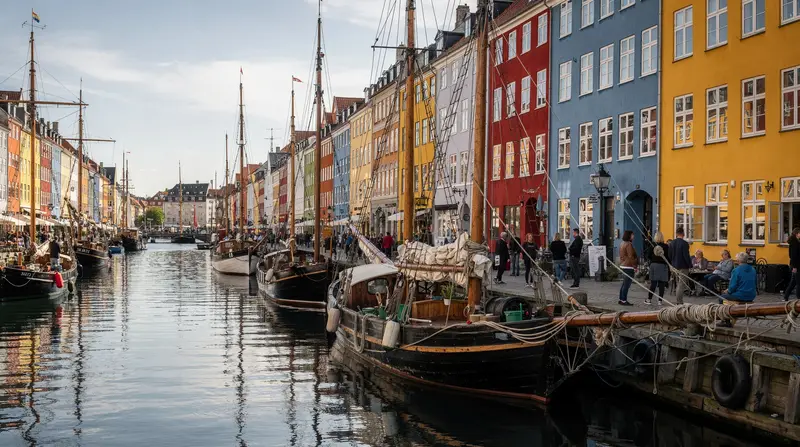
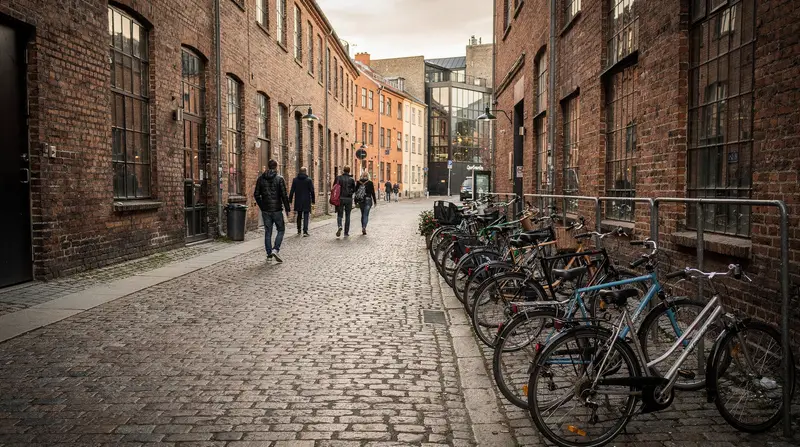
Christianshavn is technically a separate island, separated from the historic city centre by a narrow waterway and connected by several bridges. It was built in the 17th century as a merchant district — modelled on Amsterdam — and the canal layout has changed remarkably little since then. Walk Overgaden Oven Vandet (the north bank of the main canal) before 09:00 and you’ll understand why this neighbourhood keeps appearing in every honest Copenhagen guide: colourful facades reflected in still water, houseboats with small gardens, virtually no tourist infrastructure.
The neighbourhood is genuinely residential. Most of the people you’ll pass on a weekday morning are cycling to work or buying bread. The canal running through the centre — Christianshavns Kanal — is wide enough for proper boat tours and dotted with bridges where locals sit in summer. The most photographed view is from Knippelsbro bridge looking south, but the more honest version is simply walking either bank for twenty minutes without a plan.
Vor Frelsers Kirke (Church of Our Saviour) dominates the skyline with its external helical spire, which you can climb for 60 DKK (~8€). The climb is 400 steps, the last 150 of which are on the outside of the spire with no real barrier between you and a long drop. Worth it for the view, not worth it if you’re affected by heights. The church interior is free, rarely crowded before noon, and contains a massive baroque organ and a pulpit elephants are somehow involved in supporting.
A guided walking tour of Christianshavn covers the canal architecture, the neighbourhood’s merchant history, and the transition into Christiania in a structured two hours — better value than trying to piece it together from signage alone, which is minimal.
Freetown Christiania: what it actually is
Christiania is a self-declared autonomous neighbourhood of approximately 850 permanent residents occupying 34 hectares of former military barracks that squatters took over in 1971. It has been in a legal grey zone with the Danish state ever since, though residents reached a purchase agreement for the land in 2011 and the community now operates as a foundation.
What Christiania is not: a theme park, a hippie museum, or a party destination. It is a functioning community with its own governance structure, collective ownership of buildings, a primary school, a recycling system, and approximately 100 businesses ranging from vegetarian restaurants to metalwork workshops to an anarchist music venue (Loppen, which hosts serious acts).
Pusher Street — the cannabis market — is the thing most visitors come looking for and the thing Christiania is most ambivalent about. Cannabis sales are semi-public and technically illegal under Danish law; police periodically raid, and the community itself has repeatedly tried to close the market because of the organised crime elements it attracts. Photography is strictly forbidden on Pusher Street; a sign at the entrance makes this clear, and people will physically cover your lens or confiscate your phone if you ignore it.
The more interesting parts of Christiania are further in: the Lake area with its handmade houses, the community gardens, the open workshops, and the performance spaces. The Gallopperiet is a children’s circus and playground. The Woodstock café serves cheap beer and hosts live music on weekends. The smithy next to it is a working forge that has operated since the 1970s.
Practical notes: Entry is free. Bring cash — most Christiania businesses don’t take cards. Don’t bring children into the Pusher Street area. Don’t try to photograph the market or the people working it. Do: walk to the lake, eat at one of the vegetarian spots, and give it an hour before forming an opinion.
A guided walking tour through Christiania and Christianshavn is worth considering if context matters to you — a good guide will explain the legal history, the internal governance, and why this place has survived for 55 years in ways that are genuinely surprising.
CopenHill: the ski slope that shouldn’t work
CopenHill (officially Amager Bakke) is a waste-to-energy plant that opened in 2019 with a ski slope on its roof. The plant incinerates waste from Copenhagen and five surrounding municipalities, generating electricity and district heating. The slope on top — 450 metres long, with a 85-metre vertical drop — is real artificial ski terrain, not a sledging hill.
It is genuinely impressive and slightly absurd in equal measure. The slope is covered in Neveplast, an Italian synthetic ski surface that skis differently from snow (faster, less forgiving, no powder days). A beginner run and a more demanding red-equivalent run exist side by side. The building also has a climbing wall on its exterior face — 80 metres tall, Europe’s tallest indoor-equivalent outdoor climbing surface.
In winter (November–April approximately) the slope gets a thin layer of real snow blown over the synthetic surface, improving the experience considerably. In summer it’s synthetic-only, which is fine for practice but less satisfying for anyone used to real snow.
The ski pass including gear rental starts at 199 DKK (~27€) for a two-hour session. Full-day passes are available. The facility is in Amager Bakke, about 2 km from Christianshavn by bicycle, or take bus 2A from near the Metro station.
Book a CopenHill ski pass with gear rental included online in advance, especially for weekends in the main season — sessions sell out.
On the water: kayaking the harbour
Copenhagen’s harbour is clean enough to swim in (there are three official harbour pools, open May–September) and is genuinely worth seeing from water level rather than from a bridge.
A guided kayak tour through the harbour typically runs two hours, covers canals and the main harbour, and requires no kayaking experience. Prices are around 395 DKK (~53€) per person. Tours typically run from a dock near Islands Brygge, which is on the opposite bank of the harbour from Christianshavn, a 10-minute cycle from the Metro station.
The self-guided alternative is GoBoat, where you rent a small electric boat (holds up to 8 people) and navigate yourself — no licence required, 400 DKK/hour for the boat. It is genuinely fun and genuinely chaotic.
Eating and drinking in Christianshavn
Christianshavn has a genuine local eating scene that most visitors miss because they’re focused on Christiania or are in transit from Nyhavn.
Café Wilder (Wildersgade, near the canal): a long-established neighbourhood café with a reputation for good smørrebrød (open-faced sandwiches) and reasonable coffee. The terrace fills up in summer; arrive before noon for a table. Prices are honest Copenhagen prices — a smørrebrød around 90–120 DKK (~12–16€), coffee 40 DKK.
Inside Christiania: Two kitchens within the community are consistently worth eating at. Morgenstedet (the vegetarian restaurant near the lake) has been serving food since the 1970s and charges 75–95 DKK (~10–13€) for a full vegetarian meal. Månefiskeren (the “Moon Fisher”) is a café with a terrace over the water, serving simpler food and beer. Neither takes card — bring cash.
The canal-side kiosk at Christianshavns Kanal sells good coffee and pastries from a small boat. In summer a queue forms by 9:00. It is charming in the way that only deeply local small businesses in expensive cities can be charming — the prices are the same as anywhere else in the city, the setting is better than almost anywhere else.
Noma’s legacy: Noma — one of the most influential restaurants of the past two decades — operated near Christianshavn until 2024, when it closed its restaurant to focus on its food laboratory. Its influence on Copenhagen’s food culture (and on the New Nordic cuisine movement) remains enormous even after its closure. The physical site is in the Christiania adjacent area, visible from the canal, though the restaurant itself is no longer accessible.
Beer: The neighbourhood doesn’t have many dedicated beer bars — those are mainly in Vesterbro and Nørrebro. The Christiania Woodstock has cold beer in summer; the canal-side café sells Danish lager. For serious craft beer, plan a separate evening in Vesterbro.
What to skip and what’s overrated
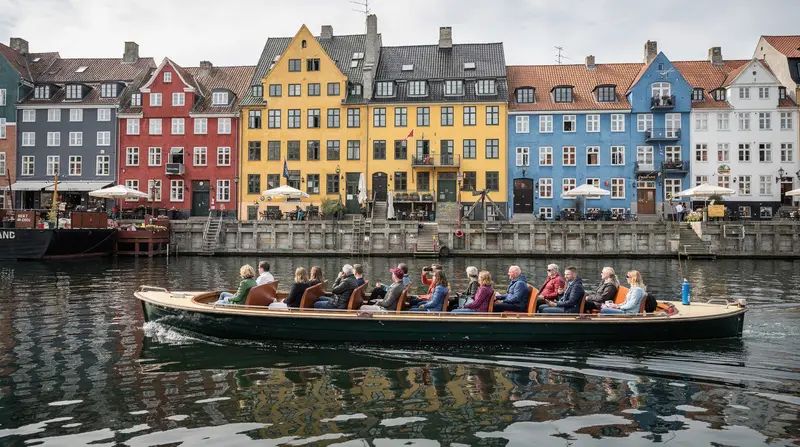
The tourist restaurant boats on Christianshavns Kanal: the floating restaurants moored along the canal look photogenic in every Instagram post and serve mediocre food at tourist prices (a basic pasta dish 175–225 DKK, ~23–30€). The locals sitting outside are invariably drinking coffee from the canal-side kiosk, not eating at the boats.
Christiania souvenir merchandise: the Christiania logo gear sold near the entrance is produced by an external company that has a contentious relationship with the community. The community’s own workshops sell different things, made differently.
Assuming the canal boat tours to Christianshavn depart from Christianshavn: most commercial harbour tours depart from Nyhavn, not from Christianshavn itself. If you want to kayak the Christianshavn canals specifically, book a tour that mentions them explicitly.
Christiania’s governance: how a 55-year-old squat became legal
The legal status of Christiania is more interesting, and more instructive about how Denmark actually handles social experiments, than most visitors realise. When squatters occupied the abandoned military barracks in 1971, the government’s initial response was tolerance rather than eviction — partly pragmatic (evicting hundreds of residents was politically costly), partly a genuine social experiment in an era when alternative communities were being tried across Northern Europe.
For four decades, Christiania existed in genuine legal limbo: residents didn’t own the land, paid a collective sum to the state rather than individual rent or property tax, and governed themselves through consensus-based community meetings rather than conventional municipal structures.
This changed in 2011, when a negotiated agreement allowed the Christiania Foundation to purchase parts of the site from the Danish state, converting decades of informal tolerance into a formal (if still unusual) legal and financial arrangement. Residents now effectively pay into a collective fund that covers the purchase financing, utilities, and communal maintenance — a structure closer to a housing cooperative than either private ownership or a conventional commune.
The community’s internal governance remains genuinely democratic and slow: major decisions go through open meetings, and consensus (not majority vote) is the traditional standard, which means decisions the Pusher Street cannabis trade included can take years to resolve. This is part of why the market has proven so difficult for the community itself to close, despite repeated internal efforts. Understanding this history reframes what you’re walking through: not a lawless zone, but one of Europe’s longest-running experiments in collective self-governance, which happens to include a semi-tolerated illegal market its own residents have spent years trying to shut down.
Christianshavn’s architecture: what to look at
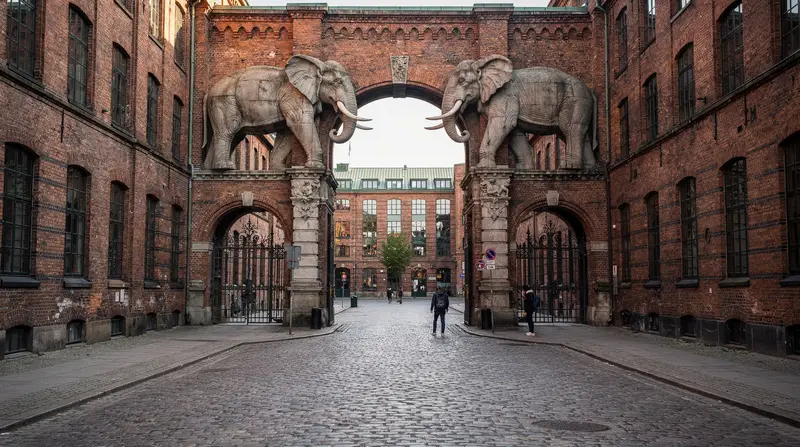
The neighbourhood’s architectural identity is unusual in Copenhagen — Eigtved-era canal-side blocks from the mid-18th century sitting alongside modern housing developments, former warehouses converted to offices, and occasional industrial structures that have survived without conversion.
The most interesting architectural walk runs from the Metro station south along Strandgade (the old merchant street), past several former East India Company warehouses that have been converted to residential and office use. The Gammel Dok (Old Dock) at Strandgade 27B now houses the Danish Architecture Centre and is worth entering — the building itself is a 1882 warehouse, and the temporary architecture exhibitions inside are usually of high quality. Entry prices vary by exhibition; the ground floor is often free.
Further south, the Appletoft area near the old citadel connection shows how the neighbourhood’s post-war social housing compares to its 18th-century predecessor — closely, in terms of density, and interestingly in terms of material palette. The red brick of the older buildings and the yellow brick of the 1950s housing create a specific urban texture you won’t see in many other European city centres.
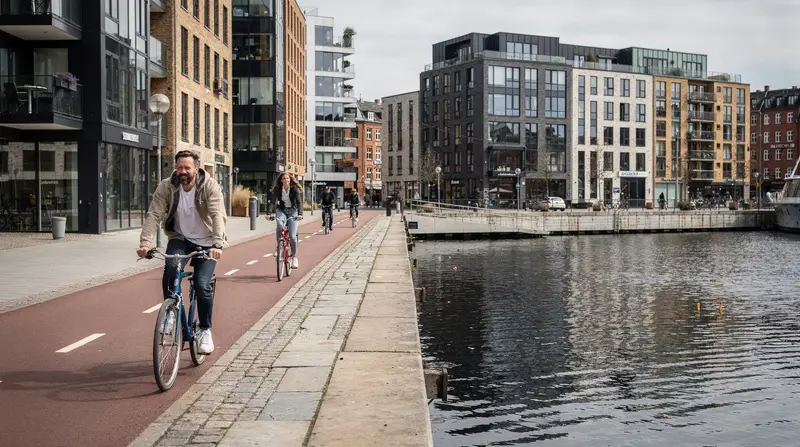
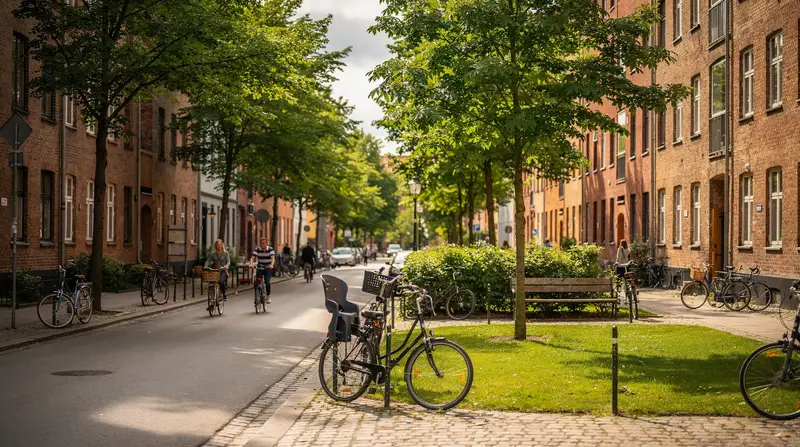
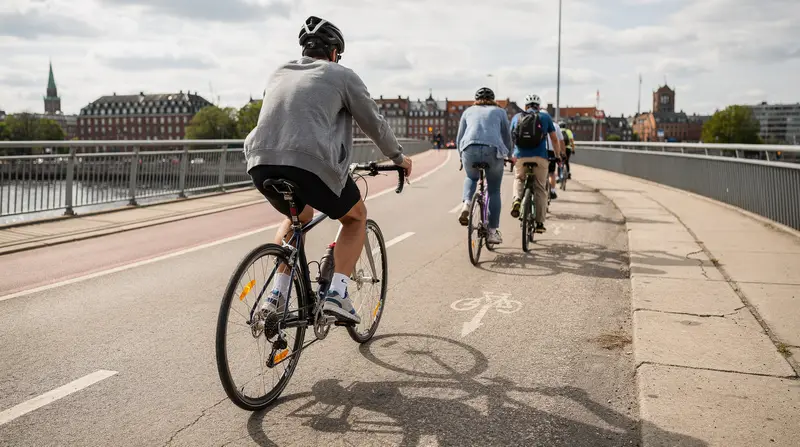
The cycling culture of Copenhagen is nowhere more visible than in Christianshavn’s narrow streets, where cycle paths have often been prioritised over car lanes and the resulting space is demonstrably better for both cyclists and pedestrians. The Torvegade axis is the main cycling artery connecting the Metro station to the bridge into Christiania; at rush hour the volume of cyclists here is genuinely impressive.
Christianshavn with children
The neighbourhood is better for children than Christiania proper, which can be confusing or inappropriate for young kids depending on the time of day.
CopenHill is excellent for children from about age 7 upward — skiing for those who can ski, the climbing wall for older children (minimum height requirements apply), and a toboggan run that is accessible to younger kids. The building itself is a working industrial facility that most children find genuinely impressive.
Kayaking works well for children from about 8–10 with a guided tour — life jackets are standard, the harbour is calm, and the guides are experienced with mixed-ability groups. Self-guided kayak or GoBoat rental is better suited to teenagers and adults.
The church tower at Vor Frelsers Kirke: the exterior spiral staircase is not recommended for younger children — the steps narrow and the drop is real. The interior staircase lower down is manageable for most children over 8.
Christiania itself: The lake, community gardens, and the Gallopperiet children’s circus space are genuinely good for children in the daytime. Avoid Pusher Street entirely with children; the best approach is to enter via the Christiania Torv entrance (from the Prinsessegade side) rather than the main gate, which bypasses the market area.
Christianshavn at different times of year
Christianshavn’s canal walk works year-round, but the character shifts noticeably by season. In summer (June–August), the canal-side benches and the kiosk queue fill early, houseboats have their gardens in full bloom, and the harbour pools nearby draw swimmers on hot afternoons. In autumn (September–October), the light on the water is arguably at its best for photography, and the neighbourhood empties of tourists considerably faster than the city centre. In winter, Christianshavn is quiet and slightly bleak in a way that suits the Christiania visit particularly well — fewer crowds at Pusher Street, and CopenHill’s synthetic slope gets its real-snow topping, which is the best time to book the ski pass.
Spring brings the community gardens in Christiania into bloom and is a comfortable shoulder season for the canal walk without summer’s crowds. Whichever season you visit, the weekday-morning rule for the canals holds consistently — this is the one part of the neighbourhood’s rhythm that doesn’t change with the calendar.
Getting here and getting around
Metro: M1 line to Christianshavn station. Four minutes from Kongens Nytorv (the Nyhavn hub). Direct from the airport via M2 to Kongens Nytorv, then one stop back on M1.
Bicycle: Copenhagen’s canal-side cycling paths make this the most pleasant approach from the city centre. The route along the harbour front from the city hall area takes about 15 minutes at normal pace.
Walking from Nyhavn: across Knippelsbro bridge, roughly 12 minutes. Not a long walk, and the bridge itself has good views of the harbour both ways.
CopenHill is not walkable from Christianshavn — it’s 2 km on the other side of Amager Strandvej. Bus 2A from Christianshavn station runs there in about 8 minutes.
How long to spend here
Half-day (3–4 hours): Metro in, walk both canal banks, 45 minutes in Christiania, church tower if you’re not afraid of heights, lunch at one of the Christiania kitchens, Metro back. This is the realistic minimum.
Full day (6–8 hours): Add a kayak tour, CopenHill, and a slower circuit around the lake in Christiania. This requires planning — book the kayak in advance, check CopenHill session times.
With a 2-day Copenhagen itinerary: Christianshavn fits naturally as a morning or afternoon slot on day one, combined with Nyhavn or the city centre.
Planning your visit: three ways to structure the day
| Plan | What’s included | Time needed |
|---|---|---|
| Canals only | Both canal banks, Vor Frelsers Kirke exterior, coffee at the kiosk | 1.5–2 hours |
| Half-day (the honest minimum) | Canals + Christiania (Pusher Street avoided or passed through quickly) + lunch | 3–4 hours |
| Full day | Half-day plan + CopenHill + kayak tour + slower Christiania lake circuit | 6–8 hours |
Most first-time visitors are best served by the half-day plan, then treating CopenHill or kayaking as a separate excursion later in the trip rather than cramming everything into one visit — both require advance booking and don’t reward being rushed. If you’re combining this neighbourhood with the rest of the city, it slots naturally into a 2-day or 3-day Copenhagen itinerary as a single afternoon block.
For an overview of how Christianshavn compares to Nyhavn and Copenhagen’s other central neighbourhoods, the things to do in Copenhagen guide is the wider reference point, and if the evening bar scene rather than the canals is your priority, the Copenhagen nightlife guide covers where the city’s actual nightlife concentrates — it isn’t here. Beer and food lovers extending the day should also see Carlsberg City, a natural add-on via Vesterbro on the other side of the harbour.
Frequently asked questions about Christianshavn and Christiania
Is Christiania safe to visit?
Christiania is generally safe during the day. The Pusher Street area can feel tense, and occasional incidents (historically including shootings between organised crime groups) have occurred. Go in the morning on a weekday for the quietest experience. Don’t photograph people who haven’t agreed to be photographed, and don’t bring an attitude about the cannabis trade in either direction.
Can you buy cannabis legally in Christiania?
No. Cannabis sales are illegal under Danish law. The de facto tolerance that existed for decades has been the subject of ongoing legal pressure, and the status changes periodically. Purchasing involves legal risk as a visitor, including fines.
Do I need a guided tour to visit Christiania?
No. You can walk in for free. A guided tour adds historical and political context that genuinely improves the experience for most visitors, but it is not required.
How do I get to CopenHill from Christianshavn?
Bus 2A from Christianshavn Metro station, 3 stops to Amager Bakke. By bicycle, follow the signs along Amager Strandvej — about 10 minutes. Not walkable at a casual pace.
When is the best time to ski at CopenHill?
November through March when real snow is added over the synthetic surface. Summer sessions on pure Neveplast are fine for beginners practising technique but feel less satisfying than winter. The slope is open year-round.
What’s the canal walk route in Christianshavn?
Start at Christianshavn Metro station, walk north along Torvegade to the main canal, then follow Overgaden Oven Vandet (north bank) east. Cross at the small bridge near Vor Frelsers Kirke, return along Overgaden Neden Vandet (south bank). Takes about 45 minutes at a relaxed pace.
Is kayaking in Copenhagen safe for beginners?
Guided kayak tours in the harbour are explicitly designed for beginners — no experience needed, life jackets provided, guide stays close. The harbour is calm in normal weather. Independent kayak rental is also available for those who’ve paddled before. The harbour swimming culture here reflects how clean the water genuinely is.
Top experiences
Bookable activities with verified prices and instant confirmation on GetYourGuide.