New Nordic cuisine explained: what it actually means and why Copenhagen became its capital
Copenhagen: New Nordic Food Tour with Tastings & Meal
Duration: 4 hours
What is New Nordic cuisine?
New Nordic is a cooking philosophy born in Copenhagen around 2004, defined by ten principles including strict Nordic seasonal produce, foraging, minimal processing and revived traditional techniques. It was codified in a manifesto signed by chefs from across the region and became globally influential through noma. Today it shapes everything from three-Michelin-star kitchens to open-faced sandwiches served at lunch counters.
| What it is | A 2004 culinary manifesto, not a cuisine name — ten principles on seasonality, purity and Nordic sourcing |
| Where to taste it | Copenhagen, from tasting menus to smørrebrød counters |
| Price range | Around 150 DKK (smørrebrød) to 900–1,100 DKK (tasting menus) |
| Booking | Fine-dining spots book out weeks ahead; lunch counters are walk-in |
| Budget option | See our New Nordic on a budget guide |
The Copenhagen New Nordic food tour is the fastest way to taste the philosophy across multiple kitchens — useful context before or after reading this explainer.
A movement that started with a dinner and a document
In November 2004, twelve Nordic chefs gathered in Copenhagen and signed a manifesto. The document was short — ten principles, less than 300 words — but it reframed how the region’s culinary identity would be understood for the next two decades.
The manifesto called for cooking that expressed “the purity, freshness, simplicity and ethics we wish to associate with our region.” It emphasised local and seasonal produce from Nordic landscapes, seas and lakes; the revival of forgotten ingredients and traditional techniques; the promotion of animal welfare; and the sharing of knowledge across Nordic borders. It was signed by chefs from Denmark, Sweden, Norway and Finland. René Redzepi and Claus Meyer drafted it. The New Nordic Kitchen Manifesto, as it came to be known, was not a marketing document — it was an attempt to define a philosophy.
What happened next was unexpected. The movement it described became arguably the most influential culinary shift in the world between 2005 and 2020.
The ten principles and what they mean in practice
The manifesto’s ten principles are worth reading closely, because they are frequently simplified or misrepresented in coverage of the movement.
1. Express the purity, freshness, simplicity and ethics that we wish to associate with our region. This is the foundational statement: New Nordic cooking should taste like where it comes from and how it was made.
2. Reflect the changes of the seasons in the meal we offer. Seasonal cooking is not unusual; making the season the explicit structural principle of a menu is. In a Nordic climate where the difference between a February and a July kitchen is enormous, this principle has real weight.
3. Base our cooking on ingredients and produce whose characteristics are particularly excellent in our climate, landscape and waters. This excludes imported exotica by principle. Nordic chefs work with what the region naturally produces: cold-water fish, root vegetables, rye, lamb, deer, berries, mushrooms, seaweed, dairy.
4. Combine the demand for good taste with modern knowledge of health and well-being. New Nordic cooking resists the richness-for-its-own-sake approach of classical French cuisine. The food is often lighter, acidic and vegetable-forward.
5. Promote Nordic products and the variety of Nordic producers. This makes farming and fishing visible. Restaurant menus name their suppliers. The movement created economic relationships between fine-dining kitchens and small farms that changed what Danish farmers grew and how.
6. Promote animal welfare and a sound production process for our flora, fauna, fish and shellfish. Welfare and sustainability were in the manifesto from the start, not added later as marketing.
7. Develop potentially new applications of traditional Nordic food products. Fermentation, preservation and dehydration are not historical curiosities to be revived — they are techniques with genuine culinary value that had been abandoned in the modernisation of Nordic cooking.
8. Combine the best in Nordic cookery and culinary traditions with impulses from without. The manifesto was explicitly not isolationist. French technique, Japanese knife skills and Peruvian ceviche thinking all fed into the kitchens operating under its influence.
9. Combine local self-sufficiency with regional sharing and the spread of our knowledge to the benefit of everyone in our countries. This was a declaration that the movement was collaborative, not proprietary. Knowledge would be shared rather than hoarded.
10. Join with consumer representatives, other cooking craftsmen, agriculture, the fishing industry, food, retail and wholesale industries, researchers, teachers, politicians and authorities on this project for the benefit and advantage of everyone in the Nordic countries. The ambition was systemic, not merely culinary.
Why Copenhagen, not Stockholm or Oslo
The manifesto was signed in Copenhagen, most of the restaurants associated with the movement’s first decade are in Copenhagen, and the city retains a disproportionate share of Nordic Michelin stars. This is not accidental.
Copenhagen in 2004 had a convergence of conditions that other Nordic capitals lacked. It had a small, dense professional cooking community that was already networked and mutually aware. It had a tradition of open sandwiches (smørrebrød) that linked high technique to local produce. It had proximity to Danish agricultural land, Swedish foraging territory, Faroese fish and Greenlandic seafood within supply-chain reach. And it had Claus Meyer — an entrepreneur with the connections and capital to establish the institutional frameworks the movement needed.
The New Nordic Food Institute, founded by Meyer, provided research infrastructure. The annual MAD Symposium (started 2011), also connected to the Copenhagen food world, became the platform through which the movement’s ideas circulated globally. The geography of a small country with a concentrated urban population made it possible for chefs to know each other, collaborate and argue productively.
Stockholm and Oslo have excellent restaurants. Neither has produced an ecosystem equivalent to Copenhagen’s.
noma’s role: amplifier, not origin
noma opened in a converted warehouse in Christianshavn in 2003. It signed the manifesto the following year and won its first Michelin star in 2005. By 2010 it had been named the World’s Best Restaurant by Restaurant magazine (a position it held in 2010, 2011, 2012, 2014 and 2021).
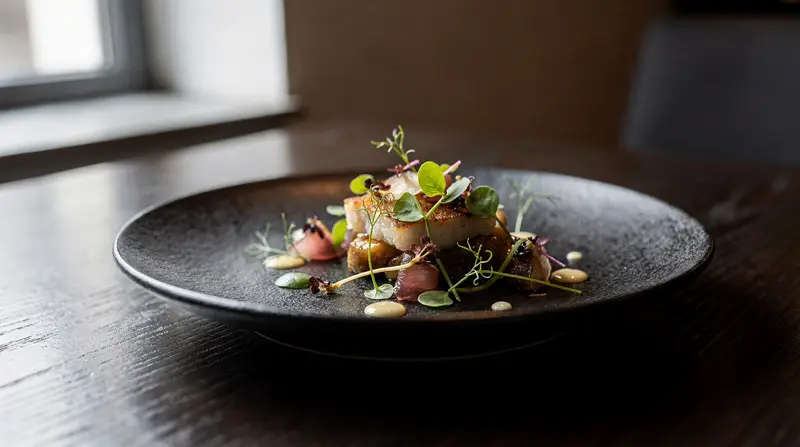
The restaurant’s influence on global fine dining cannot be overstated. It established that cold-climate, non-Mediterranean cooking could be not merely respectable but definitively excellent. It demonstrated that a restaurant could build a global reputation without olive oil, foie gras or classical French technique. And it gave the New Nordic movement a single address that journalists, chefs and food tourists could point to.
noma’s menu changed seasonally and eventually by biome: the seafood season, the vegetable season, the forest and game season each brought a completely different menu. René Redzepi’s obsession with fermentation produced what is arguably the most comprehensive publicly shared fermentation knowledge base in restaurant history — the noma guide to fermentation, published 2018, is used in professional kitchens worldwide.
In 2023, noma announced it would close its restaurant operations at the end of 2024 to focus on a food research laboratory. The announcement was widely covered as the end of an era. Whether it was is a question that Copenhagen’s remaining fine-dining scene will answer over the next decade.
The second generation: after noma’s dominance
The practical legacy of the New Nordic movement in Copenhagen is its second and third generation of restaurants. Many of the world’s best chefs worked at noma early in their careers and took its approach into their own projects.
Barr (Strandgade 93, Christianshavn) opened in 2017 in the former noma space, run by Thorsten Schmidt. It interprets New Nordic through the lens of a more accessible restaurant, offering menus at 650–950 DKK per person (around 87–127 euros) for two to three courses.
Amass (Refshalevej 153, Refshaleøen) was opened by Matt Orlando, a former noma head chef. It has its own kitchen garden and a strong sustainability programme. The restaurant composts obsessively, sources from named farms, and offers tasting menus at 900–1,100 DKK (around 120–147 euros).
Bæst (Guldbergsgade 29, Nørrebro) is the New Nordic approach applied to Italian-influenced wood-fired cooking — organic Danish charcuterie, local mozzarella made in-house, sourdough fired at high temperature. It is consistently booked out weeks ahead.
Höst (Nørre Farimagsgade 41) provides a more commercial but still considered version of the philosophy — tasting menus at 595–795 DKK (around 80–107 euros) in a warm, hygge-adjacent interior.
The movement’s influence extends further down the price ladder: the city’s smørrebrød restaurants have absorbed its logic, with seasonal toppings and named-farm sourcing appearing at 150–200 DKK (around 20–27 euros) per open-faced sandwich. For a fuller rundown of where to eat at each price point, see our best New Nordic restaurants guide and, for noma specifically, noma and fine dining in Copenhagen.
Seasonality in a Nordic climate: what actually changes
Understanding New Nordic requires understanding what a Nordic growing season actually looks like. Denmark sits at 55–57 degrees north latitude — similar to southern Canada or the south of England. The practical effect on food is:
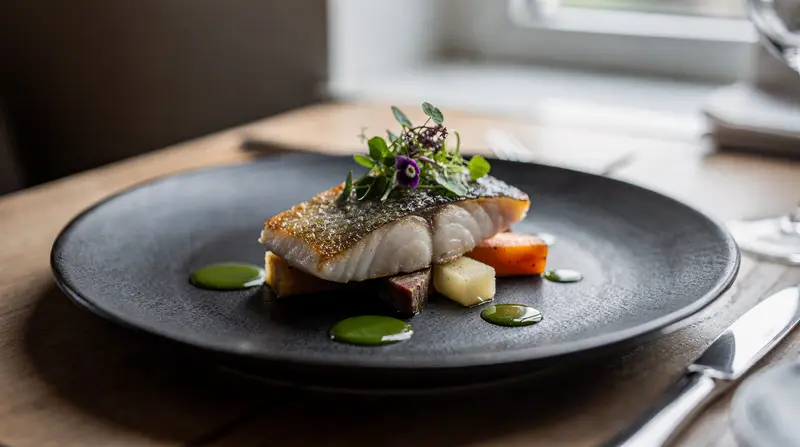
Winter (November–March): Root vegetables are the primary produce — celeriac, parsnip, beetroot, carrot. Preserved and fermented goods (pickled herring, cured meats, lacto-fermented vegetables, elderflower vinegar) carry the menu through the cold months. Cold-water fish (cod, plaice, halibut) are at their best.
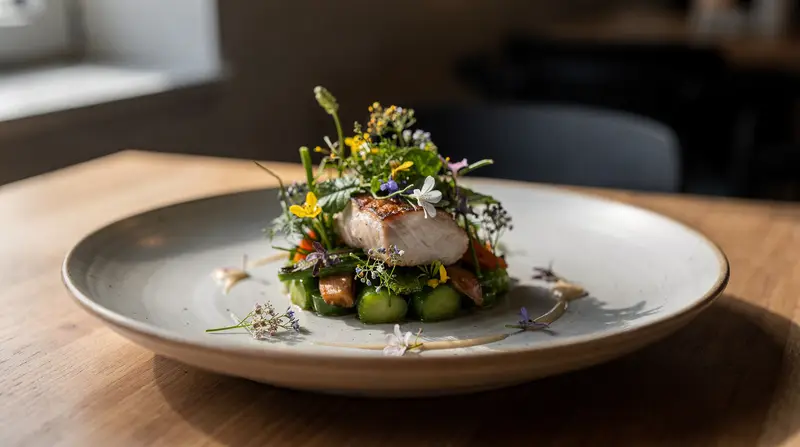
Spring (April–May): Green shoots arrive abruptly. Wild garlic, ramsons, wood sorrel and nettles appear in forests. Asparagus from Jutland (from mid-April) is a significant seasonal event in Danish fine dining. New-catch seafood shifts.
Summer (June–August): The most productive season. Danish strawberries are small, tart and brief. Elderflower is in full bloom in June. Sea buckthorn appears on coastal dunes. The long days (Copenhagen sees near-constant daylight in late June) accelerate ripening. The abundance of this period drives the vegetable season menus.
Autumn (September–October): Mushroom season. Ceps, chanterelles and hedgehog mushrooms from Danish and Swedish forests appear on menus. Game (deer, hare) opens. The last berries — lingonberry, cranberry, blackberry — concentrate before the first frost.
A kitchen operating under strict New Nordic principles cooks completely differently across these four periods. A visitor eating in Copenhagen in July and in February is eating from a different larder, from a different season’s logic.
Fermentation and preservation: the technique at the movement’s core
If there is a single technique that characterises New Nordic cooking more than any other, it is fermentation. René Redzepi’s Noma Projects has shared its fermentation research publicly; its book documents koji, kombuchas, lacto-fermentation, garum (fish and meat sauces fermented in the manner of the Roman condiment), vinegars and black garlic.
The logic is partly historical — Nordic winters made fermentation and preservation necessary for survival — and partly flavour-driven. Fermented ingredients add depth, acidity and umami to dishes without the heaviness of classical French enrichment. A garum made from fermented beef, for example, provides intensely savoury depth to a broth without the animal weight of a traditional stock.
Fermentation also extends the philosophy of using everything. Whey from cheese-making, the trim from butchering, overripe fruit, mushroom stems — all become inputs for something rather than waste. This aligns with the manifesto’s ethics statement in a practical way.
What New Nordic is not
Several things often attributed to New Nordic cuisine are worth clarifying:
It is not merely Scandinavian food renamed. Traditional Scandinavian cooking — flæskesteg (roast pork with crackling), frikadeller (meatballs), æbleskiver (Dutch pancake balls), leverpostej (liver pâté on rye) — is genuinely traditional Nordic food. New Nordic is a modernist response to that tradition, not a repackaging of it.
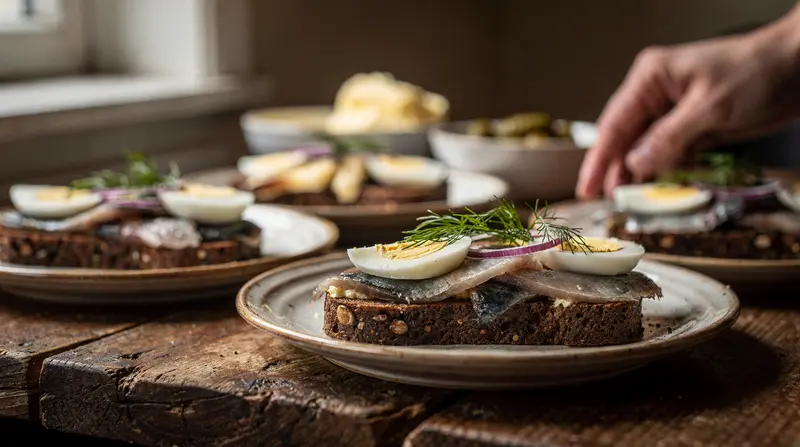
It is not exclusively expensive. The manifesto was written by restaurant chefs, but its principles apply at any price point. A rye bread sandwich with fermented herring and pickled cucumber is New Nordic in philosophy without being financially inaccessible.
It is not fully plant-based. The movement has increasingly moved toward vegetable-forward menus — noma’s vegetable season was explicitly plant-based — but this reflects aesthetic and ecological logic rather than ideology. Lamb, game, cold-water fish and dairy remain central to New Nordic cooking.
It is not a static moment. The manifesto was written in 2004. The movement has evolved through phases — the initial wild-foraging period, the fermentation and technique period, the sustainability-system period, and now the post-noma period in which the movement’s ideas are widely distributed across the industry rather than concentrated in a handful of flagship restaurants.
The honest assessment: hype and substance
New Nordic cuisine generated significant hype in the 2010s. Some of it was justified; some was not.
The justified hype: the movement genuinely changed what chefs worldwide think about local sourcing, seasonal cooking, fermentation and the relationship between cuisine and landscape. Restaurants from Toronto to Sydney to Tokyo were influenced by Copenhagen’s example. The manifesto’s principles have aged well.
The unjustified hype: the narrative occasionally reduced a complex culinary philosophy to a single restaurant (noma) and a single technique (foraging), flattening the movement’s actual breadth and diversity. Individual dishes became memes — the ants, the soil, the reindeer moss — that obscured the serious thinking behind them. Some restaurants in other cities used New Nordic aesthetics (unfinished wood, tweezers, foraged garnishes) as style without the underlying sourcing and philosophical commitments.
Copenhagen’s food scene today is more interesting for having moved past peak hype. The best restaurants are doing serious work without requiring international press attention. The movement’s influence is genuinely embedded in how the city eats, from the smørrebrød counter to the twelve-course tasting menu.
Tasting New Nordic without booking a tasting menu
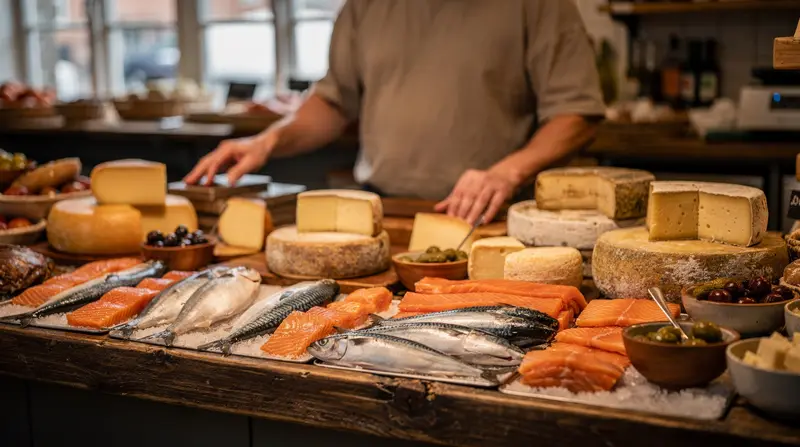
You do not need a 900 DKK dinner to understand the philosophy. A structured food tour covering three or four stops — a smørrebrød lunch counter, a natural-wine bar with fermented condiments, a bakery using ancient grains — teaches the principles faster than reading about them, and costs a fraction of a single tasting menu. If your budget is the main constraint, our New Nordic on a budget guide has a fuller list of accessible options across the city, including in Nørrebro and Christianshavn, both dense with second-generation kitchens.
Frequently asked questions about New Nordic cuisine
Who wrote the New Nordic manifesto?
The manifesto was drafted by chefs René Redzepi (noma) and Claus Meyer, then signed by twelve leading Nordic chefs at a symposium in Copenhagen in November 2004. It set out ten principles including purity, seasonality, ethics and sharing techniques across borders.
Is New Nordic cuisine just Scandinavian food?
No. Traditional Scandinavian food includes heavy stews, preserved fish, rye bread and dairy. New Nordic is a modernist reaction to that tradition — using Nordic ingredients but applying contemporary techniques, new presentations and ecological thinking. The resulting dishes often look nothing like traditional smørrebrød or frikadeller, even if the ingredients are locally sourced.
What does seasonal mean in New Nordic cooking?
In a Nordic context, seasonality is extreme. The growing season runs May to October; winter means root vegetables, dried and preserved produce, ferments and preserved fish. Summer brings berries, mushrooms, green shoots and new-catch seafood. New Nordic chefs make the season the explicit engine of the menu — the same restaurant’s menu in February looks radically different from its menu in August.
Did noma invent New Nordic cuisine?
noma popularised it globally and gave the movement its finest expression, but the philosophy preceded the restaurant. The manifesto came first (2004), and several chefs across Denmark, Sweden and Norway were already working along similar lines. noma opened in 2003 and won its first Michelin star in 2005. The relationship is symbiotic: the manifesto gave the movement coherence; noma gave it global reach.
Is foraging a gimmick?
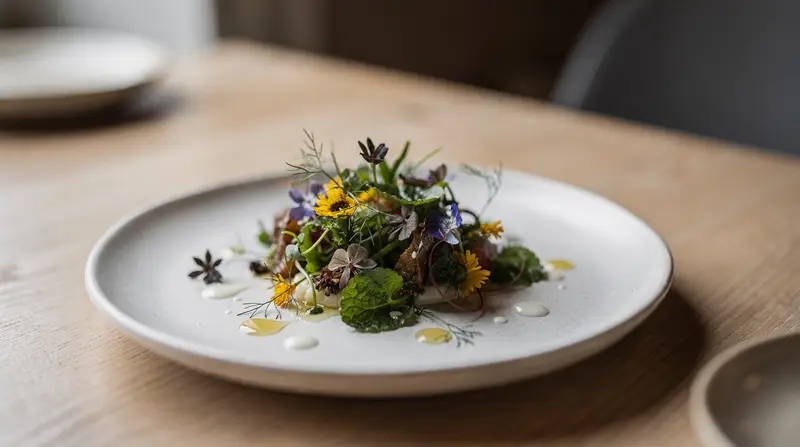
At its worst, yes — a sprig of wood sorrel garnished on an otherwise ordinary plate. At its best, foraging genuinely drives a kitchen’s seasonality and sourcing. Copenhagen’s proximity to forests, coastlines and agricultural land makes wild ingredients genuinely accessible to serious chefs. The distinction is whether the foraged element is structurally important to the dish or cosmetic.
How has New Nordic changed everyday Copenhagen food?
The movement’s influence has filtered down considerably. Smørrebrød topped with seasonal, local produce is now standard in mid-range lunch restaurants. Rye bread quality has improved city-wide. Fermentation appears on menus well below the fine-dining bracket. The obsession with sourcing has made Danish farmers more visible — restaurant menus regularly name the farm supplying their pork or potatoes.
Do I need to eat at noma to experience New Nordic cuisine?
No. noma announced it is closing its restaurant operations to focus on food research. Several of the movement’s second generation — Barr, Amass, Bæst, Höst — offer genuine New Nordic principles at more accessible prices. A New Nordic food tour lets you taste the philosophy across multiple kitchens in a single afternoon.
Top experiences
Bookable activities with verified prices and instant confirmation on GetYourGuide.