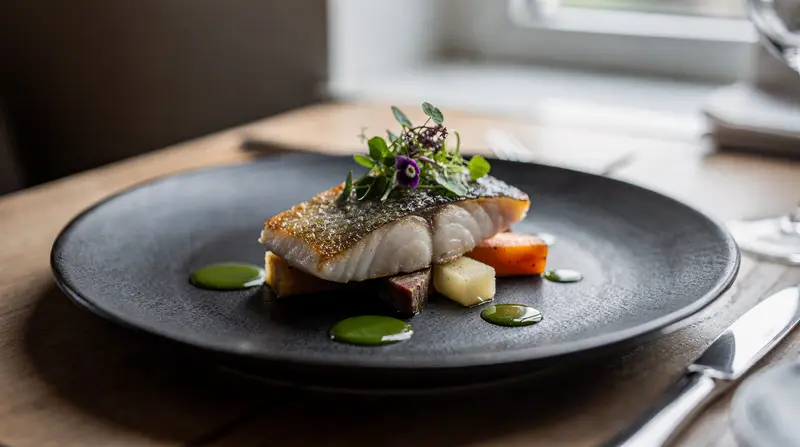
Copenhagen Michelin guide: the most starred city in the Nordic countries
Copenhagen: Evening Gourmet Walk with Food & Drinks Tasting
How many Michelin-starred restaurants does Copenhagen have?
Copenhagen has two three-star restaurants (Geranium and Alchemist), one two-star restaurant (AOC) and around ten to twelve one-star restaurants as of 2026, making it the most Michelin-starred city in the Nordic countries by total count and by density relative to population. The number fluctuates year to year as the guide is updated.
The Copenhagen evening gourmet walk provides a multi-stop food experience across the city at a fraction of a Michelin tasting-menu price — useful context for understanding the range of Copenhagen cooking before committing to a single starred booking.
| Three stars | Geranium, Alchemist (2,800–3,500 DKK/person) |
| Two stars | AOC (595 DKK lunch, 1,200–1,600 DKK dinner) |
| Best value | AOC weekday lunch |
| Booking | 1–6 months ahead depending on restaurant |
| Alternative | Bæst, Amass — no stars, widely considered excellent |
Why Copenhagen has so many Michelin stars
Copenhagen has more Michelin stars per capita than any other Nordic city — significantly more than Stockholm or Oslo, which are both larger. This is not accidental.
The New Nordic movement that emerged from Copenhagen in the mid-2000s created both the culinary conditions and the talent pipeline that starred restaurants require. The movement attracted chefs from across the world to train in Copenhagen’s kitchens. It created a dense, competitive professional environment in a city small enough for the whole industry to know each other. It established sourcing networks with Danish farmers and fishermen that gave kitchens access to high-quality, distinctive produce.
The Michelin guide responded to this environment with progressive recognition from the mid-2000s onward. noma won its first star in 2005, its second in 2007. Other restaurants followed. By the early 2010s Copenhagen had established itself as a dining destination comparable to Paris or Tokyo in terms of concentrated restaurant excellence — a remarkable achievement for a city of 800,000 people in a country of six million.
As of 2026, after noma’s closure, the landscape has redistributed without losing its overall density. The stars are held by a wider range of restaurants rather than concentrated around a single flagship, which arguably makes the city’s overall dining offer more interesting to visitors.
The three-star restaurants
Geranium
Address: Kronprinsessegade 13, 8th floor of Parken (the national football stadium), Østerbro Stars: Three (held since 2016) Head chef: Rasmus Kofoed
Geranium is technically the most refined restaurant in Copenhagen and one of the most rigorous in Europe. Rasmus Kofoed won the Bocuse d’Or in 2011 — the highest profile international cooking competition — and his restaurant reflects a competition chef’s attention to precision and execution.
The menu is called the Universe and typically runs 14 to 16 courses. It changes with the Nordic seasons: the spring menu, announced around April, uses new-growth produce; the summer menu (June–August) is explicitly vegetable-season and largely plant-based; autumn and winter bring game, preserved produce and root vegetables. The menu cycle is communicated clearly on the restaurant’s website.
The physical setting is worth noting: the eighth floor of a football stadium is an unlikely location for a three-star restaurant, but the room has floor-to-ceiling windows overlooking Fælledparken — Copenhagen’s largest park — which gives a genuine sense of the Nordic landscape during the long summer evenings.
Pricing: 2,800 DKK per person for food (around 375 euros). Wine pairing: 1,800–2,200 DKK depending on the programme. Full evening for two with wine: 10,000–12,000 DKK (around 1,340–1,600 euros).
Booking: Reservations open at noon Copenhagen time, 28 days before the service date. Weekend tables for summer services fill within five to ten minutes of opening. Use an automatic reminder set for 11:55 Copenhagen time, have a logged-in account on geranium.dk, and have your credit card ready.
Verdict: If you are spending this amount of money on a meal in Copenhagen, Geranium is the correct choice for technical precision and a room that earns the price. It is not warm in the way that some of the smaller starred restaurants are warm, and it does not surprise in the way noma once did, but the execution is beyond criticism.
Alchemist
Address: Refshalevej 173C, Refshaleøen Stars: Three (held since 2022 in the current space) Head chef: Rasmus Munk
Alchemist is a completely different experience from Geranium. It is not primarily a restaurant — it is a theatrical event that involves food. The evening is divided into five acts and includes around 50 “impressions,” a term that encompasses amuse-bouches, courses, art installations, projected ceiling imagery, live performance and what the kitchen describes as social commentary on climate, food systems, animal welfare and human health.
The building on Refshaleøen (a former industrial site that now hosts Reffen street food market and Amass alongside Alchemist) was purpose-built for the experience. The dome room, with its 22-metre ceiling, is the centrepiece — dinner is served under projected images at a scale that makes the space feel genuinely otherworldly.
Pricing: 3,500 DKK per person for food (around 470 euros). Drinks pairings: 2,000–3,000 DKK. Full evening for two with pairing: 12,000–16,000 DKK. This is Copenhagen’s most expensive dining experience.
Booking: Alchemist uses a priority waitlist system rather than a standard booking calendar. Register interest at alchemist.dk; you will be notified when slots matching your preferred dates become available. For popular dates — summer weekends, December — lead time is four to six months. Midweek in January or February is more accessible at two to three months.
Verdict: Worth experiencing once if you approach it as an event rather than a meal. Not worth it if you want a quiet dinner with excellent food and wine. The cooking itself is excellent — the theatrical elements are not a cover for mediocre technique — but the experience is exhausting in a way that Geranium is not.
The two-star restaurant: AOC
Address: Dronningens Tværgade 2, Indre By Stars: Two (held for several consecutive years) Head chef: Christian Gadient
AOC (which stands for Apicius, Omnibus and Cellar — the founders’ original concept references) operates in a seventeenth-century vaulted wine cellar in the heart of the old city. The room is the most beautiful in Copenhagen’s starred restaurant landscape — stone arches, candlelight, an intimate scale — and the cooking is serious enough to justify the setting.
Chef Christian Gadient works with Danish and Nordic produce at a level of technical precision comparable to Geranium, for approximately half the dinner price. The wine programme is among the strongest in the city.
Pricing: Lunch menus start at 595 DKK (around 80 euros), making this the best-value entry point to Michelin-starred cooking in Copenhagen. Dinner tasting menus: 1,200–1,600 DKK for food. Wine pairing: 800–1,200 DKK.
Booking: Four to six weeks ahead for dinner; two to three weeks for lunch. Significantly more achievable than the three-star restaurants.
Verdict: The first recommendation for visitors who want genuine starred cooking without the extreme prices or booking difficulty of Geranium or Alchemist. The combination of the room, the cooking and the wine programme is exceptional.
The one-star restaurants: a practical survey
Copenhagen’s one-star tier is large enough that covering all restaurants comprehensively is beyond the scope of this guide. The practically important ones for visitors:
Kadeau (Wildersgade 10B, Christianshavn) — Bornholm-sourced, one star. Menu around 1,200 DKK for food. A commitment to a single island’s produce as the defining constraint of the kitchen. Book four to six weeks ahead.
Koan (Strandgade 93, Christianshavn, former noma building) — Omakase-style, around 20 seats. Menu 1,500–1,800 DKK for food. Chef Kristian Baumann. Opened after noma’s closure. Book four to eight weeks ahead.
Jordnær (Gentoftegade 29, Gentofte) — Twenty minutes by S-Tog from central Copenhagen. Chef Eric Kragh Vildgaard runs one of the most technically precise kitchens in Greater Copenhagen. Menu 1,500–2,000 DKK. Book four to six weeks ahead.
Marchal (Hotel d’Angleterre, Kongens Nytorv 34) — Most accessible location of any starred restaurant, directly on Kongens Nytorv in the city centre. Lunch from 695–895 DKK, dinner menus at 1,200–1,600 DKK. The most formal service environment of any restaurant on this list. Book two to four weeks ahead.
Sushi Anaba — Compact omakase operation with high technical precision. Menu at 1,200–1,500 DKK. Book three to five weeks ahead.
Era Ora (Overgaden neden Vandet 33B, Christianshavn) — Italian-focused with one star, the longest-standing Michelin-starred restaurant in Copenhagen (open since 1983). An unusual presence on a list otherwise dominated by New Nordic cuisine; the cooking is Italian rather than Nordic in reference. Menu 1,200–1,500 DKK.
Clou (Kildegaardsvej 16, Hellerup) — Outside the centre, one star. Chef Jonathan Berntsen. Menu around 1,400 DKK.
Restaurants with presence but no Michelin stars
The Michelin guide is not the complete map of Copenhagen’s dining scene. Several important restaurants hold no stars:
Bæst (Guldbergsgade 29, Nørrebro) — No stars, consistently one of the most interesting restaurants in the city. Christian Puglisi’s wood-fired Italian-Nordic concept. A meal with drinks: 450–700 DKK. Book three to five weeks ahead.
Amass (Refshalevej 153, Refshaleøen) — Holds the Michelin Green Star for sustainability, no traditional star as of 2026. Matt Orlando’s kitchen garden restaurant. Tasting menus at 900–1,100 DKK. The cooking has been star-calibre for several years by most assessments.
Barr (Strandgade 93, Christianshavn) — Former noma space, North Sea culinary focus. 650–1,350 DKK. No star, consistently well-reviewed.
These and other unstarred kitchens are covered in more depth in the best new Nordic restaurants guide and the wider best food in Copenhagen guide — both make the case that Michelin’s list, while a reliable technical filter, is not a complete map of where to eat well in this city.
If the starred restaurants are out of budget
Not every visitor wants to spend 2,000+ DKK on a single meal, and Copenhagen’s food scene doesn’t require it. The New Nordic on a budget guide covers how to access the same culinary movement’s ideas — seasonal, local, technique-forward cooking — at a fraction of the starred-restaurant price, largely through market stalls, smørrebrød counters and mid-range restaurants staffed by chefs who trained in starred kitchens. For a guided introduction that samples several kitchens in one evening rather than committing to one restaurant, the best food tours in Copenhagen guide rounds up the options beyond the gourmet walk linked at the top of this page.
Book a New Nordic food tour with a full meal includedThe Green Star: sustainability recognition
The Michelin Green Star, introduced in 2021, recognises outstanding environmental and ethical practices. Copenhagen restaurants with Green Star recognition include Amass and several others — the list changes with each annual guide announcement.
The Green Star matters in Copenhagen specifically because the New Nordic manifesto explicitly included ethics, animal welfare and sustainability from its inception in 2004. Copenhagen restaurants were articulating these commitments before they became a Michelin award category.
Lunch as the value access point
Every Michelin-starred restaurant in Copenhagen is more affordable at lunch than at dinner. The cooking is often from the same kitchen operating a condensed version of the dinner menu.
AOC’s lunch at 595 DKK gives access to two-star cooking. Geranium does not currently offer a distinct lunch service (the Universe menu runs in one full service regardless of time), but AOC, Marchal and Jordnær all have meaningful lunch offerings at significantly reduced prices.
For visitors who want to experience starred cooking without an extreme dinner bill, a weekday lunch at AOC or Marchal is the most efficient approach in Copenhagen’s Michelin landscape.
Frequently asked questions about the Copenhagen Michelin guide
Which Copenhagen restaurants have three Michelin stars?
As of the 2026 Michelin guide: Geranium (Kronprinsessegade 13) and Alchemist (Refshalevej 173C, Refshaleøen). Both have held three stars for several consecutive years.
Which restaurants have two Michelin stars in Copenhagen?
AOC (Dronningens Tværgade 2) currently holds two stars. Chef Christian Gadient runs a highly technical menu in a seventeenth-century vaulted wine cellar. Lunch menus start at 595 DKK; dinner tasting menus at 1,200–1,600 DKK.
What are the current one-Michelin-star restaurants in Copenhagen?
One-star holders include Kadeau, Koan, Jordnær, Marchal, Sushi Anaba, Era Ora and Clou, among others. The full list is confirmed in the spring guide announcement.
Is a Michelin star a reliable guide to the best restaurants in Copenhagen?
Partly. Michelin identifies technically precise, well-run restaurants reliably. It is less reliable at capturing informal excellence and neighbourhood restaurants. Bæst has no stars and is consistently more interesting than several one-star addresses. The guide over-indexes on classical technique and formal service.
Can I get a Michelin-starred meal in Copenhagen for under 1,000 DKK?
Yes. AOC’s lunch menu starts at 595 DKK (around 80 euros). Marchal’s lunch menu is around 695–895 DKK. An evening gourmet walk covers the broader Copenhagen food scene at a fraction of any tasting-menu price.
What is the Green Star and which Copenhagen restaurants have it?
The Michelin Green Star is awarded for outstanding sustainability practices. Amass was among the first global recipients; Geranium and Kadeau have also received recognition.
Is it better to book a Michelin-starred lunch or dinner in Copenhagen?
Lunch is almost always better value — same kitchen at 40–60% of the dinner price, and easier to book. For first-timers testing a starred restaurant, a weekday lunch at AOC or Marchal is the most efficient access point.
Top experiences
Bookable activities with verified prices and instant confirmation on GetYourGuide.