Carlsberg City: Copenhagen's former brewery reinvented
Honest guide to Carlsberg City: Home of Carlsberg museum, craft beer, and the old brewery transformed into a new Copenhagen neighbourhood.
Copenhagen: Home of Carlsberg Experience Entry Ticket
Quick facts
- Getting there
- Bus 26 to Carlsberg; or 20-min walk from Vesterbro/Enghave Metro
- Home of Carlsberg ticket
- 165–199 DKK (~22–27€) depending on time slot
- Neighbourhood
- Adjacent to Vesterbro, Frederiksberg border
- Best visited
- Weekday afternoons for fewer crowds at the museum
- Construction timeline
- Full neighbourhood completion expected 2030
Quick answer: Carlsberg City is a genuine urban regeneration project where a 34-hectare former brewery is becoming a new Copenhagen neighbourhood. The Home of Carlsberg museum is well-produced and includes tastings; the neighbourhood itself is mid-construction and partially interesting, partially a building site. Worth visiting if you’re combining it with Vesterbro and have interest in either beer history or how cities grow.
| Where | Vesterbro/Frederiksberg border, ~20 min walk or 12-min bus from centre |
| Cost | 165–199 DKK museum entry; walking the neighbourhood is free |
| Time needed | 2 hours museum only; half a day combined with Vesterbro |
| Getting there | Bus 26 from Central Station, or on foot/bike from Vesterbro |
| Best visited | Weekday afternoons for the quietest museum visit |
What happened to Carlsberg’s Copenhagen brewery
Carlsberg has been brewing in Copenhagen since 1847, when J.C. Jacobsen built his first proper brewery on the slopes of Valby Hill — chosen for the cool cellars the hillside provided before mechanical refrigeration. The Carlsberg we know — one of the world’s largest brewing companies — was born here, and for 170 years the brewery operated continuously on this site in Vesterbro.
Production moved to a modern facility in Fredericia in 2008, leaving 34 hectares of listed 19th-century industrial buildings, gates, and the original Jacobsen brewery suddenly empty in the middle of the city. What has happened since is genuinely interesting regardless of your opinion of the beer: rather than demolition, Carlsberg A/S chose to convert the entire site into a mixed-use urban neighbourhood — housing, offices, cultural venues, shops, and hotels — while preserving the listed buildings and the spatial logic of the original brewery complex.
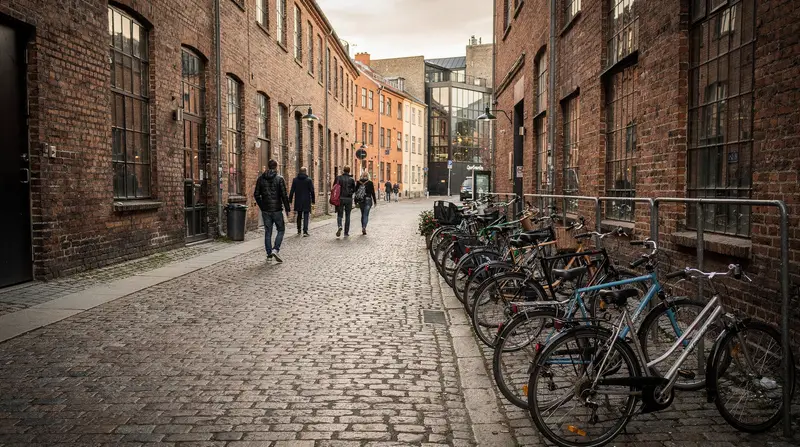
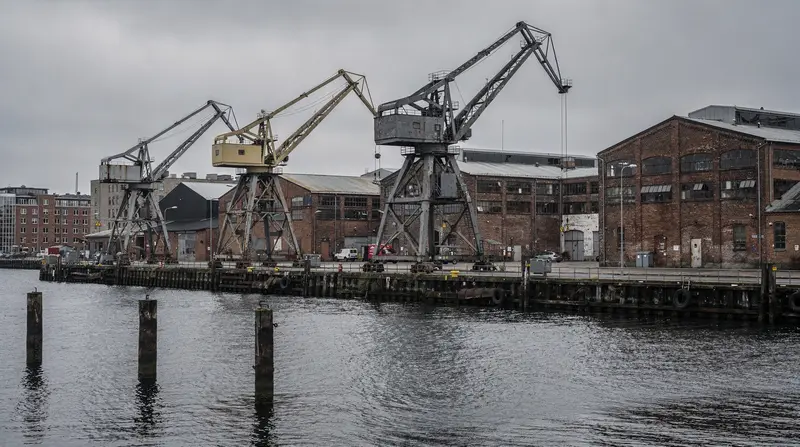
The conversion is still in progress. Parts of the site are fully operational; other parts remain construction zones. The resulting patchwork is exactly what urban regeneration looks like in real time: old brick buildings that smell faintly of hops next to cranes and concrete forms, a craft beer bar next to a building site, school-aged children cycling past limestone gates that have been standing since the 1880s.
This is not a polished tourist experience. It is an interesting one.
Home of Carlsberg: the honest assessment
The visitor experience — “Home of Carlsberg” — occupies the original Jacobsen brewery building, the oldest on the site, and does what most corporate heritage museums aspire to and rarely achieve: it makes the industrial history genuinely interesting rather than just promotional.
The museum covers the history of the Jacobsen family, the science of bottom-fermentation lager (which Carlsberg helped develop and spread globally), the social history of Copenhagen as a brewing city, and the role of Carlsberg’s research laboratories in 20th-century biology — the Carlsberg Laboratory, founded by J.C. Jacobsen in 1875, produced Nobel Prize-winning research in biochemistry and was independent of the commercial brewery. This last section is the most surprising and most overlooked.
The beer itself: Entry includes multiple tastings at various stages of the visit, ending in the tasting room with a selection of Carlsberg Group beers including some not widely available outside Denmark. The old lagering cellars have been partially preserved and are used for ambient tastings.
Honest criticism: The more recent brand history — the period from roughly 1990 onward when Carlsberg became a global volume lager — is glossed over. The marketing-heavy period of the brand’s history, including the sponsorships and the “probably the best beer in the world” campaign, gets the treatment you’d expect from a corporate heritage attraction. The early science history gets the treatment it deserves.
Tickets are 165–199 DKK (~22–27€) depending on time slot and include tastings. Under-18s can visit with a modified ticket. Budget about two hours. The self-guided format works well; the audio guide is decent but optional.
Book a Home of Carlsberg entry ticket online to guarantee your preferred time slot — the museum has limited capacity and sells out on summer weekends.
The neighbourhood itself: what to see
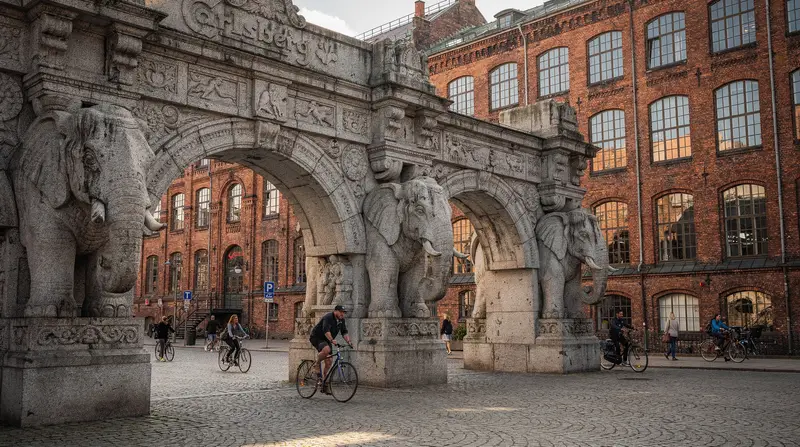
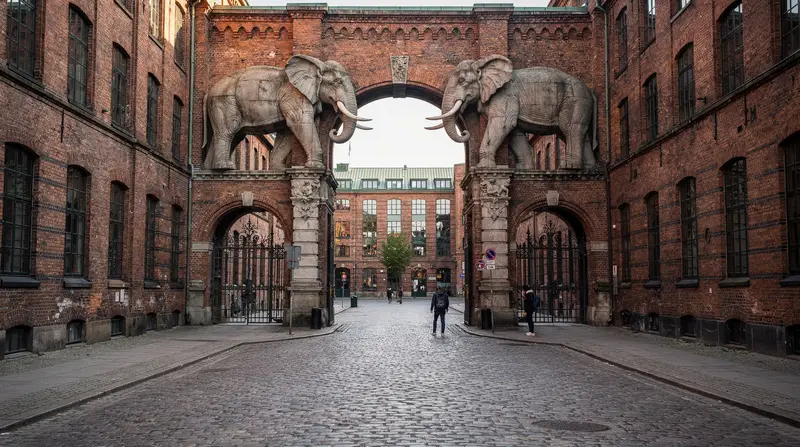
The Carlsberg Elephant Gate (Elefantporten), at the main entrance on Gamle Carlsberg Vej, is the most photographed element — four granite elephants supporting a tower, built in 1901. It has been the brand’s symbol and is more impressive in person than in photos: the craftsmanship is extremely fine, and the elephants have Indian and Siamese (now Thai) elements that reflect the global ambitions of the Carlsberg brand at the turn of the 20th century.
The Jacobsen Brewery building (the original 1847 structure) is now the museum, but the exterior and the courtyard between the old and new breweries tell a spatial story about the site’s growth over 170 years. The architecture shifts from austere neoclassical (Jacobsen’s original, austere taste) to neo-Gothic brickwork (late 19th century) to the pragmatic industrial buildings of the 1950s and 1960s, all within 200 metres.
Carlsberg Akademiet (the old research lab building) now hosts conferences and events. The Stables, where the Carlsberg brewery horses once lived, have been converted into a Bohemian-style food and drink market space. The J.C. Jacobsen Garden, behind the old brewmaster’s house, is a quiet public park that most visitors miss.
The emerging neighbourhood: The residential buildings filling the former brewhouse courtyards are architecturally varied in quality. Some are genuinely good — the housing designed by Lundgaard & Tranberg in the early phases uses brick in ways that respond well to the listed buildings. Later phases are more generic. Walking through gives a sense of how Copenhagen is trying to build density without homogeneity, with mixed results.
A guided walking tour of Carlsberg City’s industrial heritage provides architectural context that the museum doesn’t cover — the building-by-building history of the complex and its current transformation, including sections of the site that aren’t part of the main tourist circuit.
Eating at Carlsberg City
The food scene at Carlsberg Byen has developed significantly since the first commercial tenants arrived in the mid-2010s.
The Stables food market: The old B&W stables, converted in 2020, house a rotating selection of food vendors and permanent restaurants. Quality and occupancy change; at time of writing there are reliable options for wood-fired pizza, smørrebrød, and a Japanese-inspired ramen bar. Not a destination meal, but more than adequate for lunch before or after the museum.
Soren K: One of Copenhagen’s better-regarded casual restaurants is in the Royal Library (the “Black Diamond”) on Christianshavn, a 20-minute walk from Carlsberg City. Worth mentioning because the walk through southern Vesterbro and across the harbour connects the two in a natural lunch-and-walk circuit.
The Jacobsen Brewpub: The original Jacobsen brand — a premium sub-brand of Carlsberg — operates a small brewpub at the site, serving Jacobsen specialty beers alongside basic food (sausages, pretzels, cheese boards). It’s adjacent to the museum and priced at around 75–120 DKK (~10–16€) for a plate. The beer quality is good; the food is functional rather than memorable.
Neighbourhood cafés on Enghave Plads: If you’re approaching from the Vesterbro direction, the square at Enghave Plads has a good cluster of local cafés and bars — more reliably good for coffee and a light lunch than the Carlsberg site itself. This is also where the local residents who’ve moved into Carlsberg City actually eat, which tells you something.
Craft beer in and around Carlsberg City
The irony of the Carlsberg City regeneration is that the neighbourhood has become a base for Copenhagen’s craft beer scene, which exists in direct aesthetic opposition to the volume-lager tradition the original brewery represents.
Mikkeller — the most internationally celebrated Danish craft brewery — has a tap room at Carlsberg Byen, accessible to walk-in visitors and serving the full rotating tap list including experimental batches not available elsewhere. Mikkeller founder Mikkel Borg Bjergsø was, famously, a teacher before becoming a brewer, and the bar reflects his design sensibility: considered, anti-industrial-chic, focused on the beer.
A Mikkeller craft beer walk through Vesterbro covers the neighbourhood’s beer culture in a structured way, with tastings at multiple stops including venues most visitors never find independently. This runs from the Vesterbro side but connects naturally to Carlsberg City.
The Bricks and Beer tour at Carlsberg Byen combines architectural storytelling with tastings specifically within the Carlsberg City site — better for visitors who want to understand both the urban project and the beer rather than one or the other.
Beer garden: In warmer months (May–September approximately), the outdoor spaces around the Stables host pop-up beer garden events. Check the Carlsberg Byen events calendar, which is updated regularly.
Vesterbro connection
Carlsberg City is technically at the boundary of Vesterbro and Frederiksberg, and most visitors combine the two. Vesterbro — Copenhagen’s former meatpacking district, now home to the Kødbyen food and nightlife zone — is about 20 minutes on foot east from the Elephant Gate.
The best craft beer trail in Copenhagen runs logically from Carlsberg City through Vesterbro and into Nørrebro, passing a dozen serious bars and brewery tap rooms. This is a full-day circuit for anyone interested.
The design of Carlsberg City: what’s good and what isn’t
The architecture of Carlsberg Byen is worth looking at critically. The masterplan — developed by Entasis architects in Copenhagen — aimed to create a dense, walkable neighbourhood that would mix the listed 19th-century buildings with new construction in a way that neither erased the industrial heritage nor froze it in amber.
The listed buildings themselves are the clear winners. The Elephant Gate, the Jacobsen Brewhouse, the old yeast tower, the porter’s lodges — these structures have the specificity and material quality that new construction rarely achieves. The transition from the formal brick industrial vernacular of the 1880s to the more decorative neo-Gothic additions of the 1890s and early 1900s makes the site architecturally layered in the same way that genuinely old cities are.
The new residential buildings are more mixed in quality. The best of them — mostly the earlier phases — take the brick palette of the industrial buildings seriously and use it in ways that are contextually appropriate. The less successful phases, particularly the blocks filling former courtyards on the east side of the site, feel like generic Copenhagen apartment construction that could be anywhere in the city’s expansion zones.
The public spaces between buildings are well-conceived. The sequence of courtyards and passages creates the kind of permeability that makes urban neighbourhoods walkable and discoverable. This is the masterplan’s clearest achievement: the space between buildings is as considered as the buildings themselves, which is not always true of Copenhagen’s recent urban development.
Photographing Carlsberg City
The Elephant Gate is the obvious shot, and it photographs best in the late afternoon when low sun catches the granite carving at an angle — midday light flattens the detail considerably. The courtyard between the Jacobsen Brewhouse and the newer construction offers a useful contrast shot: old brick against contemporary glass and steel, a visual summary of the whole regeneration project in one frame.
For anyone interested in industrial architecture specifically, the old chimney stacks and the water tower (now largely decorative, no longer functional) provide strong vertical elements against the flat Copenhagen skyline — worth a wide-angle shot from the Enghave Plads approach. The site is quiet enough on weekday mornings that you rarely need to work around crowds of other photographers, unlike Nyhavn or the Amalienborg square.
Getting here
By bus: Bus 26 from Central Station runs to Carlsberg approximately every 10 minutes. Journey about 12 minutes.
On foot from Vesterbro: About 20 minutes from the Kødbyen (meatpacking district) area, walking west along Istedgade or Vesterbrogade.
By Metro then foot: Metro M1 to Enghave Brygge, then 18 minutes on foot through Sydhavn. Not the most direct route; the bus is better.
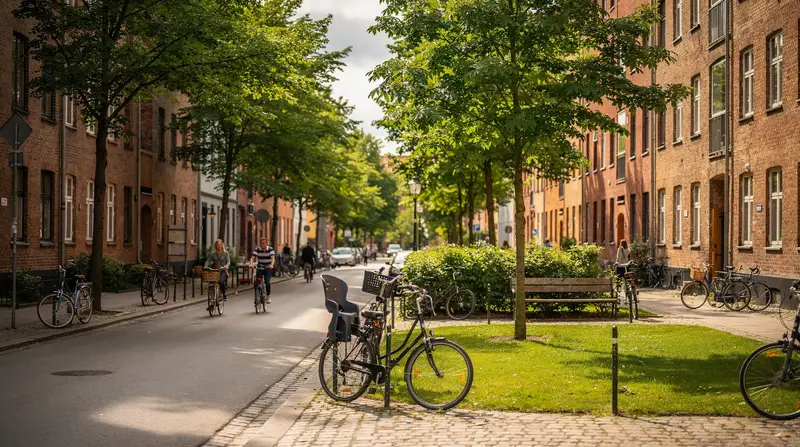
By bicycle: Carlsberg City has good cycle parking and is easily reachable from most of inner Copenhagen in 20–25 minutes. The approach through Vesterbro is flat.
Parking: There is car parking at Carlsberg Byen, useful if you’re coming from outside the city, but unnecessary from central Copenhagen.
J.C. Jacobsen: the man behind the brewery
Understanding Carlsberg City properly means understanding J.C. Jacobsen (1811–1887), who is a more complicated figure than the brand narrative suggests.
Jacobsen was a genuine scientist — he corresponded with Louis Pasteur and the Copenhagen brewery was among the first to apply microbiology systematically to industrial brewing. He brought the first bottom-fermenting yeast strains to Denmark from Munich in 1845, reportedly carrying the culture in his hat to protect it from the cold during the journey. The resulting Carlsberg lager was a technically superior product for its time.
He was also a significant philanthropist who established the Carlsberg Foundation, which continues to fund Danish science, arts, and humanities (and owns the majority of Carlsberg A/S to this day). The NY Carlsberg Glyptotek museum — one of Copenhagen’s best and most undervisited — was founded by his son Carl Jacobsen and houses one of Europe’s finest collections of ancient Mediterranean and French Impressionist art.
His relationship with his son Carl was famously terrible. The two had a formal falling-out over Carl’s purchase of artworks Jacobsen senior considered frivolous, and they divided the brewery site between them — the “old” Carlsberg (Jacobsen’s original) and “new” Carlsberg (Carl’s expansion). The estrangement lasted years and shaped the physical layout of the site you’re walking through today.
The museum covers this family history in depth. It is, unexpectedly, one of the more psychologically interesting exhibits in Copenhagen’s museum landscape.
Carlsberg’s global context and the Copenhagen beer scene
Carlsberg Group is one of the four largest beer producers in the world, operating in roughly 50 countries. The Copenhagen brewery’s closure in 2008 moved production to efficiency-optimised facilities outside the city, which is how industrial brewing has worked globally since the 1970s.
The disconnect between this corporate context and the city’s living craft beer culture is large and worth noting. Copenhagen’s independent brewing scene — anchored by Mikkeller (founded 2006), To Øl (founded 2010), and Brus (founded 2016) — developed entirely in opposition to volume-lager production and has generated international recognition quite separate from the Carlsberg legacy.
The craft beer guide to Copenhagen maps this scene in detail. The Vesterbro district, adjacent to Carlsberg City, has the highest concentration of craft beer bars in the city, and a visit to Carlsberg City fits naturally into a longer beer-focused day.
What connects them, oddly, is Mikkeller’s presence within Carlsberg Byen itself — the craft brewer who built his reputation by treating brewing as a creative and experimental practice now operates a bar inside the complex built by the company that industrialised Danish beer. This is either ironic or pragmatic, depending on how you read it.
Carlsberg City, Vesterbro or Nørrebro for a beer-focused day
Copenhagen has three neighbourhoods that anchor a serious craft beer day, and they’re different enough that it’s worth planning rather than picking at random.
| Carlsberg City | Vesterbro | Nørrebro | |
|---|---|---|---|
| Character | Industrial heritage + brand museum | Meatpacking district nightlife | Multicultural, lakes, younger crowd |
| Beer focus | Mikkeller tap room, brand history | Densest concentration of bars | Craft beerwalk (Nørrebro-specific) |
| Best for | History-first visitors | Evening/nightlife-first visitors | A quieter, local-feeling crawl |
| Combine with | Vesterbro (20-min walk) | Carlsberg City or Kødbyen dinner | Assistens Cemetery, lakes walk |
The honest route for a full beer-and-history day is to start at Carlsberg City in the early afternoon for the museum, then walk into Vesterbro for dinner and the evening bar scene, saving Nørrebro for a separate, quieter evening. This sequencing also works well slotted into a 2-day or 3-day Copenhagen itinerary, where Carlsberg City fills an afternoon that would otherwise be unstructured.
For getting between the three neighbourhoods without wasting time on transfers, the getting around Copenhagen guide covers the bus and bike routes that connect them faster than the Metro does. If your day also includes canals and counterculture rather than just beer, Christianshavn and Christiania is a reasonable fourth stop, though it’s a longer detour from Carlsberg City itself. The broader things to do in Copenhagen guide places all of this in context against the city’s non-beer attractions.
Visiting with families
Carlsberg City works reasonably well for families with older children, though it isn’t primarily a family attraction. The Home of Carlsberg museum includes non-alcoholic tasting options for under-18s and interactive elements — the bottling line demonstration and the horse stables history tend to hold children’s attention better than the pure brand-history sections. The J.C. Jacobsen Garden behind the old brewmaster’s house is a genuinely pleasant, quiet spot for children to run around after the museum, and it’s usually far less crowded than Copenhagen’s more central parks.
The Elephant Gate is a reliable photo stop that children generally find memorable regardless of their interest in the beer history — the scale and detail of the four granite elephants reads well even to a six-year-old. Families combining a Carlsberg City visit with Vesterbro should note that the walk between the two areas, while pleasant for adults, is a genuine 20-minute trek that can test younger children’s patience; budget a stop for ice cream or a snack partway.
What to skip
The surrounding residential streets between the old brewery complex and Enghave are neither interesting nor dangerous — just ordinary Copenhagen apartment blocks from the 1990s and 2000s. You can walk through them to access the site from the south but they’re not worth a detour.
The food at the Stables market area varies considerably in quality and changes frequently as vendors rotate. Check current occupants before planning a meal there — in the past it’s included strong options and weak ones in equal measure.
Frequently asked questions about Carlsberg City
Is Carlsberg City worth visiting without the museum?
The neighbourhood itself is interesting for about an hour if you’re drawn to industrial architecture or urban regeneration. The museum is the anchor attraction and makes the visit worth the journey from central Copenhagen. Without the museum, it’s a solid addition to a Vesterbro walk rather than a standalone destination.
Can you visit Carlsberg City for free?
Walking around the neighbourhood is free. The Jacobsen Garden and most of the outdoor spaces are public. The Home of Carlsberg museum has an entry charge (165–199 DKK, ~22–27€ including tastings).
How far is Carlsberg City from Vesterbro?
About 20 minutes on foot from the heart of Vesterbro (around Istedgade and Kødbyen). They share a natural itinerary — visit Vesterbro in the morning and Carlsberg City in the afternoon, or combine them with a craft beer focus.
Is Home of Carlsberg suitable for non-beer-drinkers?
Yes, with some caveats. The history, architecture, and science sections work for anyone. The tasting portions are where non-drinkers miss some of what the ticket price covers. The museum offers non-alcoholic alternatives in the tasting room, though these are fewer in number.
When does the neighbourhood construction finish?
The masterplan targets full completion around 2030. Until then, sections of the site will be active construction zones. The listed historic buildings and the core attractions are complete; it’s the perimeter residential development that remains in progress.
Is there parking at Carlsberg City?
Yes, a paid car park operates at the site. Rates are typical for Copenhagen (around 25–30 DKK/hour, ~3–4€). Day visitors combining Carlsberg City with a Vesterbro walk will generally find a single paid park-and-walk session the most practical approach by car.
What are the opening hours for Home of Carlsberg?
Generally Tuesday–Sunday 10:00–17:00, with evening events on select dates. Hours change seasonally; check the official website before visiting, especially on Mondays (typically closed) and public holidays.
Top experiences
Bookable activities with verified prices and instant confirmation on GetYourGuide.