Refshaleøen: Copenhagen's post-industrial island
Honest guide to Refshaleøen: street food at Reffen, dining at Alchemist, urban culture on a post-industrial island — and how to get there without a car.
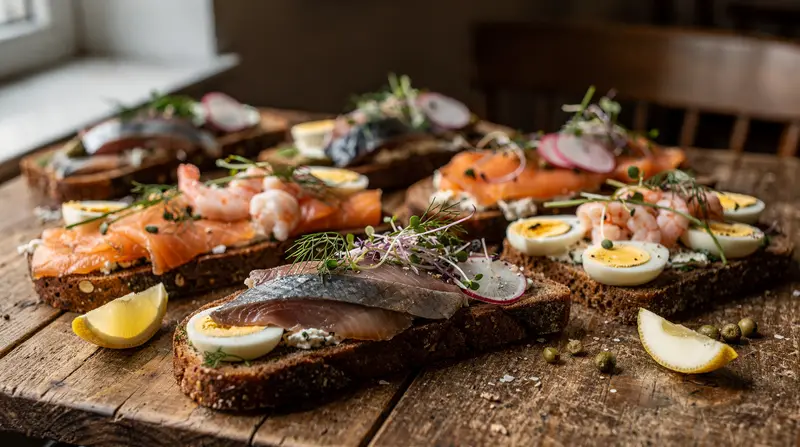
Copenhagen: New Nordic Food Tour with Tastings & Meal
Duration: 4 hours
Quick facts
- Getting there
- Bus 9A to Refshaleøen (from Nørreport, 25 min); or water bus in summer
- Reffen entry
- Free; food 80–160 DKK (~11–21€) per dish
- Alchemist
- 3,500–5,000 DKK/person (~470–670€), book months ahead
- Season
- Reffen open April–October; island accessible year-round
- Distance from city
- 4 km from Central Station
Quick answer: Refshaleøen is what happens when an industrial shipyard closes and nobody immediately decides what to do with it. The result — partly intentional, partly accidental — is one of the most interesting food and culture destinations in Copenhagen. The Reffen street food market is the main draw and worth the trip from the city centre. Alchemist is a separate, expensive, and genuinely unusual experience that requires months of advance booking. The island is at its best May–September.
| Where | Outer harbour island, 4 km from Central Station |
| Cost | Reffen free entry (80–160 DKK/dish); Alchemist ~3,500–5,000 DKK/person |
| Time needed | 2–3 hours for Reffen; a full evening for Alchemist |
| Getting there | Bus 9A (25 min) or bike (6–7 km); water bus in summer |
| Best time | May–September, weekday afternoons for smaller crowds |
What this island actually is
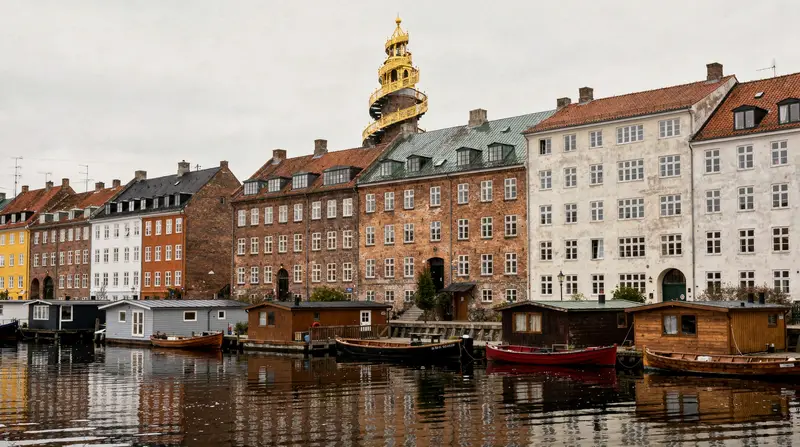
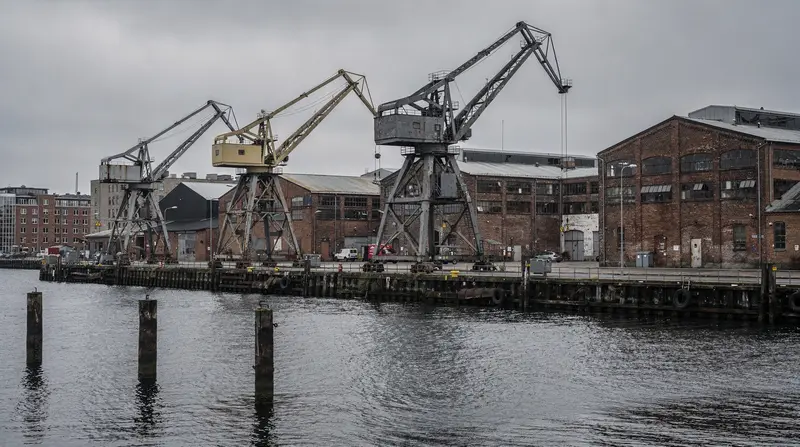
Refshaleøen — the name translates roughly as “Shale Island” — sits in the outer harbour of Copenhagen, connected to the mainland by a single bridge and accessible by boat in summer. Until 1996, most of it was occupied by Burmeister & Wain (B&W), one of the largest shipbuilding companies in Northern Europe, which launched vessels from this site from the 1870s until the industry’s collapse in the late 20th century.
The shipyard’s closure left a large problem: hundreds of thousands of square metres of industrial buildings, dry docks, and harbour infrastructure on an island that had been a closed industrial zone for over a century. No residential community existed. No retail infrastructure. No established urban fabric to build on.
What happened next was largely unplanned. The Municipality of Copenhagen allowed temporary uses — events, markets, artist studios, small workshops — while longer-term planning proceeded. The temporary uses took hold and multiplied. By 2026 the island has an active year-round population of artists, makers, restaurateurs, and a growing number of permanent residents, alongside a planning process that remains contentious about how much development the island can absorb before the qualities that made it interesting disappear.
This is not a finished neighbourhood. It is a place in the middle of becoming something, which is precisely what makes it worth visiting now.
Reffen: the street food market
Reffen (short for Refshaleøen) is a permanent street food market that opened in 2017 as a replacement for Copenhagen Street Food, which had operated in the Papirøen island immediately adjacent. The move to Refshaleøen gave the market more space, a longer operating season, and a different character — less central, deliberately harder to reach, with a demographic that skews younger and more local as a result.
The market runs from approximately late April to mid-October. Opening hours are typically noon–21:00 on weekdays and noon–22:00 on weekends, though these vary by season. Arrive on a weekday afternoon for the best combination of open stalls and manageable crowds.
The food: About 50–60 food vendors at any given time, rotating seasonally and between years. The range includes Korean fried chicken, Ethiopian injera, Japanese ramen, wood-fired pizza, New Nordic small plates, Mexican tacos, and a handful of dessert specialists. Quality is genuinely high by street food standards — the market has a vetting process for vendors, and the competition between stalls keeps standards up. Expect to pay 80–160 DKK (~11–21€) per main dish. Budget 300–450 DKK (~40–60€) for two dishes and a drink per person.
What Reffen is not: A cheap eat. A tourist attraction built for tourism. Open in winter. The prices are honest Copenhagen prices — not inflated for visitors, but Copenhagen is expensive. The crowd on a Saturday evening is heavily local, and the market’s ambiance comes from that.
The setting: Reffen uses the old B&W dry docks and harbour infrastructure as its physical frame. Stalls are in former industrial units. The outdoor seating faces the water. The view across the harbour to Copenhagen’s skyline — with the Bornholm ferry terminal in the foreground — is one of the better free panoramas of the city and one that most visitors never see because they’re looking at things from the other side.
Practical note: Most vendors are cash-optional (card accepted), but bring some DKK in cash as a backup. The market has a bar serving Danish craft beers and natural wine. Dogs are allowed and numerous.
Alchemist: the theatrical meal
Alchemist is one of the most discussed restaurants in the world. This is not hyperbole: it holds two Michelin stars, has ranked on the World’s 50 Best Restaurants list, and represents a dining format — “holistic cuisine,” as chef Rasmus Munk calls it — that does not fit standard restaurant categories.
The experience runs 5–6 hours and consists of approximately 50 “impressions” (Munk’s term for courses) across multiple rooms in a former aeronautical hangar. The space was designed with theatrical set designers; there is a domed ceiling the size of a planetarium, a room inspired by a 1950s Danish pharmacy, installations from international artists, and performances interwoven with the meal. Some impressions are eaten conventionally. Others are not.
The food itself addresses political and environmental themes — biodiversity loss, food waste, ocean pollution — through the ingredients and presentation. Dishes have included edible sea urchin consumed at a fisherman’s table, a course made from proteins extracted from food waste, and desserts that function as statements about sugar industry practices. This is either deeply serious or deeply self-indulgent, depending on what you bring to the table. Both reactions are reasonable.
Booking: Alchemist releases reservations in batches, typically 3–6 months in advance. The process requires monitoring their website for release dates and acting quickly. The base price is approximately 3,500–5,000 DKK per person (~470–670€) including non-alcoholic pairings; wine pairings add significantly to this. The restaurant’s website gives current booking information.
The honest note: Alchemist is worth investigating if you’re specifically interested in boundary-pushing gastronomy and are prepared to engage with theatre-as-meal on its own terms. It is emphatically not for everyone, and the price means mistakes are expensive. If you want serious New Nordic food at a fraction of the price, Copenhagen’s broader restaurant scene covers this territory in multiple ways.
A New Nordic food tour with tastings and a meal included covers the broader context of Copenhagen’s food culture — from local producers to restaurant philosophy — at a more accessible price point than Alchemist alone.
The rest of the island
Beyond Reffen and Alchemist, Refshaleøen has a texture that rewards slow walking.
La Banchina: A small restaurant and natural wine bar with a harbour bathing platform. In summer this is also a sauna — outdoor wood-fired sauna, cold-water dip, simple food and wine. One of the more civilised ways to spend an afternoon in Copenhagen. No reservations for the sauna (first-come); the restaurant does take bookings and is consistently busy.
Broens Gadekøkken (Broen): On the bridge connecting Refshaleøen to Christianshavn, there is a smaller street food space — a year-round alternative for the months when Reffen is closed. Less variety, more permanent vendors, slightly more reliably open.
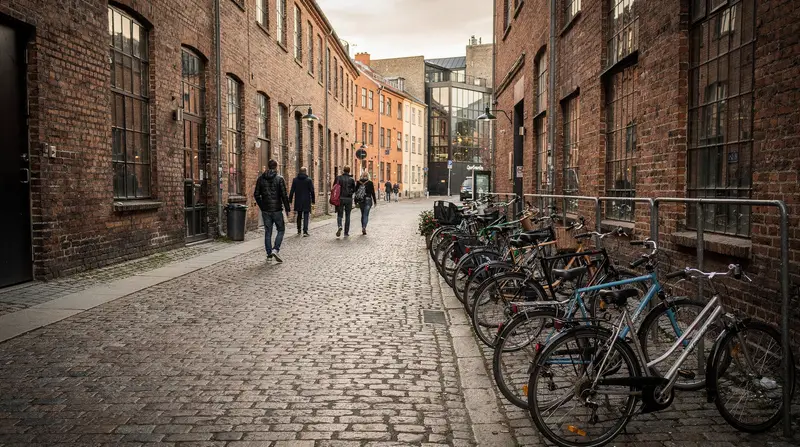
Urban regeneration and studio spaces: The B&W buildings house a rotating collection of artist studios, craft workshops, a climbing gym (Boulders), and event spaces. None of these are formal tourist attractions, but they’re visible and occasionally open. Walking through the industrial buildings gives a sense of what the island’s economy looks like outside the food scene.
CopenHill connection: The waste-to-energy plant visible from the south end of Refshaleøen — the one with the ski slope — is a 20-minute walk from Reffen along the harbour front. Not a natural combination visit, but possible if you’re spending a full day in the outer harbour area.
Getting here
By bus: Bus 9A from Nørreport Station to Refshaleøen, about 25 minutes. Direct; runs every 10–15 minutes. This is the most reliable year-round option.
Water bus (Harbour Bus line 991): In summer (approximately May–September), Copenhagen’s harbour bus routes connect Refshaleøen to the city centre, including stops at Nyhavn, Knippelsbro, and Islands Brygge. Journey time around 20 minutes from Nyhavn. More pleasant than the bus; check current schedules as these change annually.
By bicycle: Approximately 6–7 km from the city centre via the harbour front path, mostly flat. The bridge to Refshaleøen is cycle-friendly. This is how many locals arrive at Reffen.
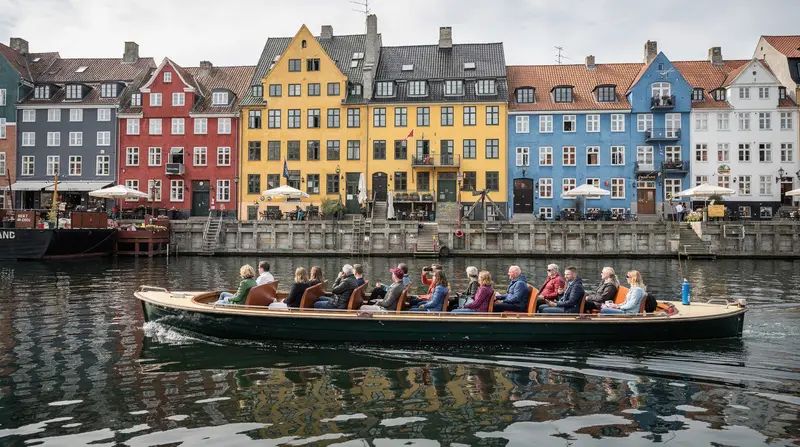
By boat rental: GoBoat rents self-drive electric boats from Islands Brygge; arriving at Reffen by boat and mooring at the Reffen dock is genuinely satisfying and takes about 30 minutes from the Islands Brygge pickup point.
Rent a GoBoat for a self-drive harbour trip to approach Refshaleøen from the water — a flat-bottomed electric boat holds up to 8 people and requires no boating experience.
From Christianshavn: Approximately 15 minutes on foot via the bridge, or 5 minutes by bicycle.
Driving: There is parking at Refshaleøen but it requires crossing the bridge at Refshalegrunden. Not recommended — the bus or bicycle is straightforwardly better.
When to go
May to September is the primary season. Reffen is open, La Banchina’s outdoor areas are active, the water bus runs, and the island has the density of activity that makes it interesting. Weekend evenings are crowded; weekday afternoons are better.
October through April: Reffen is closed. La Banchina is open year-round. Broens Gadekøkken on the bridge stays open. The island is quieter and more industrial in character — interesting for a specific type of visitor, less rewarding for others. The light in this period (Copenhagen autumn and winter light is remarkable) can make the harbour vistas extraordinary.
Summer evenings: Late June and July, Copenhagen has very long light — sunset after 22:00. An evening at Reffen with this light is one of the more specifically Copenhagen experiences available.
The B&W history: what the island was before
Burmeister & Wain (B&W) was not simply a factory — it was one of the defining industrial institutions of modern Denmark. Founded in 1843 by the Scottish engineer Burrmeister (the name was later simplified) and the Danish businessman Carl Christian Wain, the company built the first oceangoing diesel-powered ship in the world (the Selandia, 1912), helped establish the modern global container shipping industry, and employed tens of thousands of Copenhagen workers at its peak.
The shipyard on Refshaleøen was the company’s main production facility for most of the 20th century. At its largest extent the site covered the entire island and extended into adjacent areas. The final large vessel launched from Refshaleøen did so in the 1980s; the company formally ceased shipbuilding in 1996, leaving behind the infrastructure visible today — dry docks large enough to hold cargo ships, enormous hangar-scale buildings with overhead crane rails still in place, concrete loading docks that extend into the harbour.
Walking through these spaces now, occupied by food stalls and art studios and a street food market, produces a specific kind of cognitive dissonance. The scale is wrong for the current use — ceilings 20 metres high over a kitchen selling Korean fried chicken, crane rails running above bar seating, a dry dock now used for public events. This dissonance is not a problem to be solved; it’s the texture that makes the place interesting.
What the planning process looks like: Refshaleøen is under a development masterplan that has been contested between the Municipality of Copenhagen, the property owners (Refshaleøen Holding), cultural groups who occupy the space, and housing advocates who see the site as an opportunity for badly needed urban housing. The current balance — cultural uses, temporary tenants, some residential — is not permanent. Visitors coming in 2030 will encounter a different Refshaleøen; visitors in 2035 may not recognise it at all. This is worth knowing before you visit.
The food culture: context for Reffen
Reffen exists within Copenhagen’s broader positioning as a serious food city. Since the early 2000s, Copenhagen has developed a cluster of internationally recognised restaurants, producers, and food thinkers that has made it, per capita, one of the most significant food cities in Europe. The New Nordic food movement — championed by Noma, Relæ, and others — placed specific emphasis on Danish and Nordic ingredients, fermentation, and seasonal sourcing.
Reffen is not New Nordic — it’s a multicultural street food market. But it benefits from the food culture that this environment created: vendors are serious about their ingredients, competition is real, and the overall quality level is higher than what comparable markets deliver in most European cities.
The best approach to Reffen is to walk the full circuit of stalls before ordering anything. The range on any given visit typically spans five or six cuisines seriously, with another ten represented at varying quality levels. The Mexican taco vendor and the Korean fried chicken vendor are perennially strong performers; specific vendor recommendations change year to year as the market evolves.
Reffen also hosts occasional food events — special tastings, producer markets, evening formats with live music. The calendar is on their website and changes seasonally. These events often feature producers who don’t run permanent stalls, and the quality can be higher than the regular market.
What to expect and what to calibrate
Refshaleøen is not a finished product. The edges of the island are still genuinely rough — former industrial spaces in various states of occupation and disrepair, some open to weather, some repurposed in improvised ways. This is a feature, not a bug, but it means the aesthetic is explicitly not polished.
The connection to Christianshavn and its canals is natural — both are on the outer harbour, both exist partly outside the city’s mainstream tourist circuit, and both reward visitors who can tolerate incompleteness in exchange for authenticity. The kayak tours through the harbour pass between the two, giving a view of both from the water.
Frequently asked questions about Refshaleøen
Is Reffen open in winter?
No. Reffen operates approximately late April to mid-October. The exact dates vary by year — check the Reffen website for the current season. In winter, Broens Gadekøkken on the bridge offers a smaller alternative.
How do you pronounce Refshaleøen?
Roughly: “REYF-sha-leh-en”. The “ø” is the Danish vowel between “o” and “u”; if you can’t produce it, “ref-sha-le-en” is close enough to be understood. Locals and bus drivers will know what you mean.
Is Alchemist bookable on short notice?
Rarely. The restaurant releases tables in advance batches and they sell out quickly. Last-minute cancellations occasionally appear on their website; subscribing to their newsletter gives the best chance of catching these. Walk-in is not possible.
Can you visit Refshaleøen without eating at Reffen?
Yes. La Banchina is worth visiting independently for sauna and wine. The island walk is free. The industrial architecture and harbour views require no purchase. Reffen is the main draw but not the only one.
Is the harbour clean enough for swimming near Refshaleøen?
Yes. Copenhagen harbour swimming quality is monitored and consistently passes EU standards. La Banchina has a designated swimming area. The official harbour pools in the main harbour area (Islands Brygge, Kalvebod Bølge) are the main infrastructure, but swimming off Refshaleøen is practiced by regulars.
What’s the food price range at Reffen?
A single main dish at most vendors: 80–160 DKK (~11–21€). A full meal with two courses and a drink per person: 300–500 DKK (~40–67€). Beer is typically 50–75 DKK (~7–10€) per glass. This is Copenhagen pricing — not cheap by European street food standards, but broadly consistent with the city’s cost of living.
How does Refshaleøen compare to Copenhagen’s other alternative neighbourhoods?
It sits closest in spirit to Christianshavn and Christiania — both are on the outer harbour, both grew informally rather than by central planning, and both reward slow exploration over checklist sightseeing. Vesterbro offers a more finished version of the same gentrification story, with a denser restaurant and bar scene inside converted industrial buildings. If you only have time for one, choose Refshaleøen for the food (Reffen) and the rawest industrial texture, or Vesterbro if you want craft beer and a livelier evening scene within walking distance of the centre.
Where Refshaleøen fits in a Copenhagen itinerary
Refshaleøen is not a first-day destination — it rewards visitors who already have a sense of central Copenhagen and want to see a different register of the city. Pair a Reffen lunch or dinner with a walk through Christianshavn’s canals, or combine it with the best canal tours in Copenhagen to see the island from the water before eating on land. For visitors building a longer stay, the best food in Copenhagen guide places Reffen alongside the city’s other food destinations, and the things to do in Copenhagen overview shows where it sits among the bigger sights.
Top experiences
Bookable activities with verified prices and instant confirmation on GetYourGuide.