Getting Around Copenhagen: Metro, S-Tog, Bus, Bike and Zones Explained
Copenhagen Card: Access 80+ Attractions and Transportation
What is the best way to get around Copenhagen?
The Metro (M1–M4) is the fastest option for most city-center journeys — clean, frequent and runs 24/7. For longer distances and outer neighborhoods, combine with the S-tog suburban rail. Cycling is the honest local's choice for anything under 5 km. The DOT Tickets app covers all public transport. A single ticket costs 24 DKK for zones 1-2. Never board without a valid ticket — the fine is 750 DKK.
Copenhagen’s public transport system is well-organized and genuinely easy to use once you understand the zone logic and the ticket options. The metro covers most tourist destinations; the S-tog reaches outer areas; buses are slower but cover gaps. Cycling is what most Copenhageners actually use for daily movement, and it is accessible to tourists more than almost any other city in Europe.
This guide explains how each mode works, what it costs in DKK, and where the real traps are — including the 750 DKK fine that catches more tourists than it should. For arriving from the airport, see the Copenhagen Airport to city center guide.
| Cheapest | Cycling — around 75-130 DKK/day rental, then effectively free |
| Fastest center | Metro (M1-M4), every 3-6 minutes, runs 24/7 |
| For day trips | S-tog or regional train (Roskilde, Helsingør, Hillerød) |
| Ticket app | DOT Tickets — download before arrival |
| Fine if unticketed | 750 DKK, no exceptions |
The zone system
Copenhagen’s public transport uses a zone system managed by DOT (Dinoffentligetransport). All tickets are priced by how many zones you cross, not by distance.
Zone 1 covers the central city: Indre By, Nørreport, Nørrebro, Frederiksberg center, Christianshavn, Vesterbro, Islands Brygge and the neighborhoods on the M3 City Circle Line.
Zone 2 extends to areas including Kongens Lyngby direction, parts of Amager, Brøndby.
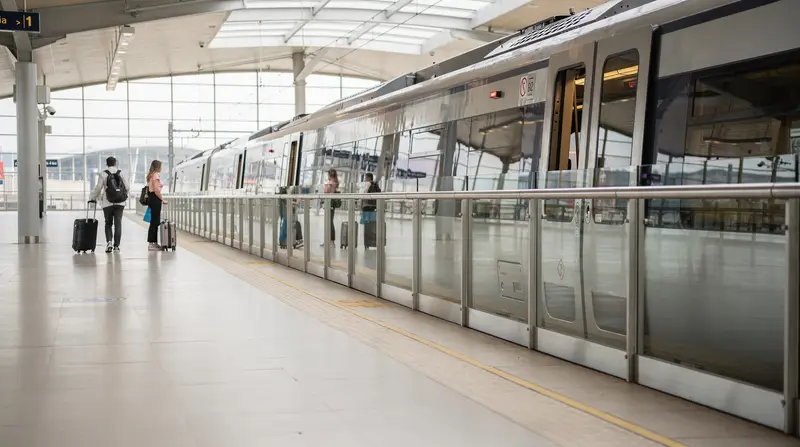
Zone 3 adds the airport (CPH) and Hellerup, Gentofte.
Zone 4 and beyond covers North Zealand towns: Hillerød, Helsingør, and Roskilde direction.
Most tourist journeys in central Copenhagen are 2-zone (24 DKK). The airport requires 3 zones (36 DKK). Day trips require calculating how many zones you cross — the DOT app does this automatically.
Single ticket prices (2026):
| Zones | Price | Validity |
|---|---|---|
| 2 zones | 24 DKK | 75 min |
| 3 zones | 36 DKK | 90 min |
| 4 zones | 48 DKK | 105 min |
Tickets are valid for unlimited transfers within the zone combination during the validity period. One ticket covers metro, S-tog, and bus for that time window.
24-hour tickets cover all zones for 130 DKK. A 72-hour ticket costs 230 DKK. These are efficient if you make 5+ journeys per day.
How to buy tickets
DOT Tickets app (recommended)
The DOT Tickets app (available on iOS and Android) is the easiest method. You select your destination zone, buy with a bank card, and the ticket appears on screen. The app calculates the correct zones automatically. You can also buy 24-hour and multi-day tickets. Download it before arriving in Copenhagen — mobile data for the initial download and setup is easier at home than at the airport.
Ticket machines
Yellow ticket machines are located at every metro station and most S-tog stations. They accept Visa, Mastercard and cash (Danish kroner). The interface is in English. Select your destination or manually select the number of zones.
Rejsekort
The Rejsekort is a rechargeable smart card. Tap on when you board (or enter the station) and tap off when you exit. The system calculates the exact fare automatically. Prices per trip are approximately 30–40% lower than single tickets. The card costs 80 DKK to buy plus a minimum 100 DKK initial load. Refundable balance (but not the 80 DKK card fee) can be reclaimed at a DOT customer service point.
The Rejsekort is used by Copenhageners for good reason — it is the cheapest way to travel. For tourists, it makes sense only on stays of 5+ days with frequent short journeys within the city. For shorter stays, the DOT app or 24-hour tickets are less administratively complex.
The Metro (M1–M4)
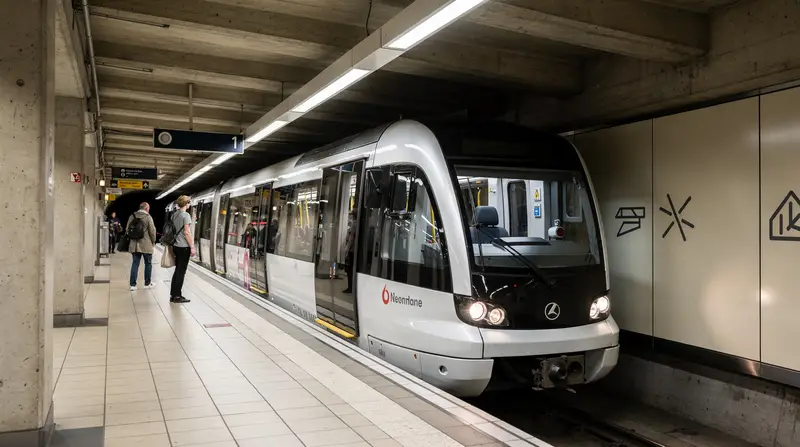
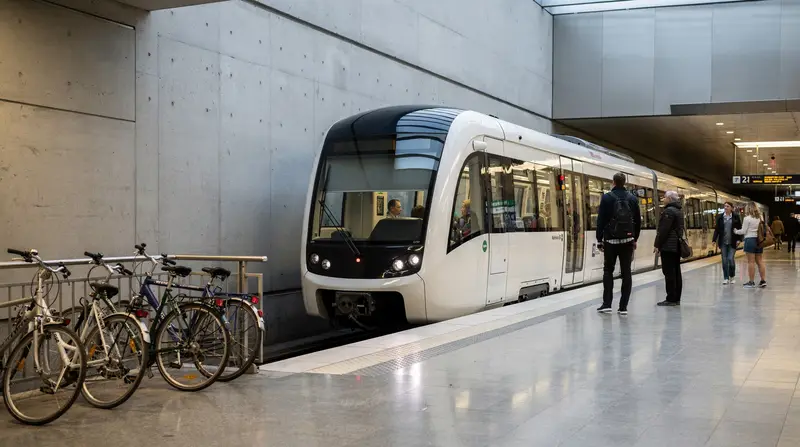
The Copenhagen Metro is automated, runs 24/7 and is the fastest way across the city center. Four lines:
M1 (green): Vanløse → Frederiksberg → Nørreport → Kongens Nytorv → Christianshavn → Islands Brygge → Amager. The original line, opened 2002. Runs above ground through Frederiksberg, underground in the center.
M2 (yellow): Vanløse → Frederiksberg → Nørreport → Kongens Nytorv → Christianshavn → Ørestad → Airport. The airport branch of M1 — the two lines share the same track from Vanløse to Christianshavn, then split.
M3 (red, City Circle Line): A full circle through the neighborhoods around the city center — 17 stations including Frederiksberg, Enghave Plads, Kongens Nytorv, Østerport, Nørreport, Nørrebro, Bispebjerg, Vanløse. Opened 2019. Connects neighborhoods that were previously poorly served by rail.
M4 (blue, Sydhavn Line): Branches from Kongens Nytorv toward the southern harbor (Sydhavn) — currently serving København H, Enghave Brygge, Sydhavn. Opened 2020 (first stations).
Frequency: Every 3–4 minutes during peak hours, every 4–6 minutes off-peak, every 7–10 minutes overnight. The metro genuinely runs all night.
Key interchanges:
- Kongens Nytorv — M1/M2 meets M3; closest metro to Nyhavn
- Nørreport — M1/M2 meets M3 and S-tog; the busiest interchange in the system
- Vanløse — M1/M2 terminates; connects to S-tog B/Bx lines
- Frederiksberg — on M2; S-tog connection to Frederiksberg station nearby
The fine: 750 DKK if caught without a valid ticket. There are no barriers — the honor system relies on inspector patrols, which happen multiple times per day on most routes. Do not board without a ticket.
S-Tog (Suburban Rail)
The S-tog is Copenhagen’s suburban rail network, operated by DSB. Seven lines (A, B, Bx, C, E, F, H) run from Copenhagen Central Station and Nørreport into the outer suburbs and beyond.
When tourists need the S-tog:
- Hellerup and Gentofte (S-tog F/H): residential northern suburbs
- Klampenborg/Dyrehaven (S-tog C/H): the Deer Park day trip
- Hillerød (S-tog A): for connections toward Frederiksborg Castle
- Helsingør (requires regional train from Central Station via S-tog network): for Kronborg Castle
- Roskilde (regional train from Central Station): for the Viking Ship Museum
- Frederiksberg and Vanløse (S-tog to Vanløse, or M1/M2): partly covered by the metro
The S-tog uses the same zone ticket system as the metro and DOT app. Validate your ticket before boarding — S-tog trains have conductors on some routes but rely on the honor system. The fine for traveling without a ticket is the same 750 DKK.
S-tog trains are older than the metro but reliable and comfortable. They run roughly 05:00–01:00, with a reduced night bus network supplementing overnight.
Buses
The Movia bus network covers the entire city and suburbs, reaching neighborhoods and streets not served by the metro. For tourists in central Copenhagen, buses are generally slower than the metro due to traffic — but useful for:
- Areas between metro stations (e.g., some parts of Nørrebro not directly on the M3)
- Amager and the southern harbor area
- Connections from neighborhoods to the S-tog
Key routes for tourists:
- 5C (the main cross-city route through the center via Rådhuspladsen): connects the airport via Amager to Frederiksberg
- 40 and 42: serve Nørrebro from Nørreport
- 14: runs between the Central Station and Hellerup via Østerport
Buses use the same zone ticket system. Tap your Rejsekort on the yellow reader when boarding, or buy via DOT app before boarding. Cash payment on the bus is no longer available on most routes — have a ticket ready.
Night buses (N routes) run overnight on main corridors when the S-tog stops. Night bus fares cost double the standard fare.
Cycling
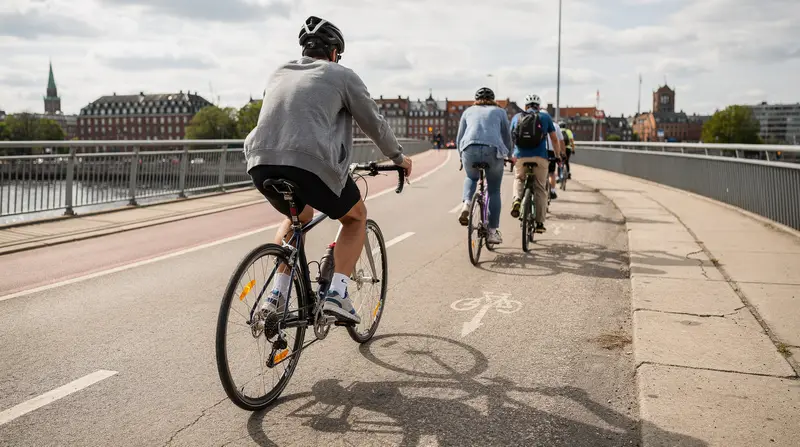
Copenhagen has 390 km of dedicated cycle lanes, a cycling culture that functions as genuine infrastructure rather than a lifestyle statement, and several bike rental options for tourists.
Bike rental options:
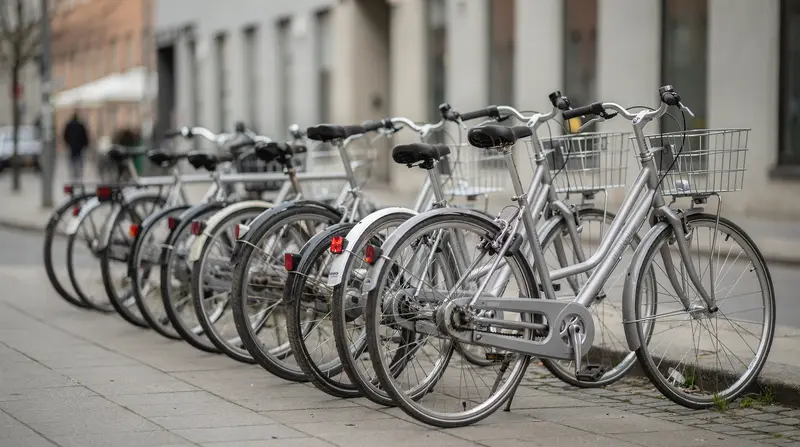
- Bycyklen (City Bikes): Electric-assist bikes available at docking stations throughout the city. Rental is time-based via an app — approximately 30 DKK for 30 minutes or 140 DKK for 24 hours. Return to any dock. Works well for short point-to-point trips.
- Private rental shops: Several companies (including Westy Bikes, Copenhagen City Bikes) offer traditional non-electric bikes at 75–130 DKK per day, with weekly rates around 300–450 DKK. These are cheaper for full-day use than Bycyklen.
- Hotel bikes: Many hotels provide or rent bikes directly to guests.
Cycling rules that matter:
- Ride in the cykelsti (cycle lane, marked in blue-grey or separated from car lanes by kerbs) — not on the pavement
- Signal with your arm before turning or stopping
- Give way to cyclists already in the lane when you merge
- Red lights apply to cyclists — running them is common practice among locals but technically illegal
- No cycling on Strøget pedestrian street
- Do not lock your bike to spots that block pedestrian access — it can be removed by the city
Average cycling times:
- Nyhavn to Tivoli: 12 minutes
- Nørreport to Vesterbro: 15 minutes
- City center to Freetown Christiania: 8 minutes
- Nørrebro to Frederiksberg: 20 minutes
For anything under 4–5 km, a bike is typically faster door-to-door than the metro once you factor in walking to and from stations.
Taxis
Taxis are metered, legally licensed and safe in Copenhagen. The main cooperative is Taxa 4×35 (app: Taxa 4x35). Bolt and Drivr also operate here.
Starting fare: approximately 37–42 DKK plus 10–14 DKK per kilometer in daytime. Evening and weekend rates are higher. A journey from Nørreport to Nyhavn (which takes 3 minutes by metro or 8 minutes by bike) costs around 80–120 DKK by taxi.
Taxis are most rational for: trips with heavy luggage, late night when other options feel inconvenient, or groups of 4+ where the per-person cost becomes competitive with the metro.
Car rental
Renting a car in Copenhagen is not useful for exploring the city itself — parking is expensive (40–60 DKK per hour in central zones), the one-way streets are confusing, and the metro is faster. A rental car makes sense for day trips to parts of Zealand not easily reached by train: Møns Klint, Stevns Klint, some parts of rural North Zealand.
Which ticket option actually saves money
The honest answer depends on trip length and how many journeys per day you make. Here is how the main options compare for a typical visitor sticking mostly to zones 1-2:
| Option | Best for | Cost | Watch out for |
|---|---|---|---|
| Single DOT ticket | 1-4 journeys/day | 24-48 DKK per journey | Adds up fast on a busy day |
| 24-hour ticket | 5+ journeys in a day | 130 DKK, all zones | Only pays off past ~5 rides |
| Rejsekort | Stays of 5+ days | 80 DKK card + top-up, ~30-40% off | Non-refundable card fee |
| Copenhagen Card | Heavy sightseeing days | 699 DKK/24h+ | Transport alone rarely justifies the price — check the museum math first |
For most first-time visitors staying 2-4 days and mixing metro with plenty of walking, single or 24-hour tickets bought through the DOT app beat both the Rejsekort and the Copenhagen Card on pure transport cost.
Copenhagen Card — unlimited transport plus 80+ attractionsPractical tips
Plan your route with Rejseplanen.dk or the Rejseplanen app — Denmark’s official journey planner. It covers all public transport including regional trains and works better than Google Maps for Copenhagen-specific multi-modal journeys. See also the Copenhagen Metro guide for detailed line-by-line information and the bike rental guide for cycling options.
The metro is always an option: Because it runs 24/7, you never need to worry about missing the last train if you stay out late on the metro network. The S-tog stops around 01:00, which means taxi or night bus for late-night suburbs.
Validate before boarding S-tog trains: Unlike the metro where your ticket’s timestamp is your validation, S-tog trains technically require you to be ticket-ready before boarding. In practice, the honor system applies throughout — but inspectors do board.
Paper tickets are not issued anymore: All DOT single tickets are either app-based or purchased as paper receipts from machines. The yellow machines print a receipt-style ticket with a timestamp. Keep it until you exit your last zone.
Frequently asked questions about getting around Copenhagen
Is Copenhagen easy to navigate for first-time visitors?
Very. The city center is compact (most attractions are within a 3 km radius of Nørreport), the metro is straightforward, and English is universally spoken at transport information points. The main initial confusion is the zone system, which the DOT app simplifies significantly. Most tourists manage the transport independently within an hour of arriving.
What is the difference between the Metro and S-tog?
The Metro (M1–M4) is the underground/automated system covering central Copenhagen and some suburbs (including the airport). The S-tog is the suburban rail network — older, above-ground (mostly), operated by DSB. They share stations at Nørreport and Vanløse. Both use the same zone ticketing. The metro is faster within the city center; the S-tog is necessary for reaching outer areas and day-trip destinations.
Can I use Google Maps for Copenhagen public transport?
Google Maps covers Copenhagen transit reasonably well but misses some complexity in zone-specific trip planning. Rejseplanen.dk or the Rejseplanen app is the official planner and gives more accurate journey times, especially for multi-modal trips involving both metro and regional trains.
How do I get to Nyhavn from the Central Station?
By metro: Take the M3 City Circle Line from København H toward Nørrebro or Østerport, then walk from Kongens Nytorv (M1/M2/M3 interchange) — 5 minutes on foot to Nyhavn. Alternatively, it is a pleasant 15-minute walk from the Central Station directly through Indre By. The walk is recommended on a clear day.
Is the Copenhagen transport system accessible for wheelchair users?
The metro has lifts at all stations and is step-free from platform to carriage. S-tog stations vary — most major stations have lifts, but some older stops do not. Buses have low-floor boarding and ramps. The accessibility map is available at dinoffentligetransport.dk.
What is the cheapest way to get around Copenhagen?
Cycling. Bike rental at 75–130 DKK per day makes most in-city journeys effectively free once you have paid for the rental. Public transport is reasonably priced relative to Copenhagen’s general cost of living — a 24-hour ticket at 130 DKK covers unlimited metro, S-tog and bus, and for a day with 6+ journeys it is better value than individual tickets.
Do children travel free on Copenhagen Metro?
Children under 12 travel free when accompanied by an adult (one adult can bring up to two children). Children aged 12–15 pay half the adult fare. All other passengers pay the full adult fare. There are no senior or tourist discounts on standard tickets.
Frequently asked questions — Getting Around Copenhagen: Metro, S-Tog, Bus, Bike and Zones Explained
How much does public transport cost in Copenhagen?
A single 2-zone ticket (covering most of the city center) costs 24 DKK (about 3.20€). A 3-zone ticket (including the airport) costs 36 DKK. A 24-hour ticket covering all zones 1-4 costs 130 DKK. The DOT Tickets app is the easiest way to buy — it calculates zones automatically. The Rejsekort card gives a 30-40% discount on single fares.What is the DOT app and how does it work?
DOT Tickets ("Dinrejse" on older signage) is the official public transport ticketing app for the Copenhagen region. Download it before you arrive, add a payment method, and buy tickets for metro, S-tog, and buses. The app selects the correct zone combination automatically based on origin and destination. Single, 24-hour, and multi-day tickets all available.What is the Rejsekort and is it worth it?
The Rejsekort is a rechargeable smart card used by Copenhagen residents and regular visitors. You check in and out on each journey and pay per zone traveled. The standard Rejsekort costs 80 DKK to buy (non-refundable) and gives roughly 30-40% off individual ticket prices. Worth it only if you are staying 5+ days and making many short journeys. For most tourists, the DOT app is simpler.What happens if you don't have a ticket on Copenhagen Metro?
Ticket inspectors board metro trains unannounced. If you do not have a valid, timestamped ticket, the fine is 750 DKK (approximately 100€) — payable on the spot or by invoice. The metro has no turnstiles, which makes it tempting to skip buying a ticket. The inspectors are persistent and the fine is non-negotiable.Is cycling safe in Copenhagen for tourists?
Cycling in Copenhagen is genuinely accessible for tourists. The city has 390 km of dedicated cycle lanes (cykelsti), physically separated from car traffic on most major roads. The main danger is not following cycling rules — stay in the bike lane, signal before turning, give way to other cyclists when merging, do not use your phone. Bike rental is available from around 100 DKK per day.What is the S-tog and when do I need it?
The S-tog (S-train) is Copenhagen's suburban rail network — 7 lines radiating from the Central Station to suburbs and towns within about 40 km. It covers areas not on the metro: Lyngby, Hillerød, Helsingør direction, Roskilde direction, the airport via a different route. For day trips to North Zealand or to reach Nørrebro/Frederiksberg stations, the S-tog is essential. Tickets use the same zone system as the metro.Does the Copenhagen Card include all public transport?
Yes. The Copenhagen Card covers unlimited travel on all metro, S-tog and bus routes in the greater Copenhagen region (zones 1-4+). At 699 DKK for 24 hours or 1,329 DKK for 72 hours, it is worth calculating whether the transport cost alone justifies it — at roughly 5-6 metro journeys per day at 24 DKK each, you would spend 120-144 DKK daily on transport, which makes the card's transport value a minor component. The card's value depends primarily on the museum admissions included.