Copenhagen Airport to City Center: Metro, Train, Taxi and Bus
Copenhagen: Classic Canal Tour & The Harbour
- Free cancellation up to 24 hours before (most activities)
- Ticket on your phone
- Last-minute booking possible
What is the fastest and cheapest way from Copenhagen Airport to the city center?
The Metro M2 is the best option for most travelers. It runs 24/7 from Terminal 3, takes 14–16 minutes to Nørreport, costs 30 DKK (roughly 4€), and departs every 3–6 minutes. No transfer, no queuing for taxis, no language barrier. The airport train (DSB) is equally fast but does not run overnight.
Copenhagen Airport (CPH, also called Kastrup) is one of Europe’s most efficiently connected airports. The Metro M2 runs directly from Terminal 3 to the city center without transfers, 24 hours a day, 7 days a week. Most travelers who land here have a good experience getting to the city — the real mistakes are overpaying for a taxi unnecessarily, or getting confused between the metro and train entrances.
| Where | CPH Airport (Kastrup), Amager, ~8 km southeast of the centre |
| Cost | 30 DKK metro/train; 250–350 DKK taxi |
| Time needed | 12–16 min metro/train; 20–35 min taxi |
| Getting there | Metro M2 direct from Terminal 3, runs 24/7 |
| Best option | Metro M2 for almost everyone, any time of day |
Where the airport is
CPH Airport (IATA: CPH, also known as Kastrup) is located in Kastrup on the island of Amager, approximately 8 kilometers southeast of central Copenhagen. It is in Denmark — not Sweden — despite being very close to the Øresund Bridge. Three terminals: Terminal 1 (charter flights), Terminal 2 (some Scandinavian carriers), and Terminal 3 (the main international terminal, arrivals hall, metro and train).
All transport connections — metro, DSB train, taxi, bus — depart from or near Terminal 3. If you arrive at Terminal 1 or 2, follow the internal walkways to Terminal 3 (signposted, 5–10 minutes on foot or by the internal transit system).
Because Kastrup sits on Amager, a short ride from central Copenhagen, a pre-booked transfer is easy to plan. Give the driver your flight number and arrival terminal, and ask where the meeting point is, since Terminal 3 is the hub for most connections. If you land late or travel with heavy bags, you can arrange a private ride with Kiwitaxi into the city.
Option 1: Metro M2 (recommended)
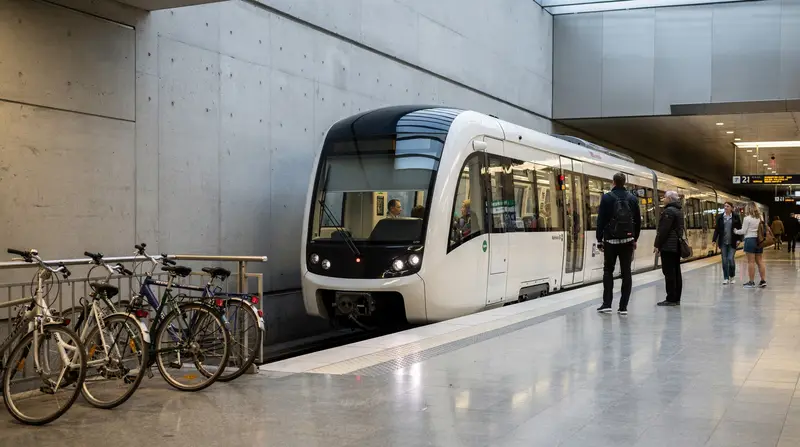
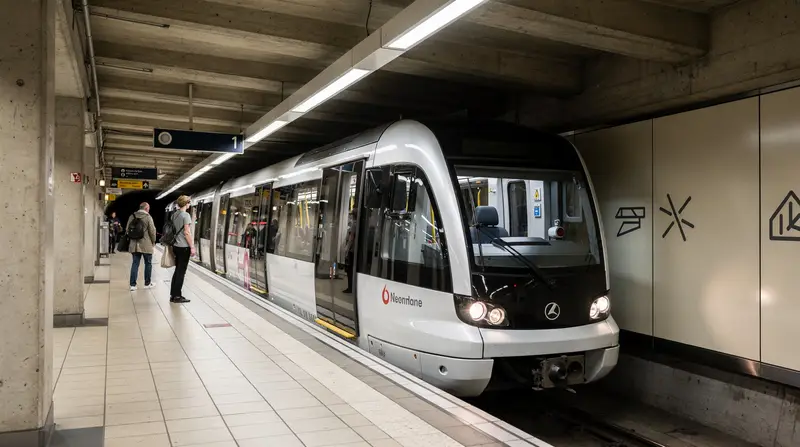
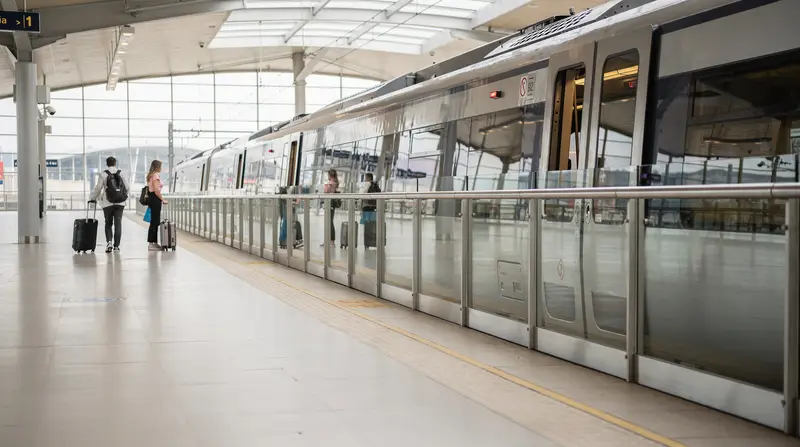
The Metro M2 is the simplest way into Copenhagen. The station is directly beneath Terminal 3 — follow the “Metro” signs from the arrivals hall, descend to the underground platform, and you are there.
Key facts:
- Line M2 (yellow line) — runs from Airport toward Vanløse via the city center
- Journey to Kongens Nytorv: 12 minutes
- Journey to Nørreport: 14–16 minutes
- Frequency: every 3–4 minutes daytime, every 4–6 minutes evenings, every 7–10 minutes late night (but it runs 24/7)
- The metro is fully automated — no driver, no conductor
Useful stops on the M2 from the airport:
- Ørestad (2 min) — largely a business district, few tourists
- DR Byen (4 min) — near the concert hall
- Islands Brygge (6 min) — residential, canal swimming
- Christians Havn (9 min) — Christianshavn, close to Christiania
- Kongens Nytorv (12 min) — Nyhavn is 5 minutes on foot; connects to M1
- Nørreport (14 min) — central interchange, Rosenborg Castle, Torvehallerne market
From Kongens Nytorv, you can switch to the M1 (green line) toward Vanløse or the M3/M4 City Circle Line to reach any other part of the city.
Cost
A single ticket covering the 3-zone journey (Zones 1+2+3) costs 30 DKK (approximately 4€ / 4.40 USD). This ticket is valid for 90 minutes and covers all metro, S-tog and bus travel within those zones — so if you need to change lines, one ticket is enough.
Buy tickets from:
- Yellow DOT/DST ticket machines in Terminal 3 (takes cards; sometimes cash)
- DOT Tickets app (download before arrival — easiest option)
- Ticket machines on the metro platform
Children under 12 travel free when accompanied by an adult. Children 12–15 pay half price.
Luggage
The metro has room for luggage but carriages are small. During peak hours (07:00–09:00 and 16:00–18:00), carriages can be very crowded and navigating large suitcases is genuinely difficult. Off-peak (most of the day), there is space. There is no special luggage carriage.
Option 2: DSB Regional Train
DSB (Danish State Railways) runs regional trains from Copenhagen Airport to Copenhagen Central Station (København H) and beyond. The train station is on the lower level of Terminal 3, below the metro station.
Key facts:
- Line: Øresundståg regional trains (the same trains that continue to Malmö, Sweden)
- Journey to Copenhagen Central Station (København H): 13 minutes
- Journey to Nørreport: approximately 17 minutes
- Frequency: regular departures from early morning to midnight (no overnight service); check the DSB and Øresundståg websites
- Cost: 30 DKK (same 3-zone fare as the metro)
The train is useful if your destination is near the Central Station — Tivoli, Vesterbro hotels, the central bus station. For Nyhavn or Nørrebro, the metro may be more convenient.
The same ticket (30 DKK) covers both metro and train travel within the valid zones. Buy from DSB ticket machines at the airport or via the DSB app. Note that the DOT app covers both DSB trains and the metro within the Copenhagen zone network.
When to prefer the train: If you arrive during peak metro crowding (morning and evening rush hours) with large luggage, the train carriages are larger and more comfortable. Also if you are connecting to an S-tog line at Central Station or at Nørreport.
Option 3: Taxi
Taxis are available from the official taxi rank outside the arrivals hall in Terminal 3. All official Copenhagen taxis are metered and licensed.
Approximate fares (all metered):
| Destination | Approximate fare | Approximate time |
|---|---|---|
| Indre By (Old Town) | 270–340 DKK | 20–30 min |
| Nyhavn | 280–350 DKK | 20–30 min |
| Vesterbro | 250–320 DKK | 20–35 min |
| Nørrebro | 290–370 DKK | 25–40 min |
| Frederiksberg | 280–360 DKK | 25–40 min |
Prices are higher during rush hour (07:00–09:00, 15:30–18:30), when metered taxis add a time charge for stationary traffic.
The honest assessment: Taking a taxi from Copenhagen Airport is a legitimate option when you have heavy luggage, are traveling as a group of 3–4 people (cost per person approaches the metro fare), or arrive exhausted after a long flight. Solo or couple travel by taxi costs 5–8 times the metro fare for roughly the same journey time. The metro is almost always faster because it does not sit in traffic.
Taxi apps: Bolt and Drivr operate in Copenhagen. You can also order via the Taxa 4×35 app (the main Copenhagen taxi cooperative). Pre-ordered taxis pick up at Terminal 3.
Option 4: Shared Shuttle and Private Transfer
Private airport transfer services can be booked in advance for fixed prices. Typical prices for a private car transfer from CPH to central Copenhagen are 350–450 DKK for 1–2 passengers, rising with group size and vehicle type. These make most financial sense for larger groups or business travelers on expense accounts.
No dedicated airport bus runs directly to Copenhagen central — the Movia city buses (like 5C) serve the route but take significantly longer than the metro or train due to traffic and stops.
Option 5: Bus 5C (budget only)
Movia bus route 5C runs from CPH Airport Terminal 3 through Amager to Rådhuspladsen (City Hall Square) and onward to Frederiksberg. Journey time is 40–60 minutes depending on traffic. The fare is 30 DKK (same zone pricing).
Use case: Only worth considering if your hotel is directly on the 5C route and you have minimal luggage. For all other purposes, the metro is faster, more reliable and the same price.
Navigating Terminal 3 on arrival
After landing, you will pass through the EU/EEA arrivals area (fast, no check for EU passport holders) or the non-EU immigration hall (queues vary — allow 20–45 minutes in peak summer season). After baggage claim, you exit through customs into the main arrivals hall.
From the arrivals hall:
- Metro: Follow blue “M” signs, go down two levels by escalator or lift
- DSB Train: Follow train signs, go down below the metro level
- Taxi: Exit the arrivals hall main doors and turn left; taxi rank is immediately visible
- Rental cars: Follow signs to the car rental center (a short walk or shuttle)
Currency exchange is available in the arrivals hall (Forex), but the rates are worse than in the city center. If you need DKK immediately, there are ATMs in the arrivals hall — use your bank card directly for a better rate than Forex counters.
Your first hours after landing
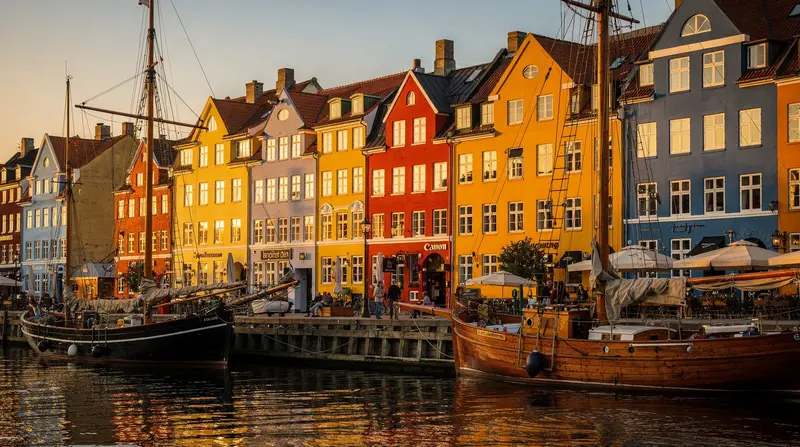
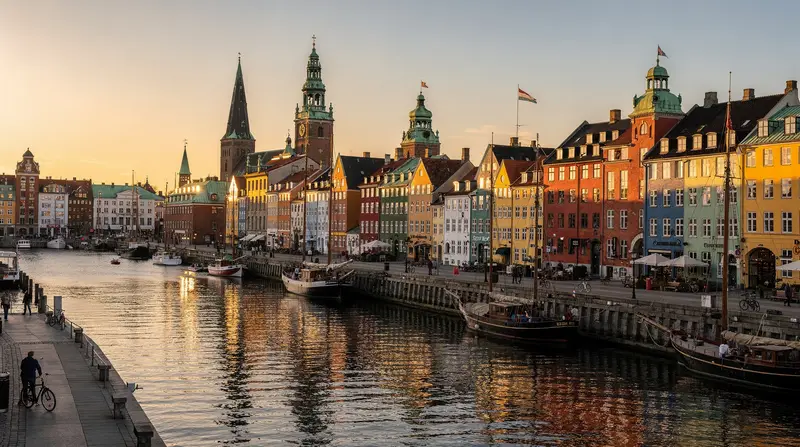
Once you have reached the centre, resist the urge to plan too much on arrival day. If your room is not ready, the luggage storage options in the city let you walk around hands-free, and the Nyhavn guide is an easy first stop since it sits a short walk from Kongens Nytorv, where the metro drops you.
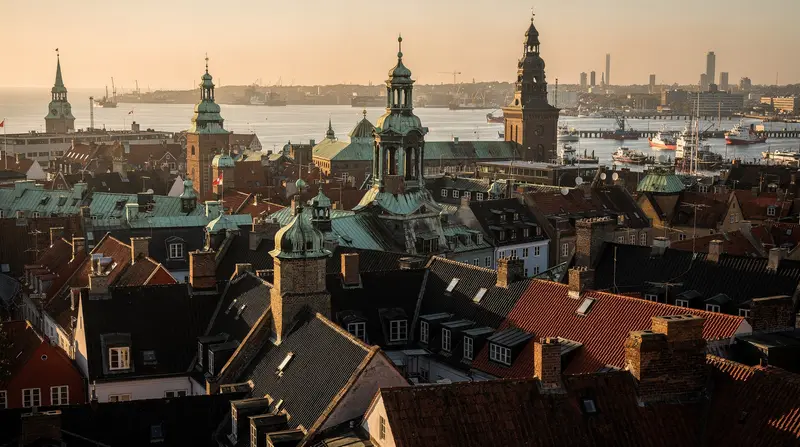
A gentle way to get your bearings after a flight is from the water. A harbour outing shows you Nyhavn, the opera house and the old quarter in one sitting without any navigation, for example a classic canal tour of the harbour. Our best canal tours guide compares the formats, and the Copenhagen by boat guide explains the wider picture.
If you would rather see the city at your own pace, a self-drive boat rental is another option once you have settled in; the GoBoat rental guide covers how it works.
For planning the days that follow, the one day in Copenhagen itinerary and the weekend break itinerary are good starting points, and the where to stay guide helps if you have not yet chosen a neighbourhood.
Which option to choose
Most travelers: Metro M2. Fast, cheap, runs 24/7, no stress.
Arriving late night with heavy luggage: Still the metro — it runs through the night and the carriages are less crowded after midnight.
Group of 3–4 people: A taxi becomes cost-competitive (30 DKK × 4 = 144 DKK, versus a taxi at 300 DKK split four ways = 75 DKK per person). Do the math for your group size.
DSB train: Choose it if you are heading directly to Central Station or connecting to S-tog lines. Note: the same DSB trains from the airport continue to Malmö — if you want to visit Sweden first, see the Copenhagen to Malmö train guide.
Bus: Avoid unless your hotel is directly on the route and you have light luggage.
Once in the city, see the full getting around Copenhagen guide and the Copenhagen Metro guide for navigating the M1–M4 network. If you’re arriving on your first visit, the first-time Copenhagen guide covers what to do once you’ve dropped your bags, and the Copenhagen Card worth it guide is worth checking before you decide whether to activate a card straight from the airport.
From the airport to specific neighborhoods
Nyhavn / Indre By
Metro M2 to Kongens Nytorv (12 min). Nyhavn is a 5-minute walk from the exit. The most direct option from the airport to the most visited part of Copenhagen.
Vesterbro (including the Meatpacking District)
Metro M2 to Kongens Nytorv, then M3 toward Vanløse to København H (Central Station) or Frederiksberg, depending on the specific hotel. Total 20–25 minutes from airport.
Nørrebro
Metro M2 to Kongens Nytorv, then M3 to Nørrebro St. Total 25–30 minutes.
Frederiksberg
Metro M2 to Kongens Nytorv, then M3 to Frederiksberg or Lindevang. Total 25–35 minutes.
Christianshavn / Christiania
Metro M2 direct — Christianshavn station is on the M2 line, 9 minutes from the airport. The most direct metro connection of any central Copenhagen neighborhood.
Hotels near the Central Station (Tivoli area)
DSB train from the airport to København H (Central Station) in 13 minutes. More direct than the metro for this specific area.
Practical details
Operating hours: Metro M2 runs 24 hours a day, 365 days a year. DSB trains run approximately 05:00–midnight.
Wi-Fi: Free Wi-Fi in Terminal 3. The metro does not have Wi-Fi in tunnels but stations and above-ground sections have signal.
Bike storage: The metro does not allow full-size bicycles during peak hours (07:00–09:00 and 15:30–18:30). Folding bikes are permitted at all times.
Lost property: Reported via the Copenhagen Metro customer service (metro.dk). DSB has a separate lost property process.
Luggage storage: If you land early and your hotel is not ready, you can store bags at the airport (65–75 DKK per item). See the Copenhagen luggage storage guide for city-center options.
Accessibility: The metro station has lifts to all levels. The carriages are step-free from the platform. DSB trains are step-free with the boarding ramps available from staff.
Frequently asked questions about getting from Copenhagen Airport to the city center
Is the Copenhagen Metro safe at night?
Yes. The metro operates 24/7 and the carriages are monitored by cameras. Late-night services (midnight to 05:00) are used by shift workers, partygoers and arriving travelers. Copenhagen has very low crime levels compared to most European capitals. Using the metro alone late at night is normal and not a cause for concern.
Do I need to validate my metro ticket?
The yellow DOT ticket machines issue a ticket with a timestamp already printed — this is your validation. There are no turnstiles on the Copenhagen Metro. Ticket inspectors do board trains regularly. An invalid or missing ticket results in a fine (amount on the official Copenhagen Metro website). Always have your ticket on your phone or printed.
Can I use contactless payment on the metro?
Not directly — you cannot tap in and out using a contactless bank card as on the London Underground. You must buy a ticket in advance (machine or app). The DOT Tickets app accepts payment by card.
How early should I arrive at the airport before my departure?
CPH Airport recommends arriving 2 hours before departure for EU/Schengen flights and 3 hours for non-Schengen (US, Asia, Middle East). Security queues at CPH are generally efficient. Allow time for the metro journey (15–20 minutes from central Copenhagen) plus the walk from the metro to check-in.
Is there luggage storage at the airport?
Yes. Luggage storage is available in Terminal 3, near the arrivals area. Prices are approximately 65–75 DKK per item per day. For luggage storage in the city center, see the Copenhagen luggage storage guide.
What currency should I have for the metro?
The DOT ticket machines accept credit and debit cards (Visa, Mastercard, Maestro). The DOT Tickets app accepts card payment. Having DKK cash is not necessary for the metro, though machines do accept some denominations of Danish coins and notes. The easiest approach is to buy via the app before landing.
Does the M2 metro stop at any tourist sights?
Beyond the city center stops (Kongens Nytorv for Nyhavn, Nørreport for Rosenborg and Torvehallerne, Christianshavn for Christiania), the M2 continues past the city center toward Vanløse. The main tourist sights are all reachable from the central stops on the M2 and the M3 City Circle Line.