Copenhagen to Malmö by Train: Øresundståg, Tickets, Prices and What to Know
Copenhagen: Malmö Private Highlights Trip with Lunch Option
Duration: Full day
How do I get from Copenhagen to Malmö by train?
Take the Øresundståg from Copenhagen Central Station (København H) or Copenhagen Airport directly to Malmö Central Station. The journey takes 35–40 minutes from Central Station or 20 minutes from the airport. Tickets cost around 100–130 DKK (115–150 SEK) bought in advance, or 150–170 DKK walk-up. You cross the Øresund Bridge during the crossing. Passport or national ID is technically required. Pay in SEK at Malmö destinations — cards are universally accepted.
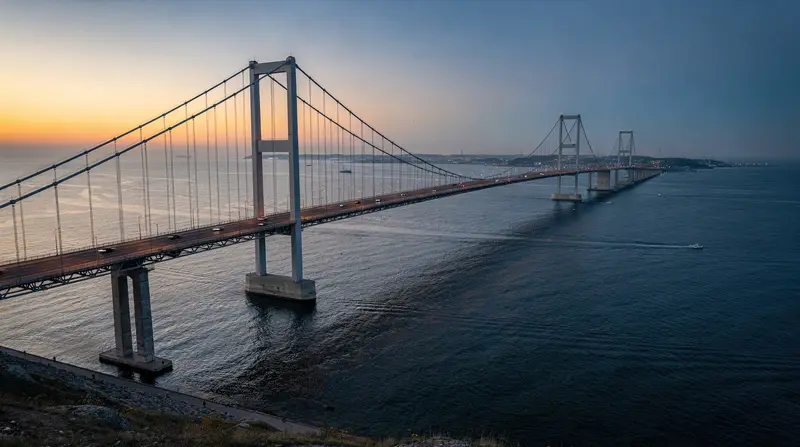
The train between Copenhagen and Malmö is one of the most pleasant urban rail journeys in Scandinavia. You board at Central Station, cross through the city, then emerge onto the Øresund Bridge for 8 kilometers of open water before arriving at Malmö Central Station 35–40 minutes after departing. It is practical, affordable, and the bridge crossing alone is worth experiencing. For the bridge itself — its structure, views and history — see the Øresund Bridge guide.
| Journey time | 35–40 min (Central Station) / ~20 min (Airport) |
| Cost one-way | around 90–130 DKK advance, 150–175 DKK walk-up |
| Frequency | Every 20 min daytime, 30–40 min evenings |
| ID needed | Yes — passport or national ID (border checks in force) |
| Currency on arrival | Swedish Kronor (SEK); cards accepted everywhere |
The Øresundståg: what it is
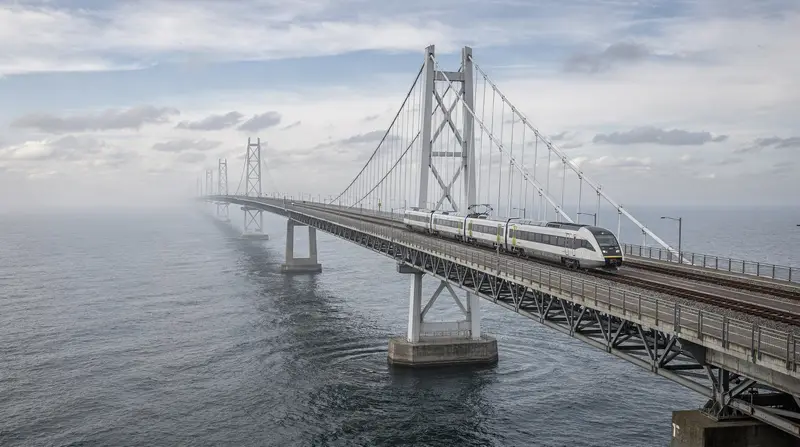
The Øresundståg (literally: “Øresund Train”) is a regional train service operating across the Øresund strait between Denmark and Sweden. It is jointly operated by DSB (Denmark) and Skånetrafiken (Sweden’s Skåne regional transport authority). The trains run on a combined route: starting from Helsingborg or further into Sweden, passing through Malmö, crossing the Øresund Bridge, and continuing through Copenhagen Airport to Copenhagen Central Station — and some trains continue further into Denmark.
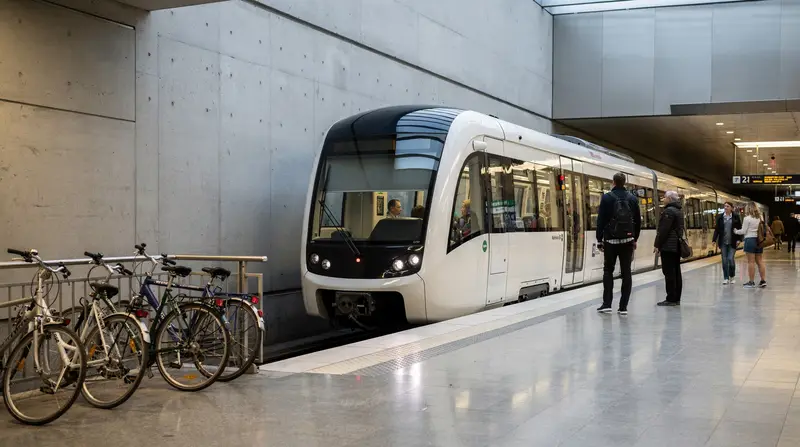
The double-decker Bombardier X31 and similar rolling stock is comfortable, with seats at both levels. Reservations are not required or generally available — you buy a ticket and sit in any available seat.
Best time of day and year to go
The crossing itself looks different depending on light and season, and this affects which departure is worth prioritising. Morning departures (before 10:00) give the clearest light on the Swedish coast approach and thinner crowds in Malmö’s old town before lunch. Late-afternoon return trips in summer (May–August) catch the bridge in golden-hour light, with sunset over the strait visible from the right-hand side of the carriage on the way back to Copenhagen.
Winter crossings (November–February) are shorter on daylight — an early departure is worth prioritising if you want to see the bridge and skyline rather than a dark window. Weekday travel avoids the Friday-evening and Sunday-evening commuter crowding on this line, which can mean standing room only for parts of the journey in peak summer.
Where to board in Copenhagen
Copenhagen Central Station (København H): The main departure point. Øresundståg trains depart from the main DSB platforms. Journey to Malmö Central: 35–40 minutes. The station is served by the Metro M3/M4, S-tog all lines, and is adjacent to Tivoli and the beginning of Vesterbro.
Copenhagen Airport (CPH): If you are traveling from or via the airport, the Øresundståg also stops here (lower level, below the metro station). Journey to Malmö Central from the airport: approximately 20 minutes. This is the fastest option if you happen to be near the airport, or if you are timing a visit to Malmö before a flight departure.
Nørreport: Some Øresundståg services stop at Nørreport — check the specific departure before planning your journey. If your service does not stop at Nørreport, take the S-tog or Metro to Central Station first.
Buying tickets
DSB (Danish Railways)
The DSB website (dsb.dk) and the DSB app cover tickets from Copenhagen to Malmö. You can select exact departure times and buy in advance. Prices are denominated in DKK on the Danish side.
Price range (one way, Copenhagen Central → Malmö Central):
- Advance purchase (7+ days): 89–110 DKK
- Standard fare (1–6 days ahead): 120–150 DKK
- Same-day walk-up: 150–175 DKK
Skånetrafiken / SJ (Swedish side)
You can also buy from the Swedish side via the SJ app or Skånetrafiken. Prices are in SEK. The ticket is valid on the same trains.
At station machines
Ticket machines at Copenhagen Central Station sell cross-border tickets. Select Malmö as your destination. Accept card payment, and some accept cash. The machines are in English.
Do not use the DOT Tickets app
The Copenhagen DOT zone tickets do not cover cross-border travel to Sweden. You need a specific DSB or SJ ticket for this journey. A DOT 3-zone ticket from the airport to Copenhagen center is valid within Denmark only.
ID and border checks: what to expect
Denmark and Sweden are both in the Schengen Area, meaning internal borders are theoretically open. However, Sweden reintroduced border controls at the Danish-Swedish border in January 2016 in response to immigration pressures, and these controls remained in place as of mid-2026.
In practice:
- Swedish border police board Øresundståg trains at Malmö Central Station (sometimes also at the bridge or at Hyllie, the last Swedish stop before Malmö)
- They check all passengers, not random sampling
- EU/EEA citizens: Valid national identity card or passport required. A Scandinavian driving license is not sufficient ID.
- Non-EU travelers: Valid passport required.
- The check is quick (officers move through the train rapidly) and polite
Failing to have valid ID when crossing does result in being turned back or detained. This is uncommon for tourists but it does happen. Have your passport available.
The bridge crossing: what to see
The Øresund Fixed Link between Denmark and Sweden consists of two main sections:
- The Drogden Tunnel (artificial island to Copenhagen Airport, underground): You don’t see this section
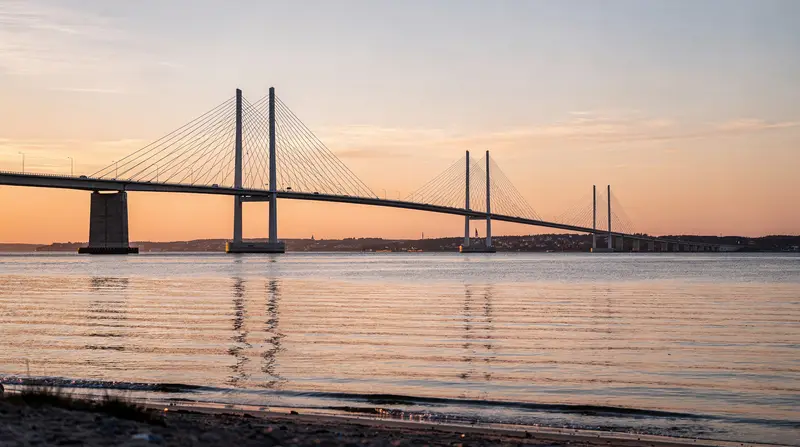
- The Øresund Bridge (artificial island to the Swedish coast, above water): 8 km of bridge including the cable-stayed section visible from the train
When you take the train from Copenhagen Central Station, you emerge into daylight as you approach the bridge. You cross over open water with views of:
- The Øresund strait to the left and right
- The cable-stayed pylon section (204 meters high) — the iconic element
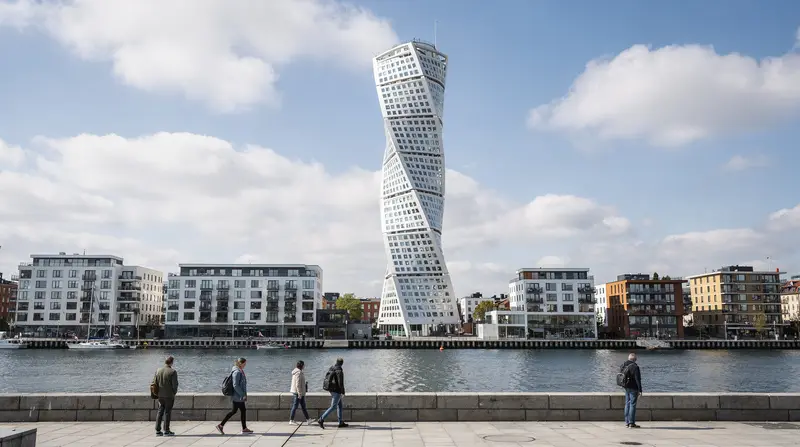
- Malmö’s skyline, including the Turning Torso, becoming visible on approach
- On clear days, the coast of northern Denmark (Helsingør direction) in the distance
The crossing is approximately 8 minutes of the journey. Sit on the right side of the train (if traveling toward Malmö from Copenhagen) for the best views of the cable-stayed section and the Malmö skyline. At night, the bridge is illuminated.
On arrival in Malmö
Malmö Central Station (Malmö Centralstation) is a large 19th-century terminus building in central Malmö — unlike Copenhagen’s modern central station, Malmö’s feels properly historic. The city center begins immediately outside the main entrance.
From the station:
- The old town (Gamla Staden) is 10–15 minutes on foot to the west
- Stortorget (the main square, Malmö’s equivalent of Rådhuspladsen) is 12 minutes on foot
- Lilla Torg (the photogenic cobblestone square with half-timbered buildings) is adjacent to Stortorget
- Malmö Castle (Malmöhus Slott) is 15–20 minutes on foot west of the station
- Västra Hamnen (the modern harbor district with the Turning Torso) is 20–25 minutes on foot or a short bus ride
Malmö’s local transit: Skånetrafiken buses and the Malmö local bus network connect the station to all parts of the city. Your Øresundståg ticket includes transport within Malmö for a limited period (check your ticket conditions — Skånetrafiken tickets typically include local transport). A separate Malmö city bus ticket costs approximately 25 SEK (approximately 17 DKK). For a full day-trip itinerary, see the Malmö day trip guide.
Currency and payments in Malmö
Sweden uses Swedish Kronor (SEK). Copenhagen DKK is not accepted in Malmö (though some tourist-facing businesses in Malmö occasionally accept DKK at unfavorable rates — better to use your card).
Exchange rate (approximate, June 2026): 100 DKK ≈ 155 SEK. Rates fluctuate.
Card payments: Universally accepted throughout Malmö — restaurants, cafés, shops, museums, public transport. Sweden has one of the highest card penetration rates in the world. You will rarely need SEK cash in Malmö.
If you do need SEK cash, use your bank card at a Swedish ATM (Swedbank, Handelsbanken or similar) — the rate is better than any exchange counter. Do not exchange currency at airport counters.
What to do in Malmö
Malmö is not a one-sight city — it combines medieval and Renaissance history with striking modern architecture. A full day covers the main areas.
Old Town (Gamla Staden): The historic center of Malmö, built on a grid of medieval streets. The main square Stortorget has the Malmö City Hall (1546) and the St. Peter’s Church, Scandinavia’s largest medieval brick church (entry free). Lilla Torg (Small Square) is the most photogenic spot — 16th-century half-timbered buildings surrounding a cobblestone square.
Malmöhus Castle: The oldest surviving Renaissance castle in Scandinavia, dating from 1537. It now houses the Malmö Museum (natural history, art, urban history). Entry approximately 80 SEK (about 52 DKK). Open Tuesday to Sunday.
Västra Hamnen (Western Harbor): Malmö’s flagship modern development. The Turning Torso — Santiago Calatrava’s 190-meter twisting residential tower — is the visual anchor. The area has a waterfront promenade, modern restaurants and cafés, and views back toward Copenhagen (the bridge is visible on clear days).
Folkets Park: The world’s oldest publicly owned municipal park (1891), still run as a community park with a restaurant, small rides, and the Feel the Feel concert stage. Entry free. Used by locals, not a tourist attraction in the conventional sense — which is what makes it interesting.
Moderna Museet Malmö: Scandinavian and international modern art, housed in a converted turbine hall. Approximately 100 SEK (65 DKK). Strong collection with regular temporary exhibitions.
Independent train versus a guided day trip
Most visitors can do this trip entirely independently — the train is simple, English signage is everywhere, and Malmö’s centre is compact enough to navigate without a guide. A guided option is worth the extra cost mainly if you want local context without research time, or if you’re combining Malmö with Lund in a single day and would rather not plan the connections yourself.
| Independent (train only) | Guided day trip | |
|---|---|---|
| Cost per person | ~90–175 DKK (train only) | Typically 600–1 000+ DKK, train included |
| Flexibility | Full — choose your own pace and stops | Fixed itinerary and timing |
| Local context | Self-researched (guides like this one) | Live commentary from a guide |
| Best for | Confident independent travellers | First-time visitors, limited planning time, combining Lund + Malmö |
Practical Malmö itinerary (one day from Copenhagen)
09:00 — Depart Copenhagen Central Station. Board the Øresundståg toward Malmö. Take the Metro M3 to København H if starting from Nørreport. Buy breakfast from the station’s food stalls before boarding.
09:40 — Arrive Malmö Central Station. Walk east into the old town.
10:00–12:30 — Old town: Stortorget, St. Peter’s Church (free, 20 minutes), Lilla Torg (coffee at a café in the square), the streets around Södergatan.
12:30–13:30 — Lunch. Lilla Torg has several good restaurants; Saltimporten Canteen (further in Västra Hamnen area) is one of Malmö’s best lunch spots. Budget 120–200 SEK for a lunch main (approximately 80–130 DKK).
13:30–15:00 — Malmöhus Castle and the surrounding moat area. The walk from old town to the castle is 15 minutes through a park.
15:00–17:00 — Västra Hamnen: walk the waterfront, see the Turning Torso, find a café for the mid-afternoon.
17:30 — Return to Malmö Central. Depart on Øresundståg toward Copenhagen.
18:10 — Arrive Copenhagen Central Station.
A guided tour combining the Øresund Bridge crossing with both Lund and Malmö covers more ground in one day than going independently, and includes transport between the three stops.Combining Copenhagen Airport and Malmö
If you are flying into or out of Copenhagen Airport, the Øresundståg stops at the airport before continuing to Malmö. This creates a convenient option: arrive at the airport, leave your luggage at the airport luggage storage, take the 20-minute train to Malmö for a half-day visit, then return to collect your luggage and continue. Or: visit Malmö on your last day, return to the airport directly from Malmö on the Øresundståg. See the Copenhagen airport to city center guide if you’re timing this around a flight rather than a day already based in the city.
Malmö versus Lund: which to add if you only have time for one
Visitors with a single free day sometimes debate whether to spend it in Malmö or continue further into Sweden to Lund, the university town 15 minutes further by train. They are different trips: Malmö offers modern architecture (Turning Torso), a proper old town, and a full day of things to do; Lund is smaller, dominated by its 12th-century cathedral and a genuinely charming, walkable university core, and is comfortably done in half a day.
If you only have one day, Malmö is the better single destination — it has more to see. If you have a full day and want both, the Copenhagen-Malmö combo itinerary sequences a route covering both towns without doubling back, and the Lund day trip guide covers Lund on its own if you’d rather split the two across separate days.
Frequently asked questions about the Copenhagen to Malmö train
Is there a direct train from Nørreport to Malmö?
Some Øresundståg services stop at Nørreport — check the specific timetable. If your departure does not stop at Nørreport, take the Metro M2 or M3 to Kongens Nytorv, then S-tog to Central Station, or take the M3 directly to København H. The S-tog is the most direct connection from Nørreport to Central Station (2 minutes).
Can I buy the Copenhagen-Malmö train ticket on the train?
On some services, a conductor will sell tickets on board, but at a premium (typically 20–30 DKK more than the machine price). Do not rely on this — buy before boarding at the station machine or via the DSB app.
Is there a faster option than the train?
The Øresundståg is the standard option. Some intercity trains (SJ) also cross the bridge and go further into Sweden — they are faster between specific city pairs (e.g., Copenhagen to Gothenburg) but for Copenhagen to Malmö alone, the Øresundståg is the practical choice. No ferry currently operates between Copenhagen and Malmö (ferries were discontinued when the bridge opened in 2000).
Do I need to book a seat on the Øresundståg?
No. Seat reservations are not available or required on Øresundståg regional trains. Buy a ticket and sit in any unreserved seat. The trains are occasionally crowded on Friday afternoon/evening and Sunday evening in summer.
What is the last train from Malmö back to Copenhagen?
Trains run until approximately midnight (last departure from Malmö around 23:30–23:45, arriving Copenhagen before 00:30). Check the exact timetable on the day via DSB or Rejseplanen for current schedules.
Can I take a bicycle on the Øresundståg?
Yes. There is a designated bicycle area in each train. During peak hours, space is limited. A bicycle supplement ticket is required — approximately 50–70 DKK (70–100 SEK), bought separately at the machine or in the app.
Frequently asked questions — Copenhagen to Malmö by Train: Øresundståg, Tickets, Prices and What to Know
How much does the train from Copenhagen to Malmö cost?
Ticket prices vary by how far in advance you buy. Through the DSB app or Skånetrafiken/SJ apps: approximately 100–130 DKK (115–150 SEK) for a one-way ticket booked in advance. Walk-up same-day prices are typically 150–175 DKK. Return tickets bought at the same time cost roughly double. Children under 16 travel free on some services (check conditions).Do I need a passport to travel from Copenhagen to Malmö?
Technically yes. Sweden is in the Schengen Area, as is Denmark, but border checks between Denmark and Sweden were reintroduced in 2016 for security reasons and remain in place. Swedish police board trains at Malmö and sometimes at the bridge. EU citizens need to show a valid passport or national ID card. Non-EU travelers need a valid passport. Driving licenses are not accepted.How long is the train journey from Copenhagen to Malmö?
From Copenhagen Central Station (København H): 35–40 minutes. From Copenhagen Airport: approximately 20 minutes (the airport is closer to Sweden — the bridge crossing is already halfway complete when you board at the airport). From Nørreport station (if you take the S-tog to Central Station): add about 5 minutes.Which train goes to Malmö from Copenhagen?
The Øresundståg (Øresund Train) — a regional train service jointly operated by DSB (Denmark) and Skånetrafiken (Sweden). Trains run every 20 minutes during daytime hours, every 30–40 minutes in evenings. They use double-decker carriages. The train is different from the high-speed intercity trains (which also cross to Sweden but are less frequent and more expensive).Can I use my Copenhagen metro ticket to go to Malmö?
No. The Copenhagen zone ticket system does not cover the cross-border journey to Sweden. You need a separate ticket — either from DSB (Danish side), SJ (Swedish intercity), or Skånetrafiken (Malmö local transport). Buy before boarding, either via app or from machines at Central Station.What currency is used in Malmö?
Swedish Kronor (SEK). Sweden is not in the Eurozone. 100 DKK is approximately 155–160 SEK (exchange rates vary). Cards are universally accepted in Malmö — restaurants, shops, museums, cafés all take Visa/Mastercard without issue. Cash in SEK is rarely necessary. Do not exchange DKK for SEK at airport counters — the rates are poor; use your card directly.Is Malmö worth visiting as a day trip from Copenhagen?
Yes, particularly if you have 2+ days in Copenhagen. Malmö is architecturally interesting (the Turning Torso skyscraper, the Västra Hamnen harbor district, Malmö Castle), the food scene is strong, and the combination of Swedish and Danish influences in one short trip is genuinely interesting. The journey is easy. Allow a full day — 4–5 hours minimum to see the key areas comfortably.