First Time in Copenhagen: What You Actually Need to Know
Copenhagen: City Highlights Walking Tour With Local Guide
Duration: 2-2.5 hours
What do first-time visitors to Copenhagen need to know?
English works everywhere — you need zero Danish. Pay by card (cashless city, even at markets). Never jump the metro turnstile — the fine is 750 DKK. Cycling lanes are serious infrastructure — don't walk in them. Tipping is not expected. MobilePay is the Danish payment app but tourists use contactless cards instead. Nyhavn is beautiful from the outside but eat two streets away.
| Currency | Danish krone (DKK), around 7.46/€1 |
| Metro fine | 750 DKK for fare evasion, no exceptions |
| Tipping | not expected, service is included |
| Language | English works everywhere, zero Danish needed |
| Best first stop | Rosenborg Castle at opening (10:00) |
Before you arrive
The currency situation
Denmark is in the EU but not the eurozone. The currency is the Danish krone (DKK). The mid-2026 rate is approximately 7.46 DKK to 1 EUR, or 6.90 DKK to 1 USD.
If you arrive thinking in euros and do not convert mentally, you will consistently underestimate prices. A 350 DKK dinner sounds manageable; converting it to €47 feels more significant. Know what the conversion is before you land.
Do: Use your contactless card for everything. Pay in DKK. Use an airport ATM if you need cash (fair rates).
Don’t: Use the bureau de change offices on Strøget or in the airport — commissions and rates are poor. Don’t pay in euros (you will get a bad rate).
The metro fine
The metro runs on an honour system — no turnstile, just validators at the entrance. The ticket inspectors who board trains and check the app/cards are regular, efficient and unhurried. The fine for fare evasion is 750 DKK (about €100).
This is not a tourist trap — it is just the Danish system. Always tap your card, scan your Copenhagen Card, or validate your ticket before entering the metro platform. Every time.
Single metro fare: 26 DKK. Airport metro (all zones): 36 DKK. 24h pass: 160 DKK.
ETIAS — what you need to know
ETIAS (European Travel Information and Authorisation System) is the EU’s new pre-travel authorisation system for passport holders from visa-exempt countries (USA, UK, Canada, Australia, New Zealand, Japan, etc.). It is expected to launch in Q4 2026.
If you are planning a visit after mid-2026 and hold a non-EU/EEA passport, check the official EU ETIAS website for the current status before booking. If launched, registration will be online and cost around €7 for 3 years’ validity — not a visa, but a required electronic authorisation.
Getting around
The metro
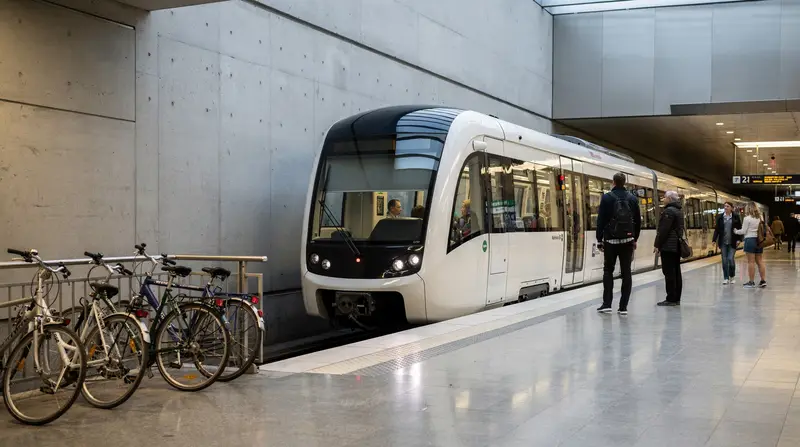
The metro (M1, M2, M3, M4) is clean, frequent and runs 24 hours a day, 7 days a week. No other European metro runs 24/7 — it is a genuine quality of life feature for visitors.
The M2 connects the airport to the centre (Nørreport, Kongens Nytorv) in 13–15 minutes — always take it instead of a taxi.
The M3 Cityringen is the newest line, circling the central neighbourhoods in a loop: Frederiksberg, Vesterbro, Nørreport, Kongens Nytorv. If you are staying in any central area, the M3 gets you anywhere within minutes.
Cycling
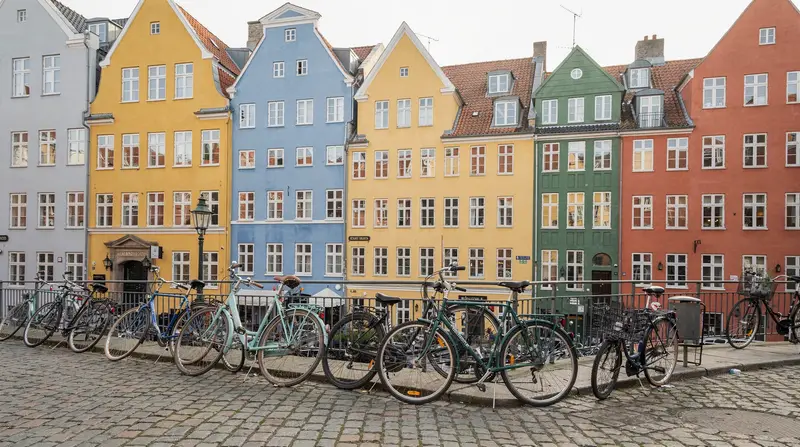
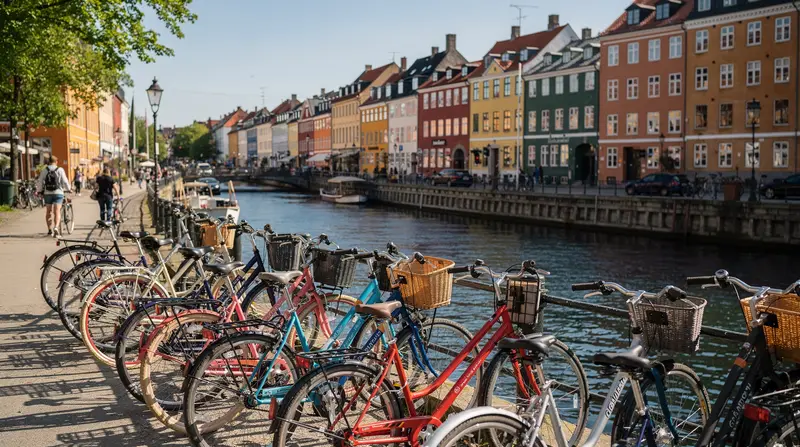
Copenhagen has 390 km of fully segregated cycling lanes — the city’s most important piece of infrastructure. For tourists:
The rules are real. Bike lanes are for bikes; walking in them causes frustration and near-misses. If you stop to check a map, step off the bike lane entirely.
Ride on the right side of the lane (the lane direction mirrors driving direction). Signal turns with hand signals. Cyclists in Copenhagen will ring a bell at you, not slow down — this is a polite warning, not a complaint.
Where to rent: Baisikeli (Vesterbro) and Donkey Republic (app-based docking stations) are the most popular options. Expect to pay 100–200 DKK per day for a standard bike. The free GoBikes require a credit card deposit and are patchier in availability.
Walking
The historic centre is very walkable. Nyhavn to Rosenborg to Tivoli to Christiansborg is a loop that can be done on foot in 2–3 hours including stopping time. Cobblestones are common — comfortable flat shoes are more practical than heels.
Money and payments
Cards accepted everywhere
Copenhagen is effectively a cashless city. Cards are accepted at restaurants, supermarkets, bakeries, market stalls, street food vendors, museum gift shops, and public toilets. Many venues are card-only — they post it on the door.
Your standard Visa or Mastercard contactless works everywhere. American Express has slightly patchier acceptance at smaller venues.
MobilePay
MobilePay is Denmark’s de facto mobile payment system — used by 80%+ of the Danish adult population for everything from splitting a restaurant bill to paying at a farmer’s market. It requires a Danish mobile number to register, so tourists cannot use it. This is not a problem: your contactless card is accepted everywhere MobilePay is.
Tipping
Denmark does not have a tipping culture. Restaurant bills include service. Rounding up a taxi fare or leaving a small amount at a café (10–20 DKK) is a kind gesture but not expected. There is no tipping pressure, no meaningful expectation, and no awkwardness about not tipping. This is genuinely different from the USA and increasingly from the UK.
Language and communication
English is universal
Danish is the national language but English is spoken fluently by essentially everyone you will interact with as a tourist — hotel staff, restaurant servers, museum guides, market vendors, metro helpers, even the woman selling tulips at the flower market. You will not encounter a language barrier.
If you make an effort to say “Tak” (thank you, pronounced “tagk”) and “Hej” (hello, pronounced “hi”), Danes will appreciate it — but it is entirely optional.
Basic Danish you might see
- Tak — Thank you
- Hej / Hej hej — Hello / Goodbye
- Undskyld — Excuse me / Sorry (pronounced “oon-skule”)
- Åben / Lukket — Open / Closed
- Toiletter — Toilets
- Udgangen — Exit
- Ingen adgang — No entry
Cultural notes for first-timers
Queuing
Danes queue properly. Take a ticket number at bakeries and butchers (there is usually a dispenser). Don’t push in. Public orderliness is expected and generally maintained.
Jaywalking
Unlike many cities, Danes reliably wait for pedestrian lights, including at empty roads. You are not required to do the same, but it is noticeable when tourists cross on red — particularly in front of children.
Cycling etiquette for pedestrians
Do not walk on bike lanes. This bears repeating because it causes genuine problems. The dark-coloured lane between the pavement and the road is a cycling lane. It looks like a pavement extension but it is not. Cyclists come fast and silently. Check for cyclists before stepping off any pavement, particularly when getting out of a taxi or parked car.
Opening hours
Many Copenhagen museums close on Mondays. Check the specific museum before planning. Supermarkets are generally open 7 am–11 pm seven days a week. Restaurants typically open for lunch 12:00–15:00 and dinner 17:30 or 18:00 onwards. Tipping applies only to the restaurant, not the café — and even there, not expected.
The main tourist areas: what to know
Nyhavn
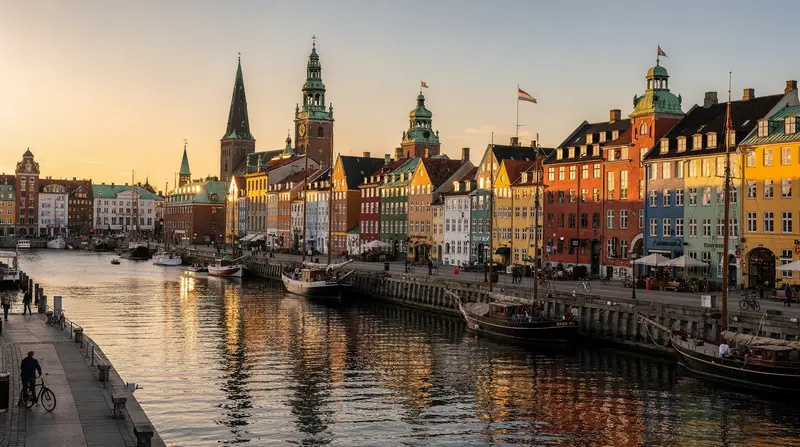
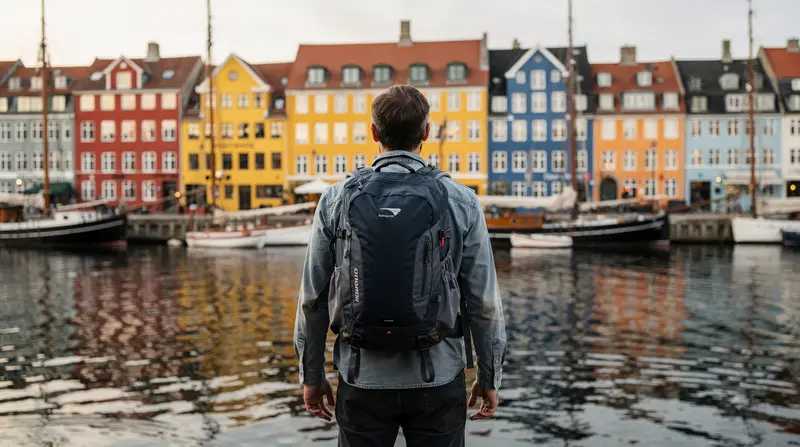
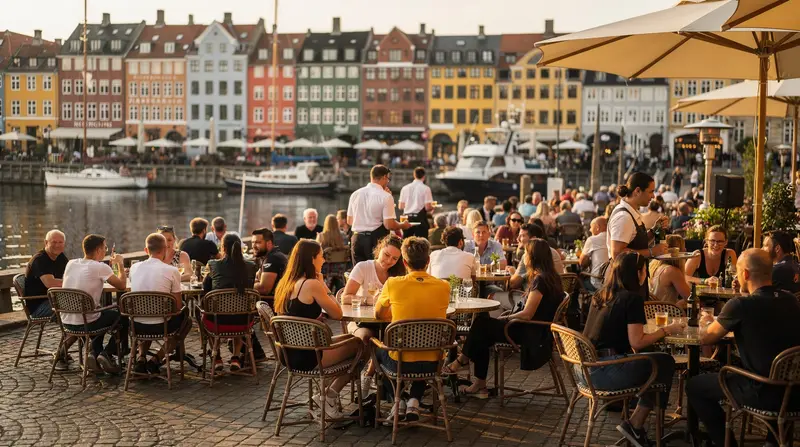
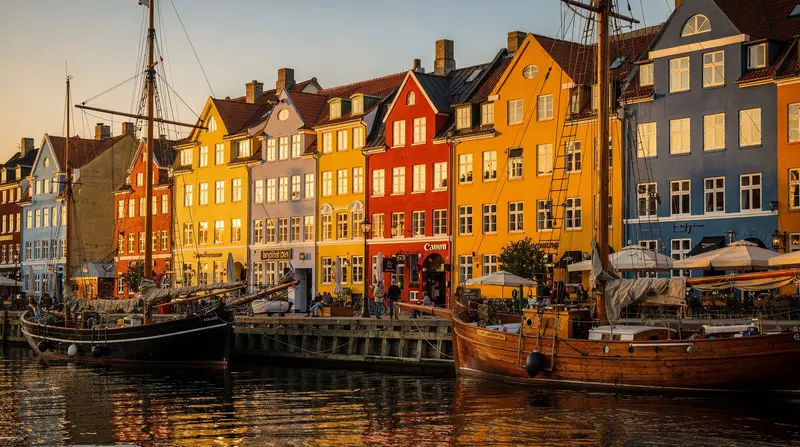
The most photographed spot in Copenhagen — a short canal lined with colourful 17th-century townhouses. It is genuinely beautiful and absolutely worth seeing. What to know:
- Arrive before 9 am or after 8 pm for photos without crowds
- The restaurants along the canal are overpriced (add 50–100 DKK per dish versus two streets away)
- The canal itself is a working waterway — do not swim
- Canal cruise boats depart from Nyhavn — a 60-minute tour is genuinely worthwhile
Strøget
Europe’s longest pedestrian shopping street, connecting Rådhuspladsen (City Hall Square) to Kongens Nytorv. Useful for orientation and has a mix of mainstream shopping and a few interesting side streets. Not a destination in itself, but a natural walking route between sights.
Souvenir shops on Strøget charge tourist prices. The same items are available at Torvehallerne and smaller shops for significantly less.
Tivoli
The 1843 amusement park in the city centre is not just a theme park — it is a genuine cultural institution. Worth visiting. Entry (~200 DKK) includes the gardens, shows, and atmosphere. Rides cost extra (tokens or Tivoli Plus pass). The evening illumination is the signature experience. It is included with the Copenhagen Card.
Things to skip on a first visit
The Little Mermaid: A 1.25m bronze statue by sculptor Edvard Eriksen, sitting on a rock at the Langelinie promenade. It is the most visited tourist attraction in Denmark. It is also anticlimactic — smaller than expected, often surrounded by crowds, and about a 20-minute walk from the main sights. If your time is limited, the Gefion Fountain nearby is more impressive.
Restaurants directly on Nyhavn canal: Beautiful setting, tourist prices, mediocre food. Walk two streets to any neighbourhood in Indre By for comparable or better quality at lower cost.
Bikes with flat handlebars (GoBikes): The free city bikes are functional but less comfortable than a rental bike for a full day’s sightseeing. If you plan to cycle for more than 2 hours, rent from Baisikeli or Donkey Republic.
A recommended first-day walk
This covers the core of Copenhagen in 4–5 hours, ending at Tivoli for the evening:
- Start at Rosenborg Castle — arrive when it opens (10:00). Crown jewels and royal apartments. Allow 90 minutes.
- Walk through King’s Garden south toward the Latin Quarter.
- Rundetårn (Round Tower) — climb the spiral ramp for a city view (50 DKK). 20 minutes.
- Walk east to Kongens Nytorv, then south along the canal to Nyhavn. Photos, coffee at a canal-side café (drink, don’t eat a meal here).
- Walk along Bredgade south toward Christiansborg — see the exterior and the free tower viewpoint.
- Cross to Slotsholmen island and walk around the canals to Christianshavn.
- Return to the centre via Knippelsbro bridge. Head west toward Tivoli for an evening visit.
A guided city highlights walk covers much of this ground in 2–2.5 hours with a local who provides historical and cultural context — a good alternative on day 1 if you prefer structured orientation before exploring independently.
Things that will surprise first-time visitors
The cycling culture is real infrastructure, not a lifestyle statement
Copenhagen’s 390 km of segregated cycling lanes are not a cycling-friendly amenity added for tourists — they are the primary transport network for most of the city’s residents. On weekday mornings, the bike lanes carry more commuters than the metro. The cycling is orderly, fast and rule-governed.
As a pedestrian: check for bikes before stepping off any pavement. The bike lane (dark-coloured, between the pavement and the road) looks like an extension of the pavement but carries fast-moving cyclists who will not swerve. As a cyclist: use hand signals, stay right, and ring your bell as a warning (not an insult) before overtaking.
The service culture is direct, not cold
Danish service culture is efficient and direct rather than warmly performative. Your waiter will not introduce themselves by name, ask how your day is going, or hover. They will take your order, bring your food, and leave you alone unless you signal for something. This is not unfriendliness — it is the Danish cultural norm of respecting personal space and not performing unnecessary social ritual.
If you need something, catch the server’s eye and give a small wave. The response will be immediate and helpful.
Sundays: fewer shops open, best museum day
Many shops and some restaurants reduce hours or close on Sundays. Strøget’s big retail shops may open noon–17:00 rather than 10:00–18:00. Plan Sunday as a museum, café and outdoor activity day rather than shopping.
Conversely, Sunday is the best day for the National Museum — free entry and typically less busy than weekdays when local school groups visit.
The hot dog cart is not ironic
The pølsevogn (sausage wagon) is Denmark’s oldest and most honest fast food. A bright orange-and-white cart on a city corner, selling rød pølse (boiled red sausage), French hot dogs, and traditional accompaniments (crispy fried onions, yellow mustard, ketchup, pickle slices, raw onion). The cultural importance of this humble institution is genuine — the pølsevogn has fed Copenhagen workers since the 1920s. Eat one. It costs 40–60 DKK.
Danes speak better English than many English speakers
The level of English fluency in Copenhagen is remarkable. Staff at every level — museum cloakrooms, market stalls, bakeries, supermarkets — speak clear, confident English. The tourist has no language disadvantage whatsoever. Menus are in Danish and English. Transit apps work in English. Museum audio guides are typically in 10+ languages.
Key timings and opening hours
What opens early
- Bakeries: most open by 06:30–07:00
- Metro: runs 24/7
- Markets: Torvehallerne opens at 10:00 (Mon–Fri), 08:00 on Saturdays
- Hot dog carts: typically 09:00 until evening
What opens at 10:00
- Most museums including Rosenborg, Christiansborg, National Museum, Glyptotek
- Tivoli (varies by season — check current opening time)
- Most shops and boutiques
What closes on Mondays
Many Copenhagen museums close on Mondays. This is not universal but is common. Always check specific museum websites before planning a Monday itinerary around paid attractions. Free outdoor sights (Nyhavn, King’s Garden, Kastellet, Amalienborg square) are unaffected.
Tivoli seasonal hours
Tivoli does not run year-round. Main season: April to late September. Halloween season: mid-October to early November. Christmas season: mid-November to 30 December. Closed: January to late March. Check tivoli.dk for exact current-season dates before visiting.
What to do in the rain
Copenhagen gets periodic rain throughout the year — rarely all-day downpours, but showers that interrupt outdoor plans. The city handles it well:
Museums: Copenhagen has enough excellent museums for a full rainy day — National Museum (one of northern Europe’s best archaeological collections), the Glyptotek (world-class antiquities and French impressionism in a beautiful winter garden), the SMK National Gallery (extensive Danish and international art), Designmuseum Danmark.
Torvehallerne market: The covered food market is fully sheltered and excellent for a slow rainy lunch — browse the stalls, eat at the indoor seating areas, buy good coffee.
Cafés: Copenhagen’s café culture was built for grey weather. The hygge concept — cosy, candle-lit, unhurried indoor warmth — is at its most genuine on rainy days. Find a neighbourhood café in Nørrebro or Vesterbro, order coffee or a hot chocolate, and use the time to plan the next stage of the trip.
Indoor food markets: Reffen (open-air) closes in rain, but Torvehallerne and Papirøen (Paper Island food hall, when operating) provide indoor alternatives.
Packing and practical prep specific to Copenhagen
Footwear matters more here than in most European capitals: cobblestones are common across the historic centre (Nyhavn, parts of Indre By, Christianshavn), and a full day of walking plus cycling requires comfortable, flat shoes rather than anything with a heel or a slick sole. Layers are essential regardless of season — Copenhagen’s weather changes quickly, and a warm sunny morning can turn into a cool, breezy afternoon by the harbour even in July. A light rain shell is more useful than an umbrella, which is awkward on a bike and in wind off the water.
Adapter plugs: Denmark uses the standard European two-pin plug (Type C/E/F), the same as most of continental Europe. UK, US, and Australian visitors will need an adapter; EU visitors from most countries will not.
SIM cards and data: EU citizens benefit from roam-like-home rules within the EU. Non-EU visitors should check their carrier’s international rates before arrival or plan to buy a local SIM (available at the airport and in central Copenhagen) — data is genuinely useful for the Rejseplanen transit app and for navigating on a bike.
What to book before you land versus what to leave until arrival: Tivoli tickets, popular restaurant reservations (especially anything New Nordic or Michelin-adjacent), and any weekend museum slots for major temporary exhibitions are worth booking ahead. Metro tickets, casual café stops, and most museum entries do not need advance booking and can be handled entirely on arrival. If your visit falls during Danish school holidays (check the specific dates each year, as they shift), book Tivoli and Den Blå Planet further in advance than usual — both fill up meaningfully during those weeks.
Guided walking tours are worth booking a day or two ahead in peak summer, particularly small-group departures with limited capacity; last-minute availability is patchier for the more specialised themed walks (food, architecture, history) than for the general city highlights tour.
Health and pharmacy basics
Pharmacies (apotek) are easy to find in central Copenhagen and staff generally speak fluent English. Steno Apotek near the Central Station operates extended hours and is a useful reference point if you need medication outside normal shopping hours. Common over-the-counter medications (painkillers, antihistamines) are available without a prescription, though some categories that are over-the-counter elsewhere require one in Denmark — ask the pharmacist directly rather than assuming. EU visitors with a valid EHIC card are covered for necessary treatment at public hospitals; non-EU visitors should confirm their travel insurance covers medical costs before arrival, as private treatment without insurance can be expensive.
Where to go deeper before you land
This guide covers the essentials, but a few decisions are worth more dedicated reading before you book anything. If you have not settled on trip length, the how many days in Copenhagen guide breaks down what 2, 3, and 4 days each realistically cover.
The getting around Copenhagen guide goes beyond the metro and cycling basics here into the full public transport network, including day trips. If cost planning matters, read is Copenhagen expensive and the Copenhagen on a budget guide together — Copenhagen is genuinely costly by European standards, and knowing where the money goes changes how you plan.
For the attractions mentioned only briefly above, the Nyhavn guide and the Tivoli Gardens guide go into opening hours and photo timing in more depth. If the Little Mermaid is on your list despite the honest caveat above, the Little Mermaid worth it guide makes the case for and against in full. And the general Copenhagen tourist traps guide rounds up the wider pattern of overpriced, underwhelming spots this guide only touches on around Nyhavn and Strøget.
The Copenhagen travel guide is the best next stop if you want the full destination overview rather than this first-timer’s essentials list.
Frequently asked questions for first-time visitors to Copenhagen
Do I need travel insurance for Copenhagen?
Travel insurance is always advisable. Denmark has an excellent public health system — EU citizens with a European Health Insurance Card (EHIC) are covered for emergency treatment. Non-EU visitors should ensure their travel insurance includes medical coverage. Danish medical care is excellent but private costs without insurance can be very high.
Is Copenhagen accessible for wheelchair users?
Better than most European capitals of similar age. The metro is fully step-free. Many museums have lifts and accessible facilities. Cobblestoned streets in the historic core can be challenging — plan routes using the newer paved sections where possible. Copenhagen’s cycling infrastructure sometimes creates barriers at crossings. Overall, accessibility is above the European average.
Can I drink tap water in Copenhagen?
Yes. Copenhagen tap water is among the best in the world by EU drinking water standards — clean, soft and odourless. There is no need to buy bottled water. Restaurants fill jugs of tap water on request without charge.
Is it safe to go out at night in Copenhagen?
Yes. The city centre, Vesterbro, and Nørrebro are all active and safe late into the night. The metro runs 24/7. The main late-night caution is awareness of heavy alcohol consumption in tourist areas — nothing dangerous, but standard city awareness applies.
What apps should I download before visiting Copenhagen?
Rejseplanen (Danish national transit planner, available in English — essential for metro and bus routes), Donkey Republic (bike rental app), Maps.me or Google Maps (offline maps), and the Copenhagen Card app if you purchase one. MobilePay is not useful for tourists.
How much cash should I bring to Copenhagen?
Very little. 200–300 DKK maximum as emergency cash — enough for one situation where cards are not accepted (rare, and getting rarer). Your contactless card will handle everything in practice. Do not exchange large amounts of cash before arrival.
Frequently asked questions — First Time in Copenhagen: What You Actually Need to Know
Do I need to speak Danish in Copenhagen?
No. English is effectively a second national language in Denmark. Every museum, restaurant, hotel, shop, and transit system operates in English. Staff at markets and even small neighbourhood shops speak fluent English. You will not encounter a language barrier at any point during a normal tourist visit.Can I use euros in Copenhagen?
Occasionally — some tourist-facing businesses near Nyhavn and Tivoli accept euros, but at poor exchange rates. Denmark uses the Danish krone (DKK). Always pay in DKK, use your card, and avoid exchange bureaus. Airport ATMs offer fair rates if you need cash.Is Copenhagen safe for first-time visitors?
Very. Denmark consistently ranks among the world's safest countries. The main urban risk is opportunistic pickpocketing in tourist-heavy areas (Nyhavn, Strøget, Tivoli). Standard urban awareness — bag in front, don't leave belongings unattended — is sufficient.What is MobilePay and do I need it?
MobilePay is Denmark's dominant contactless payment app, used extensively by Danes for everything from splitting restaurant bills to paying at market stalls. Tourists cannot register without a Danish phone number. You do not need it — use your contactless Visa or Mastercard instead. Acceptance is near-universal.Should I hire a bike in Copenhagen?
Yes, if you are comfortable cycling in traffic. Copenhagen's bike infrastructure is the best in the world — fully segregated lanes, clear signalling, and a cycling culture where the rules are respected. Bike rental costs 100–200 DKK/day. The main risk for tourists: not knowing to ride on the right side of the bike lane, and standing in cycling lanes when stopped.What are the biggest mistakes first-time visitors make in Copenhagen?
Eating on Nyhavn (overpriced), taking taxis from the airport (4× the metro cost), not validating the metro ticket (750 DKK fine), walking in bike lanes (genuinely dangerous and locals will ring their bell at you), and underestimating the cost of alcohol in bars.
Top experiences
Bookable activities with verified prices and instant confirmation on GetYourGuide.