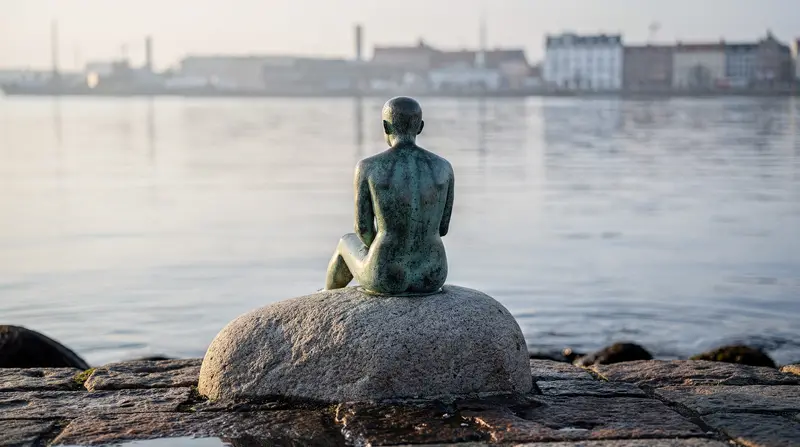
Is the Little Mermaid Worth Visiting? (Honest Answer: Mostly No)
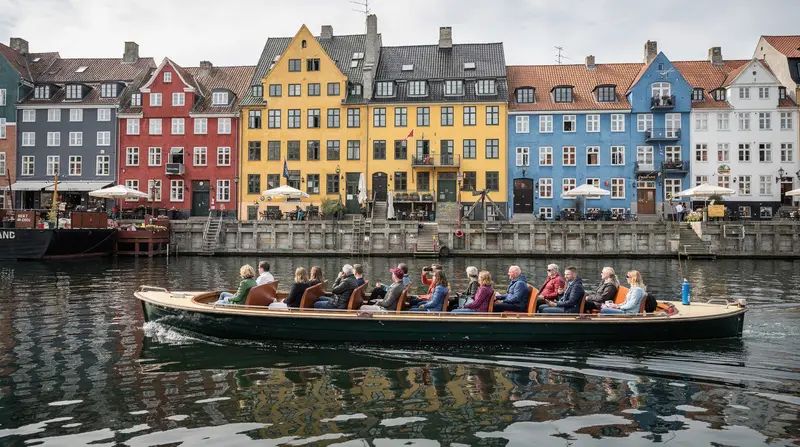
Copenhagen: Canal Cruise with Guide
Duration: 1 hour
Is the Little Mermaid in Copenhagen worth visiting?
See it once but don't make it the centrepiece of your day. The bronze statue is 1.25 metres tall, usually surrounded by crowds, and requires a 25-minute walk each way from the city centre. It is more interesting via canal cruise (you pass it as part of the route) than as a standalone trip. First-time visitors should see it; repeat visitors can skip it entirely.
See the Little Mermaid from a canal cruise — the smarter approach — you pass the statue during the standard harbour section, which saves a 50-minute round-trip walk.
Let’s be honest from the start: the Little Mermaid is one of the most universally underwhelming tourist attractions in Europe. Not because it is ugly — it is not — but because the gap between what visitors expect and what they find is almost comically wide. The statue is small, the surroundings are unremarkable, and on most summer mornings it looks less like a romantic bronze sculpture and more like a scrum of people holding phones.
None of this means you should skip it. It means you should calibrate your expectations and visit correctly.
| Where | Langelinie, northern harbour front, 20–25 min walk from Nyhavn |
| Cost | Free, always accessible |
| Time needed | 10–15 minutes at the statue |
| Getting there | Walk, bike, canal cruise, or hop-on hop-off bus |
| Best time | Before 8:30 or after 18:00 in summer |
The facts about the statue
The Little Mermaid (Den lille Havfrue) was commissioned by Carl Jacobsen, son of the Carlsberg brewery founder, who was moved by a performance of the Hans Christian Andersen ballet in 1909. The sculptor was Edvard Eriksen; his wife Eline was the model for the body, and ballerina Ellen Price for the face. The statue was unveiled on 23 August 1913.
It is made of bronze and granite. Height: 1.25 metres. Weight: approximately 175 kilograms. It sits on a rock about 20 metres from the harbour embankment, close enough to photograph but too far to touch or interact with.
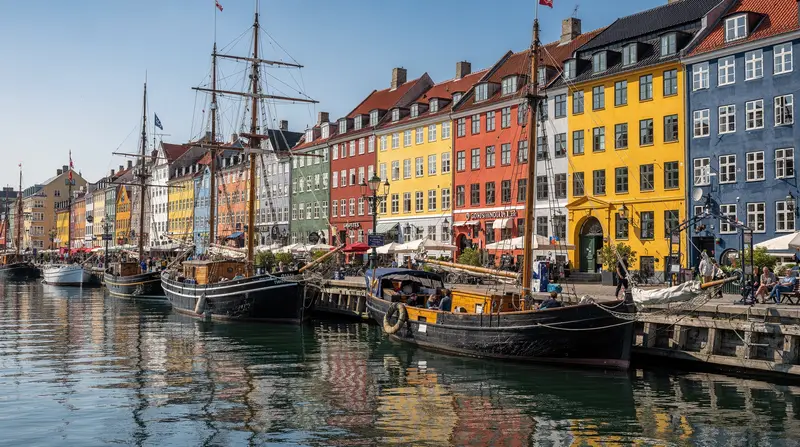
Hans Christian Andersen wrote the story “The Little Mermaid” in 1837 in Copenhagen. He lived for years at Nyhavn — at Nyhavn 18, Nyhavn 20, and Nyhavn 67 at different periods. There is no strong geographic connection between Andersen’s life and the statue’s location at Langelinie; the placement was chosen because it is near the Langelinie park and harbour.
The statue has been vandalised multiple times — decapitated twice, an arm removed, blown off its rock with explosives. It spent six months in Shanghai in 2010 for the World Expo. Each incident confirmed its peculiar hold on public consciousness.
Why it disappoints most visitors
Scale
No photograph in existence accurately conveys how small this statue is. Visitors arriving by tour bus genuinely look surprised. The surrounding embankment has low guardrails; you stand on gravel looking across water at a figure roughly the height of a child. There is no “coming around the corner” moment of grandeur.
Crowds
From May to September, the statue area is crowded between 9:00 and 18:00 on almost any day. Cruise ships dock at the nearby Langelinie terminal and disgorge passengers who walk directly to the statue; this happens multiple times a day. Getting a photo without strangers in it requires patience or very early arrival.
The walk
The harbour walk from Nyhavn to the Little Mermaid takes 20–25 minutes on foot. It is flat and straightforward — along the quay past Amalienborg and through the Kastellet area. The walk itself is pleasant on a good day; the issue is that it is 50 minutes round trip to see a small statue for 10 minutes.
The surroundings
The immediate area — a gravel embankment, some railings, the statue on its rock — does not photograph interestingly as a backdrop. The Øresund strait in the background is atmospheric when the light is good, but you cannot frame out the crowds.
When the Little Mermaid is worth seeing
As part of a canal cruise (recommended)
The one-hour canal cruises from Gammel Strand and Nyhavn take you through the inner harbour and past the Little Mermaid during the harbour section of the route. You see the statue from the water — a clean perspective without crowds scrambling around it — while the guide provides context. You are spending your time productively (seeing the whole harbour) rather than walking a detour.
This is unambiguously the best way to see the statue on a first visit.
Book the standard 1-hour canal cruise from Gammel StrandOn a morning bike ride along the harbour front
Copenhagen’s harbour-front cycling path (Havneringen) runs continuously from the city centre to Langelinie and beyond. A morning bike ride from Nyhavn to the statue and back — stopping at Kastellet and the Gefion Fountain — takes about 45 minutes in total and is genuinely enjoyable when the weather cooperates. The ride, not the statue, is the point.
If you are a Hans Christian Andersen enthusiast
The statue represents the most famous story by Denmark’s most famous author, and it sits in the city where he lived for most of his adult life. If Andersen’s work means something to you, the pilgrimage has meaning. For everyone else, it is a bronze figure on a rock.
On a hop-on hop-off bus itinerary
If you are using a hop-on hop-off bus (which covers the Little Mermaid as a specific stop), you can spend 15 minutes at the statue and hop back on without commitment. The bus is the practical way to include it without the walking detour.
Copenhagen hop-on hop-off with the Mermaid routeComparing your options
| Method | Time cost | Best for |
|---|---|---|
| Walk from Nyhavn | 40–50 min round trip | Combining with Kastellet/Gefion Fountain |
| Canal cruise | 0 extra (part of route) | First-time visitors, no detour needed |
| Bike (Havneringen path) | ~45 min round trip | Good weather, enjoy the ride itself |
| Hop-on hop-off bus | 15 min stop, no walk | Already using HOHO for other stops |
For more on the harbour cruise routes generally, see our best canal tours in Copenhagen guide.
What to do nearby that is actually good
Kastellet
The star-shaped fortress immediately adjacent to the Little Mermaid is one of the best-preserved examples of 17th-century military architecture in northern Europe. Built in 1626 and still used by the Danish military (it functions as a working army barracks), it has five intact bastions, a moat, a windmill, and a church. Entry is free; it is open daily. Walk the ramparts for views over the harbour and the city.
Most Little Mermaid visitors walk past Kastellet without entering it. This is a mistake — it is considerably more historically interesting than the statue.
The Gefion Fountain
Five minutes south of the Little Mermaid along the quay, the Gefion Fountain (1908) depicts the Norse goddess Gefion ploughing the island of Zealand from Sweden with four oxen (her sons, transformed). It is 7 metres high, in full-scale bronze, and actively spraying water. More impressive by any objective measure than the statue 300 metres away.
Amalienborg Palace
A 10-minute walk south from the Little Mermaid, Amalienborg is the winter residence of the Danish royal family — four identical rococo palaces arranged around an octagonal square with an equestrian statue of Frederick V at the centre. The changing of the guard happens at noon daily. Exterior and courtyard: free. Palace museum: 95 DKK (~13 €).
See the Amalienborg and changing of guard guide for timing details.
The Round Tower and old town, if you have more time
If you’re building a full day around the northern harbour and old town, the Round Tower (Rundetaarn) is a 15-minute walk inland and gives you the best rooftop view in central Copenhagen — a stronger payoff for the effort than the Mermaid itself. See our Copenhagen in one day itinerary for how to sequence it all without backtracking.
Practical information
Location: Langelinie, 2100 Copenhagen Ø. At the northern end of the harbour embankment, immediately south of Kastellet.
Getting there: Walk from Kongens Nytorv (25 minutes) or Nyhavn (20 minutes) along the harbour front. Bus 26 from the city centre stops at Langelinie (approx. 15 minutes). Bike: follow the dedicated harbour cycle path north from Nyhavn.
Hours: Always accessible, outdoors.
Cost: Free.
Best time: Before 8:30 or after 18:00 in summer. Shoulder season (April–May, September–October) is quieter mid-morning.
Photography tip: A longer lens (or phone zoom) from the embankment railing gives a cleaner framing than standing directly above the usual vantage point. Early morning light hits the statue from the east (harbour side), which gives better results than the flat midday light.
This pattern of hyped-up-but-underwhelming stops repeats elsewhere in the city — see our Copenhagen tourist traps guide and things to do in Copenhagen for what’s genuinely worth prioritising instead.
Frequently asked questions about the Little Mermaid
Should the Little Mermaid be on my must-see list?
For a first-time visit to Copenhagen, yes — briefly. It is embedded in the city’s identity to the extent that not seeing it on a first trip feels like a gap. But it should be a 10–15 minute stop, ideally combined with Kastellet, not a destination requiring a dedicated journey.
Is the Little Mermaid the most disappointing tourist attraction in Europe?
It frequently appears on “most disappointing” lists, alongside the Mona Lisa in Paris and the Charging Bull in New York — things whose fame wildly outpaces their physical presence. Whether it is the most disappointing is subjective, but the expectations gap is real and large.
Can you see the Little Mermaid for free?
Yes. The statue is on public land, outdoors, always accessible. Canal cruises pass it as part of their route. There is no ticket or admission for any of this.
Why is the Little Mermaid famous if it is so small?
It is genuinely beautiful as a sculpture — delicate bronze work, thoughtful composition — and it represents the most internationally known story associated with Copenhagen. Hans Christian Andersen’s fairy tales are translated into more languages than almost any work in literary history. The statue gave the story a physical address that tourists could visit. Repetition and recognition have amplified its fame far beyond what the object itself would generate on its own merits.
How long should I spend at the Little Mermaid?
Ten to fifteen minutes is sufficient. If you are combining it with Kastellet and the Gefion Fountain, budget 45–60 minutes for the whole area.
Is there anything to buy or eat near the Little Mermaid?
A small cluster of kiosks and snack vendors operates near Langelinie in summer, selling coffee, ice cream, and souvenirs. There are no full restaurants within walking distance. The nearest decent food options are at Torvehallerne market (metro: Nørreport, about 20 minutes on foot).
Frequently asked questions — Is the Little Mermaid Worth Visiting? (Honest Answer: Mostly No)
How far is the Little Mermaid from the city centre?
About 1.5 km from Kongens Nytorv — roughly 20–25 minutes on foot along the harbour front, or 35–40 minutes round trip from Nyhavn. By bike it is 10 minutes. By hop-on hop-off bus, it is a direct stop.What time should I visit the Little Mermaid to avoid crowds?
Before 8:30 in summer, or after 18:00. Mid-morning (10:00–14:00) is the worst time — cruise ship passengers and coach groups arrive simultaneously. Even early morning, you will likely share the statue with other visitors.How tall is the Little Mermaid statue?
1.25 metres (about 4 feet). This surprises almost everyone. It sits on a granite rock in the water about 20 metres from shore. You cannot get close to it or touch it.How much does it cost to see the Little Mermaid?
Nothing — it is outdoors and always accessible. The walk from the city centre is free. If you take a canal cruise, you pass it as part of the standard one-hour route at no extra cost.Can you see the Little Mermaid from a boat?
Yes — standard canal cruises from Gammel Strand and Nyhavn pass the statue during the harbour section of the route. This is the best way to see it: no walking detour required, and the view from the water gives you a cleaner perspective than the crowded viewing area onshore.Has the Little Mermaid ever been moved or damaged?
Yes, several times. The head was sawn off in 1964 and again in 1998. An arm was removed in 1984. It was blown off its rock in 2003. A replica sat at the Shanghai World Expo in 2010 while the original was exhibited there temporarily. Each incident generated international attention, which partly explains the statue's fame relative to its size.What else is near the Little Mermaid worth visiting?
Kastellet — a remarkably intact star-shaped fortress from 1626, immediately next to the statue and free to walk — is genuinely worthwhile and usually less crowded. The Gefion Fountain (1908) is a five-minute walk and considerably more impressive in scale.
Top experiences
Bookable activities with verified prices and instant confirmation on GetYourGuide.