Copenhagen Tourist Traps: What to Avoid and What to Do Instead
What are the biggest tourist traps in Copenhagen?
The Nyhavn restaurant strip (atmosphere fine, food mediocre, prices inflated), app-based bike rentals used for full days instead of per-hour, the Metro fine of 750 DKK for unvalidated tickets, overpriced souvenir shops on Strøget, and 'Viking' restaurant experiences that have little to do with actual Danish food culture. None are scams — Copenhagen is honest — but they cost significantly more than the better alternatives nearby.
The honest baseline
Copenhagen is not a city of tourist scams. You are unlikely to be pickpocketed, overcharged by a taxi, sold counterfeit goods, or misled by fake tour operators. Danes have a cultural directness about honesty that makes Copenhagen one of the most trustworthy tourist cities in Europe. For the small number of genuine risks rather than price traps, see the companion Copenhagen scams to avoid guide.
What exists is the normal tourist economy dynamic: locations with high tourist footfall charge higher prices for similar quality, and some experiences marketed to tourists do not represent the city that Copenhageners actually inhabit.
| Trap | Premium versus local alternative | What to do instead |
|---|---|---|
| Nyhavn waterfront restaurants | 25–40% | Walk 10 min to Aamanns or Schønnemanns |
| App bike rental for a full day | ~60–80% more than a hire shop | Book a traditional hire shop instead |
| Strøget souvenir shops | 3–5× | Torvehallerne, Illums Bolighus, official LEGO store |
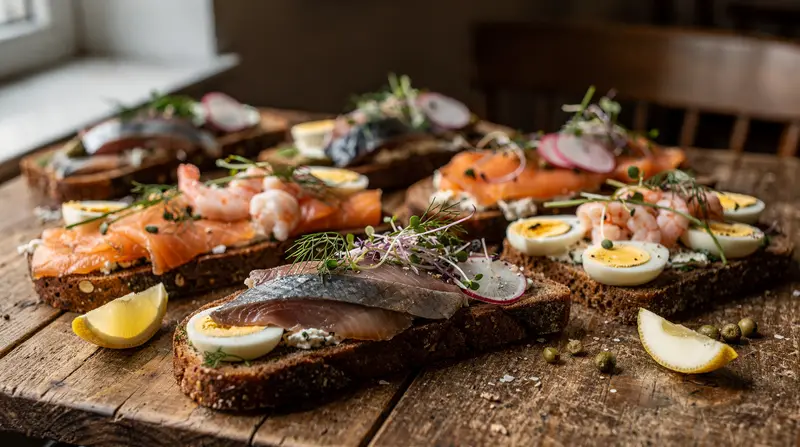
| ”Viking banquet” restaurants | Poor value at any price | Smørrebrød lunch or Reffen street food |
| Canal-view cafés | ~50–70% on coffee | Take away and sit on a canal bench free |
Here is where that gap is largest.
Trap 1: Eating at Nyhavn waterfront restaurants
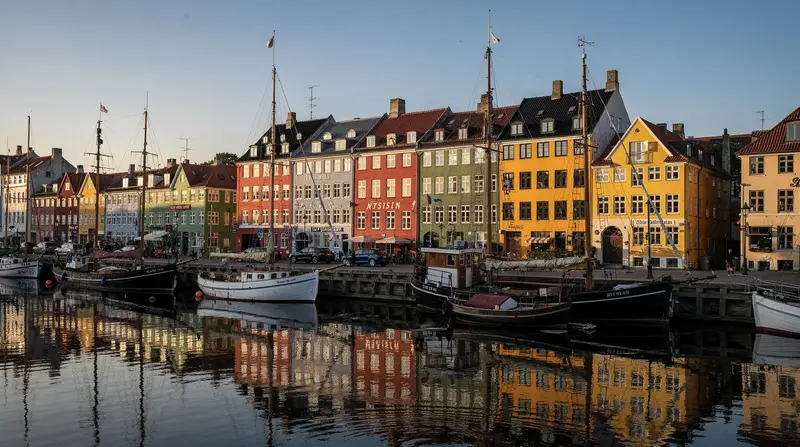
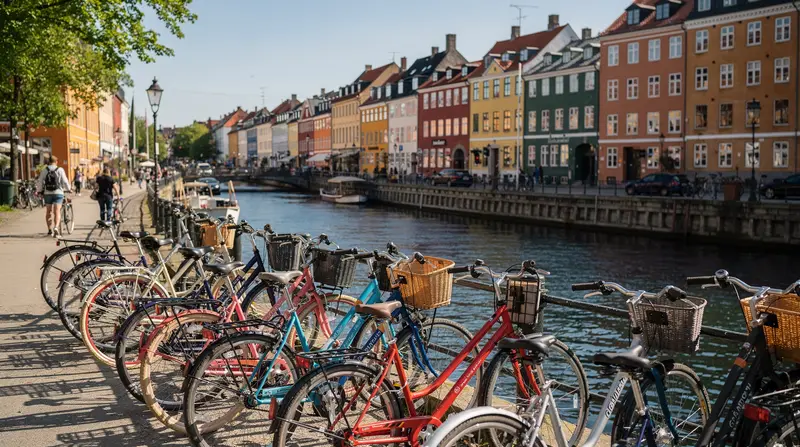
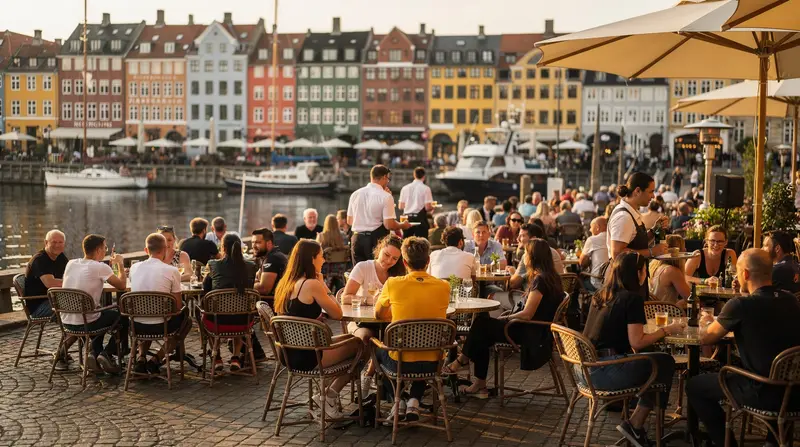
The situation: Nyhavn is Copenhagen’s most recognisable postcard image — coloured 17th-century buildings reflected in the canal, boats, tourists. It is genuinely beautiful. The restaurant strip along the south side of the canal capitalises on this location entirely.
The reality: Most Nyhavn waterfront restaurants are tourist traps in the clearest sense. The food is generic — smørrebrød approximations, burgers, salmon dishes — at prices inflated 25–40% above what you would pay for equivalent food elsewhere in the city. The service is often stretched thin during peak hours. The view is the product; the food is secondary.
What to do instead: Walk through Nyhavn, photograph it (best before 10am — see our Nyhavn timing guide), then eat at one of these alternatives:
- Aamanns 1921 (Niels Juels Gade) — proper smørrebrød at fair prices
- Schønnemanns (Hauser Plads) — the institution for Danish lunch, 10 minutes walk
- Torvehallerne market (Nørreport) — 50+ stalls, all price points, excellent quality
The walk from Nyhavn to a better restaurant takes 5–10 minutes. The saving over a tourist-facing Nyhavn meal: 50–100 DKK per person per meal, more for lunch.
Trap 2: The Metro fine (750 DKK)
The situation: Copenhagen’s Metro operates on a trust/honour system — you buy a ticket, validate it, and inspectors check periodically. Single journeys cost around 24 DKK. The fine for travelling without a valid ticket is 750 DKK.
The tourist problem: The ticket system is not intuitive. Tickets must be validated at the yellow machines before boarding — buying a ticket from the machine is not enough if you do not also stamp/validate it (on some older machines). Tourists frequently buy a ticket, fail to validate it, board, and face an inspector.
What to do:
- Always press the green button on the validator or swipe through the gate before boarding
- If using a travel card or Copenhagen Card, ensure it is activated
- Do not assume that having a ticket in your hand (physical or on an app) is sufficient — it must be scanned/validated
The 750 DKK fine is real, non-negotiable, and fully documented in our Copenhagen mistakes guide.
Trap 3: App-based bike rentals for full days
The situation: GoBike, Donkey Republic, and similar app-based bike rental services are available throughout Copenhagen. They work well for short trips.
The cost problem: At 30–40 DKK per hour, a full day of cycling (say, 6 hours of actual riding) costs 180–240 DKK via an app. A traditional bike hire shop charges 100–180 DKK for the entire day, with no per-minute concern and a guaranteed ride height/quality.
What to do: Use app-based rentals for single short journeys under 1 hour where dropping the bike anywhere is convenient. For a full day of sightseeing by bike, book with a traditional hire shop the night before. Several are located near Copenhagen Central Station and in Vesterbro.
Trap 4: Strøget souvenir shops
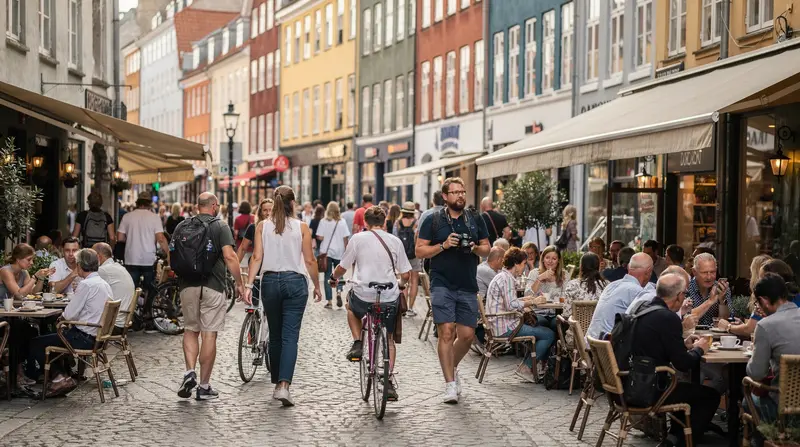
The situation: Strøget, Copenhagen’s main pedestrian shopping street, is excellent for Danish design (Muuto, HAY, Illums Bolighus) but also contains dozens of tourist souvenir shops selling Viking helmets, Little Mermaid figurines, LEGO-branded merchandise, and “Danish” gifts manufactured in China.
The reality: The souvenir shops on Strøget charge 3–5× what similar items cost elsewhere. A LEGO set at a souvenir shop costs the same as or more than at an official LEGO store (there is one in Copenhagen) or an online purchase. Viking merchandise is not connected to Danish culture in any meaningful way.
What to do instead:
- For Danish design (genuinely worth buying): Illums Bolighus, HAY House, Georg Jensen on Strøget itself
- For LEGO: The official LEGO store (Fisketorvet or Strøget) at standard retail prices
- For food gifts: Torvehallerne — smoked salts, craft chocolate, Danish biscuits, local honey
- For ceramics and craft: The Saturday flea market at Thorvaldsen Museum or local craft shops in Nørrebro
Trap 5: The “Viking experience” restaurants
The situation: Several venues in and around Copenhagen offer “Viking banquet” evenings — theatrical dining with costumes, mead, smoked meats, and entertainment. These cost 400–700 DKK per person.
The reality: These have nothing to do with what Danes actually eat or how they celebrate. They are theme-park food experiences designed for tourists. The food is generic, the theatre is variable in quality, and you leave having spent a significant amount without learning anything useful about Danish food culture.
What to do instead: For an authentic encounter with Danish food culture that is also genuinely excellent:
- A proper smørrebrød lunch at Aamanns or Schønnemanns (~200–300 DKK)
- The Taste of Denmark food tour (~650–750 DKK but includes genuine cultural context)
- Reffen street food — local vendors, no theatre, excellent food (~100–200 DKK for a meal)
Trap 6: Canal cruise operators at the docks
The situation: Several smaller operators approach tourists at the Nyhavn dock offering “canal cruises” at 130–200 DKK. Some are legitimate; some offer a significantly shorter or lower-quality experience than the established companies departing from Nyhavn or Gammel Strand.
What to do: Book a canal cruise in advance or at the main departure points (Nyhavn pier, Gammel Strand) from established operators. The cruise is genuinely one of Copenhagen’s better tourism experiences — worth doing, but not from an unknown operator who approached you on the dock.
Trap 7: Overpriced canal-view cafés
The situation: Several cafés and restaurants adjacent to Nyhavn and the Inner Harbour charge significant premiums for outdoor seating with canal views. Coffee that costs 40–50 DKK elsewhere rises to 60–80 DKK with a waterfront view.
The honest position: If you consciously choose to pay extra for the location, that is a reasonable decision — you know what you are paying for. The trap is not knowing the differential. A flat white in central Copenhagen should cost 45–60 DKK; if you are paying 75–90 DKK, you are at a tourist-facing venue.
What to do: Have your coffee at the canal if you want that experience, but budget for the premium rather than being surprised by it. Brew coffee to take away and sit on a canal bench for free is always an option.
Trap 8: Airport currency exchange and “skip the line” kiosks
The situation: Copenhagen Airport’s arrivals hall has currency exchange counters and kiosks selling pre-printed transport tickets or “fast track” passes right in the path from the gate to the exit.
The reality: Exchange counters charge 5–10% above the interbank rate, sometimes marketed as “no commission” while the spread is built into the rate itself. A withdrawal from a bank ATM using your own card gets you the real rate for a small fixed fee. Ticket kiosks charge a premium over the same Metro ticket bought from the machine two minutes further on.
What to do instead: Walk past the first exchange counter and withdraw DKK from a bank-branded ATM instead, and buy your Metro ticket from the machine or the Metro guide’s recommended app rather than a kiosk. Both take an extra two minutes and save real money over a week-long trip.
Seasonal traps: Christmas markets and summer peak pricing
Tivoli’s Christmas market (late November to early January) is genuinely beautiful, but the food and drink stalls inside charge a clear seasonal premium — mulled wine (gløgg) that costs 35–45 DKK at a city bakery runs 55–70 DKK inside the gardens, and the same applies to roasted almonds and æbleskiver. This is not deceptive (prices are posted), but it catches visitors who assume festive market pricing matches a regular Danish bakery. Bring a modest budget specifically for Tivoli snacking, or eat beforehand and treat the market stalls as an occasional extra rather than dinner.
Summer (June–August) sees a general uplift in hotel and restaurant pricing across the whole city, not just at tourist-facing venues — this is genuine seasonal demand, not a trap, but it means the gap between a Nyhavn restaurant and a Nørrebro one narrows in absolute terms even as the percentage premium stays similar. Visiting in the shoulder season (April–May or September) reduces both the base prices and the traps’ bite simultaneously.
What is not a tourist trap (but gets called one)
Tivoli: Yes, entry costs 155 DKK and the food inside is expensive. But Tivoli is a genuinely historic, beautiful experience that delivers what it promises. It is not a trap — it is a choice with a clear price.
The Copenhagen Card: Not a trap, not a guaranteed saving — depends entirely on your itinerary. See our Copenhagen Card vs individual tickets comparison.
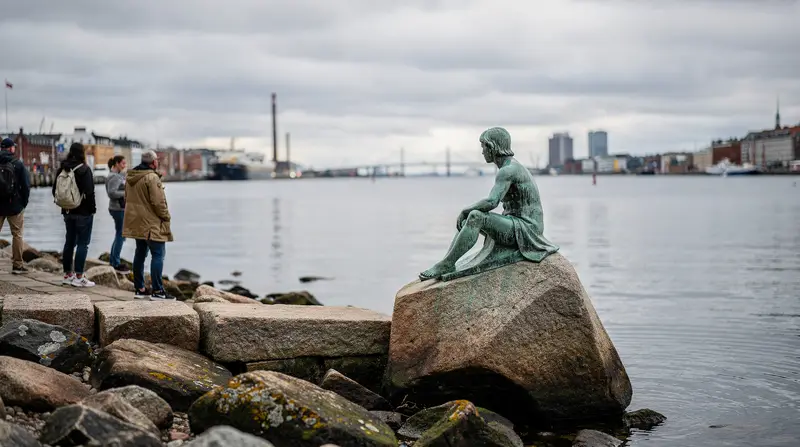
The Little Mermaid: Not overpriced (free to see), but underwhelming relative to expectations. That is a different problem — see our honest take on the Little Mermaid.
Smørrebrød at specialist restaurants: Appears expensive (150–250 DKK for lunch) but represents a full, culturally significant meal. Not a trap — a genuine local tradition worth experiencing.
Frequently asked questions about Copenhagen tourist traps
Is Nyhavn worth visiting at all?
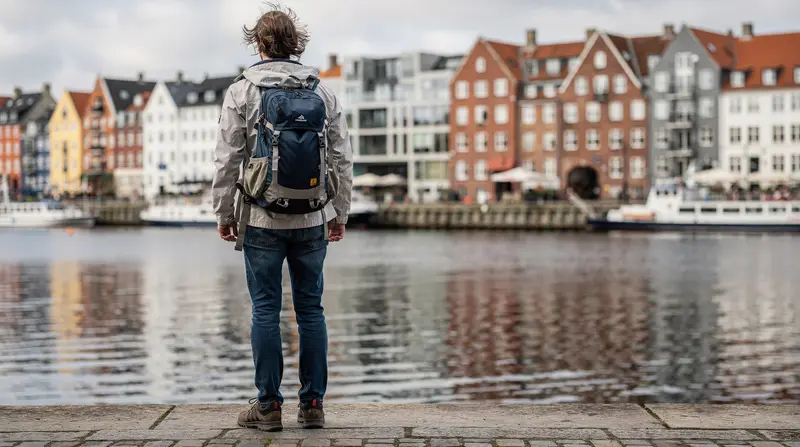
Yes, absolutely — the scenery is genuinely beautiful. Just do not eat there. Visit early morning (before 10am) or in the evening for the best atmosphere without the lunch crowd. Photograph it, walk along it, then move on to eat somewhere better.
How do I avoid the Nyhavn restaurant trap in practice?
Ask yourself: is this restaurant visibly on the waterfront, with an English menu posted outside and prices per dish of 180 DKK+? If yes, it is priced for tourists. Walk 10 minutes north to Indre By or west toward Kongens Nytorv and you will find equivalent quality for less.
Are there any actual scams targeting tourists in Copenhagen?
Very few. The classic European tourist scams (fake petition signers, shell games, aggressive street sellers) are extremely rare in Copenhagen. The city is genuinely safe from predatory tourism. The “traps” described in this guide are passive price inflation, not active deception.
Is street food a tourist trap?
Reffen and Torvehallerne are not tourist traps — they are where Copenhageners actually eat. Prices are fair (100–180 DKK for a meal), quality is high, and the experience is authentic. Some tourist-facing “street food” events near major attractions are less good value, but the main food halls are reliable.
What’s the most expensive mistake tourists make in Copenhagen?
Statistically, the Metro fine (750 DKK) is the most severe single financial hit many tourists experience. After that: accumulating multiple tourist-restaurant meals over a 3–4 day trip without realising the markup (easily costs an extra 1,000–2,000 DKK across a trip versus eating where locals eat). Our Copenhagen on a budget guide has the fuller set of levers for keeping total trip cost down beyond just avoiding these specific traps.
Frequently asked questions — Copenhagen Tourist Traps: What to Avoid and What to Do Instead
Are there actual scams in Copenhagen?
Genuine scams are rare. Copenhagen is one of the most honest cities in Europe — overcharging tourists through price opacity or fake services is not common. The 'traps' are mostly cases of paying tourist prices for tourist-facing products when better-value local alternatives exist a short walk away. The Metro fine is the closest thing to a real financial danger, but it results from misunderstanding the ticket system rather than deliberate fraud.Is Nyhavn worth visiting?
Yes, for the scenery and atmosphere — no, for eating. Nyhavn's coloured-house waterfront is genuinely beautiful and worth seeing, especially early morning or in the evening. The restaurants on the water charge 20–40% more than equivalent venues 5 minutes away, and the food quality rarely justifies the premium. Walk along Nyhavn, photograph it, then eat elsewhere.How expensive are Copenhagen tourist restaurants?
A main course at a Nyhavn waterfront restaurant costs 180–280 DKK. The same quality (or better) at a non-tourist venue in Vesterbro or Nørrebro costs 120–200 DKK. The premium is real — 30–50 DKK per dish — which adds up significantly for a family or couple over multiple meals.What is the Metro fine in Copenhagen?
Travelling without a valid, validated ticket on Copenhagen's Metro costs 750 DKK per person per incident. Inspectors check tickets at irregular intervals. The fine is not negotiable and applies even if you intended to buy a ticket. Always validate before boarding.Are GoBikes a tourist trap?
Not exactly — they work fine for short journeys. But the per-minute pricing makes them expensive for full-day use. At 30–40 DKK per hour, a 7-hour day of cycling costs 210–280 DKK via the app versus 100–180 DKK from a hire shop. For a half-hour ride between attractions, the app is convenient. For a full day of cycling, use a traditional hire shop.Are Viking restaurants authentic?
No. 'Viking banquet' restaurants in Copenhagen are entertainment products — dramatised medieval experiences with costumes, mead, and theatrical presentation. They are not connected to actual Danish food culture or Danish culinary tradition, which is far more interesting. The smørrebrød tradition, New Nordic cuisine, and the Torvehallerne market are more genuine and often cheaper.