Copenhagen Mistakes to Avoid: What First-Time Visitors Get Wrong
Copenhagen: City Highlights Walking Tour With Local Guide
Duration: 2-2.5 hours
What are the most common mistakes tourists make in Copenhagen?
Not validating Metro tickets before boarding (750 DKK fine), cycling on the pavement instead of the bike lane, visiting the Little Mermaid at peak hours, eating at Nyhavn waterfront restaurants without realising the premium, not carrying a card (Denmark is nearly cashless), and assuming museums are open on Mondays (most are closed). These are the avoidable errors that repeatedly catch first-time visitors.
Why these mistakes happen
Copenhagen is widely considered an easy city to navigate — compact, English-speaking, well-signposted, and logical in layout. That ease breeds overconfidence. Visitors who would research Tokyo’s transit system for hours breeze into Copenhagen assuming it is self-explanatory.
Most of it is. But the mistakes that catch people tend to be specific, non-obvious, and sometimes expensive. Here they are, organised by category.
| Mistake | Cost of getting it wrong |
|---|---|
| Unvalidated Metro ticket | 750 DKK fine |
| Cycling on the pavement | Social friction, occasional police attention |
| All-day app-bike hire | 100–150 DKK extra vs a daily hire |
| Nyhavn quayside dinner | 60–120 DKK premium per main |
| Monday museum visit | Wasted trip — most major museums closed |
Join a local-guided city highlights walk — a fast way to absorb the practical layout of the centre (and dodge several of these mistakes) before exploring independently.
Transport mistakes
Mistake 1: Not validating your Metro ticket
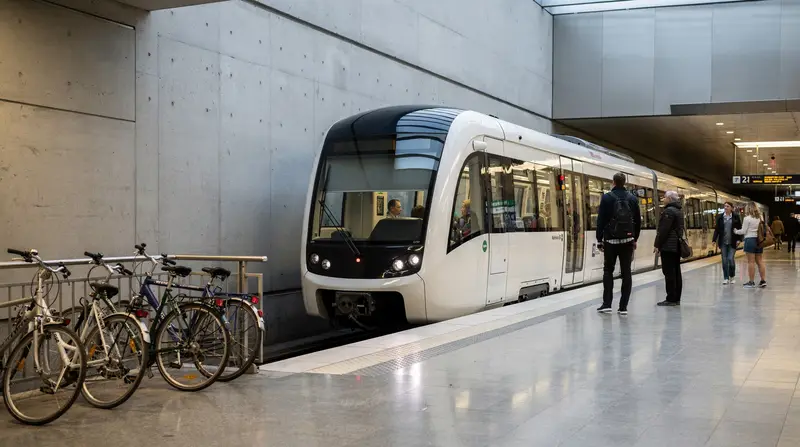
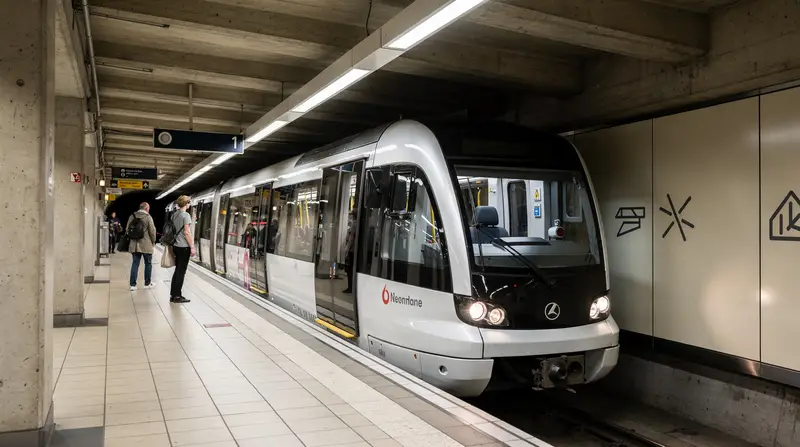
What happens: You buy a single-journey ticket at the machine. You board the Metro. An inspector checks tickets. Your ticket shows as unvalidated. Fine: 750 DKK.
How it happens: On older-style ticket machines, buying a ticket and validating it are two separate steps — you must stamp it at the yellow validation machine. On newer systems and with the Copenhagen Card, you activate at the gate. The system is not standardised, and the consequence of getting it wrong is severe.
How to avoid it: The simple rule — when in doubt, press the green button or swipe through the gate before boarding. If using a paper ticket, always look for the yellow validator stamp machine near the platform entrance. The Copenhagen Metro guide covers exactly what counts as a valid ticket on each ticketing method.
The 750 DKK fine is equivalent to approximately 100 EUR. It is not uncommon.
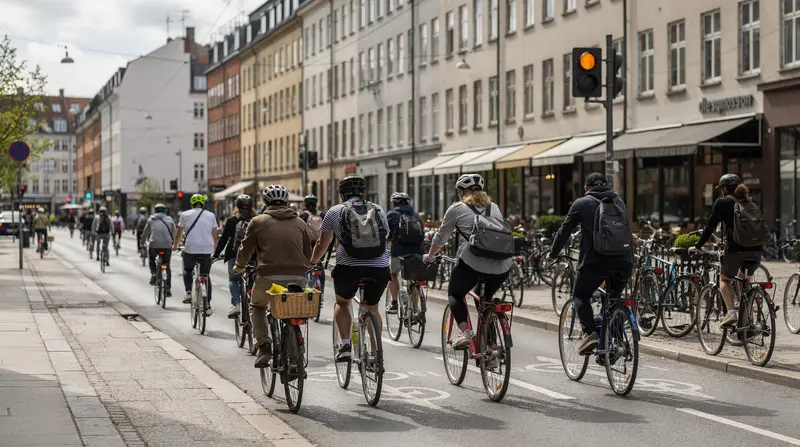
Mistake 2: Cycling on the pavement (sidewalk)
What happens: You hire a bike, feel uncertain about the cycle lane, and drift onto the pavement. A cyclist behind you rings their bell. A local gives you a look.
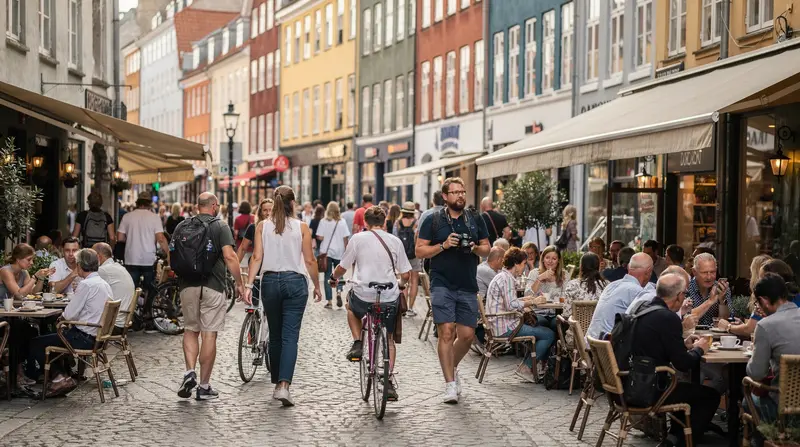
Why it matters: Cycling on the pavement is illegal in Denmark. The cycle lane (cykelsti) is the dedicated marked lane at the edge of the road, separated from both the car traffic and the pedestrian path. This is where you belong. The pavement is for pedestrians.
The deeper mistake: Some visitors treat the cycling infrastructure as more casual than it is. Copenhagen cyclists follow actual rules — lights, hand signals, lane discipline — in a way that may surprise visitors from cities where cycling is more anarchic. Integrating with this culture is easier than it sounds once you understand the expectation. The cycling rules and etiquette guide covers the full rule set in more depth than fits here.
Mistake 3: Using app-based bikes for all-day cycling
What happens: You download the GoBike or Donkey Republic app, hire a bike “conveniently,” and spend a full day cycling. The per-minute charges accumulate to 200–280 DKK — significantly more than a traditional daily hire.
The better approach: Use app-based bikes for point-to-point journeys under an hour. For full-day cycling, book a traditional hire shop the evening before. Cost: 100–180 DKK for the whole day.
Mistake 4: Trying to pay by cash everywhere
The assumption: Many countries require cash for small purchases, markets, and tips. Denmark is the exception.
The reality: Denmark has one of the highest cashless payment rates in the world. Virtually every venue — including small cafés, market stalls, and some churches — accepts contactless card. The few exceptions (some church donation points, occasional cash-only food stalls) are rare. Carrying 500 DKK in cash is adequate backup for most trips.
The actual problem: Trying to pay with Euros in cash. Tourist-facing venues may accept Euros at poor exchange rates. Always pay in DKK with a card, or withdraw DKK from an ATM (use your bank card for the best rate — avoid airport exchange booths).
Planning mistakes
Mistake 5: Visiting the Little Mermaid as a primary attraction
What happens: Visitors make the 20-minute walk from Nyhavn to the Little Mermaid expecting a significant experience. They find a 1.25-metre bronze statue surrounded by 50 other tourists.
The fix: See it in passing, not as a destination. If you are walking to Kastellet or along the harbour front, include it as a 10-minute stop. Do not build your morning around it. See the full assessment in our Little Mermaid honest guide.
Mistake 6: Planning museum visits on a Monday
What happens: Monday is your free day. You head to the National Museum. Closed.
Which museums close on Mondays:
- National Museum of Denmark
- Designmuseum Danmark
- SMK (National Gallery of Denmark) — closed Mondays
- Ny Carlsberg Glyptotek — check (some seasons vary)
- Cisternerne — check
Which do not:
- Rosenborg Castle (varies seasonally)
- Christiansborg Palace
- The Blue Planet Aquarium
- Louisiana Museum (open daily, closed Tuesdays)
The fix: Check opening hours for any museum you plan to visit. Never assume.
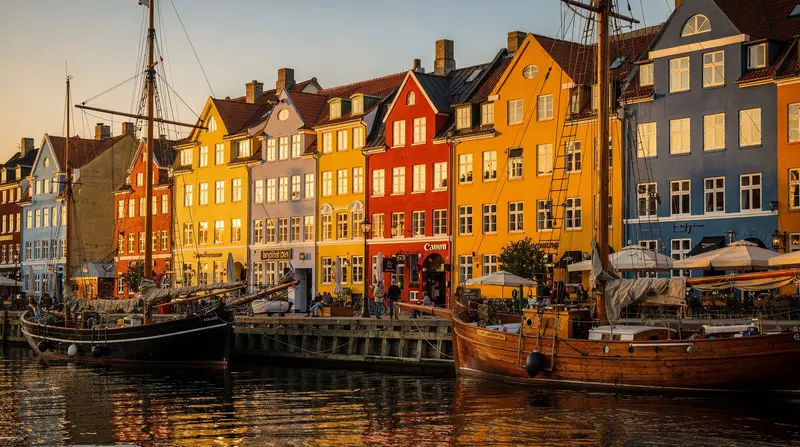
Mistake 7: Eating at Nyhavn restaurants without checking
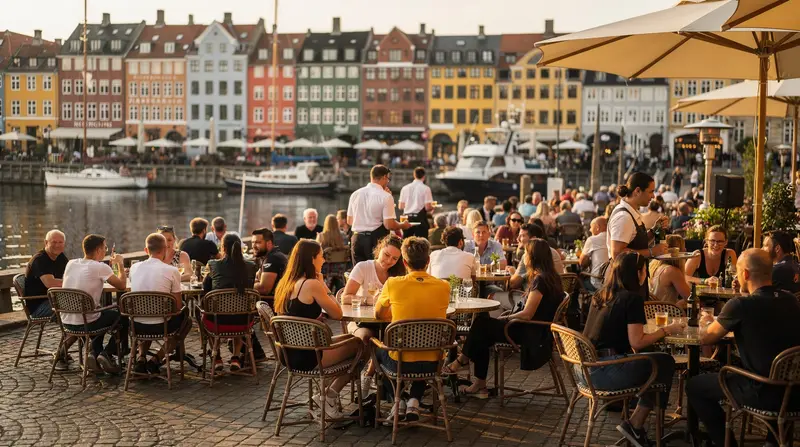
What happens: Nyhavn is beautiful. There are restaurants. You sit down. The meal is generic, expensive (180–280 DKK for a main course), and not especially good.
The honest position: The Nyhavn waterfront restaurants serve decent but not excellent food at a location premium of 25–40% above comparable venues nearby. If you specifically want to eat waterside with that view, budget for the premium and accept it as a deliberate choice. If you want good food at fair prices, walk 5–10 minutes.
The fix: Eat at Nyhavn if you consciously choose the view. Otherwise, walk to Torvehallerne (15 minutes), Vesterbro or Nørrebro (bike ride), or Aamanns 1921 (5 minutes) for better food at lower prices.
Mistake 8: Underestimating how far things are from each other
What happens: The Copenhagen Card covers the Metro, so you assume everywhere is on the Metro. But the Little Mermaid, Reffen, and several other attractions are not near any Metro station and require cycling or walking.
The key distances from central Copenhagen (Rådhuspladsen):
- Nyhavn: 15 minutes walk
- Tivoli: immediately adjacent
- Rosenborg Castle: 20 minutes walk
- The Little Mermaid: 35–40 minutes walk, 20 minutes by bike
- Reffen street food: 25 minutes by bike
- Blue Planet Aquarium: 20 minutes Metro
The fix: Look at a map before planning your day. Copenhagen is walkable and cycleable, but the tourist sights are spread across the city. Plan routes that make geographic sense rather than jumping back and forth. The getting around Copenhagen guide covers every transport mode side by side if you’re deciding between walking, cycling, metro and bus for a specific route.
Cultural mistakes
Mistake 9: Tipping 15–20% automatically
What happens: Visitors from the United States and other high-tip cultures add 15–20% to every restaurant bill by habit. This is significantly above local norms.
Danish tipping culture: Tipping is voluntary and appreciated but not expected. Service staff earn a living wage. Most local Danes round up to the nearest 50 DKK on a large bill or leave small change; adding 10% is considered generous. Adding 20% is fine but unnecessary.
The only exception: If you receive genuinely exceptional service — a waiter who went out of their way, a guide who was outstanding — a tip is a meaningful gesture. The default is: no tip required.
Mistake 10: Speaking loudly in public spaces
This is minor but real. Danish social culture values quiet, calm, and discretion in shared public spaces — Metro carriages, cafés, museums, queues. Loud conversation (particularly on mobile phones) in enclosed public spaces will draw looks. This is not hostility toward visitors — it is general Danish social norm. Match the ambient volume level of those around you.
Mistake 11: Assuming everything is more expensive than it actually is
The perception: Copenhagen is “the most expensive city in Europe.” This reputation sometimes leads visitors to avoid experiences assuming they cannot afford them.
The reality: Copenhagen is expensive compared to Eastern Europe or Southeast Asia but comparable to London, Paris, or Zurich for most categories. Supermarket food is reasonable (Denmark’s grocery chains — Netto, Fakta, Lidl — are affordable). Coffee in a local café (not tourist-facing) costs 45–55 DKK. A supermarket lunch is 60–100 DKK. Meals at non-tourist restaurants are 150–250 DKK for a main.
The biggest driver of high costs is eating at tourist-facing restaurants and not self-catering for any meals. Our Copenhagen on a budget guide has the full breakdown.
Seasonal mistakes
Mistake 12: Visiting Tivoli out of season without checking
What happens: You plan to visit Tivoli and arrive in October. It is closed (it typically closes in late September and reopens for Halloween season, then Christmas).
Tivoli’s opening seasons (approximate 2026):
- Main summer season: late April to late September
- Halloween season: mid-October
- Christmas season: mid-November to early January
- Closed: February, March, early April, late October to mid-November
The fix: Check current-year dates on the Tivoli website before making it a central plan.
Mistake 13: Packing for the wrong weather
Copenhagen weather is unpredictable in any month. In summer, days can reach 25°C or drop to 13°C with rain in the same week. In autumn and spring, the wind off the harbour adds to the cold beyond the thermometer reading.
The practical rule: Pack for layering. A waterproof outer layer is useful in any month. Do not pack only for a Mediterranean summer because the forecast looked warm — change happens fast.
Sightseeing mistakes
Mistake 14: Falling for the well-known tourist traps
What happens: Visitors budget significant time and money for attractions that consistently disappoint relative to their reputation and price — certain souvenir-heavy shopping streets, some overpriced “Viking experience” venues, and generic hop-on-hop-off circuits that don’t stop near what you actually want to see.
The fix: Our Copenhagen tourist traps guide and things to skip in Copenhagen guide both name specific venues and explain what to do instead. Reading either before finalising an itinerary saves both money and time that’s better spent elsewhere.
Mistake 15: Buying Tivoli tickets without checking the season
Covered above as a seasonal mistake, but worth repeating as a standalone planning error: several visitors assume Tivoli Gardens is open year-round like a standard theme park. It runs distinct seasons with real closures in between — check current dates before anchoring a day around it.
Frequently asked questions about Copenhagen mistakes to avoid
Do I need to book museum tickets in advance?
For the major museums (National Museum, Rosenborg, Glyptotek), advance booking is not typically necessary on weekdays outside peak summer. In July and August, same-day tickets are usually available. Booking in advance via each museum’s website saves time and occasionally offers a small discount. Tivoli at peak times can have longer waits for specific rides but not for entry.
What happens if I accidentally cycle on the wrong side of the road?
Cycle lanes in Denmark are one-directional, following road traffic rules. Cycling the wrong direction on a one-way cycle lane is illegal and risky — other cyclists are coming the other way at speed. Correct immediately and dismount if necessary to reorient. No fine is immediately issued for this, but the safety risk is real.
Are dogs allowed in Copenhagen restaurants?
Many restaurants allow well-behaved dogs in outdoor areas. Indoor policy varies. If travelling with a dog, call ahead. This is relevant because Copenhagen is very dog-friendly in general — parks, many shops, and most outdoor spaces welcome dogs, but restaurants require confirmation.
Is it safe to drink tap water in Copenhagen?
Yes, completely. Copenhagen tap water is among the cleanest in the world. Ordering bottled water in a restaurant is unnecessary and adds cost. Ask for tap water (lidt vand, tak) — in most restaurants, a jug of tap water is provided free of charge.
What is the legal drinking age in Denmark?
18 for purchases from bars and restaurants. 16 for purchases from supermarkets and convenience stores (beer and wine up to 16.5% ABV). This affects anyone travelling with older teenagers — supermarket alcohol purchase is legal at 16, which surprises visitors from countries with a uniform 21 age.
Frequently asked questions — Copenhagen Mistakes to Avoid: What First-Time Visitors Get Wrong
What is the Metro fine in Copenhagen?
750 DKK per person for travelling without a valid, validated ticket. This applies regardless of whether you intended to buy a ticket or whether you have one in your pocket that was not stamped/validated. Metro inspectors check tickets at irregular intervals and the fine is non-negotiable and non-reducible.Do you need cash in Copenhagen?
Almost never. Denmark is among the world's most cashless societies — virtually every shop, restaurant, café, taxi, and market stall accepts contactless payment (Visa, Mastercard, Mobilepay). Some small market vendors are cash-only; a few churches have cash-only donation boxes. Bringing a small amount of cash (500–1,000 DKK) is sensible as backup, but you can complete an entire trip without it.Do you tip in Copenhagen?
Tipping is not expected or culturally required in Denmark. Service staff receive a living wage, and tipping is discretionary rather than expected. If the service was excellent, a 5–10% tip is appreciated but never assumed. Do not feel obligated to tip at all — and do not feel awkward about not tipping, as local Danes usually do not.Are museums closed on Mondays in Copenhagen?
Most major museums are closed on Mondays, following the common European museum pattern. This includes the National Museum, Designmuseum Danmark, and SMK. Notable exceptions: the Glyptotek (closed Mondays), Rosenborg Castle (check seasonal hours — closed certain days in winter). Always verify current opening hours before planning museum visits on a Monday.Is Danish kroner (DKK) very different from the Euro?
Yes. Denmark is in the EU but not in the Eurozone — it uses the Danish krone (DKK). 1 EUR ≈ 7.45 DKK (2026 rates). Many tourist areas accept Euros for cash payments but at poor exchange rates. Always pay in DKK when possible, and do not use currency exchange booths at the airport or central tourist areas (use your bank card instead).What should I know about cycling in Copenhagen before I try it?
Cycle in the dedicated bike lane, not on the pavement. Follow traffic lights. Signal turns with your arm. Yield to pedestrians at designated crossing points. Do not cycle the wrong direction on a one-way bike lane. Lights are legally required after dark. The infrastructure is excellent but expects you to follow the rules — locals will indicate their displeasure if you cut across lanes or ignore signals.