The Little Mermaid in Copenhagen: Why She Disappoints (And What to Do Instead)
Copenhagen: Canal Cruise with Guide
Duration: 1 hour
Is the Little Mermaid in Copenhagen worth visiting?
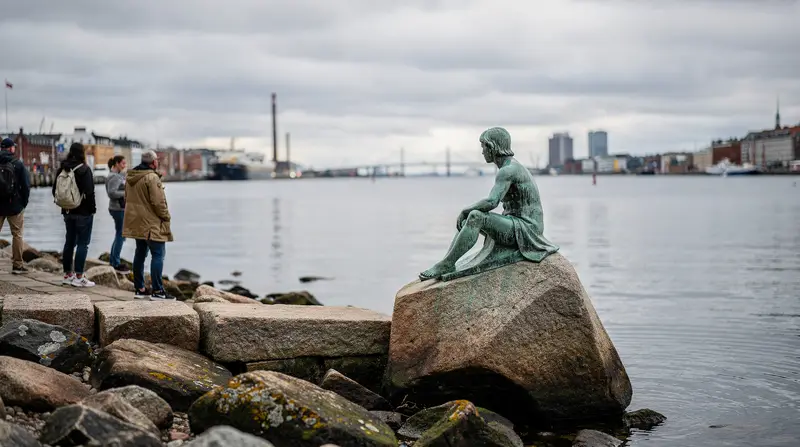
Briefly, yes — but not as a dedicated journey. The statue is 1.25 metres tall, sits on a rock in the harbour, and is surrounded by other tourists taking the same photograph. The area around it has nothing else of interest nearby. If your route takes you past the Kastellet fortress, spend 10 minutes at the statue. Do not cross the city specifically to see it — almost every visitor is underwhelmed.
The honest assessment
The Little Mermaid is Copenhagen’s most famous attraction and its most reliably disappointing one.
That is not a controversial opinion — it is the documented experience of a significant percentage of visitors. The statue appears in every “most disappointing tourist attractions” list compiled since the genre was invented. It sits alongside the Mona Lisa (also small, also crowded) and Times Square (also crowded, differently disappointing) as globally famous sights that the marketing apparatus has oversold.
Understanding why, and knowing how to handle it, makes the difference between frustration and a satisfying visit.
| Where | Langelinie harbour front, 20–25 min walk from Nyhavn |
| Cost | Free, no ticket, open 24 hours |
| Time needed | 10–15 minutes at the statue itself |
| Getting there | Walk/bike along the harbour, HOHO bus, or harbour bus 901/902 |
| Best time | Before 8am in summer to avoid the crowds |
What the photograph does not show
Every famous photograph of the Little Mermaid uses one of three techniques to make it look more impressive than it is:
- Low angle shooting — a camera at water level looking up at the statue on its rock makes it appear larger than it is
- Telephoto compression — a long lens at distance compresses perspective, removing the crowd and making the statue look substantial against the harbour backdrop
- Early morning, no tourists — the only way to photograph it without other people is 5–7am in summer
What the in-person reality looks like: a small bronze figure on a rock, usually surrounded by 30–60 other tourists, at least 10 of whom are also trying to get “alone with the statue” photographs. The location — the Langelinie harbour front — is a pleasant walking path but not inherently scenic.
The statue weighs 175 kg and stands 1.25 metres tall. For comparison, a typical domestic refrigerator is 1.75 metres tall.
Why it became famous
The Little Mermaid was commissioned in 1913 by Carl Jacobsen, founder of the Carlsberg brewery, after seeing a ballet based on Hans Christian Andersen’s 1837 fairytale. Sculptor Edvard Eriksen modelled it on his wife, Eline, using ballet dancer Ellen Price as the reference for the pose. Jacobsen donated it to the city of Copenhagen.
For the first several decades, it was a local landmark — valued by Copenhageners, somewhat famous, but not globally iconic. The transformation to global tourist magnet happened gradually through the mid-20th century as Copenhagen’s tourism infrastructure grew and the statue became the default image for “Denmark” in international media.
Hans Christian Andersen’s actual connection: Andersen was born in Odense, not Copenhagen, and his story “The Little Mermaid” (1837) ends tragically — the mermaid does not get the prince and dissolves into sea foam. The Disney version (1989) with the happy ending is what most visitors mentally picture. The statue depicts the mermaid in a melancholy pose, appropriate to Andersen’s original but disconnected from the film many visitors associate with the name.
The honest visit guide
If you decide to visit:
The best time is early morning on a weekday — before 8am in summer, when the crowd is minimal and the light is good. The Hop-On Hop-Off bus and most organised tours reach it between 10am and 3pm, which is the worst window.
The walk from Nyhavn along the waterfront takes about 20 minutes on foot. The path passes the Gefion Fountain (a genuinely impressive mythological bronze group — more visually striking than the Mermaid) and the Kastellet entrance. These are worth more time than the Mermaid itself.
At the statue: 5–10 minutes is sufficient. Walk around it, photograph it if you want documentation, and move on.
Combine with Kastellet: The star-shaped 17th-century fortress immediately behind the Mermaid is far more interesting as a historical site and landscape. It is free to enter, has a working windmill, and is largely ignored by tourists who queue for the Mermaid photograph. A loop of the Kastellet ramparts takes 30–45 minutes and is considerably more rewarding than standing at the statue.
This isn’t the only Copenhagen sight that oversells on reputation — see our honest things to skip in Copenhagen and Copenhagen tourist traps guides for the full picture before you plan your must-see list.
A 2-hour alternative walk that includes the Mermaid as a minor stop
Rather than making the Little Mermaid the destination, build a walk in which it is one stop:
Starting point: Kongens Nytorv Metro station (M1/M2)
-
Frederiks Kirke (Marble Church) — 10 minutes walk from Kongens Nytorv. The dome is second-largest in Scandinavia after St Paul’s. Free to enter. Genuinely beautiful.
-
Amalienborg Palace square — Frederiksstaden’s octagonal square with the four identical rococo palaces. If you time it right, see the changing of the guard at noon.
-
Churchillparken — small park between Amalienborg and Kastellet. Contains the Museum of the Danish Resistance (free, small, genuinely moving).
-
Gefion Fountain — mythological bronze of the goddess Gefion ploughing with oxen. Much larger and more dramatic than the Mermaid; most tourists walk past it on the way to the statue.
-
Kastellet — 10–15 minute loop of the star-shaped fortress walls. Working windmill, historic barracks.
-
The Little Mermaid — 10 minutes. Photograph it, acknowledge that you have now seen it, and head back.
Total: 2 hours, 0 DKK, covers the Mermaid and four genuinely worthwhile stops.
What the alternatives tell you about Copenhagen
The reason the Little Mermaid disappoints is partly that Copenhagen has so many things that are genuinely excellent by any standard — and the Mermaid, by comparison, is a small bronze statue with a big reputation.
For a broader sense of what’s genuinely worth your time, see our things to do in Copenhagen and best museums in Copenhagen guides — both list attractions that reward a full visit rather than a 10-minute photo stop.
For a canal cruise orientation to the city (which passes the Mermaid from the water, one stop among many, and which we cover in full in our Copenhagen by boat guide):
Copenhagen Canal Cruise from Gammel StrandThe Mermaid is visible from the water as one of the landmarks pointed out by the guide — seen in context, surrounded by other harbour life, for about 2 minutes, which is the exactly correct amount of time to spend on it.
The vandalism history (more interesting than the statue)
The Little Mermaid has been attacked several times:
- 1964: Head sawn off. The head was never found. A new one was cast from the original mould.
- 1984: Right arm sawn off. Recovered and reattached.
- 1998: Head sawn off again. Found two days later by an anonymous tip and reattached.
- 2003: Statue blasted off its rock by explosives. Damaged but recovered and restored.
- Multiple vandalism incidents: Paint, paint bombs, a dildo placed in her hand (twice), and several political protest modifications.
This history is more interesting than the statue itself. Copenhagen’s Tourist Board is aware of this and mentions the vandalism in official materials, apparently having concluded that “famously vandalism-prone” is better marketing than nothing.
Alternatives for Hans Christian Andersen fans
If your interest in the Little Mermaid comes from a love of Hans Christian Andersen’s work, the real Andersen destination is Odense, his birthplace, 1.5 hours from Copenhagen by train. The H.C. Andersen Museum in Odense is modern, excellent, and genuinely engaged with his life and work. See our Odense guide for details.
In Copenhagen, the Museum of Copenhagen has some Andersen context, and his apartment building (Nyhavn 20) has a plaque — he lived there in 1834 when he wrote The Little Mermaid. That apartment building on the Nyhavn canal is more directly connected to the story than the statue three kilometres away — see our Nyhavn guide for the full story of the canal itself.
Frequently asked questions about the Little Mermaid
Can I take a selfie with the Little Mermaid?
Yes, but getting one without other people in the frame requires either arriving very early (before 7am in summer) or accepting that you will be photoshopped-out territory. The rock the statue sits on is in the water — you cannot stand directly next to it. Photographers use zoom lenses to appear to stand beside it, which requires being about 10 metres away on the shore.
Is there anything to eat near the Little Mermaid?
A small café kiosk operates at the Langelinie pier during summer months. It sells coffee and snacks at tourist prices. There is nothing substantial within a 10-minute walk. Plan to eat before or after.
How long should I spend at the Little Mermaid?
10–15 minutes maximum. If you are spending more, you are waiting for the crowd to clear — which it will not, between 10am and 4pm on any summer day. Arrive early or accept the crowd.
Is there a indoor replica or exhibition about the Little Mermaid anywhere?
A full-size replica exists at various locations worldwide (Shanghai, Solvang in California). The original mould is in private possession. The Copenhagen City Museum has some historical context. The statue in situ is the only “authentic” version.
Why do people say the Little Mermaid is a waste of time?
Because the experience does not match the expectation created by its global fame. It is the most famous thing in Copenhagen, therefore visitors prioritise it. Upon arrival, they find a 1.25-metre bronze statue they could photograph in 30 seconds. The disconnect between reputation and physical reality is the problem. If you arrive with calibrated expectations — “I will see a historically significant small statue in 10 minutes and move on” — the disappointment does not occur.
Frequently asked questions — The Little Mermaid in Copenhagen: Why She Disappoints (And What to Do Instead)
How big is the Little Mermaid statue?
1.25 metres tall, seated on a rock at the edge of the harbour. It is genuinely small — smaller than most photographs suggest because photographers use low angles and telephoto lenses to make it appear more imposing. Weight: approximately 175 kg. It was commissioned by brewer Carl Jacobsen in 1913 and designed by sculptor Edvard Eriksen.Is the Little Mermaid free to see?
Yes, completely free. The statue is on the shoreline at Langelinie and accessible on foot or by bike. There is no entrance fee, no ticket, no opening hours. You can see it at any time of day or night.How do I get to the Little Mermaid from the city centre?
Walk or cycle from Nyhavn along the harbour front — about 20–25 minutes on foot (1.5 km) or 10 minutes by bike. Alternatively, take the Hop-On Hop-Off bus or harbour bus line 901/902. There is no Metro station directly nearby. The Citadel (Kastellet) is adjacent and worth combining with the visit.Why do so many visitors find the Little Mermaid disappointing?
The combination of small physical scale, crowds of other tourists doing the same thing, and a location that has nothing else immediately nearby creates a mismatch with the iconic status the statue has in tourist marketing. It has been listed as one of the world's most disappointing tourist attractions in multiple surveys — consistently alongside the Mona Lisa, Times Square, and Stonehenge.Has the Little Mermaid ever been vandalised?
Several times. The head has been sawn off twice (1964 and 1998). The arm was cut off once. The statue has been painted, covered in paint bombs, and temporarily removed during Expo 2010 in Shanghai. Each time, it has been repaired or recast from the original mould. This history is arguably more interesting than the statue itself.What should I visit instead of or alongside the Little Mermaid?
The Kastellet fortress (immediately adjacent, free, genuinely beautiful — a star-shaped 17th-century military fortress with working windmill). The Gefion Fountain (between Kastellet and the Mermaid, larger and more visually striking than the Mermaid). Amalienborg Palace square (10 minutes south, genuinely impressive). The Churchillparken and SMK National Gallery (nearby). Combining these four creates a 2-hour walk that makes the Mermaid a minor stop rather than the destination.