Things to Skip in Copenhagen (And What to Do Instead)
Copenhagen: Canal Cruise with Guide
Duration: 1 hour
What can I safely skip in Copenhagen?
The Little Mermaid as a long detour (see it briefly if passing, not as a dedicated trip), Ripley's Believe It or Not, Strøget during peak shopping hours, Viking restaurant experiences, most tourist souvenir shops, and any canal cruise from an unlicensed dock operator. Copenhagen has more genuinely excellent things to do than time allows — these are simply not among them.
How to use this guide
Copenhagen is an excellent city with genuinely excellent things to do. This guide exists not to be cynical but to acknowledge that travel time is finite — and some things marketed as Copenhagen essentials are genuinely not worth your limited time.
The items here fall into three categories:
- Genuinely not worth it — actively a poor use of time and money
- Worth it on the right terms — often done wrong, worth reconsidering how
- Overrated but inoffensive — fine if you are already there, not worth a special trip
| Skip entirely | Ripley’s, Viking dinner shows, Strøget souvenir shops |
| Do differently instead | Changing of the Guard (time it precisely), Nyhavn (go at 8am) |
| Cost saved | ~200 DKK per skipped attraction, redirected to real food/museums |
| Best alternative | National Museum, Glyptotek, Torvehallerne — see below |
| Applies most to | First-time visitors with 2–3 days and limited time |
Genuinely not worth it
The Little Mermaid as a dedicated excursion
The statue is 1.25 metres tall, sits on a rock in the harbour, and is surrounded by other tourists trying to photograph it at the same time. The walk from Nyhavn takes 15–20 minutes through a park that is pleasant but not the reason you came. The area around the statue has nothing else nearby.
The verdict: See it if you are walking in that direction anyway. Do not build an itinerary around it. See our full honest assessment of the Little Mermaid.
Ripley’s Believe It or Not
A global franchise exhibit with minimal connection to Copenhagen or Denmark. Adult entry costs around 200 DKK. The exhibits are the same format and quality as Ripley’s in Orlando, Toronto, or Bangkok.
The verdict: Not worth the money or the time. Better use of 200 DKK: a proper smørrebrød lunch at a traditional restaurant, plus a beer, with change to spare.
Viking dinner experiences
Theatrical, expensive, and unrelated to actual Danish food culture. These market themselves to tourists looking for an “authentic Danish experience” and deliver neither authenticity nor particularly good food.
The verdict: Skip entirely. A meal at a good smørrebrød restaurant will cost a similar amount and actually teach you something about Danish culinary tradition.
Souvenir shops on Strøget
Viking horns, Little Mermaid keychains, and LEGO sets at inflated prices. Nothing here represents contemporary Danish culture and the same items are available elsewhere at lower prices.
The verdict: The design shops on Strøget (HAY, Illums Bolighus, Georg Jensen) are worth entering. The souvenir stalls are not.
The Hop-On Hop-Off bus (for most visitors)
The Hop-On Hop-Off bus covers many attractions and can be useful for visitors with mobility limitations. For everyone else, Copenhagen is better explored by bike, on foot, or by Metro. The bus moves slowly in traffic, is expensive (around 250–400 DKK per day), and gives a windshield view rather than the street-level experience the city rewards.
The verdict: Skip for able-bodied visitors. Consider only if mobility is limited or if you have children who want a structured tour. Cycling covers more ground more cheaply and enjoyably.
Worth it, but often done wrong
The Changing of the Guard at Amalienborg
The Royal Guard changes at noon daily when the Queen is in residence. The ceremony itself is 12 minutes and genuinely worth watching — but only if you time it precisely and position yourself well. Visitors who arrive early and leave late, staying 45 minutes in the square, have done it wrong and feel disappointed.
The right approach: Arrive at 11:50, position on the square. Watch the 12-minute ceremony. Leave by 12:15. The square itself (Amalienborg and the Marble Church behind it) is beautiful and worth a longer exploration separately.
Strøget at peak hours
Strøget is Copenhagen’s main pedestrian street and runs 1.1 km from Rådhuspladsen to Kongens Nytorv. Walking it quickly is useful for navigation and passes several worthwhile shops. Walking it slowly on a Saturday afternoon in summer is a poor use of time — crowded, slow, and indistinguishable from any tourist shopping street in Europe.
The right approach: Walk through Strøget on a weekday morning or as a direct route between two areas. Do not plan leisure time there.
The Round Tower (Rundetårn)
The Rundetårn is a 17th-century astronomical tower with a spiral ramp rather than stairs (horses and horses-drawn carts once climbed it). The view from the top is good but not the best in Copenhagen — Christiansborg’s tower has a better panorama and is free. The tower itself is interesting as an architectural curiosity.
The right approach: Visit if you find the spiral ramp concept interesting (genuinely unusual), or combine with a guided visit to the old town. Skip if you only have time for one panoramic view — Christiansborg is better.
Nyhavn restaurants at lunch
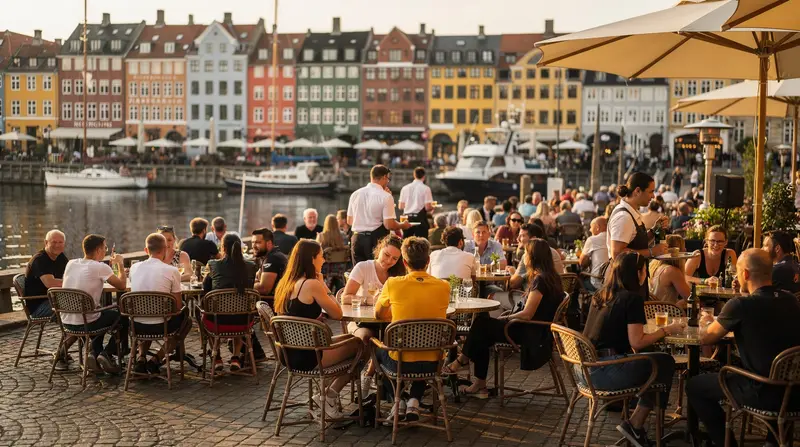
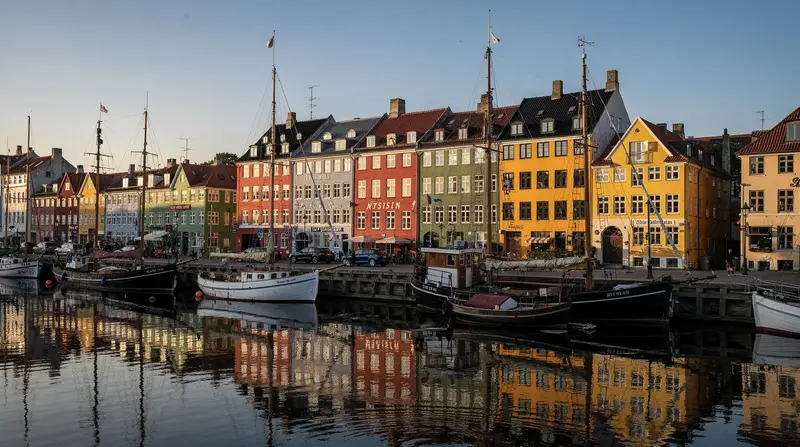
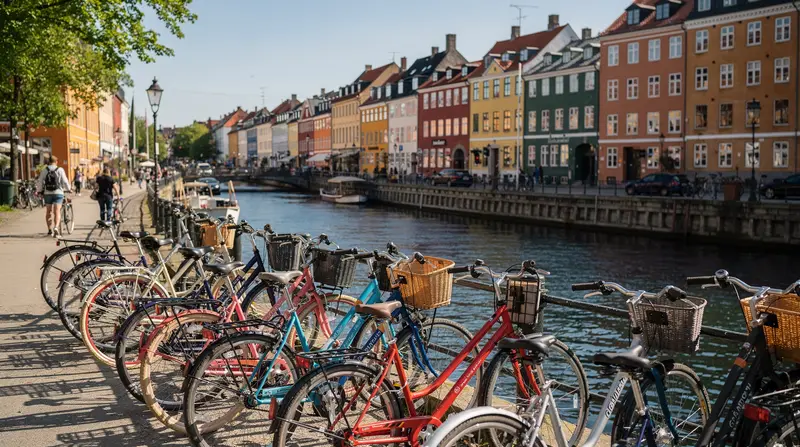
Already covered in our tourist traps guide, but worth repeating: the view is worth experiencing, the food is not worth the price. Nyhavn at 8am before the crowds is magical.
Overrated but inoffensive
The Stroget Christmas market
Copenhagen has excellent Christmas markets. The Stroget one is the largest but not the best — too crowded, too commercial, and largely indistinguishable from generic European Christmas market products. Tivoli’s Christmas market (same city, same season) is dramatically better in atmosphere.
The verdict: Fine if you are walking through anyway. Do not make it a destination.
The Harbour Bath (Islands Brygge) in summer peak
One of Copenhagen’s most photogenic summer activities — swimming in the harbour, sunbathing on the platforms — is genuinely excellent, but at 2–4pm on a summer weekend it is overcrowded. The same experience at 8am or on a weekday is completely different and far more enjoyable.
The right approach: Go early or on a weekday. Do not queue for it on Saturday afternoon.
The Botanical Garden
Lovely, free, and peaceful — but frequently listed as a major Copenhagen attraction when it is really a pleasant hour-long walk that you might combine with something else. Do not drive your entire itinerary around it.
What to do instead of these
If you skip everything on this list, you free up time for:
- The National Museum — genuinely excellent, undervisited relative to its quality
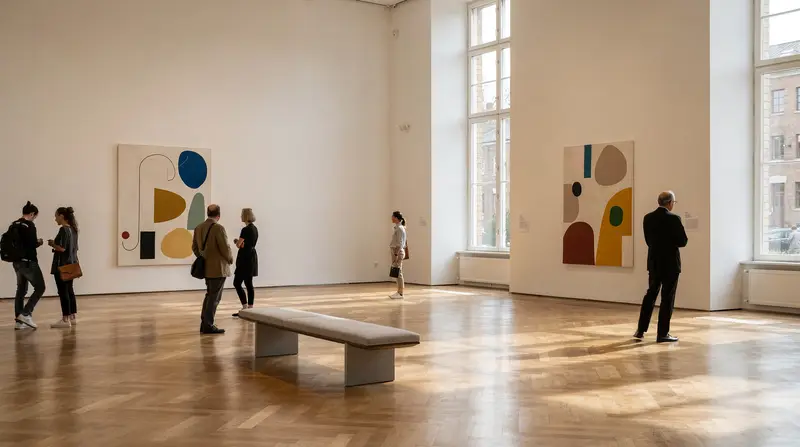
- Ny Carlsberg Glyptotek — one of Europe’s most beautiful museum buildings
- Torvehallerne market — where Copenhageners actually eat lunch
- Vesterbro and Nørrebro neighbourhoods — the real contemporary Copenhagen
- Louisiana Museum of Modern Art — genuinely world-class, an easy day-trip
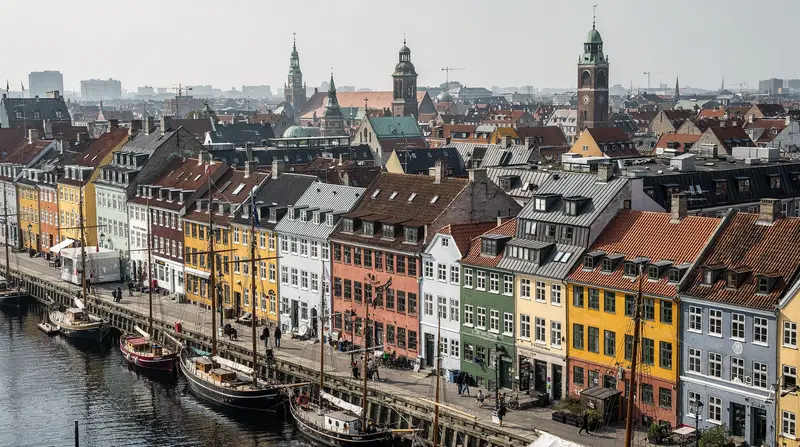
- A canal cruise from Gammel Strand — the best 1-hour orientation to the city
- Reffen street food — seasonal but excellent
Book the Gammel Strand canal cruise — the single best replacement for the time you’d otherwise spend on the Hop-On Hop-Off bus or a slow walk down Strøget.
How this list compares to the honest highlights guide
This guide is deliberately the mirror image of our things to do in Copenhagen ranking — read the two together for the full picture. If you’re specifically deciding on the Little Mermaid, the dedicated Little Mermaid guide goes into more depth than the summary here. For a broader sense of where tourist traps cluster in the city, the Copenhagen tourist traps guide covers restaurants and shopping streets beyond just Strøget, and the Copenhagen on a budget guide explains how skipping the items on this list directly funds better use of a limited trip budget.
Frequently asked questions about things to skip in Copenhagen
Is Christiania worth visiting?
Yes, with caveats. The free town of Christiania is a genuine Copenhagen phenomenon — a self-governing community established in 1971 that operates outside normal Danish law in some respects. It is genuinely interesting as a cultural experiment and worth 1–2 hours. The photography restrictions (no photos in certain areas) and the commercial cannabis sales are the two things to navigate carefully. Visit on a guided walking tour for context. Do not skip it on a 4+ day visit.
Should I visit Christiansborg Palace?
Yes — it is among Copenhagen’s best attractions and is underused relative to its quality. The Parliament building, the Royal Stables, and the tower (free entry, best panoramic view in the city) combine for a half-day that is genuinely substantive. Many visitors walk past it and see only the exterior.
Is the National Aquarium (Blue Planet) worth it?
For families with children, absolutely — one of the best aquariums in Europe. For solo travellers or couples without children, the 175 DKK entry is harder to justify unless marine life is a specific interest. It requires a Metro journey to Amager and is a full-half-day commitment.
Is the Designmuseum worth visiting?
Yes, if design interests you even modestly. The permanent collection — Danish furniture design from Kaare Klint to the present — is excellent and well-presented. The building (an 18th-century hospital) is beautiful. Often crowd-free. Entry around 125 DKK.
Is Tivoli overrated?
No — it is properly rated but often done wrong. See it in the evening for the light and atmosphere rather than as a daytime ride park. The food inside is expensive; eat beforehand. Read our Tivoli guide before visiting.
What about boat tours from different parts of the city?
The main canal cruise operators from Gammel Strand and Nyhavn are worthwhile — 1-hour guided cruise for around 130–150 DKK. Random small operators approaching you at the dock with unclear pricing are worth avoiding. Book in advance or at the established boarding points.
Frequently asked questions — Things to Skip in Copenhagen (And What to Do Instead)
Is the Little Mermaid worth visiting?
Briefly, yes — but not as a dedicated journey. The statue is small, the location is unremarkable, and the surrounding area offers nothing else nearby. If your route takes you past it, spend 10 minutes. Do not cross the city specifically for it. See our full honest assessment at the Little Mermaid guide.Should I visit Ripley's Believe It or Not in Copenhagen?
No, unless you have children aged 8–12 who specifically enjoy that format. Ripley's is a global franchise with no connection to Copenhagen or Danish culture. At around 200 DKK adult entry, the money is far better spent at the National Museum (~150 DKK, substantive) or the Glyptotek (~115 DKK, genuinely beautiful).Is Strøget worth walking?
A quick walk through Strøget connects several neighbourhoods and passes some worthwhile design shops. But shopping there (H&M, Zara, tourist souvenir stalls) is not a Copenhagen experience. The genuine Danish design shopping — HAY, Muuto, Illums Bolighus, Georg Jensen — is also on Strøget but accessible without the shopping-mall atmosphere.What Copenhagen attractions are commonly overrated?
The Little Mermaid, the changing of the guard at Amalienborg (only worth it if you time it precisely — it is 12 minutes), the Rosenborg Castle Treasury (worthwhile, but often cited as the only reason to visit when the castle gardens are equally good and free), and the Hop-On Hop-Off bus (better replaced by cycling or the Metro for most visitors).Are guided city tours worth the money?
Walking tours and bike tours with good guides are genuinely worthwhile as an introduction to the city. Generic bus tours (not Hop-On Hop-Off) are useful if mobility is a concern. 'Viking tour' experiences and theatrical dinner shows are not worth the money regardless of mobility.Can I skip the canal cruise?
If you are staying 3+ days, no — the canal cruise is one of the most efficient and genuinely pleasurable ways to understand Copenhagen's geography and history. For a 1–2 day visit, other priorities should come first. The 1-hour cruise from Gammel Strand or Nyhavn is well worth it if time allows.