Copenhagen Card vs Individual Tickets: The Honest Numbers (2026)
Copenhagen Card: Access 80+ Attractions and Transportation
- Free cancellation up to 24 hours before (most activities)
- Ticket on your phone
- Last-minute booking possible
Is the Copenhagen Card worth buying instead of individual tickets?
Only for stays of 3+ days with a very full sightseeing schedule — you break even at roughly 6–7 paid attractions plus metro use. For a 2-day city break where you plan to walk most of it and choose 1–2 attractions, individual tickets typically save you money. The 72-hour card (1,039 DKK) only pays off if you combine many paid sights with day-trip trains.
The honest premise
The Copenhagen Card is marketed as a way to save money. That is partially true. It is also a convenience product — one pass for everything — and that convenience has a real cost that many visitors underestimate.
This guide works through the actual DKK numbers, attraction by attraction, so you can calculate your own break-even point before you buy.
| Where | Applies city-wide, plus regional day-trip attractions |
| Cost | Card 589–1,419 DKK; individual attractions 40–200 DKK each |
| Break-even | Roughly 6–7 paid attractions + regular metro use |
| Best for | 3+ day, museum-heavy, day-trip-including itineraries |
| Skip if | 1–2 day city break with light sightseeing |
What the card costs in 2026
| Duration | Adult 16+ (DKK) | Junior 12–15 (DKK) | Child 3–11 (DKK) |
|---|---|---|---|
| 24 hours | 589 | 399 | 100 |
| 48 hours | 859 | 509 | 140 |
| 72 hours | 1,039 | 589 | 180 |
| 120 hours | 1,419 | 789 | 260 |
These prices shift slightly by season. The figures above are the standard 2026 rates — always verify on the official site before buying.
The major paid attractions and their individual ticket prices
This is the core of the calculation. Here are the adult entry prices for the attractions most commonly visited:
| Attraction | Individual adult ticket (DKK) | Covered by Copenhagen Card? |
|---|---|---|
| Rosenborg Castle | ~150 | Yes |
| National Museum of Denmark | ~150 | Yes |
| Ny Carlsberg Glyptotek | ~150 | Yes |
| Christiansborg Palace (combined ticket) | ~225 | Yes |
| Louisiana Museum (Humlebæk) | ~145 | Yes |
| Frederiksborg Castle (Hillerød) | ~125 | Yes |
| Roskilde Cathedral | ~65 | Yes |
| Designmuseum Danmark | ~140 | Yes |
| SMK National Gallery | 140 | Yes |
| Tivoli entry | ~200 | Yes |
| Amalienborg Museum | ~100 | Yes |
Public transport single journey (Metro/bus): ~24 DKK (Zones 1–2). Airport journey: ~30 DKK.
The break-even calculation
72-hour card at 1,039 DKK: To break even, you need to extract 1,039 DKK in value.
Scenario A — moderate visitor (2 days, focused):
- Rosenborg: 150
- National Museum: 150
- Glyptotek: 150
- 6× Metro journeys: 144
- Total: 594 DKK — you are 445 DKK short. Stick with individual tickets.
Scenario B — 3-day sightseeer:
- Rosenborg: 150
- Christiansborg: 225
- Glyptotek: 150
- Tivoli entry: 200
- 8× Metro journeys: 192
- Total: 917 DKK — you are 122 DKK short. Individual tickets still win.
Scenario C — day-tripper + museums:
- Frederiksborg (Hillerød) day trip — train included in card; fare on the DSB website
- Louisiana (Humlebæk) — train included in card; fare on the DSB website, plus 145 DKK entry
- Rosenborg: 150
- National Museum: 150
- 4× Metro: 96
- Total: 821 DKK — 218 DKK short. Individual tickets still win; the card only buys convenience.
The pattern is clear: the card comes closest to paying off when you combine day-trips with central museum visits, because it includes the S-train and regional train to Hillerød and Roskilde. If you are staying in central Copenhagen and walking everywhere, individual tickets almost always win.
When the card makes sense
You should buy the Copenhagen Card if:
- You plan 3+ days with 6+ paid attractions
- You want to combine Copenhagen day-trips to Hillerød (Frederiksborg), Louisiana, or Roskilde — the trains are included
- You are travelling with children aged 3–11, because child cards cost only 100–260 DKK
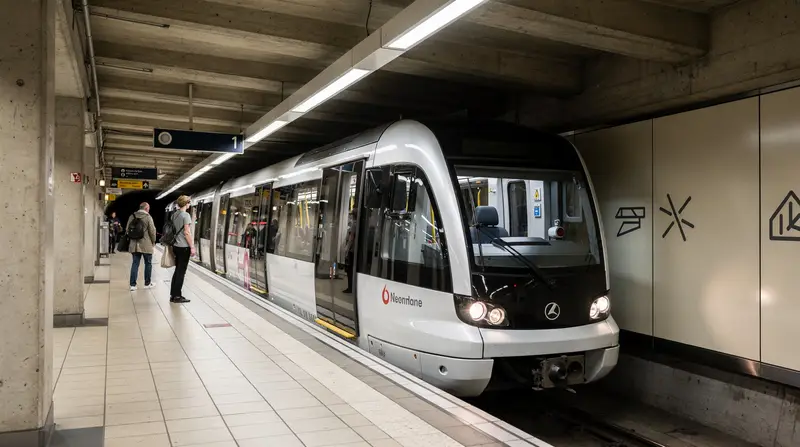
- You arrive and depart by Metro (airport transfer included)
- You want zero friction — tap your phone and walk in anywhere
You should skip the Copenhagen Card if:
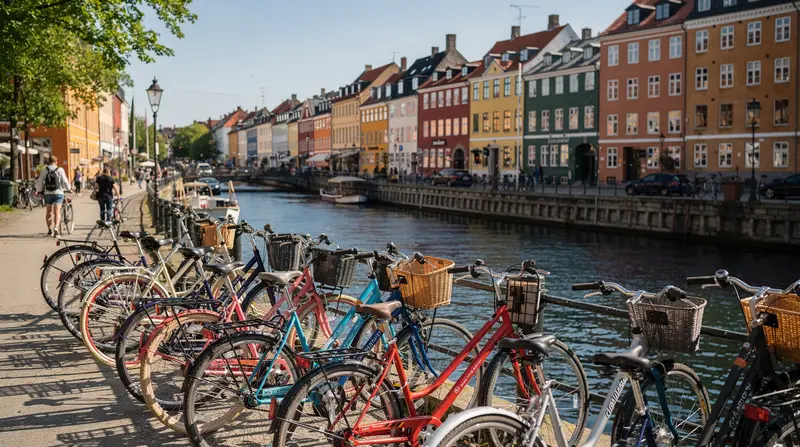
- You are on a 1–2 day city break focusing on Nyhavn, walking, and one or two attractions
- You plan to visit only free attractions (most churches, harbour areas, parks)
- You are cycling everywhere — you will not use the Metro much
- You prefer eating well to visiting many museums — the card offers no food savings
The “City Card” alternative
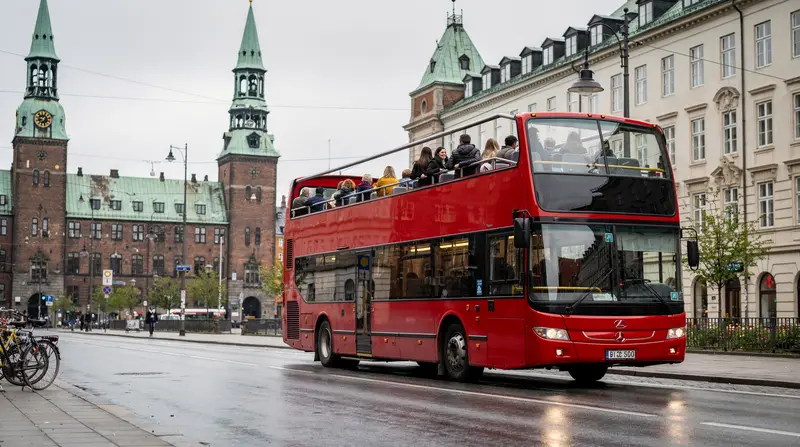
There is a second, cheaper pass called the Copenhagen City Card (~442 DKK for 48 hours). This covers 40+ attractions instead of 80+, includes the Hop-On Hop-Off bus instead of full public transport, and does not include the S-trains or regional rail to day-trip destinations. For visitors who want the Hop-On Hop-Off bus as their main transport and plan 3–4 central attractions, it can make sense. It does not replace the full Copenhagen Card for day-trippers.
Copenhagen City Card (40+ attractions + Hop-On Hop-Off)The Tivoli wrinkle
Tivoli is listed as an included attraction, but the detail matters: the card covers entry only, not rides. Tivoli’s business model is unusual — entry and rides are sold separately. Entry alone (included) gets you into the gardens, light shows, and performances. If you want rides, you pay a ride pass on top (from 199 DKK extra). This is not a dealbreaker, but if your main reason for visiting Tivoli is the rides, the Copenhagen Card saves you less than you might expect. Read our full Tivoli Gardens guide to decide if it is worth your time.
Louisiana: the card’s biggest single saving
If you plan to visit the Louisiana Museum of Modern Art in Humlebæk, the Copenhagen Card gets its best single return on that trip: the museum entry (~145 DKK) plus the return regional train from Copenhagen (fare on the DSB website) makes that day trip a solid use of the card. Combine that with one central museum and a few Metro journeys and you have covered a good part of a 72-hour card’s price.
Louisiana is one of the most genuinely worthwhile things to do near Copenhagen. See our Louisiana Museum guide for context.
Shaping your days around the card
If you do buy, the card rewards a plan more than it rewards enthusiasm. The easiest way to waste it is to wander without a route and discover on day three that you have only used it for the metro. Group your paid sights by area so that each day has a clear centre of gravity: Rosenborg and the Round Tower sit close together in the old centre, and our Round Tower guide and Rosenborg Castle guide show how easily they combine in a single morning. Christiansborg pairs naturally with the National Museum, and both are covered in the Christiansborg Palace guide and the National Museum guide.
Keep one full day for a regional trip rather than scattering small ones. The included trains are where the card does its hardest work, so a day in North Zealand is worth more to your break-even than a fourth central museum. Our day trips from Copenhagen guide and the Frederiksborg Castle guide help you pick one that fits your pace, and the 3-day itinerary shows a rhythm that suits a 72-hour card without rushing.
Getting around is the other half of the equation. If you are unsure how much you will really use public transport, read the getting around Copenhagen guide and the Copenhagen Metro guide before you decide. A visitor who cycles or walks between sights will feel the card’s transport value shrink fast, and the bike vs metro comparison is a useful reality check.
Practical tips if you buy
- Activate on arrival, not before. The clock starts when you validate, not when you buy. Activate when you first use transport or enter an attraction.
- Plan the first and last day carefully. Extract maximum value in the first hours after activation.
- Keep the Tivoli ride pass cost separate in your mental accounting.
- Children under 10 get in free at some attractions even without a card — check before counting them in your break-even calculation.
- Buy online rather than at the airport kiosk; prices are the same but you avoid queues.
The honest verdict
The Copenhagen Card is not a scam and it is not a guaranteed saving. It is a tool that rewards specific behaviour: heavy museum use, day-trips on S-trains, and airport transport via Metro.
If your itinerary matches those patterns — and particularly if you are visiting for 3+ days — the 72-hour card (1,039 DKK) is mainly a convenience that removes payment friction at attractions; it rarely saves money.
If you are doing a quick 2-day city break with Nyhavn walks, one museum, Tivoli, and a canal cruise, you will almost certainly spend less buying tickets individually. Run the numbers for your own planned itinerary using the table above. The honest answer is personal arithmetic.
Before you commit
Write down the attractions you genuinely want to see, not the ones that merely look good on a list. Be strict with yourself: a museum you would skip if it cost money should not count towards the card’s value. If your list is short, individual tickets keep you flexible and let you change plans on a rainy morning without feeling that you are wasting a pass. Our rainy day survival blog shows how many good indoor options exist whatever you decide.
For a wider view of what a trip costs beyond tickets, the Copenhagen trip cost guide puts the card in context next to food, lodging and transport. If you are still weighing the decision, the is the Copenhagen Card worth it blog post gives a more personal take on the same question.
Frequently asked questions about the Copenhagen Card vs individual tickets
How many attractions do I need to visit to break even on the Copenhagen Card?
Roughly 6–7 paid attractions plus several Metro journeys for the 72-hour card (1,039 DKK). The more day-trips you add — especially Louisiana and Frederiksborg via S-train — the better the card performs.
Is the Copenhagen Card cheaper than Tivoli + a canal cruise?
Not necessarily. Tivoli entry is included but canal cruises are generally not (verify the current list). A stand-alone canal cruise costs around 130–220 DKK. Add Tivoli (from 200 DKK) and one museum (120–175 DKK) and you are at roughly 450–595 DKK — around the 24-hour card price of 589 DKK, before transport. Individual tickets win or roughly tie for this specific combination.
Does the Copenhagen Card ever pay off on a 1-day visit?
Rarely. You would need to visit 4+ attractions in a single day, all paid, plus use the Metro multiple times. Possible in theory — Rosenborg + Christiansborg + National Museum + Tivoli entry with Metro connections — but exhausting. A 1-day visitor doing the highlights on foot with one museum usually saves money buying individually.
Can I share a Copenhagen Card?
No. Each card is personal and non-transferable. Companions need their own cards. This is an important detail for families — calculate per person.
What if I only want to visit free attractions?
Many of Copenhagen’s best experiences are free: Amalienborg exterior, Nyhavn waterfront, Botanical Garden, most churches, the harbour, street food at Reffen, all parks. If your itinerary leans heavily free, the Copenhagen Card offers minimal return. See our Copenhagen on a budget guide for a free-attraction-first itinerary.
For the equivalent break-even analysis with slightly different card pricing tiers, see the companion Copenhagen Card worth it guide. And if your trip includes children, check things to do Copenhagen and best museums Copenhagen for which paid attractions are worth counting into your calculation.
Is there a student or senior discount on the Copenhagen Card?
Not a standard one. Some attraction tickets offer individual student/senior reductions, which means buying individually can be cheaper if you qualify for those discounts at several venues. Check each attraction’s pricing before defaulting to the card.
How does the Copenhagen Card compare to just using a travel card (Rejsekort)?
The Rejsekort is a public transport prepaid card only — it does not cover attractions. It is slightly cheaper than single Metro tickets for frequent transport users. If you only need transport (not museum access), a Rejsekort or single-journey tickets are sufficient. The Copenhagen Card makes sense when you want both transport and museum access bundled.
Top experiences
Bookable activities with verified prices and instant confirmation on GetYourGuide.