Louisiana Museum of Modern Art: Complete Guide to the Day Trip from Copenhagen
Copenhagen Card: Access 80+ Attractions and Transportation
Is Louisiana Museum worth the trip from Copenhagen?
Yes, for almost every visitor. Louisiana in Humlebæk combines a world-class permanent collection (Giacometti, Calder, Francis Bacon, Asger Jorn) with exceptional architecture and gardens above the Øresund strait. The train from Copenhagen Central takes 38–40 minutes. Entry is 175 DKK adults; children under 18 are free. Budget at least 3–4 hours.
Louisiana Museum of Modern Art sits on a promontory of the North Zealand coast, 35 km north of Copenhagen, overlooking the Øresund strait toward the Swedish shore. It is regularly cited among the best art museums in the world — not only for its collection but for the way the collection, the architecture, and the landscape have been integrated into a single experience that is almost impossible to replicate anywhere else.
The Copenhagen Card covers both Louisiana admission and the Kystbanen train fare from Copenhagen, making it the most efficient way to include this day trip in a multi-museum visit.
| Where | Humlebæk, North Zealand — 35km / 38–40 min by train from Copenhagen |
| Cost | 175 DKK adult; children under 18 free |
| Time needed | 3–4 hours minimum |
| Getting there | Kystbanen train to Humlebæk, then 10-min walk |
| Best time | Weekday mornings, or Thursday evenings (open until 22:00) |
For a day-trip-focused version of this guide with sample train timetables, see Louisiana Museum day trip from Copenhagen; for the destination overview, see Humlebæk & Louisiana.
The Louisiana experience: what makes it different
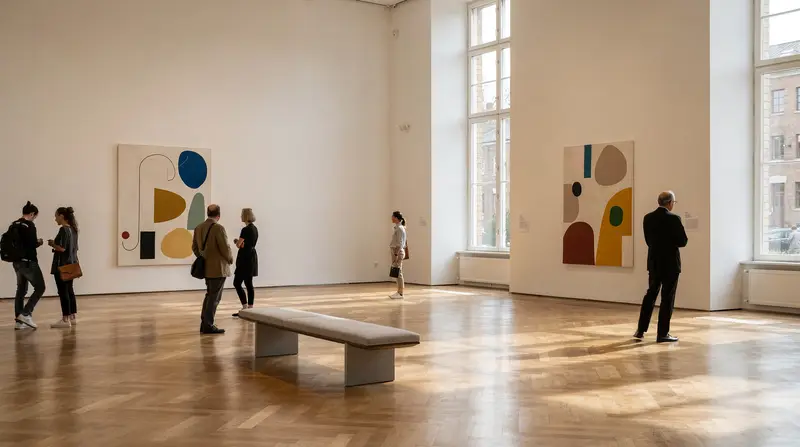
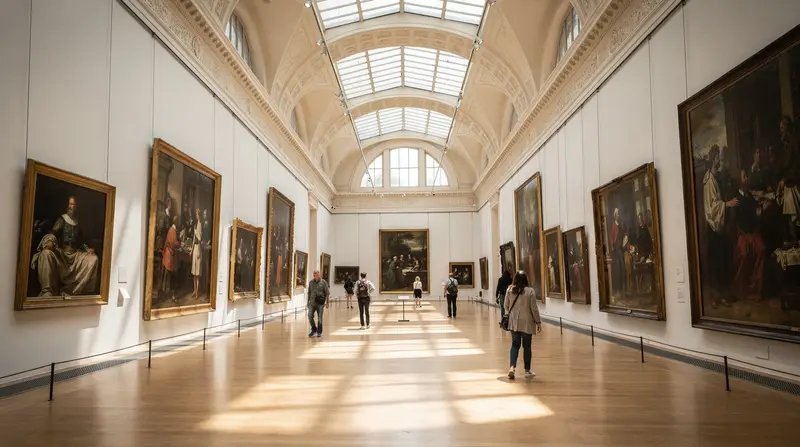
Most art museums are buildings that contain art. Louisiana is something different: an estate where a 19th-century villa, a series of low white pavilions extending through the hillside, and a series of outdoor sculpture terraces have been designed as a single continuous environment. You move through the museum via interior corridors that open periodically onto garden views, sculptural installations, and the sea — and then return indoors. The transition between inside and outside is repeated dozens of times in a single visit.
The result is that your experience of the art is constantly inflected by natural light, by views of the water, by the sound of the wind. Alberto Giacometti’s elongated bronze figures are placed in a dedicated pavilion designed specifically for them — low ceilings, controlled light — but you approach them through a glass-walled corridor with garden views on both sides. Alexander Calder’s stabiles are placed on the outdoor terraces where they can be seen against the Øresund. Francis Bacon’s paintings hang in a room where the only window faces a quiet internal courtyard.
This is deliberate. Louisiana’s founders — Knud W. Jensen bought the estate and opened the museum in 1958 — understood that the setting was part of the artwork, not incidental to it.
Getting there: the train from Copenhagen
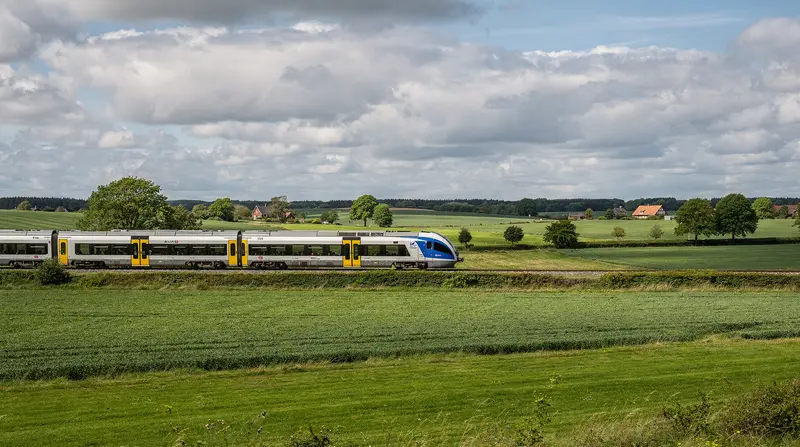
The logistics are simple and the journey is one of the pleasures of the trip.
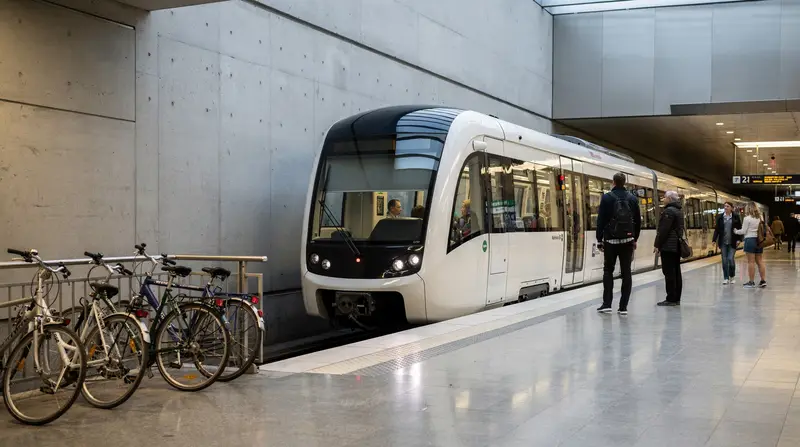
From Copenhagen Central Station (Københavns Hovedbanegård): Take any Kystbanen train towards Helsingør. Do not confuse this with S-Tog trains; you want the regional Kystbane line (platform numbers vary — check the departure board). Exit at Humlebæk. Journey time: approximately 38–40 minutes.
From Hellerup station: If you are coming from Østerbro or Nordhavn, Hellerup is a convenient interchange. Journey time from Hellerup to Humlebæk: approximately 25 minutes.
Frequency: Trains run every 20 minutes throughout the day.
Ticket price: A standard single adult ticket from Copenhagen Central to Humlebæk is approximately 60 DKK (zones 3–4, depending on exact pricing). A return is therefore approximately 120 DKK. If you have a Copenhagen Card, the train journey is covered at no additional cost.
From the station to the museum: Exit Humlebæk station and follow the Louisiana signs. It is a 10-minute flat walk through a residential area. There is also a shuttle bus in peak season — check at the station.
Timing: If you want to make the most of a full day, take a train that arrives at Humlebæk before 11:30. Trains leaving Copenhagen Central at 10:00 or 10:20 work well for this.
The permanent collection: key highlights
Alberto Giacometti — the dedicated pavilion
Louisiana has one of the world’s most significant Giacometti collections, displayed in a purpose-built pavilion designed specifically for the work. Giacometti’s elongated bronze figures — their surfaces rough and worked, their silhouettes instantly recognisable — are arranged so that each can be seen from multiple angles in natural and controlled light.
The pavilion is connected to the garden by a glass corridor; approaching the Giacomettis through this transitional space, with the garden visible on both sides, is one of the carefully engineered transitions that define Louisiana’s approach to display. Budget 20–30 minutes here.
Alexander Calder — mobiles and outdoor stabiles
Several of Calder’s large outdoor stabiles are installed on the terraces overlooking the Øresund. These are best seen in wind — the colored steel elements move against the sea and sky in the way Calder intended. His indoor mobiles are installed in gallery spaces where air movement causes them to rotate slowly. The collection covers Calder’s work from the 1930s through the 1970s.
Francis Bacon — paintings
Louisiana holds several significant Bacon works, including paintings from his mature period. Bacon’s distorted, isolated figures — painted in raw flesh tones against flat, geometric backgrounds — are among the most psychologically intense objects in any Nordic museum collection. The room they occupy at Louisiana is deliberately quiet and controlled.
Asger Jorn and the COBRA movement
Asger Jorn (1914–1973) was the most significant Danish painter of the 20th century and the co-founder of the COBRA movement (1948–1951), a pan-European avant-garde network that rejected rationalist abstraction in favour of expressive, gestural painting drawing on Nordic mythology and folk art. Louisiana holds major Jorn works across his career, from early COBRA-period paintings to the large-scale works of his later years.
Henry Moore and Max Ernst
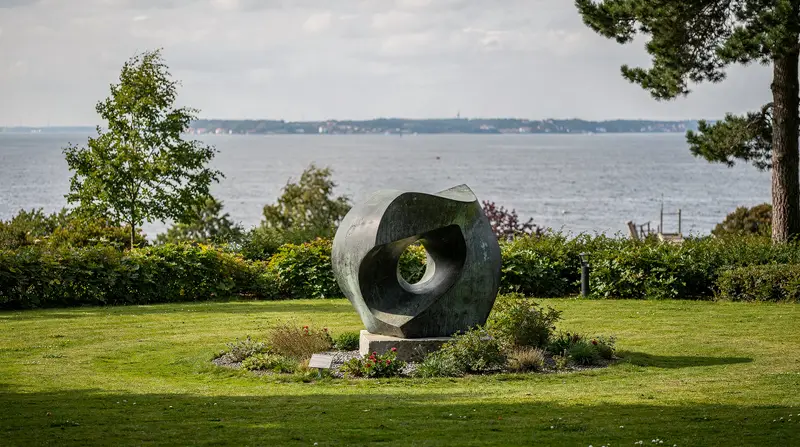
Two significant international sculptors are well-represented in the outdoor collection. Moore’s large reclining figures are placed in the landscape in a way that emphasises their biomorphic relationship to the land. Ernst’s work appears in both indoor and outdoor contexts.
Contemporary and recent acquisitions
Louisiana has an active acquisition programme and regularly adds significant contemporary works. The contemporary section changes composition as new acquisitions are integrated. Recent emphases have included North African, Latin American, and East Asian contemporary art alongside the established European and American collection.
The architecture: five architects across 60 years
The Louisiana building complex was developed in stages from 1958 to the present. The original architects were Vilhelm Wohlert and Jørgen Bo, who designed the initial white pavilion wings extending from the 1855 villa. Their approach — low, human-scaled buildings hugging the hillside, large windows creating continuous indoor-outdoor transitions — established the architectural language that all subsequent additions have followed.
The 1982 concert hall extension, the underground gallery spaces, the 1991 south wing, and the 2008 north wing were all designed to maintain coherence with the original vocabulary. The result is a museum that has grown significantly in size without ever feeling disjointed.
A floor plan is available at the entrance; the layout can be confusing on a first visit because many of the galleries are connected in sequences rather than arranged around a central circulation route. Allow yourself to get slightly lost — this is intentional and part of the experience.
The sculpture garden and outdoor terraces
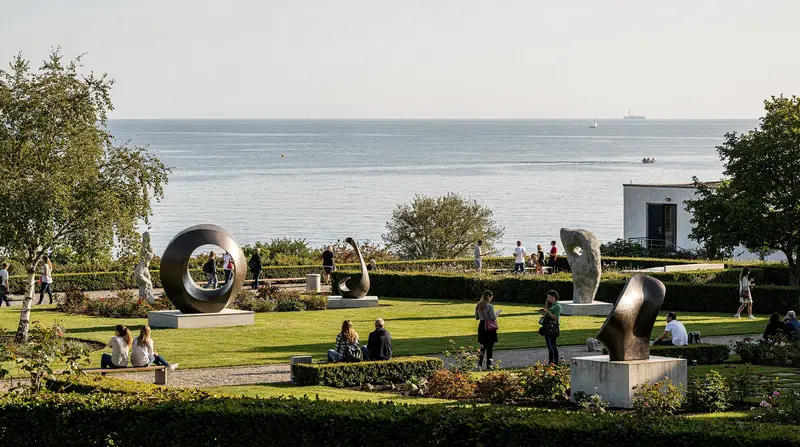
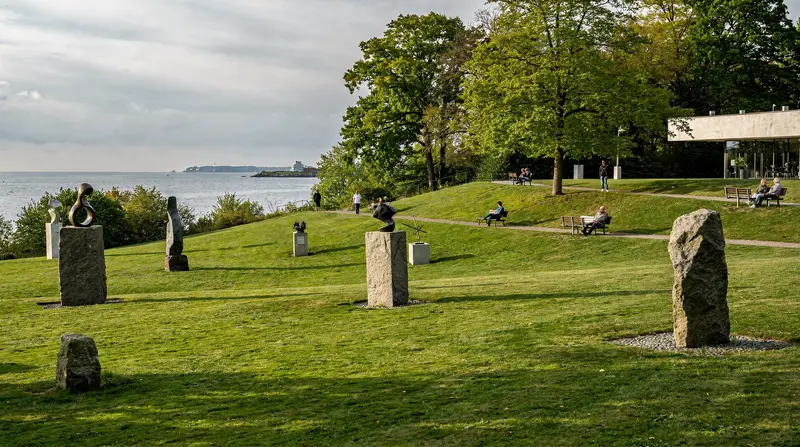
The sculpture garden at Louisiana occupies the hillside between the museum buildings and the Øresund shoreline. In clear weather this is among the finest outdoor spaces attached to any museum in Europe: Calder’s red mobile stands against the blue-grey water, a panorama of the Swedish coast visible in the middle distance.
The garden also has works by Jean Arp, Joan Miró, and several Nordic sculptors. In summer, the terraces function as a picnic area — bring food or buy from the café and eat outside. In winter, the garden is peaceful and often empty, which has its own appeal.
The café and restaurant
Louisiana’s café-restaurant is located at the point where the hillside terraces meet the main building, with a terrace overlooking the Øresund. It is, fairly predictably, expensive: a coffee costs 55–70 DKK, a lunch plate 160–200 DKK, and the dinner menu (served on weekday evenings) is fine-dining priced.
The food quality is genuine — the kitchen uses Danish seasonal produce and the cooking is competent. If you are planning a full-day visit, budget for at least one café stop and consider it part of the Louisiana experience rather than grudging museum catering.
The café sells takeaway pastries and sandwiches at the counter for slightly lower prices if you want to eat on the terrace without the full table service.
The concert hall
Louisiana’s concert hall, built in 1982, hosts regular concerts from classical through jazz and contemporary music. The venue’s acoustics are good, the capacity modest (around 300 seats), and the programming typically serious. Tickets can be purchased via the Louisiana website; some concerts are included in museum admission on the day.
Practical information
Address: Gl. Strandvej 13, 3050 Humlebæk
Hours:
- Tuesday–Friday: 11:00–22:00 (Thursdays until 22:00)
- Saturday–Sunday: 11:00–18:00
- Monday: Closed
Note: Louisiana has extended Thursday evening hours — arriving at 17:00 on a Thursday gives you access until 22:00, with significantly reduced crowds after about 18:00.
Admission:
- Adults: 175 DKK (~23 €)
- Children under 18: Free
- Copenhagen Card: Covered
Getting there by train: Kystbanen from Copenhagen Central to Humlebæk, approximately 38–40 minutes, every 20 minutes. Standard adult return approximately 120 DKK.
Photography: Permitted in most of the permanent collection and outdoor areas. Temporary exhibitions may restrict photography — check at entry.
Accessibility: The museum has invested significantly in accessibility. Lifts connect all levels; the sloping terrain of the outdoor garden requires some navigation, but most of the main paths are paved and accessible. Contact Louisiana in advance for specific accessibility requirements.
Membership: Louisiana membership (from approximately 600 DKK/year) gives unlimited access, guest tickets, and priority booking for concerts and events. Worth calculating if you plan to visit more than twice.
Louisiana’s education and children’s programme
Louisiana takes children seriously as a museum audience — not by simplifying the art but by providing programmes and environments where children engage with the actual collection on their own terms.
The Children’s Wing (Børneafdelingen) is a permanent part of the museum with dedicated staff and programming. It includes studio spaces where children can create responses to works they have seen, and workshop programmes that run on weekends and during school holidays. The permanent collection is used as source material; the goal is genuine engagement rather than age-appropriate approximation.
Entry for children under 18 is free. The children’s wing is fully accessible and designed for children from approximately age 4 upward. For families visiting Louisiana, the children’s wing adds 45–60 minutes to the visit and substantially changes the quality of the experience for adults as well — the questions children ask about the Giacomettis and the Calders are sometimes more interesting than adult analysis.
A sample half-day itinerary
For visitors with roughly 4 hours, one workable sequence: arrive via the 10:00 or 10:20 train from Copenhagen Central, reaching Humlebæk around 10:40–11:00. Walk the 10 minutes to the museum and start with the Giacometti pavilion while you’re fresh (20–30 minutes), then move through the main collection toward Francis Bacon and the COBRA/Asger Jorn rooms (45–60 minutes). Break for coffee or an early lunch on the terrace before the crowds peak. Spend the early afternoon in the sculpture garden, timing it for good light if the weather cooperates, then finish with whatever temporary exhibition is showing. This leaves the bookshop and a final pass through the galleries you rushed earlier for the last 30 minutes before the return train.
Visitors with a full day can slow this down considerably — Louisiana rewards lingering more than almost any museum in Denmark, and a rushed 2-hour visit genuinely misses the point of how the building and garden are designed to be experienced.
Louisiana’s publication programme
The Glyptotek has Jacobsen’s correspondence and acquisition records; Louisiana has its own publishing legacy. The museum produces exhibition catalogues, a members’ magazine (Louisiana Magasin, published multiple times per year), and occasional artist monographs that are among the better-designed publications in the Danish cultural sector.
The bookshop stocks a complete run of Louisiana publications, all available individually. The monographs on COBRA-movement artists and on the museum’s Nordic acquisitions are genuinely useful reference works for anyone researching Scandinavian modern art. The exhibition catalogues from major shows at Louisiana over the past 40 years document a substantial chapter of European art history from a distinctively Nordic perspective.
Combining Louisiana with Kronborg Castle
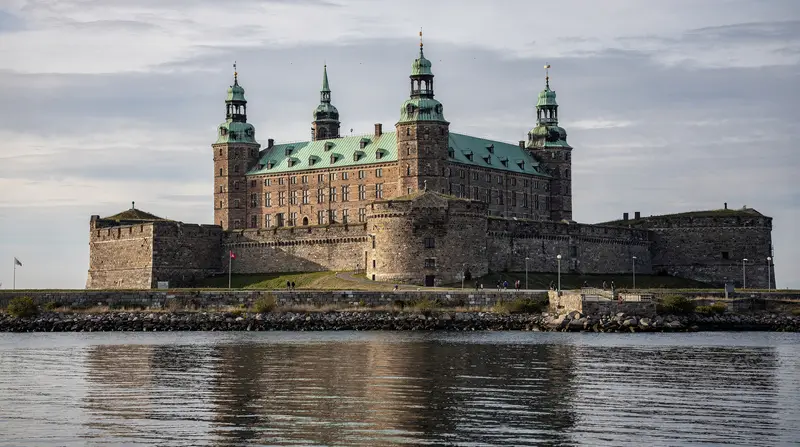
The Kystbanen line that serves Louisiana continues north to Helsingør (Kronborg Castle, about 20 minutes further from Humlebæk). It is possible to combine both in a single day, but not comfortably — Louisiana needs at least 3 hours, and Kronborg deserves 2. Starting at Kronborg (arrive Helsingør ~10:30), leaving by 13:00, and reaching Louisiana by 13:30–14:00 gives you 4 hours at Louisiana before it closes at 18:00 (or 22:00 on Thursdays). This is manageable but requires discipline.
The Castles of North Zealand Day Tour covers the castle route; Louisiana is typically added separately given its different nature. See the Kronborg and Hamlet’s castle guide for the castle’s own opening hours and history.
Louisiana vs SMK and the Glyptotek
If your time in Copenhagen itself is limited, weigh Louisiana against the city’s own major collections. SMK, the National Gallery, has a broader six-century sweep; the Glyptotek is stronger on classical antiquity and Impressionism. Louisiana’s advantage is the combination of art, architecture and landscape rather than depth of any single period — see our best museums in Copenhagen guide for how all of these rank for different interests.
Frequently asked questions about Louisiana Museum
Does Louisiana have a bookshop?
Yes, a well-stocked design and art bookshop near the main entrance — one of the best museum bookshops in Denmark. Strong on Louisiana’s own publications (exhibition catalogues, monographs on artists in the collection), as well as general art and architecture books.
Is Louisiana suitable for very young children?
Children under 18 are free, and the outdoor space is genuinely enjoyable for children of all ages. The art itself may not hold attention for under-5s, but the gardens, the views, and the space to run around make it manageable. There is a family-friendly section with age-appropriate programming.
Is there a coat check at Louisiana?
Yes, a free cloakroom near the main entrance. It is compulsory in the winter months and recommended in summer as bags are not permitted in all gallery areas.
Can I just visit the sculpture garden without paying?
No. The entire Louisiana estate, including the outdoor areas and garden, requires a valid admission ticket or membership.
What is the best month to visit Louisiana?
May and September offer a good balance: good weather for the outdoor terraces, smaller crowds than July and August, and the landscape in good condition. July and August have maximum light and warmth but also maximum visitors. November through February has the fewest crowds and a stripped-back beauty to the coastal landscape; the indoor experience is not diminished.
Can I do Louisiana as a half-day trip, or do I need a full day?
Either works, but they deliver a genuinely different experience. A half-day (4–5 hours including travel) covers the permanent collection highlights, the sculpture garden, and a coffee stop — enough to leave satisfied. A full day allows time for the current temporary exhibition in full, a proper sit-down lunch, the concert hall programme if timing allows, and unhurried time in the garden watching the light change over the Øresund. Neither is wrong; match it to how much time you have left elsewhere in your Copenhagen itinerary.
Is Louisiana crowded on public holidays?
Danish public holidays and school half-terms bring noticeably larger crowds, particularly to the Giacometti pavilion and the café. If your visit falls on one, arrive at opening (11:00) or, on Thursdays, arrive in the evening after 18:00 when the daytime crowds have mostly left.
Is the Louisiana café open to non-museum visitors?
No. The café is within the museum grounds and requires valid admission or membership to access.
Is Louisiana a good fit alongside other Copenhagen day trips?
Yes — it’s consistently one of the highest-rated options in our day trips from Copenhagen guide. If you’re weighing whether the Copenhagen Card makes sense for the visit, see the full Copenhagen Card worth it breakdown — it depends on what else you’re combining it with.
Frequently asked questions — Louisiana Museum of Modern Art: Complete Guide to the Day Trip from Copenhagen
How do I get to Louisiana Museum from Copenhagen?
Take the Kystbanen train from Copenhagen Central (Københavns Hovedbanegård) or Hellerup station towards Helsingør. Exit at Humlebæk. The museum is a 10-minute walk from the station (follow signs to Louisiana). Trains run every 20 minutes; the journey takes approximately 38–40 minutes from Copenhagen Central. Return tickets cost around 120 DKK at standard fare.How much does Louisiana Museum cost?
Adults pay 175 DKK (approximately 23 €). Children under 18 are free. The Copenhagen Card covers admission. Membership (available at the museum) costs around 600 DKK per year and includes unlimited access plus guest tickets.Is Louisiana Museum covered by the Copenhagen Card?
Yes. The Copenhagen Card covers admission to Louisiana Museum and includes the Kystbanen train journey to Humlebæk. If you plan to visit Louisiana and at least one other paid attraction plus use public transport, the Copenhagen Card is worth calculating.What is the best time to visit Louisiana Museum?
Weekday mornings (Tuesday–Thursday) are quietest. Summer weekends can be very busy, particularly Saturday afternoons. The outdoor sculpture garden is best visited in spring and summer (May–August). Winter visits have fewer crowds and the museum's atmospheric winter garden café comes into its own.How long do you need at Louisiana Museum?
A minimum of 3 hours. 4–5 hours is comfortable for the permanent collection, current temporary exhibition, sculpture garden, café, and the outdoor terraces overlooking the Øresund. A full day is not excessive if the temporary show is strong.Who are the key artists in Louisiana's permanent collection?
Alberto Giacometti (major sculpture group in a dedicated pavilion), Alexander Calder (mobiles and stabiles), Francis Bacon, Asger Jorn (leading Danish COBRA member), CoBrA movement artists, Henry Moore, Max Ernst, and significant holdings of Danish and Nordic modern art.Can you swim near Louisiana Museum?
There are beach access points near the museum, and the Øresund coast near Humlebæk has designated swimming areas. The water is cold except in July and August. This is primarily a summer option and involves a short walk beyond the museum grounds.
Top experiences
Bookable activities with verified prices and instant confirmation on GetYourGuide.