Louisiana Museum Day Trip from Copenhagen: Train, Tickets & How to Make the Most of It
Copenhagen Card: Access 80+ Attractions and Transportation
How do you get to Louisiana Museum from Copenhagen?
Take the Kystbanen train from Copenhagen Central (or Østerport/Hellerup) towards Helsingør and exit at Humlebæk. Trains run every 20 minutes; the journey takes 38–40 minutes. Walk 10 minutes from Humlebæk station following signs to Louisiana. Return fare is approximately 120 DKK. Entry costs 175 DKK for adults; children under 18 are free. The Copenhagen Card covers both the train and admission.
Louisiana on the Øresund: the museum that earns the journey
Louisiana Museum of Modern Art in Humlebæk is a 38-minute train ride from Copenhagen Central, and it is consistently cited as one of the finest modern art museums in northern Europe. That citation, repeated in every guide and travel feature, has become so familiar that visitors risk dismissing it as promotional language. It is not promotional language; it is accurate.
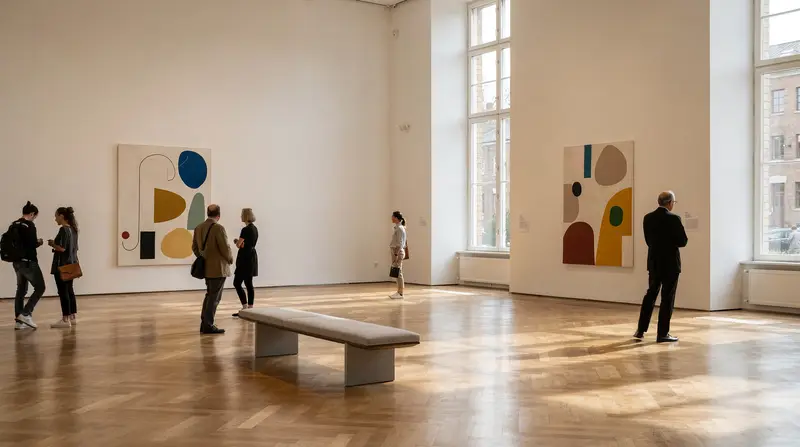
What makes Louisiana different from a conventional city museum is the integration of building, landscape, and art. The museum was founded in 1958 by the art collector Knud W. Jensen — named after the three women called Louise who had previously owned the estate — and expanded over five decades into a series of connected pavilions descending toward the Øresund strait. The permanent collection is significant. The temporary exhibitions are ambitious. The building and gardens are the equal of either.
This guide covers how to get there, what to see, how long to spend, and how to combine Louisiana with other North Zealand day trips. For a shorter overview focused on the essentials, see our Louisiana Museum guide; for the destination page, see Humlebæk & Louisiana.
| Where | Humlebæk, North Zealand — 38–40 min by train from Copenhagen Central |
| Cost | 175 DKK adult entry; children under 18 free |
| Time needed | 3–4 hours minimum, longer for a relaxed visit |
| Getting there | Kystbanen train to Humlebæk, then 10-min walk |
| Best time | Tue/Wed mornings, or Thursday evenings (open until 22:00) |
Getting to Louisiana Museum by train
Line: Kystbanen (Coast Line), operated by DSB. From Copenhagen Central towards Helsingør.
Departure stations: Copenhagen Central (Københavns Hovedbanegård), Østerport (central Copenhagen), Hellerup (Gentofte).
Frequency: Every 20 minutes throughout the day.
Journey time:
- From Copenhagen Central: 38–40 minutes
- From Østerport: approximately 33 minutes
- From Hellerup: approximately 27 minutes
Return fare (2026): Approximately 120 DKK using a Rejsekort card or station ticket (4 zones). Copenhagen Card covers the journey.
Exit at: Humlebæk. The station is the second stop after Humlebæk village; do not confuse it with Humlebæk Strand (if shown). Most trains show Humlebæk as a stop — confirm on the departure board.
From Humlebæk station to Louisiana: A 10-minute walk following signage. Turn right out of the station, cross the road, and follow the signs south along Gl. Strandvej. The walk is flat and straightforward.
Tickets and opening hours
Entry prices (2026):
- Adults: 175 DKK (~23 €)
- Children under 18: Free
- Copenhagen Card: Covered (both train and entry)
Opening hours:
- Tuesday–Friday: 11:00–22:00 (note: extended evening hours)
- Saturday–Sunday: 11:00–18:00
- Monday: Closed
Thursdays: The extended opening until 22:00 is significant for visitors planning a combined day. Arriving at Louisiana at 17:00 on a Thursday gives you 5 hours with significantly reduced crowds — most daytime visitors have left by 18:00.
Advance booking: Not strictly necessary outside peak summer weekends, but recommended in July and August to avoid queue time. The Copenhagen Card covers Louisiana entry and can be activated and shown on your phone.
What to see at Louisiana Museum
The permanent collection: the Giacometti pavilion
Louisiana’s most significant single holding is the Giacometti pavilion — a dedicated wing housing a substantial group of Alberto Giacometti’s sculptures, assembled by Knud W. Jensen through personal friendship with the artist. The collection includes major bronze figures from the 1950s and 1960s, the walking figures and elongated standing forms that define Giacometti’s mature work.
The pavilion is designed specifically for these works: lower-lit, with spaces sized to make the vertical figures legible at the distances Giacometti intended. This is one of the better presentations of Giacometti’s sculpture in the world.
The Calder works
Alexander Calder’s mobiles and stabiles are distributed between the gallery spaces and the outdoor sculpture garden. The most famous is the large red metal stabile on the lower terrace — visible from the café and often photographed against the Øresund backdrop. Calder’s work is particularly suited to Louisiana’s setting: the mobiles move with the sea breeze in the outdoor spaces, and the architecture is low enough to let the stabiles be experienced as sculpture rather than oversized objects in a white cube.
Francis Bacon and postwar European art
The European postwar collection includes significant works by Francis Bacon — large triptychs and isolated figure paintings — alongside Max Ernst, Joan Miró, and a strong representation of the COBRA movement, the postwar avant-garde network that united artists from Copenhagen, Amsterdam and Paris. COBRA represented a key moment in 20th-century art; Louisiana’s collection is one of the best representations of it outside the COBRA Museum in Amsterdam.
The Danish and Nordic collection
Asger Jorn — Denmark’s most internationally significant 20th-century artist and a COBRA founder — is well represented in the permanent collection. Louisiana also holds major works by Robert Jacobsen, Richard Mortensen, and other significant Danish artists of the postwar period. The Nordic collection provides context that larger international museums rarely give to Scandinavian modern art.
Temporary exhibitions
Louisiana typically runs 3–4 major temporary exhibitions per year, often monographic retrospectives of internationally significant artists or thematic surveys of movements and periods. The quality has historically been high: past exhibitions have included major retrospectives of Jean-Michel Basquiat, Cindy Sherman, Yayoi Kusama, and Olafur Eliasson. Check the Louisiana website before visiting to see what is showing.
The sculpture garden
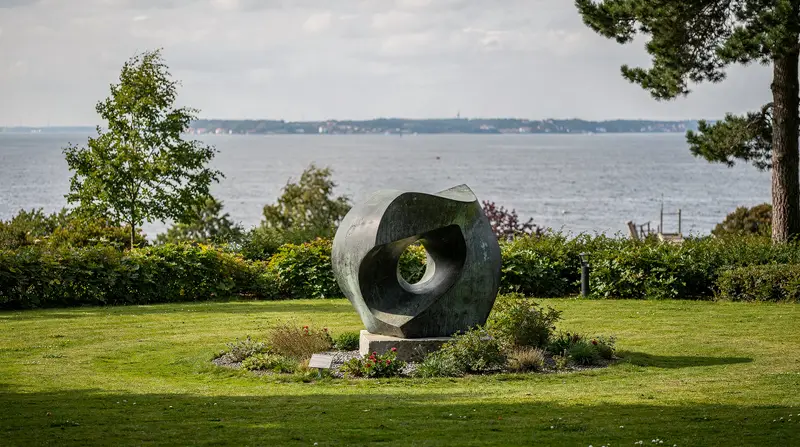
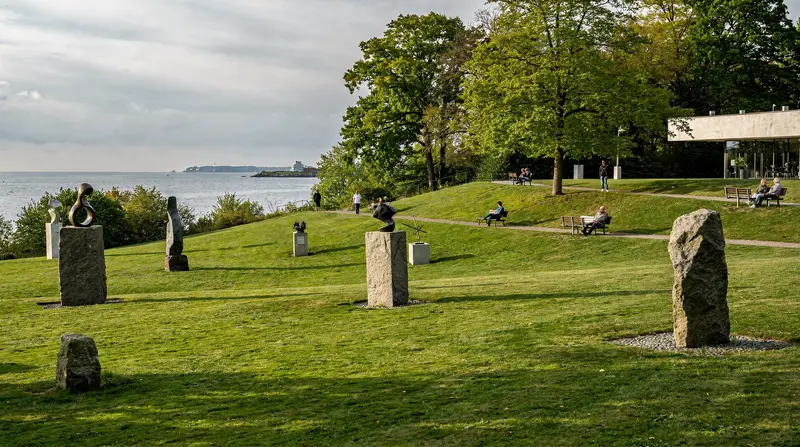
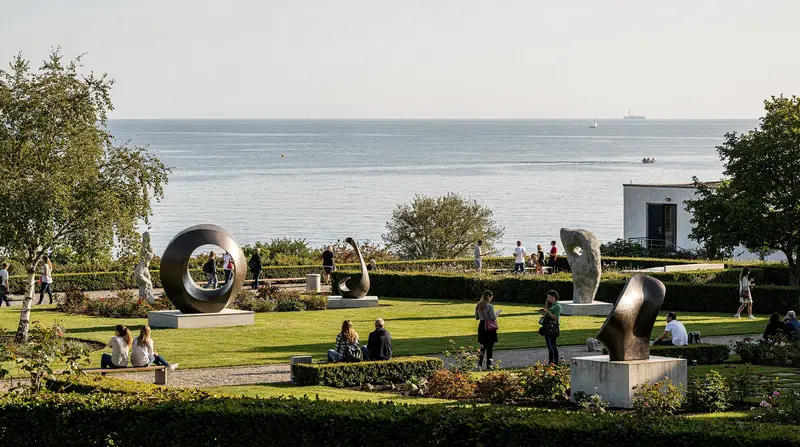
The outdoor sculpture garden descends from the main building to the Øresund waterfront on a series of terraces. In good weather, this is the highlight of any Louisiana visit.
Key works in the garden:
- Calder’s large red stabile (lower terrace, visible from the café)
- Jean Arp organic forms
- Joan Miró bronze figures
- Henry Moore reclining figures on the upper lawn
- Nordic sculptors represented throughout the paths
The garden is designed to be walked slowly. Paths wind through the hillside planting, with occasional clearings revealing views of the strait or framing a specific work. In May and September the garden is at its most pleasant — less crowded than summer, with the plants in good condition.
In winter, the garden is walkable and has a stripped-back quality that suits the grey Øresund light. The indoor galleries are not diminished by the season.
The café and restaurant
Louisiana’s café-restaurant is located at the point where the main building meets the lower terrace, with a panoramic view of the strait. It is, frankly, expensive:
- Coffee: 55–70 DKK
- Lunch plate: 160–200 DKK
- Pastry at the counter: 55–80 DKK
The food quality is genuine — Danish seasonal produce, competent cooking — and the setting is exceptional. Budget for at least one café stop and consider it part of the Louisiana experience.
For slightly lower cost, the café counter sells takeaway pastries and sandwiches that can be eaten on the terrace without full table service. This is the better option for a quick break rather than a full lunch.
Louisiana’s children’s wing
The Børneafdelingen (Children’s Wing) is a permanent part of the museum, not an afterthought. It has dedicated staff, studio spaces for hands-on creative work, and workshop programmes running on weekends and school holidays. The actual collection is used as source material — children engage with Giacometti and Calder through making, not simplified reproductions.
Children under 18 are free. The children’s wing is fully accessible and suitable from approximately age 4 upward.
Combining Louisiana with other North Zealand destinations
Louisiana sits on the Kystbanen line between Copenhagen and Helsingør. The geography creates two natural combinations:
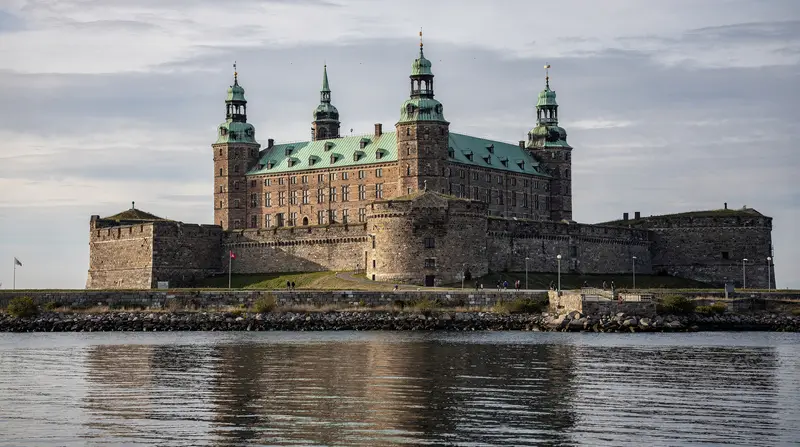
Louisiana + Kronborg Castle (Helsingør)
The line continues from Humlebæk north to Helsingør (approximately 20 minutes further). This combination is possible in one day with careful timing:
- Start at Kronborg (arrive Helsingør 10:30), spend 2.5 hours, leave by 13:00
- Train to Humlebæk: approximately 20 minutes, arrive Louisiana 13:30
- Spend 4 hours at Louisiana (closes 18:00 most days, 22:00 Thursdays)
This is feasible but leaves little time for Helsingør town. On Thursdays, the Thursday evening opening at Louisiana removes time pressure. See the Kronborg and Hamlet’s castle guide or the North Zealand castles route for the full castle-day logistics.
Louisiana + Humlebæk town
Humlebæk village (5 minutes from the station) has a small harbour and a few cafés. It is pleasant for 30 minutes before or after the museum visit, particularly in summer.
The Castles of North Zealand Day Tour covers the castle circuit; Louisiana is typically added as a separate decision given its different nature.
Practical information
Address: Gl. Strandvej 13, 3050 Humlebæk
Hours: Tue–Fri 11:00–22:00, Sat–Sun 11:00–18:00, Monday closed
Entry: Adults 175 DKK, children under 18 free. CPH Card: covered.
Train: Kystbanen from Copenhagen Central to Humlebæk, every 20 minutes, 38–40 minutes journey. Approximately 120 DKK return.
Photography: Permitted in most permanent collection areas and outdoors. Temporary exhibitions may restrict — check at entry.
Bookshop: One of the best museum bookshops in Denmark. Strong on Louisiana’s own publications, exhibition catalogues, and Scandinavian modern art monographs. Open during museum hours.
Cloakroom: Free, near the main entrance. Compulsory in winter, recommended in summer (bags not permitted in all areas).
Frequently asked questions about visiting Louisiana from Copenhagen
What is the best day of the week to visit Louisiana?
Tuesday and Wednesday mornings are quietest. Saturday afternoons in July and August are the busiest. Thursday evenings (Louisiana is open until 22:00 on Thursdays) are excellent — the daytime crowds have thinned, the evening light on the Øresund is beautiful from the terrace, and the atmosphere in the café shifts to something more relaxed.
Can I visit Louisiana in bad weather?
Yes — Louisiana is predominantly an indoor museum. The permanent collection, temporary exhibitions, and café are all indoors. The sculpture garden is less enjoyable in heavy rain, but the interior experience is not affected. Louisiana is a good rainy-day option for any Copenhagen itinerary.
Is Louisiana Museum better than the SMK National Gallery in Copenhagen?
They serve different purposes. SMK (Statens Museum for Kunst) has a broader collection covering six centuries of European art, plus a strong Danish collection. Louisiana is more focused: postwar and contemporary international art, presented in an extraordinary setting. For a day trip experience — the combination of art, architecture, landscape, and travel — Louisiana is more compelling. For depth of historical collection, SMK is the stronger museum. If you have time for both, visit both — see our best museums in Copenhagen guide for how they rank against the rest of the city’s collections.
How far is Louisiana from Kronborg Castle?
By train, approximately 20 minutes on the Kystbanen line (Kronborg is in Helsingør, the terminus; Louisiana is in Humlebæk, one stop south). By car, approximately 15–20 minutes.
Does Louisiana have a membership programme?
Yes. Annual membership costs approximately 600 DKK and includes unlimited access, guest tickets, and priority booking for concerts and events. Worth calculating for repeat visitors or Copenhagen residents — the membership pays off after two full-price adult visits.
Is the Copenhagen Card worth it just for Louisiana?
Only sometimes — see our full Copenhagen Card worth it breakdown for the maths. If Louisiana is genuinely your only paid attraction that day, the train fare plus 175 DKK entry may come out cheaper than the card; the card pays off once you’re combining it with city attractions or Kronborg on the same visit.
Frequently asked questions — Louisiana Museum Day Trip from Copenhagen: Train, Tickets & How to Make the Most of It
Is Louisiana Museum worth the trip from Copenhagen?
Yes, for almost every visitor with any interest in modern art, architecture, or exceptional outdoor spaces. Louisiana combines a world-class permanent collection — Giacometti, Calder, Francis Bacon, Asger Jorn — with architecture that places galleries and sculpture gardens directly above the Øresund strait. The building is part of the experience. Entry at 175 DKK is reasonable for a museum of this calibre. Budget at least 3–4 hours.What is special about Louisiana Museum's architecture?
Louisiana's buildings are a series of connected pavilions descending a hillside above the Øresund strait, built in multiple phases between 1958 and 1991. Each wing integrates with the natural landscape rather than imposing on it — gallery spaces open onto sculpture terraces, corridors frame views of the sea, and the transition between indoor and outdoor spaces is gradual rather than abrupt. The building itself is studied in architecture schools as a significant example of how to integrate a cultural institution with a natural site.How much time do you need at Louisiana Museum?
A minimum of 3 hours to see the permanent collection, the sculpture garden, and one temporary exhibition. 4–5 hours is comfortable if you want to eat at the café, spend time in the outdoor spaces, and visit the bookshop. A full day is not excessive if the temporary exhibition is strong. Louisiana rewards slower visits; rushing through it misses the point.Is the Copenhagen Card worth it for a Louisiana day trip?
Potentially yes. The Copenhagen Card covers the Kystbanen train to Humlebæk (approximately 120 DKK return), Louisiana entry (175 DKK), and all Copenhagen public transport and 80+ city attractions. If you also visit Kronborg or Frederiksborg on your trip, the card covers those too. Do the maths based on your full itinerary — if Louisiana is your only day trip, the card may not save money unless you are spending multiple days using it for Copenhagen city attractions.Can you combine Louisiana with Kronborg Castle in one day?
Yes, but the day requires discipline. The Kystbanen line continues from Humlebæk north to Helsingør (Kronborg), approximately 20 minutes further. Starting at Kronborg (arrive ~10:30, leave by 13:00) then travelling to Louisiana (arrive ~13:30–14:00) gives you 4 hours before Louisiana closes at 18:00 on most days. On Thursdays Louisiana is open until 22:00, giving more flexibility. It is possible but not relaxed — plan carefully.What is in Louisiana's permanent collection?
The permanent collection includes significant holdings of Alberto Giacometti (a dedicated pavilion), Alexander Calder (mobiles and stabiles), Francis Bacon, Asger Jorn (leading Danish COBRA artist), Henry Moore, Max Ernst, Joan Miró, Jean Arp, and major holdings of Danish and Nordic modern art. The collection spans the 1940s to the present, with particular strength in European postwar abstraction and the COBRA movement.Does Louisiana Museum have good facilities for families?
Yes. Children under 18 are free. Louisiana has a dedicated Children's Wing (Børneafdelingen) with hands-on studio activities and guided programmes for children on weekends and school holidays. The outdoor sculpture garden is genuinely enjoyable for children of all ages. The café has family-friendly options. Louisiana is among the better Danish cultural institutions for families with children aged 5 and above.
Top experiences
Bookable activities with verified prices and instant confirmation on GetYourGuide.