Rundetårn (Round Tower) Copenhagen: The Spiral Ramp and Best Views
Copenhagen: The Secret of the Round Tower (Rundetårn)
Is the Rundetårn (Round Tower) worth visiting in Copenhagen?
Yes — at 40 DKK (~5 €) it is one of Copenhagen's best-value paid viewpoints, offering a clear view over the old city roofline. The spiral equestrian ramp is genuinely unusual and historically interesting. Allow 45 minutes. Pair it with Rosenborg Castle (15 minutes' walk) for a good half-day.
Book the Rundetårn guided tour — “The Secret of the Round Tower” — this guided experience covers the astronomical history and the building’s architectural secrets that the standard self-guided visit doesn’t reveal.
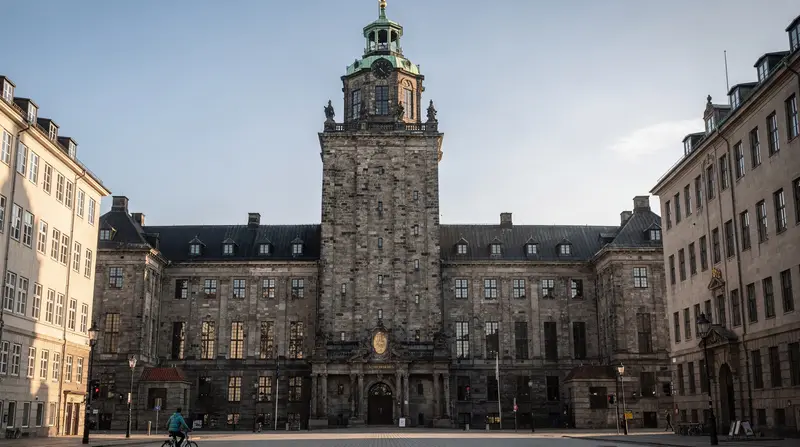
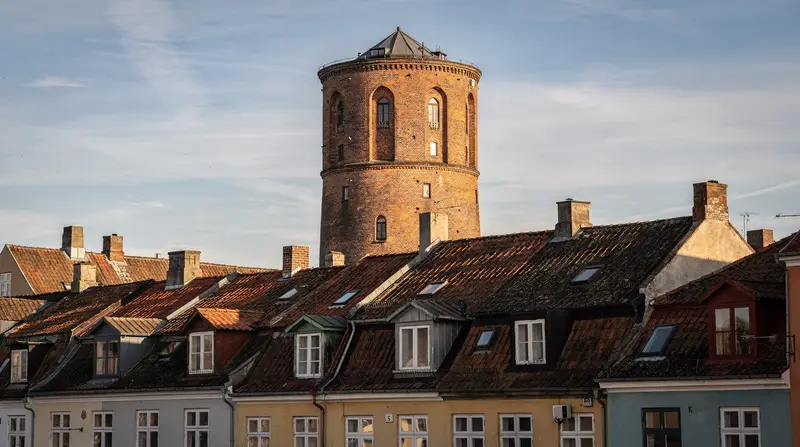
The Rundetårn stands in the middle of Indre By — Copenhagen’s old town — and has dominated its surrounding streets since 1642. What makes it unusual is not primarily the view from the top (good, but not the highest in the city) but the method of getting there: a continuous spiral ramp, 209 metres long, winds seven and a half times up the interior of the tower. There are no stairs.
The ramp was designed to allow horse-drawn carts to carry astronomical instruments to the observatory at the top. In 1716, Tsar Peter the Great rode his horse to the summit; Catherine, his wife, followed in a horse-drawn carriage. The story may be slightly embellished, but the ramp is entirely capable of it — the incline is gentle and the width sufficient.
| Where | Købmagergade 52A, off Strøget in Indre By |
| Cost | Around 40 DKK adults, 5 DKK ages 5–15 |
| Time needed | 30–45 minutes |
| Getting there | 2 min walk from Strøget, 7 min from Nørreport |
| Best time | Before 11:00 or after 16:00 to avoid congestion on the ramp |
The ramp
Walking the ramp takes about 10–12 minutes at a normal pace. The brick floor has a rough herringbone pattern for grip; the walls are plastered with small arched niches. Unlike staircases, the ramp is entirely continuous — there are no landings, no flat sections, no interruption. You simply walk upward in an unbroken spiral.
The experience is more contemplative than physically demanding. The incline is approximately 1:10 — steep enough to feel it in your calves on the way up, but nothing like the steep medieval stairs of most European church towers. Children and older visitors manage it comfortably.
Practical note: The ramp can become congested at peak times when visitor groups pass each other in both directions. Late morning (before 11:00) and late afternoon (after 16:00) are the least crowded times.
The gallery
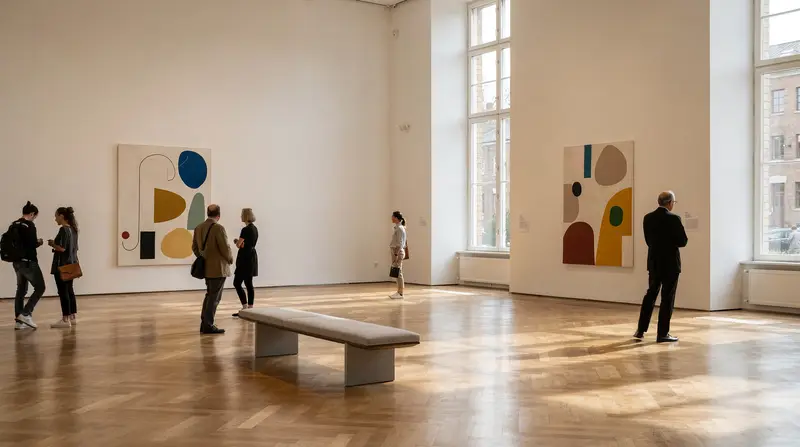
Halfway up, the ramp widens into a barrel-vaulted gallery space — the former university library, dating to 1657. It now hosts changing exhibitions of contemporary art, photography, and cultural programming. Exhibition themes change several times a year; sometimes the gallery is between shows during changeovers.
The architecture of the gallery itself is worth pausing for: the vaulted ceiling, the heavy wooden beams, and the quality of light through small windows create a striking space regardless of what’s being exhibited.
The observation deck
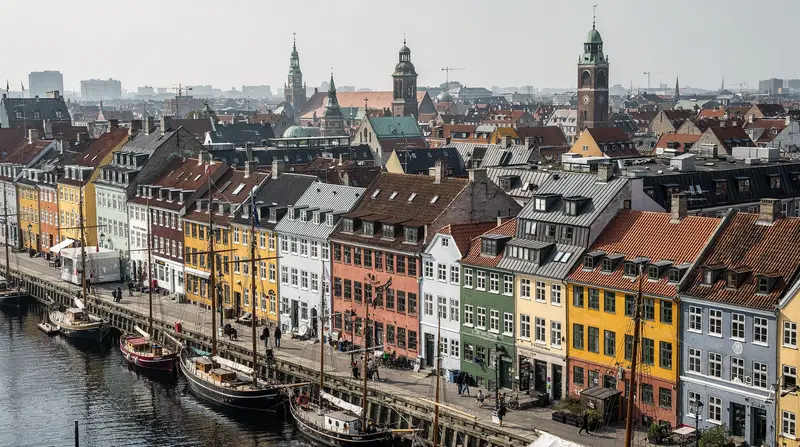
At 36 metres, the top of the Rundetårn offers what is sometimes called the “old-town view” of Copenhagen — rooflines, church spires, and the streets of Indre By spreading out below. The view differs from the Christiansborg tower (which at 106 metres gives a broader cityscape) in that you are within the historic centre, not above it. You can see the streets and squares clearly enough to plan your walk.
Specifically visible: Vor Frue Kirke (the Cathedral) to the southwest, Nikolaj Church (now a contemporary art gallery) to the south, the copper spire of Børsen (the old stock exchange) in the distance, and the green patina of the Christiansborg dome further south. To the north, Rosenborg Castle is visible above the trees of the King’s Garden.
The deck has a small area with a glass roof covering the original telescope mounting point — the brass fittings of the 17th-century observatory are still visible in the floor.
Best times: Dusk in summer (around 21:00) for warm light and long shadows. Midwinter afternoons for low-angle light across the city roofline. Overcast days produce even light that works well for photography without harsh shadows.
Historical context
Christian IV (r. 1588–1648) built the Rundetårn as part of a three-building complex: the tower itself, the adjacent Trinity Church (Trinitatis Kirke), and a student dormitory. The concept was an integrated university complex — observatory, church, and student housing in one block.
The astronomical observatory functioned actively until 1861, when the urban light pollution from gas street lighting made serious observation impossible and the function transferred to a new observatory in Frederiksberg. The Rundetårn remained as a landmark and public viewpoint; the gallery was used as a library for two centuries.
Tycho Brahe — the Danish astronomer whose observational data provided the basis for Kepler’s laws of planetary motion — had worked at Uraniborg on Ven (now Hven, Sweden) in the 1570s–1590s. The Rundetårn was conceived partly to continue this tradition of Danish astronomical excellence in a more urban context.
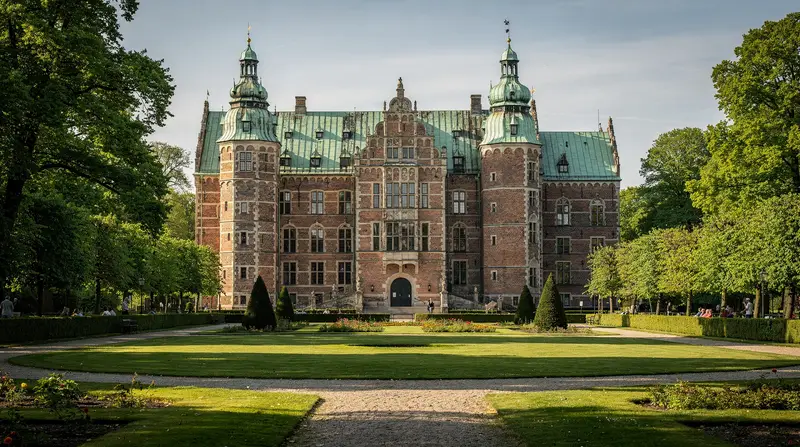
The tower was not the only unusual structure Christian IV built in Copenhagen. He was responsible for the Rosenborg Castle (also 1606–1633), the Round Tower, the Børsen stock exchange with its twisted dragon-tail spire, and several churches — an architectural legacy that still defines the city’s historic skyline.
Combining with other sights
With Rosenborg Castle
The natural pairing. Rosenborg Castle is a 12-minute walk north from the Rundetårn (through Kultorvet and along Gothersgade). Spend 45 minutes at the Round Tower, then walk to Rosenborg for the Crown Jewels. Lunch in the King’s Garden. This makes a solid 4-hour morning.
Book the Round Tower, Rosenborg Castle & Old Town guided tourWith Strøget and Indre By
The Rundetårn sits just off Strøget — Copenhagen’s main pedestrian shopping street — at the Købmagergade intersection. It fits naturally into a morning’s walk through the old town: start at Rådhuspladsen, walk Strøget east, detour up Købmagergade to the tower, return via the Cathedral or Nyhavn.
With a guided old-town walking tour
Several walking tours start or pass through Indre By and include the Rundetårn exterior as part of the route. If you want the tower interior, allow time for a self-guided visit before or after the group tour.
With Torvehallerne and a wider Indre By day
Nørreport station, and the Torvehallerne market next to it, are a 7-minute walk north — a natural lunch stop before or after the tower. See the Torvehallerne guide for what to eat there. For the full range of what else the old town offers, the things to do in Copenhagen ranking and the Indre By guide both cover the neighbourhood in more depth, and the Copenhagen Card worth it guide is useful if you’re weighing the Rundetårn’s 40 DKK against a multi-attraction pass.
Practical information
Address: Købmagergade 52A, 1150 Copenhagen K. On Købmagergade, just off Strøget in central Indre By.
Getting there: Walk from Strøget (2 minutes), Nørreport metro (7 minutes on foot), or Kongens Nytorv (10 minutes). Central Station is 15 minutes on foot. No need for metro or bus from the city centre.
Opening hours:
- Summer (mid-May to mid-September): 10:00–20:00 daily
- Observatory evenings (autumn/winter): Tuesdays and Wednesdays 19:00–22:00 when the telescope is available for public use
- Winter: 10:00–17:00 daily (check website)
Tickets: Purchased at the entrance door. No advance booking required or available. Cash and card accepted.
Photography: Permitted throughout including the gallery and observation deck. The ramp itself is a photogenic subject from above (looking down the spiral) or from the gallery.
Frequently asked questions about the Rundetårn
How do I pronounce Rundetårn?
“Roo-neh-tawn” is the closest English approximation. Rundetårn literally means “Round Tower” in Danish. The proper diacritical spelling is Rundetårn, with an å (a circle on top of the a).
Was the Rundetårn really used by Tsar Peter the Great?
The historical record confirms that Peter the Great visited Copenhagen in 1716. The story of him riding a horse to the top of the tower is recorded in multiple sources, though some historians consider it embellished. The ramp is genuinely capable of accommodating a horse — it was designed for it — so the story, embellished or not, is physically plausible.
Is the Rundetårn an active observatory?
No longer for professional astronomy. The telescope is available for public use on specific evenings (autumn and winter, Tuesday and Wednesday 19:00–22:00 when skies permit). The experience of using the original 17th-century mounting point with a modern telescope in an urban context is memorable.
How does the Rundetårn compare to other Copenhagen viewpoints?
At 36 metres it is lower than the Christiansborg Tower (106 m, free) or the Amalienborg area viewpoints. But it gives the best close-up view of the old town specifically — streets, rooflines, and historic buildings at a scale where you can still identify them. The Christiansborg Tower sees the whole city at once; the Rundetårn sees the old city neighbourhood in detail.
Is there a café at the Rundetårn?
No café inside the tower. A small gift shop operates at ground level with postcards, tower-themed items, and books. Numerous cafés exist within two minutes’ walk on Strøget and Købmagergade.
Can children visit the Rundetårn?
Yes — the ramp is suitable for children of all ages, including in prams and pushchairs (though steep enough that a loaded pushchair needs two adults). The climb is gentle and the view engaging for children. Admission for children under 5 is free.
Frequently asked questions — Rundetårn (Round Tower) Copenhagen: The Spiral Ramp and Best Views
How much does the Rundetårn cost?
40 DKK (~5 €) for adults. Children aged 5–15: 5 DKK (~0.65 €). Children under 5: free. No advance booking required — tickets are purchased at the entrance.What is the Rundetårn famous for?
Its unusual spiral equestrian ramp (equestrian staircase) instead of stairs — a continuous 7.5-turn helix 209 metres long, rising 36 metres. The structure was built by Christian IV in 1642 as an astronomical observatory. Tsar Peter the Great reportedly rode his horse to the top in 1716, followed by his wife in a carriage.How long does it take to visit the Rundetårn?
About 30–45 minutes for the walk up the ramp, time on the viewing platform, and descent. Add time for any temporary exhibition in the gallery partway up. The ramp is not steep — walking pace is comfortable for most people.What can you see from the top of the Rundetårn?
The old-town roofline, the towers of the Cathedral of Our Lady (Vor Frue Kirke) and Nikolaj Church, and the streets of Indre By directly below. On clear days: Rosenborg Castle to the north, Frederiksberg in the west. The 360-degree view is more intimate and architectural than the broader cityscape from Christiansborg Tower.Is there an exhibition in the Rundetårn?
Yes — a changing gallery of art and cultural exhibitions occupies the barrel-vaulted hall partway up the ramp. Exhibition content changes several times a year. Entry is included in the tower ticket. The original library gallery (not open to the public) is above the exhibition space.Is the Rundetårn accessible for people with mobility issues?
The ramp has no steps and is wheelchair-accessible in principle, though it is a sustained incline over 209 metres. No elevator is available. The viewing platform at the top can be reached by ramp only. People with limited mobility should assess their comfort with a sustained uphill walk before visiting.When was the Rundetårn built?
Construction began in 1637 and was completed in 1642. Christian IV built it as the observatory for the University of Copenhagen — a functional scientific building rather than a ceremonial tower. Tycho Brahe had previously operated his famous Uraniborg observatory on the island of Ven (now Sweden), and the Rundetårn was designed as a more accessible urban equivalent.
Top experiences
Bookable activities with verified prices and instant confirmation on GetYourGuide.