Christiansborg Palace Copenhagen: Tower, Ruins, Royal Rooms — Full Guide
Copenhagen: Christiansborg Palace Entry Ticket
Is Christiansborg Palace worth visiting in Copenhagen?
Yes, especially for the tower — which is free and offers the best panoramic view in Copenhagen. The Royal Reception Rooms and the Ruins require paid tickets (from 95 DKK each) and reward visitors who have an interest in Danish royal and political history. The tower alone justifies the visit for anyone on any budget.
Book Christiansborg Palace entry tickets — the tower is free; this ticket covers the Royal Reception Rooms, where the famous tapestry Great Hall is located.
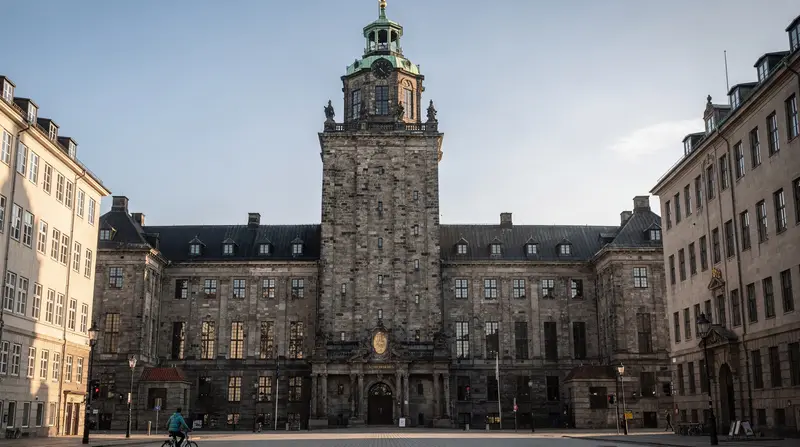
Christiansborg Palace is one of the most unusual buildings in Europe. The Danish Parliament (Folketing), the Supreme Court, the Prime Minister’s offices, and the royal family’s state reception rooms all occupy the same building — a 15th-century island in the centre of Copenhagen where six different structures have stood since Bishop Absalon built a castle here in 1167.
The current palace, completed in 1928, is the third major rebuild after fires destroyed its predecessors in 1794 and 1884. At 106 metres, the tower is the highest accessible point in the city. The ruins of the earlier castles survive beneath the current building. The combination of politics, royalty, archaeology, and architecture makes Christiansborg unusually layered for a single site.
| Where | Slotsholmen island, central Copenhagen |
| Cost | Tower free; paid sections from 95 DKK each, combined ticket ~220 DKK |
| Time needed | 30 min (tower only) to 3.5 hours (full combined visit) |
| Getting there | 12–15 min walk from Kongens Nytorv or Central Station |
| Best time | Morning for short queues; summer sunset for the tower view |
The Tower — free and essential
Start here, regardless of what else you plan to see.
The Christiansborg Tower is free to enter, open daily, and accessible by elevator. At 106 metres it gives a 360-degree panoramic view across Copenhagen: the old city roofline to the north, Tivoli and the Central Station to the west, the harbour and the opera house to the east, and the Øresund on clear days. A viewing platform with telescopes encircles the top.
Hours in summer (June–August): 10:00–22:00 daily. Hours in winter: typically 10:00–17:00. The tower is closed for maintenance on certain days — check the current schedule.
Best time for the tower: Sunset in summer (approximately 21:00–22:00 in June) for warm horizontal light across the city. Alternatively, morning visits (before 11:00) have the shortest queues. The elevator wait in peak July can be 20–30 minutes.
Practical tip: The tower is free but operated separately from the paid palace sections. It has its own entrance — look for signage at the palace perimeter.
The Royal Reception Rooms — 95 DKK
The state apartments used for royal banquets, receptions, and formal ceremonies. Guided tours run in Danish and English at set times; self-guided visits with English text panels are also available.
The Great Hall (Riddersalen)
The centrepiece and the reason most visitors pay for this section. The hall is 40 metres long and 20 metres wide, lined with 17 large woven tapestries commissioned by Queen Margrethe II in 1990 and completed in 2000, designed by the contemporary Danish artist Bjørn Nørgaard.
The tapestries depict Danish history from prehistoric times through the 20th century — including a panel showing Queen Margrethe II’s own coronation. They are serious works of art in their own right, not decorative filler. Margrethe II is herself a trained artist and took an active role in the tapestry designs. Allow 15–20 minutes in this room alone.
The Throne Room
Smaller than expected given its function, but the throne itself (in use since 1849) and the formal arrangement are worth seeing. State banquets for visiting heads of state take place in the adjacent Dining Hall (not usually open to the public).
The Mirror Hall
Denmark’s answer to Versailles’ equivalent, though smaller and less theatrical. Fourteen mirrors face fourteen windows; the effect is most striking in afternoon light.
The Ruins — 95 DKK
Excavated beneath the current palace, the ruins represent 800 years of building on this island. Access is by elevator or stairs down into the basement level.
Bishop Absalon’s castle (1167–1369): The original fortification that became the centre of medieval Copenhagen. The blue granite stones of the original walls are clearly labelled and identified. This is the oldest physical layer of the Danish capital.
Copenhagen Castle (1369–1731): The royal castle that replaced Absalon’s fortification and grew into the primary royal residence for three centuries. The foundations include towers, halls, and the remains of the chapel.
The second Christiansborg (1740–1794): Partially overlaid by the current palace; sections of the baroque palace that preceded the current building.
The excavations are presented with English-language interpretation panels and are well-lit. For visitors interested in archaeology or medieval history, this is the most genuinely educational part of the Christiansborg complex. For others, it can feel repetitive after 30 minutes.
The Royal Stables — 95 DKK
Located in the palace wing along the canal side. The 18th-century stables house royal carriages (including the state coach used at coronations and official state visits), historical harnesses, and the current working horses used by the mounted Royal Guard.
Honest assessment: impressive in scale and atmosphere — the old wooden stable stalls, the carriages under gas-lit lanterns, the smell of horses in the working section — but primarily of interest to equestrian enthusiasts and those curious about court ceremonial. The carriage collection is the most historically interesting element.
The Parliament (Folketing) — free
Denmark’s unicameral parliament sits in Christiansborg’s main chamber. Free English-language guided tours are available at set times (typically weekdays in the afternoon when parliament is not in session). The tour covers the main chamber, the parliamentary history, and the process of Danish democracy.
Tours must be booked in advance via the Folketing website. They are popular with school groups but accessible to any visitor and genuinely informative about the Danish political system.
How to plan your Christiansborg visit
The tower-only visit (free)
Entirely justified. Walk from the nearest metro (Kongens Nytorv, 10 minutes on foot, or Gammel Strand crossing from Nationalmuseet). Enter the tower, take the elevator up, spend 30 minutes taking in the view. Leave. No charge, no queuing for tickets.
This is the correct approach for first-time visitors with limited time who want the best Copenhagen view.
Tower plus Ruins (95 + free DKK)
The best combination for history-minded visitors. The Ruins add archaeological depth without requiring a full 2.5-hour palace visit.
Full combined ticket (approximately 220 DKK)
Worth it for visitors who have half a day and strong interest in Danish royal and political history. Covers Reception Rooms, Ruins, and Stables.
Book a fast-track private Christiansborg Palace tourPractical information
Address: Prins Jørgens Gård 1, 1218 Copenhagen K. On the island of Slotsholmen, in the central city.
Getting there: Walk from Kongens Nytorv (15 minutes), Nørreport (15 minutes), or Central Station (12 minutes). Bus 2A, 9A stop at Christiansborg. Metro access via Gammel Strand (closest) or Kongens Nytorv.
Tower hours: Varies seasonally. Approximately 10:00–17:00 in winter, 10:00–22:00 in summer (extended). Check before visiting.
Reception Rooms hours: 10:00–17:00 in summer (guided tours at set times). Closed Mondays in winter.
Copenhagen Card: The Copenhagen Card covers the Royal Reception Rooms and Ruins (not the tower, which is already free). See our Copenhagen Card worth it guide to check whether it makes sense for your trip.
Christiansborg sits directly on the walking route between Nyhavn and Indre By’s old town streets, so it slots easily into any first-time Copenhagen itinerary alongside Rosenborg Castle and the National Museum of Denmark.
Frequently asked questions about Christiansborg Palace
Is the tower at Christiansborg better than the Rundetårn?
They offer different views. The Christiansborg tower at 106 metres is higher and gives a broader cityscape. The Round Tower at 36 metres gives a more intimate old-town view. Christiansborg’s tower is free; the Round Tower costs 40 DKK (~5 €). If choosing one, the Christiansborg tower gives more for less money. Both reward a visit, and both fit well into a one-day Copenhagen itinerary.
Can you visit Christiansborg Palace without a tour?
Yes. The tower is always self-guided. The Reception Rooms have self-guided options with English text. Guided tours are available in English but not mandatory.
Does the royal family live at Christiansborg?
No. The royal family uses Christiansborg for official functions — state banquets, receptions, audiences. Their residences are Amalienborg Palace (Copenhagen, winter) and Fredensborg Palace (North Zealand, spring/autumn). Christiansborg is primarily a governmental and ceremonial building.
Is Christiansborg Palace the largest in Copenhagen?
By floor area, yes — it is the largest building in Denmark. The current structure, completed in 1928, has approximately 140,000 square metres of floor space across its various wings and functions.
What happened to the previous Christiansborg Palaces?
The first Christiansborg (1733) burned in 1794. The second (completed 1828) burned in 1884. The current third Christiansborg was completed in 1928. The ruins of the earlier castles and Bishop Absalon’s original fortification survive in the basement excavations.
Is parking available near Christiansborg?
Limited street parking exists nearby; underground parking is available at Rådhuspladsen (City Hall Square) 10 minutes’ walk away. Given the central location, public transport is strongly recommended.
Frequently asked questions — Christiansborg Palace Copenhagen: Tower, Ruins, Royal Rooms — Full Guide
How much does Christiansborg Palace cost to visit?
The Tower is free. The Royal Reception Rooms cost 95 DKK (~13 €) for adults, children under 17 free. The Ruins (excavations beneath the palace) cost 95 DKK. The Royal Stables cost 95 DKK. A combined ticket for all four paid sections costs approximately 220 DKK (~30 €) for adults. The Parliament (Folketing) can be visited on a free guided tour.How tall is the Christiansborg Palace Tower?
106 metres — making it the tallest accessible point in Copenhagen. The top offers a 360-degree view covering the entire city, the harbour, and on clear days the Øresund strait. An elevator is available. The tower is open until 22:00 in summer, making it excellent for sunset views.What are the Ruins at Christiansborg?
Below the current palace (the sixth building on the site since 1167) lie excavated foundations from Bishop Absalon's original castle (1167), the subsequent medieval royal castle, and the later Bishop's Palace. The underground archaeology is well-preserved and well-explained with English signage. Allow 45 minutes.Can you visit the Danish Parliament at Christiansborg?
Yes — free guided tours of the Folketing (parliament chamber) are available in English at set times. Check the Folketing website for current tour schedules. The chamber is closed during parliamentary sessions.What is in the Royal Reception Rooms?
The rooms used by the Danish royal family for state banquets and official receptions. The Great Hall is the centrepiece — 17 large tapestries depicting Danish history were commissioned by Queen Margrethe II herself and completed in 2000. The Throne Room, the Mirror Hall, and the Royal Library balcony are also included.Are the Royal Stables worth visiting?
For those with specific interest in equestrian history — yes. The 18th-century stables house royal carriages, including the state coach used at coronations, and the current royal horses. If you are not particularly interested in horses and carriages, the Royal Reception Rooms and Ruins are better uses of your time and money.How long does Christiansborg take to visit?
Tower alone: 30–45 minutes including queue and elevator. Tower plus Ruins plus Reception Rooms: 2.5–3 hours. A full combined visit with Stables: 3–3.5 hours. Most visitors choose the tower plus one or two paid sections.
Top experiences
Bookable activities with verified prices and instant confirmation on GetYourGuide.