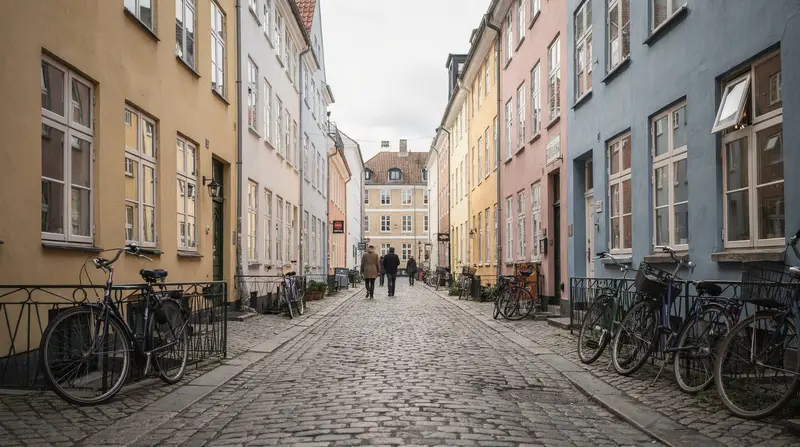
Indre By: Copenhagen's old town and what's actually worth your time
Indre By is Copenhagen's historic core — Round Tower, Rosenborg Castle, Strøget, Latin Quarter. Honest guide with DKK prices and skip/worth-it verdicts.
Copenhagen: Old Town Guided Walking Tour
Quick facts
- Getting there
- Metro M1/M2 to Kongens Nytorv or Nørreport, or walk from Central Station
- Key landmarks
- Rundetårn, Rosenborg Castle, Strøget, Christiansborg Palace
- Rosenborg entry
- 175 DKK (~23 €) adults; Royal Danish Collection (Crown Jewels included)
- Round Tower
- 40 DKK (~5.50 €) adults; climb the spiral ramp, not stairs
- Best time to walk
- Morning before 10:00 on Strøget; lunchtime in the Latin Quarter
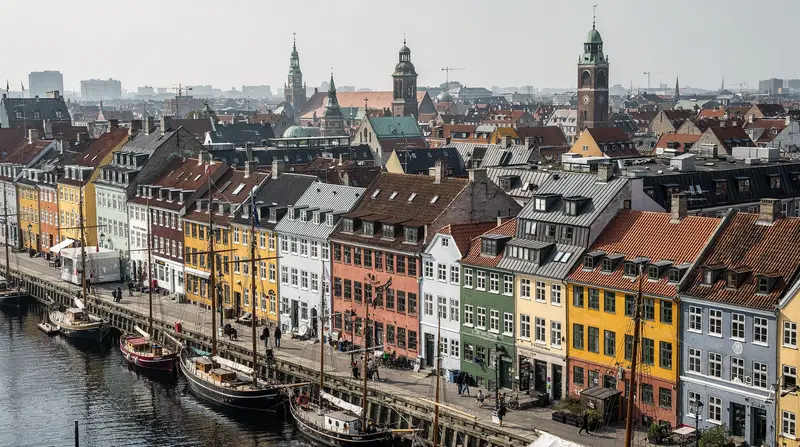
Quick answer: Indre By (literally “Inner City”) is the medieval core of Copenhagen, ringed by what were once the city’s defensive ramparts and canals. It holds the densest concentration of major sights: Christiansborg Palace on its own island, the Latin Quarter around the university, Rundetårn (Round Tower), Rosenborg Castle and its gardens, and the kilometre-long pedestrian street Strøget. Plan a full day; morning for the historic lanes, afternoon for a museum or the castle gardens.
| Where | Copenhagen city centre, inside the old ramparts |
| Cost | Rundetårn ~40 DKK, Rosenborg ~175 DKK; walking is free |
| Time needed | Full day for the main circuit |
| Getting there | Metro M1/M2 to Kongens Nytorv or Nørreport |
| Best time | Morning before 10:00 on Strøget; year-round |
Orientation: what Indre By actually covers
The neighbourhood is bounded approximately by the harbour to the east, the lakes (Søerne) to the north, the main rail corridor and Vesterbrogade to the west, and the harbour canals to the south. Within this roughly circular area sits almost everything you see in Copenhagen tourism imagery.
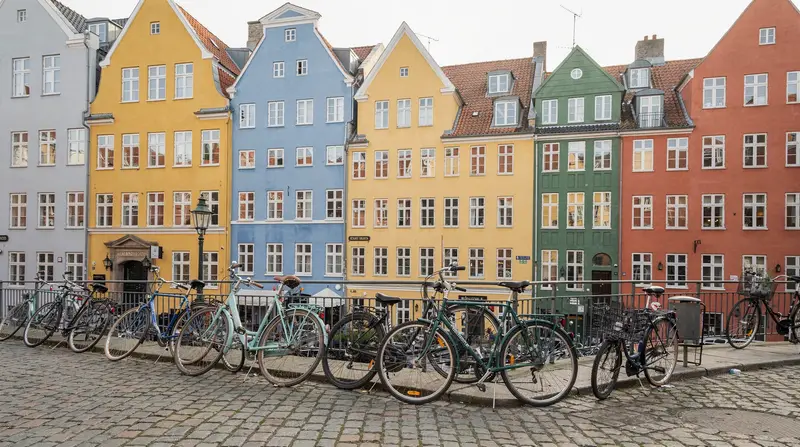
The medieval street grid in the northern part — the Latin Quarter around the University of Copenhagen (founded 1479) — is genuinely old. The streets around Gammeltorv (Old Square) and Nytorv (New Square) follow a plan that predates the fire of 1728, which destroyed a third of the city. Most of what you see was rebuilt in the 18th century.
Christiansborg Palace to the south sits on its own island, Slotsholmen, separated from the main city by two narrow canals. The parliament (Folketing), Supreme Court, and Prime Minister’s office all operate from within the same building complex — an unusual arrangement that reflects Denmark’s compact governing structure.
Strøget: the tourist-trap pedestrian street
Strøget is often described as one of the longest pedestrian shopping streets in Europe (roughly 1.1 km from Rådhuspladsen to Kongens Nytorv). What the promotional copy doesn’t mention: the majority of shops on Strøget are international chains (H&M, Zara, Lego, Bang and Olufsen showrooms) interspersed with tourist souvenir shops and café operations that are mediocre and overpriced.
Worth doing on Strøget:
- The Lego flagship store (Vimmelskaftet 37) is genuinely well-executed if you have children or an interest in the brand — it has building stations and exclusive sets not available elsewhere.
- Georg Jensen’s silver flagship (Amagertorv 4) is architecturally interesting and carries the full range of the historic Danish silversmith.
- Royal Copenhagen’s flagship (Amagertorv 6) shows the full porcelain range and has a small museum section.
Not worth your time on Strøget:
- Any café with outdoor seating directly on the pedestrian street — these are priced for captive tourists. Walk one street north or south for functional alternatives.
- The souvenir shops between Rådhuspladsen and Gammelstorv: Viking helmet magnets manufactured in Shenzhen at €8 each.
The parallel streets one block north (Studiestræde, Larslejsstræde, Sankt Peders Stræde) — the “Latin Quarter” — have independent cafés, second-hand bookshops, vintage clothing and neighbourhood restaurants. This is where Copenhagen residents who need to be in Indre By actually go.
Rundetårn: the Round Tower
Built in 1642 under Christian IV, the Round Tower (Rundetårn) is the defining visual landmark of the Latin Quarter — a squat brick cylinder with a copper spiral on top. The climb to the observation platform at 34.8 metres is via a spiral ramp, not stairs (the original purpose was to allow horse-drawn carts to carry books to the astronomical observatory at the top). Tsar Peter the Great reportedly rode a horse to the top in 1716; his wife followed in a carriage.
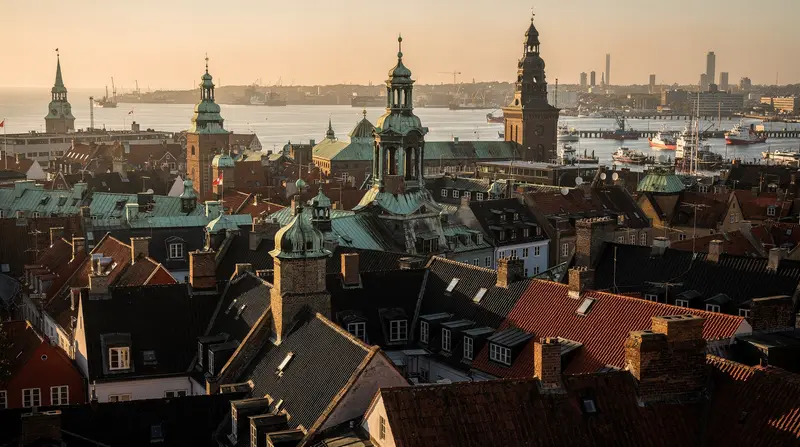
Entry is 40 DKK (~5.50 €) for adults, 5 DKK for children. The view over the copper-green rooftops of Indre By is excellent and this is the best easy viewpoint in the city centre — better than the (also free) Christiansborg tower for understanding the old street grid. Allow 30–45 minutes.
The guided Round Tower experience with local stories adds context that the minimal on-site signage doesn’t provide — the astronomical history, the civil engineering of the ramp, the odd cultural events (including a unicycle race held inside the spiral every year).
The gallery space in the middle of the tower (between the entrance and the observation level) hosts temporary exhibitions — check the current programme if this is of interest.
Rosenborg Castle and the King’s Garden
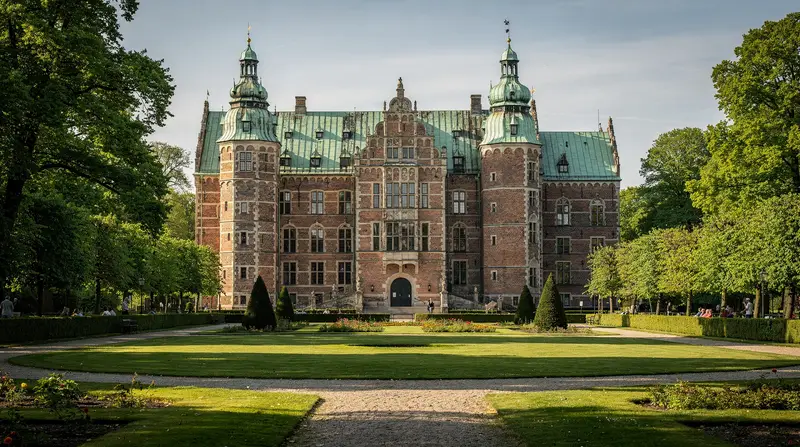
Rosenborg Castle (Rosenborg Slot) is a small Dutch Renaissance palace built by Christian IV between 1606 and 1633, now housing the Danish royal family’s historic treasury and art collection — including the Crown Jewels in the basement.
Entry is 175 DKK (~23 €) for adults, which covers the full castle and treasury. The Crown Jewels display (the regalia used at coronations and state occasions) is in a basement vault; the gem collection is genuinely impressive and includes Christian IV’s personal ornaments. The rooms above display furniture, paintings and royal artefacts chronologically from the 1600s through to the early 20th century — it’s a functioning royal museum rather than a empty ceremonial shell.
The surrounding King’s Garden (Kongens Have) is Copenhagen’s oldest royal garden (1606) and free to enter year-round. In summer it functions as a city park used heavily by locals — picnics, children’s events, the occasional free concert. It’s one of the genuinely pleasant outdoor spaces in central Copenhagen.
A combined Round Tower, Rosenborg and old town walking tour covers both major landmarks in a single half-day circuit with a guide who connects the historical threads between them — useful if this is your only day in Copenhagen.
Tip: the Copenhagen Card covers Rosenborg entry. If you’re visiting three or more paid attractions, the card often pays for itself. See the Copenhagen Card guide.
Christiansborg Palace: free towers, paid rooms
Christiansborg Palace is the third building on the Slotsholmen island site (two predecessors burned or fell into disrepair). The current building was completed in 1928 and is a neo-baroque structure that today houses Denmark’s three branches of government and various royal reception rooms.
The tower is free: Christiansborg Tower (106 metres) offers the tallest accessible viewpoint in Copenhagen, free of charge. Hours are seasonal — check the website, but generally 10:00–17:00 in summer, closed Mondays. This is the view for understanding the full city geography: you can see the harbour, the lakes, the spires of the Church of Our Saviour in Christianshavn, and on clear days the Øresund crossing toward Sweden.
The Royal Reception Rooms (140 DKK, ~19 €, closed Mondays) cover the state rooms — the large tapestries depicting Danish history are the highlight. The basement ruins of previous castles (95 DKK) are worth an hour for anyone interested in medieval Copenhagen.
Guided walking options in Indre By
The old town is compact enough to navigate independently with a map, but the historical layers — medieval, Baroque, 18th-century post-fire, 19th-century expansion — are not obvious without context. A guide makes the difference between recognising that you’re in a historic city and actually understanding why the street grid is the shape it is.
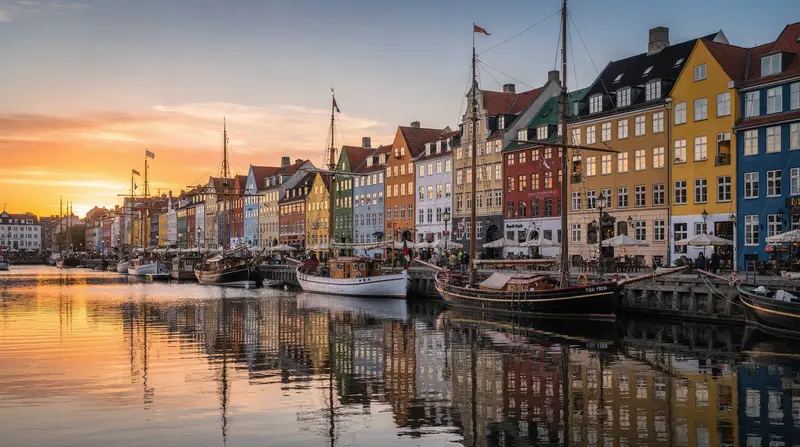
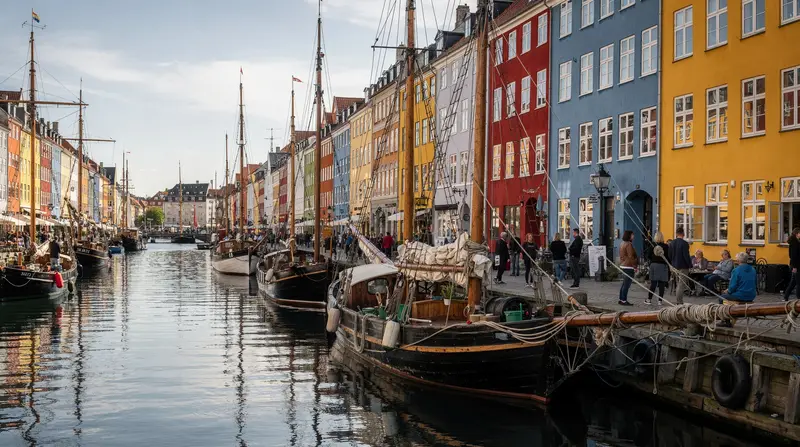
The Old Town guided walking tour covers the core Indre By circuit (Strøget, the Latin Quarter, Christiansborg, Nyhavn) in roughly 2 hours with a local guide. Suitable as a first-morning orientation before exploring independently.
For a longer version covering areas beyond the standard tourist circuit, the highlights and hidden gems tour goes into the backstreets of the Latin Quarter and the lesser-known northern parts of Indre By, including the area around Nørreport and the botanical gardens.
If you prefer to set your own pace, the self-guided audio tour covers the major landmarks on your own schedule — useful if you want to stop longer at specific points without a group.
Eating in Indre By without getting ripped off
The closer you are to Strøget and Rådhuspladsen, the worse the food-to-price ratio. Two strategies:
Go north toward Nørreport: the cafés and lunch restaurants along Nørre Voldgade and around Kultorvet square are more local-facing. A lunch special (typically two pieces of smørrebrød plus a beer or water) runs 130–165 DKK (17–22 €).
Find the Latin Quarter side streets: Studiestræde between Vester Voldgade and Nørre Voldgade has several café-restaurants with honest pricing. Café Norden on Amagertorv is a Strøget institution that’s become tourist-heavy but still offers reasonable open sandwiches (110–140 DKK per piece) in a quality setting.
Torvehallerne: 10 minutes north of Nørreport station, the covered market is the best lunch option in the area. Fishmonger stalls sell fresh shrimp bought by the bag (75–90 DKK per 100g), smørrebrød counters operate from 11:00, and Hallernes Smørrebrød is consistently the most recommended. Coffee from The Coffee Collective inside is excellent (45–55 DKK for a flat white).
Coffee in Indre By: The Coffee Collective (Jægersborggade branch is better but the Torvehallerne location is convenient), Darcy’s Kaffe (Fiolstræde), and Ricco’s Coffee Bar (Nansengade) are the honest options. Coffee on Strøget from chain operations runs 55–70 DKK for mediocre output.
The Church of Our Lady and the Cathedral
Vor Frue Kirke (Church of Our Lady) on Frue Plads is Copenhagen’s cathedral and a building that consistently surprises visitors who expect medieval drama. The current structure is neoclassical (completed 1829) after the British navy’s 1807 bombardment destroyed the previous Gothic church. Inside, Bertel Thorvaldsen’s marble statues of Christ and the Twelve Apostles — commissioned for the rebuild — are among the finest neoclassical sculptures in northern Europe.
Entry is free. Allow 20 minutes. The statues of the Apostles along the nave were Thorvaldsen’s most ambitious commission; the Christ figure at the altar has become one of the most reproduced images in Christian iconography (it was the model for the famous pose in religious imagery worldwide).
The Ny Carlsberg Glyptotek: the most underrated museum
Two minutes’ walk from Rådhuspladsen, the Ny Carlsberg Glyptotek is consistently underrated in Copenhagen tourism. The building itself — a sequence of halls around a glass-roofed winter garden with a palm-filled café — is extraordinary. The collection covers Danish and French sculpture (Rodin, Degas), a substantial ancient Mediterranean collection (Egyptian, Greek, Etruscan, Roman), and French impressionism.
Entry is 115 DKK (~15 €) for adults; free on Sundays. The winter garden café is one of the more pleasant places to eat lunch in Indre By — sandwiches and salads around 120–160 DKK, reasonable coffee, sheltered from the city noise.
The Egyptian mummy collection in the basement is the most visited section — several complete mummy cases with detailed documentation of the preserved individuals inside. The French sculpture hall (containing Degas’s Little Dancer aged Fourteen and several of Rodin’s Burghers of Calais preparatory studies) is the art collection’s strongest point.
Allow 2 hours for the full museum; 90 minutes if you’re selective. The Sunday free-entry policy makes it a useful rain-day option — expect crowds but the building is large enough to absorb them.
Evening in Indre By
The neighbourhood empties somewhat after 18:00 as locals move to Vesterbro and Nørrebro for evening meals. What remains is more manageable.
Gammeltorv and Nytorv (Old Square and New Square) are two adjacent squares on Strøget that become pleasant evening spaces when the shopping crowds thin. The Renaissance fountain in Gammeltorv was installed in 1608 by Christian IV; the neoclassical Courthouse in Nytorv was built in 1815.
Ørstedparken: the park immediately south of Nørreport station (named after Hans Christian Ørsted, discoverer of electromagnetism) is a small but well-designed park with a lake, popular with after-work cyclists and joggers. A good transition point between Indre By’s sightseeing circuit and the lake walk toward Nørrebro.
Dinner near Indre By: Vestergade and Studiestræde (Latin Quarter streets) have several reasonable restaurants in the 200–300 DKK main-course range. The Thai street food at Thai Esan (Larsbjørnsstræde 11) is the consistently recommended budget option — mains at 120–150 DKK.
For the most honest restaurant concentration in reach of Indre By without tourist premium, the 15-minute walk to Vesterbro’s Kødbyen remains the better choice. See the best food Copenhagen guide for specifics.
Indre By in the rain
A wet day in Indre By is not a wasted day — the neighbourhood has an unusual density of indoor options within a short walk of each other. The Ny Carlsberg Glyptotek’s glass-roofed winter garden is a pleasant place to sit out a downpour with coffee even if you skip the collection. The National Museum of Denmark (free entry, Ny Vestergade) has enough galleries to fill a full wet afternoon. Torvehallerne, the covered food market north of Nørreport, works as both lunch and shelter. If the rain is only showers, the glazed medieval lanes around the Latin Quarter offer enough doorways and café awnings to keep moving between them without a real soaking.
Indre By with limited mobility
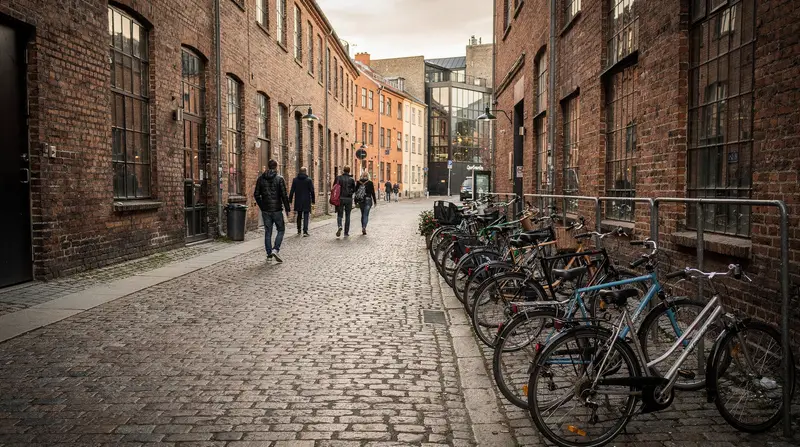
The core of Indre By — Strøget, Gammeltorv, Nytorv, and the streets around the Latin Quarter — is flat, paved, and manageable for wheelchair users and anyone with limited walking stamina, though the cobblestones on some side streets are uneven. Rundetårn’s spiral ramp (rather than stairs) is unusually accessible for a 17th-century tower and can be climbed by wheelchair users with assistance, though the gradient is genuinely steep near the top.
Rosenborg Castle’s ground floor and treasury are accessible; the upper floors involve staircases without a lift alternative. Christiansborg’s free tower has lift access. If mobility is a concern, prioritise Rundetårn’s exterior views, the free Christiansborg tower, and the flat walk along Strøget over the upper floors of Rosenborg.
Getting around Indre By
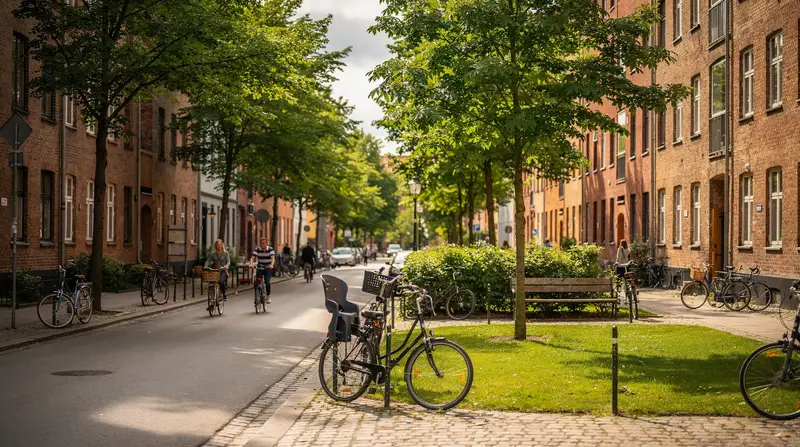
The neighbourhood is compact — from Rådhuspladsen to Kongens Nytorv is a 20-minute flat walk. Most visitors navigate on foot. Cycling within the old town is legal but the pedestrianised sections of Strøget require walking with the bike.
Metro access: Kongens Nytorv (M1/M2) for the eastern side; Nørreport (M1/M2) for the northern side and Rosenborg. Rådhuspladsen connects to the main bus network (12, 26, 33 among others).
From the airport: Metro M2 direct to Kongens Nytorv, 15 minutes. This deposits you at the eastern edge of Indre By, with Nyhavn and Strøget immediately accessible.
See the 1-day Copenhagen itinerary and 2-day itinerary for suggested sequences that cover Indre By efficiently.
Frequently asked questions about Indre By and Copenhagen’s old town
How long do I need to explore Indre By?
A first-time visitor wanting to cover the main landmarks (Round Tower, Rosenborg, Christiansborg, Strøget, the Latin Quarter) should budget a full day. If you’re adding a museum (National Museum, the SMK, or the Ny Carlsberg Glyptotek), make it a full day with an early start. The 2-day Copenhagen itinerary structures Indre By as day one.
Is the Round Tower worth the entry fee?
At 40 DKK (~5.50 €), it’s one of the best-value paid experiences in the city. The spiral ramp climb is unusual and the view over old Copenhagen is excellent. Comparable commercial observation decks in other European cities charge three to four times as much for similar or lesser views.
Is Rosenborg Castle worth visiting?
Yes, if you have any interest in Danish history or royal treasury. The Crown Jewels in the basement are genuinely impressive; the rooms display furniture and royal objects that are more personal and accessible than many larger palaces. At 175 DKK (~23 €), it’s mid-range for a major European castle attraction. The surrounding King’s Garden is free and worth visiting regardless.
What is the best free viewpoint in Copenhagen?
Christiansborg Tower is the highest accessible viewpoint and free (seasonal hours, closed Mondays). The Round Tower at 34.8 metres is lower but gives a better feel for the old town roofscape. Both are covered in more detail above.
Can I walk from Indre By to Nyhavn?
Yes — from the Kongens Nytorv end of Strøget, Nyhavn is a 3-minute walk. From the Rådhuspladsen end of Strøget (the western entrance), allow 25 minutes. This is the standard tourist circuit on foot: Central Station area to Rådhuspladsen, east along Strøget to Kongens Nytorv, down to Nyhavn, then north along the harbour.
What is the Latin Quarter in Copenhagen?
The area around the University of Copenhagen (Fiolstræde, Studiestræde, Store Kannikestræde) is known informally as the Latin Quarter — the same usage as in Paris, referring to the university district where Latin was historically the working language. It has independent bookshops, cafés, vintage clothing and the university’s main buildings. Far less crowded than Strøget and more representative of the neighbourhood Copenhageners actually use.
Are there good museums in Indre By?
Yes. The National Museum of Denmark (Nationalmuseet, Ny Vestergade — free entry) is the most comprehensive Danish historical collection. The Ny Carlsberg Glyptotek (Dantes Plads — 115 DKK, free on Sundays) has a strong ancient Egyptian collection and a large French impressionist section. Both are within walking distance of Rådhuspladsen. For art, the SMK (National Gallery) is 15 minutes north by foot or one metro stop.
Top experiences
Bookable activities with verified prices and instant confirmation on GetYourGuide.