Designmuseum Danmark Copenhagen: Danish Design from Kaare Klint to Today
Copenhagen Card: Access 80+ Attractions and Transportation
Is Designmuseum Danmark worth visiting?
Yes, for anyone with an interest in design, furniture, or Scandinavian aesthetics. The museum traces Danish design from the 1900s to the present, with iconic pieces by Arne Jacobsen, Hans Wegner, and Kaare Klint alongside fashion and ceramics. Entry is 130 DKK; Copenhagen Card accepted. Children under 16 are free.
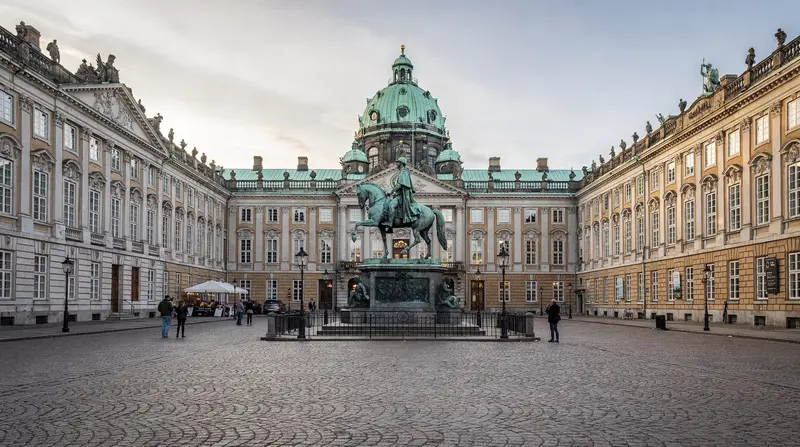
Designmuseum Danmark sits in Frederiksstaden — the elegant 18th-century district between Kongens Nytorv and Amalienborg Palace — in a building that is itself an argument for the quality of Danish craftsmanship. The former Frederiks Hospital (1757) is one of the finest Rococo buildings in Copenhagen, its yellow-painted courtyard and symmetrical facades providing an appropriate container for what is inside: a comprehensive collection tracing Danish and international design from the early 20th century to the present.
The Copenhagen Card covers entry and is worth factoring into your planning if you are visiting two or more paid attractions in a day.
| Where | Bredgade 68, Frederiksstaden |
| Cost | 130 DKK adults, under-16 free |
| Time needed | 1.5–2.5 hours |
| Getting there | 10-minute walk from Kongens Nytorv metro |
| Best time | weekday mornings, Wednesday evenings until 20:00 |
Why Danish design matters
Denmark produced a disproportionate number of the 20th century’s most influential designers and design ideas. The reasons are a combination of craft tradition (a strong guild culture persisting longer than in most industrialised countries), institutional support (the Danish Arts and Crafts Association, founded 1907, actively promoted collaboration between artisans and industry), and a particular philosophical alignment between function, material honesty, and beauty that the Danes labelled “functionalism” but which became known internationally as Scandinavian design.
The result was a body of work — furniture, ceramics, textiles, graphics, silverware, architectural hardware — that shaped how the second half of the 20th century thought about domestic objects. Arne Jacobsen’s Egg Chair (1958) still appears in contemporary interiors. Hans Wegner’s Round Chair (1949), called “The Chair” in the United States after it appeared in the Kennedy-Nixon presidential debate, remains in continuous production. Georg Jensen silver and Royal Copenhagen porcelain are still made in Denmark.
Designmuseum Danmark holds all of this and traces the entire trajectory that produced it.
The permanent collection: what to see
Danish furniture: the chairs room
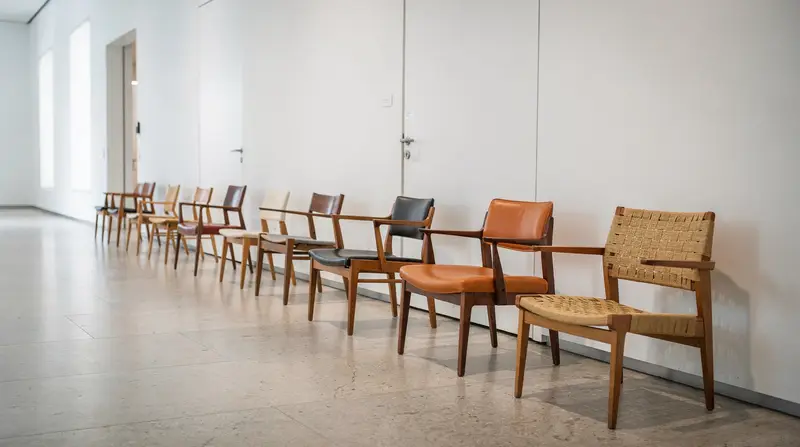
The museum’s single most visited space is the dedicated Danish furniture gallery — a large room displaying chairs, tables, and storage furniture spanning the full period of Danish modern design, from Kaare Klint’s foundational work in the 1920s through to contemporary pieces.
Key objects:
Kaare Klint (1888–1954): Klint is the figure who established the principles of Danish modern furniture. His approach — studying the proportions of the human body and designing around actual use rather than stylistic ambition — was influential across the entire Scandinavian design movement. The Faaborg Chair (1914) and the Safari Chair (1933, a reworking of a colonial design into something refined and portable) are both represented.
Arne Jacobsen (1902–1971): Jacobsen was an architect who designed furniture for his buildings. The Series 7 chair (1955), the Egg Chair (1958), and the Swan Chair (1958) — all designed for the Royal SAS Hotel — are the canonical examples. The Egg and Swan in particular demonstrate Jacobsen’s unusual approach: shell-moulded fibreglass covered in fabric, forms that look sculptural from a distance and functional from up close.
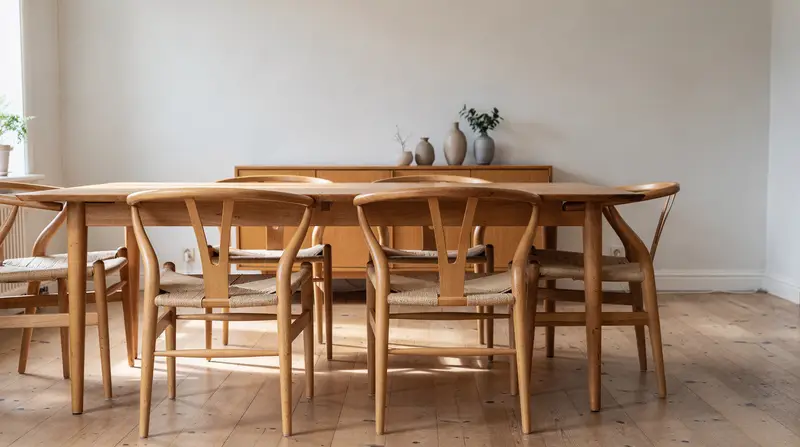
Hans Wegner (1914–2007): Wegner designed over 500 chairs in his lifetime. The museum displays several of the most significant: the Round Chair/The Chair (1949), the Wishbone Chair/Y Chair (1950), the Valet Chair (1953) with its jacket-back headrest. Wegner’s work is defined by an extraordinary understanding of wood joinery and a preference for visible craft — no piece looks machined, even when it is.
Nanna Ditzel (1923–2005): The most significant female figure in mid-century Danish design. Her hanging basket chair (1959) and her silverware for Georg Jensen are both represented.
Danish fashion and textiles
A significant portion of the museum is devoted to Danish fashion history, from the handicraft traditions of the 19th century through the global emergence of Danish fashion in the 21st century (Ganni, Cecilie Bahnsen, Stine Goya have all shown at international fashion weeks). The textile collection includes woven fabrics by Lis Ahlmann and printed textiles by Vibeke Klint.
For visitors whose interest in design extends to clothing and surface pattern, this section is genuinely strong. It is less frequently highlighted in coverage of the museum but covers material that few other institutions document as well.
Ceramics and porcelain: Royal Copenhagen and beyond
Denmark has a strong tradition of decorative ceramics, centred on two institutions: Royal Copenhagen (founded 1775) and Bing & Grøndahl (founded 1853, merged with Royal Copenhagen in 1987). The museum’s ceramics collection traces both the distinctive Danish approaches to surface decoration — the Blue Fluted pattern, the Flora Danica service — and the development of studio ceramics in the 20th century.
The Flora Danica service, produced for Catherine the Great of Russia in 1790 (she died before it was completed) and subsequently kept in Denmark, is represented here with individual pieces. Each piece is hand-painted with a different Danish plant species, identified by its Latin name on the underside. The technical quality is exceptional.
Industrial design and product design
The museum’s 20th-century industrial design section covers Danish contributions to product design, from silverware (Georg Jensen, Henning Koppel) through audio equipment (Bang & Olufsen, whose forms are as design-conscious as any furniture) to graphic design, poster art, and typography. The Bang & Olufsen objects in particular are striking — products designed as sculpture, where the relationship between form, material, and function is as carefully considered as in any fine art object.
International design: context for the Danish achievement
A section of the museum places Danish design in international context, with significant objects from Italian modernism (Ettore Sottsass, Vico Magistretti), German functionalism (Braun, Bauhaus-adjacent objects), and Scandinavian contemporaries. This contextualisation is useful for understanding what is specifically Danish about the Danish contribution versus what is shared across the mid-century European design movement.
The building: Frederiks Hospital (1757)
Before it became a museum, the building was a hospital — Frederiks Hospital, built between 1752 and 1757 to designs by Nicolai Eigtved and Lauritz de Thurah in the Rococo style. It operated as the city’s main hospital until 1910, when a new facility was built. The building was then used for various purposes before being converted to the Museum of Decorative Art (now Designmuseum Danmark) in 1926.
The courtyard is worth 10 minutes. The proportions are elegant — a long yellow-rendered facade with a central pediment, symmetrical wings, and a cobbled courtyard that in summer has seating from the museum café. The relationship between the building and the objects inside is not accidental: the museum was placed here precisely because the quality of the architecture was considered appropriate to the quality of the collection.
The museum shop
The Designmuseum shop is one of the best museum shops in Copenhagen — a genuine design shop rather than a tourist souvenir outlet. It sells:
- Ceramics and porcelain: Royal Copenhagen pieces, contemporary Danish studio ceramics
- Jewellery: Designs referencing the collection, contemporary Danish jewellery designers
- Textiles and homeware: Woven items, cushions, tea towels with heritage patterns
- Books: Design history, architecture, monographs on individual Danish designers (strong selection, good prices)
- Children’s design items: Age-appropriate design books and objects
The shop is accessible without a museum ticket.
The café
The museum café occupies part of the ground floor near the courtyard entrance. It serves coffee, pastries, and light lunch plates at prices that are fair by Copenhagen standards (coffee 50–65 DKK, a lunch plate 120–150 DKK). In summer, there is courtyard seating. The café attracts a mixed crowd of museum visitors and local neighbourhood regulars — a good sign.
Danish design and its philosophical foundations
Danish modern design did not emerge from nowhere. It was the product of a specific intellectual environment — the confluence of Functionalism (the idea, imported from the German Bauhaus and reinforced by Danish architects like Kay Fisker and Steen Eiler Rasmussen, that form should serve function), the craft tradition of the Danish Arts and Crafts movement, and a broader social democratic belief that beautiful, well-made objects should be available to ordinary people rather than only to the wealthy.
Kaare Klint was the figure who most clearly articulated this synthesis. His approach was essentially empirical: measure the human body, measure the activities the furniture supports (sitting at a table, reading, eating), and then design from those measurements outward. The proportions of his furniture are derived from human proportions, not from artistic convention. This sounds obvious in retrospect; in the 1920s it was genuinely radical.
The Designmuseum’s permanent collection can be read as an extended demonstration of this idea. The chairs by Klint, Wegner, and Jacobsen are beautiful, but their beauty is inseparable from their functional rightness — they work better than comparable chairs from the same period because they were more carefully thought through. The museum’s arrangement of the collection invites this comparison: you see chairs from different periods and different national traditions alongside each other, and the Danish objects consistently show their thinking.
Danish fashion: an emerging international story
The fashion section at Designmuseum Danmark has grown in prominence over recent years as Danish fashion has achieved increasing international recognition. Until the 2010s, Danish fashion was known primarily within Scandinavia and through a handful of heritage names (Georg Jensen, Bruuns Bazaar). The emergence of Ganni as an internationally recognised brand, followed by Cecilie Bahnsen and Stine Goya’s presence at international fashion weeks, has changed the conversation.
The museum’s fashion collection documents this arc — from the handicraft textiles of the 19th century through the first Danish department stores and ready-to-wear industry of the mid-20th century, to the contemporary moment. The approach is historical and analytical rather than trend-focused; the museum is interested in Danish fashion as a design practice and cultural form, not as a lifestyle product.
Practical information
Address: Bredgade 68, 1260 Copenhagen K
Hours: Tuesday–Sunday 10:00–18:00 (Wednesdays to 20:00). Closed Mondays.
Admission:
- Adults: 130 DKK (~17 €)
- Children under 16: Free
- Copenhagen Card: Covered
Getting there:
- Kongens Nytorv metro (M1/M2): 10-minute walk north via Bredgade
- Bus 26: Stop on Esplanaden, 5 minutes’ walk
- Amalienborg Palace: 5-minute walk south via Bredgade
- Walking from Nyhavn: 12–15 minutes north via Store Strandstræde and Bredgade
Photography: Permitted in permanent galleries. Check on temporary exhibitions.
Cloakroom: Free, compulsory for large bags.
Accessibility: Fully accessible with lifts throughout. The historic building has been adapted without compromising accessibility.
What to do around Designmuseum Danmark
The museum sits at the northern edge of Frederiksstaden, a planned royal district built from the 1740s onwards. Amalienborg Palace (where the Royal Family lives; the museum’s courtyard costs 130 DKK but the exterior palace square and daily changing of the guard at noon are free) is 5 minutes south. The Marble Church (Marmorkirken) is 5 minutes west. Nyhavn is 10–12 minutes walk south-southeast.
A natural half-day route: Kongens Nytorv → Bredgade → Designmuseum Danmark (1.5–2 hours) → Amalienborg square and changing of the guard (free, 12:00 daily) → Nyhavn for a canal cruise or walk.
How the collection is arranged for a first-time visitor
Unlike some design museums that organise strictly by chronology, Designmuseum Danmark mixes chronological and thematic display within its galleries — a deliberate choice that lets visitors see, for example, a 1920s Kaare Klint chair alongside a contemporary reinterpretation of the same joinery technique, making the continuity of Danish craft tradition visible rather than merely stated in a wall label. For a first visit, the recommended order is: start with the furniture gallery on the ground floor (the collection’s strongest section), move through ceramics and porcelain, then finish with fashion and industrial design on the upper floor, ending near the café for a break before continuing to the temporary exhibition space if one is showing.
Visitors with limited time should prioritise the furniture gallery and the Frederiks Hospital courtyard over the fashion and industrial design sections — not because those sections are weak, but because the furniture collection is what the museum is most internationally known for and what most first-time visitors specifically came to see.
Comparing Designmuseum Danmark to other Copenhagen museums
For visitors trying to decide how to allocate limited museum time, Designmuseum Danmark occupies a specific niche: it is narrower in scope than the National Museum (which covers the whole of Danish and world history) or the Glyptotek (antiquities and 19th-century French and Danish art), but deeper on the single subject of Danish modern design than either. If your interest is broad cultural context, the National Museum or SMK arguably deserve priority.
If you have a specific interest in furniture, product design, or the “why” behind Scandinavian minimalism as a design philosophy, Designmuseum Danmark rewards the visit more than a broader museum would on the same subject, and it pairs unusually well with an afternoon spent actually shopping the same design tradition rather than only viewing it behind glass.
Extending the design theme beyond the museum
Designmuseum Danmark gives the historical grounding; the Danish design shops guide covers where to actually buy contemporary pieces from the same design lineage — Hay House and Frama are both a short walk from the museum in Indre By. For the broader architectural and cultural context of Danish design thinking, the Copenhagen design guide and the Scandinavian architecture guide both cover material this museum only touches on within its own walls.
Frederiksstaden itself — the planned 18th-century royal district the museum sits in — is covered in more depth in the Frederiksstaden and Amalienborg destination guide, including the daily changing of the guard detailed in the Amalienborg changing of the guard guide. If your Copenhagen time is limited and you are prioritising museums generally, the best museums in Copenhagen guide ranks Designmuseum Danmark against the National Museum, the Glyptotek, and SMK to help you choose.
Frequently asked questions about Designmuseum Danmark
Is Designmuseum Danmark the same as the Danish Design Museum?
Yes. “Designmuseum Danmark” is the current official name; “Danish Design Museum” is the English name used in older guides and some international sources. They refer to the same institution.
Can I sit in the chairs at Designmuseum Danmark?
A small number of chairs in the collection are available to sit on. Most of the collection pieces are displayed behind barriers or ropes, as you would expect in any museum. There are reproduction pieces available to handle in some sections.
How does Designmuseum Danmark compare to the Design Museum in London?
Both are strong institutions but with different emphases. The London museum is stronger on British industrial design and fashion. Designmuseum Danmark is stronger on Scandinavian design, furniture, and ceramics, and has greater depth on the specific story of Danish modernism. If you are specifically interested in Danish or Nordic design history, Copenhagen’s museum is more focused.
Is there a good English audio guide at Designmuseum Danmark?
The museum offers an English audio guide app (downloadable free) covering the main permanent collection highlights. The in-gallery labelling is also fully bilingual in Danish and English.
What is nearby Designmuseum Danmark for lunch?
Bredgade and the surrounding streets have several good options: Café Petersborg (traditional Danish lunch, 10 minutes south), Torvehallerne market (20 minutes south by foot or a short bus ride), and various cafés in the Frederiksstaden neighbourhood.
Do I need to book in advance?
Advance booking is not required for the permanent collection. For popular temporary exhibitions, booking ahead can save queue time, particularly on weekends. Online tickets can be purchased via the Designmuseum website.
Frequently asked questions — Designmuseum Danmark Copenhagen: Danish Design from Kaare Klint to Today
How much does Designmuseum Danmark cost?
Entry is 130 DKK for adults. Children under 16 are free. The Copenhagen Card covers admission. There is no separate ticket for temporary exhibitions — one ticket covers everything currently on display.Where is Designmuseum Danmark?
Bredgade 68, Frederiksstaden, Copenhagen. It is a 10-minute walk from Kongens Nytorv metro station (M1/M2) or a short walk from Amalienborg Palace. Bus 26 stops nearby.What are the highlights of Designmuseum Danmark?
The collection of iconic Danish chairs (Kaare Klint's Faaborg Chair, Arne Jacobsen's Egg and Swan, Hans Wegner's Wishbone/Round Chair), the Danish fashion collection, Royal Copenhagen and Bing & Grøndahl porcelain, and the industrial design section covering Danish product design from the 1950s to the present.How long does Designmuseum Danmark take?
1.5–2.5 hours for a focused visit. Design enthusiasts may want 3+ hours; visitors with a general interest will typically be satisfied in 90 minutes. The building itself adds time — it's worth walking slowly through the 18th-century hospital courtyard.Is the building at Designmuseum Danmark worth seeing?
Yes. The museum occupies the former Frederiks Hospital (1757), one of the finest Rococo buildings in Copenhagen. The yellow-painted courtyard and the building's proportions are beautiful. The architecture is part of the experience.Is Designmuseum Danmark good for children?
Children under 16 are free. The museum has some interactive elements, and the furniture collection is tangible and engaging. It is less specifically child-focused than the National Museum's children's section or Den Blå Planet, but older children with design or art interests tend to engage well.Does Designmuseum Danmark have a shop?
Yes, one of the best museum shops in Copenhagen. It sells Danish design objects, ceramics, textiles, jewellery, and books, most at fair prices relative to design shops elsewhere in the city.
Top experiences
Bookable activities with verified prices and instant confirmation on GetYourGuide.