What is hygge? The Danish concept, stripped of clichés
What does hygge mean?
Hygge (pronounced hoo-guh) is a Danish word for a quality of cosiness, togetherness and ease that makes an ordinary moment feel good. It is not a product or a lifestyle brand — it is a social and emotional atmosphere, most often experienced in small groups, and entirely resistant to being forced.
Hygge has been sold to the world as a mood board: candles, chunky knits, mulled wine, a dog by the fire. The aesthetic is not entirely wrong, but it is entirely beside the point. Hygge is an atmosphere, not a product category, and the gap between the Danish word and the English-language lifestyle industry that has grown up around it is substantial.
| What it is | A quality of cosiness, togetherness and ease — not a product |
| Pronunciation | Roughly “hoo-guh” |
| Season | Strongest winter association, but present year-round |
| Opposite | Uhygge — dread, unease, the uncanny |
| Where to feel it in Copenhagen | Small cafés, not monuments — see best cafés for hygge |
For a practical, place-by-place guide to experiencing hygge as a visitor rather than just understanding the word, see hygge in Copenhagen.
Where the word comes from
Hygge entered Danish from Old Norse, where it derives from hugr, meaning mind or mood — the same root as the English word hug, though the connection is indirect. The word appears in Danish texts from the early 19th century; the modern sense, meaning a quality of comfortable, social ease, solidified through the 19th and early 20th centuries.
It is grammatically flexible. You can have hygge (a noun), something can be hyggelig (the adjective — warm, cosy, comfortable, easy to be with), and you can hygge or at hygge sig (the verb — to enjoy oneself in a relaxed way, to make something cosy). The verb form is important: hygge is something you do, or create, not something you buy.
The concept crossed into Norwegian and there are equivalents in Swedish (mysig, mysigt) and German (gemütlich), but the Danish term has become the internationally recognised shorthand. This happened partly by accident — two books published in English in 2016, both titled variations on The Little Book of Hygge, triggered a wave of Anglo-American interest that coincided with post-2016 cultural exhaustion and appetite for comfort.
What the word actually describes
The closest English translation is something like cosiness or conviviality, but neither captures it exactly.
Cosiness implies warmth and comfort, which is part of hygge. But hygge is not primarily about physical comfort. You can have hygge in a draughty summer cabin with bad wine if the conversation and company are right. The physical setting supports hygge but does not create it.
Conviviality implies sociability, which is also part of hygge. But conviviality tends to imply some degree of energy and performance. Hygge is quieter. A hyggelig evening is often one where nothing especially remarkable happens — people talk, eat, drink, perhaps laugh, and the main quality of the evening is ease. Nobody is trying to impress anyone. Status competition is explicitly anti-hyggelig.
The sociologist Carsten Levisen, who has written academically about hygge, describes it as a cultural keyword — a word that encodes a whole cluster of values: warmth, togetherness, shelter from the outside world, equality among those present, and a kind of timelessness (hygge is associated with moments that stretch rather than rush).
The equality dimension
One aspect of hygge that gets consistently missed in the English-language coverage is its egalitarian character.
Hygge is structurally flat. The best hyggelig moments tend to happen between equals, or in situations where social hierarchy is temporarily suspended. Showing off wealth, expertise or status breaks hygge. A dinner where one guest consistently talks about their salary, their house or their extraordinary life is not hyggelig, regardless of what candles are on the table.
This connects to broader Danish cultural values — Janteloven (the informal social law against thinking you are better than others) is related though distinct. But it means the commercial hygge industry has something structurally backwards: marketing high-end products as hygge-enhancing misses the point that expensive things, conspicuously displayed, are closer to hygge’s opposite.
The genuinely hyggelig version of an evening often involves cheap or homemade food, ordinary wine, a group of people who know each other well enough not to perform for each other.
What hygge feels like in practice
Danes use the word in everyday conversation in ways that give you a sense of its texture:
“Vi hygger os” — we are hygge-ing, we are having a good, relaxed time.
“Det var hyggeligt” — it was pleasant, warm, cosy (said after a dinner, a visit, an afternoon).
“Er det hyggeligt?” — is it nice/cosy there? (said about a café, a flat, a neighbourhood).
“Hyg jer!” — enjoy yourselves, have a nice time (a parting greeting, equivalent to “have fun” but with more warmth and less pressure).
The word appears constantly in Danish life — used about people (“hun er virkelig hyggelig” — she is really warm and easy to be with), about places, about situations. A café is hyggelig if it is small, warm, low-lit, not too loud, staffed by people who are not in a hurry. A neighbourhood is hyggelig if it has a community character, accessible independent shops and places where people congregate.
Hygge versus the aesthetics that get associated with it
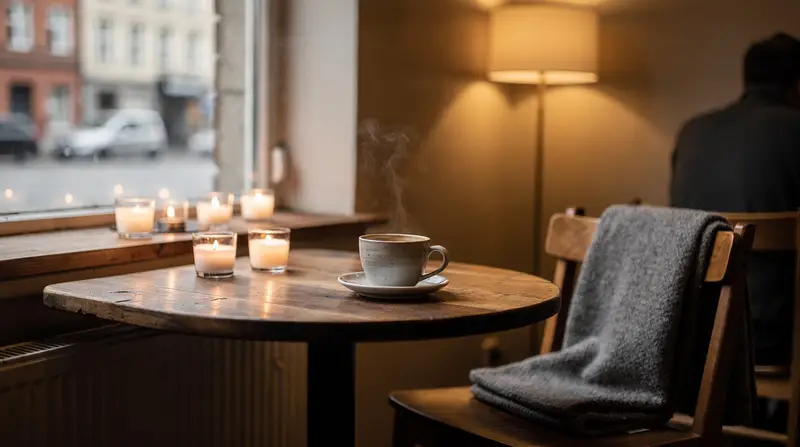
The visual hygge checklist that spread globally after 2016 — candles, woollen blankets, mugs of hot drinks, dimmed lights, open fires, wood furniture — is not wrong exactly. These things do appear in hyggelig settings because they contribute to warmth and physical comfort. But they are not hygge. They are props.
The most systematically un-hyggelig thing you can do with a candle is light it specifically so that your living room looks hyggelig on Instagram. The moment it becomes performance, it stops being hygge.
What the props list also misses: hygge happens in summer, outdoors, at modest barbecues and on ferries. It happens in the workplace — the Friday afternoon coffee ritual (fredagsslik, literally “Friday sweets”) is understood as a work-hygge moment. It happens at football matches, in allotment gardens (kolonihaver), at communal laundry rooms in apartment buildings. The setting is variable; the quality of ease and togetherness is constant.
Why Denmark, specifically
The honest answer is: nobody is entirely sure.
One structural argument is that Denmark’s long, dark winters created a particular incentive for indoor sociability — making your domestic and social environment as warm and pleasant as possible was both psychologically and practically useful in a climate where outdoor life was limited for five months of the year.
A social-historical argument is that Denmark’s Lutheran Protestant tradition placed particular emphasis on modest, non-ostentatious domestic virtue — the good home, the good community, the ethical ordinariness. This is a tradition that may have contributed to a cultural preference for the quietly pleasant over the spectacular.
The welfare state argument is that Denmark’s universal social security system reduces the anxiety that often distorts social interactions in less equal societies. When people are not competing desperately for status and resources, they can afford to value the relaxed evening.
None of these explanations is complete. They are all partial. Hygge exists and is genuinely valued in Danish life; why it crystallised as a named concept in Denmark specifically is a more complicated historical question.
What you will actually find in Copenhagen
Visitors to Copenhagen who are looking for hygge as a checklist — candles, pastry, fireplace — will find the aesthetic without difficulty. The city has been producing these things since before the word became global.
Visitors who look for the actual quality — the ease, the equal company, the absence of performance — will find that it requires participation rather than tourism. You cannot observe hygge in a café the way you can observe a monument. You can sit in a hyggelig café, drink good coffee, and be left in peace, which is a version of it. But hygge as the Danes mean it — the warmth between people who are comfortable with each other — is something you experience by staying long enough, and knowing enough people, to stop performing.
That is not a critique of Copenhagen as a tourist destination. It is just an honest description of what the word means and why the most interesting version of it is not available in a shop.
Hygge in language: what the vocabulary reveals
A language’s vocabulary is a record of what a culture cares about enough to name. Danish has an unusually dense vocabulary around social comfort, communal warmth and the quality of time spent with others.
Beyond hygge itself, Danish has: hyggekrog (a cosy nook or corner of a room, literally “hygge corner”), hyggepunkter (items that contribute to hygge — candles, cushions, warm drinks), hyggesnakke (a relaxed, unhurried conversation, literally “hygge talk”), hyggelig (the adjective, warm, pleasant, easy to be with), and uhygge (its opposite — unease, discomfort, the uncanny; used in the literary sense, and also the Danish word for “horror” as a genre).
The word uhygge is worth sitting with. Horror and coziness are antonyms in Danish, built from the same root. The most unhyggelig thing imaginable, linguistically, is dread — and the most hyggelig is its deliberate opposite: warmth, safety, ease, good company.
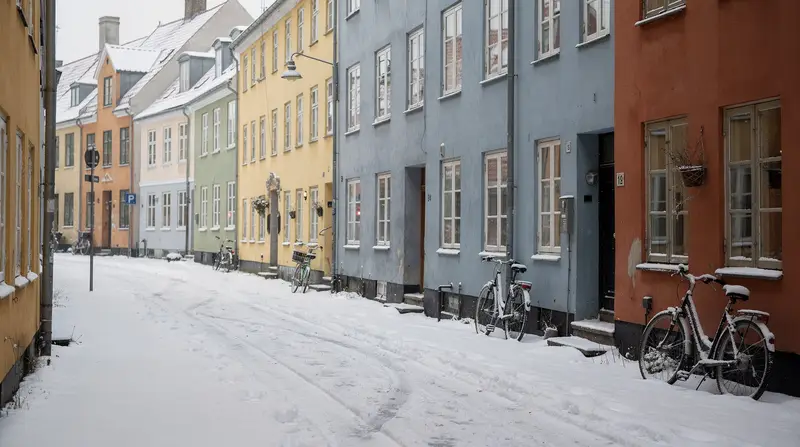
This is also why hygge has a particular seasonal texture in Denmark. The winter darkness — genuine Nordic darkness, 17 hours of night in December — is the backdrop against which hygge becomes most necessary and most legible. The cosy interior is cosy partly because of the contrast with what is outside. You cannot appreciate the warmth without acknowledging the cold.
The related Swedish word mysig and the Norwegian hyggelig (same spelling, same derivation) do similar linguistic work in their respective cultures. The German gemütlich is often cited as a near-equivalent, though it has more of a note of sentimentality and historical Romanticism than hygge carries. The Dutch gezellig is probably the closest European equivalent — a word for the quality of sociable warmth that, like hygge, resists direct translation.
Where hygge actually shows up for visitors
Understanding the word is one thing; noticing it in practice is another. Copenhagen’s small, low-lit, unhurried cafés are the most reliable place a visitor can sit inside something close to hygge without needing an invitation — see best cafés for hygge for specific recommendations.
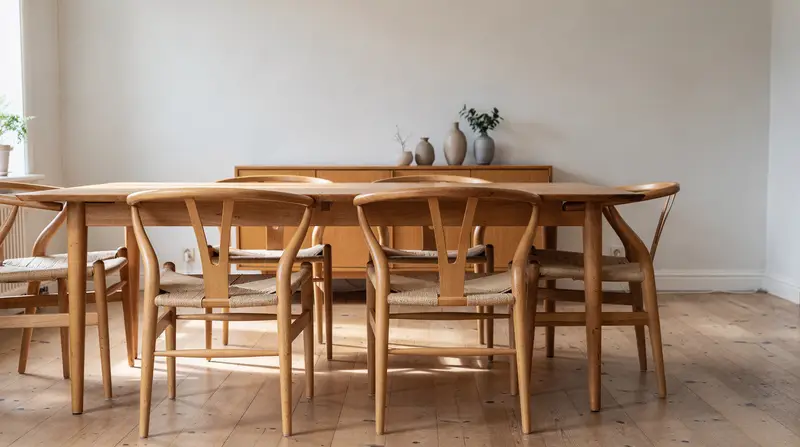
The city’s approach to interiors and everyday objects — warm wood, soft lighting, functional simplicity — is not incidental to hygge either; it is one of the reasons Danish design developed the way it did, prioritising domestic comfort over display. And because hygge has its strongest cultural pull in the dark months, Copenhagen in winter is arguably the most honest season to feel the contrast between outside cold and inside warmth that the word describes.
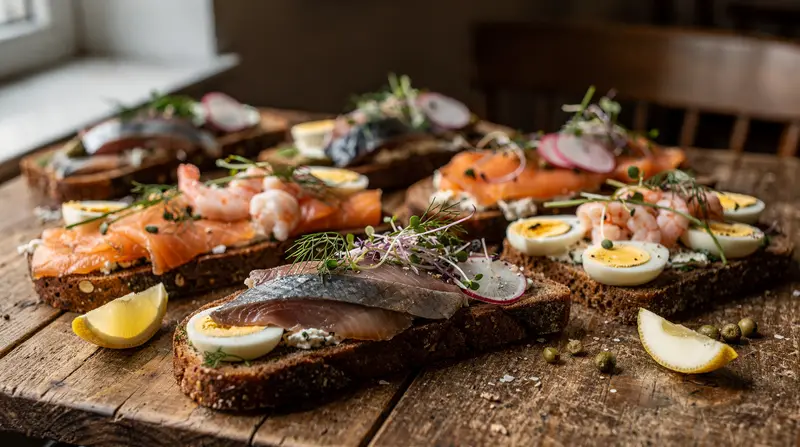
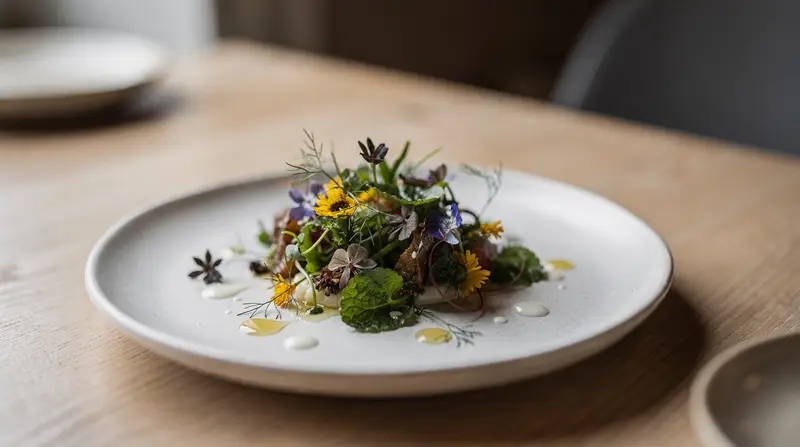
New Nordic cuisine borrows some of the same instincts — modest, ingredient-focused, communal rather than performative — though the fine-dining version of it can drift toward spectacle. The New Nordic cuisine explained guide covers where that tension sits.
Hygge and hospitality: what it means for how Danes host
One place hygge shows up reliably is in how Danes host guests at home, which matters if you get invited into a private house or apartment during your visit — a genuine possibility given how socially normal it is among Danes to bring international visitors home for dinner. The expectation is not a performance of hospitality (elaborate courses, formal seating, an anxious host) but the opposite: candles lit without comment, simple food shared at a table where nobody is rushing to clear plates, and conversation that isn’t structured around impressing anyone.
If invited, the correctly hyggelig response is to relax rather than to compliment everything extravagantly — over-praising can itself feel like a mild breach of the understated register hygge operates in. Bringing a modest gift (wine, flowers, chocolate) is expected, but an expensive one can feel slightly off-key for the same reason ostentation generally does.
There is also a practical dimension worth knowing: Danish hosts rarely rush a dinner. A meal that starts at 6 or 7pm can easily run past 10 or 11pm without anyone treating that as unusual, because the point of the evening is the unhurried time together rather than the food itself as a discrete event. Visitors used to a faster dinner-and-departure rhythm sometimes misread the lack of a clear “wrapping up” cue; the honest advice is to relax into the pace rather than watch the clock, and to let your host signal when the evening is naturally winding down.
Frequently asked questions about hygge
How do you pronounce hygge?
In Danish, hygge is pronounced roughly hoo-guh — the g is soft, almost swallowed, and the e is short. The H is aspirated, more like an h than a hard k. Non-Danes saying hig-ee or hyj are both wrong; hoo-guh is the closest English-speakers can reliably get.
Is hygge uniquely Danish?
The word is Danish and Norwegian (the Norwegian variant appears in older texts as well). The concept of warm communal conviviality is universal — most cultures have a version of it. What is arguably particular to Denmark is the extent to which hygge is consciously named, valued and protected as a social norm.
Can you have hygge alone?
Yes — Danes speak of at hygge sig, meaning to enjoy oneself in a relaxed, pleasurable way, which can be entirely solitary: reading by a lamp, taking a long bath, pottering around a kitchen on a Sunday. The social dimension is common but not obligatory.
What does anti-hygge look like?
Anxiety, rush, status competition, showing off expensive things, arguing about politics at dinner, checking your phone constantly. Anything that breaks the atmosphere of ease and equality tends to be the opposite of hyggelig.
Is hygge a winter thing?
It has a strong winter association in Denmark because low light and cold weather make the contrast between outside bleakness and indoor warmth particularly stark. But Danes also describe hygge at summer garden parties, on boats, at outdoor festivals. The season shapes the setting; it does not define the experience.
Has hygge been commercialised?
Substantially. From around 2016 onwards, hygge became a Western lifestyle-marketing term applied to everything from cushions to subscription boxes. Most Danes find this faintly absurd — the commercial hygge industry exports a visual aesthetic while missing the actual substance: the quality of social time spent with people you are comfortable with.
How does hygge connect to Danish happiness statistics?
Denmark consistently scores near the top of global happiness surveys. Researchers cite hygge as one social mechanism that helps — the cultural norm of regularly making time for low-stakes, comfortable socialising appears to protect against loneliness and social isolation. The correlation is not causation, but it does seem to be one strand in a broader fabric.