Hygge in Copenhagen: where to actually feel it
Copenhagen: Private Boat Tour - Hidden Gems & Hygge
Where can you experience hygge in Copenhagen?
The strongest hygge in Copenhagen is in small neighbourhood cafés in Nørrebro and Vesterbro, at the colonihave (allotment) gardens in late summer, at Torvehallerne on a grey morning, and on canal boats with locals in the evening. It is rarely in the tourist-heavy waterfront. The best hygge moments require some participation: ordering coffee, sitting for an hour, not rushing.
Hygge in Copenhagen is not difficult to find if you know what you are looking for. It is difficult to find if you are looking in tourist-brochure places at tourist-brochure times. The places with the most concentrated hygge aesthetic — Nyhavn waterfront, the Christmas market at Tivoli — are also the least likely to produce the actual experience: ease, equality, comfortable slowness. The following is a practical guide to where and when it tends to show up.
| Best neighbourhoods | Nørrebro, Vesterbro, Frederiksberg |
| Best season | November–February indoors, June–August outdoors |
| Cost | Free (a walk, a cemetery) to around 200 DKK (café lunch) |
| Avoid | Nyhavn at peak tourist hours, Instagram-optimised cafés |
| Time needed | No minimum — an hour in the right café is enough |
Hygge by season, side by side
| Season | Character | Where it works best |
|---|---|---|
| Winter (Nov–Feb) | Candlelit, slow, the canonical version | Neighbourhood cafés, Copenhagen in winter |
| Summer (Jun–Aug) | Outdoor, long light evenings | Harbour baths, Reffen, canal-side seating |
| Autumn (Sep–Oct) | Soft light, tourist peak has passed | Cafés with outdoor seating still open |
| Spring (Mar–May) | Relief after grey months, terraces fill fast | King’s Garden, Frederiksberg Park |
Seasonal hygge: when the city changes
Winter (November–February): the canonical season
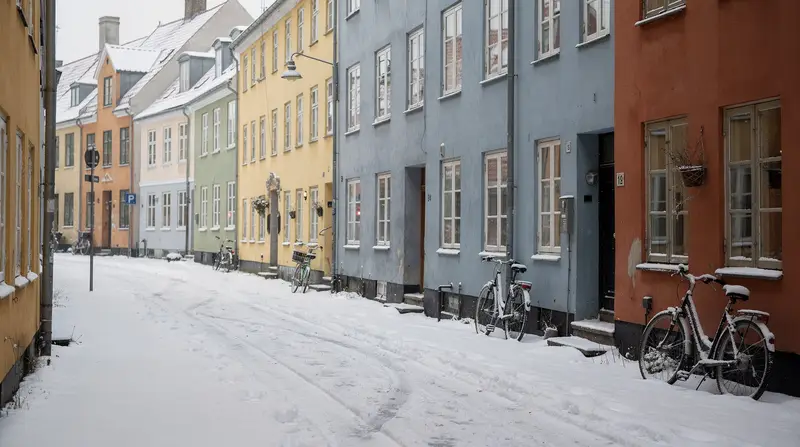
This is the version of hygge that went international. Copenhagen in winter is dark — sunrise after 8:30 in December, sunset before 16:00 — and cold, with temperatures regularly around 0°C and grey skies for days at a time. The city’s response to this is to make indoors extraordinarily good.
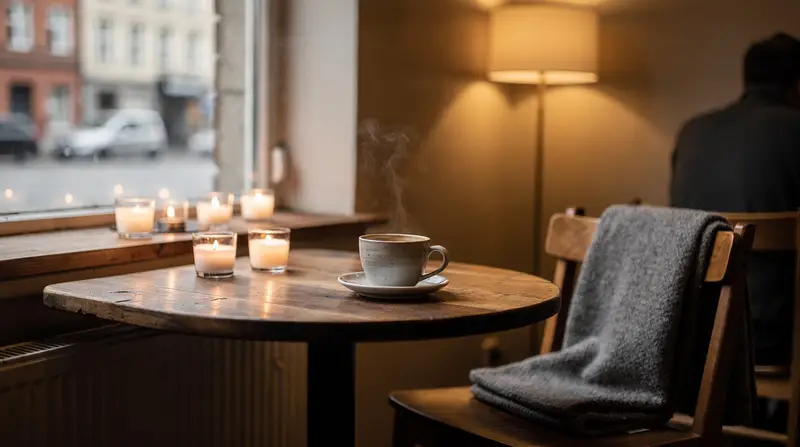
Every café lights candles in winter, including during the day. The windows of neighbourhood bakeries fog up from the warmth inside. People slow down. Conversations in cafés are longer. There is a cultural permission to spend two hours at a small table with a book and a coffee without anyone suggesting you might leave.
The Christmas season (mid-November through December) adds another layer: Tivoli’s Christmas market transforms the park with wooden stalls, warm drinks (gløgg, the spiced mulled wine, around 50–70 DKK per mug) and atmospheric lighting. The Christmas market at Nytorv and the one at Kongens Nytorv are smaller and less crowded. The canal city becomes genuinely romantic in a way that the midsummer tourist peak does not.
The hygge caveat about winter: the hotels are expensive even without the peak-season premium, and some outdoor activity options are limited. But this is the season when the city most rewards sitting still.
Summer (June–August): outdoor hygge
Copenhagen’s summer version of hygge is less immediately obvious to visitors from warmer climates, but it exists and is distinct.
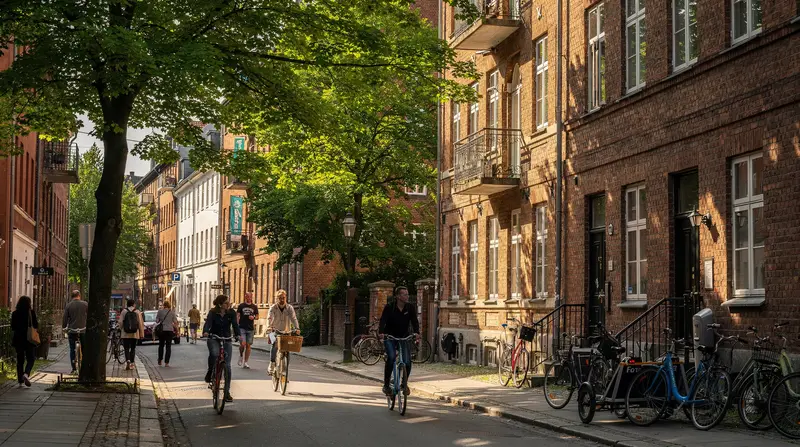
The city’s 3,300 hours of sunlight spread across a short summer create long, warm evenings with light until 22:00 in June. This is the season of the kolonihave — the allotment garden communities on the urban fringes that date to the late 19th century and house tens of thousands of Copenhageners in small garden plots with summer cabins. These are not accessible to tourists, but their existence shapes the city’s summer character: locals disappear to them on weekends, and the urban neighbourhoods take on a different tempo.
What visitors can access: the harbour baths at Islands Brygge (free, open daily in summer), the food stalls at Reffen on Refshaleøen (open May–September, a 10-minute cycle from Nyhavn), the canal-side seating at Christianshavn, and the garden cafés in the King’s Garden (Kongens Have) near Rosenborg Castle. These places have a low-key sociability in summer that approaches hygge on a good evening.
A private canal boat evening tour through the lesser-used waterways in summer — when the light is still golden at 20:00 and the inner harbour is quiet — is a legitimate hygge experience: slow, beautiful and away from crowds.
Autumn (September–October): the transition
September is arguably the best month to visit Copenhagen for a combination of hygge and liveability. The tourist peak has passed, the light is soft and horizontal, the café season still includes some outdoor seating, and the city has its everyday rhythm back.
The indoor season begins again around October — cafés move tables inside, the woollen-blanket-by-the-window tableau becomes standard.
Spring (March–May): emergence
Danes celebrate spring with visible relief. The first warm days (around 10–14°C in April) bring Copenhageners onto every available outdoor bench and café terrace. The trees in the King’s Garden and in Frederiksberg Park bloom from mid-April. This is a light, cheerful hygge — not the deep winter version but the particular pleasure of warmth returning after months of grey.
Neighbourhoods: where the atmosphere lives
Nørrebro
The neighbourhood most consistently described by Copenhageners as hyggelig is Nørrebro, particularly the Jægersborggade street (a 500-metre strip of independent cafés, ceramics studios, a roastery, a wine bar and a chocolatier) and the adjacent area around Elmegade.
Jægersborggade is a genuinely unusual street. It was a rundown area fifteen years ago; it has been refurbished by small independent businesses without becoming tourist-dependent. The coffee at The Coffee Collective roastery at the corner of Jægersborggade (espresso around 40 DKK) is among the best in Scandinavia; the queue on a Saturday morning is worth it.
Assistens Cemetery — where both Hans Christian Andersen and Søren Kierkegaard are buried — is used by local Nørrebro residents as a park: picnics, sunbathing, walking dogs. This is a genuinely Danish attitude to death and leisure that surprises many visitors. The cemetery is free and open daily.
Vesterbro
Værnedamsvej is Copenhagen’s closest equivalent to a Parisian market street — butchers, cheesemongers, a wine shop, a boulangerie-style bakery, independent restaurants. It is in Frederiksberg technically, at the western edge of Vesterbro. Lunch here — a cheese plate or open sandwich at one of the counters — is a relaxed midday hygge.
The coffee shops and bars on the Istedgade western stretch (beyond the historically rough area near Central Station, which has gentrified significantly) are popular with locals for exactly the qualities that create hygge: small, warm, known-crowd clientele.
Frederiksberg
A separate municipality surrounded by Copenhagen, Frederiksberg has a quieter residential hygge character. Frederiksberg Allé has a line of good cafés; Frederiksberg Gardens (Frederiksberg Have) is free, open daily and significantly less crowded than the King’s Garden in summer.
Christianshavn
The canal neighbourhood adjacent to the old city has a village-within-the-city quality that many residents cite as hyggelig. The canal (Wilders Canal) is quieter than Nyhavn and more beautiful in some respects. The independent café and restaurant scene here is strong. The neighbourhood also contains Christiania, the self-governing community, which has its own distinct character — very much its own thing.
Specific places with hyggelig qualities
Torvehallerne (Israels Plads): the covered food market open daily 10:00–19:00 (Fridays until 20:00, Saturdays 10:00–18:00, Sundays 11:00–17:00). The best approach is Thursday or a weekday morning — fewer people, more genuine market energy. Coffee from The Coffee Collective stall, smørrebrød from Hallernes Smørrebrød, fresh shrimp from the fishmonger. Budget 100–200 DKK for a proper lunch.
Granola (Værnedamsvej 5): a legendary Copenhagen café in a converted apothecary space. Mismatched vintage furniture, good coffee, a menu of all-day brunch items at 90–145 DKK. Genuinely hyggelig on a grey morning.
Paludan Bogcafé (Fiolstræde 10): a bookshop-café combination in Indre By, open until midnight. A student institution with second-hand books lining the walls, cheap coffee (around 35 DKK) and a noise level that stays low enough for reading. Perhaps the most literal hygge café in the city centre.
La Glace (Skoubogade 3): Copenhagen’s oldest patisserie, opened 1870. The cakes (95–135 DKK per piece) are traditional Danish confectionery: Sportskage (meringue, caramel and whipped cream), Othello (marzipan, chocolate, vanilla cream). The interior is unchanged from its 19th-century form. Extremely hygge in December.
The role of food and coffee in Copenhagen hygge
Hygge in Denmark is inseparable from food, but the food involved is rarely elaborate. The canonical foods associated with hygge are:
Kanelsnegle (cinnamon rolls): a soft, yeasted dough with cinnamon butter filling, glazed with sugar. Every good bakery makes them. Price 20–35 DKK. Consumed warm, with filter coffee, while sitting still.
Wienerbrød (Danish pastry): the collective term for the enriched, laminated pastry that Danes call wienerbrød and everyone else calls Danish pastry. Kardamommesnurrer (cardamom twists) are the current fashionable variant. Around 25–40 DKK per piece.
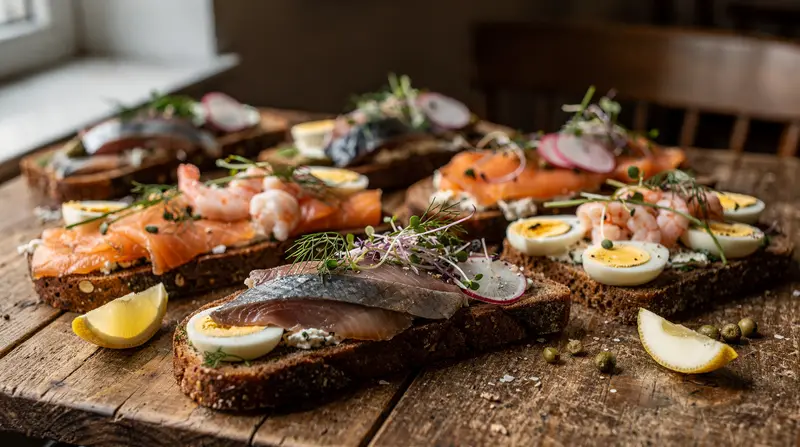
Smørrebrød (open sandwiches): the Danish lunch staple — thin rye bread (rugbrød) with various toppings. Classic combinations: pickled herring with raw onion and capers; liver pâté (leverpostej) with pickled cucumber; roast beef with remoulade and crispy onions. At a good smørrebrød restaurant, expect 90–150 DKK per piece; a lunch of two pieces is standard.
Filter coffee: not espresso, as a rule. Danish café culture is filter coffee — light roasts, carefully brewed, served in cups rather than small glasses. The country drinks more coffee per capita than almost any other. The ritual of the coffee cup — the second, the third — is a structural part of hygge.
A Danish cooking class in a private home — this GYG experience uses the word hyggelig explicitly in its title, and for once it is accurate: the format (small group, someone’s actual kitchen, Danish recipes) is closer to the genuine version of hygge than most tour experiences.
What hygge is not in Copenhagen
The Nyhavn tourist restaurants: overpriced, crowded, impersonal. The physical setting is hyggelig; the commercial operation is not. See the Nyhavn guide for where to actually eat near the canal.
The Christmas market at Tivoli in December: beautiful, atmospheric, and worth an evening — but very touristic and expensive (gløgg 65–75 DKK, mediocre food at inflated prices). The atmosphere is hygge-adjacent without being genuinely hyggelig.
Instagram-optimised cafés: Copenhagen has a growing number of very photogenic café interiors that draw a crowd specifically for photography. The presence of twelve people photographing their coffee at the next table is not hyggelig. Look for places where most of the customers are doing something other than documenting their experience.
Rushed sightseeing: you cannot hygge at speed. The traveller who is in Copenhagen for 36 hours and has sixteen things to see will not find hygge. Hygge requires you to be somewhere long enough to stop performing.
Frequently asked questions about hygge in Copenhagen
What is the most hyggelig time to visit Copenhagen?
November through February is the canonical hygge season — the contrast between grey cold outside and warm candlelit interiors is sharpest. But July and August have their own outdoor version: garden cafés, canal evenings, summer gardens. Both are valid. The worst time for hygge as a tourist is midsummer peak on a Saturday in Nyhavn or Strøget.
Which neighbourhoods are most hyggelig?
Nørrebro (particularly around Elmegade and Jægersborggade) and Vesterbro (around Istedgade’s west end and Værnedamsvej) consistently offer the most genuinely hyggelig café environments. Frederiksberg has a quieter residential hygge. The tourist-dense areas of Indre By and Nyhavn offer the aesthetic without the atmosphere.
Is Nyhavn hyggelig?
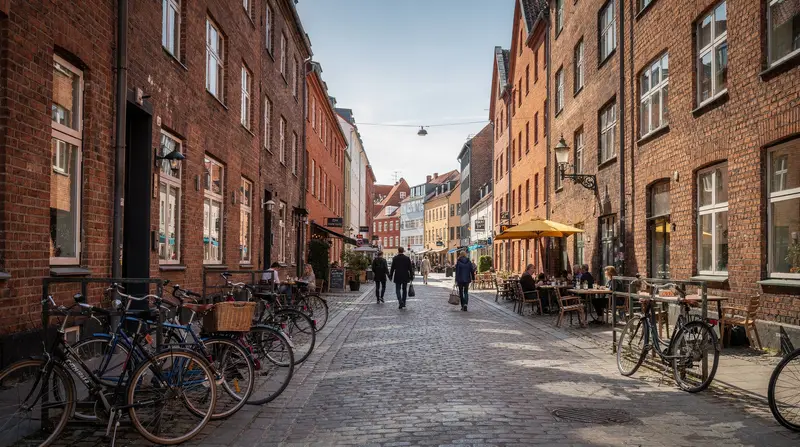
In a photographic sense, yes — the coloured townhouses and canal boats are visually warm. In the functional sense, it is difficult: the restaurants are overpriced, the crowds are heavy in summer, and the atmosphere is performative tourism rather than Danish ease. Early morning or a rainy November day at Nyhavn is significantly more hyggelig than a July Saturday lunchtime.
Do I need to speak Danish to experience hygge?
No. Copenhagen is highly English-speaking and most café staff and Danes under 60 are comfortable in English. The language barrier does not block hygge. What helps is a willingness to settle in — order a coffee, take the small table in the corner, stay for a second cup. Rushing from attraction to attraction is the real barrier.
What does a hyggelig café look like?
Small (10–20 covers at most), warm, low-ceilinged or wooden-beamed. The coffee is good. The music is low. There is no hurry. The staff know the regulars by name. Tables are close enough that you might nod at your neighbour but not so close that the noise is overwhelming. Candles on the table in winter. Natural light, or limited artificial light.
What should I eat for a hyggelig experience?
Kanelsnegle (cinnamon rolls) with filter coffee is the canonical café hygge. Smørrebrød (open sandwiches on rye bread) at a counter lunch. A shared plate of Danish pastry in the afternoon. In the evening, a simple meal with good bread, local beer, good company. Nothing that requires performance or spectacle.
Are there hyggelig experiences outside Copenhagen?
Absolutely. The coastal towns of North Zealand — Helsingør, Tisvildeleje — have a strong summer hygge character. Roskilde outside of festival season is quiet and warm. The island of Møn has farmhouse-hygge in abundance. But if you only have Copenhagen, the city has more than enough.