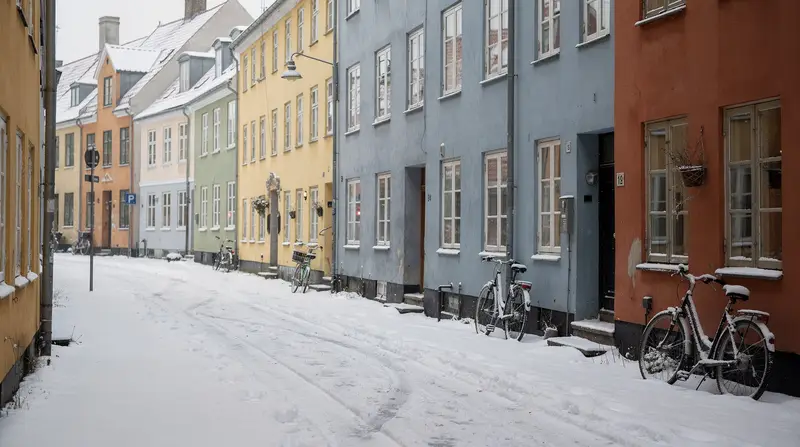
Copenhagen in winter: what it's actually like (November–February)
Copenhagen: Mikkeller Winter Craft BeerWalk
Is Copenhagen worth visiting in winter?
Yes — if you know what you are signing up for. Daylight runs from about 8:30 to 15:30 (7 hours) in December. It is cold (average 2°C in January) and frequently grey. But accommodation prices drop 25–40%, crowds nearly vanish at major sights, and the hygge atmosphere — candles, warm cafés, glögg at Christmas markets — is at its peak. Tivoli's Christmas edition (mid-November to 31 December) is genuinely worth the trip.
Copenhagen in winter is an acquired taste. The light disappears early, the wind off the Øresund bites through inadequate jackets, and the city’s famous canal panoramas look nothing like the saturated summer photos. What you get instead is something genuinely different: the city operating at its own pace, for its own people, at prices that reflect the absence of tourist pressure.
This guide is about what winter in Copenhagen is actually like — the conditions, the trade-offs, and what to do when you have seven hours of daylight and the rest of the day to fill indoors. For a lighter, less extreme version of the same low-crowd, low-cost logic, see Copenhagen in spring and autumn.
| When | November–February |
| Cost | 25–45% below summer hotel rates |
| Daylight | 7–10 hours |
| Best for | Hygge, Christmas markets, museums, low prices |
| Skip | Harbour baths, canal kayaking, formal gardens |
The honest case for winter travel
The strongest argument for visiting Copenhagen in November, January or February is financial. Average hotel rates in January are 30–45% lower than in July. A room in a three-star hotel in Indre By that costs 1,800–2,200 DKK per night in summer can be found for 1,100–1,400 DKK in late January. Budget hostels follow a similar curve.
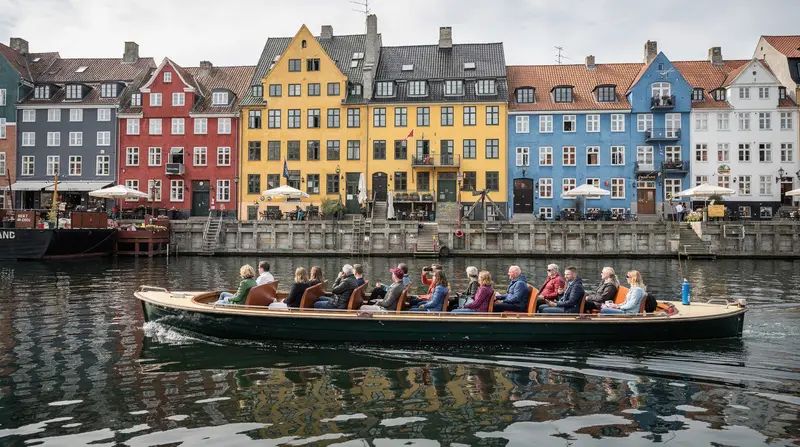
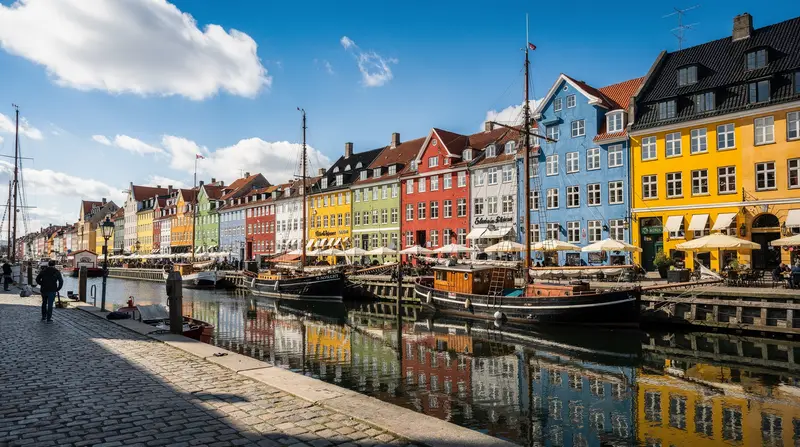
Queues at major sights — Rosenborg Castle, Christiansborg Palace, the Round Tower — are either short or nonexistent. You can walk through Nyhavn on a Wednesday morning in January without a single tour group in sight. The canal cruise you take will have twelve people on it rather than fifty.
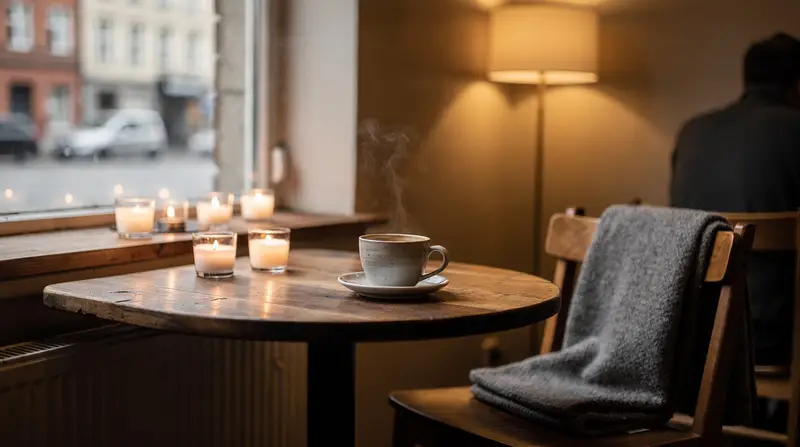
The second argument is cultural. The Danish concept of hygge is not merely marketing — it is a genuine cultural practice that is most naturally expressed in winter. Cafés light candles at 2 pm when the light goes. Restaurants are warmer and quieter. The Mikkeller Winter Craft BeerWalk runs specifically because winter evenings call for beer in warm pubs. The city is not performing for visitors; it is doing what it does.
The honest case against: if outdoor sightseeing is your priority, or you are travelling with children who need open space, or you have never experienced Nordic winter light and don’t know how you respond to extended grey darkness, the May–September window is significantly easier.
Weather by month
November: Average high 7°C, average low 3°C. Rain is frequent — 15–17 rain days typical. Daylight 8–9 hours. The month starts autumnal and ends feeling properly cold. The Tivoli Christmas edition opens mid-month.
December: Average high 4°C, average low 1°C. The darkest month — only 7 hours of daylight around the solstice. Snow is possible but not reliable. Christmas market season peaks. CPH gets busier in mid-December as Danes return for Christmas, then quietens sharply from 26 December onward.
January: Average high 3°C, average low –1°C. The coldest month. Also the quietest. Post-Christmas deflation is real — some restaurants and smaller attractions close for two to three weeks in early January for their annual break. Check ahead.
February: Average high 4°C, average low –0°C. Still cold but daylight is visibly increasing (rising from 8.5 to nearly 10 hours through the month). The city starts to feel like it is preparing for something. Prices remain low. This is arguably the best winter month for a trip.
Daylight and how to plan around it
At the solstice, Copenhagen has approximately 7 hours of daylight. Sunrise is around 8:35; sunset around 15:35. By late January you have gained nearly an hour on each end.
The practical implication: plan outdoor activities for the morning window (10:00–14:00 at most). Nyhavn at midday in December has low-angle winter light that is actually very photogenic — the coloured houses pick up a quality of light that the high summer sun flattens. The Little Mermaid, Amalienborg Palace, and the canal walks are all manageable within the daylight window if you start at 10:00.
After 15:30, transition to indoor activities. This is not a hardship. Copenhagen’s indoor options are excellent.
What to do in Copenhagen in winter
Museums
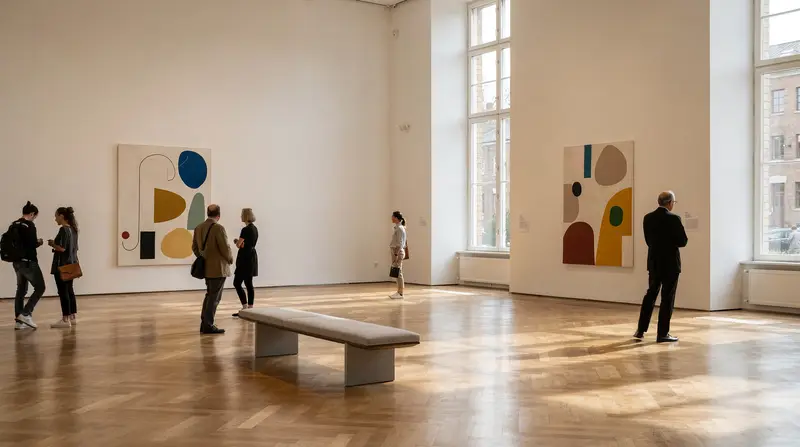
Copenhagen’s museum collection is one of the strongest in Northern Europe, and in winter you can move through it without crowds or queuing. Three particular recommendations for winter:
The Glyptotek (Dantes Plads 7, closed Mondays, free entry on Sundays) is best appreciated in winter for its winter garden — a glass-roofed tropical atrium with palm trees and a café in the centre of the building. On a grey January afternoon, spending an hour in the winter garden between rooms of French Impressionist and Danish Golden Age paintings is one of the most civilised experiences the city offers. Entry 145 DKK, children under 18 free.
The National Museum of Denmark (Ny Vestergade 10, free entry to permanent collection) covers Danish history from the Stone Age through to the 20th century across four floors. It is excellent and entirely uncrowded in winter — plan two to three hours minimum. The Viking section alone justifies the visit.
SMK — National Gallery of Denmark (Sølvgade 48–50, closed Mondays, free for under-27s) has a permanent collection that includes the best Danish Golden Age painting outside private collections. The temporary exhibitions are consistently strong. Entry 130 DKK.
The Tivoli Christmas edition
See the full Copenhagen Christmas Tivoli guide for a deeper breakdown of the market stalls, the pantomime programme and ticket strategy; the summary below covers what a first-time winter visitor needs.
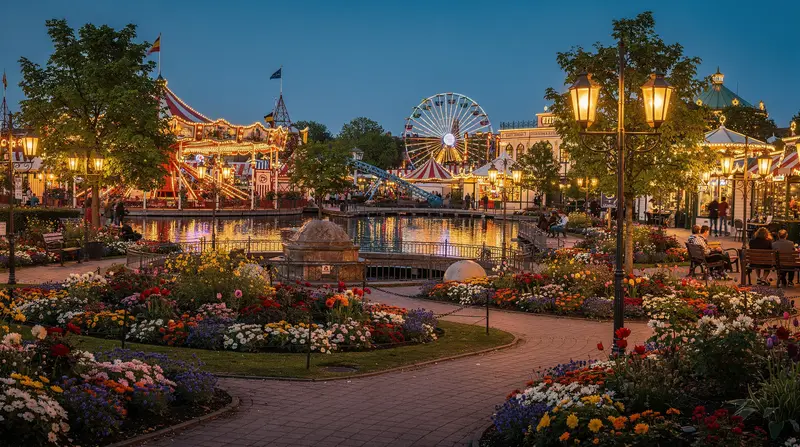
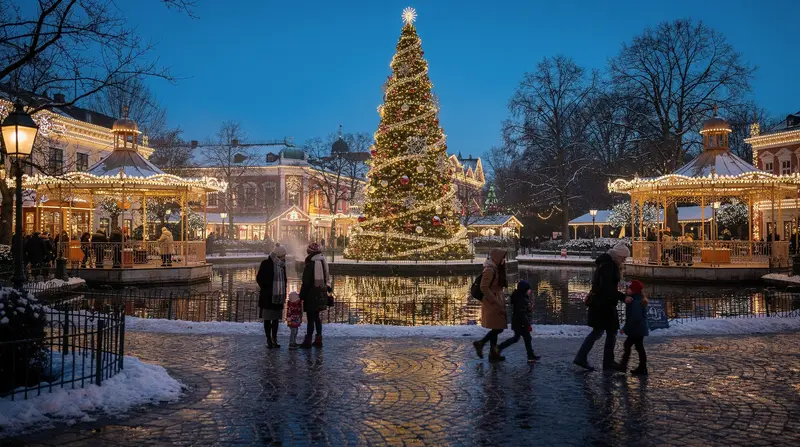
Tivoli Gardens runs its winter season from approximately 15 November to 31 December. The transformation is significant — the summer fun-park becomes something different: illuminated trees (600,000 lights in the interior), a Christmas market of around 60 stalls, a skating rink, and the iconic pantomime theatre running Christmas programmes.
The atmosphere peaks in the evenings, when the lights are at their best. Go after dark — from 17:00 onward — for the most impressive version of the illumination. Arrive at 11:00 on a weekday morning if you want calm and space.
Entry is around 200 DKK for adults in 2026; rides are paid separately or via a season ride pass. Some rides operate in mild conditions; expect fewer than in summer.
Beer and warmth
Copenhagen has one of the world’s most developed craft beer scenes, and winter is a natural time to explore it. The Mikkeller Winter Craft BeerWalk is designed specifically for the season — a guided walk through Vesterbro’s bars focusing on seasonal and winter ales, stouts, and porters. Groups are small. It runs regardless of weather because all the drinking happens indoors.
Neighbourhood bars in Vesterbro and Nørrebro are in their element in winter. Mikkeller Bar (Viktoriagade 8), Fermentoren (Halmtorvet 29A), and Brus (Guldbergsgade 29N, Nørrebro) are all warm, knowledgeable, and welcoming on a grey February evening.
Food and restaurant culture
Winter is when Copenhagen’s restaurants are at their most concentrated effort. Without the tourist flood, they are serving their regular customers and taking their cooking seriously. The smørrebrød lunch culture is particularly well-suited to winter — a proper sit-down smørrebrød at Aamanns (Øster Farimagsgade 10) or Schønnemann (Hauser Plads 16) with aquavit and pickled herring is the correct meal for a grey Thursday in January.
New Nordic restaurants that require months of advance booking in summer (Geranium, Alchemist) may have shorter lead times in January and February — worth checking if fine dining is a priority.
What to skip in winter
Harbour baths: closed from September to mid-May. No outdoor swimming in the harbour.
Canal kayaking: seasonal operators close November through March.
Rosenborg Palace Gardens: the formal gardens are beautiful in spring and summer but have little to offer in December. The palace itself is open and worth visiting.
Day-trips to beach-adjacent destinations: Dragør, the coast south of Copenhagen, and Møns Klint are all theoretically reachable but offer significantly less in winter. Helsingør (Kronborg Castle) and Roskilde (Viking Ship Museum) are both excellent year-round — winter adds a Hamlet-appropriate atmosphere to Kronborg.
Getting around in winter
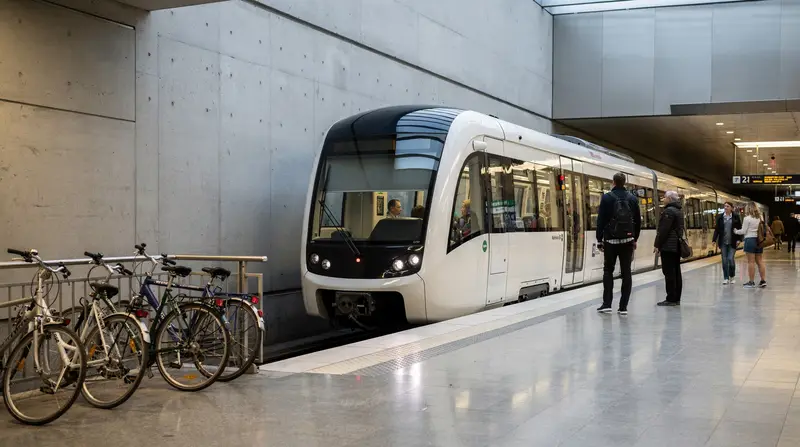
The Copenhagen Metro runs 24 hours a day, seven days a week, year-round — one of the few European capitals where this is true. It is heated and reliable regardless of weather.
Cycling is an option in winter — Danes do it in large numbers — but windproof clothing and lights are essential (darkness comes early). Bike rental is available year-round from Donkey Republic (app-based, around 40–50 DKK/hour) and some hotel concierges.
The S-Tog (suburban rail) to day-trip destinations like Helsingør and Roskilde operates on normal schedules. DSB train tickets from Copenhagen Central to Helsingør are around 98 DKK one-way.
Budget and prices in winter
Sample winter prices (January–February, excluding the Christmas period):
- Three-star hotel, Indre By or Vesterbro: 1,100–1,500 DKK/night
- Hostel dorm: 200–280 DKK/night
- Museum entry (Glyptotek): 145 DKK
- Canal cruise with hot drink: 195–250 DKK
- Smørrebrød lunch (Aamanns or similar): 200–350 DKK for 3 pieces with drinks
- Craft beer tasting walk: 350–450 DKK
- Metro day pass: 140 DKK
The Copenhagen Card (24h from 699 DKK, 72h from 1,069 DKK) covers public transport and entry to 80+ attractions. In winter, with museums as your primary activity and fewer outdoor excursions, it calculates well if you visit three or more paid attractions per day.
The hygge reality
Hygge (roughly: a quality of comfortable, convivial warmth) is often described as a Danish winter coping mechanism, and there is truth in that. It emerges not from design but from necessity: when it is dark at 15:30 and 2°C outside, the most natural response is to light candles, make coffee, and sit with people you like. The what is hygge guide covers the concept in more depth if the word itself is unfamiliar; hygge in Copenhagen covers where to actually find it as a visitor.
The visitor experience of hygge is real if you approach it correctly. It requires: going to the right cafés (smaller, neighbourhood-facing rather than tourist-facing), eating properly at the right paces, not rushing, not expecting summer energy. The best cafés for hygge guide names specific addresses rather than describing the concept in the abstract. The opposite of hygge is standing in a queue in the cold to reach something disappointing. In winter, the queue is short or gone entirely.
Is winter cheaper overall, not just for hotels?
Hotels are the largest single saving, but the effect runs through the whole trip. Restaurant set menus in January and February are sometimes discounted compared with the summer à la carte pricing, museum entry prices don’t change but you get more time per krone since there’s no queuing, and flights out of the peak window are consistently cheaper. The Copenhagen trip cost guide breaks down a full daily budget by season if you want the complete comparison rather than the winter-specific numbers here.
Practical notes
Tipping: not expected in Denmark but appreciated. 10% is generous; rounding up is normal.
VAT refunds: non-EU visitors can claim VAT back on purchases over 300 DKK at shops displaying the Tax Free sign. Keep receipts and claim at the airport.
Sunday closures: some smaller shops and cafés are closed on Sundays. Museums and restaurants are generally open.
January closures: independent restaurants sometimes close for two to three weeks in early January. Check websites before visiting specific places.
Frequently asked questions about Copenhagen in winter
How cold does Copenhagen get in winter?
December–February averages 2–4°C during the day and –1 to 1°C at night. Snow occurs most years but rarely settles for more than a few days. Wind from the Øresund makes it feel colder than the thermometer suggests — a windproof outer layer is more important than a very thick coat.
How many daylight hours does Copenhagen have in winter?
At the winter solstice (21 December), Copenhagen has about 7 hours of daylight — sunrise around 8:35, sunset around 15:35. By late January it has recovered to nearly 8.5 hours. By late February you have close to 10 hours.
Is Tivoli open in winter?
Yes — Tivoli runs a Christmas edition from mid-November to 31 December. Entry is around 200 DKK for adults. The evening illumination is the main attraction. Tivoli is closed in January, February, and most of March before the summer season opens in mid-April.
What is there to do in Copenhagen in winter beyond Tivoli?
The National Museum, Glyptotek (with its tropical winter garden), SMK, and the Design Museum are all uncrowded and excellent. Craft beer walks, food tours, and canal cruises with hot drinks run year-round. The smørrebrød lunch culture suits winter particularly well.
Is Copenhagen cheaper in winter?
Significantly — hotel prices in January–February are typically 30–45% lower than in July. Flights are also cheaper outside the summer peak. The exception is the Christmas period (mid-December to New Year), which is priced as a holiday season.
What should I pack for Copenhagen in winter?
A windproof and waterproof outer layer is the priority. Thermal base layers, mid-layer fleece, waterproof boots with insulation, hat, gloves, scarf. Layer heavily — indoor spaces are very warm.
Are the Christmas markets in Copenhagen worth it?
The Tivoli Christmas market is the most atmospheric. The Højbro Plads market near Strøget is more authentic than the Nyhavn market. The Frederiksborg Castle market in Hillerød (45 minutes by train) in late November is quieter and very traditional.
Top experiences
Bookable activities with verified prices and instant confirmation on GetYourGuide.