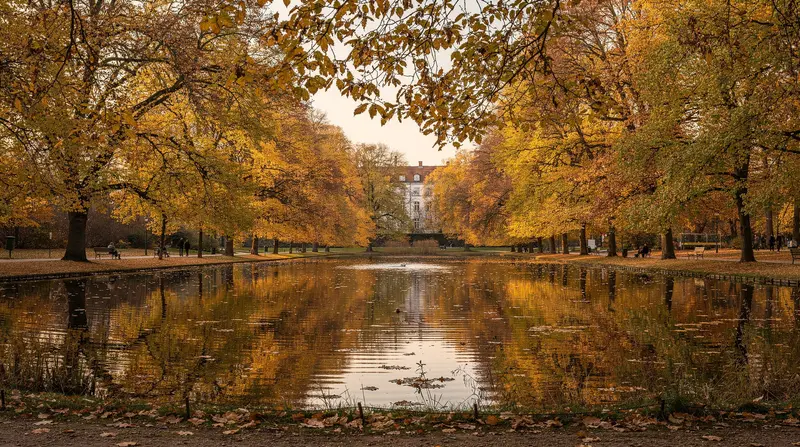
Copenhagen in spring and autumn: why May and September are the sweet spot
Copenhagen: Highlights 3-Hour Bike Tour with a Local Guide
Duration: 3 hours
Is spring or autumn better than summer for Copenhagen?
For most visitors, yes. May and September offer 13–15 hours of daylight (enough for full days out), temperatures of 12–17°C, hotel prices 20–35% lower than July, and attractions that can be visited without queuing. Tivoli opens mid-April and closes late September, so both spring and early autumn include it. The main trade-off: no harbour bath swimming in spring, and autumn weather becomes genuinely grey by October.
The argument for visiting Copenhagen in summer is obvious: maximum light, harbour swimming, festivals, outdoor energy. The argument for winter has its own coherence: hygge atmosphere, Christmas markets, low prices, museums with room to breathe. The case for May and September is less frequently made, which is partly why it is worth making here.
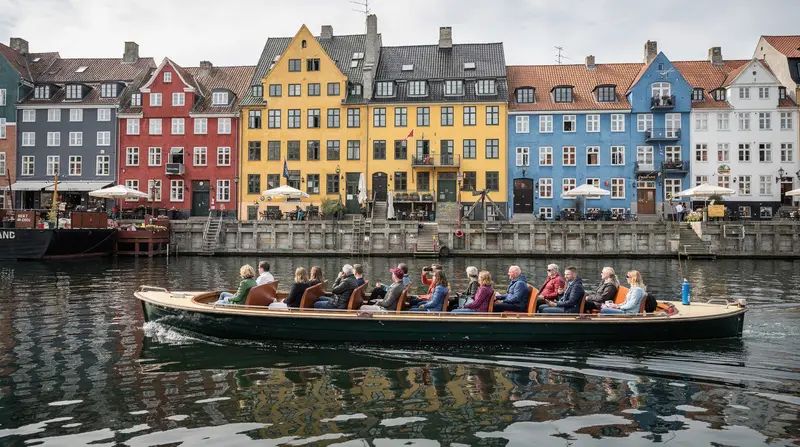
The shoulder seasons in Copenhagen — specifically late April through May and the first three weeks of September — offer a combination that neither peak summer nor deep winter can match: enough daylight for full days outdoors, temperatures that are genuinely pleasant rather than either oppressively hot or greyly cold, hotel and flight prices that have not yet reached peak, and an absence of the tour-group density that makes July in Nyhavn feel like a managed experience.
This guide covers the specific conditions in spring (April–May) and autumn (September–October), what is open, what is best, and how the two seasons compare. For the seasons this guide argues against as a default choice, see Copenhagen in summer and Copenhagen in winter — both have their own case, covered honestly elsewhere.
| Best months | May and the first three weeks of September |
| Temperature | 11–17°C |
| Daylight | 13–17 hours (spring), 11.5–14 hours (autumn) |
| Hotel prices | 15–30% below July |
| Tivoli | Open (mid-April–late September) |
Spring: April and May
April
April is a transitional month that starts cold and ends promising. Average high: 11°C. Average low: 5°C. Daylight rises from 13 hours at the start to 15 hours by the end of the month. Rain: around 12 rain days on average.
The critical April event is Tivoli reopening for its main summer season, typically mid-April. In recent years the opening has been around 20 April; 2026 dates will be confirmed in autumn 2025. Early April Tivoli is closed; late April Tivoli is open and uncrowded.
The Copenhagen Botanical Garden’s glasshouses, particularly the Palmehuset (Victorian palm house, 1874), are especially worth visiting in early spring when the contrast between the grey exterior and the tropical interior is at its most striking. The outdoor gardens begin blooming from late April.
April accommodation prices sit close to winter low-season rates — typically 15–25% below July. This makes it a strong option for budget-focused visitors who want Tivoli in the itinerary.
May
May is the best month in the shoulder seasons. The statistics:
- Average high: 15°C
- Average low: 8°C
- Daylight: 15.5 to 17 hours (rising through the month)
- Rain: 10–12 rain days
- Tivoli: open and operating at full capacity but not peak-season crowded until the final weeks
- Hotel prices: 20–30% below July
The longer daylight gives May the structural feel of summer (you can fit an enormous amount into a day) without the summer price premium or crowd levels. The harbour baths open in June, so swimming is not yet available, but for cycling, outdoor cafés, parks, and day-trips, May is hard to fault.
Kongens Have (the King’s Garden, free, adjacent to Rosenborg Castle) becomes a daily social gathering place from mid-May — Copenhageners bring picnic blankets, friends bring dogs, the café near the western gate opens its outdoor terrace. This is the garden at its best.
The Distortion festival — an annual street party that takes over different Copenhagen neighbourhoods on successive days in late May and early June — is one of the more interesting reasons to visit at this time. It is genuinely local, entirely outdoors, and free to attend the street stages (club events at night require tickets, around 150–250 DKK).
Spring day-trips
Day-trip timing in spring is excellent. Kronborg Castle (Helsingør) and Frederiksborg Castle (Hillerød) both see fraction of their July visitor numbers in May. You can walk through Kronborg’s vaulted great hall and the Frederiksberg’s ornate interiors without being shuffled through as part of a group. The train journey is the same (45 minutes) and the castle entry prices are unchanged — 150 DKK at Kronborg, 150 DKK at Frederiksborg.
Louisiana Museum of Modern Art (Humlebæk, 35 minutes by train north of Copenhagen, 185 DKK entry) has some of the best indoor-outdoor integration of any museum in Scandinavia. The sculpture garden is open year-round but is particularly good in spring when the landscape is coming into colour. May is the ideal month to visit before summer crowds arrive.
Book the North Zealand castles day tour — Kronborg and Frederiksborg without the summer queuesAutumn: September and October
September
September is the other sweet-spot month. The statistics:
- Average high: 17°C (early September often warmer)
- Average low: 11°C
- Daylight: 14 hours at the start, falling to 11.5 by the end
- Rain: 13–15 rain days (increasing through the month)
- Hotel prices: 15–25% below July
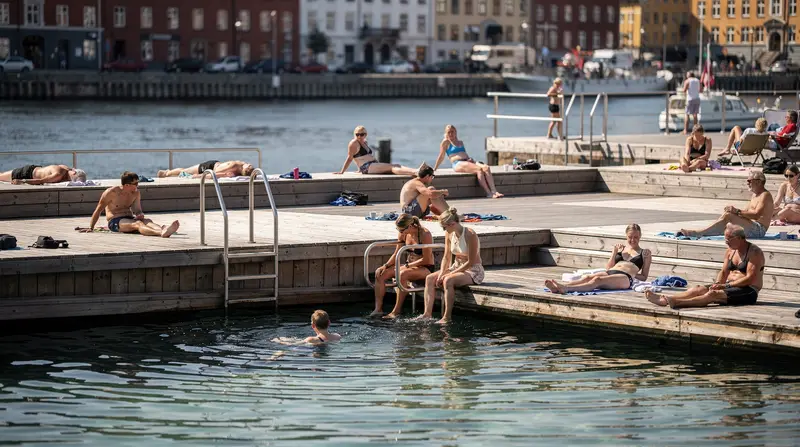
The first two weeks of September are often the best of the year. Summer crowds have thinned — European school holidays are over — but the weather retains summer warmth. The harbour baths remain open in early September if water temperature permits. Tivoli is still running (it closes late September) but without the July queues.
Restaurant culture shifts in September toward the autumn menus that Copenhagen’s kitchens do particularly well: root vegetables, cured fish, game, foraged mushrooms, fermented preparations. Visiting in September rather than July gives access to the seasonal cooking that defines New Nordic cuisine in practice rather than in concept.
Copenhagen Jazz Festival sometimes has extension events into early September. The Copenhagen Film Festival (CPH:PIX) runs in spring, but some autumn cultural programming follows: the Music at the Museum series (free concerts at the National Museum and SMK) and the autumn season at the Royal Danish Theatre and Copenhagen Opera House.
October
October is darker and rainier. Average high: 12°C, average low: 7°C. Daylight drops from 11.5 hours to 9.5 hours by the end of the month. Rain becomes more persistent. Tivoli is closed (it typically closes the last Sunday of September or the first Sunday of October in non-Christmas years).
October is still a viable option for museum-focused visitors and those who respond well to the autumn atmosphere that precedes the Tivoli Christmas season. Hotel prices return to near-winter levels. The Glyptotek’s winter garden is open year-round and increasingly appealing as the outdoor temperature drops. Some autumn forest cycling on the paths through Dyrehaven (the deer park north of the city, free) can be excellent on a clear October day.
Comparing spring and autumn
| Late April–May | September | October | |
|---|---|---|---|
| Average temperature | 11–15°C | 17°C | 12°C |
| Daylight hours | 13–17h (rising) | 11.5–14h (falling) | 9.5–11.5h (falling) |
| Hotel vs July | –20 to –30% | –15 to –25% | –30 to –40% |
| Tivoli | Open (late April) | Open (until late Sept) | Closed |
| Harbour baths | Closed | Open (early Sept) | Closed |
| Crowds | Low–moderate | Low–moderate | Low |
| Best for | Cycling, parks, day-trips | Restaurants, culture, city | Museums, hygge |
For first-time visitors who want the full Copenhagen experience at reduced cost and crowd levels, May is the single best month. For return visitors or those prioritising food culture and museums, September offers the most complete version of the city.
What Tivoli is like in spring and early autumn
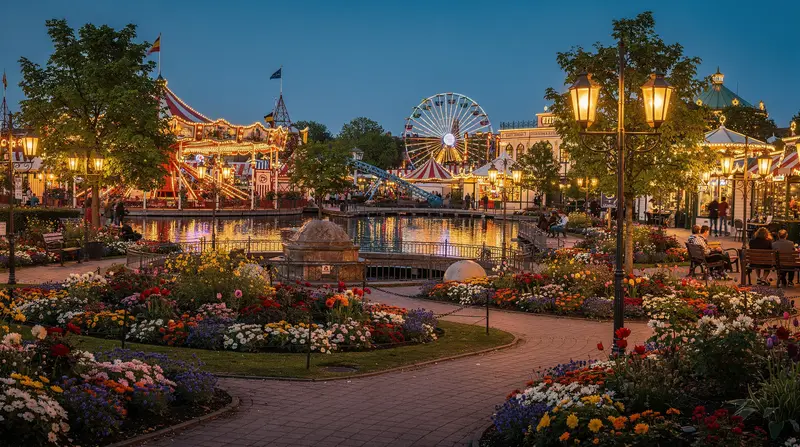
Tivoli in May is significantly less crowded than in July. The spring weekday experience — arriving at 11:00, the park one-third full — is a completely different experience from the July Saturday evening reality. Ride wait times are short; the gardens are in spring bloom; the outdoor stage programme begins.
September at Tivoli has a different feel again: the summer season is winding toward its close, some special closing-week events run, and the crowds thin perceptibly from mid-September. The rides are all operating. The gardens have the amber quality of late summer vegetation.
Entry prices are the same as peak season (around 185–210 DKK for adults in 2026). The advantage is not price reduction but experience quality — shorter queues, more space, a slower pace.
Cycling in spring and autumn
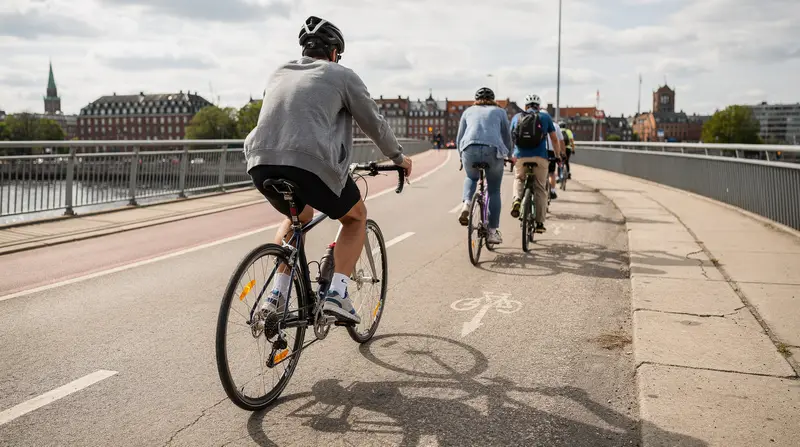
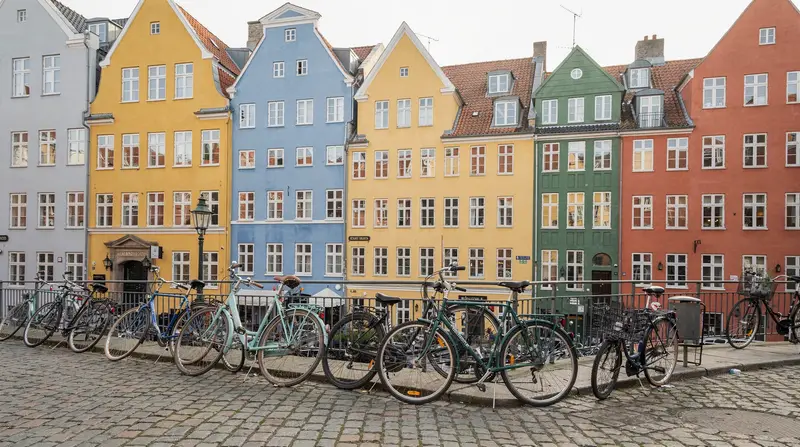
Cycling is Copenhagen’s defining transport mode, and spring and autumn are arguably the most pleasant times to use it as a visitor. The weather (15°C, light wind, long light) in May matches the city’s cycling conditions almost perfectly. Autumn cycling in September carries a slightly different atmosphere — the morning light has changed angle, the Nørrebro canal cycling route is quieter, the harbour ride to Refshaleøen has fewer other cyclists.
Guided cycling tours in spring and autumn have smaller group sizes than in July, which means more conversation with the guide and more flexibility in route. The three-hour city highlights cycling tour is particularly good in May when the parks are in flower.
Bike rental: Donkey Republic (app-based, 40–50 DKK/hour, no minimum), Bycyklen (city e-bikes, available via app, 30 DKK for 30 minutes), or hotel rental where available.
Parks and outdoor spaces in spring
Kongens Have (The King’s Garden)
The oldest royal garden in Denmark, surrounding Rosenborg Castle, is free to enter and one of the most consistently pleasant outdoor spaces in the city. In May, the formal garden layout — geometric hedges, rose beds, tree-lined allées — is maintained to a standard that the summer’s heavy visitor footfall eventually reduces. The marionette theatre in the garden runs free performances on weekend afternoons from May through August.
Frederiksberg Gardens
A larger, less formal park around Frederiksberg Palace (west of Islington, accessible by Metro M1 or bus 6A). The park has a Chinese Pavilion, a rowing lake, and a slope offering views over the city. The Copenhagen Zoo is adjacent (entry around 200 DKK for adults). This park is significantly less visited by tourists than Kongens Have and very popular with Frederiksberg’s residents for spring and autumn walks.
Amager Strandpark
The artificial beach and park south of the city (Metro M2, Amager Strand station) has excellent autumn and spring walking — the beach is wide, the horizon across the Øresund toward Sweden is clear, and in May or September there are almost no visitors compared to July. Not a swimming beach in spring (cold), but excellent for a 3–5 km coastal walk.
Food in spring and autumn: what changes
Copenhagen’s restaurant scene has a genuinely seasonal rhythm. In spring (April–May), asparagus, new potatoes, lamb, and the first Nordic strawberries (appearing from late May) dominate menus. The Torvehallerne market reflects this — spring produce is taken seriously.
In autumn (September–October), the shift is toward stored and fermented produce: celeriac, cabbage, beets, late-season mushrooms (kantareller/chanterelles disappear from menus by late October), cured salmon, and the smørrebrød preparations that use these ingredients at their best. The autumn julefrokost season begins to accelerate in October — restaurant smørrebrød menus become more elaborate.
Visiting during either season and eating at a traditional Danish restaurant (Aamanns 1921, Schønnemann, or the smørrebrød lunch counter at Torvehallerne) gives a more seasonal experience than July, when menus tend to lean toward accessible tourist favourites.
Packing for spring and autumn
Neither season is genuinely cold by Nordic standards, but both are changeable enough to catch visitors packing for the wrong day. A waterproof, windproof outer layer matters more than a heavy coat — the wind off the harbour and the Øresund adds a real chill even at 14–15°C, and a sudden shower is common in both seasons. Layering works better than a single warm garment: mornings in May can be 8°C and afternoons 18°C, and the same swing happens in reverse through September. Waterproof shoes are worth it for cobblestone streets in the old town, which hold puddles after rain. Bring at least one genuinely warm layer for October evenings, when the temperature can drop faster than the forecast suggests once the sun goes down around 18:00.
What festivals and events fall in these windows
Beyond Distortion in late May, spring and autumn carry a lighter events calendar than summer, which is part of their appeal — you are visiting for the city rather than a festival crowd. CPH:PIX (the Copenhagen International Film Festival) runs across parts of spring. The best festivals in Copenhagen guide covers the full annual calendar if event timing is a factor in choosing your dates; for most spring and autumn visitors, though, the absence of a packed events calendar is the point — you get the city functioning normally rather than performing for a festival crowd.
Budget in spring and autumn
Sample prices for May or September (compared to July):
- Three-star hotel, central: 1,300–1,700 DKK/night (vs 1,800–2,500 DKK in July)
- Budget hostel dorm: 200–280 DKK/night
- Tivoli entry: same (185–210 DKK)
- Kronborg Castle: same (150 DKK)
- Canal cruise: same (145–195 DKK)
- Restaurant dinner: same (350–600 DKK for mid-range)
The savings are primarily on accommodation and flights. A May or September trip saves 200–500 DKK per night on accommodation alone compared to July, which over a four-night stay amounts to 800–2,000 DKK — enough for a day-trip to Roskilde and a good dinner.
Frequently asked questions about Copenhagen in spring and autumn
What is the weather like in Copenhagen in May?
May averages highs of 15°C and lows of 8°C. Daylight rises from 15.5 to 17 hours through the month. Around 10–12 rain days. Generally pleasant — the best month in the shoulder season for outdoor activities.
What is the weather like in Copenhagen in September?
September averages highs of 17°C, lows of 11°C. Daylight drops from 14 to 11.5 hours through the month. Around 13–15 rain days, increasing toward October. The first two weeks often retain summer warmth.
Is Tivoli open in spring and early autumn?
Yes — Tivoli’s main season typically runs mid-April through late September. Exact 2026 dates will be confirmed by Tivoli. Spring and autumn visits are significantly less crowded than July–August.
Are prices lower in spring and autumn?
Yes — hotels run 15–30% lower than July, and flights are generally cheaper outside the peak summer window. The best value months for accommodation are October–February (excluding Christmas) and April–May.
What are the best things to do in Copenhagen in spring?
Cycling through the parks and along the harbour, the Botanical Garden in bloom, Tivoli without summer crowds, day-trips to Kronborg and Frederiksborg without tourist queues, and the Distortion festival in late May.
What are the best things to do in Copenhagen in autumn?
Museum visits (uncrowded, full collections accessible), seasonal restaurant menus, early September harbour swimming, autumn cycling to Amager beach, and the cultural programming at the SMK and Royal Theatre.
What is the Copenhagen Botanical Garden like in spring?
The Botanical Garden (near Nørreport Metro, free outdoor access) is at peak bloom in May — cherry blossoms, Alpine garden, rose beds. The Victorian Palmehuset glasshouse (50 DKK) is one of the finest 19th-century glasshouses in Scandinavia and excellent in any season.
Top experiences
Bookable activities with verified prices and instant confirmation on GetYourGuide.