Copenhagen in summer: light, crowds, harbour baths and what to actually do
Kayak Tour in Copenhagen Harbor (June, July, August)
Duration: 2 hours
Is summer the best time to visit Copenhagen?
Summer (June–August) offers the most daylight (up to 17.5 hours in June), the warmest temperatures (average 20–22°C in July), open harbour baths for free swimming, and a full festival calendar. It is also the most expensive, most crowded period, with hotel prices 35–50% higher than winter. If outdoor life and festivals are priorities, summer is the right choice. If budget and museum space matter more, May or September deliver 90% of the experience at significantly lower cost.
At 4:26 on the morning of 21 June 2026, the sun rises over Copenhagen. By 10 pm it has not yet fully set — civil twilight lingers until nearly 23:00. In the seven hours between those events, the city operates at a pace and energy that is genuinely different from the version tourists read about in winter hygge articles.
Summer in Copenhagen is not quiet, intimate, or cheap. It is crowded, expensive, and saturated with daylight in a way that Northern Europeans consider both a gift and a mild existential pressure. But it is also when the harbour opens for swimming, the outdoor café culture reaches its peak, the festival calendar fills out, and the city’s cycling infrastructure starts to make complete sense.
This guide covers what summer in Copenhagen actually involves: the weather data, the costs, the crowd reality, and how to organise your time around 17 hours of available daylight. If the crowds and prices described here sound like too much, spring and autumn genuinely deliver most of the same city for less.
| When | June–August |
| Cost | 35–50% above winter hotel rates |
| Daylight | Up to 17.5 hours (June solstice) |
| Best for | Harbour swimming, festivals, cycling, outdoor dining |
| Book ahead | Canal cruises, Rosenborg, Tivoli in July |
The light: what 17 hours of daylight actually feels like
The summer solstice on 21 June gives Copenhagen 17 hours and 37 minutes of daylight. Sunrise at 4:26 am, sunset at 22:02. It does not get astronomically dark — civil twilight continues until about 23:15. Astronomical darkness barely occurs at all in June.
By late July, daylight has reduced to about 16 hours. By late August it is around 14.5 hours — still longer than mid-May in Central Europe.
For visitors, the practical effects are:
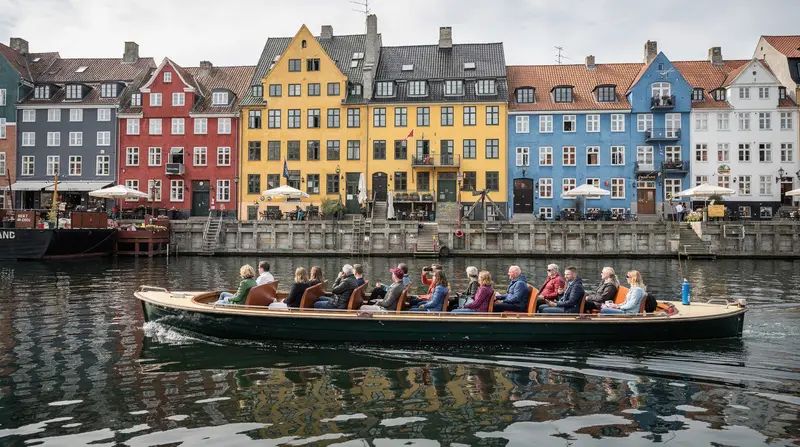
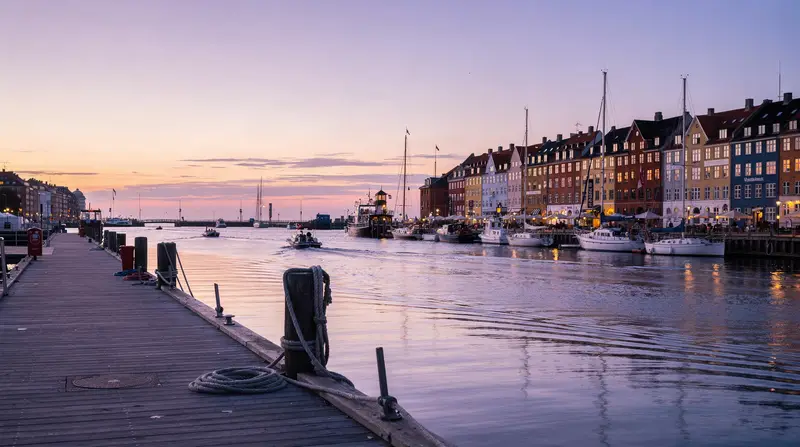
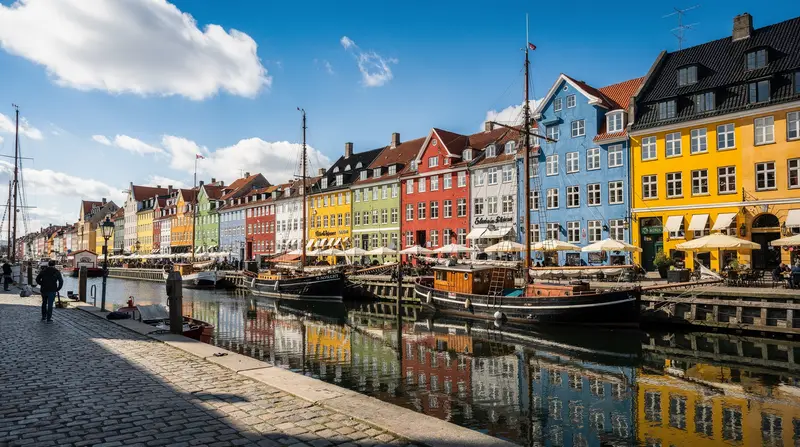
- The evening light (19:00–21:30) is golden and very photogenic. Canal light, the coloured facades of Nyhavn, Rosenborg Castle grounds — all look different and better in the summer evening.
- Sleep is disrupted unless you have effective curtains or an eye mask. Budget hotels often have thin or no blackout blinds. Pack an eye mask.
- The feeling of urgency dissolves. It is 21:00 and still light, so a second bar or an evening canal cruise seems entirely reasonable.
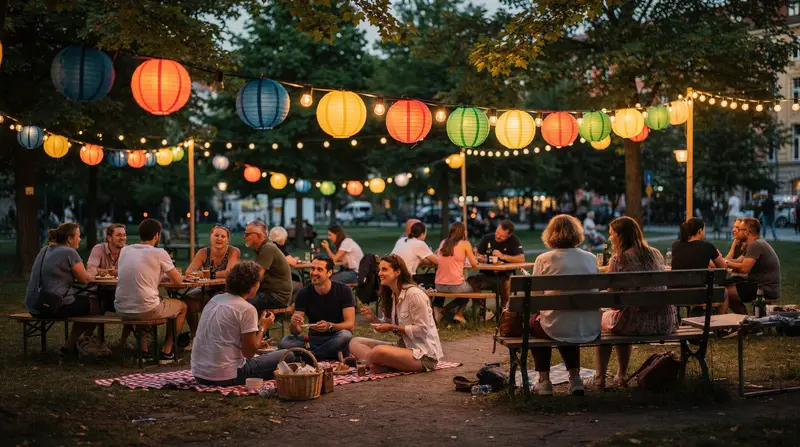
- Outdoor restaurants and café terraces are the natural default. Copenhagen has some of Europe’s better outdoor seating culture — Vesterbro’s Kødbyen, Refshaleøen, the canal-side terraces.
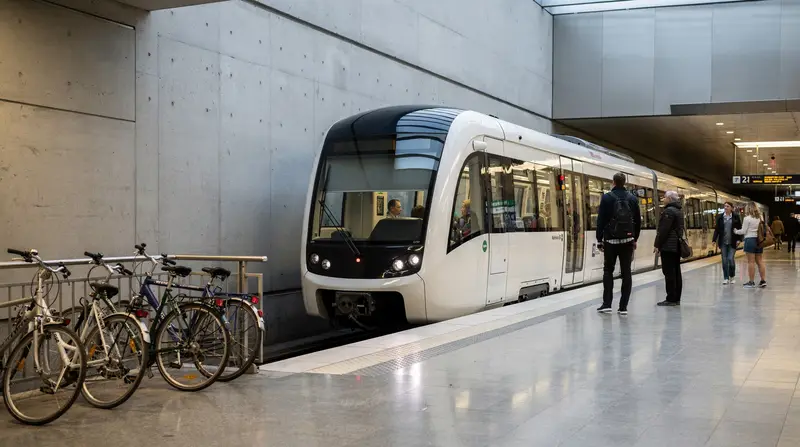
The Copenhageners use the light deliberately and enthusiastically. Afternoon and evening beach visits to Amager Strandpark (reachable by Metro M2, Amager Strand station) are a local summer routine. Outdoor swimming in the harbour is treated not as a novelty but as a daily habit.
Weather: the honest version
June: Average high 19°C, average low 11°C. The solstice falls mid-month. The month starts fresh and can feel cool on overcast days. Rain: around 13–15 rain days on average. The transition from spring to summer is not always linear — a sunny week in early June can be followed by a grey, rainy week. Bring a light rain layer.
July: Average high 22°C, average low 14°C. The warmest month. Heatwaves (30°C+) occur some years but are not guaranteed. Copenhagen has limited air conditioning in older buildings, hotels, and public spaces — a hot week in July in a budget hotel without cooling can be uncomfortable. The harbour baths are the main relief. Rain: 15 rain days average, but often short showers rather than sustained rain.
August: Average high 22°C, average low 13°C. Marginally the same as July. The season’s crowds begin to ease slightly from mid-August as European school holidays end. Hotel prices start to drop slightly. This is the month that most closely balances summer conditions with reduced peak-season pressure.
The honest caveat: Danish weather is variable. A summer visit planned around outdoor activities can hit a cold, grey week. The city is still excellent in that scenario (museums, cafés, food tours) but worth anticipating.
The harbour baths: Copenhagen’s defining summer activity
See the full harbour baths guide for a location-by-location breakdown; the summary below covers what matters for a one-off summer visit.
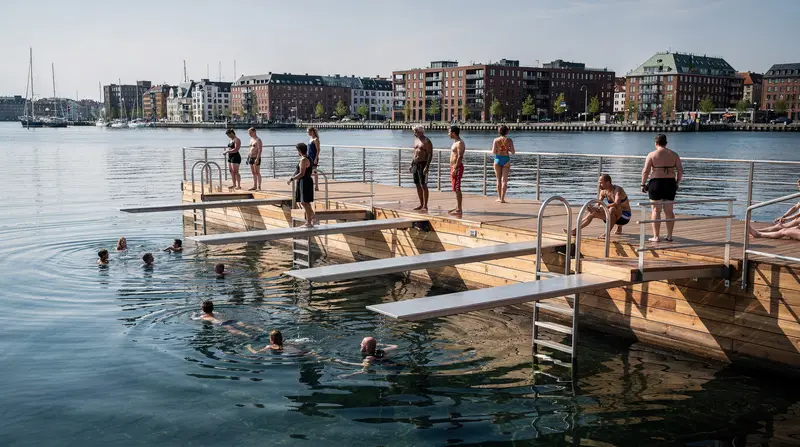
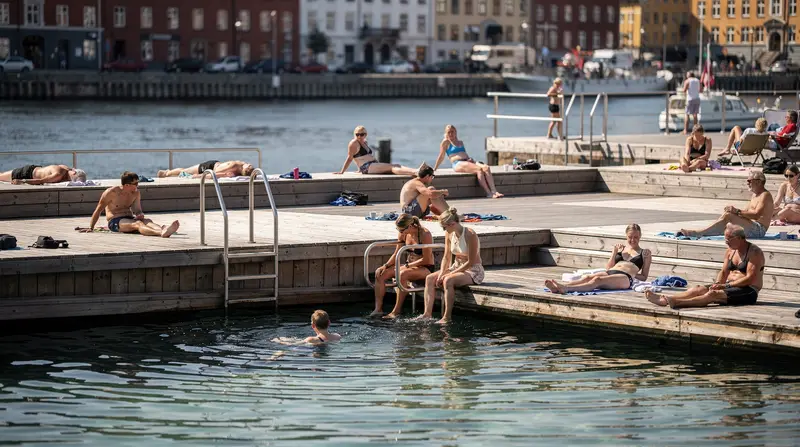
Copenhagen’s inner harbour was too polluted to swim in until the late 1990s. By 2002, water quality had improved enough that the city opened the Islands Brygge harbour bath — platforms with lanes, jumping towers, shallow family areas, and a social scene built around the idea that swimming in a European city harbour was normal.
It is now entirely normal. The water quality is monitored daily and meets EU bathing water standards consistently. In good summers, the water temperature reaches 20–22°C in July and August.
Islands Brygge Harbour Bath (Islands Brygge 14, Metro M1 Frederiksberg or S-Tog Sydhavn): The most popular and the best. Five pools of different depths, including a children’s section and a 5m jump tower. Open June to mid-August, hours approximately 7:00–19:30 (longer on weekends). Free entry. Lifeguards on duty. Arrives busy on hot days by 11:00 — go before 9:00 for space, or after 17:00 when some of the crowd leaves.
Fisketorvet Harbour Bath: Smaller, on the Vesterbro waterfront side. Less well known, slightly less crowded. Also free.
Sluseholmen: Further south, newer, and the least crowded of the three. Excellent for families. Reachable by bus 9A.
For something with more structure, kayak tours of the harbour run June through August — a two-hour guided paddle through the canals and outer harbour gives a completely different perspective on the city at water level.
How summer crowds work in Copenhagen
Understanding the crowd pattern helps with planning:
Nyhavn: Crowded from 10:00 to 20:00 throughout summer. The canal view is always accessible but the waterfront is genuinely packed on July weekends. Go at 8:00 for the quiet version. The evening light (from 19:00) makes it worth returning then — fewer people, better light, better photos.
The Little Mermaid: Permanently overcrowded in summer, to a degree that is often disorienting — the statue is very small and the viewing platform is always full. Worth seeing once, spend five minutes maximum. Do it in the morning en route to Amalienborg from a walk along the waterfront.
Rosenborg Castle and gardens: The castle queue peaks around 11:00–14:00. Go at opening time (10:00) or after 15:30. The castle gardens (Kongens Have) are free and one of the best open-air spaces in the city for a picnic. Very popular with Copenhageners on summer evenings.
Tivoli: Open daily in summer, roughly 11:00–23:00 (later on weekends). Busiest on Thursday–Saturday evenings. Monday–Wednesday daytime visits are noticeably calmer.
Canal cruises: The one-hour canal cruise from Gammel Strand is a very efficient way to orient yourself to the city. Book in advance for summer — it sells out regularly.
Summer food and outdoor eating culture
Summer changes where Copenhageners eat. The city’s outdoor eating spots come into their own:
Reffen (Refshaleøen island): Copenhagen’s largest street food market, open summer only (roughly May to October). Around 50 stalls covering every cuisine category, outdoor seating directly on the harbour, converted shipping containers. Reachable by boat (from Nyhavn, 15 minutes, around 40 DKK) or bus 9A (longer). A meal costs 80–150 DKK per person depending on what you choose. Very popular with Copenhageners, less tourist-facing than Torvehallerne. Do not miss on a warm summer evening.
Torvehallerne (Israels Plads): The indoor-outdoor food market near Nørreport Metro runs year-round but the outdoor extension comes alive in summer. Coffee from The Coffee Collective, smørrebrød from various stalls, cheese, charcuterie, seasonal produce. Budget 100–200 DKK for a market lunch.
Vesterbro and Kødbyen terraces: The former meatpacking district (Kødbyen) has a cluster of restaurants and bars with outdoor seating that work brilliantly on summer evenings. Lidkoeb cocktail bar (Vesterbrogade 72B), Kodbyens Fiskebar (Flæsketorvet 100), Jolene (Flæsketorvet 81–85). Busiest from 18:00 onward.
Ice cream: Copenhagen has a serious ice cream culture. Vaffelbageren (Fiolstræde 19, Indre By) and Ismejeriet (multiple locations) are well-regarded locals. Expect 40–65 DKK for a two-scoop cone.
Day-trips from Copenhagen in summer
Summer is the right season for day-trips — the light extends far enough to allow a full day out and an evening return.
Helsingør (Kronborg/Hamlet castle): 45 minutes by train from Central Station (around 98 DKK return), the castle and the harbour town are worth a full day. Kronborg Castle entry is 150 DKK for adults. The ferry to Helsingborg in Sweden from Helsingør takes 20 minutes (around 80 DKK return) and can turn the day into a two-country experience.
Roskilde: 25 minutes by train (around 88 DKK return). The Viking Ship Museum is genuinely excellent — the five original Viking ships were excavated from the fjord and the museum was built around them. Entry 155 DKK. The adjacent Roskilde Cathedral (a UNESCO World Heritage site, free) contains the tombs of 39 Danish monarchs. Roskilde Festival takes over the town and surrounding area in late June/early July.
Malmö (Sweden): 35 minutes by train across the Øresund Bridge (around 105–130 DKK return, check DSB website). A day in Sweden within the price of a local day-trip — different food, different architecture, a different feel from Copenhagen but easily combined. See the Malmö day-trip guide for a full itinerary.
The day-trips from Copenhagen overview covers the full range beyond these three, including Roskilde’s Viking heritage in more depth via the Roskilde Vikings guide.
Book a guided grand day trip around Copenhagen’s castles and countrysideSummer nights: the other side of the light
The northern summer nights guide covers what happens after 21:00 in June and July specifically — rooftop bars, late canal cruises, and the practical reality of a city that barely gets dark. It’s worth reading alongside this guide if evenings matter as much as days to your trip, since a 17-hour daylight window changes the rhythm of a Copenhagen evening more than most visitors expect.
Cycling in summer
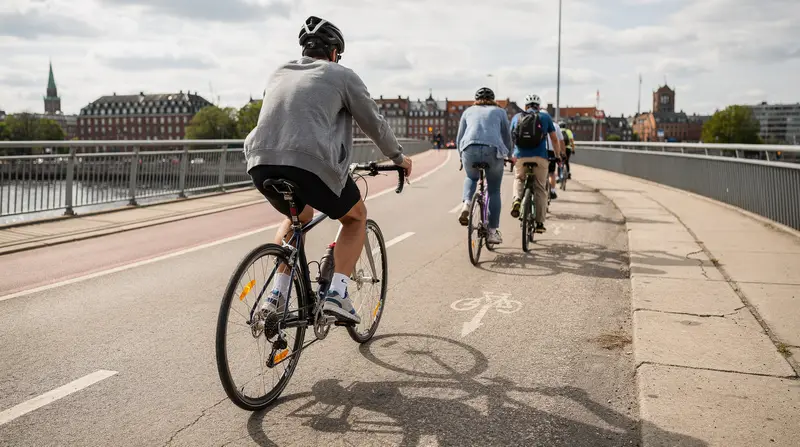
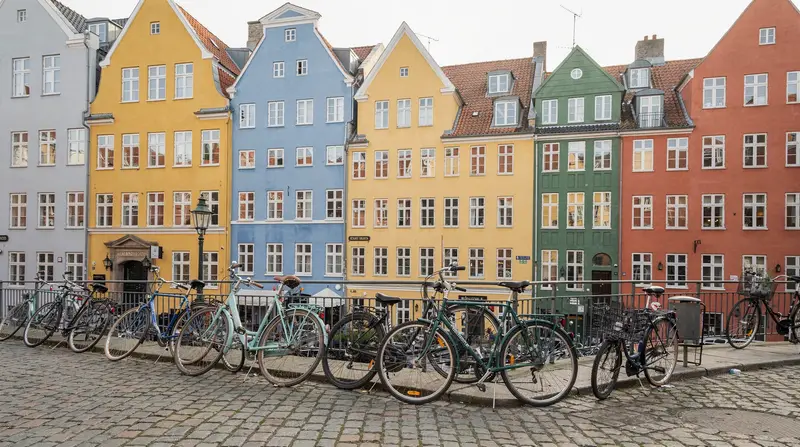
Copenhagen’s cycling infrastructure is year-round, but summer is when it makes the most intuitive sense for visitors. The weather is benign, the light lasts, and the cycling lanes are wide and continuous throughout the city and inner suburbs.
Rental options: Donkey Republic (app-based, 40–50 DKK/hour), Bycyklen (city e-bikes, 30 DKK for 30 minutes), or hotel bike rental if available. Guided bike tours cover the city highlights in 2–3 hours and provide the cycling orientation that makes solo riding easier afterward.
Summer cycling routes: Nørrebrogade through Nørrebro for the city’s most famous cycling corridor; along the harbour waterfront to Refshaleøen; out to Amager Strandpark for a beach finish; north through Frederiksberg to Charlottenlund beach.
Summer budget reality
Copenhagen is expensive year-round. Summer adds a seasonal premium:
- Three-star hotel, central location: 1,800–2,800 DKK/night in July
- Budget hostel dorm: 250–350 DKK/night
- Canal cruise (1 hour): 145–195 DKK
- Tivoli entry: 185–210 DKK
- Rosenborg Castle: 165 DKK
- Restaurant dinner (mid-range): 350–600 DKK per person with drinks
- Reffen street food meal: 120–160 DKK
- Day-trip to Helsingør: 98 DKK return train + 150 DKK castle = 248 DKK
The Copenhagen Card (24h from 699 DKK, 48h from 879 DKK, 72h from 1,069 DKK, 120h from 1,349 DKK) covers most attractions and all public transport. For a summer visit with 2+ museum visits per day, it typically breaks even or saves money.
Reducing costs in summer: cook your own breakfast if the hotel has facilities; use harbour baths instead of paying for pools; cycle rather than taxi; eat at Reffen rather than sit-down restaurants; prioritise one major paid attraction per day.
Frequently asked questions about Copenhagen in summer
How warm does Copenhagen get in summer?
July is the warmest month, averaging 22°C. Heatwaves to 30°C+ occur some years but are not guaranteed. Rain is possible throughout the summer — around 15 rain days in July, often as short showers.
How many hours of daylight does Copenhagen have in summer?
At the solstice (21 June), 17 hours and 37 minutes — sunrise at 4:26, sunset at 22:02, not fully dark until around 23:15. By late August this reduces to 14.5 hours. Pack an eye mask if you are sensitive to light when sleeping.
Are the harbour baths free?
Yes — Islands Brygge, Fisketorvet and Sluseholmen harbour baths are free and open June to mid-August. Water quality consistently meets EU bathing standards. Arrive early on hot days as they fill quickly.
How crowded is Copenhagen in summer?
July is peak season. Nyhavn, the Little Mermaid, and Tivoli are genuinely crowded. Book canal cruises, popular restaurants, and castle visits in advance. Arriving at sights at opening time avoids queues. The crowds ease noticeably from mid-August.
What are the major summer festivals?
Distortion (late May/early June, free street parties), Copenhagen Jazz Festival (July, 10 days), Roskilde Festival (late June/early July, 30km from the city). Copenhagen Pride is in August.
Is summer expensive in Copenhagen?
Yes — hotels cost 35–50% more than in winter. Book 2–3 months ahead. June and August are marginally cheaper than July. Free activities (harbour swimming, cycling, free museums such as the National Museum) help manage costs.
Can you swim in the Copenhagen harbour in summer?
Yes — the harbour is clean enough to swim and purpose-built harbour baths make it easy. Water temperature reaches 20–22°C in July and August. Islands Brygge Harbour Bath is the best option.
Top experiences
Bookable activities with verified prices and instant confirmation on GetYourGuide.