Copenhagen's long summer evenings: what to do when it's still light at 10 pm
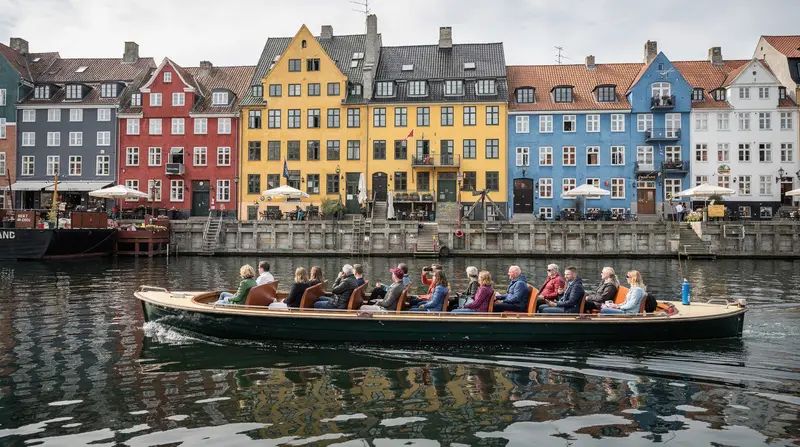
Copenhagen: Canal Cruise with Guide
Duration: 1 hour
What should you do in Copenhagen when it's still light at 10 pm?
Use the evening light as the locals do: cycle along the harbour, take a canal cruise, eat outdoors at Reffen street food market on Refshaleøen, swim at Islands Brygge harbour bath, climb the Round Tower for the sunset view around 21:30, or sit in a park with wine from a supermarket. The extended evening is the defining feature of a Copenhagen summer — plan around it rather than ending your day at a conventional time.
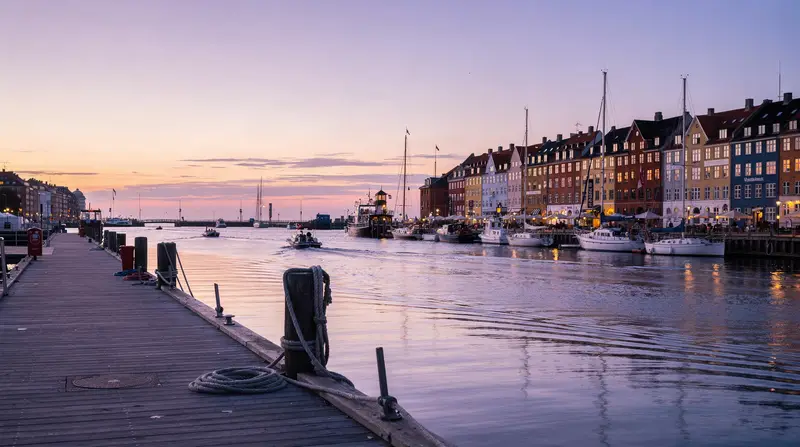
At 21:47 on a July evening, the sky above Nyhavn is the colour of a peach. The sun has been declining for hours but has not yet reached the horizon. At the outdoor tables along the canal’s south bank, every seat is occupied. No one is in any hurry. The light is so persistent that it creates a kind of temporal disorientation — it feels like mid-afternoon but the clock says nearly 10 pm.
This is the defining feature of summer at Nordic latitudes: the evening does not end when evenings are supposed to end. Copenhagen’s summer light extends the usable outdoor day to a length that Mediterranean cities, which lose their light by 20:30–21:00, cannot match. It changes how you eat, where you go, what you prioritise. This guide is about how to use those extra hours — see the Copenhagen in summer guide for the wider seasonal picture beyond just the evenings.
| Solstice sunset | 22:02 on 21 June; usable light until ~23:15 |
| Best evening activity | Canal cruise 19:00–21:00, or Reffen from 18:00 |
| Free options | Harbour bath swim, park picnic, harbour walk at golden hour |
| What to bring | Eye mask (sleep), light jacket (evening drop to 15–17°C) |
| Season | Roughly May–August for genuinely long evenings |
The physics of Copenhagen’s long evenings
At the summer solstice (21 June 2026), sunrise in Copenhagen is at 4:26 am and sunset at 22:02. Civil twilight — the period when outdoor activities, reading, and photography remain viable — extends to approximately 23:15. Between sunset and full civil twilight, the sky transitions through a sequence of pinks, oranges, and pale blues that doesn’t occur in similar form at lower latitudes where the sun drops more steeply below the horizon.
Copenhagen sits at 55.7°N — roughly the same latitude as Moscow, Edmonton, and southern Alaska. At this latitude, the solstice sun travels a shallow arc across the southern sky and takes an extended period to sink below the horizon at each end of the day. The result is not just long days but long dusks — the 90 minutes from 20:30 to 22:00 have a quality of light that photographers specifically seek out.
By late July, sunset is around 21:20. By mid-August it is 20:45. Even in late August, Copenhagen has light until after 20:30, and the evenings remain long by any standard outside of northern Europe.
The practical implication for visitors: the conventional tourist day — arrive at an attraction at 10:00, finish by 17:00, eat dinner at 19:00, be done by 21:00 — is a waste of Copenhagen’s summer resources. The best things to do in Copenhagen in summer are disproportionately concentrated in the evening hours.
What Copenhageners do with their evenings
The local response to the extended summer evening is instructive. Copenhageners use the evening light in ways that reveal exactly what the city’s infrastructure is designed for:
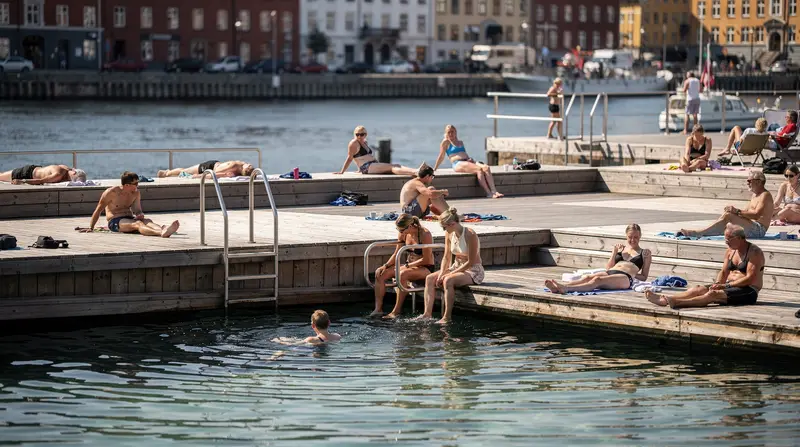
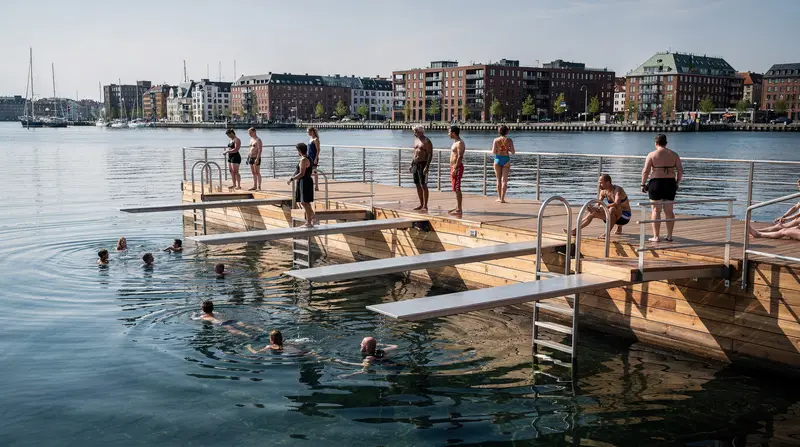
Harbour swimming: Islands Brygge harbour bath is busier from 17:00 onward than in the middle of the day. After work, Copenhageners cycle to the bath, swim for an hour, and dry on the platforms in the remaining light. The water temperature at 18:00 is the same as at noon, but the atmosphere is social and relaxed in a way that the peak midday hours are not.
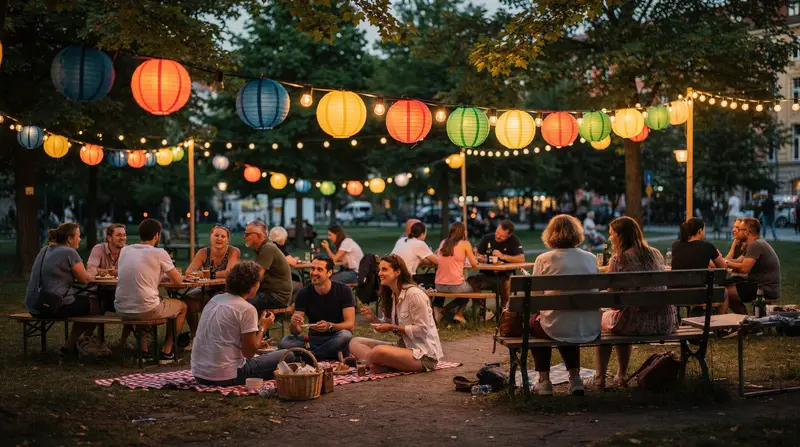
Park picnics: Kongens Have (the King’s Garden around Rosenborg Castle), Fælledparken, and Ørstedsparken fill with groups picnicking from 17:00 onward. The Danish picnic culture is specific: you bring wine (supermarket Aldi or Netto sells decent wine from 40–80 DKK per bottle), bread, cheese, and you stay until the light goes — which, in June, is close to midnight. This is free, social, and genuinely pleasant.
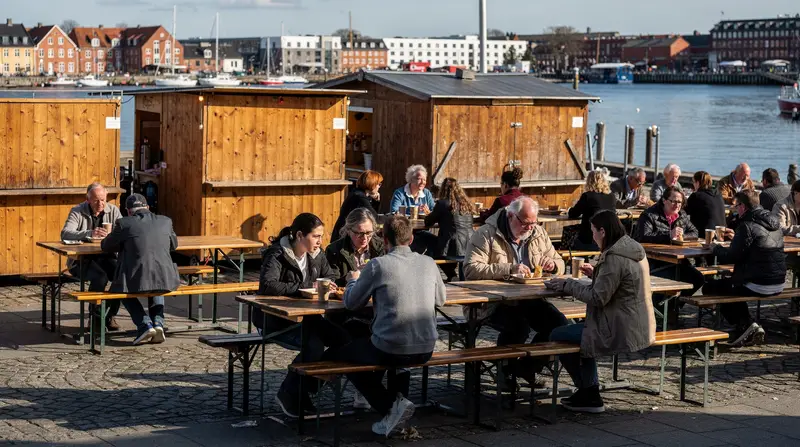
Reffen and outdoor eating: The street food market on Refshaleøen is primarily an evening destination. Copenhageners don’t go at noon; they go at 18:30 or 19:00, eat multiple small portions from different stalls, sit along the waterfront, and remain until closing. The light at 20:00 over the harbour is one of the better visual experiences the city offers.
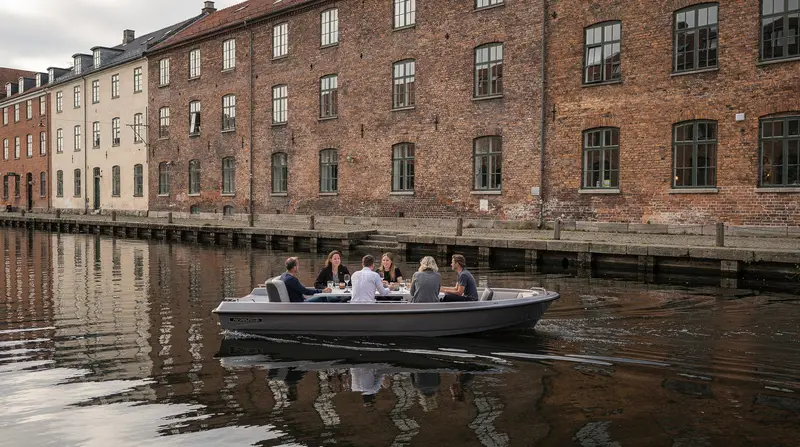
Canal and harbour cruising: GoBoat self-drive boats (electric, no license required, minimum 2 people, approximately 365–495 DKK per hour depending on season and boat size) are booked by Copenhageners for evening excursions from 18:00 onward. A two-hour evening cruise through the inner harbour and canals — self-driven, with provisions from a nearby supermarket — is a significant Copenhagen summer pleasure.
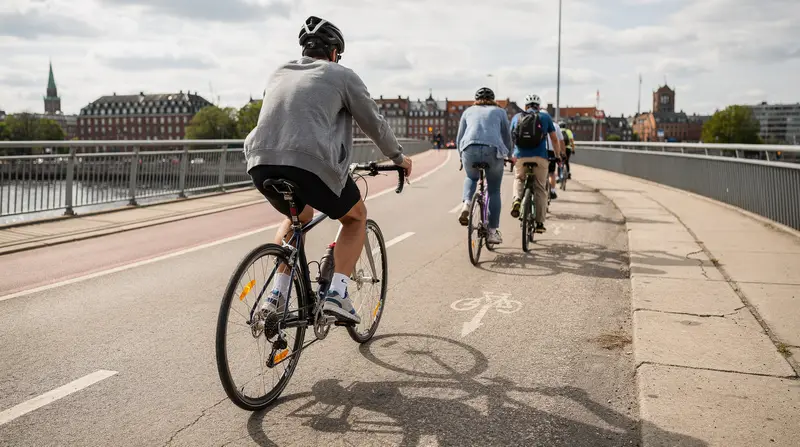
Cycling: The evening cycling culture in Copenhagen reaches its peak on summer evenings. The cycle lanes on Dronning Louises Bro (the bridge over the lakes between Nørrebro and Indre By) are full of cyclists at 21:00 in June. Evening cycling from the city centre to Refshaleøen, or south along the harbour to Amager Strandpark, gives access to the evening light in open water contexts that the city’s urban streets don’t provide.
The evening canal cruise: what to know
The one-hour guided canal cruise from Gammel Strand — the most-reviewed and most practical tourist activity in Copenhagen — runs throughout the day, but the 19:00 and 20:00 departures in summer are the best versions. Reason: the angled evening light on the Nyhavn canal facades, the Christianshavn waterfront, and the opera house (Operaen, designed by Henning Larsen, opened 2005) creates photographic and aesthetic conditions that the harsh midday light doesn’t offer.
During the Jazz Festival (July), evening canal cruises from Nyhavn sometimes have jazz musicians aboard — check the Jazz Festival programme.
A standard one-hour canal cruise costs approximately 145–195 DKK. Book in advance in summer — the evening departures sell out earlier than midday slots. The cruise departs from Gammel Strand (opposite the National Museum) and passes through the inner harbour, the Christianshavn canal, and back through Nyhavn.
For a more independent evening on the water, the GoBoat self-drive option from Islands Brygge (no license required, 1–3 hours, book through goboat.dk) is an excellent alternative — you control the route, pace, and what provisions you bring. The GoBoat rental guide covers booking, pricing and provisioning in detail.
The round tower at golden hour
Rundetårn (the Round Tower, Købmagergade 52A, open daily until 20:00 in summer, 45 DKK entry) is Copenhagen’s best elevated viewpoint — not the highest, but the most accessible and most centrally located. The tower’s viewing platform at 34.8 metres gives a 360-degree view across the city’s rooftops.
At golden hour — approximately 19:30–21:30 in June and July — the view from the Round Tower’s platform takes on the warm colour of the low sun. The church spires, the distant water of the Øresund, and the copper roofs that characterise Copenhagen’s skyline are all at their most photogenic in this light. On a clear summer evening, the tower at 20:00 combines the best light with significantly fewer visitors than the midday peak.
How the long evenings change a typical itinerary
Most Copenhagen itineraries are written as if the day ends at 18:00 and everything after is just dinner. In summer, that wastes roughly a third of the usable daylight. A practical adjustment: shift your museum and indoor-attraction visits earlier in the day (10:00–16:00, when the light outside is flat and less interesting anyway) and reserve outdoor, waterfront and elevated activities for 18:00 onward, when the light itself becomes part of the experience.
This has a secondary benefit: museums, Tivoli, and Rosenborg are measurably less crowded in the first two hours after opening than in the midday peak, while the harbour, Reffen and canal cruises get better rather than worse as the evening progresses. Structuring the day this way — indoors and cultural in the morning, outdoors and social in the evening — matches both the crowd patterns and the light, rather than fighting either.
Rosenborg Castle gardens after 17:00
Kongens Have (the King’s Garden), the formal garden surrounding Rosenborg Castle, is free to enter and stays open until dusk. In summer this means the park is accessible until 21:00–22:00 — and in the final hours of the day it functions as the city’s most atmospheric outdoor gathering space.
The marionette theatre in the garden runs free performances at 14:00 and 15:00 on weekends and some weekdays from May through August. The rose garden is in full bloom through June and July. The long allée down the centre of the garden, lined with tall lime trees, has the quality of an outdoor cathedral in evening light.
Rosenborg is one of the few central Copenhagen parks with consistently excellent lawn space — come with picnic provisions (the Irma or Netto supermarkets on Kongens Nytorv are five minutes away) and arrive at 17:00 for three to four hours of outdoor time in one of the city’s most beautiful settings.
Refshaleøen and Reffen at evening
Refshaleøen is a former naval shipyard island across the harbour from Nyhavn, converted in the 2010s into a creative and food destination. The primary draw for summer evenings is Reffen — Copenhagen’s largest street food market, in operation roughly May through October.
Getting there: Harbour bus line 992 from Nyhavn (around 15 DKK, takes 10–12 minutes) or cycle along the harbour path from Christianshavn (20–25 minutes, signposted). The harbour bus is the easiest option if you don’t have a bike.
What to eat: Around 50 stalls covering Danish, Korean, Mexican, Turkish, Indian, Japanese and numerous other cuisines. Typical price: 80–130 DKK for a main dish, 40–70 DKK for a drink. The lamb burger (Grillen), the Vietnamese bánh mì (Søndermølle), and the open-fire smoked fish stalls are consistently good. Quality varies across stalls — walk the length of the market before choosing.
The setting: Reffen is built on the waterfront with outdoor seating facing the harbour. On a summer evening at 19:00, with the water reflecting the sky and the harbour visible across to the Operaen and Nyhavn, it is one of the more spectacular casual dining settings in the city. The informality (outdoor seating on wooden platforms, no reservations, no dress code) matches the Danish summer mood exactly.
Hours: Approximately 11:00–22:00 in summer (later on weekends, check reffen.dk for the 2026 schedule). Busiest from 17:00–20:00. Arrive at 18:00 for good seating selection; arriving after 20:00 means reduced stall selection as some close early. The full Reffen street food guide covers which stalls are worth the queue.
Drinking at sunset: where to go
Copenhagen’s outdoor bar culture concentrates in a few areas that make particular sense in the context of the evening light:
Nyhavn south bank: The most photographed evening drinking location in the city. Outdoor seating at the canal-side bars facing the coloured 18th-century houses and the water. Expensive (beer around 80–100 DKK, cocktails 120–160 DKK) but the setting partially justifies the premium. Best before 19:00 when it is crowded but not overwhelmed, or after 21:00 when the light is golden and the day-trippers have thinned.
Vesterbro, Halmtorvet area: The former Vesterbro market square (Halmtorvet) has several bars and restaurants with outdoor seating. Less scenic than Nyhavn but more local, less tourist-facing, and 20–30% cheaper. Fermentoren (craft beer, Halmtorvet 29A), Karriere Bar (Flæsketorvet 57–67), and the outdoor terrace of Lidkoeb (Vesterbrogade 72B) are all within walking distance.
Amager Strandpark: If you have access to a bicycle, cycling to Amager Strandpark (Metro M2, Amager Strand station, or 20–25 minute cycle from the city centre) for sunset over the Øresund is an experience that moves more visitors than they expect. The artificial beach facing Sweden, with the Øresund Bridge visible to the south, has a genuinely dramatic quality in the evening light. Bring a supermarket picnic. Renting a bike for the evening is straightforward — see the bike rental guide for options near the centre.
Practical notes for navigating long summer evenings
Sleep: The persistent light disrupts sleep for visitors from lower latitudes. Pack an eye mask — it is the single most useful item for a summer Copenhagen trip. Most budget and mid-range hotels have inadequate blackout blinds. Interior-facing rooms are darker than harbour or street-facing rooms.
Heat: Copenhagen’s summer evenings rarely retain daytime heat after 20:00. Even on days that reach 25°C, the evening temperature drops to 15–17°C by 21:00. Bring a light jacket or layer for evening outdoor time — it is almost always needed.
Mosquitoes: Less of an issue than in wetter Nordic regions, but harbour and canal areas have occasional mosquito presence in warm, still evenings. Light repellent spray is useful if you are sitting near water.
Restaurant booking: Summer evening restaurant tables at good Copenhagen establishments are booked out 3–7 days in advance. For evening dining at any restaurant above the casual level, book ahead. Open Table and the restaurant’s own website are both used. Same-day walk-in is possible but requires flexibility about timing and location.
Transit: Copenhagen Metro runs 24/7 — no last-train anxiety regardless of how late the evening extends. The Metro connects Islands Brygge, Nørreport, Kongens Nytorv (Nyhavn walking distance), and the airport. Night buses cover routes the Metro doesn’t. A 24-hour transport pass is 140 DKK; a single Metro ride is 27 DKK. The getting around Copenhagen guide covers every transport option if you need more than the metro basics.
Photographing the long evening light
Copenhagen’s summer evening light is genuinely one of the best photography windows in Northern Europe, and a handful of specific locations reward showing up at the right time rather than wandering and hoping.
Nyhavn’s south bank, 20:00–21:00: The angled light hits the coloured facades directly, and the canal water carries reflected colour. Arrive slightly before golden hour proper — the transitional light in the 30 minutes leading into it is often more interesting than the peak itself.
The Round Tower platform, 20:30–21:30: Elevated views over the rooftops catch the warm light on the copper roofs and church spires citywide, and — unlike midday — the platform is genuinely uncrowded at this hour.
Amager Strandpark, sunset: Facing west across the Øresund toward Sweden, this is the best location in the city for an actual sunset over water, as opposed to the softer ambient glow you get from the harbour-facing spots.
Christianshavn’s canals, blue hour (just after sunset): The 15–20 minutes after the sun dips give a deep blue sky against lit windows and boat lights — a different, quieter mood than the golden-hour crowds at Nyhavn.
A wide-aperture lens or a phone’s night mode both handle this light well; a tripod is unnecessary before full darkness given how much ambient light persists, but useful if you want long-exposure water shots after 23:00 in June.
A summer evening sequence
One practical way to structure a Copenhagen summer evening (June or July):
17:00 — Harbour bath at Islands Brygge. Swim, dry on the platforms, watch the city from the water.
18:30 — Cycle or harbour bus to Refshaleøen. Dinner at Reffen with water-facing seating.
20:00 — Return by harbour bus to Nyhavn. Walk the south bank of the canal in golden light.
21:00 — Canal cruise (one hour) for the last of the evening light on the water.
22:00 — Wine in Kongens Have or at an outdoor Vesterbro bar as the light finally fades.
This sequence costs approximately 500–800 DKK per person including food, drink, and the canal cruise — reasonable for a Copenhagen evening — and uses the long light as the structuring element rather than working against it.
Frequently asked questions about Copenhagen summer evenings
How late does it stay light in Copenhagen in summer?
On 21 June (summer solstice), sunset is at 22:02. Civil twilight continues until approximately 23:15. By late July, sunset is around 21:20. Usable outdoor light for photography and cycling remains until at least 21:30 throughout June and July.
What is the best way to experience the evening light?
A canal cruise between 19:00 and 21:00 — the angled evening light on the Nyhavn facades and Christianshavn canal is at its most photogenic in this window. Alternatively, cycling along the harbour waterfront or climbing the Round Tower at 20:00.
Are Copenhagen restaurants busier in the evenings?
Copenhageners eat later in summer (19:00–21:00 typically). Outdoor restaurant seating fills from 18:00. Book any non-casual restaurant 3–7 days in advance for summer evening tables.
Is it possible to kayak the canals in the evening?
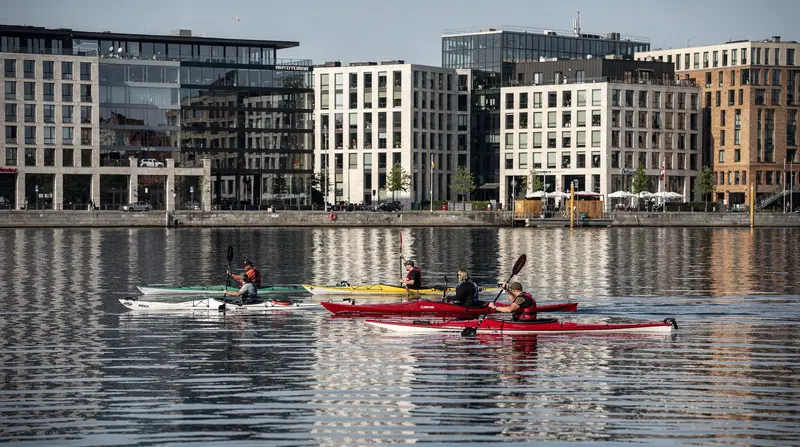
Yes — kayak rentals and tours operate until 20:00–21:00 in summer. Evening kayaking through the Christianshavn canal past Christiania and through the inner harbour is one of the more memorable summer experiences.
What is Reffen?
Copenhagen’s largest street food market on Refshaleøen island — 50 stalls, waterfront seating, open in summer (May–October). Reachable by harbour bus from Nyhavn (15 DKK, 10 minutes) or by bicycle. A meal costs 80–150 DKK. This is where Copenhageners spend summer evenings.
What free things can you do in Copenhagen in the evening?
Harbour bath swimming at Islands Brygge (free), picnic in Kongens Have, walk the harbour waterfront at golden hour, outdoor Jazz Festival concerts (July), cycling through Frederiksberg Gardens, watching the sunset over the Øresund from Amager Strandpark.
Does the midnight light affect sleep?
Yes — the sky does not fully darken in June. Pack an eye mask and request an interior room when booking. Most people adjust within 1–2 nights.
Frequently asked questions — Copenhagen's long summer evenings: what to do when it's still light at 10 pm
How late does it stay light in Copenhagen in summer?
On 21 June (summer solstice), sunset is at 22:02 in Copenhagen. Civil twilight (usable outdoor light) continues until approximately 23:15. Astronomical darkness barely occurs. By late July, sunset is around 21:20; by mid-August it is around 20:45. It is light enough for outdoor activity and photography until at least 21:00 throughout June and July.What is the best way to experience the evening light in Copenhagen?
Take a canal cruise between 19:00 and 21:00 — the angled evening light on the buildings along Nyhavn, the Christianshavn canal, and the inner harbour is at its most photogenic in this window. A one-hour canal cruise from Gammel Strand runs through this period. Alternatively, cycle along the harbour waterfront from the Little Mermaid to Refshaleøen as the sun descends — the light changes dramatically in the final 90 minutes before sunset.Are Copenhagen restaurants busier in the evenings than usual?
Yes and no — Copenhageners eat dinner later in summer than in winter, often 19:00–21:00 rather than 18:00–19:30. Restaurants with outdoor seating fill from 18:00. The evening light extends the outdoor eating window significantly. Booking a restaurant with a terrace (Fisketorvet area, Refshaleøen, Nyhavn south side) for 19:30 and eating as the sun sets is a very good use of a Copenhagen summer evening.Is it possible to kayak the canals in the evening?
Yes — kayak rental and tours in Copenhagen harbour operate through the summer evenings, typically until 20:00 or 21:00 depending on the operator. Evening kayaking through the Christianshavn canal, past Christiania and through the inner harbour is one of the more memorable Copenhagen summer experiences. The water is generally calmer in the evening as boat traffic reduces. Guided kayak harbour tours run June through August.What is Reffen and why is it the best evening destination?
Reffen is Copenhagen's largest street food market, located on Refshaleøen island — a former industrial area across the harbour from Nyhavn. Around 50 food stalls, outdoor seating along the waterfront, and a very local atmosphere. Open in summer (roughly May–October), evenings from 17:00. Reachable by harbour bus (about 15 DKK, runs from Nyhavn and Knippelsbro) or by bicycle along the harbour path. A meal is 80–150 DKK. This is where Copenhageners spend summer evenings.What free things can you do in Copenhagen in the evening?
Swim at Islands Brygge harbour bath (free, open until 19:30 on weekdays, later on weekends), picnic in Kongens Have or Ørstedsparken with supermarket wine and provisions, walk the harbour waterfront from Langelinie to the Little Mermaid and back at golden hour, cycle through Frederiksberg Gardens in the late evening, visit the free outdoor stage at the Copenhagen Jazz Festival (July), or watch boats from the Knippelsbro bridge.Does it affect sleep?
Yes, if you are unused to Nordic latitudes. At midnight in June, the sky is not fully dark — there is a persistent glow on the northern horizon. Most budget hotels have inadequate blackout curtains. Standard advice: bring an eye mask, ask for an interior room when booking, and accept that for the first night or two your sleep schedule may adjust. Most people adapt within 48 hours.
Top experiences
Bookable activities with verified prices and instant confirmation on GetYourGuide.