Best festivals in Copenhagen 2026: Distortion, Jazz, Roskilde and more
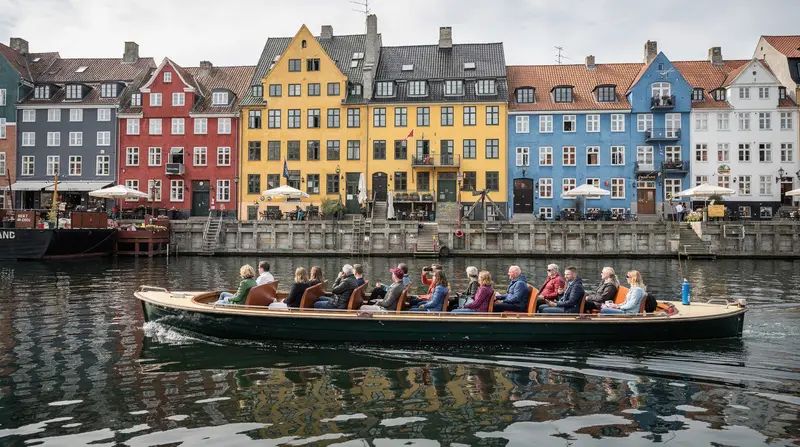
Copenhagen: Canal Cruise with Guide
Duration: 1 hour
What are the best festivals to visit Copenhagen for?
The Copenhagen Jazz Festival (10 days in July, many free concerts) is the most accessible for visitors. Distortion (late May/early June, free daytime street parties) is the most local. Roskilde Festival (late June/early July, 30km from Copenhagen) is one of Europe's great music festivals but requires camping commitment. CPH:DOX (March, film and documentary) suits cultural visitors in the off-season.
Copenhagen does not have a single dominant festival that defines it the way Carnival defines Rio or the Fringe defines Edinburgh. Instead it has a layered festival calendar that runs from March through December, with a genuine peak in the summer months that includes one of the world’s most respected jazz festivals, one of Europe’s most significant rock festivals (30 km from the city), and a street party culture that is as local as it is accessible.
This guide covers the major events worth planning a trip around, what each one is actually like to attend, and the practical information — dates, costs in DKK, transport, tickets — that makes the difference between a good experience and an expensive logistical failure. For general seasonal planning beyond festival dates, see the best time to visit Copenhagen and Copenhagen in summer.
| Where | City-wide (Jazz, Distortion, Pride, Kulturnatten); Roskilde 30km west |
| Cost | Free (daytime Distortion, Pride parade) to 2,500+ DKK (Roskilde week pass) |
| Time needed | A single evening (Kulturnatten) to a full week (Roskilde) |
| Getting there | Metro/S-tog for city festivals; DSB festival trains for Roskilde |
| Booking | Book accommodation 2–3 months ahead for any summer festival |
Copenhagen Jazz Festival (July)
The Copenhagen Jazz Festival is ten days of programming across more than 100 venues, running in early-to-mid July. It is one of the oldest and most respected jazz festivals in Europe, and it has the unusual quality of genuinely integrating into the city rather than creating a separate event zone.
What it is: Concerts in Tivoli Gardens, on outdoor stages at Nyhavn, in Jazzhus Montmartre (one of the oldest jazz clubs in Europe, Nørregade 41), in churches, in Kongens Have park, in cafés, in hotel lobbies, and on temporary outdoor stages in squares across the city. The scale is unusual — upward of 1,200 concerts over 10 days.
What’s free and what costs money: A significant proportion of the festival’s programming is free — outdoor concerts, park stages, and café performances. This is the part of the festival that makes it genuinely accessible for visitors who haven’t planned specifically around it. You can spend an entire day moving between free concerts in the summer heat without paying for a ticket. The major evening concerts at Tivoli and Jazzhus Montmartre are ticketed, typically ranging from 150 DKK (local acts at smaller venues) to 450 DKK (international headline acts at Tivoli).
2026 dates: Specific dates will be announced in early 2026. Historically the festival runs in the first two to three weeks of July. Check cphjazz.com for the 2026 programme announcement.
Who plays: The festival books a mix of Danish jazz (a serious tradition — Jan Garbarek, Nils Petter Molvær, and the Scandinavian jazz lineage are well-represented), international headline acts (Brad Mehldau, Vijay Iyer, and similarly respected names in recent years), and emerging acts on smaller stages. It is not a pop festival wearing jazz clothing — the programming is serious.
Practical advice: The free outdoor concerts at Nyhavn and Kongens Have fill quickly on warm evenings. Arrive 30–45 minutes before listed start times for the best position. For ticketed concerts, the Jazzhus Montmartre (smaller, 400–600 capacity) has the most intimate atmosphere. Tivoli concerts offer the unique experience of jazz in a fairground illuminated at night.
If you’re in Copenhagen for the Jazz Festival, the long, light July evenings extend the outdoor concert experience considerably — see the northern summer nights guide for what that actually looks like at this latitude.
Distortion Street Festival (late May / early June)
Distortion is harder to describe to someone who hasn’t been. It is an annual street party that takes over Copenhagen’s neighbourhoods for five consecutive days in late May or early June, drawing around 100,000 people over its run, and functioning as an expression of the city’s own relationship with outdoor culture, music, and public space.
Structure: Each day focuses on a different neighbourhood. Historically: Day 1 Nørrebro, Day 2 Vesterbro, Day 3 Nørreport/City centre, Day 4 Christianshavn, Day 5 the harbour/closing party. The daytime street party (roughly 14:00–22:00 each day) is free and open to anyone on the street. Mobile bars are licensed to operate on the streets. Temporary stages feature DJs and live acts. The evening club events at partner venues (roughly 22:00 onward) require separate tickets (around 150–350 DKK).
2026 dates: Distortion typically takes place in the first week of June (sometimes overlapping with the last days of May). Check distortion.dk for 2026 specific dates, announced in late 2025 or early 2026.
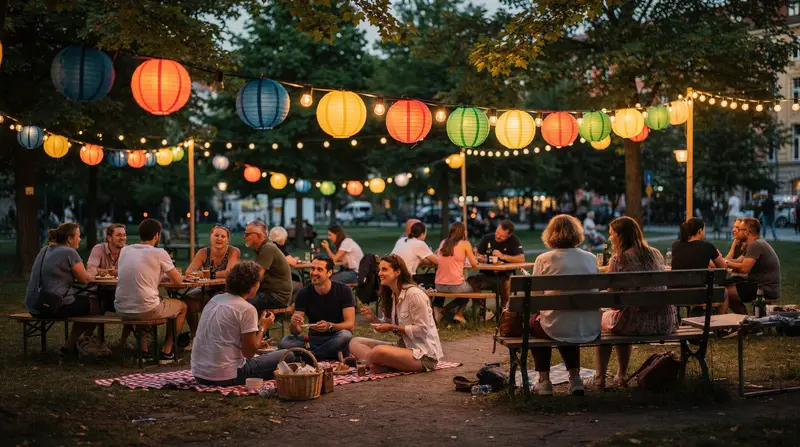
What it’s like: Crowded, loud, outdoor, and very local. Distortion has a reputation for being the festival that Copenhageners attend rather than one that draws primarily foreign visitors. The age range is broadly 20s–30s; the atmosphere is enthusiastically hedonistic without being aggressively so. Each neighbourhood day has a distinct flavour — Nørrebro is more hip-hop and urban; Vesterbro has more electronic and alternative presence; the harbour day is the largest and most club-oriented.
Practical advice: Wear comfortable shoes you don’t mind getting beer on. Bring cash — the mobile bars use physical payments at busy periods. The daytime street parties are excellent even if you have no interest in the evening club scene. Going on the Nørrebro or Vesterbro day gives the most characterful neighbourhood experience. Distortion has historically attracted petty theft issues in the densest crowd areas — be appropriately aware.
Distortion week is also a good time to combine street parties with a proper stop at the city’s craft beer bars, several of which sit directly on the festival route in Vesterbro and Nørrebro. For the rest of the year’s evening scene, the Copenhagen nightlife guide covers clubs and bars beyond festival week.
Roskilde Festival (late June / early July)
Roskilde Festival is not a Copenhagen festival — it takes place 30 km west of the city in Roskilde — but it is so structurally connected (train access, Copenhagen accommodation as a base, proximity) that it belongs in any Copenhagen festival guide.
What it is: One of Europe’s oldest and largest music festivals, founded in 1971, held on a permanent outdoor site on the edge of Roskilde. Around 130,000 attendees over the full festival week. Proceeds fund humanitarian and cultural charitable work — Roskilde Festival is run by a non-profit foundation, which distinguishes it from commercially operated festivals of similar scale.
2026 dates: Roskilde Festival 2026 will run approximately 24 June to 4 July (exact dates announced in autumn 2025). The first four days include industry events and volunteer setup; the main festival runs the last five to six days. Check roskilde-festival.dk for confirmed 2026 dates.
Tickets and costs:
- Full week festival pass (2026 approximate): 2,500–3,200 DKK, including camping
- Day tickets (available for the final 1–2 days): around 700–900 DKK
- Travel: DSB festival trains from Copenhagen Central to Roskilde Station (35 minutes, return included in full week tickets; day tickets require separate train tickets, approximately 88 DKK one-way)
The lineup: Roskilde books across genres — rock, electronic, pop, hip-hop, world music, and experimental. Historically headliners have included Bob Dylan, Paul McCartney, Radiohead, Kendrick Lamar, and Beyoncé alongside less mainstream acts across 8 stages. The 2026 lineup will be announced in stages from early 2026.
The camping experience: Roskilde is a camping festival. The site has around 8 camping zones, each with a distinct atmosphere (from family-oriented to the notoriously intense Orange Camping, which requires separate application). Facilities are adequate for the scale; hygiene standards have improved significantly in recent years. Not camping — staying in Copenhagen and commuting by festival train — is possible for day tickets but misses the core social experience of the festival.
For visitors using Copenhagen as a base: Full-week ticket holders often stay in Copenhagen accommodation for the first few days of the festival before moving to the camping site. This works logistically with the festival train. Day-ticket attendance (final 1–2 days) can be done as a long day-trip from Copenhagen with the train.
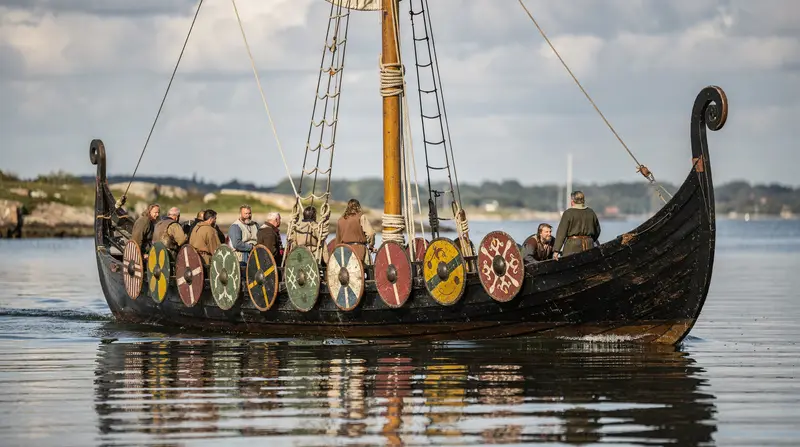
Roskilde the town has other reasons to visit beyond the festival — the Roskilde and Viking ships guide covers the cathedral and the Viking Ship Museum, both worth combining with a festival day trip if you have time before or after.
CPH:DOX (March)
CPH:DOX is Copenhagen’s international documentary film festival, typically running for 10 days in March. It is consistently ranked among the world’s leading documentary festivals and has a programming scope that extends beyond traditional documentary into art film, VR installations, and experimental work.
What it is: Around 200 films screened across 20+ venues, accompanied by industry programming (DocMarket for professionals) and panel events. The public programme covers films on politics, science, art, social issues, and experimental documentary forms.
2026 dates: CPH:DOX 2026 will run in March (exact dates announced in late 2025, historically running 10–14 days in mid-to-late March). Check cphdox.dk.
Tickets and costs:
- Single tickets: 110–160 DKK per screening
- Mini pass (8 screenings): approximately 700 DKK
- Full festival pass: 1,200–2,500 DKK depending on category
Why it’s relevant for visitors: March is Copenhagen’s low season — hotel prices are at their winter minimum, the festival provides a genuine reason to visit, and the programming scope is broad enough to appeal to visitors without a specific documentary-industry interest. The festival creates a visible energy in the city’s cultural scene during a typically quiet month.
Venues: The Imperial Cinema (Vester Voldgade 9) serves as the main venue. Additional screenings run at Cinemateket (the Danish Film Institute, Gothersgade 55), Dagmar Teatret (Jernbanegade 13), and various smaller venues across Indre By. All central, accessible by Metro.
Copenhagen Pride (August)
Copenhagen Pride takes place in the third week of August (typically around 16–23 August, exact 2026 dates TBC at worldpride2021.dk/events or similar). The central event is the Saturday Pride Parade through central Copenhagen — a free public event drawing 250,000+ spectators. The parade route runs through Rådhuspladsen (City Hall Square) and along central streets.
What’s free and what costs money: The parade is free and open to all. The Pride Village (typically in Fælledparken park, Østerbro) has free daytime access with some ticketed stages (100–250 DKK). Club events and parties throughout the week require tickets from individual venues.
Context: Denmark has a long history of legal LGBT+ equality (same-sex partnerships legally recognised since 1989, full marriage since 2012). Copenhagen Pride operates in a city that treats it as a normal part of summer cultural life rather than a contested political event. The atmosphere is celebratory.
Kulturnatten (October)
Kulturnatten (Culture Night) is a single Friday in October when 200+ cultural institutions across Copenhagen open from 18:00 to midnight, many for free or for a single access wristband (around 110–130 DKK in recent years) that covers all venues. Museums, palaces, galleries, archives, theatres, churches, and institutions that are normally inaccessible open their doors.
What makes it distinctive: The combination of usually-closed spaces (Christiansborg Palace’s basement and kitchen, Rosenborg’s treasury in low light, Frederiksberg Palace’s private rooms) and the festival atmosphere of the city at night in October. It is extremely popular with Copenhageners and sells out quickly — check kobenhavn.dk for the 2026 date announcement (typically announced in August–September for an October event).
Northside Festival (June, Aarhus)
Northside is Aarhus’s boutique music festival, not Copenhagen’s — it takes place in Aarhus (190 km away, 1h 15min by train). It is mentioned here because Copenhagen visitors who are also touring Denmark sometimes combine a Copenhagen trip with Aarhus, and Northside (typically first or second week of June) offers a very different festival experience from Roskilde: smaller scale, curated lineup, better food options, 3-day format, day tickets available.
Day tickets typically 600–900 DKK; 3-day passes around 1,800–2,200 DKK. Check northsidefestival.dk for 2026 dates and lineup.
Festival planning: logistics and booking
Accommodation during festivals: Book at least 2–3 months in advance for any festival period that overlaps with summer. During Jazz Festival (July), hotels in central Copenhagen book out at peak summer rates. Staying in Frederiksberg, Amager, or Østerbro and using the Metro saves 200–400 DKK/night without significant convenience cost.
Copenhagen Card and festivals: The Copenhagen Card (24h from 699 DKK) covers museum entry and public transport but does not include festival ticket costs. It is worth having for the transport (Metro, S-Tog, buses) during a festival week if you are also doing sightseeing.
Copenhagen Card — 80+ attractions and transport includedThe festival calendar at a glance (2026, approximate):
- March: CPH:DOX documentary festival
- April: Tivoli summer season opens
- Late May–early June: Distortion street festival
- June: Northside Festival (Aarhus), Tivoli summer in full operation
- Late June: Roskilde Festival begins
- Early July: Roskilde Festival ends; Copenhagen Jazz Festival begins
- Mid July: Copenhagen Jazz Festival
- August: Copenhagen Pride
- Late September: Tivoli summer season closes
- Mid-November: Tivoli Christmas season opens
- October: Kulturnatten; Copenhagen Blues Festival
Frequently asked questions about Copenhagen festivals
When is the Copenhagen Jazz Festival 2026?
Expect early-to-mid July 2026. Exact dates will be confirmed at cphjazz.com in early 2026. Many concerts are free; major venue tickets cost 150–450 DKK.
What is Distortion festival like?
A five-day free daytime street party across different Copenhagen neighbourhoods in late May or early June. Around 100,000 attendees. Evening club events require tickets (150–350 DKK). Check distortion.dk for 2026 dates.
How do I get to Roskilde Festival from Copenhagen?
DSB festival trains from Copenhagen Central to Roskilde Station (35 minutes). Return transport is included in full festival passes. Day tickets require separate train tickets (around 88 DKK one-way). Full week passes include camping and are approximately 2,500–3,200 DKK in 2026.
What is CPH:DOX?
Copenhagen’s international documentary film festival, running 10 days in March. Single tickets 110–160 DKK; festival passes from 700 DKK. One of the best reasons to visit Copenhagen in off-season.
Is there an outdoor film festival in Copenhagen?
Several outdoor cinema events run in summer parks and courtyards, but no single coordinated outdoor film festival. Check aok.dk for current summer cultural listings.
When is Copenhagen Pride 2026?
Third week of August 2026 (approximately 16–23 August). The Saturday Pride Parade is free and draws 250,000+ spectators. The Pride Village and club events have ticketed components (100–250 DKK).
What is Kulturnatten?
A single Friday in October when 200+ cultural institutions open from 18:00 to midnight, many covered by a single access wristband (approximately 110–130 DKK). One of the best single evenings in Copenhagen’s cultural calendar.
Frequently asked questions — Best festivals in Copenhagen 2026: Distortion, Jazz, Roskilde and more
When is the Copenhagen Jazz Festival 2026?
The Copenhagen Jazz Festival typically runs for 10 days in early-to-mid July. For 2026, dates are expected in the first two weeks of July (exact dates announced in early 2026). The festival spreads across 100+ venues including Tivoli Gardens, Nyhavn, Jazzhus Montmartre, and outdoor stages. Many concerts are free; ticketed evening concerts at major venues range from 150 to 450 DKK.What is Distortion festival like?
Distortion is an annual Copenhagen street party that takes over a different neighbourhood each day for five days in late May or early June. The daytime street parties (roughly 14:00–22:00 each day) are free and accessible to anyone. Each day has a different neighbourhood theme — Vesterbro, Nørrebro, Nørreport, the harbour area, and a closing-weekend club stage. Evening club events require tickets (around 150–350 DKK). Distortion draws around 100,000 people over its run.How do I get to Roskilde Festival from Copenhagen?
Roskilde Festival is held at a permanent festival site in Roskilde, 30 km west of Copenhagen. During the festival, DSB runs special festival trains from Copenhagen Central Station to Roskilde Station (35 minutes, approximately 88 DKK one-way, return included in festival tickets). Camping is the standard accommodation — the festival site has 8 camping zones. Day tickets are available for the final two days but the full festival experience requires a week pass (around 2,500–3,200 DKK for 2026, confirmed when tickets go on sale).What is CPH:DOX?
CPH:DOX is Copenhagen's international documentary film festival, typically running for 10 days in March. It is one of the world's largest documentary festivals, screening 200+ films across 20+ venues. Single tickets run 110–160 DKK; festival passes 500–2,500 DKK depending on category. Industry-facing programming runs alongside the public screenings. Venues include the Imperial Cinema (Vester Voldgade 9) and multiple smaller venues across Indre By.Is there an outdoor film festival in Copenhagen?
Several outdoor cinema events run in summer. Cinemateket (the Danish Film Institute, Gothersgade 55) runs outdoor screenings in their courtyard in summer. Various parks host one-off outdoor film nights from June through August. These are not coordinated as a single festival but are announced through the Copenhagen cultural calendar (aok.dk covers current listings).What other notable festivals happen in Copenhagen?
Copenhagen Pride (typically third week of August, free parade on Saturday with ticketed events), Kulturnatten (Culture Night, October, one night where 200+ cultural institutions open late for free), Copenhagen Blues Festival (November), Northside Festival (June, smaller boutique music festival in Aarhus Park, day tickets around 600 DKK), and the Distortion Off season events that precede the main festival week.Do I need to book accommodation well in advance for the Jazz Festival?
Yes — the Jazz Festival in July coincides with peak summer season. Central Copenhagen hotels sell out or charge peak summer rates. Book at least 2–3 months in advance for July travel. Staying slightly outside the centre (Frederiksberg, Amager, or Østerbro) and using the Metro brings prices down significantly while remaining within 15–20 minutes of festival venues.
Top experiences
Bookable activities with verified prices and instant confirmation on GetYourGuide.