Roskilde Day Trip Guide: Viking Ships, UNESCO Cathedral & How to Get There
Roskilde: The Big Viking Tour - Ships, Kings & Living History
Is Roskilde worth a day trip from Copenhagen?
Yes — Roskilde is one of the best day trips from Copenhagen. The Viking Ship Museum houses five original Viking ships excavated from the fjord, and Roskilde Cathedral is a UNESCO World Heritage Site containing the burial tombs of over 40 Danish kings and queens. The train from Copenhagen Central takes just 25–30 minutes and costs approximately 108 DKK return. Both main attractions are covered by the Copenhagen Card.
Roskilde: Denmark’s Viking capital
Before Copenhagen existed as a city, Roskilde was the political and religious centre of Denmark. It was the seat of the Danish king from the 10th century through the late medieval period, the site of the first Danish Christian cathedral, and the location of one of the most important naval defensive actions of the Viking age. Then, in 1443, the capital moved to Copenhagen — and Roskilde became what it is today: a prosperous regional city of 50,000 people, largely overlooked by tourists, containing two of the most significant historical sites in Scandinavia.
The Viking Ship Museum and Roskilde Cathedral are, together, worth a full day. More importantly, they complement each other: the cathedral gives you the medieval and Christian history of Denmark; the Viking Museum gives you the centuries before. Together they bracket the transformation of Scandinavia from the Norse world to the Christian monarchy that would later become modern Denmark.
The train from Copenhagen takes 25 minutes. This is the most accessible genuinely significant day trip in the region.
| Where | Roskilde, 25–30 min west of Copenhagen by train |
| Cost | ~108 DKK return train + 185 DKK museum + 45 DKK cathedral |
| Time needed | 5–6 hours including travel |
| Getting there | Regional/intercity train from Copenhagen Central |
| Best time | Any season; May–September for the fjord boat trips |
Getting to Roskilde from Copenhagen
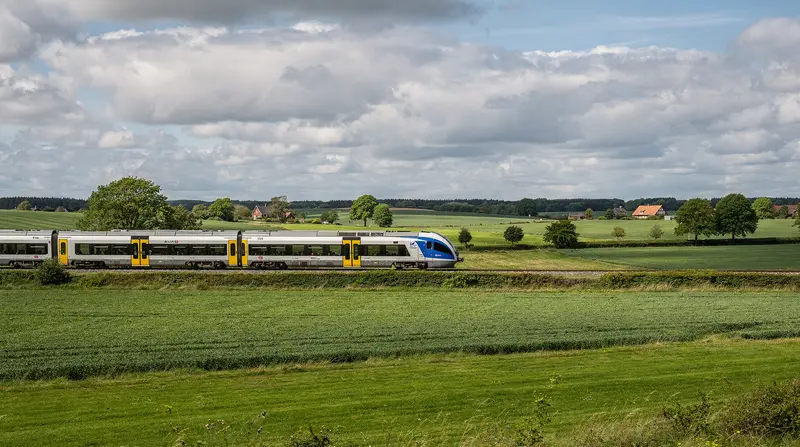
Train: Regional trains (Regionaltog) and intercity (InterCity) services heading west from Copenhagen Central towards Ringsted, Odense, Aarhus, and other westbound destinations all stop at Roskilde. The train also stops at Copenhagen Airport (Kastrup) before reaching the city centre — useful if arriving from the airport.
Journey time: 25–30 minutes from Copenhagen Central, 35–40 minutes from the airport.
Frequency: Every 10–20 minutes throughout the day, more frequently during peak hours.
Fare (2026): Approximately 108 DKK return (3 zones) using a Rejsekort card. Without Rejsekort, buy a 3-zone ticket at the station (slightly higher). Copenhagen Card: covered.
From Roskilde station to the attractions: Both main attractions are within easy walking distance:
- Roskilde Cathedral: 600 metres east of the station, 8-minute walk.
- Viking Ship Museum: 1 km south of the station, 12–15 minute walk, or follow the harbour road.
Roskilde Cathedral: 1,000 years of Danish royal history
Entry: 45 DKK adults, children under 15 free. Copenhagen Card: covered. Hours: Monday–Saturday 09:00–17:00, Sunday 12:30–17:00 (shorter hours October–March; check ahead).
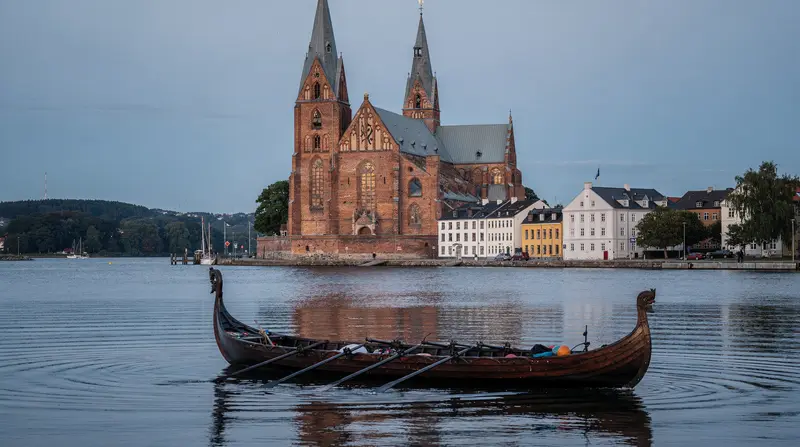
Roskilde Cathedral was inscribed as a UNESCO World Heritage Site in 1995, cited as “an outstanding example of Gothic and Romanesque ecclesiastical architecture” and for its “long history as a burial place of Danish royals.” The citation is accurate but undersells it slightly: Roskilde Cathedral has been the burial church of the Danish royal family since the 15th century, and contains the tombs of more than 40 kings and queens across nearly a millennium. It is the Westminster Abbey of Scandinavia.
Construction began around 1170 under Bishop Absalon (the same bishop who founded Copenhagen). The building was substantially complete by 1280 and shows an unusual mix of Romanesque and Gothic — the transition between the two styles is visible in the nave, where the heavier Romanesque stonework below meets the lighter Gothic arches and clerestory above.
The royal tombs
The cathedral is ringed with burial chapels added over the centuries by successive Danish monarchs. Each chapel contains the tombs of a dynasty — some simple stone sarcophagi, others elaborate freestanding monuments with life-size marble effigies.
The most visited burial chapel is the Absalon Arch area and the Christian IV chapel (north nave), where the warrior-king Christian IV is buried in an elaborate bronze sarcophagus. Also notable: the chapel of King Harald Bluetooth (the Viking king who Christianised Denmark and whose name gives us the Bluetooth wireless standard — he chose a system that connected different people, hence the logo) is commemorated here, though his actual remains were later moved.
The newest royal burial chapel is the Chapel of the Kings of the Glücksburgs (the current Danish royal family). King Frederick IX was buried here in 1972, and Queen Margrethe II (who abdicated in 2024) will be interred here in due course.
The organ and music
Roskilde Cathedral has a significant music tradition and one of Denmark’s better cathedral organs. Occasional free concerts are given; check the cathedral’s website for programmes. The acoustic quality of the nave is excellent.
The Viking Ship Museum (Vikingeskibsmuseet)
Entry: 185 DKK adults, children under 18 free. Copenhagen Card: covered. Hours: Daily 10:00–17:00 (year-round, with extended summer hours).
The Viking Ship Museum is built around five original Viking ships, excavated from the bottom of Roskilde Fjord in 1962. The ships had been deliberately sunk around 1070 CE, loaded with stones, to block a navigation channel and prevent enemy ships from approaching the town. They sat on the fjord bottom for 900 years before archaeologists removed them.
The five ships
The excavated ships represent the full range of Viking watercraft — not just the famous longships of popular imagination:
Skuldelev 1: A large ocean-going knarr (cargo ship), approximately 16 metres. Built in Norway around 1030, this is the type of ship that crossed the North Atlantic to Greenland and North America. The broad hull and shallow draught are designed for carrying heavy cargo across open water.
Skuldelev 2: The largest ship in the collection — a warship (langskib) approximately 29 metres long, built in Dublin around 1042. This is the closest to the ‘classic’ Viking longship: narrow, fast, designed to be rowed hard into battle and beached quickly. Its Irish origin reflects the extent of the Viking world.
Skuldelev 3: A coastal trading vessel (a smaller knarr), approximately 14 metres, built in Denmark around 1040. This is the workhorse ship of Scandinavian commerce — not glamorous, but the vessel that carried goods between Danish towns and along the coasts.
Skuldelev 5: A small warship — a Snekke — approximately 18 metres long. Built in Zealand around 1030. Faster and lighter than Skuldelev 2; may have served as a scout or communications vessel.
Skuldelev 6: A small fishing vessel, approximately 12 metres. Built in western Norway around 1030. The hull is designed for the rough waters of Norwegian fjords and coastal fishing.
The museum building and presentation
The museum’s glass hall frames views of Roskilde Fjord, setting the ships in the context of the water they sailed. The ships themselves are preserved in situ — the excavated fragments are assembled on supporting frames that follow the original hull shapes, with gaps where fragments were lost. The result is not complete ships but legible ship outlines — and the impression of scale and engineering is clear.
The museum’s exhibition around the ships covers Viking-age navigation, trade networks, shipbuilding techniques, and the archaeological process of the 1962 excavation.
The Roskilde Viking Ship harbour
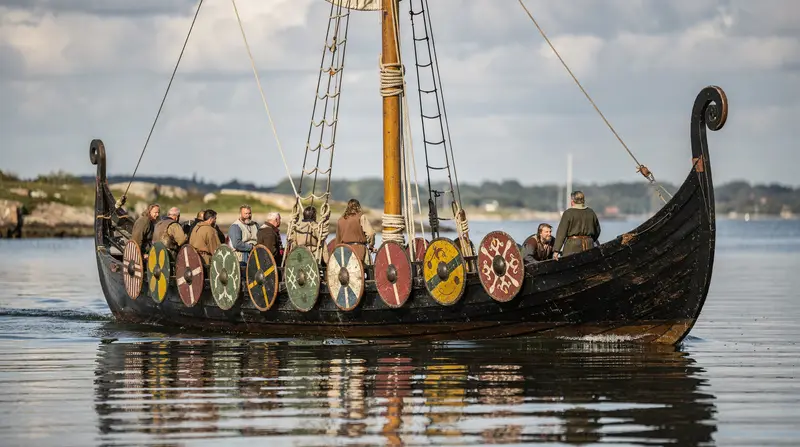
Adjacent to the museum, the working harbour is where replica Viking ships are built using period techniques and materials. In summer (May–September), short fjord trips on operational replica ships are available at the harbour — weather permitting. These are not museum tours with commentary; they are actual sailing experiences on working replica vessels. Worth the additional cost if timing and conditions allow.
Guided tours vs DIY
DIY is the default and it works well. The Viking Ship Museum’s self-guided experience is clear, well-labelled in English, and covers the key stories. The cathedral is straightforward to navigate.
Organised tours add value for specific visitors:
The Roskilde Big Viking Tour is the most comprehensive guided option — it covers both the Viking Ship Museum and the cathedral with expert interpretation, including the living history demonstrations at the harbour. Recommended for visitors who want in-depth Viking history context rather than the self-guided experience.
The Roskilde Viking City Tour in English departs from Copenhagen, includes transport, and gives a guided half-day covering both sites — useful for visitors who prefer to leave the logistics entirely to someone else.
For visitors combining Roskilde with other destinations on the same day (particularly the castles of North Zealand), the Grand Day Trip Around Copenhagen combines Kronborg, Frederiksborg, and Roskilde in a single organised full day.
Roskilde’s food and café options
Roskilde is a practical town with multiple reasonable café and restaurant options:
Near the Viking Ship Museum: The museum café has a terrace with fjord views, lunch plates around 120–150 DKK, and coffee from 45 DKK. Standard café quality, pleasant setting. Worth using for lunch if you are spending most of the morning at the museum.
Algade (pedestrian street): Several cafés and bakeries between the station and the cathedral. The Torvebageriet bakery is reliably good for pastries and lunch sandwiches at reasonable prices (50–80 DKK).
The Roskilde waterfront: A few seasonal food stalls near the harbour in summer. Informal, cheap, useful for a quick lunch before or after the museum.
Roskilde vs. other Zealand day trips
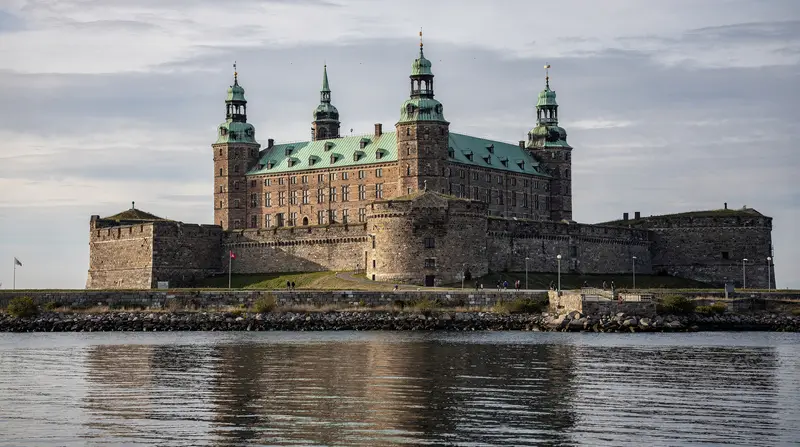
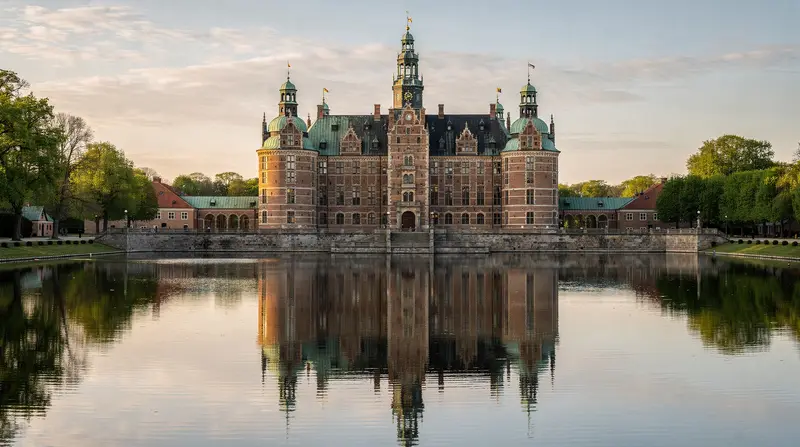
Roskilde competes for a spot on your itinerary with several other well-known Copenhagen day trips. Compared with Kronborg Castle at Helsingør (Shakespeare’s Hamlet setting), Roskilde has stronger Viking-age content but a less dramatic single building. Compared with the North Zealand castles route, which strings together Kronborg, Frederiksborg and Fredensborg, Roskilde is a faster, single-site trip that fits more comfortably into a half-day.
If you are trying to decide how many days you need in Copenhagen overall, Roskilde is one of the easiest additions to a three-day itinerary precisely because the round trip plus both sites fits inside a single afternoon. For families weighing several day-trip options, the day trips from Copenhagen overview ranks Roskilde against Malmö, Louisiana, and Kronborg side by side.
Palace, cathedral & Viking ships cruise special combines Roskilde’s two headline sights with a fjord cruise in a single booked day — useful if you would rather not plan the train connections yourself.
Practical information
Train from Copenhagen Central: 25–30 minutes. Westbound regional or intercity services every 10–20 minutes. Return fare approximately 108 DKK (Rejsekort) or slightly more at the ticket office.
Walking from Roskilde station:
- Cathedral: 8 minutes (600 m)
- Viking Ship Museum: 12–15 minutes (1 km)
Cathedral entry 2026: Adults 45 DKK, children under 15 free. CPH Card: covered. Hours: Mon–Sat 09:00–17:00, Sun 12:30–17:00.
Viking Ship Museum entry 2026: Adults 185 DKK, under 18 free. CPH Card: covered. Hours: daily 10:00–17:00.
Roskilde Festival: Held annually in late June/early July. The festival site is north of the station. During festival week, trains from Copenhagen run extra services and Roskilde is significantly busier.
Frequently asked questions about Roskilde
Is Roskilde worth visiting without an interest in Vikings?
Yes. Roskilde Cathedral alone is worth the 25-minute train journey — it is a genuinely significant UNESCO site with an unrivalled collection of Danish royal tombs spanning a millennium. Even visitors with no particular interest in Vikings tend to find the cathedral compelling. The Viking Museum is an extra bonus, not the only reason to go.
Can I combine Roskilde and Kronborg Castle in one day?
Not comfortably. Both deserve 2.5–3 hours on site. Attempting both means rushed visits and significant time on trains. If you want to combine them, consider an organised tour: the Grand Day Trip Around Copenhagen covers Kronborg, Frederiksborg, and Roskilde in a single organised full day — the only practical way to see all three without a car.
Is the Viking Ship Museum good for children?
Yes, particularly for children aged 7 and above. The ship scale is impressive, and in summer the harbour boat trips on replica ships are a genuinely unusual experience for children. The museum is well-designed for family visits with clear sightlines into the ships and accessible exhibits. Children under 18 are free.
How do I buy train tickets to Roskilde?
Tickets can be bought at the Copenhagen Central ticket machines (accept cards and cash), via the DSB app, or at staffed ticket counters. The Rejsekort travel card works on all DSB regional and intercity trains and gives a discount over per-journey tickets. If you have a Copenhagen Card, train travel is included.
What is the Roskilde Festival?
Roskilde Festival is the largest music festival in northern Europe, held annually in late June / early July on a site north of Roskilde. It attracts approximately 130,000 attendees over 8 days and has featured major international artists since its foundation in 1971. If you are visiting Copenhagen in late June or early July, day passes to Roskilde Festival are available; check the festival website. Note that during festival week, Roskilde is unusually busy and some accommodation is hard to find.
Frequently asked questions — Roskilde Day Trip Guide: Viking Ships, UNESCO Cathedral & How to Get There
How do you get from Copenhagen to Roskilde by train?
Take a regional or intercity train from Copenhagen Central (Københavns Hovedbanegård) towards Ringsted, Odense, or other westbound destinations — all stop at Roskilde. Trains run every 10–20 minutes. Journey time is 25–30 minutes. The return fare is approximately 108 DKK (3 zones) using a Rejsekort card or buying a ticket at the station. Copenhagen Card covers the journey.How much does the Viking Ship Museum cost?
Adults pay 185 DKK (approximately 25 €). Children under 18 are free. The Copenhagen Card covers admission. In summer (May–September), the museum offers optional boat trips on replica Viking ships in the fjord — these are booked separately at the harbour (typically 80–120 DKK extra depending on the boat).How much does Roskilde Cathedral cost to enter?
Adults pay 45 DKK (approximately 6 €). Children under 15 are free with an adult. Copenhagen Card covers admission. The cathedral is open Monday–Saturday 09:00–17:00 and Sunday 12:30–17:00 (shorter hours in winter). It remains an active church so some areas may be restricted during services.How long should you spend in Roskilde?
Allow 1.5–2 hours at the Viking Ship Museum, 45–60 minutes at the cathedral, 30 minutes walking between sites and along the waterfront, and a lunch stop. A comfortable Roskilde day trip takes about 5–6 hours total including travel time from Copenhagen. You do not need to arrive early — the sites are not crowded outside peak summer weekends.What Viking ships are in the Viking Ship Museum?
Five original Viking ships from the 11th century, deliberately sunk in Roskilde Fjord around 1070 to block a navigation channel. They were excavated in 1962 and include: a large ocean-going trading vessel (similar to those that crossed the North Atlantic), a smaller coastal trader, a warship (longship), a ferry, and a fishing boat. The collection represents the full range of Viking ship types — not just warships, despite the popular image.Is there a boat trip on Viking ships in Roskilde?
Yes, in summer (typically May–September). The Viking Ship Museum's harbour operates replica ships — reconstructed using the same techniques as the originals — and offers short fjord cruises on weekends and some weekdays. These are weather-dependent and sold at the harbour on the day. Budget 80–120 DKK extra. The experience of sailing on a working replica ship is genuinely unusual and worth the addition if timing works.What else is there to do in Roskilde beyond the main attractions?
The waterfront south of the Viking Ship Museum has a pleasant harbour walk. The Roskilde Palace (opposite the cathedral) houses a temporary exhibition space. The pedestrian street Algade has independent cafés and bakeries. For music history visitors, Roskilde is the home of the annual Roskilde Festival — the largest music festival in northern Europe, held each year in late June/early July.
Top experiences
Bookable activities with verified prices and instant confirmation on GetYourGuide.