Best Time to Visit Copenhagen: Season by Season, Honestly
What is the best time to visit Copenhagen?
May and September are the sweet spot — warm enough for canal tours and outdoor dining, well below peak tourist volumes, and noticeably cheaper hotels than July–August. June–August is peak season with the longest days (up to 17.5 hours in late June) but the highest prices. November–February is cold and dark but offers Christmas markets and the lowest hotel rates of the year.
Why timing matters more in Copenhagen than most European cities
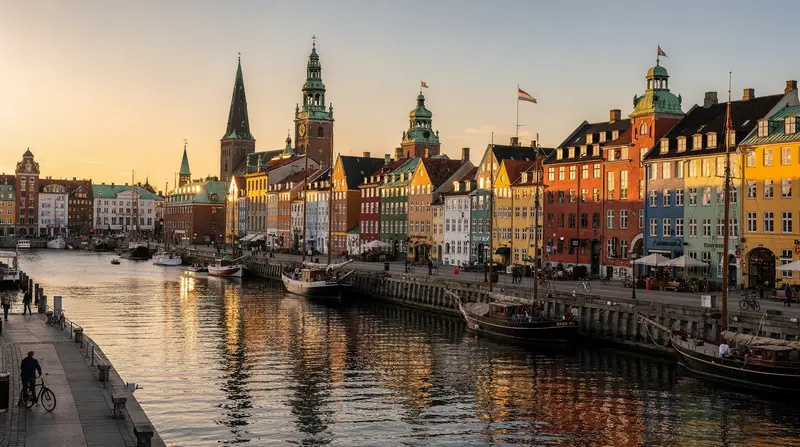
Copenhagen sits at latitude 55.7°N — further north than Moscow. That geographical fact shapes everything about when to visit. The difference between a June evening (light past 10 pm, outdoor cafés full, harbour baths open) and a December afternoon (dark by 3:37 pm, below zero, wind off the Øresund Strait) is stark.
But darkness is not the whole story. Copenhagen’s winter offers its own rewards: museum culture at its most accessible, the best restaurant scene in Europe running without summer tourist pressure, and Tivoli’s Christmas market — one of the most genuinely atmospheric in Europe.
This guide gives you honest month-by-month data so you can match your timing to what you want from the trip.
| Best overall | May or September |
| Warmest | July–August (22–24°C average high) |
| Cheapest | January–February (hotels ~45–50% of peak) |
| Longest days | Late June (~17.5 hrs daylight) |
| Best for Christmas | Mid-November – 30 December (Tivoli market) |
For a deeper look at any single season, see the dedicated winter, summer and spring and autumn guides.
Daylight hours: the Copenhagen variable
| Month | Sunrise | Sunset | Daylight |
|---|---|---|---|
| January | 8:37 | 16:12 | ~7.5 hrs |
| February | 7:46 | 17:11 | ~9.5 hrs |
| March | 6:35 | 18:07 | ~11.5 hrs |
| April | 6:15 | 20:10 | ~14 hrs |
| May | 5:13 | 21:10 | ~16 hrs |
| June | 4:26 | 21:56 | ~17.5 hrs |
| July | 4:44 | 21:44 | ~17 hrs |
| August | 5:36 | 20:48 | ~15 hrs |
| September | 6:32 | 19:35 | ~13 hrs |
| October | 7:28 | 18:19 | ~11 hrs |
| November | 7:26 | 16:10 | ~8.5 hrs |
| December | 8:37 | 15:37 | ~7 hrs |
The shift from June (17.5 hours) to December (7 hours) is one of the most dramatic in any major European city.
What the daylight means in practice:
In late June, you can take a canal cruise at 9 pm in full afternoon light. The city’s outdoor café culture runs until 10:30 pm. Tivoli stays open until midnight. The psychological effect of 17+ hours of daylight is significant — Copenhagen in midsummer feels permanently energised.
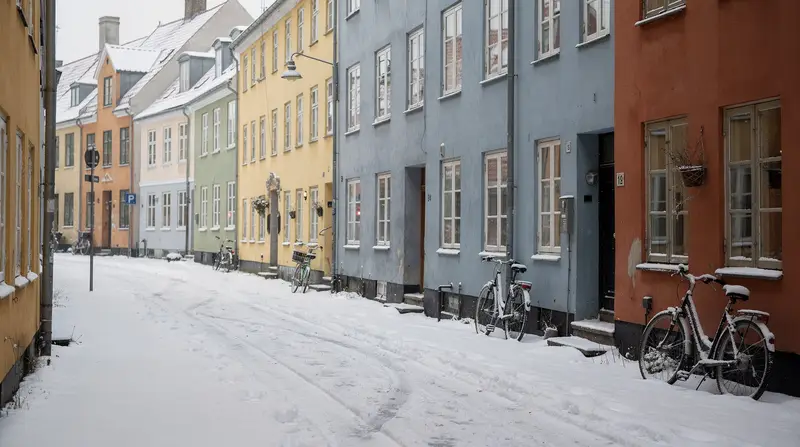
In December, the inverse applies. By 3:37 pm, the sky is dark. Museum days must be planned carefully because there are only 7 hours of daylight in which to do anything outdoors. The city compensates with intensive café culture, the Christmas market illumination, and the concept of hygge — the Danish celebration of cosy indoor warmth against the dark outside.
Month-by-month breakdown
January and February
Temperature: −1 to +4°C. Crowds: Very low. Hotel prices: Lowest of the year.
The quietest and cheapest months. Cold, often grey, short days. Museums are uncrowded — the National Museum, Glyptotek and Designmuseum often have rooms to yourself. Copenhagen’s restaurant scene is fully operational and making its strongest case for New Nordic cuisine.
The city’s café culture (hygge in practice) reaches peak form in winter: candles on every table, blankets on outdoor chairs, staff who are not rushing you because of a queue. Fashion Week in February briefly fills hotels.
Worth visiting for: Museum depth, restaurant scene, lowest prices, authentic city atmosphere. Avoid if: You need outdoor activities, cycling or sunlight.
March and April
Temperature: 3–12°C. Crowds: Low to moderate. Hotel prices: Below average.
The city starts to wake up. March still feels like winter but daylight grows quickly (gaining about 3 minutes per day). CPH:DOX documentary festival runs in March, attracting a creative crowd.
April is when Copenhagen becomes genuinely pleasant outdoors. Cherry blossom appears in Frederiksberg Gardens and around Kastellet. Canal tours restart their full schedules. The city’s parks recover their green. Hotel prices remain well below summer levels.
Worth visiting for: Good value, growing daylight, parks coming alive, fewer tourists. Avoid if: You want guaranteed warm weather for outdoor dining.
May
Temperature: 12–18°C. Crowds: Moderate, growing. Hotel prices: Rising but still 20–30% below July peak.
Many regular visitors’ favourite month. Long evenings, comfortable temperatures, the city’s cycling infrastructure fully occupied by locals (a good sign), restaurant terraces open. Tivoli is open in May with lighter crowds than summer. The Botanical Garden is at its most photogenic.
Hotel availability becomes tighter by mid-May. Book 4–6 weeks ahead.
Worth visiting for: Best overall balance of weather, daylight, crowds and price. Strong recommendation for most travellers.
June
Temperature: 16–22°C. Crowds: High. Hotel prices: Peak begins.
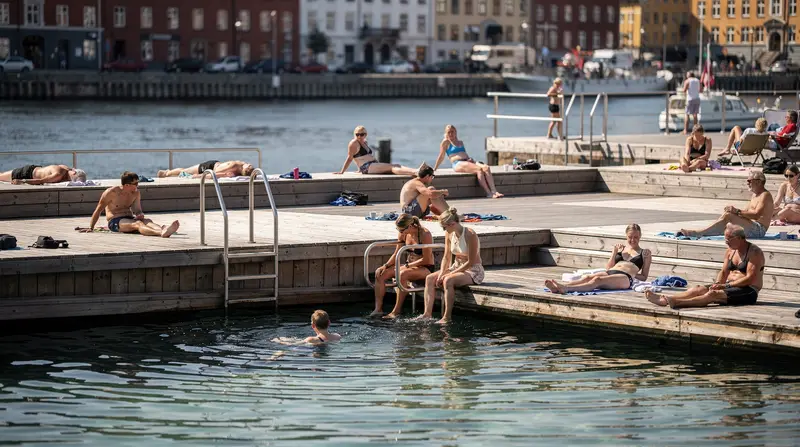
Summer arrives. Longest days of the year — the sun sets after 10 pm around the solstice, creating a surreal Nordic evening light. Harbour baths open (free). Canal tours run from early morning. Outdoor culture is at maximum.
Copenhagen Jazz Festival runs for 10 days in early July (often starting late June), with hundreds of free outdoor concerts across the city. This is an exceptional time to visit if you enjoy live music.
Crowds are manageable in early June; by late June, the main tourist sites are noticeably busier. Hotel prices climb.
Worth visiting for: Long days, outdoor culture, Tivoli in full swing. Book: At least 6–8 weeks ahead.
July and August
Temperature: 19–24°C. Crowds: Peak. Hotel prices: Highest of the year.
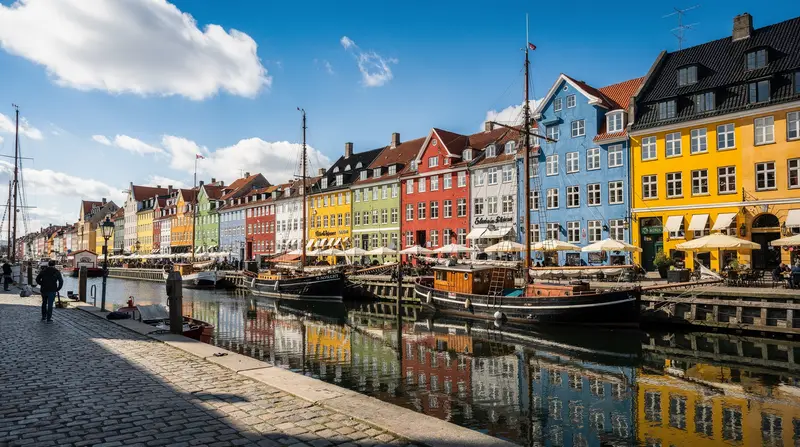
Peak tourist season. Everything is open, everything is crowded. Canal tour queues at Nyhavn can be 30–45 minutes. Hotels at Tivoli peak prices — expect to pay 30–60% more than spring for equivalent rooms.
The upside: Copenhagen is genuinely magnificent in summer. Harbour baths packed with locals (free), outdoor markets, terrace dining until late, the longest days, beach buses running to Amager Strandpark. If you visit in August, aim for the last two weeks — slightly fewer tourists, still warm, school holidays ending in Denmark.
Fashion Week returns in August, briefly affecting hotel availability.
Worth visiting for: Peak outdoor experience, long evenings, full activity calendar. Strategy: Book 8–12 weeks ahead; consider arriving on a Tuesday or Wednesday rather than Friday–Sunday.
September
Temperature: 14–19°C. Crowds: Noticeably dropping. Hotel prices: Falling.
The other sweet spot alongside May. Summer quality without full summer pressure. Restaurant terraces stay open. Canal tours run full schedules. Hotel prices drop 15–25% from August. The city’s restaurant scene, freed from the summer tourist crush, performs at its best.
Copenhagen is a city that takes food seriously — September is when the New Nordic restaurants feel most accessible to independent travellers.
Worth visiting for: Near-summer weather, post-summer restaurant scene, lower prices. Second strongest recommendation after May.
October
Temperature: 9–14°C. Crowds: Low. Hotel prices: Below average.
Autumn arrives. Daylight still reasonable (around 11 hours). Parks turn golden. A good month for museum-heavy itineraries. The city’s food and coffee culture remains excellent. Fewer tourists means easier restaurant access.
Occasional storm risk from the North Sea — not dangerous but can produce grey, wet days. A waterproof jacket is essential.
Worth visiting for: Autumn atmosphere, museum depth, low crowds. Avoid if: You need outdoor cycling or canal tours as primary activities.
November and December
Temperature: 2–8°C. Crowds: Low (until Christmas market season). Hotel prices: Low, then rising in December.
November is quiet and underrated. The city’s café culture is strongest in cold months. Museums are uncrowded.
From mid-November, Tivoli Christmas market opens and transforms the park into one of Europe’s most atmospheric holiday settings. Entry is included with the Copenhagen Card. Crowds build through December — if you visit in the Christmas market period (mid-November to 30 December), book hotels 6–8 weeks ahead as this has become a popular seasonal city-break.
Worth visiting for: Christmas market, hygge atmosphere, lowest hotel rates (November), genuine local-city experience. Avoid if: Short days and cold temperatures are dealbreakers.
Copenhagen events calendar (key dates)
| Event | Dates | Notes |
|---|---|---|
| CPH:DOX Film Festival | March | Documentary focus, tickets needed |
| Copenhagen Marathon | May | Affects Vesterbro/centre accommodation |
| Distortion Festival | June | 5-day street festival across neighbourhoods |
| Copenhagen Jazz Festival | Early July | 10 days, hundreds of free outdoor concerts |
| Copenhagen Pride | August | Multi-day LGBTQ+ festival |
| Fashion Week | February + August | Hotel prices spike briefly |
| Tivoli Halloween | Late October | Tivoli’s autumn event |
| Tivoli Christmas Market | Mid-November – 30 Dec | One of Europe’s best — book hotels early |
| New Year’s Eve | 31 December | City-wide celebrations, fireworks at Rådhuspladsen |
Crowd and price summary
| Season | Crowds | Hotel price relative to peak |
|---|---|---|
| July–August | Peak | 100% (baseline) |
| June | High | ~85% |
| May | Moderate | ~70% |
| September | Moderate | ~75% |
| April + October | Low | ~60% |
| March + November | Very low | ~50% |
| January + February | Lowest | ~45–50% |
These are approximate relative comparisons for mid-range hotels. Specific event periods (Christmas market, Jazz Festival week) shift these estimates upward.
Temperature and weather by month
Average temperatures
| Month | Average high | Average low | Feels like (wind) |
|---|---|---|---|
| January | 3°C | -1°C | -4 to -6°C |
| February | 4°C | -1°C | -3 to -5°C |
| March | 7°C | 1°C | 2–4°C |
| April | 12°C | 4°C | 7–10°C |
| May | 17°C | 9°C | 13–16°C |
| June | 21°C | 13°C | 18–20°C |
| July | 23°C | 15°C | 20–22°C |
| August | 23°C | 15°C | 19–22°C |
| September | 18°C | 11°C | 14–17°C |
| October | 13°C | 7°C | 8–11°C |
| November | 7°C | 3°C | 3–5°C |
| December | 4°C | 0°C | -1 to 1°C |
Wind from the Øresund Strait makes winter temperatures feel significantly colder than the mercury suggests. A 3°C February day with 25 km/h wind feels closer to -5°C. Dress for wind chill, not thermometer reading, from November to March.
Summer is pleasantly warm rather than hot. The 22–24°C July average is ideal for canal cruising, cycling and outdoor dining. Occasional heat waves push temperatures to 28–32°C for a few days but do not define the season.
Rainfall patterns
Copenhagen receives approximately 600 mm of rain annually — lower than London (680 mm) or Amsterdam (900 mm). Rain is fairly evenly distributed, with slightly heavier totals in summer (when storms are more intense) and more persistent drizzle in autumn and winter.
On average, Copenhagen has 10–15 rainy days per month in autumn and winter, dropping to 8–12 per month in summer. Most summer rain comes as short afternoon showers rather than all-day grey — a lightweight waterproof cover is the practical solution rather than a full weather contingency plan.
Snow is possible from December to February but rarely persistent in the city centre — coastal urban heat keeps ground snow unusual, though it occurs in cold winters. The 2020–21 winter saw notable snowfall; most years see only light dustings.
What to pack by season
Summer (June–August)
Copenhagen summers are warm but not hot. The sun sets after 10 pm around the solstice — bring an eye mask if you sleep light. Evenings can drop to 13–16°C even in July. Pack:
- Light layers (a packable fleece or light cardigan for evenings)
- A waterproof jacket (summer showers are short but heavy)
- Comfortable walking shoes for cobblestones
- Sunscreen — northern latitude UV is stronger than it looks
Spring and autumn (April, May, September, October)
The widest variation in conditions. A warm May day can reach 18°C; a grey October day can feel like December. Pack for both possibilities:
- Mid-layer (merino wool, fleece or thin down jacket)
- Waterproof outer layer
- Closed-toe shoes or boots (cobblestones, unpredictable rain)
Winter (November–March)
Cold and dark, but manageable with the right gear. Temperatures from 0 to 6°C, wind from the Øresund Strait adds chill. Museums, cafés and restaurants provide warm refuge throughout the day.
- Thermal base layer
- Warm mid-layer (wool or synthetic)
- Windproof and waterproof outer jacket
- Waterproof boots or shoes
- Hat, scarf, gloves — not optional
- Christmas visits: the Tivoli Christmas market is partly outdoor — dress for standing still in the cold
Booking timing by season
Summer (June–August): book 6–8 weeks minimum
The most popular season generates strong hotel demand, particularly around the July school holidays and Copenhagen Jazz Festival week. Arriving on a Tuesday, Wednesday or Thursday gives you better hotel rates than a Friday–Sunday arrival. Midweek restaurant reservations are easier than weekend slots for any desirable restaurant.
Christmas market (mid-November – 30 December): book 4–6 weeks ahead
The Christmas market has become a major European city-break destination. Hotel prices rise significantly from the day the market opens. If this is your reason for visiting, book accommodation at least 4–6 weeks in advance. The market itself requires no booking — Tivoli entry is ~200 DKK (or included with the Copenhagen Card).
Spring and autumn: book 2–3 weeks ahead
Reasonable lead time is enough for most accommodation in shoulder season. The exception: if you are visiting during Copenhagen Marathon (May), Copenhagen Pride (August), or any large conference — check whether a major event is in town during your dates.
Winter (January–February): often book last minute
The quietest period. Last-minute hotel rates can be very competitive. If you have flexible travel dates, winter is when you can legitimately book a week before arrival and find good room availability at low prices.
Tivoli opening seasons
Tivoli is not open year-round — its calendar shapes which months offer the full Tivoli experience.
| Season | Dates (approx.) | What’s open |
|---|---|---|
| Main season | April – late September | Full Tivoli — all rides, gardens, concerts |
| Halloween season | Mid-October – early November | Halloween-themed events, reduced rides |
| Christmas season | Mid-November – 30 December | Christmas market, illuminations, seasonal rides |
| Winter break | January – late March | Closed entirely |
The main summer season (April–September) is when Tivoli is at its best. The Christmas market season is the only good winter substitute. January–March means no Tivoli at all — factor this into your planning if Tivoli is a priority. Full seasonal detail for the market itself is in the Christmas at Tivoli guide.
Matching timing to trip length and budget
How long you are staying changes the calculus. A 2-3 day trip built around Tivoli, the harbour and the old town works in almost any season except deep winter, when Tivoli is closed entirely. A longer stay of 5+ days benefits more from shoulder-season timing (May or September) simply because you will be outdoors more of each day, and the Copenhagen trip cost guide shows how much seasonal timing alone can move your accommodation budget — often 40-50% between January and August for the same room.
If a specific experience is non-negotiable — the northern summer nights light, the Christmas market, or the Jazz Festival — build your dates around that first and accept the trade-offs (higher prices in summer, cold in winter) rather than compromising on the headline reason for the trip.
Frequently asked questions about the best time to visit Copenhagen
Is Copenhagen better in summer or winter?
They offer fundamentally different experiences. Summer gives you long days, outdoor culture, cycling, harbour baths and Tivoli at full capacity. Winter gives you uncrowded museums, the Christmas market, lower prices and a genuine sense of Danish hygge culture. Neither is objectively better — it depends whether you prioritise outdoor activity or indoor culture.
What is the weather like in Copenhagen in spring?
March is still cold (3–8°C) and can feel like an extension of winter. April warms to 8–12°C and is increasingly pleasant, with cherry blossom and growing daylight. May reaches 12–18°C and is the most reliably enjoyable spring month. Rain is possible in any spring month but rarely heavy or prolonged.
When is Copenhagen least touristy?
January, February and November see the fewest tourists. Even the main sights — Nyhavn, Tivoli (closed mid-November for setup), Strøget — are noticeably quieter. Museum queues disappear entirely. The tradeoff is cold, short days.
Is it worth visiting Copenhagen for Christmas?
Tivoli’s Christmas market (mid-November to 30 December) is one of the best in Europe — more atmospheric than most German markets, with real craft stalls, Danish æbleskiver (pancake balls), gløgg (mulled wine) and the full Tivoli illumination. Entry is included with the Copenhagen Card. Yes, it is worth visiting specifically for this.
How hot does Copenhagen get in summer?
Average July highs are 22–24°C. Occasional heat waves push temperatures to 28–32°C, but these are short-lived (2–4 days typically). Copenhagen does not get the sustained Mediterranean heat of southern Europe. Humidity is moderate. The long summer evenings are the main draw, not scorching temperatures.
Does Copenhagen have a rainy season?
No distinct rainy season — precipitation is fairly evenly distributed year-round (averaging around 50 mm per month). Summer brings occasional heavy showers; winter brings more persistent drizzle. A waterproof layer is sensible in any season, but Copenhagen is not an especially rainy city by northern European standards.
Frequently asked questions — Best Time to Visit Copenhagen: Season by Season, Honestly
What month is cheapest to visit Copenhagen?
January and February are the cheapest months — hotel rates can be 40–50% below July–August peak. March and November are also good value. Avoid public holidays even in winter, as Copenhagen fills for short breaks.How many hours of daylight does Copenhagen get?
It varies dramatically. In late June (summer solstice) Copenhagen has approximately 17.5 hours of daylight — sunrise around 4:26 am, sunset after 10 pm. In late December (winter solstice) it drops to about 7 hours — sunrise around 8:37 am, sunset around 3:37 pm.Does it rain a lot in Copenhagen?
Copenhagen averages about 600 mm of rain per year — lower than London or Amsterdam. Rain is distributed fairly evenly across seasons, with slightly more in summer (heavier showers) and autumn. Expect some grey days in any season. A light waterproof layer is wise year-round.Is Copenhagen worth visiting in winter?
Yes, if you embrace indoor experiences: museums, hygge cafés, Copenhagen's extraordinary restaurant scene, and the Tivoli Christmas market (mid-November to 30 December). Winter hotel rates are significantly lower. The main loss is outdoor activity — cycling, harbour baths, canal tours are all limited.When is Copenhagen most crowded?
July and the first two weeks of August are peak season. Tivoli queues are longest, hotel prices highest, canal tour wait times notable. If you visit in summer, go in early June or late August for much the same experience with notably fewer tourists.What events should I plan around?
Copenhagen Jazz Festival (early July, 10 days, free outdoor concerts) is worth timing a visit around. Tivoli Christmas market (mid-November–December 30) is one of Europe's best. Copenhagen Fashion Week (February and August) affects hotel availability. CPH:DOX documentary festival (March) attracts a cultural crowd.