Copenhagen Christmas markets and Tivoli winter season: the honest guide
Copenhagen: Tivoli Gardens Entry Ticket
When does Tivoli open for Christmas and is it worth it?
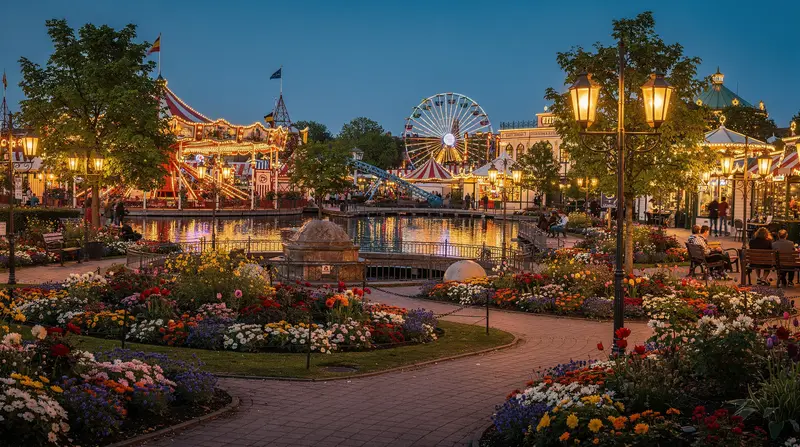
Tivoli's Christmas edition opens in mid-November and closes on 31 December (closed Christmas Eve and Christmas Day). Entry is around 200 DKK for adults in 2026. In the evening, the 600,000 illuminated lights and Christmas market atmosphere make it the most genuine Christmas experience in Copenhagen. Worth it — but go after 17:00 for the lights, on a weekday to avoid weekend crowds.
Copenhagen is not the most famous Christmas market city in Europe. Nuremberg, Strasbourg and Vienna dominate the rankings. But Copenhagen has two things those cities do not: Tivoli Gardens, one of the oldest amusement parks in the world, transformed into a Christmas experience every November; and a genuine local culture around the season that extends beyond the market stalls.
This guide covers the Tivoli Christmas edition in practical detail, the other markets worth visiting (and the ones worth skipping), what things actually cost in DKK, and how to plan a December visit around the light and crowds.
| Where | Tivoli Gardens (central), plus Nyhavn, Højbro Plads, Kongens Nytorv |
| Cost | Tivoli entry ~185–210 DKK; glögg 55–100 DKK |
| Time needed | 2–4 hours at Tivoli in the evening |
| Getting there | Central Station or Rådhuspladsen, both a short walk |
| Best time | Weekday evenings after 17:00 for lights with fewer crowds |
For a broader look at visiting outside the Christmas window, see the Copenhagen in winter guide and the best time to visit Copenhagen guide.
Tivoli Christmas: what it actually is
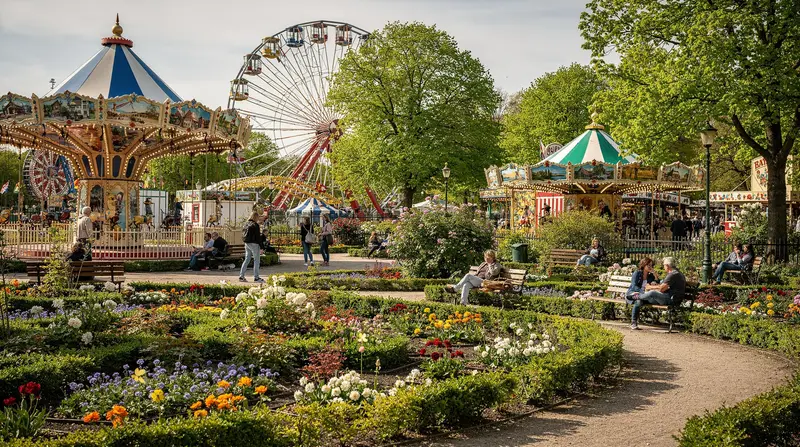
Tivoli Gardens opened in 1843 and has been running a Christmas edition since 1994. The summer fun-park — roller coasters, open-air stage, gardens — closes in late September and reopens in November with a different identity: 600,000 LED lights strung through the trees and buildings, a Christmas market of around 60 stalls, a skating rink (separate ticket, around 80–100 DKK including skate rental), and a reduced selection of operating rides.
The transformation is substantial. The grounds look nothing like the summer version. The pantomime theatre, which operates in summer as a commedia dell’arte venue, runs Christmas-themed programmes in December. The Chinese-style Nimb hotel and restaurant that anchors one corner of the park is extensively decorated.
What Tivoli Christmas is not: a budget option, a purely child-focused experience, or a substitute for a traditional European Christmas market. It is its own thing — a designed experience that combines a fairground atmosphere, Danish Christmas food and drink, illumination, and the novelty of being inside one of the world’s most famous parks in a completely different season.
Practical details: dates, hours, prices (2026)
Opening dates: Tivoli’s 2026 Christmas season will open in mid-to-late November (historically between 14 and 21 November) and run until 31 December. The park closes on 24 December (Christmas Eve, the main Danish celebration day) and 25 December. Watch Tivoli’s website (tivoli.dk) for the confirmed 2026 announcement in autumn.
Hours: Sunday–Thursday 11:00–22:00; Friday–Saturday 11:00–23:00. Extended hours on selected dates in December.
Entry prices (approximate 2026):
- Adults: 185–210 DKK
- Children 3–7: 100–110 DKK
- Children under 3: free
- Ride pass (unlimited): 250–350 DKK (sold separately from entry)
The Copenhagen Card does not include Tivoli entry. Book online through tivoli.dk for guaranteed entry — on busy dates (weekends in December, 20–23 December) the park applies daily caps.
When to go: Weekday evenings from 17:00 onward are the best combination of atmosphere and manageable crowds. The lights are the main event, which means daytime visits miss the primary draw. Weekends in mid-December are the most crowded — expect the park to be full.
What to eat and drink at Tivoli Christmas
Glögg (55–75 DKK): Scandinavian mulled wine, served warm with almonds and raisins in the cup. Tivoli’s glögg stalls use recipes that have been adjusted over decades. The quality varies by stall — the stalls near the Chinese Tower (Tårnet) tend to be less crowded. Non-alcoholic glögg is available at most stands.
Æbleskiver (55–65 DKK for 6): Spherical fried dough, similar to a filled donut but without filling — served with jam and powdered icing sugar. They require practice to eat without dusting yourself. This is the definitive Danish Christmas street food.
Roasted almonds (35–45 DKK per bag): Sugar-glazed with cinnamon. Available everywhere; the versions at the smaller stalls are usually better than the franchise-style operations near the entrance.
Smoked sausages and flæskesteg sandwiches: Traditional roast pork (flæskesteg) sandwiches appear at several stalls at 90–120 DKK. A proper Christmas food.
The Nimb restaurants: Tivoli’s Nimb complex has several restaurants at full Copenhagen prices — Nimb Brasserie (two-course dinner 400–600 DKK), Nimb Bar for cocktails (150–200 DKK per drink). Worth it for the setting if budget allows; skip if you are watching costs.
The other Copenhagen Christmas markets
Nyhavn Christmas market
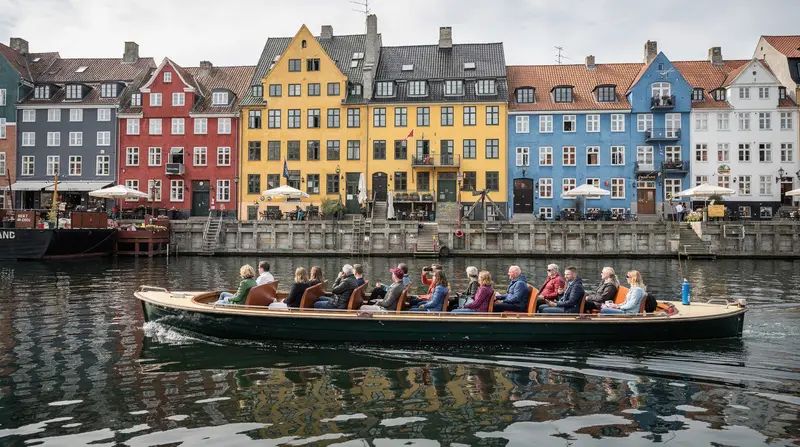
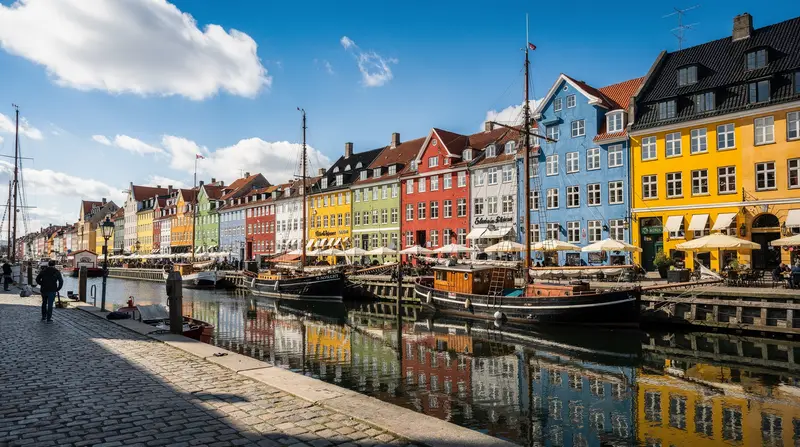
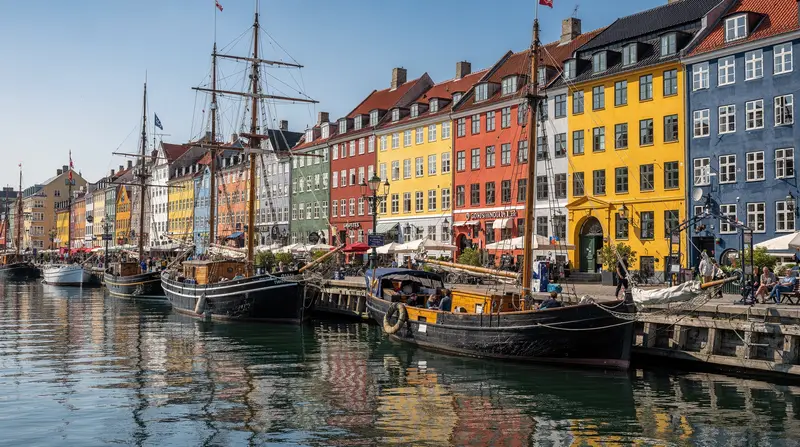
The most photographed and the most tourist-facing. Small stalls along the south side of the canal sell glögg, æbleskiver, decorations and crafts. The setting — coloured facades, boats, lights reflected in the canal — is excellent for photos. The prices are 20–40% above what you would pay elsewhere (glögg here runs 85–100 DKK). Worth passing through at dusk for the photos; not worth spending money at unless you specifically want the Nyhavn backdrop.
Højbro Plads market
A slightly more local market on the square between Strøget and the canal. Around 30–40 stalls, a mix of craft and food sellers, and more Danes than tourists. Glögg runs 55–70 DKK here. The market is open daily during December, roughly 10:00–20:00. This is the better eating and buying option if you want a traditional market without tourist pricing.
Kongens Nytorv
The large square in front of Magasin du Nord has an ice skating rink (Kongens Nytorv Skøjtebane) that runs through January. Entry and skate rental costs approximately 80–100 DKK. A few market stalls surround it. The skating is enjoyable and less crowded than Tivoli’s rink. The square’s architecture — Hotel d’Angleterre and the Magasin building illuminated — makes for a good evening visit even without skating.
Frederiksborg Castle Christmas market (Hillerød)
One of the best Christmas market experiences in the region, and completely off the radar of most visitors. The market takes place in late November (typically two weekends, usually the last two weekends of November) within the castle grounds. Entry to the market is free or very low cost; castle entry is separate.
Getting there: train from Copenhagen Central (H) to Hillerød — approximately 45 minutes, 98–120 DKK return. The castle is a 10–15 minute walk from the station. The market is smaller and more genuinely traditional than Tivoli, with local food producers, handicraft stalls, and significantly fewer tourists. If dates align, this is the December day-trip to prioritise.
Kronborg Castle Christmas market (Helsingør)
A smaller market at Kronborg Castle — the Hamlet setting — in Helsingør. Train from Copenhagen Central takes 45–50 minutes (98 DKK return to Helsingør from CPH). The castle in winter, in the context of Hamlet’s Denmark, has an appropriate atmosphere. The market is modest but the location compensates.
What the Christmas period means for Copenhagen logistics
Crowds: Copenhagen is busiest in the pre-Christmas week (18–23 December) as Danes do their Christmas shopping and attend parties. Nyhavn and Strøget are packed on December weekends. The city is very quiet from 24 December through 26 December as Danes spend time with family. From 27 December to New Year’s Eve it picks up again — this period sees both Danes and international visitors, and hotel prices reflect that.
Restaurant availability: many Copenhagen restaurants are fully booked from 1 December for their julefrokost (Christmas lunch) events — large, multi-hour traditional meals that Danish companies and groups book months in advance. This can make walk-in reservations harder than usual. Book restaurants at least a week ahead for December.
New Year’s Eve: Copenhagen Central, Nyhavn, and the harbour area see public fireworks from midnight. The city’s own fireworks are supplemented by private fireworks — Danes purchase and set off an extraordinary quantity per capita. Nyhavn is the best free viewing location; the waterfront hotels have reserved parties.
The Danish Christmas food culture
Understanding the julefrokost (Christmas lunch) culture helps make sense of December in Copenhagen. A traditional julefrokost is a multi-hour, multi-course event: pickled herring in multiple preparations, liver pâté on rye bread, meatballs (frikadeller), roast pork with crackling (flæskesteg), caramelised potatoes (brunede kartofler), red cabbage, rice pudding with almond prize, and large quantities of aquavit and beer.
This meal is not typically available in restaurants in the form Danes eat it at home, but winter menus at traditional Danish restaurants include most of the elements. Aamanns 1921 (Niels Hemmingsens Gade 19–21) and Schønnemann (Hauser Plads 16) both offer winter-focused menus in December.
For the home-cooking version, any supermarket in December sells the full julefrokost kit — pickled herring, liver pâté, Danish beers specifically brewed for Christmas (Julebryg, released on the first Friday of November, known as J-dag).
Tivoli Christmas vs staying in the city
The question visitors sometimes ask is whether the Tivoli Christmas ticket at 185–210 DKK is worth it when there are free or lower-cost alternatives.
The honest answer: if you are in Copenhagen for Christmas specifically, Tivoli is worth the price for the evening illumination experience alone. There is nothing else in the city that looks like Tivoli at 18:00 on a December evening with the lights on, snow or frost optional.
If you are in Copenhagen in December for other reasons and the Christmas market experience is incidental, the Højbro Plads market and a walk through the Kongens Nytorv skating rink area are free or nearly free alternatives that give you the glögg-and-cold-air atmosphere without the entry ticket. For other family-friendly ideas that combine well with a Tivoli evening, see the Copenhagen with kids guide and the one-day Copenhagen itinerary for a December-adapted schedule, plus the Copenhagen trip cost guide for budgeting a winter visit.
Frequently asked questions about Copenhagen Christmas and Tivoli
When exactly does Tivoli Christmas open in 2026?
Tivoli’s Christmas season for 2026 typically opens in the second or third week of November (historically 14–21 November) and runs until 31 December. The park closes on 24 and 25 December. The exact 2026 date will be announced by Tivoli in autumn 2026.
How much does Tivoli Christmas cost?
Entry is approximately 185–210 DKK for adults, 100–110 DKK for children aged 3–7, free for under-3s. Rides are paid separately or via a ride pass (around 250–350 DKK). The Copenhagen Card does not cover Tivoli entry.
What are the best Copenhagen Christmas markets beyond Tivoli?
The Frederiksborg Castle market in Hillerød (late November, 45 minutes by train) is the most traditional and least crowded. Højbro Plads near Strøget is more locally-facing than Nyhavn. Kongens Nytorv has the skating rink. The Kronborg market in Helsingør suits a day-trip if dates align.
What is glögg and how much does it cost?
Glögg is Scandinavian mulled wine — red wine spiced with cardamom, cloves, cinnamon and orange peel, served warm with almonds and raisins. At Tivoli stalls it costs 55–75 DKK. At the Nyhavn tourist market, 80–100 DKK. Supermarket glögg mix costs 40–60 DKK.
Is the Tivoli Christmas market good for children?
Yes — some rides operate, the pantomime theatre runs Christmas programmes, and the space is manageable for families. Bring a stroller for young children — paths are paved and accessible.
Should I buy Tivoli Christmas tickets in advance?
On weekends and in the final week before Christmas, yes — Tivoli applies daily entry caps. Weekday evenings in November and early December rarely sell out. For 20–23 December, booking at least a week in advance is sensible.
What is the New Year’s Eve atmosphere like in Copenhagen?
Very active — both public and private fireworks make it one of the louder New Year’s Eve experiences in Europe. Nyhavn and the harbour waterfront are the best free viewing areas. Book restaurants and accommodation well in advance as this is one of the busiest nights of the year.
Frequently asked questions — Copenhagen Christmas markets and Tivoli winter season: the honest guide
When exactly does Tivoli Christmas open in 2026?
Tivoli's Christmas season for 2026 typically opens in the second or third week of November (historically around 14–21 November) and runs until 31 December. The park is closed on Christmas Eve (24 December) and Christmas Day (25 December). The exact 2026 opening date will be announced by Tivoli in autumn 2026. Hours are approximately 11:00–22:00 Sunday–Thursday and 11:00–23:00 Friday–Saturday.How much does Tivoli Christmas cost?
Entry to Tivoli Christmas in recent years has been approximately 185–210 DKK for adults, 100–110 DKK for children (3–7), and free for children under 3. Rides are paid separately or via a ride pass (around 250–350 DKK for unlimited rides). The Copenhagen Card does not cover Tivoli entry. Expect prices for 2026 to be in a similar range, confirmed when bookings open in autumn 2026.What are the Copenhagen Christmas markets beyond Tivoli?
Nyhavn has a small but picturesque market along the canal (tourist-facing, expect glögg at 80–100 DKK). Højbro Plads near Strøget has a more traditional market with local stall holders. Kongens Nytorv has an ice skating rink and surrounding market. The Frederiksborg Castle Christmas market in Hillerød (45 minutes by train, runs late November) is the most traditional and least crowded. The Kronborg Christmas market in Helsingør offers a Hamlet-season atmosphere.What is glögg and how much does it cost?
Glögg is the Scandinavian version of mulled wine — red wine spiced with cardamom, cloves, cinnamon, ginger, and orange peel, served warm with almonds and raisins. At Tivoli stalls, glögg costs around 55–75 DKK per cup. At the Nyhavn tourist market, expect 80–100 DKK. A Danish supermarket bottle of glögg mix costs 40–60 DKK — the souvenir option.Is the Tivoli Christmas market good for children?
Yes — Tivoli is one of the better Christmas experiences in Copenhagen for families. Some rides operate (the vintage carousel, the train, the spinning tops) though the full selection of summer rides is reduced. The pantomime theatre runs Christmas programmes. The size of the park means children don't get overwhelmed. Bring a stroller if you have very young children — the paths are paved and accessible.What is there to eat and drink at Copenhagen Christmas markets?
At Tivoli: glögg, æbleskiver (fried dough balls with jam and icing sugar, around 55–65 DKK for 6), roasted almonds (35–45 DKK per bag), smoked sausages (75–95 DKK), æggnog, and a range of hot drinks. At the outdoor markets: similar, with the addition of traditional Danish Christmas cookies (peberkager, brunkager) sold in decorative tins at 80–150 DKK.Should I buy Tivoli Christmas tickets in advance?
On weekends and in the final week before Christmas, yes — Tivoli sets daily entry caps and can sell out online. Weekday evenings in November and early December rarely sell out and walk-up tickets are available. For the high-demand period (20–23 December), booking at least a week in advance is sensible.
Top experiences
Bookable activities with verified prices and instant confirmation on GetYourGuide.