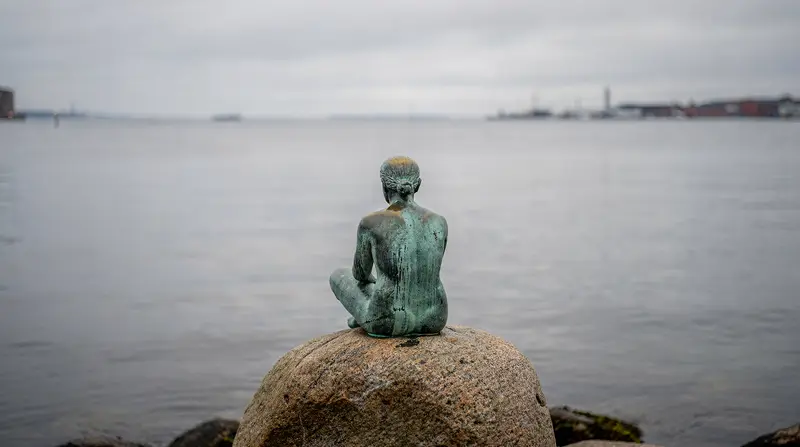
The Little Mermaid, Copenhagen — the honest take
Let me tell you what happens when most people see The Little Mermaid for the first time.
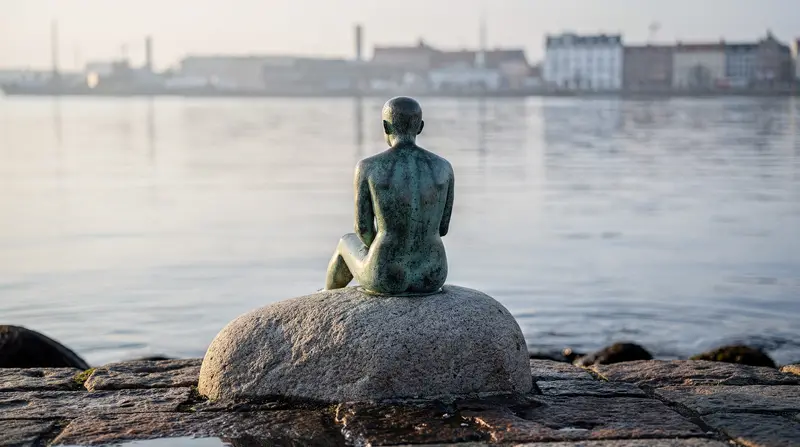
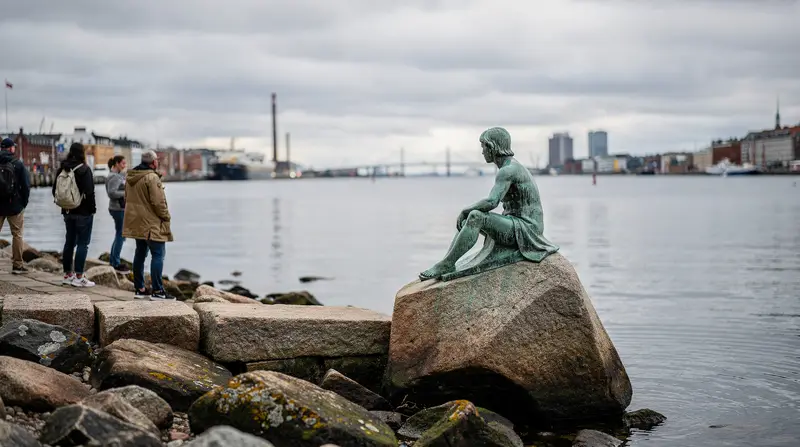
They walk along the Langelinie promenade from the Citadel (Kastellet), following the path that the map says leads to Copenhagen’s most famous attraction. They arrive at a small bronze statue sitting on a rock in the harbour. The statue is approximately 1.25 metres tall — about the height of a ten-year-old child. It is smaller than the photograph suggested. There are thirty or forty other people clustered around it, many of them holding up phones. It is difficult to get close. The statue sits close to the water but is not dramatically positioned — there is no cliff, no wave-swept rock, no particularly compelling backdrop. There is the harbour, some bollards, and a walking path.
Most people look at it for between three and seven minutes and then leave.
This is not a failure of the statue, exactly. It is a failure of expectation calibration. The Little Mermaid has been on every Copenhagen postcard, every tourism website header, and every “top ten things to see in Copenhagen” list for 112 years. The expectations it arrives with are impossible for a 1.25-metre bronze sculpture to meet.
Here is my honest take on whether to visit, when to go if you do, and what to do instead.
| Where | Langelinie promenade, 20-min walk from Nyhavn |
| Cost | Free, always accessible |
| Time needed | 15 minutes, best as part of a longer walk |
| Best time | 07:00–09:00, May–September |
| Skip if | Visiting July–August between 10:00 and 16:00 |
For a fuller sense of what else in Copenhagen falls into this same “iconic but overhyped” category, see our tourist traps and things to skip guides.
What The Little Mermaid actually is
The statue was created by sculptor Edvard Eriksen and installed in 1913, commissioned by Carl Jacobsen (of the Carlsberg brewing family). It was inspired by the Hans Christian Andersen fairy tale of the same name — a mermaid who gives up her voice and her fish tail for the chance to win a human soul, ultimately failing and dissolving into sea foam. The model for the statue’s body was Eriksen’s wife Eline; her face was based on the prima ballerina Ellen Price.
The statue has had a complicated life. It has been repeatedly vandalised — decapitated twice (1964 and 1998), had an arm sawn off (1984), been covered in paint on multiple occasions, and in 1984 was temporarily replaced with a replica while the original was being repaired. In 2010, the actual statue was temporarily moved to Shanghai for the World Expo, which seemed to confirm that the original and a replica are functionally the same object.
None of this makes it less interesting as a piece of cultural history. But it does suggest that the statue’s significance is primarily symbolic and associative rather than visual.
The repeated vandalism is itself part of the story now. Each attack — decapitation, the severed arm, the paint — generated fresh headlines and, if anything, reinforced the statue’s status as a symbol worth defacing, which is a strange kind of fame. Local guides sometimes point out that the statue’s fragility (a single bronze figure with no security barrier, sitting on a public rock accessible from the water) is unusual for an object this internationally recognised, and part of a deliberate choice by the city to keep it approachable rather than fenced off.
The scale problem
The single thing that surprises visitors most is the scale. At 1.25 metres high and weighing 175 kilograms, the statue is not imposing. For comparison:
- The Statue of Liberty is approximately 93 metres from base to torch
- Copenhagen’s Gefion Fountain, fifty metres away from The Little Mermaid on the same promenade, is substantially larger and more visually dramatic
- Rosenborg Castle, where the Crown Jewels are housed, fills an entire city block
If you arrive expecting a monumental civic sculpture, you will be surprised. If you arrive expecting a modest, carefully executed bronze figure that rewards close inspection more than distant viewing, you will be less disappointed.
Should you visit?
Yes, if:
- You are spending 3+ days in Copenhagen and Langelinie is on your walking route anyway
- You have children who know the Disney version of The Little Mermaid and will care about seeing the original inspiration
- You want the photograph for personal reference rather than because you expect it to be spectacular
- You are arriving by cruise ship via the Langelinie pier, in which case the statue is a five-minute walk
No, if:
- You have limited time (one or two days) and are making choices about what to prioritise — the time is better spent at Rosenborg Castle, the Designmuseum, or a canal tour
- You are visiting during peak summer (July-August) between 10:00 and 16:00, when the statue is at its most crowded and least photogenic
- You expect a visually dramatic, grand attraction — it is not
When to go if you do visit
The single best time to visit The Little Mermaid is early morning in May-September: arrive between 07:00 and 09:00 before the tour groups. In that window, in good light, with the harbour water calm and the promenade quiet, the statue has genuine appeal. The bronze has a particular quality in early morning light. You can approach the rock, examine the detail of the figure closely, and understand why Eriksen’s craftsmanship was respected even by those who find the subject matter sentimental.
The worst time: 11:00-15:00 in July and August. The promenade is packed, the statue is surrounded, and the visual experience is primarily of other people’s phones.
The Langelinie walk: what to see instead
The most efficient approach to The Little Mermaid is to treat it as one point on a longer walk rather than a destination in itself. The Langelinie area has several other things worth seeing:
Kastellet (The Citadel): A seventeenth-century star-shaped fortress still used by the Danish military, with intact earthwork ramparts, a working windmill, a church, and moats. Free to enter and walk around. More architecturally interesting than the mermaid statue, considerably less crowded, and photographs well in all conditions. Allow 30-45 minutes.
The Gefion Fountain: Fifty metres from The Little Mermaid, a large bronze fountain depicting the Norse goddess Gefion ploughing the land with her sons (transformed into oxen). More dramatic visually, largely ignored by tourists. Free, always accessible.
Churchillparken: The park between Kastellet and Amalienborg, named for Winston Churchill, contains the Churchill memorial and the English church of St. Alban’s — a Gothic Revival church built in 1887 that is genuinely attractive and rarely visited.
Amalienborg Palace: A 20-minute walk from The Little Mermaid, the winter residence of the Danish royal family. The changing of the guard happens daily at noon and is worth seeing if your timing aligns. The four identical palaces arranged around an octagonal square, with the equestrian statue of Frederick V at the centre, constitute one of the most elegant pieces of Rococo urban planning in Northern Europe.
The hop-on-hop-off alternative
Many hop-on-hop-off bus routes in Copenhagen stop at The Little Mermaid. If you are already using a hop-on-hop-off bus as your sightseeing method, the stop adds no extra effort and a reasonable amount of context (audio guides typically explain the statue’s history).
The walking route from Nyhavn through Frederiksstaden to Kastellet, past The Little Mermaid, and back through Amalienborg takes approximately 2.5-3 hours at a comfortable pace and covers enough of the eastern waterfront to feel complete. This is probably the best way to incorporate the statue into a Copenhagen day without having it feel like a wasted detour, and it fits naturally into a broader things to do in Copenhagen itinerary.
The honest bottom line
The Little Mermaid is worth fifteen minutes of your Copenhagen visit, not an hour. It is a piece of well-executed public sculpture with a long and somewhat absurd history, positioned in a pleasant harbour setting, surrounded on all sides by more visually interesting things that most visitors ignore because they are not on the postcard.
Go early, spend fifteen minutes, photograph what you want to photograph, walk to the Gefion Fountain, continue to Kastellet, and end at Amalienborg for the noon guard change. That is a morning well spent. The Little Mermaid, as a single destination, is not.
People ask if it is “worth it.” It is worth fifteen minutes. It is not worth an hour of a limited Copenhagen visit. Manage expectations, time it right, and it earns its place in your morning. That is the honest take.